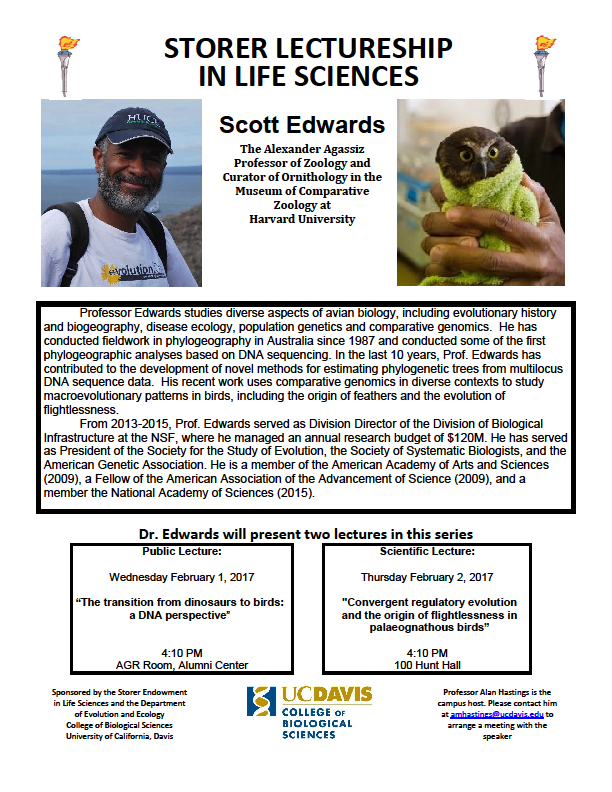
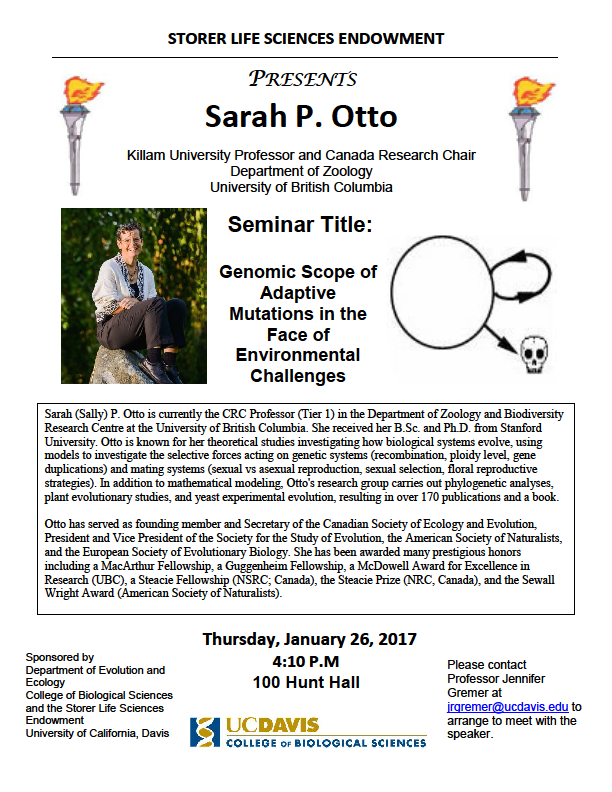
Was fun yesterday watching all the punny posts about #Superb_Owls. I really love owls. I posted some too and also made a Storify of some of the posts of the day. Here are mine:
Here is the full Storify
Was fun yesterday watching all the punny posts about #Superb_Owls. I really love owls. I posted some too and also made a Storify of some of the posts of the day. Here are mine:
Here is the full Storify
got this forwarded to me
CCST is seeking scientists and engineers for a year of public service and government leadership training in Sacramento.
The California Council on Science and Technology is still accepting applications for the 2018 Class of the CCST Science & Technology Policy Fellowship. Completed applications are due on February 28th, 2017.
The CCST Science Fellows program is open to those holding a PhD or equivalent degree in science and engineering, and in social science fields such as economics. Applicants range from new graduates, postdoctoral scholars, tenured faculty, and industry staff. Eligibility information, program timeline, and the application link can be found at fellows.ccst.us/apply.php.
As CCST Science Fellows, scientists and engineers spend one year in Sacramento serving the California State Legislature. Working as legislative staff in the State Senate or State Assembly, they get a front-row seat learning about the craft and process of lawmaking in the State of California — a dynamic arena that often sets policy trends for the United States and the world.
So join us. Read reflections from current and former CCST Science Fellows (fellows.ccst.us/blog), and see how our program has changed their lives and careers. Then tell a friend, or apply for the program yourself — and help make California’s policies stronger with science.
MIC 291: Selected Topics in Microbiology
Work-in-Progress Seminars
Dr. Monica Borucki
(LLNL)
“Recovering Viral Population Diversity to Improve Biosurveillance and Predict Viral Emergence”
Wednesday, January 25, 2017
4:10 pm
1022 Life Sciences
Abstract: RNA viruses constantly evolve to optimize interactions with their hosts and potentially expand host range. Understanding the role of quasispecies in viral evolution is a necessary step toward optimizing detection of emergent viruses, developing effective countermeasures, and ultimately predicting the potential impact of emerging or novel viruses. Deep Illumina sequencing and computational analysis of viral quasispecies was used to define the role intra-host viral diversity plays in the adaptation of viruses to new host environments, with a focus on viral families of medical significance that exhibit the propensity for cross species transmission. Analysis of samples from a naturally occurring rabies host jump, and from in vitro and in vivo passage of a coronavirus and a paramyxovirus indicate that viral diversity plays a pivotal role in viral adaptation. In each case the genetic changes that characterized the emergent genotype were present as rare variants in the virus population prior to selection. These results suggest that recovering the full genetic diversity could improve biosurveillance by building a knowledge base of mutations that may play a role in viral emergence. Similarly, the presence of ancestral genotypes as rare members of the population may provide insights useful for forensic studies and outbreak investigation.
Dr. Borucki is a Biomedical Scientist in the Biosciences and Biotechnology Division of LLNL. Her research focuses on the mechanisms of viral evolution and emergence, biosurveillance, and viral forensics. Before coming to LLNL, she served as a Research Geneticist at USDA-ARS and adjunct faculty at Washington State University where she investigated the epidemiology and virulence of food pathogen, Listeria monocytogenes.
The Florida State University
Coastal and Marine Laboratory
Research Faculty Position Open: Marine Community Ecologist
The Florida State University Coastal and Marine Laboratory (FSUCML) (http:///www.marinelab.fsu.edu) invites applications for a Marine Community Ecologist research faculty position (12 month renewable appointment). We seek a highly motivated coastal ecologist with notable research achievements. The successful applicant will be expected to make a commitment to excellence in scholarship, student mentoring and outreach and have the ability to develop a well-funded, independent research program. Salary will be provided at 100% for the first two years and 75% from the 3rd year forward, with the expectation that the remaining 25% of salary will be met through external funding. A competitive start-up package will be offered. Applicants must have a Ph. D. degree with significant postdoctoral experience.
The Coastal and Marine Laboratory is committed to research focused on coastal and marine issues of ecological importance that provides the scientific basis for policy decisions. The primary area of interest is in experimental community ecology with a focus on local habitats. The FSUCML is embedded in an area of rich terrestrial and marine biodiversity with an abundance of complex and interconnected estuarine and marine habitats including tidal salt marshes and flats, seagrass meadows, oyster reefs, and hard-bottom reefs dominated by soft coral and sponge communities. It is expected that successful candidates would focus on ecological processes related to these local habitats and environments.
Applicants are asked to provide a single document in PDF format containing a letter of application, a curriculum vita, a two-page narrative describing their research interests and plans, and a brief graduate student mentoring statement. Applicants are encouraged to present their research in a way that is complementary to, and can form a basis for integrative collaboration with faculty at the FSUCML and on the FSU main campus.
Applications must be sent electronically to lhedwards. Applicants should also have three letters of recommendation sent tolhedwards. The closing date for applications is 15 February 2017 .
Florida State University is committed to the diversity of its faculty, staff, and students, and to sustaining a work and learning environment that is inclusive. Women, minorities, and people with disabilities are encouraged to apply. FSU is an Equal Opportunity/Access/Affirmative Action Employer.
Kyria Boundy-Mills, Ph.D.
Curator, Phaff Yeast Culture Collection
January 18, 2017
Time: 4:10-5PM
Location: Room 1022 LSA
Title: “Discovery and Innovation at the Phaff Yeast Culture Collection”
https://serc.si.edu/job/marine-disease-ecologist
The Smithsonian Environmental Research Center (SERC) is seeking a scholar with expertise in marine diseases (pathogens) and/or marine parasites to develop a new research program in marine disease ecology. The candidate will leverage the capabilities of existing SERC labs and bridge interests at SERC and throughout the Smithsonian Institution to better understand human drivers of coastal disease processes.
Deadline: January 31, 2017