Treat this flu with antibiotics

A big problem these days is the overuse of antibiotics. One of the reasons antibiotics are overused is that people use them for viral illnesses not bacterial ones. But the NY Times Book Review has an example of a “flu virus” that if you have it, you should use antibiotics on. In a review of Craig Venter’s new book in this Sunday’s Times, Peter Dizikes refers to one of Venter’s achievements in sequencing the first genome:

But he never found a comfortable place in the fledgling government project to chart the human genome and in 1992 joined a new private group, the Institute for Genomic Research. There, Venter and colleagues became the first researchers to chart the whole genome of any organism (the flu virus), among other landmarks, and refined a technique allowing scientists to piece together genomes from small bits of DNA, minimizing the ponderous genetic surveying then in use.

Fine and dandy, except it was not the flu virus, but a bacterium sometimes referred to as H. flu, also known as H. influenzae. It does cause an illness that can resemble the flu, but it is definitely a bacterium. If the Times gets it wrong, one cannot really expect the public to get it right can we? I am not sure what the solution here is, but maybe we should stop saying things are “flu-like” when we mean “flu-like symptoms.” Or maybe we need better diagnostics for the home, so that people can figure out what they have more easily.

Prejudice and DNA

There is an article in this Sundays’ New York Times by Amy Harmon about prejudice’s possibly being revived and stoked by the oncoming personal genomics revolution. I think there is no doubt this is coming. The problem is really two fold in my opinion.

First, as reflected in the story, it is pretty clear that despite the claims of some researchers who seem like they simply want to avoid the subject, we will start to see more findings of genetic differences among populations. . For example, Marc Feldman from Stanford (who by the way was on my thesis committee) is quoted as saying

“There are clear differences between people of different continental ancestries,” said Marcus W. Feldman, a professor of biological sciences at Stanford University

The second part of the problem, in my opinion, is an extension of something I complain about routinely here – the overselling of genomics. In this case we have a double effect. First, is the effect of “DNA.” Somehow, when analysis of DNA is part of a study or story, people seem to overestimate its importance. Then comes the genomics-effect. Since genomics is about “all” the DNA, it carries even more weight than normal DNA studies. On the one hand, this is reasonable, as genomics does give a more thorough picture than past genetic studies. But on the other hand, genomics gets oversold as somehow telling the whole story. In this regard I buy the argument in the Harmon story reflected in the quote by David Altschuler that

it is so clear that the economic and social and educational differences have so much more influence than genes. People just somehow fixate on genetics, even if the influence is very small.”

I certainly think personal genomics is going to reveal lots of interesting connections between genes and various phenotypes. But there is no doubt data from personal genomics will lead to the amplification of prejudices and biases already present.

Nice pro open access editorial in The Journal Times

The Journal Times has a new editorial in support of Open Access publishing.

Key phrase:

While open access to information won’t eliminate the development work, by continuing to limit public access to the information for which the public has paid, we risk losing that vital moment of inspiration which leads to something that makes our lives easier, or healthier, or to a whole new industry. It’s not a risk we can afford to keep taking

I could not agree more.

Population genomics gets real in Drosophila

There has been lots and lots of talk about “population genomics” in the last few years. For microbes, people have been doing this type of genome wide survey within populations for some time. But for multicellular organisms there have been only a few studies and most of these were limited in scope. Now comes a in depth study of Drosophila simulans published in PLoS Biology. This project, led by colleagues of mine at UC Davis (David Begun is first author, Chuck Langley is senior author) did “light” whole genome sequencing (at the Washington University Genome Sequencing Center) of seven lines of D. simulans and one line of D. yakuba.

There is lots of interesting population genomics, population genetics and evolutionary analysis in this paper. If anyone out there is interested in personal genomics or human population genomics in any way, it is worth checking out this paper as a model for what can be done in multicellular eukaryotes.

New from the Public Library of Science – PLoS Neglected Tropical Diseases

Well, obviously most people will not want to get one of these “Neglected” tropical diseases, but if you do, one would bet you will be surfing the web trinyg to find out more about it.

And alas, most of the research on such diseases is hidden behind journal restrictions. That was, until now.

Check out the PLoS NTDS Web Site to or Bora’s blog to learn more.

Also check out the editorial by Margaret Chan, the Director General of the World Health Organization. She says

The launch of PLoS Neglected Tropical Diseases marks yet another turning point in the long and notorious history of some of humanity’s oldest diseases. ….

The free availability of leading research articles will benefit decision-makers and diseases control managers worldwide. It will also motivate scientists, both in developing and developed countries.

There is also an interesting population genetic study of Leptospira interrogans.

Good to see this journal out there.

SF Gate Column on "You big, fat pile of bacteria"

There is an interesting column on SFGate.com about microbes living in and on people. By Mark Morford, SF Gate Columnist

He talks about eating earthworms as a kid.

Of course, it turns out, biologically speaking, that big, dirty earth-muncher probably did my immune system, my intestinal tract and all the happy bacteria therein a world of good. It’s true.

Furthermore he says

we as an overpampered culture are probably not getting enough nasty buggy immune-system-boosting microbes in our diet, in our meats, in our mouths. And therefore we should probably, you know, eat a bit more crap.

I am not sure I would go as far as suggesting eating crap, but I second the notion that we as a society have to stop being obsessed with getting rid of all bacteria. Bacteria are overall good.

Venter on Colbert

Craig Venter was on Colbert last night, talking mostly about synthetic biology and using microbes to make various things (e.g., energy). Colbert kept trying to egg him on in various areas, but Craig played the straight man again (like the last time he was on Colbert) through most of it. Although I should note, Craig seemed much more relaxed this time.

http://www.comedycentral.com/sitewide/video_player/view/default/swf.jhtml

Wanted – Good Microbiologist/Molecular Geneticist for UC Davis Section on Microbiology

Continuing on my trend of posting UC Davis Jobs of Relevance to my Blog. Here is a new posting:

ASSISTANT PROFESSORS
MICROBIOLOGY AND MOLECULAR GENETICS

The Section of Microbiology, College of Biological Sciences, University of California, Davis, invites applications for two tenure-track positions at the level of Assistant Professor. This is a broadly based search for candidates working on bacterial, archaeal or eukaryotic systems (microbial and non-microbial). Candidates must have an outstanding record of achievement in research and will be expected to develop a strong, externally funded, research program in microbiology and/or molecular genetics. Successful candidates will be expected to participate in normal undergraduate and graduate teaching responsibilities. Department faculty members use microbial and non-microbial systems to study diverse research subjects ranging from environmental microbiology and bacterial gene regulation to single molecule studies of protein-DNA interaction and transcriptional control in mammalian cells. See http://microbiology.ucdavis.edu/ugfaculty.htm for descriptions of faculty research. Due to limits on laboratory space availability, one of the two positions must commence on or after January 1, 2009. Applicants should submit (1) a curriculum vitae, (2) a statement of current and proposed research, (3) copies of no more than two key publications, (4) a statement of teaching interests, and (5) arrange to have at least three letters of recommendation submitted. Applications will only be accepted online at http://microbiology.ucdavis.edu/. Please see the website for details.
While applications will be reviewed until the positions are filled, only applications completed by November 16, 2007 can be assured of full consideration. The University of California is an Equal Opportunity/Affirmative Action Employer with a strong institutional commitment to the development of a climate that supports equality of opportunity and a respect for differences.

Ten Things I Love About Cold Spring Harbor Laboratory

I know. They have gotten a bit of negative publicity recently. But CSHL is a great place. Here are some reasons.

  1. Dolan DNA Learning Center. A pioneer in many aspects of biotechnology and genomics education.
  2. Banbury Center. Just on the other side of the harbor from the main lab. The Banbury Campus is a truly spectacular place to hang out. I would know. I must have gone there a dozen times while working on my textbook. It has great places to walk to, like down a big hill to a secluded beach. And it is always peaceful and pleasant.
    [googlemaps https://maps.google.com/maps?f=q&hl=en&geocode=&time=&date=&ttype=&q=cold+spring+harbor,+ny&ie=UTF8&t=h&om=1&s=AARTsJp3e5KgjeAd4nPGwvhPk7OmTHUonA&ll=40.892656,-73.469782&spn=0.009732,0.012875&z=15&output=embed” frameborder=”0″ height=”300″ scrolling=”no” width=”300″>
    View Larger Map
  3. The main campus. Also a very pleasant place to hang out. Not quite as nice maybe as Banbury, but still very peaceful and conducive to science.
  4. Meetings and Courses. They have quite a collection of well known meetings and courses. Personally, I have a place near and dear to my heart for the main Genomes meeting, which I used to go to often. It was the place where I first talked about “Phylogenomics” as a means to predict gene function and this was how I got my first taste of the lab.
  5. Books from CSHL Press Of course I am a bit biased since they just published my evolution textbook, but the general quality of what they publish is very very very high. So many of these books have been key parts of my education including “A short course in bacterial genetics,” “Molecular biology of the gene“, “A genetic switch“, The Archaeal Laboratory Manuals, “Molecular cloning: a laboratory manual” and many others. They publish some good journals too, but since they are not fully Open Access journals, I will not mention them here but hopefully these will become more Open as time goes on.
  6. Caumsett State Park. Just around the corner from the Banbury Campus it is a delightful location. When I was working on my textbook and living on the Banbury Campus I would try to bike to Caumsett every day for a break. http://maps.google.com/maps?f=q&hl=en&geocode=&time=&date=&ttype=&q=cold+spring+harbor,+ny&ie=UTF8&t=h&om=1&s=AARTsJp3e5KgjeAd4nPGwvhPk7OmTHUonA&ll=40.927132,-73.470726&spn=0.038909,0.051498&z=13&output=embed
    View Larger Map
  7. Biking down (and up) Snake Hill Road. See Google Map here. It is very steep and curvy and very fun and short enough to go up without killing yourself
  8. Alex Gann. He was the original editor for my Evolution textbook. Conjure up an adjective to describe anybody you know. That adjective remarkably describes Alex too. He is anything and everything, good and bad, all rolled into one.
  9. Barbara McClintock. I am not sure what it is about her that is so fascinating but her persistence about jumping genes is awe inspiring. And of course, she was right about something very important when lots of people told her she was wrong.
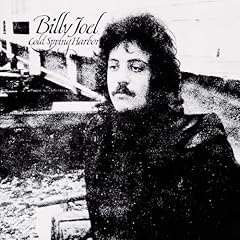
  10. The lab was named after a Billy Joel album. How cool is that?

Microbial genomics and Metagenomics workshop

For those interested in microbial genomics or metagenomics see the announcement here:

The U.S. Department of Energy Joint Genome Institute (DOE JGI) is offering a five-day workshop on Microbial Genomics and Metagenomics, in Walnut Creek, California, January 7-11, 2008. The workshop includes two days of intensive seminars and three days of hands-on tutorials. The goal is to provide training in microbial genomic and metagenomic analysis and to demonstrate how the cutting-edge science and technology of DOE JGI can enhance your research. Participation is limited to 40 attendees (graduate students, postdocs, and faculty or staff scientists). To register for the workshop, submit your application online from the registration page: http://www.jgi.doe.gov/meetings/mgm/


Note the Workshop is FREE. Yes that is right. FREE.