Metagenomics 2007 Update

Some brief notes on the Metagenomics 2007 meeting. For those who do not know – metagenomics is the simultaneous sequencing of the genomes of communities of microbes.

Day 1 : I missed the introductory talk by Larry Smarr (my flight was late). Then there was an opening poster session – a diverse collection of things. My favorite were those involving methods to sequence the genomes of single cells (e.g., one by Ramunas Stepanauskas). Such methods will be critical for getting reference genomes from organisms that are not abundant in a community but might nevertheless be important.

Then there was a dinner and a post dinner talk by Masahira Hattori. The talk was not overwhelmingly interesting … sort of a good example of metagenomics as a fad. Hattori has extensive experience in genome sequencing – having been involved in sequencing the human genome as well as the genomes of other large charismatic furry organisms. As with many people who worked on the human genome, he moved into microbial genomic studies. He has done some interesting things in this arena, the most interesting to me being the sequencing of the genome of a symbiotic bacteria called Carsonella. He did talk about this and I learned something I missed in the paper – this genome was sequenced with the aid of genome amplification methods (see above).

Then Hattori talked about his recent work on human microbiome metagenomics. He has done a lot of work in this area including a big project in which 80,000+ sequence reads were generated for 13 healthy Japanese individuals (both adults and children). I confess much of his results/analyses were not convincing – they seemed to me to be something of the order of “I know I should be doing metagenomics – here is some.” His talk did lead to one of the funnier moments of the meeting – someone asked a question that went something like this

“I know when I go to Japan my intestinal tract changes” leading to a groan from the audience and at least one “A little too much information” comment. The questioner was clearly going somewhere with then but before he got too far, Hattori interjected “It gets much better”

Day 2: Some notes.

Day 2 was a pleasant surprise. For many metagenomics related meetings you hear the same talks and the same data over and over and over again. That was not the case here.

The first talk was by Jed Furman. This was truly inspiring to me. He presented a tour de force of environmental microbiology where metagenomics was simply a component and he interwove the history of metagenomics too. Among his topics – use of ARISA in surveying microbes, studies of the functions present in marine archaea, species richness versus latitude, the scalar nature of sampling for microbes, changes in ocean communities over time, and functional redundancy. This to me is the ideal use of metagenomics – as a tool in other studies. In this sense I disagree with those who say metagenomics is a field. I view it more as a tool. A powerful tool, as Furman showed. But most powerful if used in the context of other studies. In particular he said “Remarkably few experiments other than sequencing have been done in environmental genomics and I hope that will change”

Other talks were by Dawn Field, David Relman, Jim Tiedje, Janet Jansson, Forest Rohwer, and Mitch Sogin. Just a few tidbits from these:

  • Janet Jannson who talked in part about a twin study of microbes associated with Crohn’s disease lauded the idea of a Genomic Encyclopedia for Bacteria and Archaea (a project I am leading at the JGI … if you want to know more stay tuned or ask). Also she referred to humans as “fermenters of microbes” a phrase I kind of like.
  • David Relman gave a good overview of his and others’ work on the human microbiome. One thing he emphasized was the need to remember that rare organisms can be important and that most metagenomics projects do not sample the rare bugs well. And he too then talked about single-cell genomics. He also mentioned a paper I have been waiting for and did not know it had come out. This is a paper on microbial colonization of the human gut in infants by Chana Palmer et al. (with Pat Brown as senior author). In this paper they use a rRNA chip to track microbes colonization infants. This paper is spectacular. Really.
  • Forest Rohwer, who talked most about coral associated microbes and coral damage by people started off by saying “This is my humans suck talk”

There were also breakout sessions, one of which I chaired on “Computational Metagenomics.” Our general conclusion from this – metagenomic informatics is really difficult, we need more interdisciplinary efforts to develop new approaches, and that more money is needed for computational efforts if we want to get the most out of metagenomic data (like we were going to say we need less money). All jokes aside, I do agree with this point – metagenomic sequence analysis is orders of magnitude more complex than analyzing any single-organisms genome. And we need a major ratheting up of computational efforts if we are to get the most out of these data sets that are being produced.

Metagenomics 2007 – streaming live

If you are interested in Metagenomics – log on to the Webcast here.

More info on the meeting can be found here.

I have been f*&$% tagged

I have been tagged by John Logsdon, a supposed friend and colleague of mine in his Sex, Genes and Evolution blog.

Here are the rules:

  1. We have to post these rules before we give you the facts.
  2. Players start with eight random facts/habits about themselves.
  3. People who are tagged need to write their own blog about their eight things and post these rules.
  4. At the end of your blog, you need to choose eight people to get tagged and list their names.
  5. Don’t forget to leave them a comment telling them they’re tagged, and to read your blog.

1. I once bumped into Michael Dukakis (ex governor of Massachusetts and presidential candidate) when he was shopping at a grocery store in Brookline, MA. I was living at my aunt and uncle’s house in Brookline for the summer while working for Colleen Cavanaugh at Harvard on chemosynthetic symbionts. Dukakis had a bag of onions in one hand and a bag of garlic in the other. Sort of symbolized his political career at the time.

2. My grandfather, Benjamin Post was a physicist (specializing in powder diffraction and X-ray crystallography). When I went to graduate school with plans to work on butterfly population genetics with Ward Watt at Stanford, my grandfather was crushed, because he considered ecology and evolution to be the equivalent of sociology. Not hard science. I kept saying “But we use lots of math” But that did not sell him. It did not help my cause that my brother (who is now by the way an evolutionary biologist), at the time was in grad. school in X-ray crystallography. Then, I decided to not join the Watt lab, and joined the lab of Philip Hanawalt to pursue my dream of working on adaptive/Cairnsian mutation. Thankfully, Rich Lenski convinced me to work on something else. But I stayed in the Hanawalt lab because Hanawalt was the absolute perfect advisor. So when I went to Boston to visit my grandfather and told him I was working on DNA repair and mutation processes, this at least piqued his interest. DNA was after all something physicists worked on. And then I said, “And my advisor, Phil Hanawalt, is in the National Academy and was a biophysicist” my grandfather said “Hanawalt? Is he related to Don Hanawalt?” Turns out, my grandfather worked with Phil Hanawalt’s father, J. Donald Hanawalt, who was an expert in powder diffraction. So my grandfather said, not completely in jest, “you may not be doing real science, but at least you are doing it with the child of a real scientist”

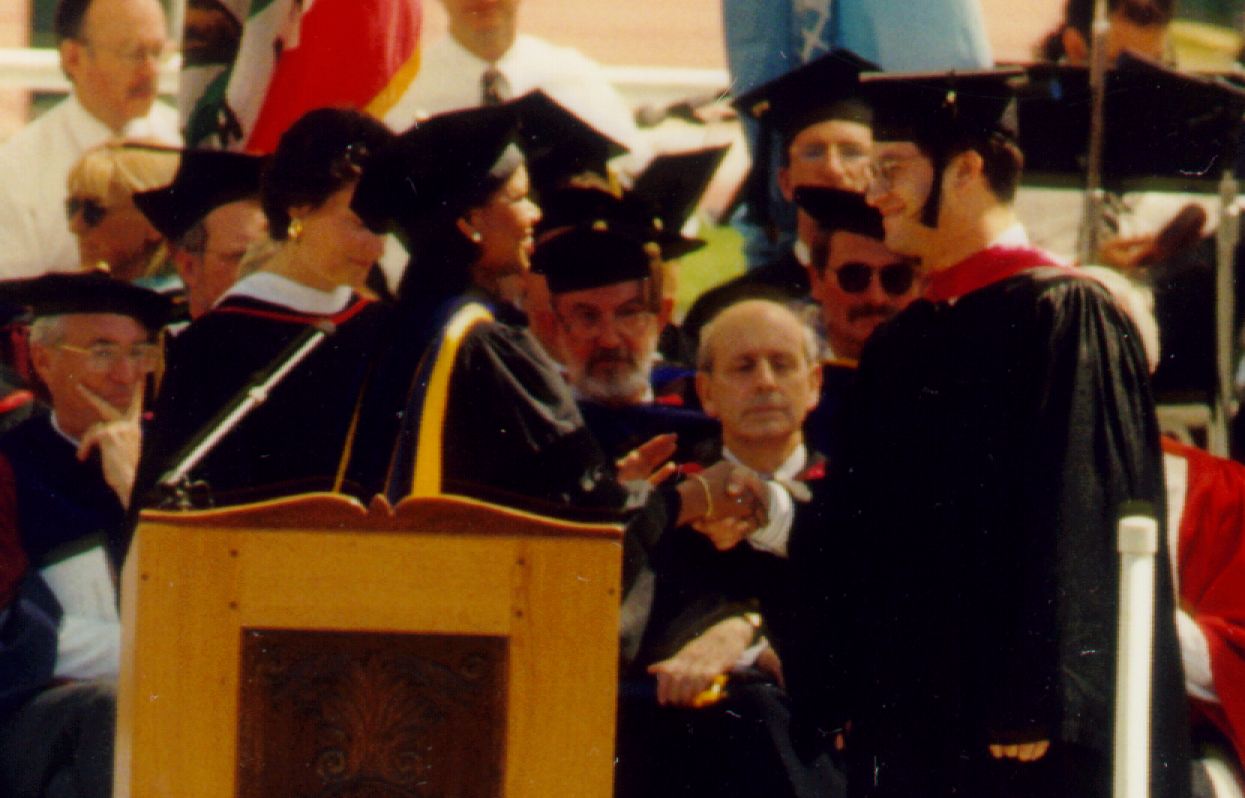
3. I worked with Condoleezza Rice. Not recently. When she was provost of Stanford. On redoing Stanford’s Science, Math and Engineering requirements for non science majors. She was great in this role (no comment about her current role. I try to avoid politics here). I really liked working with her (OK, I worked mostly with her office, but I did interact with her a bit.

4. I am one of those people who had a horrible reaction to the SmallPox vaccine. I was 10. We were going to Kenya on a family trip to visit my uncle David Post who at the time was studying baboons in Amboseli as part of his PhD research with the Altman’s. Never mind that he is now a law professor at Temple (and aspiring blues guitarist). Though getting the reaction sucked, it is a GREAT test of my doctor’s knowledge and background. When they ask for allergies, I say “Small Pox Vaccine.” Unfortunately, most of them are at a complete loss when they read this as they are beginning to talk to me in an appointment. Only the really good ones can discuss it coherently.

5. The best job I ever had was an internship at the Public Defender Service in Washington, DC. It helped me decide not to go to law school but was immensely interesting and fun. I got to go all over the city interviewing witnesses, taking pictures and generally snooping around. Plus the lawyers there were unreal – just *$&%# brilliant. This included people like Bernie Grimm who now is seen regularly on TV commenting on various lawyerly things. But the best by far was Michelle Roberts, who interns used to go to watch in court just because she was phenomenal.

6. I was originally an East Asian Studies major in college. I had studied Japanese in high school and thought for sure that this was the way to make money and get into the business world. Japan was on the rise and I was going to be prepared. Then in college my freshman year I took intensive Japanese classes and some East Asian Studies classes. At the same time I was taking Biology major classes since I was interested in that too. And when I took an Evolution class taught by Stephen Jay Gould (with Wayne Maddison and David Maddison as the TAs), my mind was torn. Do what my intellectual passion told me (Evolution). Or stay in E. Asian studies – which I was not really interested in anymore – but a friend kept telling me I should major in because Mira Sorvino was in some of my classes (this was before I met the even more smashing woman that became my wife). But Gould and team evolution won out. And I switched my registration to Biology as a major.

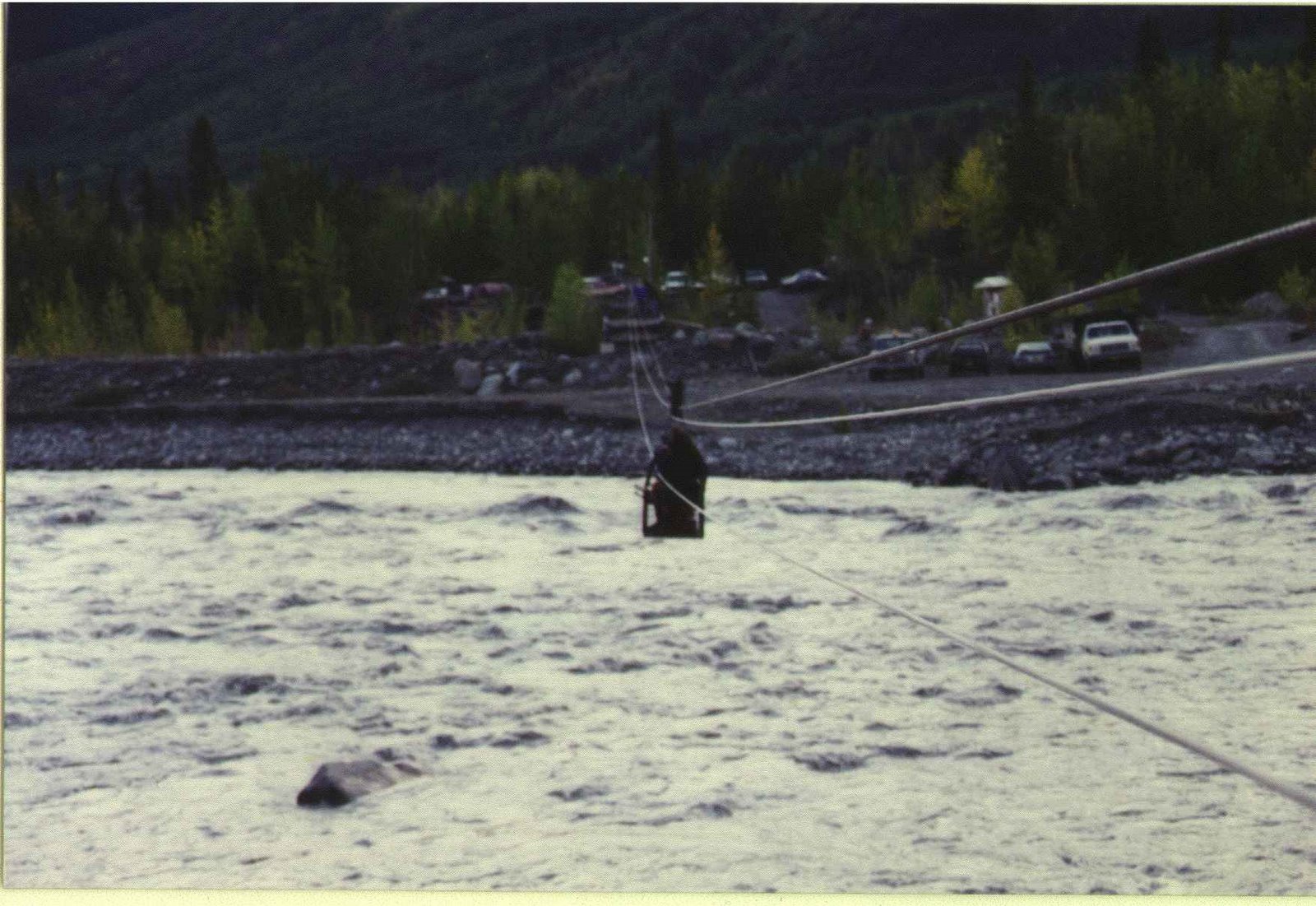
7. I can’t read fiction anymore. I used to love it. And I even wanted to (and I guess still want to) write fiction (I am a co-author on a short story published in Nature -of course, it is not Open Access). But this all changed thanks to Roman Dial, who was a PhD student at Stanford in the Roughgarden lab when I was there. When Roman, who grew up in Alaska, found out we were going on a trip to Alaska, he gave us all sorts of crazy suggestions for things to do. It was only when someone told me Roman was a “crazy” adventurer and friend of John Krakauer’s that I read some of his articles from Outside Magazine. First, this taught me that I did not want to do some of the things he suggested we do in Alaska (like getting dropped off on a glacier by some friends of his in Kennicott then hiking down to a river where some other friends would pick us up and go rafting. The hike he said was a few days. When I looked at the map I realized it might take us a month.) But the other thing that Roman did to me was get me reading non fiction outdoor stories. Then when Into thin Air came out, I was hooked (although Krakauer’s book Into the Wild is even better). And I have barely been able to read any fiction since. I have however read just 100s of mountaineering, sailing, exploration, travel and other non fiction stories. But other than a wayward Pynchon novel here and there, no fiction reaches out to me.

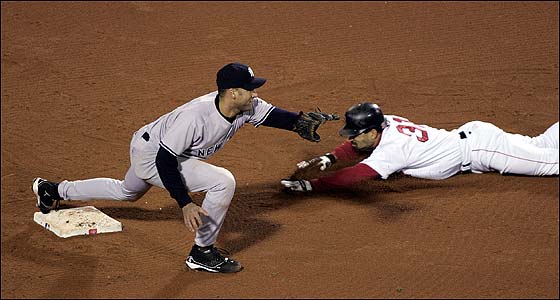
8. I am a RedSox fan. A real one. Not one of these “Ooh, they finally won the Series and now I am going to wear an Ortiz shirt or a hat with a B on it.” But one who still feels sick to my stomach when the ’86 Series is discussed. And who wants to die when the Boone home run off Wakefield is shown on TV. I was born in Boston and though we moved when I was little, my mom helped make me and my brother into Sox fans. But this pain now comes with joy – finally. I told my friends and family when the Sox were down 3-0 to the Yankees in the ALCS in 2004 that this was the perfect set up for the biggest humiliation ever of the Yankees. And oh what a humiliation it was. I even keep the text messages my brother and I sent back and forth during games just as a reminder. And I had put up a RedSox shrine in my office at TIGR during the playoffs that year so now, being a true Sox fan and thus being superstitious about everything, the shrine is in my new office in Davis. That’s me. Keeper of the flame.

And sorry to say, but I have accepted phase one of this tagging but am not keen on phase two (tagging eight people). So after consultation with my lawyer, I have decided that the rules are open to interpretation a bit.

And therefore I tag

1. John Logsdon
2. John Logsdon
3. John Logsdon
4. John Logsdon
5. John Logsdon
6. John Logsdon
7. John Logsdon
8. John Logsdon

Fishing for biofuels

Well, it sounds a bit crazy but amazingly it turns out to be true. I originally overheard this at a recent conference on biofuels where some venture capitalists hosted a lunch to discuss new possible sources of biofuel production. And a representative of a major international fishing company said they had been approached by a small Pacific Island nation promoting the following idea. The plan is to harvest ALL biomass in their territorial waters surrounding the island and to turn this biomass into fuel. The way they see it, fish, seaweed, algae, and other organisms contain vast reservoirs of material that if processes efficiently could become a significant new source for ethanol production. The questions they were asking related to how much it would cost to simply design giant nets that could collect everything in the water. Apparently, they were even interested in what it would take to collect algae and other microbes.

The way they see it, biofuel production may be more financially rewarding than selling fish and if they could make use of all the other stuff in the water, they might have enough biomass to produce vast amounts of fuel.

I personally love this idea. People are struggling to squeeze the last little bit out of the light that hits the surface of the land on the planet in terms of balancing food and fuel production. So why not simply collect biomass directly from the oceans and turn this into raw material for biofuels? The key question is – how much material could one get? It turns out, quite a bit. It is estimated that the microbial content of ocean surface water is enormous (in particular if one includes the viruses). All one would need is a way of filtering these organisms out of the water (or maybe precipitating them) to supplement the biomass found in the seaweed and larval invertebrates and other organisms. And much of this material will be much easier to process than plant biomass since one will not have the problem of converting lignin and cellulose into usable carbon compounds.

So I believe the time is ripe for an ocean biomass conversion program to be begun to supplement that biofuel production on land. Seems to me like BP and Chevron and the oil companies should be looking into this since they already know a great deal about harvesting material in a marine environment.

NOTE – this is the first posting in a new biofool initiative here at the Tree of Life. Though I support some aspects of the biofuel movement, other parts I think need some reworking. Stay tuned for more brilliant commentary on the issue.

News Story titles you don’t want to see – Va. May Increase Freshwater Fecal Bacteria Limit

Just a quick one here … talk about story lines you really do not want to hear or see. What I really want is more fecal bacteria in my lakes and rivers.

Genome Transplantation – Coming to a Bacteria Bacterium Near You

Well, I was interviewed yesterday by the AP (see the AP article here) relating to an article in Science on Genome Transplantation by John Glass, Craig Venter, and crew and the Venter Institute. Their article is coming out in tomorrow’s Science. Though this was not published in an Open Access journal, I think this one is definitely worth talking about and looking at.

Here is what they did, in a nutshell. Took one mycosplasma species (mycoplasma are bacteria that do not have cell walls and have very small genomes) and very carefully removed its chromosome. They then mixed this with a recipient mycoplasma that had some detectable genetic differences. And they then selected for cells that had a antibiotic resistance function found only in the “donor” genome. And they got some growth. And surprisingly, many of the cells that grew up appear to have COMPLETELY replaced the endogenous genome with the donor genome. Thus they use the term genome transplantation.

It seems like a pretty solid paper, although I still am not 100% convinced that these are not some relics of the original donor cells that simply made it through the genome extraction processes intact (this is very unlikely given their controls but still possible). Assuming that they really have genome transplantation, it is a pretty cool result.

Why? Well, it means that at least in some sense, they can use this as a tool in synthetic genomics. One of the big limitations of synthetic biology right now is how one would make a genome in vitro of a bacteria and then get this genome to “boot up” into a cell. For viruses, they can make genomes in the test tube and get the virus to be created because viruses are cellular parasites and all they have to do is get the DNA for the virus to be packaged in the right way into a cell or viral capsid. But for a bacteria, things are much different. The challenge has been how to get a recipient cell to boot up a new genome and delete its own or at least silence its own. And without going into all the gory details, this has proven challenging.

So – now genome transplantation. On the one hand, it can serve as a way to boot up a new genome. However, it probably has limited potential in many ways since to get the new genome to effectively replace the old one, it has to not only be replicated, but the machinery of the cell present in the recipient has to work well enough on all the key components of the donor genome to get the booting up to work. For example, all the promoters in the donor genome must be transcribed efficiently by the recipients machinery, at least for the RNA and protein synthesis machinery genes, so that the donor stuff can get made. And of course the replication origin and other replication features must all work as well. What this means is that I think genome transplantation will only work if the donor and recipient are very similar to each other for most of the housekeeping genes and functions. So this is not yet ready to work for all of synthetic biology. But it still seems pretty cool.

Evolution is … WTF?

OK

I know I am a little dim (well, maybe a lot). And maybe something was lost in the translation of putting this on the web. But WTF? Can someone explain to me what the point of the NY Times “story” entitled “Evolution is” with a bunch of quotes?

And again, WTF? Why did they pick these quotes?

Like this one by Gould

“It touches all our lives; for how can we be indifferent to the great questions of genealogy: where did we come from and what does it all mean? and then, of course, there are all those organisms: more than a million described species, from bacterium to blue whale, with one hell of a lot of beetles in between – each with its own beauty, and each with a story to tell.” – Stephen Jay Gould

and this one by Maynard Smith

“As an evolutionary biologist, I have learned over the years that most people do not want to see themselves as lumbering robots programmed to ensure the survival of their genes.” – John Maynard Smith

Anyone out there have the inside scoop on this?

Southwest Airlines Supports Evolution

Congrats to Southwest Airlines. On a recent flight coming back to Davis from San Diego I saw a nice 1 pager in their Spirit Magazine promoting the Darwin exhibit currently on display at the Field Museum in Chicago. Many places shy away from saying anything about evolution for fear of antagonizing ID supporters. In fact, I cannot recall ever seeing anything on evolution in anyother airline magazine. Kudos to Southwest. Another reason to fly them. For those airlines that shy away from topics like evolution in their magazines, do they also shy away from physics and math in their engineering departments?

Overselling genomics awards

Genomics is great. It really is. But is has also been absurdly oversold by many, starting with those who implied sequencing the human genome would cure all diseases. So I have decided to start a new line of this blog – the “Overselling genomics awards”

My first award goes to the Stuart Truelson for a Commentary for the California Farm Bureau Federation. The essay has some OK points about genomics but is a bit overzealous about the benefits that come from genomics. The essay ends with:

The genomics age is here, whether some like it or not. And, any effort to impede potential benefits that genomics offers humankind–from more and better food to breakthroughs in health and life-saving medicine–should raise moral and ethical questions that are even more serious than those surrounding the science itself.

Sounds a bit like those who say “Any discussion of the war makes you unpatriotic.” And thus Mr. Truelson gets my first award, not just for overselling genomics, but for being so icky about it.

Scrap food to energy – here we come

Well, congrats to Martin Wu, who is a Project Scientist at Davis in my group for getting his pet project approved as a new Community Sequencing Proposal through the Joint Genome Institute. In this project (see the MIT technology review article here)Martin and Ruihong Zhang a Prof. at Davis are going to do some sequencing of microbes that like in Dr. Zhang’s biogas reactors.

From the MIT article:

“Sequencing these organisms will give us a better idea of who the players are so we can better control the conditions or improve the design to further improve conversion of waste into biogas,” says Ruihong Zhang, the UC Davis bioengineer who developed the system.

and

“We want to compare what kind of microbes are there at different conditions and try to figure out why one [set of conditions] works better than the other,” says Martin Wu, a geneticist at UC Davis who will lead the genomics part of the project.

and

In nature, the microbes that carry out degradation of organic waste and generation of methane exist in a very complex anaerobic community, and individual isolates from the community are hard to grow,” says Jim Bristow, head of the community sequencing program at the Department of Energy’s Joint Genome Institute, in Walnut Creek, CA

Martin has been interested in this area for ages, since his family used to use a biogas reactor on their farm in China. I find this much more sensible than the plans to specifically grow plants to produce biofuels since these reactors simply make use of current solid waste.

Some other interesting stories and links about biogas:

Big biogas Africa project
Biogas project in India wins award
Google blog search on biogas
Google news search on biogas

Books on Biofuels