Eisen Lab Blog

The evil Pecoses

Friends who went to Pyle Junior High may appreciate this story more than other people. A few years ago I told my kids a story about throwing up on the Vice Principal of Pyle – Mr Pecos. They got me to tell this story over and over and then one day a new kind creature appeared in their play stories – the evil “Pecoses”. And now Pecoses are everywhere. Here are some pics and a video of some Pecoses

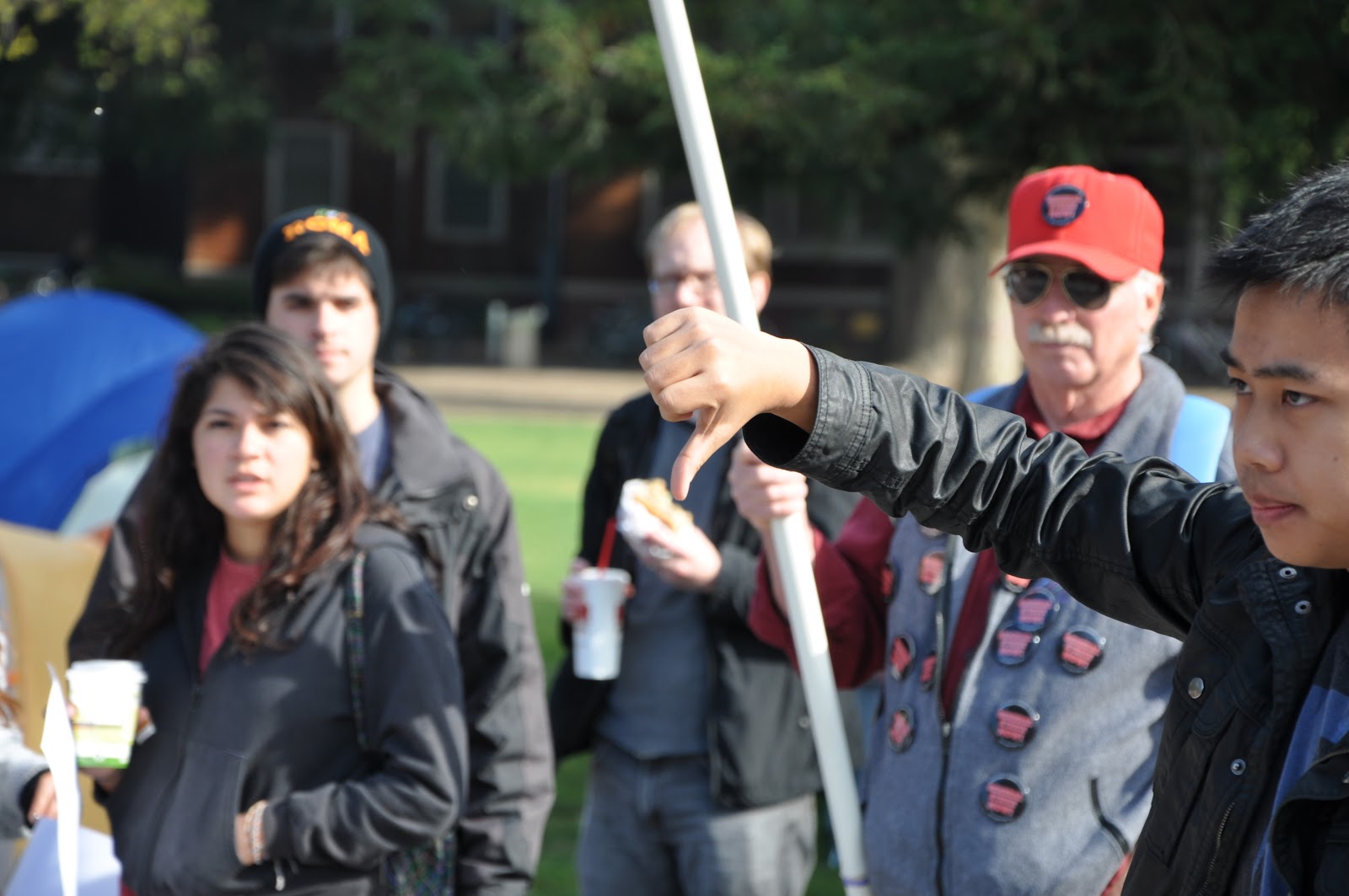
Well #occupyevolution Eisen lab meeting in UCDavis quad has begun #occupyucdavis

Well #occupyevolution Eisen lab meeting in UCDavis quad has begun #occupyucdavis

Charles Vest Seminar "The 21st century university: Purpose, problems & promise" wrap up

Here is a wrap up, via my twitter posts and responses to them, of the seminar yesterday by Charles M. Vest, ex head of MIT and current head of the National Academy of Engineering. I know it is a bit lazy not to rewrite a summary but I think the tweets do an OK job …

UPDATE – some new links regarding the talk

Here are my tweets:

phylogenomics
Awaiting seminar by CHarles Vest, Pres. of US Natl. Acad. Engineering, past pres. of MIT #UCDavis
11/30/11 4:07 PM

phylogenomics
Vest seminar “The 21st Century Research University Purpose, Problems and Promise” #UCDavis
11/30/11 4:08 PM
phylogenomics
Charles Vest http://t.co/NlxrgeeE says Linda Katehi is an admired educational leader throughout the country #UCDavis
11/30/11 4:10 PM
phylogenomics
Charles Vest: two main challenges for universities now are globalization and access (i.e., access to education)
11/30/11 4:13 PM
phylogenomics
Charles Vest: currently trend to “brain interaction” across the globe, but need to work on how to connect people & computers better
11/30/11 4:14 PM
phylogenomics
Vest: FoldIt tool is evidence for “collective intelligence” – the researchers involved weren’t just integrating computers but brains
11/30/11 4:15 PM
phylogenomics
Vest discussing book A New Culture of Learning by Douglas Thomas and John Seely Brown “www.newcultureoflearning.com/”
11/30/11 4:16 PM
phylogenomics
Vest says location of universities still matter for many reasons incl. people need to be together and universities are embedded in cultures
11/30/11 4:17 PM
phylogenomics
Vest: purpose of research universities is “to create opportunity” (1) for graduates, (2) for business/industry (3) nations/regions
11/30/11 4:19 PM
phylogenomics
Vest: though research universities have many purposes, must be patient b/c hard to predict when benefits will occur
11/30/11 4:20 PM
phylogenomics
Vest: MIT and Stanford work very well b/c research is side by side w/ applications
11/30/11 4:21 PM
phylogenomics
Vest: few people understand that research universities are central to innovation (e.g., computing, laser, internet, gennomics)
11/30/11 4:22 PM
phylogenomics
Note – I might disagree with Vest’s claim that Universities drove genomic innovation
11/30/11 4:23 PM
phylogenomics
Vest: virtually every job in America depends on one or more university based innovations
11/30/11 4:23 PM
phylogenomics
Vest six lessons including (1) teaching and research must be intimately intertwined and are inseparable
11/30/11 4:24 PM
phylogenomics
Vest lesson 2: quality of research university is determined by quality of its faculty
11/30/11 4:25 PM

oldivory
@phylogenomics I’ve quit telling kids to interview the faculty when applying to colleges. Parents don’t get it either. Ah, well.
11/30/11 4:29 PM

phylogenomics
@oldivory good idea …
11/30/11 4:30 PM
phylogenomics
Vest: need in particular young faculty to grow up through rising w/in university
11/30/11 4:26 PM
phylogenomics
Vest lesson 3: science can flourish only in an open environment #herehere
11/30/11 4:26 PM
phylogenomics
Vest lesson 4: young faculty must be free to study and teach what they believe is important (e.g., should not be assistants to Sr. faculty)
11/30/11 4:27 PM

KSBruno9
@phylogenomics so not the European model.
11/30/11 5:11 PM
phylogenomics
Vest lesson 5: competition engenders excellence in universities (drives improvement in research, teaching, ideas, facilities, etc)
11/30/11 4:28 PM

rmtakata
@phylogenomics @carloshotta Mild competition. Wild competition could lead to cheating, forgery, distrust, sabotage…
11/30/11 4:32 PM

phylogenomics
@rmtakata @carloshotta he did not say it was perfect, just that it can be useful
11/30/11 4:34 PM
phylogenomics
Vest Lesson 6: fundamental scholarship and research must be equal w/ applied research and innovation
11/30/11 4:29 PM
phylogenomics
Vest: there is a danger in focus on applied issues that we ignore search for truth – must not be too utilitarian
11/30/11 4:30 PM

phylogenomics
Vest says “never in his lifetime has it been so hard to hang onto his optimism” b/c Washington is broken
11/30/11 4:32 PM

tjsharpton
As a young researcher, this concerns me RT @phylogenomics Vest says “never in his lifetime has it been so har… (cont) http://t.co/eZwvMurX
11/30/11 5:23 PM
phylogenomics
Vest: v. concerned w/ financial pressures on universities especially as it affects access & this started even before recent financial issues
11/30/11 4:33 PM
phylogenomics
Vest: in the last decade real per student state appropriations have dropped >20% while costs have risen
11/30/11 4:35 PM
phylogenomics
Vest: response to financial issues will be cut back on low demand classes, fewer low/middle $$ students, decr. in merit based aid & all bad
11/30/11 4:36 PM
phylogenomics
Vest: the favorite solution to State university financial problems is to seek out of state students; this spirals out of control
11/30/11 4:37 PM
phylogenomics
Vest: cites U. Michigan slogan from 19th century “an uncommon education for the common man”
11/30/11 4:37 PM

jim_croft
nice… but also woman? RT @phylogenomics: Vest: cites U. Michigan slogan from 19th century “an uncommon education for the common man”
11/30/11 4:43 PM

phylogenomics
@jim_croft I was not endorsing – just reporting
11/30/11 4:44 PM

jim_croft
@phylogenomics of course – the sentiment is perfect, the wording is excellent, for its time, just a little dated in some circles today.
11/30/11 4:49 PM
phylogenomics
Vest references Vannevar Bush’s vision “Science The Endless Frontier” for research & for access http://t.co/9n1Q0LAF
11/30/11 4:39 PM
phylogenomics
Vest references Vannevar Bush Quote on education access http://t.co/LmE1bTF7
11/30/11 4:42 PM
phylogenomics
Vest: we must be good citizens of the world and contribute to and learn from increasing globalization of education
11/30/11 4:43 PM
phylogenomics
Vest: all regions of the world are more/more linked/integrated w/ shared environment, challenges, resources, knowledge, humanity
11/30/11 4:45 PM
phylogenomics
Vest: modern research universities concept was developed from Humboldt University in Germany in 1800s -> JHU in US -> others in US -> global
11/30/11 4:46 PM
phylogenomics
Vest says he has a hard time contemplating scale of educational expansion in China and India
11/30/11 4:46 PM
phylogenomics
Vest: the Yin and Yang of Universities are Competition and Collaboration
11/30/11 4:47 PM
phylogenomics
Vest: people everywhere need opportunity from universities and thus MIT developed “Open Courseware” for anyone to use anywhere/anytime
11/30/11 4:48 PM

phylogenomics
Vest: Open Courseware movement has spread globally – and it (and related initiatives) are a revolution
11/30/11 4:49 PM

mikedelic
@phylogenomics I’ve taken free courses from Stanford and MIT that imwoudlnt have been able to back in the day. Love open source education
11/30/11 5:07 PM

mikedelic
@phylogenomics my favorite was Robert sapolsky’s behavioral biology course from Stanford
11/30/11 5:08 PM
phylogenomics
Vest: openness is the true spirit of education, democratization and empowerment
11/30/11 4:49 PM
phylogenomics
Vest refs: “Unlocking the Gates” and “Abelard to Apple” – books about open education
11/30/11 4:50 PM
phylogenomics
Vest: in 21st century we are observing the early emergence of a “Meta University” via open materials and platforms
11/30/11 4:51 PM
phylogenomics
Vest: must rekindle spirit of research university as provider of opportunity while also promoting openness
11/30/11 4:52 PM
phylogenomics
Here is more form Charles Vest on the “meta university” http://t.co/tJ0fNSqo
11/30/11 4:53 PM
phylogenomics
Vest: analog of Tip ONeil’s “all politics is local” need outreach to get people locally to understand importance of research universities
11/30/11 5:03 PM
phylogenomics
Questioner asks Vest how to best export notion of democracy/ access
11/30/11 5:09 PM
phylogenomics
Vest in response to question expresses dismay at how anyone could support the “Dream Act” http://t.co/FpwekBzu
11/30/11 5:09 PM


(NOTE – I GOT THIS WRONG SOMEHOW – HE CLEARLY SEEMS LIKE THE TYPE WHO WOULD SUPPORT THE ACT). SEE OTHER POSTS …)

lukedones
@phylogenomics Dismay that anyone would *support* the DREAM Act? Why?
11/30/11 5:12 PM

phylogenomics
@lukedones do you mean why would anyone be dismayed that some support the act?
11/30/11 5:15 PM

lukedones
@phylogenomics Yes. Just wondering whether he gave a reason.
11/30/11 5:21 PM

phylogenomics
@lukedones not that I remember
11/30/11 5:21 PM

phylogenomics
@lukedones sorry – in looking at the Dream Act I am wondering if he misspoke and meant he supported it … no longer sure what he said
11/30/11 6:24 PM

VoteBothell
@phylogenomics why no support for Dream Act?
11/30/11 7:01 PM


phylogenomics
Sorry all; MAJOR error tweeting Charles Vest talk; I wrote he was against Dream Act; I think he/I got that backwards & must be for it
11/30/11 7:19 PM

phylogenomics
@VoteBothell sorry – I think he must be for it – so either he or I got it backwards
11/30/11 7:20 PM

VoteBothell
@phylogenomics Great, got it. Enjoy your tweets. I’ve been following you since the pepper spray. My support and thoughts are with UC Davis.
11/30/11 7:22 PM
lukedones
@phylogenomics Thanks – I expected an academic would be for the Dream Act.
11/30/11 7:26 PM
phylogenomics
Vest: we need more experimentation with how research is funded to try to find other ways
11/30/11 5:21 PM
phylogenomics
Vest: should keep systems at basic science agencies but should try new approaches like ARPA-E
11/30/11 5:22 PM
phylogenomics
Vest views Open Courseware as a new form of publication not really as “classes” per se, b/c not interactive
11/30/11 5:25 PM

California Aggie (#UCDavis student newspaper) also doing great job w/ #OccupyUCDavis Coverage

The California Aggie, the UC Davis student newspaper is also doing a great job with covering the Occupy UC Davis saga.  Here are some links of interest:

Davis Enterprise really doing a rocking job covering #OccupyuUCDavis Story

The Davis Enterprise has really come through in the clutch with diverse coverage of the pepper spraying incident as well as diverse, interesting and sometimes unusual letters and comments.  Here are some links from them of interest:

News Stories


Some other articles:


Letters


My brothers dream come true: baseball meets bioinformatics

James Fraser & Michael Eisen: Baseball Meets Biology

Letter of support for #UCDavis Chancellor cosigned by ~ 250 faculty #OccupyUCDavis

There was a letter published in the Davis Enterprise (Letter to the Editor – The Davis Enterprise) co-signed by many UC Davis Faculty. I have been sent the letter by Walter Leal, one of the coordinators of the distribution and signing, and he also sent the latest list of faculty signers (which has expanded greatly since the Enterprise letter was published). I am posting the letter and the latest list here. Note – I am also (slowly) adding links to web pages for the faculty so that people can find out more about who they are.

We, the undersigned UC Davis faculty, support the free exchange of ideas on campus and students’ right to peaceful protests. We are appalled by the events of Friday, Nov. 18 in the Quad, but heartened by the Chancellor’s apology and her commitment to listen to and work on the students’ concerns. We strongly believe that Linda Katehi is well-qualified to lead our university through this difficult healing process and oppose the premature calls for her resignation; this is not in the best interest of our university.

  1. Walter S. Leal, Professor, Entomology
  2. Nina Amenta, Professor, Computer Science
  3. Francisco J. Samaniego, Distinguished Professor, Statistics
  4. Ricardo H. R. Castro, Assistant Professor, Chemical Engineering & Material Science
  5. Kevin Johnson, Professor and Dean, Law School (signing in his individual capacity)
  6. Eduardo Blumwald, Professor, Plant Sciences
  7. Miguel A. Mendez, Professor, Law School
  8. Maureen Stanton, Professor, Evolution and Ecology
  9. Miguel A. Marino, Distinguished Professor Emeritus, Hydrologic Sciences, Civil & Environmental Engineering, and Biological & Agricultural Engineering
  10. Adela De La Torre, Professor, Chicano/a Studies
  11. James B. Ames, Professor, Chemistry
  12. John E. Bolander, Professor, Civil & Environmental Engineering
  13. Charles L. Judson, Emeritus Professor, Entomology
  14. Joaquim Silvestre, Professor, Economics
  15. Satya Dandekar, Professor and Chair, Medical Microbiology and Immunology
  16. James R. Carey, Professor of Entomology and Director, Biodemographic Determinants of Lifespan
  17. Emanuel Maverakis, Assistant Professor, Dermatology
  18. Abhaya M. Dandekar, Professor, Plant Sciences
  19. Renee Tsolis, Associate Professor, Medical Microbiology and Immunology
  20. R Holland Cheng, Professor, Molecular & Cellular Biology
  21. Robert H. Rice, Professor, Environmental Toxicology
  22. Susan Rivera, Professor, Psychology
  23. Andre Knoesen, Professor, Electrical and Computer Engineering
  24. Lorena Garcia, Assistant Professor, Public Health Science
  25. Angela Gelli, Associate Professor, Pharmacology
  26. Susan E. Ebeler, Professor, Viticulture & Enology
  27. George Bruening, Professor Emeritus, Plant Pathology; Member, National Academy of Sciences
  28. Anh-Vu Pham, Professor, Electrical and Computer Engineering
  29. Xiaoguang Liu, Assistant Professor, Electrical and Computer EngineeringM. Saif Islam, Professor, Electrical & Computer Engineering
  30. S. Geoffrey Schladow, Professor, Civil and Environmental Engineering
  31. Venkatesh Akella, Professor, Electrical & Computer Engineering
  32. Judith S Stern, Distinguished Professor, Nutrition and Internal Medicine; Member, Institute of Medicine
  33. Fu-Tong Liu, Distinguished Professor and Chair, Dermatology
  34. Neville Luhmann Jr., Distinguished Professor, Electrical and Computer Engineering
  35. William J. Murphy, Professor and Vice Chair of Research, Dermatology and Internal Medicine
  36. Susan Kauzlarich, Professor, Chemistry, Recipient of the Presidential Award for Excellence in Science, Mathematics, and Engineering Mentoring
  37. Alan Hastings, Distinguished Professor, Environmental Science and Policy; Member, Academy of Arts and Sciences
  38. Richard Michelmore, Professor and Director, The Genome Center
  39. Sebastian Schreiber, Professor, Evolution and Ecology
  40. John S. Werner, Distinguished Professor, Ophthalmology & Vision Science; Neurobiology, Physiology & Behavior
  41. Terence M. Murphy, Professor Emeritus, Plant Biology
  42. Judy Callis, Professor, Molecular and Cellular Biology
  43. Frank McNally, Professor, Molecular and Cellular Biology
  44. Susan L. Keen, Senior Lecturer SOE, Evolution and Ecology
  45. Kimberley McAllister, Professor, Center for Neuroscience, Neurology, and NPB
  46. Joseph F. Antognini, Clinical Professor, Anesthesiology and Pain Medicine
  47. Charles A. Fuller, Professor, Neurobiology, Physiology & Behavior
  48. W. Martin Usrey, Professor, Center for Neuroscience, Neurobiology, Physiology & Behavior, and Neurology
  49. Kyriacos A. Athanasiou, Distinguished Professor & Chair, Biomedical Engineering and Orthopaedic Surgery
  50. Sue C. Bodine, Professor, Neurobiology, Physiology and Behavior
  51. David M. Rocke, Distinguished Professor, Public Health Sciences and Biomedical Engineering
  52. Scott I. Simon Professor and Vice Chair, Biomedical Engineering
  53. Leah Krubitzer Professor and MacArthur Fellow, Psychology
  54. Yong Duan, Professor. UC Davis Genome Center and Biomedical Engineering
  55. Emanuel Epstein, Research Professor, Land, Air and Water Resources; Member, National Academy of Sciences
  56. Subhash H. Risbud, Distinguished Professor, Materials Science
  57. David P. Fyhrie, Professor, David Linn Endowed Chair, Biomedical Engineering
  58. Thomas R. Gordon, Professor and Chair, Plant Pathology
  59. Pam Ronald, Professor, Plant Pathology and Genome Center
  60. Douglas Cook, Professor, Plant Pathology
  61. Charles W. Bamforth, Professor, Food Science and Technology
  62. Michael R. Hill, Professor and Vice Chair, Mechanical and Aerospace Engineering
  63. Diane M. Beckles, Associate Professor, Plant Sciences
  64. Sashi K. Kunnath, Professor and Chair, Civil and Environmental Engineering
  65. Mary L. Cadenasso, Associate Professor, Plant Sciences
  66. Mary Louise Flint, Extension Entomologist, Entomology
  67. John I. Yoder, Professor, Plant Sciences
  68. Bryce W. Falk, Professor, Plant Pathology
  69. Douglas A. Kelt, Professor, Wildlife, Fish, & Conservation Biology
  70. Benjamin J. McCoy, Professor Emeritus, Chemical Engineering
  71. Bo Lonnerdal, Distinguished Professor, Nutrition & Internal Medicine
  72. J. Bruce German, Professor, Food Science & Technology, Director, Foods for Health Institute
  73. Janet F. Roser, Professor, Animal Science
  74. Robert K. Washino, Emeritus Professor, Entomology
  75. Iannis E. Adamopoulos, Assistant Professor, Internal Medicine
  76. Kathryn Dewey, Distinguished Professor, Nutrition
  77. Tina Jeoh, Assistant Professor, Biological and Agricultural Engineering
  78. Harry H. Cheng, Professor, Mechanical and Aerospace Engineering
  79. Michael Denison, Professor, Environmental Toxicology
  80. Ye Chen-Izu, Assistant Professor, Pharmacology
  81. Trish Berger, Professor, Animal Science
  82. Linda J. Harris, Cooperative Extension Specialist, Food Science and Technology
  83. Stefan Wuertz, Professor, Civil and Environmental Engineering
  84. Rob Y. H. Chai, Professor, Civil and Environmental Engineering
  85. Stephen Kowalczykowski, Distinguished Professor, Microbiology, and of Molecular and Cellular Biology; Member, National Academy of Sciences
  86. James F. Shackelford, Professor, Chemical Engineering and Materials Science
  87. Deb Niemeier, Professor, Civil Engineering
  88. Maria Marco, Assistant Professor, Food Science & Technology
  89. Brian Mulloney, Distinguished Professor, Neurobiology, Physiology, and Behavior
  90. Katherine Ferrara, Professor, Biomedical Engineering
  91. William D. Ristenpart, Assistant Professor, Chemical Engineering & Materials Science
  92. Jean-Jacques Chattot, Professor, Mechanical and Aerospace Engineering
  93. Anita M. Oberbauer, Professor, Animal Science
  94. David Gilchrist, Professor Emeritus, Plant Pathology
  95. Jay R. Lund, Professor, Civil and Environmental Engineering
  96. Carlos E. Puente, Professor, Land Air and Water Resources
  97. David Biale, Distinguished Professor, History
  98. Lynn Kimsey, Professor, Entomology
  99. David Horsley, Associate Professor, Mechanical and Aerospace Engineering
  100. Valerie Williamson, Professor, Entomology and Nematology
  101. Kyaw Tha Paw U, Professor, Atmospheric Science & Land, Air and Water Resources
  102. Matthew J. Wood, Associate Professor, Environmental Toxicology
  103. Eduardo A. Silva, Assistant Professor, Biomedical Engineering
  104. Ning Pan, Professor, Textiles, Biological & Agricultural Engineering
  105. Debra Long, Professor and Chair, Psychology
  106. Robert Emmons, Professor, Psychology
  107. Brian Trainor, Associate Professor, Psychology
  108. Shelley A. Blozis, Associate Professor, Psychology
  109. John P. Capitanio, Research Psychologist, Psychology
  110. Joy Geng, Assistant Professor, Psychology
  111. Valley Stewart, Professor, Microbiology
  112. Ann Huff Stevens, Professor, Economics
  113. Lisa Oakes, Professor, Psychology
  114. Kristin H. Lagattuta, Associate Professor, Psychology
  115. Robert Feenstra, Distinguished Professor, Economics
  116. Gregory Clark, Professor, Economics
  117. George A. Barnett, Professor & Chair, Communication
  118. Fadi A. Fathallah, Professor, Biological and Agricultural Engineering
  119. Jeff Sherman, Professor, Psychology
  120. James E. K. Hildreth, Professor and Dean, College of Biological Sciences (signing in his individual capacity); Member, Institute of Medicine
  121. Sally P. Mendoza, Professor Emeritus of Psychology and Staff Scientist, California National Primate Research Center
  122. Peter H. Lindert, Distinguished Research Professor of Economics
  123. Scott E. Carrell, Associate Professor, Economics
  124. Steven J. Luck, Professor, Psychology, Director, Center for Mind & Brain
  125. Robert A. Bell, Professor, Communication
  126. Dean Keith Simonton, Distinguished Professor, Psychology
  127. Ahmet Palazoglu, Professor & Chair, Chemical Engineering and Materials Science
  128. Stephen Lewis, Professor, Electrical and Computer Engineering
  129. Delmar Larsen, Assistant Professor, Chemistry
  130. Gary N. Cherr, Professor and Interim Director, Bodega Marine Laboratory
  131. Mario Biagioli, Distinguished Professor of Science and Technology Studies & Law Director, Center for Science & Innovation Studies
  132. Michael D. Toney, Professor, Chemistry
  133. Shota Atsumi, Assistant Professor, Chemistry
  134. Kirill Kovnir, Assistant Professor, Chemistry
  135. Thomas W. Schoener, Distinguished Professor, Evolution and Ecology
  136. Simon R. Cherry, Professor, Biomedical Engineering
  137. Alyson Mitchell, Professor, Food Science & Technology
  138. Kent J. Bradford, Professor, Plant Sciences
  139. T. M. DeJong, Professor, Plant Sciences
  140. Carlos H. Crisosto, Specialist, Plant Sciences
  141. Neil E. Schore, Professor and Vice-chair, Chemistry
  142. Louis W. Botsford, Professor, Wildlife, Fish, and Conservation Biology
  143. Robert H. Becker, Professor, Physics
  144. Marylynn Barkley, Emeritus, Neurobiology, Physiology and Behavior
  145. Joseph M. DiTomaso, Cooperative Extension Specialist, Plant Sciences
  146. Bruce C. Kirkpatrick, Professor, Plant Pathology
  147. Jay A. Rosenheim, Professor, Entomology
  148. Hildegarde Heymann, Professor, Viticulture and Enology
  149. Douglas Nelson, Professor, Microbiology
  150. Richard Grotjahn, Atmospheric Science and Climate Dynamics
  151. David Simpson, Professor, English
  152. Frederic Chedin, Associate Professor, Molecular and Cellular Biology
  153. Alan L. Balch. Distinguished Professor, Chemistry
  154. J. Edward Taylor, Professor, Agricultural and Resource Economics
  155. Bruce Hartsough, Professor, Biological and Agricultural Engineering
  156. Jacquelyn Gervay-Hague, Professor and Chair, Chemistry
  157. Nael H. El-Farra, Associate Professor, Chemical Engineering & Materials Science
  158. Giovanni Peri, Professor, Economics
  159. Carlton Larson, Professor, School of Law
  160. Athena Soulika, Assistant Professor, Dermatology
  161. Gabriel J. Chin, Professor, Law School
  162. Matt Traxler, Professor, Psychology
  163. Alan Brownstein, Distinguished Professor, Law School
  164. Evelyn Lewis, Professor, Law School
  165. Dennis Ventry, Professor, Law School
  166. Barbara A. Burrall, Health Sciences Clinical Professor, Dermatology
  167. Robert Hillman, Professor, Law School
  168. Lovell (Tu) Jarvis, Professor, Agricultural and Resource Economics
  169. Donna Shestowsky, Professor, Law School
  170. Margaret Johns, Senior Lecturer, Law School
  171. Albert Lin, Professor, Law School
  172. Rex Perschbacher, Professor, Law School
  173. Edward Imwinkelried, Professor, Law School
  174. Marilynn Etzler, Professor, Biochemistry
  175. Andrea Bjorklund, Professor, Law School
  176. Elizabeth Joh, Professor, Law School
  177. Tilahun Yilma, Distinguished Professor of Virology; Member, National Academy of Sciences
  178. Ashutosh Bhagwat, Professor, Law School
  179. Frank Osterloh, Professor, Chemistry
  180. Richard M. Frank, Professor, Law School
  181. Leslie Kurtz, Professor, Law School
  182. Yoko Ono, Assistant Researcher, Dermatology
  183. Jinyi Qi,Professor, Biomedical Engineering
  184. Courtney G. Joslin, Professor, Law School
  185. Isao Fujimoto, Emeritus Senior Lecturer, Community & Regional Development & Asian American Studies
  186. R. Paul Singh, Distinguished Professor, Food Engineering
  187. Wendy Silk, Professor, Land, Air, and Water Resources
  188. Jared T. Shaw, Assistant Professor, Chemistry
  189. Joel C. Dobris, Professor of Law, Emeritus
  190. Madhavi Sunder, Professor, Law School
  191. Donald P. Land, Professor, Chemistry
  192. Anupam Chander, Professor, Law School
  193. Kit S. Lam, Professor and Chair, Biochemistry and Molecular Medicine
  194. Peter B. Moyle, Professor, Wildlife, Fish, and Conservation Biology
  195. John M. Labavitch, Professor, Plant Sciences
  196. Anthony Wexler, Professor, Mechanical and Aerospace Engineering 
  197. Robyn M. Rodriguez, Associate Professor, Asian American Studies
  198. Robert H Smiley, Dean and Professor Emeritus, Graduate School of Management
  199. Daniel L. Simmons, Professor, Law School
  200. Annaliese K. Franz, Assistant Professor, Chemistry
  201. Eric E. Conn, Professor Emeritus, Plant Biochemistry; Member, National Academy of Sciences
  202. Carlito Lebrilla, Distinguished Professor, Chemistry
  203. Clayton Tanaka, Professor, Law School
  204. Lisa Pruitt, Professor, Law School
  205. Sherman Stein, Professor Emeritus, Mathematics
  206. Charles F. Shoemaker, Professor, Food Science & Technology
  207. M. Levent Kavvas, Civil and Environmental Engineering
  208. Patricia A. Conrad, Professor of Parasitology, School of Veterinary Medicine
  209. Yannis F Dafalias, Professor, Civil Engineering
  210. Hsing-Jien Kung, Distinguished Professor, Biochemistry & Molecular Medicine
  211. Jean VanderGheynst, Professor, Biological and Agricultural Engineering
  212. Themis J. Michailides, Plant Pathologist in AES, Department of Plant Pathology
  213. Mary Christopher, Professor, Veterinary Medicine
  214. Harold G. Levine, Professor and Dean, School of Education (signing in his individual capacity)
  215. Dennis Pendleton, Dean UC Davis Extension (signing in his individual capacity)
  216. Rena Zieve, Professor, Physics
  217. Georgia Drakakaki, Assistant Professor, Plant Sciences
  218. Michael W. Maher, Professor, Graduate School of Management
  219. Michael J. Singer, Professor Emeritus, Land, Air and Water Resources
  220. Jeffrey Mount, Professor, Geology
  221. Nicholas Curro, Associate Professor, Physics
  222. David Woodruff, Professor, Graduate School of Management
  223. Howard J. Spero, Chair, Geology
  224. Louise Kellogg, Professor, Geology
  225. Chih-Ling Tsai, Professor, Graduate School of Management
  226. Peter Schiffman, Emeritus Professor, Geology
  227. Howard W. Day, Professor, Geology
  228. Kenneth L. Verosub, Distinguished Professor, Geology
  229. Shannon W. Anderson, Professor, Graduate School of Management
  230. Warren Pickett, Distinguished Professor of Physics
  231. Athanasios Geromichalos, Assistant Professor, Economics
  232. Ryosuke Motani, Professor, Geology
  233. Christine Bruhn, Extension Specialist, Food Science and Technology
  234. Hemant K. Bhargava, Associate Dean, Graduate School of Management
  235. Shirley Chiang, Professor, Physics
  236. Eldridge Moores, Professor Emeritus, Geology
  237. Qing-Zhu Yin, Associate Professor, Geology
  238. Abigail Thompson, Professor, Mathematics
  239. John M. Boone, Professor and Vice Chair (Research) of Radiology; Professor, Biomedical Engineering
  240. Ken Joy, Professor, Computer Science
  241. Michelle Yetman, Associate Professor, Graduate School of Management
  242. Shannon McCormack, Acting Professor, Law School
  243. John W. Poulos, Professor of Law Emeritus, Law School
  244. Hearne Pardee, Chair, Art Studio
  245. Bruce D. Hammock, Distinguished Professor, Entomology; Member, National Academy of Sciences
  246. Margaret Ferguson, Professor, English
  247. Gina Werfel, Professor, Art
  248. Michael D. Lairmore, Dean, School of Veterinary Medicine (signing in his individual capacity)
  249. Damian C. Genetos, Assistant Research Professor, Anatomy, Physiology, and Cell Biology
  250. Greg Kuperberg, Professor, Mathematics
  251. Andrew Waldron, Professor, Mathematics
  252. Alex Mogilner, Professor, Neurobiology, Physiology and Behavior and Mathematics
  253. Anne Schilling, Professor, Mathematics
  254. Joseph A. Biello, Associate Professor, Mathematics
  255. Constantin Genigeorgis, Professor Emeritus, School of Veterinary Medicine
  256. Annabeth Rosen, Professor Art & Art History
  257. Becca Thomases, Assistant Professor, Mathematics
  258. Dennis L Matthews, Director of the Center for Biophotonics and Professor, School of Medicine
  259. Margherita Heyer-Caput, Professor, French & Italian (signing in her individual capacity)
  260. Stephen M. Lane, Adjunct Professor Neurological Surgery
  261. Michael Kapovich, Professor, Mathematics
  262. John R. Roth, Distinguished Professor, Microbiology; Member, National Academy of Sciences
  263. Anthony Tyson, Distinguished Professor, Department of Physics; Member, National Academy of Sciences
  264. Konstantinos Zarbalis, Assistant Professor, Davis Medical Center Department of Pathology
  265. Fumio Matsumura, Distinguished Professor, Environmental Toxicology

Journal club today on bacteria in toilets – posting some notes here

I am heading a journal club discussion today of the following paper: PLoS ONE: Microbial Biogeography of Public Restroom Surfaces
I am going to use this page/post to put up some notes for the discussion.  Fortunately I have a good guide in this – Rob Dunn wrote a nice commentary/review for Scientific American blogs: Public bathrooms house thousands of kinds of bacteria
Stay tuned/come back to this page as I will be posting some more notes. Any suggestions for other things to look at/discuss would be welcome.

Notes (I note – I am copying much of the text from the paper not rewriting it.)
What was sampled?

Ten surfaces (door handles into and out of the restroom, handles into and out of a restroom stall, faucet handles, soap dispenser, toilet seat, toilet flush handle, floor around the toilet and floor around the sink) in six male and six female restrooms evenly distributed across two buildings on the University of Colorado at Boulder campus were sampled on a single day in November 2010. 

How did they collect samples?

Surfaces where sampled using sterile, cotton-tipped swabs as described previously [14], [15]. As the 12 restrooms were nearly identical in design, we were able to swab the same area at each location between restrooms. In order to characterize tap water communities as a potential source of bacteria, 1 L of faucet water from six of the restrooms (each building having the same water source for each restroom sampled) was collected and filtered through 0.2 µm bottle top filters (Nalgene, Rochester, NY, USA). 

How did they get DNA?

Genomic DNA was extracted from the swabs and filters using the MO BIO PowerSoil DNA isolation kit following the manufacturer’s protocol with the modifications of Fierer et al. [14]. 

How did they get sequence data?

A portion of the 16 S rRNA gene spanning the V1–V2 regions was amplified using the primer set (27 F/338R), PCR mixture conditions and thermal cycling conditions described in Fierer et al. [15]. PCR amplicons of triplicate reactions for each sample were pooled at approximately equal amounts and pyrosequenced at 454 Life Sciences (Branford, CT, USA) on their GS Junior system. A total of 337,333 high-quality partial 16 S rRNA gene sequences were obtained from 101 of the 120 surface samples collected, averaging approximately 3,340 sequences per sample (ranging from 513–6,771) (Table S1) in 4 GS Junior runs, with the best run containing 116,004 high-quality reads. An additional 16,416 sequences (ranging from 2161–5084 per sample) were generated for five of the six water samples collected for source tracking analysis. Each sample was amplified with a unique barcode to enable multiplexing in the GS Junior runs. The barcoded sequencing reads can be separated by data analysis software providing high confidence in assigning sequencing read to each sample. Sequence data generated as part of this study is available upon request by contacting the corresponding author.

How did they analyze the data?

All sequences generated for this study and previously published data sets used for source tracking (see below) were processed and sorted using the default parameters in QIIME [16]. Briefly, high-quality sequences (>200 bp in length, quality score >25, exact match to barcode and primer, and containing no ambiguous characters) were trimmed to 300 bp and clustered into operational taxonomic units (OTUs) at 97% sequence identity using UCLUST [17]. Representative sequences for each OTU were then aligned using PyNAST [18] against the Greengenes core set [19] and assigned taxonomy with the RDP-classifier [20]. Aligned sequences were used to generate a phylogenetic tree with FastTree [21] for both alpha- (phylogenetic diversity, PD)[22] and beta-diversity (unweighted UniFrac) [23] metrics. The unweighted UniFrac metric, which only accounts for the presence/absence of taxa and not abundance, was used to determine the phylogenetic similarity of the bacterial communities associated with the various restroom surfaces. The UniFrac distance matrix was imported into PRIMER v6 where principal coordinate analysis (PCoA) and analysis of similarity (ANOSIM) were conducted to statistically test the relationship between the various communities [24]. In order to eliminate potential biases introduced by sampling depth, all samples (including those used in source tracking) were rarified to 500 sequences per sample for taxonomic, alpha-diversity (PD), beta-diversity (UniFrac) and source tracking comparisons.

Sourcetracking

To determine the potential sources of bacteria on restroom surfaces and how the importance of different sources varied across the sampled locations, we used the newly developed SourceTracker software package [25]. The SourceTracker model assumes that each surface community is merely a mixture of communities deposited from other known or unknown source environments and, using a Bayesian approach, the model provides an estimate of the proportion of the surface community originating from each of the different sources. When a community contains a mixture of taxa that do not match any of the source environments, that portion of the community is assigned to an “unknown” source. Potential sources we examined included human skin (n = 194), mouth (n = 46), gut (feces) (n = 45) [26] and urine (n = 50), as well as soil (n = 88) [27] and faucet water (n = 5, see above). For skin communities, sequences collected from eight body habitats (palm, index finger, forearm, forehead, nose, hair, labia minora, glans penis) from seven to nine healthy adults on four occasions were used to determine the average community composition of human skin [26]. The mouth (tongue and cheek swabs), gut and urine communities were determined from the same individuals although the urine-associated communities were not published in the initial report of these data [26]. While urine is generally considered to be sterile, it does pick up bacteria associated with the urethra and genitals [28], [29]. The average soil community was determined from a broad diversity of soil types collected across North and South America [27].

—————————————————————
Notes on Sourcetracking

Abstract to paper:

Contamination is a critical issue in high-throughput metagenomic studies, yet progress toward a comprehensive solution has been limited. We present SourceTracker, a Bayesian approach to estimate the proportion of contaminants in a given community that come from possible source environments. We applied SourceTracker to microbial surveys from neonatal intensive care units (NICUs), offices and molecular biology laboratories, and provide a database of known contaminants for future testing.

Some lines from paper

We developed SourceTracker, a Bayesian approach to identifying sources and proportions of contamination in marker-gene and functional metagenomics studies. Our approach models contamination as a mixture of entire source communities into a sink community, where the mixing proportions are unknown.

SourceTracker’s distinguishing features are its direct estimation of source proportions and its Bayesian modeling of uncertainty about known and unknown source environments.

SourceTracker outperformed these methods (NAIVE BAYES AND RANDOM FORESTS) because it allows uncertainty in the source and sink distributions, and because it explicitly models a sink sample as a mixture of sources.

SourceTracker also assumes that an environment cannot be both a source and a sink, and we recommend research into bidirectional models.

Based on our results, simple analytical steps can be suggested for tracking sources and assessing contamination in newly acquired datasets. Although source-tracking estimates are limited by the comprehensiveness of the source environments used for training, large-scale projects such as the Earth Microbiome Project will dramatically expand the availability of such resources. SourceTracker is applicable not only to source tracking and forensic analysis in a wide variety of microbial community surveys (where did this biofilm come from?), but also to shotgun metagenomics and other population-genetics data. We made our implementation of SourceTracker available as an R package (http://sourcetracker.sf.net/), and we advocate automated tests of deposited data to screen samples that may be contaminated before deposition.

Who was there?

A total of 19 phyla were observed across all restroom surfaces with most sequences (≈92%) classified to one of four phyla: Actinobacteria,Bacteroidetes, Firmicutes or Proteobacteria (Figure 1A, Table S2). Previous cultivation-dependent and –independent studies have also frequently identified these as the dominant phyla in a variety of indoor environments [10][13]. Within these dominant phyla, taxa typically associated with human skin (e.g. Propionibacteriaceae,Corynebacteriaceae, Staphylococcaceae and Streptococcaceae) [30]were abundant on all surfaces (Figure 1A). The prevalence of skin bacteria on restroom surfaces is not surprising as most of the surfaces sampled come into direct contact with human skin, and previous studies have shown that skin associated bacteria are generally resilient and can survive on surfaces for extended periods of time [31], [32]. Many other human-associated taxa, including several lineages associated with the gut, mouth and urine, were observed on all surfaces (Figure 1A). Overall, these results demonstrate that, like other indoor environments that have been examined, the microbial communities associated with public restroom surfaces are predominantly composed of human-associated bacteria.

Figure 1. Taxonomic composition of bacterial communities associated with public restroom surfaces.
(A) Average composition of bacterial communities associated with restroom surfaces and potential source environments. (B) Taxonomic differences were observed between some surfaces in male and female restrooms. Only the 19 most abundant taxa are shown. For a more detailed taxonomic breakdown by gender including some of the variation see Supplemental Table S2.
doi:10.1371/journal.pone.0028132.g001


Comparative analysis

Comparisons of the bacterial communities on different restroom surfaces revealed that the communities clustered into three general categories: those communities found on toilet surfaces (the seat and flush handle), those communities on the restroom floor, and those communities found on surfaces routinely touched with hands (door in/out, stall in/out, faucet handles and soap dispenser) (Figure 2, Table 1). By examining the relative abundances of bacterial taxa across all of the restroom samples, we can identify taxa driving the overall community differences between these three general categories. Skin-associated bacteria dominate on those surfaces (the circles in Figure 2) that are routinely and exclusively (we hope) touched by hands and unlikely to come into direct contact with other body parts or fluids (Figure 3A). In contrast, toilet flush handles and seats (the asterisk-shaped symbols in Figure 2) were relatively enriched in Firmicutes (e.g.Clostridiales, Ruminococcaceae, Lachnospiraceae, etc.) andBacteroidetes (e.g. Prevotellaceae and Bacteroidaceae) (Figure 3B). These taxa are generally associated with the human gut [26],[33][35] suggesting fecal contamination of these surfaces. Fecal contamination could occur either via direct contact (with feces or unclean hands) or indirectly as a toilet is flushed and water splashes or is aerosolized [36][38]. From a public health perspective, the high number of gut-associated taxa throughout the restrooms is concerning because enteropathogenic bacteria could be dispersed in the same way as human commensals. Floor surfaces harbored many low abundance taxa (Table S2) and were the most diverse bacterial communities, with an average of 229 OTUs per sample versus most of the other sampled locations having less than 150 OTUs per sample on average (Table S1). The high diversity of floor communities is likely due to the frequency of contact with the bottom of shoes, which would track in a diversity of microorganisms from a variety of sources including soil, which is known to be a highly-diverse microbial habitat [27], [39]. Indeed, bacteria commonly associated with soil (e.g. Rhodobacteraceae, Rhizobiales, Microbacteriaceae and Nocardioidaceae) were, on average, more abundant on floor surfaces (Figure 3C, Table S2). Interestingly, some of the toilet flush handles harbored bacterial communities similar to those found on the floor (Figure 2, Figure 3C), suggesting that some users of these toilets may operate the handle with a foot (a practice well known to germaphobes and those who have had the misfortune of using restrooms that are less than sanitary).


Figure 2. Relationship between bacterial communities associated with ten public restroom surfaces.
Communities were clustered using PCoA of the unweighted UniFrac distance matrix. Each point represents a single sample. Note that the floor (triangles) and toilet (asterisks) surfaces form clusters distinct from surfaces touched with hands.
doi:10.1371/journal.pone.0028132.g002


Table 1. Results of pairwise comparisons for unweighted UniFrac distances of bacterial communities associated with various surfaces of public restrooms on the University of Colorado campus using the ANOSIM test in Primer v6.
doi:10.1371/journal.pone.0028132.t001


Figure 3. Cartoon illustrations of the relative abundance of discriminating taxa on public restroom surfaces.
Light blue indicates low abundance while dark blue indicates high abundance of taxa. (A) Although skin-associated taxa (PropionibacteriaceaeCorynebacteriaceae,Staphylococcaceae and Streptococcaceae) were abundant on all surfaces, they were relatively more abundant on surfaces routinely touched with hands. (B) Gut-associated taxa (ClostridialesClostridiales group XI, Ruminococcaceae,LachnospiraceaePrevotellaceae and Bacteroidaceae) were most abundant on toilet surfaces. (C) Although soil-associated taxa (Rhodobacteraceae, Rhizobiales, Microbacteriaceae and Nocardioidaceae) were in low abundance on all restroom surfaces, they were relatively more abundant on the floor of the restrooms we surveyed. Figure not drawn to scale.
doi:10.1371/journal.pone.0028132.g003

Comparisons 2 (Gender)

While the overall community level comparisons between the communities found on the surfaces in male and female restrooms were not statistically significant (Table S3), there were gender-related differences in the relative abundances of specific taxa on some surfaces (Figure 1B, Table S2). Most notably, Lactobacillaceae were clearly more abundant on certain surfaces within female restrooms than male restrooms (Figure 1B). Some species of this family are the most common, and often most abundant, bacteria found in the vagina of healthy reproductive age women [40], [41] and are relatively less abundant in male urine [28], [29]. Our analysis of female urine samples collected as part of a previous study [26] (Figure 1A), found that Lactobacillaceae were dominant in urine, therefore implying that surfaces in the restrooms where Lactobacillaceae were observed were contaminated with urine. Other studies have demonstrated a similar phenomenon, with vagina-associated bacteria having also been observed in airplane restrooms [11] and a child day care facility [10]. As we found that Lactobacillaceae were most abundant on toilet surfaces and those touched by hands after using the toilet (with the exception of the stall in), they were likely dispersed manually after women used the toilet. Coupling these observations with those of the distribution of gut-associated bacteria indicate that routine use of toilets results in the dispersal of urine- and fecal-associated bacteria throughout the restroom. While these results are not unexpected, they do highlight the importance of hand-hygiene when using public restrooms since these surfaces could also be potential vehicles for the transmission of human pathogens. Unfortunately, previous studies have documented that college students (who are likely the most frequent users of the studied restrooms) are not always the most diligent of hand-washers [42], [43].

Source Tracking


Human sources:

Results of SourceTracker analysis support the taxonomic patterns highlighted above, indicating that human skin was the primary source of bacteria on all public restroom surfaces examined, while the human gut was an important source on or around the toilet, and urine was an important source in women’s restrooms (Figure 4, Table S4). 

Soil not an apparent source:

Contrary to expectations (see above), soil was not identified by the SourceTracker algorithm as being a major source of bacteria on any of the surfaces, including floors (Figure 4). Although the floor samples contained family-level taxa that are common in soil, the SourceTracker algorithm probably underestimates the relative importance of sources, like soils, that contain highly diverse bacterial communities with no dominant OTUs and minimal overlap between those OTUs in the sources and those found in the surface samples. As soils typically have large numbers of OTUs that are rare (i.e. represented by very few sequences) and the OTU overlap between different soil samples is very low [27], it is difficult to identify specific OTUs indicative of a soil source. 

Other potential sources:

The other potential sources we examined, mouth and faucet water, made only minor bacterial contributions to restroom surface communities either because these potential source environments rarely come into contact with restroom surfaces (the mouth – we hope) or they harbor relatively low concentrations of bacteria (faucet water) (Figure 4). While we were able to identify the primary sources for most of the surfaces sampled, many other sources, such as ventilation systems or mops used by the custodial staff, could also be contributing to the restroom surface bacterial communities. More generally, the SourceTracker results demonstrate how direct comparison of bacterial communities from samples of various environment types to those gathered from other settings can be used to determine the relative contribution of that source across samples. Although many of the source-tracking results evident from the restroom surfaces sampled here are somewhat obvious, this may not always be the case in other environments or locations. We could use the same techniques to identify unexpected sources of bacteria from particular environments as was observed recently for outdoor air [44].

Figure 4. Results of SourceTracker analysis showing the average contributions of different sources to the surface-associated bacterial communities in twelve public restrooms.
The “unknown” source is not shown but would bring the total of each sample up to 100%.
doi:10.1371/journal.pone.0028132.g004
Conclusion

While we have known for some time that human-associated bacteria can be readily cultivated from both domestic and public restroom surfaces, little was known about the overall composition of microbial communities associated with public restrooms or the degree to which microbes can be distributed throughout this environment by human activity. The results presented here demonstrate that human-associated bacteria dominate most public restroom surfaces and that distinct patterns of dispersal and community sources can be recognized for microbes associated with these surfaces. Although the methods used here did not provide the degree of phylogenetic resolution to directly identify likely pathogens, the prevalence of gut and skin-associated bacteria throughout the restrooms we surveyed is concerning since enteropathogens or pathogens commonly found on skin (e.g. Staphylococcus aureus) could readily be transmitted between individuals by the touching of restroom surfaces.

Supporting Information Top

Public restroom surfaces sampled and comparison of alpha-diversity metrics for each restroom surface. Note that all alpha-diversity values were determined from 500 randomly selected sequences from each sample.
(DOC)

Average taxonomic composition of bacterial communities associated with female (F) and male (M) public restroom surfaces. Numbers in parentheses indicate the standard error of the mean (SEM). Taxonomy was determined using the RDP-classifier for 500 randomly selected sequences from each sample.
(DOC)

Results of ANOSIM test comparing the bacterial communities associated with male and female restroom surfaces.
(DOC)

Results of SourceTracker analysis showing percentage of microbial community contributions of different source environments to restroom surfaces. Values are the average of ten resamplings with the standard error of the mean reported in parentheses.
(DOC)