5 Things You Probably Didn’t Know About Jonathan Eisen
- He doesn’t know how to play Minecraft
- He mailed grass when he was a little kid
- His new phone is “precious” to him
- He loves Let it Go and Taylor Swift
- He has very ugly pink boots
Just got an email announcement for “Dr. Roizen’s Preventative and Integrative Medicine Conference” in Las Vegas in December 2015.
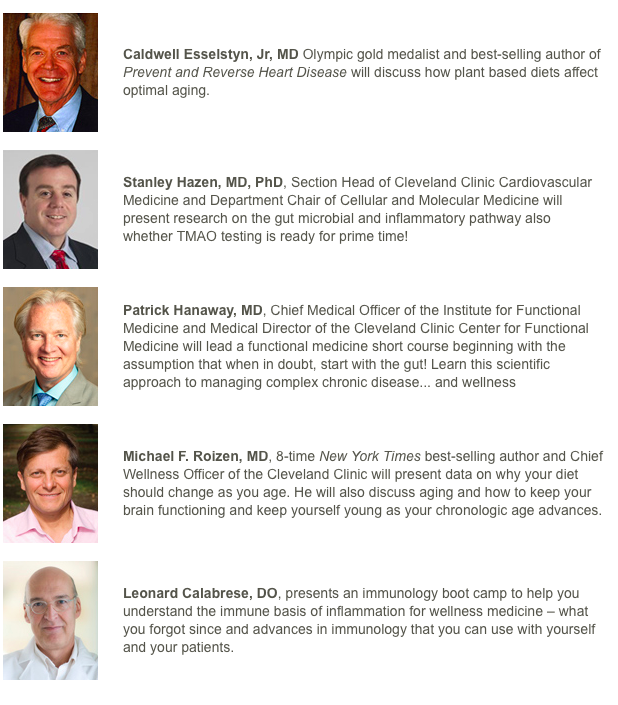
The announcement did not start of well for me with the gender balance of the key speakers
But since I spoke at this meeting in 2013 and since there was a good gender balance at that meeting, I decided to give the benefit of the doubt and keep reading (though I note – not trying to say this 5:0 gender ratio is a good thing).
And this is when it got worse – here are the bullet points for what one should learn from attending this meeting
The Social Life of Medical Data
A one-day workshop on sharing, pooling and appropriating medical information
http://icis.ucdavis.edu/?tribe_events=workshop-the-social-life-of-medical-data
Wednesday, June 10, 10 am to 5 pm
UC Davis campus (location TBA)
Once digitized, medical information – such as data, images, standards, and codes – travels across different spaces and communities. Smartphones produce and transmit data coming from our bodies, which is shared and discussed in social media platforms and then gathered and analyzed in data centers. Medical information intended for professional use can be appropriated, circulated and used to create communities of caring or participate in biomedical research. At the same time new power asymmetries can emerge, as public institutions and private corporations claim control over increasingly valuable health data.
In this one-day workshop we will analyze the trajectories of digitized medical data. We will discuss how patient communities, care providers, social activists, governments and corporations are designing, fostering and managing alternative approaches to healing and increasingly look towards open source, distributed, and participatory research to do this. Data created from bodies has the potential to expand our understanding of health-related research and scholarly communication practices.
In addition, we will explore different ways of including patient communities in participatory design of tools that assist in the management and analysis of health data. We aim to foster a discussion amongst anthropologists, media scholars and biomedical researcher about the emergent forms of sociality and the politics of health and illness in our digital era.
Speakers include:
Nick Anderson, UC Davis
Carlos Andres Barragan, UC Davis
Dav Clark, UC Berkeley
Alessandro Delfanti, UC Davis
Joe Dumit, UC Davis
Allison Fish, UC Davis
Marina Levina, University of Memphis
Hélène Mialet, UC Berkeley
Kim Surkan, MIT
Orkan Telhan, University of Pennsylvania
Detailed program TBA
Lunch will be served. Please RSVP at this link if you plan to attend http://bit.ly/1PxzbQ6
—
UC Davis Innovating Communication in Scholarship
icis.ucdavis.edu
POSTDOCTORAL POSITION BIOINFORMATICS & HUMAN MICROBIOME RESEARCH
The Institute for Genome Sciences at the University of Maryland School of Medicine encompasses an inter-disciplinary, multi-departmental team of collaborative investigators with a broad research program related to the genomics of infectious diseases, human microbial metagenomics, functional genomics, and bioinformatics.
TWO POSTDOCTORAL FELLOW positions are currently opened at the Institute for Genome Sciences for collaborative projects between Drs. Jacques Ravel and Rebecca Brotman. Qualified candidates will be enthusiastic, highly motivated and interested in studying the role of the human microbiome in relation to women’s health. The research in this position will focus on how the vaginal microbiome provides protection from sexually transmitted infections (STIs) and in the development of bacterial vaginosis (BV). Projects will apply computational, statistical and bioinformatics approaches on multi-omics’ datasets such as genome sequences, metabolomics, metagenomics, and metatranscriptomics.
The ideal applicant will possess a demonstrable understanding of bioinformatics and computational biology with a background in molecular biology, microbial ecology, statistics and/or molecular epidemiology. The candidate will have a doctoral degree in Genetics, Biology, Microbiology, Computer Science or a related field. Programming and statistical skills in languages such as Perl, Python, C/C++ and R, though not essential, are a plus.
Postdoctoral fellows at IGS benefit from a community of interactive research labs, bioinformatics experts and a variety of state of the art sequencing, and computational resources in a world-class institute dedicated to genomic, basic, and translational research.
To apply, please send a CV, a statement of research interests (2 pages maximum), and contact information for three references to IGS-jobs.
Additional inquiries about the position can be sent to Drs. Jacques Ravel and Rebecca Brotman
jravel@som.umaryland.edu
rbrotman@som.umaryland.edu
CPB Spring Quarter Seminar Reminder – Tuesday, May 19, 2015 – 4:10pm – 1022 Life Sciences
May 19: Anna O’Brien
Graduate Student, Population Biology Graduate Group, UC Davis
Title: “Environmental gradients and interactions with soil biota shape adaptation in teosinte”
Nice story on KQED from Dan Potter: Women Getting Science Ph.D.s Still Face Gender Barriers
http://blogs.kqed.org/science/files/jw-player-plugin-for-wordpress/player/player.swf
Department of Microbiology & Molecular Genetics Recruitment Seminar
Samuel Diaz-Munoz, Ph.D.
(NYU)
"The Evolution of Viral Social Interactions"
Monday, May 18, 2015
11:15 am*
197 Briggs*
*note time and location
Seminar today
“Insights from a global view of secondary metabolism: Small molecules from the human microbiota”
Michael Fischbach, Ph.D.
Assistant Professor, Department of Bioengineering and Therapeutic Sciences, University of California, San Francisco
Friday, May 15, 2015 12:10 – 1:00 PM
Genome and Biomedical Sciences Facility Auditorium (GBSF 1005)
I don’t even know what to say or do about this it is so stunningly pathetic. I saw this Tweet earlier in the day:
Oxford Global’s Pharmaceutical IT Congress: All 38 speakers male! (it seems)
http://t.co/ctu18mKLAw
@phylogenomics @GenderAvenger #YAMMM
— Elisabeth Bik (@MicrobiomDigest) May 13, 2015
I figured even in an era of blatant sexism in science, this must be a mistake right? How could there be a conference with 38 male speakers and 0 female speakers. So I went to the site: Who is Speaking – Oxford Global’s 13th Pharmaceutical IT Congress, September 2015. And, well, as far as I can tell Elisabeth Bik has the numbers right. (See a list at the end of this post). They even have a running slideshow of the speakers faces.
This is even worse than the 25:1 ratio of the qBio meeting I lost it over a few years ago. I have never seen anything like this. I note – a 38:0 ratio is nearly impossible by chance in any field and I think pretty clearly an indication of massive bias of some kind.
I note – this is not the first case of a mostly male meeting from Oxford Global. See for example:
Oxford Global Sequencing Meetings: Where MEN Tell You About Sequencing #YAMMM
I think it is time to just boycott meetings meetings from Oxford Global. The only way they will change is if people stop speaking at or going to their meetings. So please – stop going to their meetings. Stop speaking at their meetings.