Fired for (not believing in evolution) promising to do sucky science

The Boston Globe reports on a story about a post doc (Nathanial Abraham) from Woods Hole Oceanographic Institution who was fired recently, apparently because he does not believe in evolution. Apparently, even though Abraham was supposed to focus on comparative and evolutionary studies in the lab of Mark E. Hahn, at some point Abraham told Hahn he did not believe in evolution.

This raises the question – that the Globe asks

“Can people work in a scientific field if they don’t believe in its basic tenets?”

I think the answer in this is a bit slippery. If someone does not believe in evolution, but in their work still uses evolutionary analyses and perspective I am not sure what one should do. But Abraham apparently went further and said he would not even discuss evolution in papers on the project. This is reflected in a letter from Hahn quoted in the Globe:

“. . . You have indicated that you do not recognize the concept of biological evolution and you would not agree to include a full discussion of the evolutionary implications and interpretations of our research in any co-authored publications resulting from this work,” Hahn wrote in the letter, which the commission provided to the Globe. “This position is incompatible with the work as proposed to NIH and with my own vision of how it should be carried out and interpreted.”

This then becomes more than “not believing” in evolution outside of work. This is clearly a stance that could jeopardize the quality and integrity of the papers coming out of the project (imagine if I said I was going to write all genome papers from now one based on my belief that DNA is not the material of inheritance but instead that membranes are).

So this looks like a case where the issue is much clearer than in some other cases reported recently. Abraham basically was telling his boss “I vow to do sucky science.” And for this, I think it is perfectly reasonable that he got canned.

PS – Thanks for Iddo Friedberg for pointing this story.

Also – see PZ Myers’ post about this for much more detail.

Sharpshooters, dual symbioses and new ways to sequence a genome

Those interested in symbioses and in new sequencing methods should look at a paper that just came out in PNAS by John McCutcheon and Nancy Moran (OK – I am a bit biased – this work is related to something I did previously with Nancy). Their paper reports a further dissection of a dual symbioses in sharpshooters (a group of insects that feed on xylem sap). The dual symbioses involves two types of bacteria that live inside specialized cells in the gut of these insects.
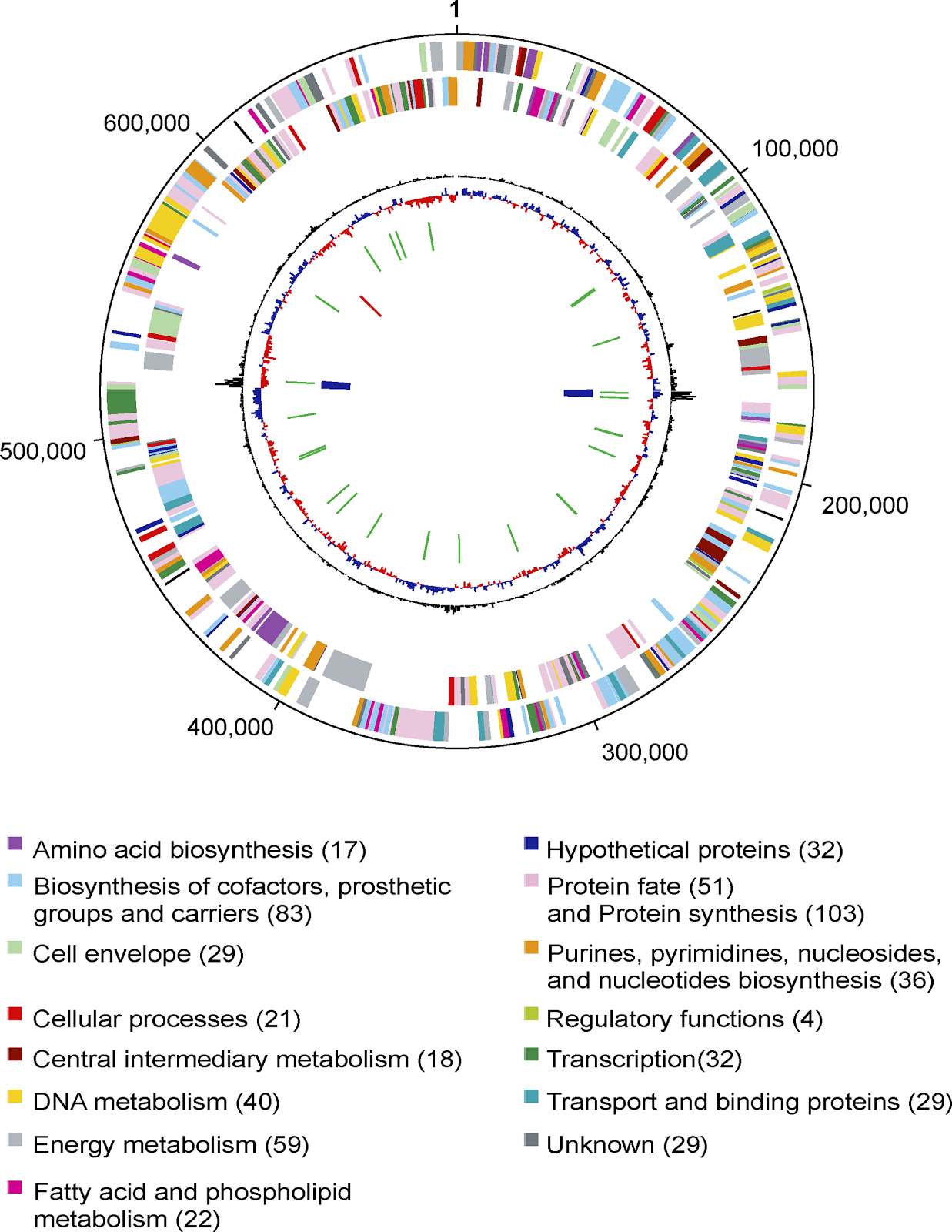
Previously, my group had worked with Nancy to sequence the genome of one of the symbionts (Baumannia) as well as part of the genome of the second one (Sulcia). Nancy was interested in this symbioses for many reasons including that as obligate xylem feeders the sharpshooters almost certainly were not getting gall the nutrients they needed in their diet. Based on what was known about bacterial symbionts in other sap feeding insects (e.g., aphids) it seemed likely that the symbionts of the sharpshooters were making the missing nutrients for their host. However, all previous genomic based studies had been done on phloem feeding insects like aphids. Phloem and xylem are the two main circulatory systems in plants. Phloem tends to be nutrient rich, although still not rich enough for the aphids to live on it alone. Thus the aphids rely on bacterial symbionts to make amino acids missing in the phloem.

Xylem is generally much poorer in nutrients and this Nancy wanted to compare the genomes of the symbionts of xylem feeders with those of phloem feeders. Nancy and others had done preliminary work on the sharpshooters showing that they had multiple symbionts living inside cells in their gut and that one of the symbionts (which she named Baumannia after Paul Baumann who she had worked with previously) was closely related to the Buchnera symbionts found in aphids.

So Nancy approached me when I was at TIGR and asked if I would be interested in helping her sequence the Baumannia genome. I said yes (secretly, truth be told, I would have tried to sequence the genome of a rock if Nancy asked. She is perhaps the smartest person I know in all of science and is always doing the coolest types of research. Plus, I figured, I might also be able to interact with her husband, Howard Ochman, who also does cool stuff).

Of all the possible sharpshooters (the symbionts are found in all sharpshooters), Nancy chose to focus on the glassy winged sharpshooter because it is an important pest organism (it is a vector for Pierce’s disease in grapes).

So – we (well, the core facility at TIGR under my supervision) sequenced the Baumannia genome using DNA that Nancy had isolated from dissections of the gut of glassy winged sharpshooters. In analysis of the genome we (well, again, the royal we — in this case Dongying Wu in my lab did most of the analysis) found, among many things, that Baumannia appeared to be making vitamins and cofactors for the host. But alas, we also found something missing — Baumannia did not appear to be able to make amino acids for the host. Since xylem was likely to be missing amino acids that all animals require in their diet, we had figured that Baumannia must be making them for the host. So we were vexed.

That was, until Nancy pointed out (or reminded us – since she probably had mentioned it before) that there was another symbiont living in the gut of these insects — a symbiont called Sulcia. She suggested that we look at the DNA sequence pieces that did not assemble with the Baumannia genome and look for any that might encode genes similar to genes from the group of bacteria in which Sulcia is found. And, 1.5 years later, after much informatics and lab work, we obtained about 130 kb of the genome of this second symbiont and found that it encoded at least some of the essential amino acid synthesis pathways that could make the needed amino acids for the host. And we stopped there, published a paper in PLoS Biology proposing the existence of a dual symbiosis with one symbiont making vitamins and cofactors and the other making amino acids, and moved on to other things.

Now in this new paper, Nancy’s lab has returned to this symbioses and has finished the genome of Sulcia (the genome is available here in Genbank). And the story just gets cooler and cooler. With this complete genome they get a more detailed picture of the symbiosis than we were able to obtain, and are able to really reconstruct the whole system (and correct some mistakes we had made in our paper). My favorite thing in their paper is Figure 3 which you can find here (I am not sure about the PNAS policy of putting the image in my blog since this does not seem to be an Open article). This figure shows their reconstruction of what could be called to community metabolism. Interestingly it appears the symbionts depend on each other and are not just passing things on to the host separately.

Another important aspect of their paper is that it is the first (as far as I know) example of a genome being finished using a combination of the two hot new sequencing methods – 454/Roche and Illumina/Solexa. Basically they used the Roche/454 method to provide deep coverage of the Sulcia genome and then used Illumina/Solexa sequencing to get accurate sequence data for the types of sequence for which the Roche method does not work well.

So – check out the paper in PNAS. You won’t regret it.

An interactive Tree of Life (Web Tool)

Thanks to Michael Ferrari who has pointed out a cool new phylogenetics visualization tool called the “Interactive Tree of Life

Put out (I believe) by Peer Bork’s group, this tool allows users to upload their own trees and then view and manipulate them from anywhere. Seems like Peer is trying to become the Google of phylogenetics.

Metagenomics leads to discovery of smallest primate

Check out the post at Suicyte Notes on the discovery of a very very small novel primate from analyzing metagenomic data. Man, metagenomics rocks.

New metagenomics software available

A new publication in BMC Bioinformatics by Eppley et al. is available describing Strainer. Strainer is a metagenomics analysis software package focused on population genetics, from the Banfield lab. The software is available here.

Their summary of the software:

Background
Metagenomic analyses of microbial communities that are comprehensive enough to provide multiple samples of most loci in the genomes of the dominant organism types will also reveal patterns of genetic variation within natural populations. New bioinformatic tools will enable visualization and comprehensive analysis of this sequence variation and inference of recent evolutionary and ecological processes.

Results
We have developed a software package for analysis and visualization of genetic variation in populations and reconstruction of strain variants from otherwise co-assembled sequences. Sequencing reads can be clustered by matching patterns of single nucleotide polymorphisms to generate predicted gene and protein variant sequences, identify conserved intergenic regulatory sequences, and determine the quantity and distribution of recombination events.

Conclusions
The Strainer software, a first generation metagenomic bioinformatics tool, facilitates comprehension and analysis of heterogeneity intrinsic in natural communities. The program reveals the degree of clustering among closely related sequence variants and provides a rapid means to generate gene and protein sequences for functional, ecological, and evolutionary analyses.

Open Access dinosaurs and way to go Paul Sereno


Well, I met Paul Sereno, the dinosaur hunter, for the first time at SciFoo camp (for more about that see here). I confess I was skeptical when he said he was committed to Open Access. But now he has really proven his OA chops. He has a new paper in PLoS One on some friggin cool dinosaur fossils.

The paper is Structural Extremes in a Cretaceous Dinosaur by Paul C. Sereno1*, Jeffrey A. Wilson2, Lawrence M. Witmer3, John A. Whitlock2, Abdoulaye Maga4, Oumarou Ide4, Timothy A. Rowe5

Check it out at PLoS One.

Judgement Day – Tonight on PBS

Tonight ()Tuesday, 11/13, from 8-10 pm) NOVA is running a documentary on the Kitzmiller vs. Dover evolution trial.

For more detail see the NOVA site.

PS – Thanks to Doug Rusch for pointing this out.

Treat this flu with antibiotics

A big problem these days is the overuse of antibiotics. One of the reasons antibiotics are overused is that people use them for viral illnesses not bacterial ones. But the NY Times Book Review has an example of a “flu virus” that if you have it, you should use antibiotics on. In a review of Craig Venter’s new book in this Sunday’s Times, Peter Dizikes refers to one of Venter’s achievements in sequencing the first genome:

But he never found a comfortable place in the fledgling government project to chart the human genome and in 1992 joined a new private group, the Institute for Genomic Research. There, Venter and colleagues became the first researchers to chart the whole genome of any organism (the flu virus), among other landmarks, and refined a technique allowing scientists to piece together genomes from small bits of DNA, minimizing the ponderous genetic surveying then in use.

Fine and dandy, except it was not the flu virus, but a bacterium sometimes referred to as H. flu, also known as H. influenzae. It does cause an illness that can resemble the flu, but it is definitely a bacterium. If the Times gets it wrong, one cannot really expect the public to get it right can we? I am not sure what the solution here is, but maybe we should stop saying things are “flu-like” when we mean “flu-like symptoms.” Or maybe we need better diagnostics for the home, so that people can figure out what they have more easily.

Prejudice and DNA

There is an article in this Sundays’ New York Times by Amy Harmon about prejudice’s possibly being revived and stoked by the oncoming personal genomics revolution. I think there is no doubt this is coming. The problem is really two fold in my opinion.

First, as reflected in the story, it is pretty clear that despite the claims of some researchers who seem like they simply want to avoid the subject, we will start to see more findings of genetic differences among populations. . For example, Marc Feldman from Stanford (who by the way was on my thesis committee) is quoted as saying

“There are clear differences between people of different continental ancestries,” said Marcus W. Feldman, a professor of biological sciences at Stanford University

The second part of the problem, in my opinion, is an extension of something I complain about routinely here – the overselling of genomics. In this case we have a double effect. First, is the effect of “DNA.” Somehow, when analysis of DNA is part of a study or story, people seem to overestimate its importance. Then comes the genomics-effect. Since genomics is about “all” the DNA, it carries even more weight than normal DNA studies. On the one hand, this is reasonable, as genomics does give a more thorough picture than past genetic studies. But on the other hand, genomics gets oversold as somehow telling the whole story. In this regard I buy the argument in the Harmon story reflected in the quote by David Altschuler that

it is so clear that the economic and social and educational differences have so much more influence than genes. People just somehow fixate on genetics, even if the influence is very small.”

I certainly think personal genomics is going to reveal lots of interesting connections between genes and various phenotypes. But there is no doubt data from personal genomics will lead to the amplification of prejudices and biases already present.

Nice pro open access editorial in The Journal Times

The Journal Times has a new editorial in support of Open Access publishing.

Key phrase:

While open access to information won’t eliminate the development work, by continuing to limit public access to the information for which the public has paid, we risk losing that vital moment of inspiration which leads to something that makes our lives easier, or healthier, or to a whole new industry. It’s not a risk we can afford to keep taking

I could not agree more.