Please post and distribute to faculty, staff and students.
Thank You!


INTIMACY & INTERFACE
Software Prototyping
for a New Media
| Thursday, April 21st
2-4 p.m. Data Science Initiative suite 360 Shields Library |
This talk will explore the implications of “intimacy” and how it rubs against the dogma of automation in the computer science field. A selection of prototypes, work and sketches will be shown, re-imagining our relationship to archive and media, through a discussion about what it means to “interface” with the past, with the present, and with one another. Several audiovisual tools for analysis and exploration will also be shared and installed in the Digital Scholarship and Data Science Labs, for research uses within the campus community.
Robert M. Ochshorn is a Berlin-based artist, programmer, and researcher developing media interfaces for extending human perceptive and expressive capabilities. Ochshorn has a computer science background and consults for the Communications Design Group (CDG) Lab in San Francisco, founded by Alan Kay and Bret Victor on the model of Xerox PARC. He has worked in the Interrogative Design Group at MIT and Harvard, and has held fellowships in the Design Department of Jan van Eyck Academie and the Akademie Schloss Solitude.
For more information, contact Marit MacArthur at mjmacarthur.
Dear Colleagues,
A friendly reminder. Today (April 14th, 4:10pm, @1100 Social Sciences) Carl Bergstrom from the University of Washington will present the Ecology and Evolution seminar. Carl’s research applies mathematical models and computer simulations to study population biology, animal behavior, and evolutionary theory and especially information flow in biological systems and the infectious disease. Carl’s seminar is titled "Anthropogenic evolution, externalities, and public health" and a summary of his talk is copied below.
Seminar abstract: Humans today have a major impact on the evolution of species ranging from pathogenic bacteria to charismatic megafauna. In some cases, such as conservation efforts, humans deliberate influence the evolutionary process to bring about desired ends. In other cases, such as the overuse of antibiotics, undesirable evolutionary consequences result as a side-effect of other activities. One common element of these cases is that the consequences of anthropogenic evolution are rarely fully encompassed by existing economic markets. In other words, anthropogenic evolution can generate both positive and negative externalities, which can be managed by legislation, taxation, torts, and property rights much as are other externalities such as public works or pollution. After briefly summarizing some of these mechanisms, I will show how a public choice framework from economics can be adapted to think about the positive and negative externalities generated by the public health measures. Such activities as vaccination and antibiotic use influence can both the trajectory of a disease outbreak and the evolution of the pathogen in question, and we can adapt the economic theory of public finance to account for the externalities generated thusly. In the final part of the talk, I consider how antimicrobial use influences the evolution of antimicrobial resistance for epidemic diseases rather than for the typical endemic settings in which this problem is studied. To do so, I will use mathematical models to predict how the timing of antiviral use influences resistance evolution and drug efficacy in seasonal influenza and other epidemically spreading diseases.
And in today’s #YAMMY #manel we have “Medical Devices Reimagined”: the Third Annual Rosenman Symposium Tickets, Wed, Jun 22, 2016 at 1:00 PM | Eventbrite
With the following very diverse array of speakers. Good times. If you are on of the right kind.
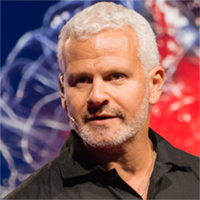
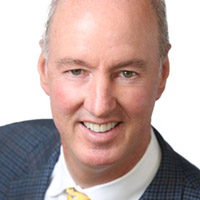
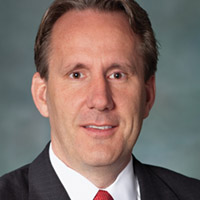
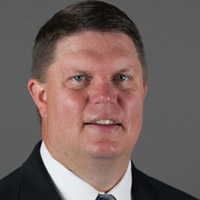
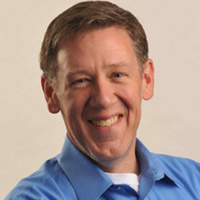
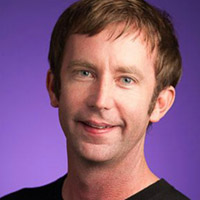
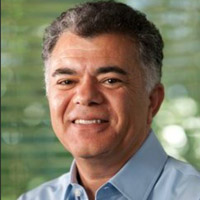
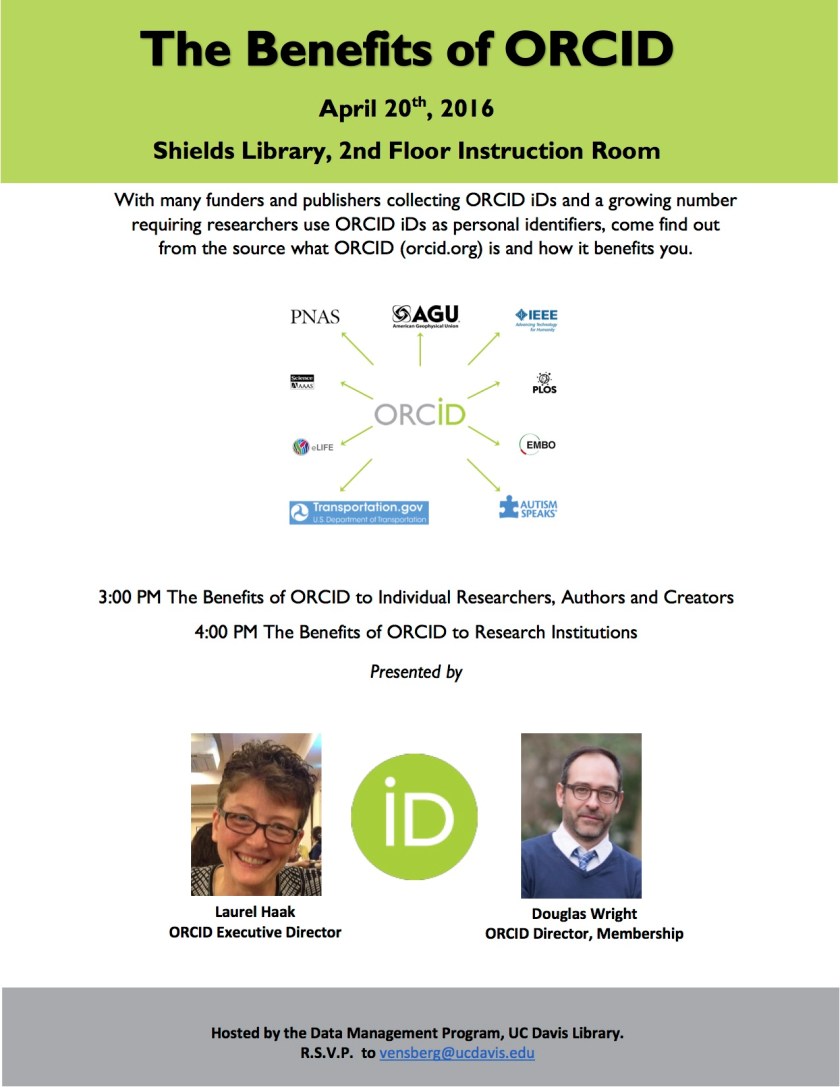
The Data Management Program at the UC Davis Library is hosting two seminars on the benefits of ORCID, an identifier for researchers, authors and creators. ORCID is now required by publishers like Science, PNAS, America Geophysical Union, IEEE, PLoS, EMBO, eLife and funders like the U.S. Department of Transportation and Autism Speaks. This event is an opportunity to have your questions answered by Laurel Haak and Douglas Wright, Directors of the ORCID team. The seminars will be held on April 20th in the 2nd Floor Instruction Room in the Shields Library.
3:00 PM The Benefits of ORCID to Individual Researchers, Authors and Creators
4:00 PM The Benefits of ORCID to Research Institutions
Let vensberg know if you are interested in attending, and, if possible, please, distribute broadly the message and the attached flyer.
Davis Postdoc Entrepreneurship and Career group (DPEC) presents
Speakers: Dr. Tanya Smith (Prof. Harvard University) and Dr. Beth Russell (Prof. Nazareth College)
Date: Thursday 28th April 2016, 4:30–7 pm (refreshment to follow)
Location: Gladys Valley Hall, Room 1020, School of Veterinary Medicine, Davis campus.
If you have any questions, contact Siobhan at soleary (or) Valentina at valcampanelli.
Academic Women’s Leadership: An Informative and Interactive Workshop
Graduate students, postdocs, staff, and faculty are invited to participate in an interactive discussion of how women are experiencing and influencing academic culture. We’ll present the results of a national survey of academic women in STEM fields and consider how leadership, mentorship, community building, and education can create a more inclusive culture at UC Davis. All genders are welcome!
Bio: Dr. Tanya Smith is an Associate Professor of Human Evolutionary Biology at Harvard University. She received her BS in Biology from the State University of New York at Geneseo and her PhD in Anthropological Sciences from Stony Brook University. Dr. Smith subsequently created and managed a research unit at the Max Planck Institute for Evolutionary Anthropology in Leipzig, Germany before returning to the US for a tenure-track position at Harvard University. She oversees a Dental Hard Tissue Laboratory and studies the evolution of human development. In addition to publishing more than 60 scholarly articles and delivering more than 80 lectures, Dr. Smith has been interviewed by National Public Radio, Voice of America, British Broadcasting Corporation, New York Times, and Slate Magazine. Her research has been featured in documentaries produced by the BBC, PBS Nova, and the Discovery Channel, and the scholarly journals Nature and Science. While still in graduate school, she organized the first Stony Brook University Women’s Leadership Symposium, and subsequently co-founded the Physical Anthropology Women’s Mentoring Network, serving hundreds of graduate students, postdoctoral fellows and junior faculty. Dr. Smith has lectured and led workshops on professional development for women and junior faculty at Duke University, Harvard University, Stony Brook University, and the University of Washington. Her postgraduate training includes the MIT Leadership Skills for Engineering and Science Faculty program, the NSF-funded Women Evolving Biological Sciences (WEBS) program, and the Coaches Training Institute Co-Active Leadership Program. Dr. Smith is a member of the Association for Women in Science, the American Association of University Women, is active on Linked In and Twitter (@DrTanyaMSmith).
Bio: Dr. Beth Russell is an Associate Professor of Social Work at Nazareth College. Her primary appointment is in the Greater Rochester Collaborative Master of Social Work Program. She teaches practice-based classes including specialty coursework in sexual health, evidenced based practice, leadership, supervision, and diversity. She received a PhD in Education with a specialty in Counselor Education and Supervision from the University of Rochester, New York; a Master of Social Work from the University of Michigan, Ann Arbor; and a Bachelor of Science in Human Development and Family Studies from Cornell University. In addition to being a professor, she has worked in a variety of practice settings, including as a case manager for the chronically mentally ill, clinical social worker and sex therapist in a university hospital outpatient setting, child therapist, supervisor of mental health counselors, adult therapist, program evaluator, and a research consultant on several community projects. Her professional interests include sexual health, sex therapy, interpersonal practice, and evidence-based practice. Dr. Russell’s current research focuses on health professionals’ training in sexual health and their clinical practices; intimate partner violence; leadership and diversity issues in academia; and women’s well-being. Dr. Russell has authored and co-authored peer-reviewed journal articles, continuing education courses, book chapters, a book, and several book reviews in the past twelve years. She is a member of the Council of Social Work Education, the National Association of Social Workers, the American Association of Sex Educators, Counselors, and Therapists, and the American Association of University Women, and can be found on Linked In and Twitter (@BethRussellphd).
Academic Women’s Leadership-April2016.pdf
This may be of interest:
Live Webcast of NAS Microbiomes of the Built Environment meeting
Monday April 11
10:30am – 5:00pm EDT
More information:
The National Academies of Sciences, Engineering, and Medicine are conducting a consensus study that will examine the formation and function of microbial communities in built environments, the impacts of such microbial communities on human health, and how human occupants shape complex indoor microbiomes. This study is intended to provide an independent, objective examination of the current state of science regarding built environment microbiomes and their impacts on human health, and then attempt to bridge gaps in moving this research to an application stage, in which building materials and architecture will be designed with microbiomes in mind. The study is being conducted by a committee of experts and the consensus report is expected to be released in 2017.
The study’s first public meeting will be held on April 11, 2016 in Washington, DC. You may view the webcast of the public sessions, to be held from 10:30am – 5:00pm EDT by clicking here.
Please direct any questions or comments to builtmicrobiome@nas.edu
This study is sponsored by the Alfred P. Sloan Foundation, U.S. Environmental Protection Agency (EPA), National Aeronautics and Space Administration (NASA) and the National Institutes of Health (NIH).
Via Sebastien Schreiber
Dear Colleagues,
I hope your Spring quarter has started on a good note. The first Ecology and Evolution seminar will be given by Outi Savolainen from the University of Oulu in Finland. Outi works on the genetics of adaptation and speciation. Her group uses genomic tools to examine the genetic basis underlying genetic variation in adaptive traits, such as timing of growth in Scots pine and the timing of flowering in Arabidopsis lyrata (see https://wiki.oulu.fi/display/PGG/Outi+Savolainen).
The title, time and place for her talk is as follows:
Title: Examining genetics of local adaptation in the perennial outcrossing Arabidopsis lyrata
Date: Thursday April 7 at 4:10pm
Place: 1100 Social Sciences
Reminder: This can count towards the MCT Fellowship.
Helping Faculty Prepare Underrepresented Students of Color for Doctoral Success
A Discussion of Teaching Practices and Institutional Structures
Monday, April 4, 2016
2:00 – 3:00 pm
Voorhies 126
This roundtable discussion addresses institutional structures of higher education and practices around preparing underrepresented students of color for doctoral programs. It features faculty members from Hampton University, a historically black university founded in 1868, who will share their experiences and expertise in teaching students at Hampton University and in advising and mentoring undergraduate research.
Our discussion will engage
· the teaching and mentoring of underrepresented students of color
· teaching and advising across different kinds of institutional spaces
· institutional structures and its impact on underrepresented students of color
· race in higher education
Panelists:
Dr. Amee Carmines, Department of English, Hampton University
Dr. Joyce Jarrett, Department of English, Hampton University
Dr. Mark Jerng, Department of English, University of California, Davis
Dr. Amee Carmines is Professor of English at Hampton University. Her academic focus is western and world literature and critical theory. During her twenty-nine year tenure at the university, she has served as faculty mentor to student fellows associated with the Dana Scholars Program, UNCF Mellon/Mays Undergraduate Research Program, and with IRT Fellows. She also routinely teaches central courses, such as literary criticism and senior seminar.
Dr. Joyce Jarrett holds the endowed chair of Distinguished Professor of English at Hampton University. She has taught a range of courses to include African American literature, senior thesis, advanced writing, and introduction to literary studies (a required tools course for majors). Currently, she also serves as a UNCF Mellon/Mays faculty mentor. Dr. Jarrett has also served the university in numerous administrative posts: Chair of the Department of English, Executive Assistant to the President, and Provost.
Dr. Mark Jerng is Associate Professor of English and Graduate Adviser for the PhD Program in English at University of California, Davis. He is Lead PI for the UCD Summer Program for Literary Analysis and Success in the Humanities (SPLASH).
This event is sponsored through the UCD Summer Program for Literary Analysis and Success in the Humanities (SPLASH), a UC-HBCU initiative that funds collaborations across the UCs and historically black colleges and universities. UCD SPLASH brings Hampton University undergraduates to UC Davis for an 8-week summer program during which they work with faculty mentors and develop independent research projects. The goal is to provide an undergraduate research experience as well as professionalizing activities in helping prepare students for applying to PhD programs in English and literature programs.
April 4 UCD-Hampton U Roundtable Event.pdf


 Jonathan Eisen's Lab