Only Nature could turn the success of PLoS One into a model of failure

Now, mind, you I like Nature as a publishing unit. They publish some very fine journals. Now, most of them are not Open Access, so I choose not to publish there if I can avoid it. But I still like them. And many of the editors and reporters there are excellent – smart, creative, insightful and such. But Nature the publisher can also be completely inane when it comes to writing about Open Access and PLoS. In a new article by Declan Butler, Nature takes another crack at the PLoS “publishing model”

The problem with PLoS now is … wait for this … the success of PLoS One. PLoS One it turns out is publishing a lot of papers (including one by me, today). And bringing in a decent amount of money to PLoS apparently (note for full disclosure – I am involved in PLoS Biology as “Academic Editor in Chief” and PLoS Computational Biology as an Academic Editor … although I should note I am not involved in financial discussions at PLoS in any way).
So why is the success of PLoS One a problem? Well, because it allows Nature to do the old good cop bad cop routine and to write, again, about the “failings” of the PLoS publication model. Now, mind you, the article does not quote a single source for what the PLoS publication model is. But they do say it has failed. From what I can tell here is the logic of the failure argument:
  1. Nature believes PLoS’ model for success revolved solely around PLoS Biology and PLoS Medicine and some of the other other PLoS journals being self sustaining after a few years.
  2. Analysis of some financial information suggests that PLoS Biology and Medicine currently are not breaking even
  3. PLoS One is apparently wildly successful and thus is brining in some money to PLoS.
  4. PLoS One publishes a lot of papers (they discuss this a bit and imply that this is a bad thing because some of the papers must be bad. Note – they do not back this up with any evidence. Silly for me to ask a science journal to use evidence)
  5. Therefore, the entire PLoS Publication model is a failure.
The problems with this logic are, well, large. Here are some:
  1. Does Nature really think that there ever was a single “model” for how PLoS should be evaluated?
  2. If so, where is the documentation of what this model actually was?
  3. Even if there was a PLoS model and even if it turns out to be not exactly what PLoS is doing now, what is the big deal? If you were a stockholder of any company and they told you “we are never going to change our business model no matter what happens in the world around us” I would recommend you not buy their stock. It is simply farcical to expect any entity to stick to a single simple model forever.
  4. Does not Nature supplement some of their bigger journals with their higher volume other journals?
  5. Most companies these days use high profile entities such as PLoS Biology and PLoS Medicine to attract attention to other portions of their company in order to help bring in money. Is this somehow not allowed by PLoS? Doesn’t Nature do the same thing?
  6. If you look at the figure Nature shows of PLoS $$$, it shows income rising in 2007 and expenses going down. How did that get turned into a bad thing?
So – I still do like Nature publishing because much of the time it has high quality stuff. It even has high quality stuff commenting/criticizing the Open Access movement and pointing out some of the challenges with it. But this article by Butler is not an impressive piece of work. I really wanted to give him an award but could not think of what to give.
See also (thanks to Bora for pointing out a bunch of these links)

My first PLoS One paper …. yay: automated phylogenetic tree based rRNA analysis

ResearchBlogging.org
Well, I have truly entered the modern world. My first PLoS One paper has just come out. It is entitled “An Automated Phylogenetic Tree-Based Small Subunit rRNA Taxonomy and Alignment Pipeline (STAP)” and well, it describes automated software for analyzing rRNA sequences that are generated as part of microbial diversity studies. The main goal behind this was to keep up with the massive amounts of rRNA sequences we and others could generate in the lab and to develop a tool that would remove the need for “manual” work in analyzing rRNAs.

The work was done primarily by Dongying Wu, a Project Scientist in my lab with assistance from a Amber Hartman, who is a PhD student in my lab. Naomi Ward, who was on the faculty at TIGR and is now at Wyoming, and I helped guide the development and testing of the software.

We first developed this pipeline/software in conjunction with analyzing the rRNA sequences that were part of the Sargasso Sea metagenome and results from the word was in the Venter et al. Sargasso paper. We then used the pipeline and continued to refine it as part of a variety of studies including a paper by Kevin Penn et al on coral associated microbes. Kevin was working as a technician for me and Naomi and is now a PhD student at Scripps Institute of Oceanography. We also had some input from various scientists we were working with on rRNA analyses, especially Jen Hughes Martiny

We made a series of further refinements and worked with people like Saul Kravitz from the Venter Institute and the CAMERA metagenomics database to make sure that the software could be run outside of my lab. And then we finally got around to writing up a paper …. and now it is out.

You can download the software here. The basics of the software are summarized below: (see flow chart too).

  • Stage 1: Domain Analysis
    • Take a rRNA sequence
    • blast it against a database of representative rRNAs from all lines of life
    • use the blast results to help choose sequences to use to make a multiple sequence alignment
    • infer a phylogenetic tree from the alignment
    • assign the sequence to a domain of life (bacteria, archaea, eukaryotes)

  • Stage 2: First pass alignment and tree within domain
    • take the same rRNA sequence
    • blast against a database of rRNAs from within the domain of interest
    • use the blast results to help choose sequences for a multiple alignment
    • infer a phylogenetic tree from the alignment
    • assign the sequence to a taxonomic group

  • Stage 3: Second pass alignment and tree within domain
    • extract sequences from members of the putative taxonomic group (as well as some others to balance the diversity)
    • make a multiple sequence alignment
    • infer a phylogenetic tree

From the above path, we end up with an alignment, which is useful for things such as counting number of species in a sample as well as a tree which is useful for determining what types of organisms are in the sample.

I note – the key is that it is completely automated and can be run on a single machine or a cluster and produces comparable results to manual methods. In the long run we plan to connect this to other software and other labs develop to build a metagenomics and microbial diversity workflow that will help in the processing of massive amounts of sequence data for microbial diversity studies.

I should note this work was supported primarily by a National Science Foundation grant to me and Naomi Ward as part of their “Assembling the Tree of Life” Program (Grant No. 0228651). Some final work on the project was funded by the Gordon and Betty Moore Foundation through grant #1660 to Jonathan Eisen and the CAMERA grant to UCSD.

Wu, D., Hartman, A., Ward, N., & Eisen, J. (2008). An Automated Phylogenetic Tree-Based Small Subunit rRNA Taxonomy and Alignment Pipeline (STAP) PLoS ONE, 3 (7) DOI: 10.1371/journal.pone.0002566

Looming news

Just having some fun with/at Carl Zimmer who claims he has some news to post very soon. See

Top five metaphors Darwin considered and rejected for "The Tree of Life"


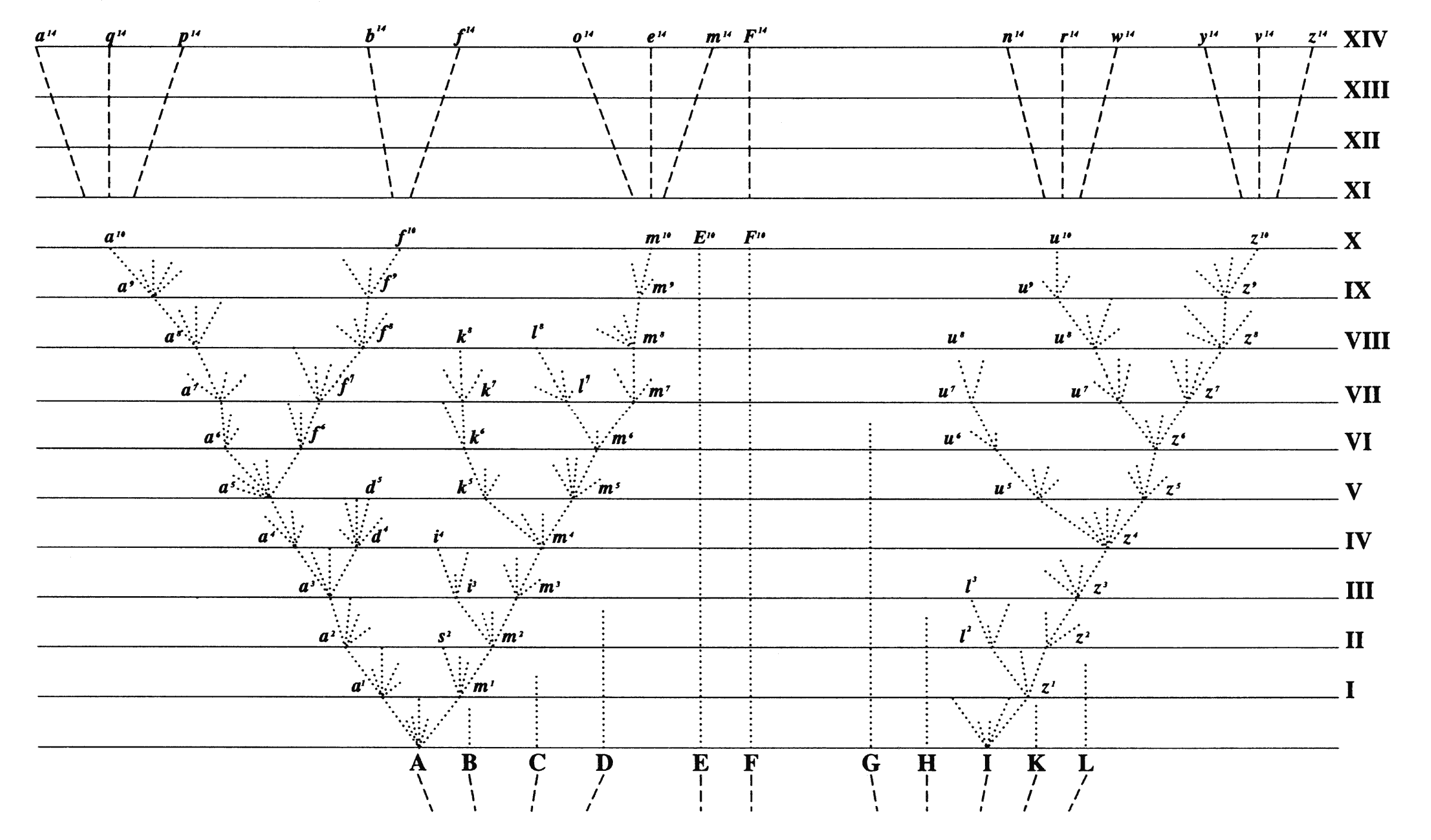
Well, as I am desperately trying to prevent Hollywood from corrupting the term “Tree of Life” and I got to thinking. Why did Darwin and others have to use the metaphor of a tree to represent the branching history of organisms through evolutionary time? Why did other metaphors not get used? Well, thanks to a little research I did by communicating with Darwin directly (as I did when he announced his endorsement of Obama), I have found out that Darwin went through many other metaphors before settling on the “Tree of Life.” (note the tree-like figure here which is based on the one figure in the Origin of Species).

And here are the top 5 other such metaphors for what is now known as “The Tree of Life”

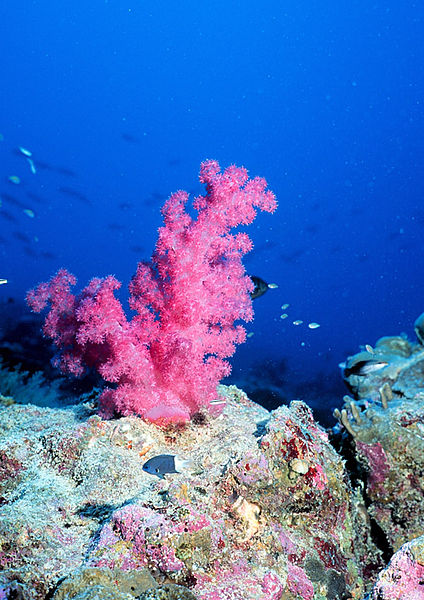
  1. The coral of life. Darwin particularly liked this one as he did some work on marine organisms. But ultimately he rejected it because he was worried about anti-evolutionists killing coral to get back at Darwin.
  2. The watershed of life. Rivers exhibit branching patterns much like trees. The big problem Darwin saw was that sometimes separate river branches reconnect to each other, which did not follow his model for descent. If only Darwin knew about lateral gene transfer.
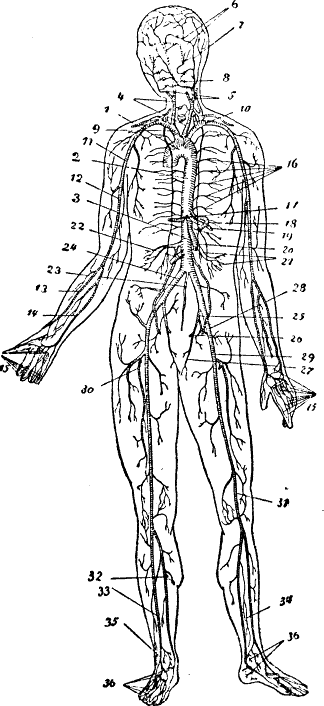
  3. The blood vessels of life. Darwin was desperate to find visceral connections for people to evolution. This one would have been great. The big problem here was the “going” and “coming” nature of arteries and veins.
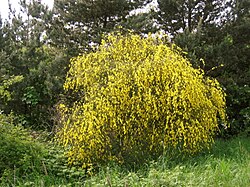
  4. The shrub of life. Thus turns out to have been one of Darwin’s favorites because it captures the richness of diversity more than a sparsely branching tree. However, shrub, even then, was used as a derogatory term to refer to height challenged individuals. And Darwin did not want to upset this key constituency so he avoided this term.
  5. The lungs of life. While this has some positive features (e.g., it is unidirectional like a tree), thankfully Darwin did not stick to this or we would have competition from “LOL” for all the domain names.

    Other possibilities included “the Plumbing System of Life” and “the Highway Map of Life”. If you know of others Darwin may have considered, let me know.

Hello world!

Welcome to WordPress.com. This is your first post. Edit or delete it and start blogging!

Calling all evolutionary biologists – protect the "Tree of Life" from extinction by Hollywood

OK, I am getting worried. As I wrote a few weeks ago, there is a new movie coming out supposedly next year called “The Tree of Life” starring Brad Pitt, Sean Penn and others. Well, the movie sounds like it could be good. But though this may sound like a cool thing to those of you out there who study the Tree of Life in some way, we are at risk here. There will soon be 100s of blogs, web pages, news stories, etc. writing about the Tree of Life movie. And uses of the Tree of Life by evolutionary biologists will lose their google rankings. The term “The Tree of Life” is at risk of a form of extinction.

So what are we to do? I am calling on all evolutionary biologists and bloggers and biologists in general to to link to other sites that use the term as much as possible. For example, you can add a link to my blog, which is after all called “The Tree of Life.”
So please, add links to some Tree of Life pages. And start using the term yourself as much as possible.
Here are some places you should link to
Please post additional links in the comments here and please help save “The tree of life”
———————————-
Note – here are some sites responding and helping save “The tree of life”

Jelly Bellies in the New York Times

Well, Jelly Bellies, a semi-local institution (they are based in Fairfield for those who have not seem them from I-80) has gotten some good press in the Times today. I hear they have a nice tour that kids and adults like but we have not done it yet.  I must say, I like their Sport Beans when I go for bike rides.  Anyway, just good to see local businesses getting some props in the Times.

Combinging two of my favorite things – chocolate and genomes

Well, the Mars company has really done it now (see Unwrapping the Chocolate Genome -from washingtonpost.com). They are planning to sequence the cacoa genome. Genomes and chocolate. Man are they going to get every bioinformatics person I know to apply to help out with this project …

Some little notes on the project:

  • They plan to release the data for public use: “Mars plans to make the research results free and accessible through the Public Intellectual Property Resource for Agriculture, a group that supports agricultural innovation, as they become available. The intent is to prevent opportunists from patenting the plant’s key genes.”
  • They are doing this in a collaboration with IBM
  • Good quote by Howard Shapiro: “We have the ability as a private company to take charge of the future,” Howard-Yana Shapiro, global director of plant science for Mars, said.”

So -even though I pondered whether this was science by press release, a friend of mine convinced me it was not and this was just getting out the word on the project. For other details see

Swimming the Mirror: Poems for My Daughter on KDVS Today at 5 PM

Brad Buchanan will be discussing and reading from his new book of poems, “Swimming the Mirror: Poems for My Daughter” (Roan Press) on KDVS 90.3 FM today (Wednesday) at 5pm. Please consider tuning in. Also available onlne at http://www.kdvs.org/listen/.

Why I am writing about this?  Well Brad and I used to play street hockey together in grad. school at Stanford.  No – neither of us started Google as did other street hockey players from Stanford.  But you should check out Brad’s new book of poems from Roan Press and also can see some of his past stuff at an old blog here.
Roan Press is a new Sacramento area publisher. In the email I got they say 

“Please mark your calendars for Roan Press’s first Book Launch Party at the Book Collector (1008 24th Street) on July 23 at 7:30 pm. Roan Press is a new Sacramento publisher with an interest in poetry, fiction, books of essays and other genres. We particularly welcome submissions from Northern California writers, but are open to work from anyone, anywhere. Please also watch for our website, http://www.roanpress.com, which is coming soon”

Overselling genomics award #4: University of Western Ontario and Graham Thompson on honeybee altruism

In my blog I give out some snarky awards for things that annoy me including the Genomics by Press Release Award and the Adaptationomics Award and the Overselling Genomics Award. Sometimes I really want to give something an award but I am not sure what it should get. That is the case here. There is what I find to be a painful press release on “Selfish Genes” in honeybees put out by University of Western Ontario. This press release relates to a paper being published in Genetics. on QTL mapping in honeybees and searching for alleles/genes that suppress the reproductive activity in worker bees. This suppression is a form of altruistic behavior in a way and has been the subject of a good deal of research. Basically, the ended up mapping some of the suppression to a few regions of the genome.

The press release however, goes way way overboard in interpreting their results and claiming “New Discovery Proves ‘Selfish Gene’ Exists.” They imply throughout the press release that prior work simply suggested that selfish genes were theoretically possible in this case and that now with their results they have been proven. For example they quote the lead author Graham Thompson:

This means that the ‘selfish’ gene does exist, not just in theory but in reality.

This is way beyond an overstatement. Their results are nice and interesting but they are part of a continuum of work on bees (and other selfish systems) and do not in any obvious way suddenly prove the existence of this selfish gene compared to prior work that they imply was just guesswork. I am personally baffled by the extent of this claim — basically ignoring work by many others as well as work in a variety of systems outside of bees. They end the press release with the following:

“This basically provides a validation for a huge body of socio-biology,” says Thompson, who adds the completion of Honey Bee Genome Project in 2006 was crucial to this discovery.

For that last statement, I am thus giving them my “Overselling genomics award” #4. But they easily could have gotten a few others.  

NOTE – I had changed the award to just U. Western Ontario and not including Thompson because it is the University that appears to be responsible for the press release not Thompson.  However, a commenter (Oliver) convinced me that if we want to clean up press releases we need to make the scientists involved in the story help make sure the press releases are clean, so I put Thompson back in.

Hat tip to T. Ryan Gregory for pointing this out. And you should check out his new Genomics by press release “award” at his blog Genomicron. I will probably be writing about the same story soon.