Image by Thomas Fuchs – from article about the work of the BioBE Center in Scientific American “What’s in Your Bacterial Aura?” by Peter Andrey Smith

Note – Crosspost from microBEnet.
Imagine you have a camera with a special “anti-macro” lens. This lens scrubs from any image all plants and animals and other “macro” organisms. And this lens also highlights the remaining living things – the microorganisms – anywhere in the frame (including those that were in or on the macro organisms removed from the image). Maybe you get a pixel or two of some color depending on what microbes are there. If you took pictures with this lens wherever you travelled, you would see that on every surface – in and on every macro organism – in the air – in the water – in the soil – everywhere – there would be a teeming cloud of microbes. Microbial ecosystems everywhere you look.
For many years, the cloud of microbes in our surroundings was overlooked. And then, as science and technology advanced, we were able to “see” this world better. One critical tool in seeing the hidden world of microbes has been DNA sequencing – which allows one to read the string (or sequence) of chemicals (abbreviated A, T, C and G) that make up the genomes of organisms. By applying DNA sequencing methods to DNA isolated directly from environmental samples, researchers can infer what kinds of microbes where there – and make some predictions about what they could be doing.

Tree of Life from the Pace Lab website.
Such environmental DNA sequencing was pioneered by Norm Pace and colleagues in the 1980s. And their work, and then the work of hundreds of other scientists, began to serve as a DNA-based lens to study the hidden world of microbes (for more information on this see the microBEnet guide Fact Sheet: rRNA in Evolutionary Studies and Environmental Sampling).
Though much was learned in those “early years” the work was slow and expensive – especially when one considers that there are thousands upon thousands of different kinds of microbes in most nooks and crannies of the planet. Then, in the 1990s, the cost and difficulty of DNA sequencing began to decrease at a faster than exponential rate. Driven in part by goals associated with human medicine, the improvements in DNA sequencing also allowed improved exploration of the microbial world. For more information on the sequencing revolution and how it applies to microbes see the video of a talk I gave on the topic.
Some parts of the world attracted the most attention of the CSI-microbiology crews. First came the oceans. And then the soil. And more recently – the “human microbiome” – the collection of microbes that live in and on people – has been a major area of focus. All the while the technology got better – faster – cheaper – and easier.

And yet, despite all the advances, one part of our world still somehow was left a bit in the dark. This was the “built environment” – the buildings – the cars – the planes – the water systems – and the other “unnatural” places that humans have created. Perhaps because such environments are “unnatural” they did not attract as much attention of the microbial ecologists. But now – finally – they have. The rise of the “microbiology of the built environment” – as this area of work has become known – is seen in the existence of an Alfred P. Sloan Foundation funded program in this area. Now – I should confess here that I am not an impartial observer. I am funded by this Sloan Foundation program to run the “microbiology of the built environment network” (aka microBEnet).

- The microbiology of the Built Environment network (microBEnet)
But you do not have to take my word that studies of the microbiology of the built environment are spreading. You can instead see the growing number of scientific papers on the topic as well as news stories and other “chatter that we cover on our “microBEnet” blog.
But just a collection of papers and news stories and other information does not really do justice to the field. I think the rise of the “microbiology of the built environment” field is highlighted perhaps best by two scientific studies published in the last two days that show the direction of the field and the enormous potential that it has. I note – both studies were funded by grants from the Sloan Foundation as part of the microbiology of the built environment program. I describe these studies in more detail below.
The first of these papers was published yesterday in the journal Microbiome on January 28, 2014. The paper is entitled “Microbes in the neonatal intensive care unit resemble those found in the gut of premature infants” and the authors are Brandon Brooks, Brian Firek, Christopher Miller, Itai Sharon, Brian Thomas, Robyn Baker, Michael Morowitz and Jillian Banfield. I note – for full disclosure – I have collaborated with Jill Banfield’s lab on a recent study but was not involved in any way in this NICU work. (Also – see the recent blog post on microBEnet by Brandon Brooks about his work on this project).
 Now – NICUs are really interesting places in terms of microbial ecology. First, this is where many premature babies end up and such babies are known to have some challenges in terms of microbial colonization (not the least of which is that they are frequently delivered by C-section and also pumped full of antibiotics to limit infections). NICUs are also supposed to be very “germ free” – kept that way in order to – again – limit infections. A key question in terms of microbial ecology is – what microbes are present in NICUs (on surfaces, on people, in the air) and how does that impact the infants and their health.
In January of 2013, I wrote about one such study that was carried out by Krissi Hewitt, Frank Mannino, Antonio Gonzalez, John Chase, J. Gregory Caporaso, Scott Kelley and Rob Knight: New paper on bacterial diversity in NICUs. And then I wrote about another NICU study: New paper on microbes in NICUs & how they change w/ cleaning & over time. This one was done by colleagues of mine at UC Davis (Nicholas Bokulich, David Mills and Mark Underwood).
The new paper is another piece of the story of the microbial ecology of NICUs. In a press release from
UC Berkeley BioMed Central the work is summarized:
To investigate microbes in NICUs, researchers from the University of California, Berkley, swabbed the most touched surfaces of the unit as well as collecting fecal samples from two premature babies in a small pilot study. The surfaces swabbed included the sink, feeding and breathing tubes, hands of healthcare staff and parents, access knobs on the incubator and electronic devices at the nurses’ station, such as keyboard, mouse and cell phone.
They did extensive characterization of the microbial communities found in the NICU for each of two infants – looking at electronics, hands, incubators, sinks, surfaces, and tubes:

Figure 1 from here. Taxonomic classification of neonatal intensive care unit (NICU) room microbes for infants 1 and 2. Phylum-level (top) and family-level (bottom) classifications were assigned using the Ribosomal Database Project (RDP) classifier on assembled full-length 16S rRNA genes. Day of life (DOL) is plotted on the X axis and relative abundance, generated by ‘expectation maximization iterative reconstruction of genes from the environment’ (EMIRGE), is plotted on the Y axis.
This is basically what one can consider to be the first pass at generating the equivalent of a field guide for the microbial diversity in these NICUs. The colors in the figure correspond to different taxonomic groups of microbes. The top half of the graph shows microbes grouped by Phylum and the bottom half shows them grouped by Family. Phylum is a higher level grouping – sort of the equivalent to “Animals” vs “Plants” and Family is a lower level grouping – akin to Mammals vs. Reptiles.
Another analysis that they do in this paper is that they try to pinpoint the possible “sources” of the microbes found in the infants. They do this using a software tool called “SourceTracker.” The figure below shows the results for two infants (from left to right shows the progression of days).

The most probable source of gut colonizing microbes. This was generated using the source-sink characterization software, SourceTracker. Neonatal intensive care unit room sequences were designated as putative sources and fecal sequences sinks. Brooks et al. Microbiome 2014 2:1 doi:10.1186/2049-2618-2-1
They conducted a variety of other analyses of the microbes in the NICU and in and on the infants. From the press release the researchers state:
When looking at the two infants fecal samples, to identify microbes living in their guts, they found that there was similarity with microbes identified from the NICU surfaces, with the most abundant similar to that those found on tubes.
They also state:
Some of the bacteria contained resistance genes, known as efflux pumps, for pumping out the disinfectant used to clean the unit, which gives clues as to why they are present in the NICU despite being subject to regular cleaning and sterilization. The microbes in the guts of premature babies also had these resistance genes.
Now I find this to be very intriguing. If the infants are acquiring microbes from the NICU that are resistant to disinfectants, they might (key word here being might) also be acquiring microbes that are resistant to various antibiotics in the environment. Certainly, the paper not only adds to our understanding of NICUs – it leaves one thinking of many new questions to ask.
The second of these papers was published today, January 29, 2014 in the journal PLOS One. The paper is entitled Architectural Design Drives the Biogeography of Indoor Bacterial Communities and it comes from the “Biology of the Built Environment (BioBE) Center” at the University of Oregon. The authors of the paper are Steven Kembel, James Meadow, Timothy O’Connor, Gwynne Mhuireach, Maxwell Moriyama, Dale Northcutt, Jeff Kline, G.Z. Brown, Brendan Bohannan and Jessica Green. In the interest of full disclosure -the director of the BioBE Center and senior author on the paper – Jessica Green – is a colleague, collaborator, and friend.
The press release from the University of Oregon summarizes the project:
Researchers used specially filtered vacuum cleaners to collect dust in offices, classrooms, hallways, bathrooms and storage closets to develop a microbial snapshot of the building, based on where people congregated, how people used indoor spaces, and how these spaces were connected to allow human movement between them.The samples were collected from the complex’s centerpiece, Lillis Hall — an airy, 136,000-square-foot facility, which has mechanical air ventilation throughout most of the building, except for a wing of offices where occupants wanted window ventilation. Lillis Hall was the first building in the Eugene-Springfield area to achieve LEED silver certification for its sustainability features. The building was chosen for the study because of its variety of different uses and its flexible operation. For example, Lillis Hall was designed to accommodate both mechanical and natural air ventilation, allowing researchers to observe whether ventilation influences indoor bacterial communities.

The Building Studied

The paper claimed to show some interesting findings. For example, they reported that “soil- and plant-associated bacteria were most common in unoccupied spaces, such as mechanical rooms and storage closets,” and that “several different human-gut-associated bacteria, including lactobacillus, staphylococcus and clostridium, were most common in bathroom dust.” Not overly surprising perhaps but interesting that they were able to detect such patterns.

Deinococcus radiodurans. From Wikipedia. TEM acquired in the laboratory of Michael Daly.
They also reported that bacteria in the Deinococcus group were “some of the most common bacteria in the building.” This is of direct interest to me since I have worked on some of the microbes in this group on and off over the years. In particular I worked on Deinococcus radiodurans one of the most radiation and desiccation resistant organisms known (as an aside – this has led to this bug getting all sorts of press – and even being called “Conan the Bacterium“). I started working on this bug during graduate school (where I studied the evolution of radiation resistance, among many things) and then moved in 1998 to The Institute for Genomic Research, and played a key role in the project to sequence and analyze its genome (PDF here) (note – back then – sequencing a bacterial genome was difficult and expensive). In regard to Deinococcus in the current study from the BioBE Center James Meadow stated:
“They were found in all rooms, but more abundant in mechanically ventilated — versus naturally ventilated — rooms. That might suggest that they are accumulating over time while other bacteria dry out and die in buildings.”
I find it refreshing and pleasing that these papers are published in “Open Access” journals wherein the papers are freely and openly available to all. This to me highlights another aspect of microbiology of the built environment which is its growing connection to the public.

From “Ecosystem, sweet ecosystem” in the Boston Globe 8/2011

And it is pretty clear that there is a growing appreciation of microbiology of the built environment not just in the world of scientists and engineers but also to other fields (e.g., the BioBE Center is co-directed by an architect) but also in the general public. This can be seen by the growing number of news stories discussing microbes in our buildings and other built environment locales. And most importantly, many of these stories are focusing on the need to understand the full ecology of these microbial systems (e.g., more nuanced with discussion of ecosystems and ecology and such (see for example this piece in the Boston Globe by Courtney Humphries: Ecosystem, sweet ecosystem).
Consider also Jessica Green’s TED talks about the microbiology of the built environment, with hundreds of thousands of views:
https://embed-ssl.ted.com/talks/jessica_green_good_germs_make_healthy_buildings.html
https://embed-ssl.ted.com/talks/jessica_green_are_we_filtering_the_wrong_microbes.html
Why is such an ecological focus important? Well, first, that is what is needed to understand the microbiology of the built environment. But more importantly, there is a detrimental story line about the microbes in our environment that is spreading like an infection. This story line involves fear mongering about microbes and general germophobia. According to many in the news media – when one hears that we are surrounded by a cloud of microbes – the immediate reaction is the desire to kill the germs and to clean and sterilize the world around us. Put antibiotics into kitchen counters. Use hand sanitizers 100 times a day. Swab a surface and count the germs and run a news story about how disgusting everything is. Filter out everything. Sterilize the air, the floors, the walls, the children. Kill the germs. Kill the germs. Kill the germs.
Such fear mongering may generate web hits an sell magazines and newspapers and improve Nielsen ratings. But it is very dangerous. For the microbes in the world around us are mostly innocuous. Sure – some are bad – causing disease. But some are beneficial too. And simply trying to kill or clean all places where we live and breathe is just not a good idea. Overuse of antimicrobial and antibiotics will breed resistant strains which then could lead to problems if those strains infect organisms or if their genes spread to others. And destroying an ecosystem to kill a few bad players has potentially disastrous consequences. We know, for example, that antibiotic use in humans – though obviously useful in treating some infections – can lead to “dysbiosis” where the microbial community is messed up. This in turn possibly may lead to various problems in the immune system (especially if the antibiotics were used early in childhood) and can also lead to being overrun by pathogens after antibiotics (ironic, to be overrun by a pathogen after using antibiotics to try to kill another pathogen).
Does such “dysbiosis” happen in our buildings and other parts of our built environment when we focus on killing or removing all the germs in any way we can? Possibly. And that is in part what the two labs who have published the papers I am focusing on here are working on. What is the ecology of a NICU and does trying to keep everything completely sterile help or hurt? What is the ecology of a high tech building and does all the air filtering and people traffic have an impact on the microbial ecosystem and in turn on the “health” of the building or the people in it?
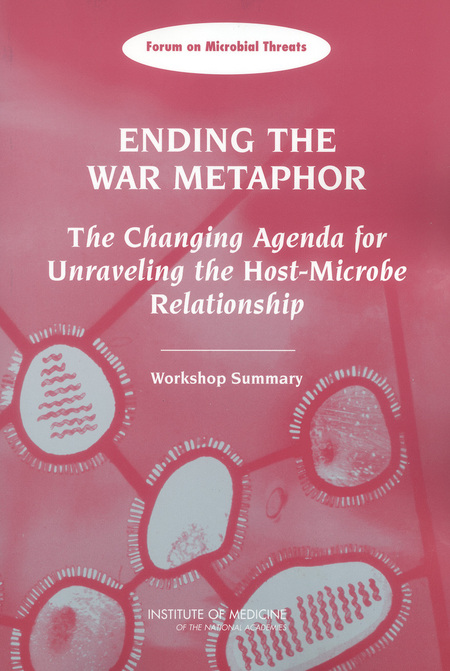
This is what we need to know. And we desperately need to turn the publics attention away from the “War Metaphor” focused on killing all microbes to a more nuanced ecological driven approach where people think about them microbial world much the way they are starting to think about National Parks and tropical rain forests. Just as we would not argue for killing all mammals simply because one might be annoying us, we need to stop trying to kill all germs just because some do us harm.
How can we stop the germophobia and spread the message that not all microbes need to be killed? Certainly more science and communication of science that focuses on the ecology of the built environment will help. Another way is something we also see spreading which is through “citizen science” projects. Engaging the public in studying the microbial ecology of the built environment is a great way to get them to think about the topic more deeply and to (hopefully) not subscribe to the obsessive germophobia going around. Citizen science projects have been around for some time now and have been spreading rapidly in the last few years. Examples include bird counts and surveys, protein folding analysis, comet discovery and star watching, and many many more. A few years ago there were few, if any citizen science projects that focused on microbes.
Citizen Microbiology session at ASM 2013

That however has changed – largely in conjunction with the decrease in sequencing costs discussed above. Two years ago we (the microBEnet team) organized what I think was the first “Citizen Microbiology” meeting and it was a great success. This led us (myself and David Coil in my group) to organize an entire session focused on Citizen Microbiology at the annual “American Society for Microbiology” meeting last summer (for more detail see The Tree of Life: Thoughts on Citizen Microbiology and upcoming session at #ASM2013). It too seemed to be a great success and it is relevant to note that there are now many citizen microbiology projects focusing on the built environment. Examples include “Project MERCCURI” (which is coordinated by microBEnet and Darlene Cavalier of SciStarter), the Wildlife of Your Homes project (run by Rob Dunn and Holly Menninger), and The Home Microbiome Project run by Jack Gilbert and even an Aquarium project (run by Josh Neufeld). These and other projects are engaging the public to participate in microbial diversity research and at the same time helping educate people about the hidden world of microbes found in the places we spend most of our lives. And many of them are getting some good press too (e.g., see the Time Magazine article here). The more people find out about such projects the better.
Overall, I see much good happening in regard to “microbiology of the built environment”. There is more funding – a growing number of papers – the papers cover interesting and important topics – there is increased good coverage in the scientific and popular press – and growing coverage in social media. Each thing on its own might not be much to care about. But all of it together suggests to me that we are seeing a transformation into an era where microbiology of the built environment – and the ecology of the microbial communities around us – will be a standard topic when considering the world in which we live. Sure – we have a long way to go and we are really just scratching the surface of understanding the microbiology of the built environment. But I am hopeful that we will begin to not only better understand what microbes are out there and what they might be doing in our buildings and cars and water supplies and such, but also how we can design and engineer our built environment with microbes in mind. Such “bio-informed design” as Jessica Green calls it would be a much much better thing than the “kill all the germs” we see as a pervasive sentiment today.
UPDATE Feb 2, 2014
Posted the article as a PDF to Figshare and have obtained the following DOI: 10.6084/m9.figshare.923520
http://wl.figshare.com/articles/923520/embed?show_title=1
UPDATE 2: Feb 4, 2013 – some additional notes and press coverage
I love that the last paragraph in the Kembel et al. paper starts with “Churchill famously stated that ‘‘[w]e shape our buildings, and afterwards our buildings shape us.’’”
Some press coverage of the two papers:
- CoDesign: How architecture could shape your microbiome
- A building’s design can shape its microbiome | Futurity
- Gut Bacteria in Preemies Altered by Hospital Stay, Study Finds