Lederberg Workshop Rest of the Story

When I left off in my notes the first day of the workshop was basically ending. After the session ended, the speakers and the members of the Institute of Medicine Forum on Microbial Threats went out to dinner at a restaurant in Cleveland Park. A few of us walked over to the Metro together and talked along the way. Thankfully, I did not get lost, as (1) I grew up in the DC area (2) I worked around the corner from where the workshop was held for a summer 20 years ago and (3) Julian Parkhill from the Sanger Center was with us and I had sadly gotten very disoriented with him when I was at a NIH Human Microbiome meeting in Bethesda which is actually where I grew up.

The dinner was quite good and I had some good conversations with various folks about microbes and their lives as well as about science in general. Sometimes these types of events are a bit much for me but for whatever reason the whole dinner event was very pleasant. And this was despite the fact that I still had not even started working on my talk for the next day. Finally, as some people were getting coffee Stanley Cohen and a few others said they wanted to head back to the hotel so a gaggle of us left, and went back.

I then spent a few hours making an outline of my talk and finding some slides and worrying about what I was going to say. I was going to be the last talk of the meeting — in essence wrapping things up. Normally I do not get stressed about such things but here I was at this workshop in honor of one of the greatest biologists of the 20th century. And many scientist’s I really really respect were to be in the audience. To give those who know an idea of how big a deal I thought this workshop was – I wore a suit for both days of the meeting. Now, I have not worn a suit in probably two years. But it just seemed natural to do it here. Anyway, with all of these things together it was a big deal to me to give the closing talk of the workshop.

And so I slept very little piecing together a talk that I hoped would honor Lederberg and make people glad they stayed until the end. On a side note, I never met Lederberg. But I was trained in microbiology by one of his students – Ann Ganesan who worked as a Senior Scientist in Phil Hanawalt’s lab where I did my PhD. Ann was amazing — the grand guru of microbiology and I learned a great deal from her. And thus I felt a connection to Lederberg even if I did not know him.

And finally, after very little sleep, I headed out for day 2 of the workshop. And day 2 was as good or better than day 1. There was Stanley Cohen talking about Lederberg and plasmids, Julian Davies (one of my all time favorite speakers) discussing antibiotic resistance, Jo Handelsman talking about functional metagenomics and microbial commensals in insects, Steven S. Morse talking about emerging diseases, Peter Daszak from the Consortium for Conservation Medicine, Mark Woolhouse talking about the ecology of human pathogens, and then me. All of the talks before me were quite excellent. Thoughtful. Insightful. Entertaining. (I do not think I have ever been at a meeting like this – I normally cannot sit through more than a few talks in a day). Lederberg would have been proud.

And then me. I think I did a good job with the wrap up. A lot of the talks for the day had been about how we can use an understanding of the past to help predict the future. And I talked about the original of novelty and how understanding how new functions originate can certainly help us understand the present (e.g., analyzing genome sequences) and I tried to bring in examples from all the other talks at the meeting (ahh .. one of those times where having my laptop and modifying my slides during the day was a good thing).

And then there was a brief discussion session where some really good questions/suggestions came up and then it was over. But I did come back inspired. Lederberg was such an incredible scientist and person. His legacy hopefully lives on.

Joshua Lederberg Papers on the Web (well, most of them)

As a follow up to my previous post about a symposium in honor of Josh Lederberg that is coming up in Washington on Tuesday. There is a nice collection of his “papers” on the web – Profiles in Science: The Joshua Lederberg Papers

By papers they mean everything – letters, notes, drafts, communications, etc.  It is quite comprehensive and quite interesting including many discussions with other leading researchers key moments in the history of 20th century biological sciences research.  It is worth checking out.  I note – despite the availability of this great collection, one part of this life as a scientists is not completely freely available – his publications.  Not all are at this site and many are hidden behind the walls of various journals.  What a shame.  Just about every one of his papers is worth reading.

Microbial Evolution and co-Adaptation: A Workshop in Honor of Joshua Lederberg – Institute of Medicine

Well, in a few days I am off to a cool workshop in honor of Josh Lederberg (for more detail see this link Microbial Evolution and co-Adaptation: A Workshop in Honor of Joshua Lederberg – Institute of Medicine). The goal of the workshop is to “to inform the Forum and the general public about the many scientific and policy contributions of Dr. Joshua Lederberg to the life sciences, medicine, and public policy.”

The workshop is put on by the Institute of Medicine in Washington DC and it is open to the public. You have to register in advance and I am not sure how many more slots are available but it looks to be pretty good. The sessions topics are are: “The microbiome and co-evolution” “Microbial evolution and the emergence of virulence” “Mechanisms of resistance” “Anticipation of future emerging infectious diseases” and there are some heavy hitter speakers in there including David Relman, Jo Handelsman, Jill Banfield, Margaret Mcfall-Ngai, Stanley Falkow, Bruce Levin, Julian Parkhill, Stanley Cohen, Julian Davies, Steven Morse, Ian Lipkin, and well, me.

I will be blogging from there, but if you are in the DC area or can be, it could be a good workshop.

I am also going to be writing a bit more about Lederberg and his favorite bug (E. coli) in the next few days so stay tuned …

Open Evolution – Open Taxonomy Mailing List

In my continuing series on Open Evolution I am posting an email I got regarding the creation of a new mailing list on “Open Taxonomy”. For more on Open Taxonomy see “The Other 95%” which has some really good stuff on it.

Under the umbrella of the Open Biomedical Ontologies project (OBO; http://obofoundry.org/) we have created a new mailing list, called obo-taxonomy, for the discussion of ontological representation of taxonomies and phylogenies. The OBO Foundry supports the development of orthogonal, interoperable reference ontologies for biological science.

The Phenoscape project (http://phenoscape.org) develops methods and tools for using ontologies to integrate comparative morphological data with mutant phenotypes of genetic model organisms. As such we are very interested in participation from members of the evolutionary biology community to explore how best to integrate taxonomy into an ontological framework. Issues include proper semantics of the relationship between taxonomic groups, and between specimens and species.

Subscribe to the mailing list:
https://lists.sourceforge.net/lists/listinfo/obo-taxonomy

Additional info:
http://blog.phenoscape.org/2008/05/15/taxonomy-as-ontology-opening-the-debate/

Acknowledgments:
The Phenoscape project (http://phenoscape.org/) is funded by NSF-BDI and supported by the National Evolutionary Synthesis Center (NESCent; http://nescent.org).

Calling all microbiologists — we need better PR to compete with the platypus and other cutesies

Well, much as I hate to admit it, I find myself agreeing with the notion that cuteness sells in genome sequencing. That is in essence the claim of Natalie Anger in an article in the New York Times about all the attention the platypus genome paper has been receiving over the last week (see
A Gene Map for the Cute Side of the Family – New York Times

Alas, microbiologists really do not have anything like this no? I mean, who feels that E. coli or yeast are, well, cute? (Well, even if you have one of those “giant microbes” stuffed animals, that just means you are a dork like me … the public does not collect those). Sure, Carl Zimmer can get some attention for all the geeky tattoos out there and some of them did have something to do with microbes, but again, a platypus they are not.

So what are we forlorn microbiologists to do? We need better PR and imagery. We need cute microbes. We need more dark and evil microbes too (I mean, if anyone sequenced the T-rex genome – for real – it would get attention too).

So – I am calling all microbiologists and microbiology fans — bring forth your imagery that will help microbes get the attention they deserve. And today I am suggesting just one simple thing we can all do to make a difference: get some new names.

That is, give your favorite microbe a good common name or nickname to bring out the cuddly or dark imagery we need. All microbes names should conjure up something to the public, like anthrax does (yes, I know, anthrax is the disease and not the microbe , but this adherence to rules is part of the problem we have).

Here are some proposed name changes for organisms I have worked on:

Wolbachia – “The Feminizer”
Tetrahymena – “The Hairy Beast”
Carboxydothermus hydrogenoformans – “Exploding Breath of Death”
Chlorobium tepidum – “Little Green Machine”

So – please – come up with nicknames for all your bugs and start to use them or at least post them here.

Explorit Videos on Youtube

A variety of videos are available from the Explorit Science Center on YouTube. They are worth browsing.

Icky Stuff at Long’s


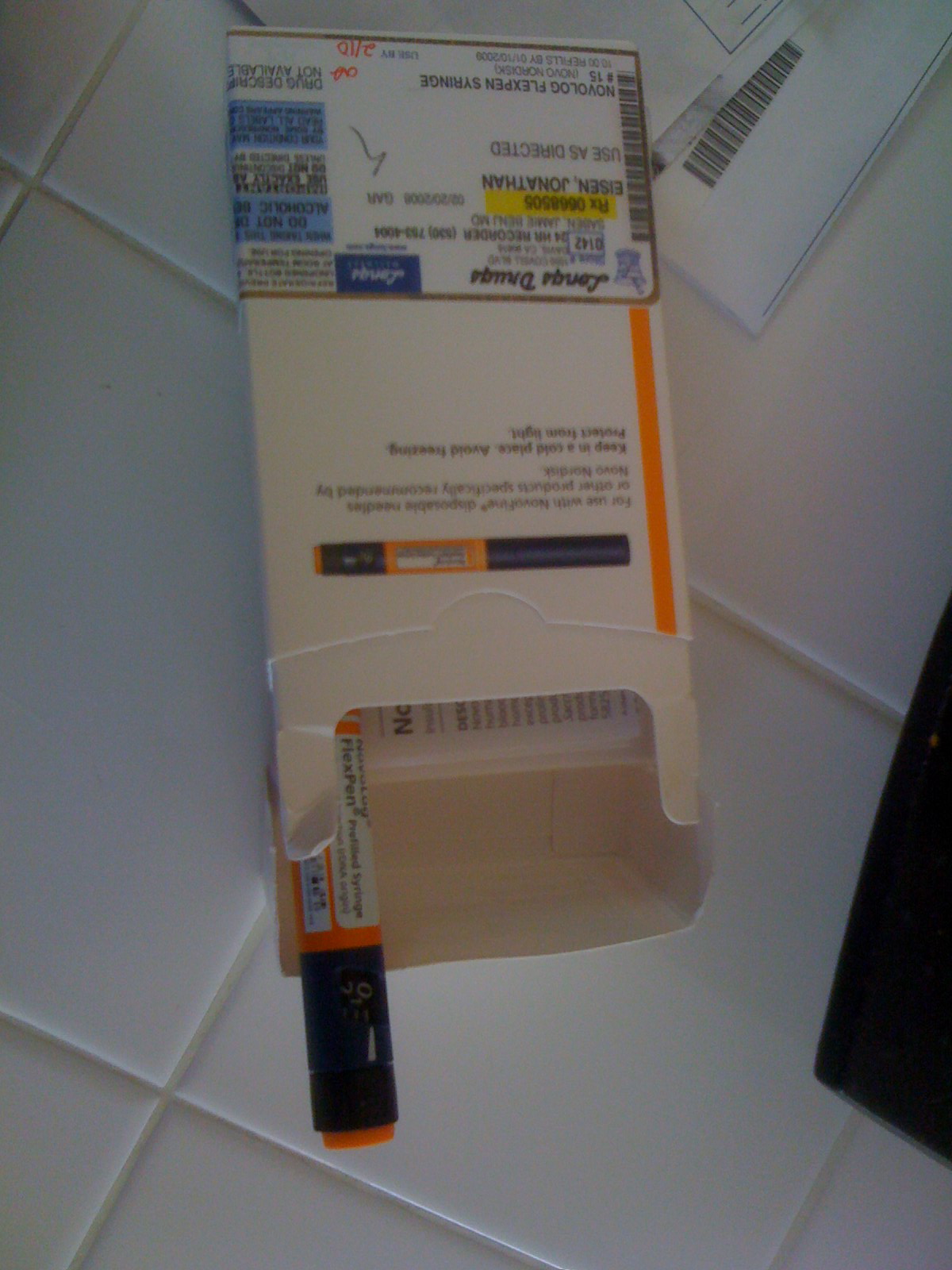
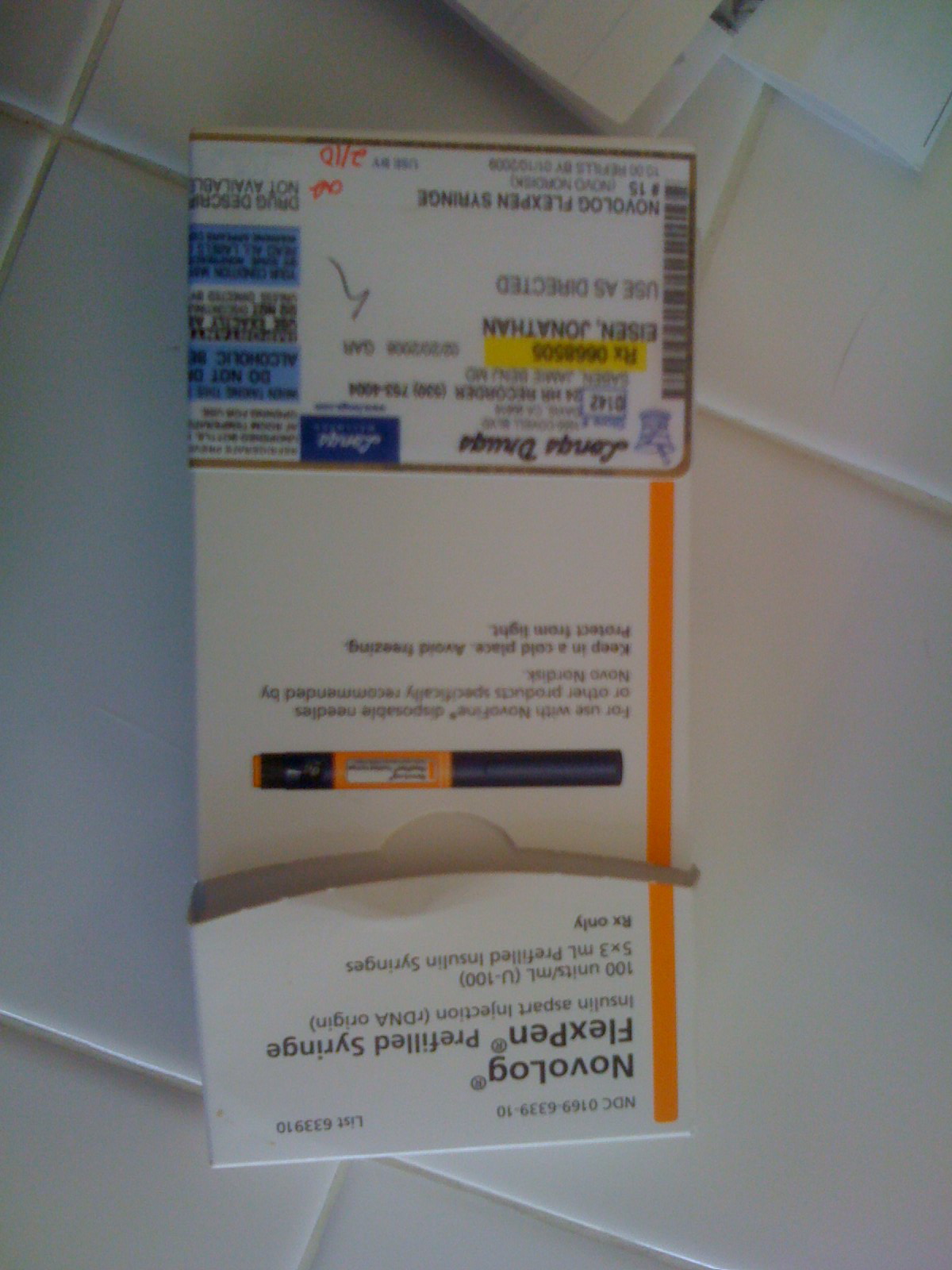
All I can say is I am glad I check my medicines before I take them.  I went to Long’s in East Davis the other day to pick up some insulin and was given a box of my insulin pens.  When I got home I found that there was only one insulin pen in the box and that pen was used.  Not exactly confidence boosting in my pharmacy.  Only later did I figure out what happened which was even scarier.  This was insulin I had returned months before because of a defect that Long’s was supposed to send back to the manufacturer (I had called the company who had handled this very well, and they told me a free box would be at Long’s and that Long’s would return the unused portion to them).  So I guess Long’s put it in the fridge and did not return it and then saw my name on it and gave it back to me.  Yuck.  Even worse, they did it again, I think the next time I went in.  Double yuck.  

Note that I wrote this when it happened but decided not to post it (but saved it in my blogger account), since it seemed a bit too personal. But now (2009) I am having problems with Long’s again and I figured I would make live some of my old postings about Long’s.

Kudos to New Scientist’s "24 myths and misconceptions" about evolution

New Scientist has a pretty good article on myths and misconceptions about evolution (see Evolution: 24 myths and misconceptions).

They really hit on many of my pet peeves on evolution. Among my favorites:

Many of these fit in well with my Adaptationomics Award which I will start giving out again soon ….

Help save Davis’ Schools …

Normally I do not put too many things about Davis here as I post them on my Davis Blog here. But I am cross posting today since I know many people from Davis read this blog.

There is a financial crisis of sorts going on in Davis. Please consider donating to the Davis Schools Foundation by May 15 in order to prevent cancellation of programs and/or termination of teachers.

See the video below which was made to showcase Davis’ children and what we stand to lose if we don’t all act fast!

See also Jamie Madison’s blog.

SPARC and Science Commons release guide to creating institutional open acces policies

A nice new release from SPARC and Science Commons is out. They put together a guide to creating institutional open access policies (see Press Release)

In the guide they have an overview of the new Harvard Open Access policy, suggestions for what one can do on one’s own campus and a plan of action for bringing about policy change. I know I am going try some of their suggestions here at Davis as I am hoping Davis and the UC in general adopts a policy like Harvard’s (they mention the UC consideration of such a policy in their site)