CUCFA letter to UC regarding health care plan changes

Posting this email I just received. I note – I find the new UC medical plan to be a horrendous change and am also deeply concerned about how it was decided upon and implemented.

——-

This message is being sent to the University of California faculty on behalf of the board of the Council of UC Faculty Associations. The following letter was delivered to UC President Janet Napolitano earlier today:

————————————-

President Janet Napolitano
Office 12122
1111 Franklin Street
Oakland, CA 94607

Dear President Napolitano,

The recent changes to the health care insurance plans available to UC faculty and staff have resulted in a drastic reduction in both choices and quality of our insurance options. UC Care, the new “self-funded” PPO medical insurance plan that replaces Blue Cross Plus, Blue Cross PPO, and Anthem plans, does not provide equivalent coverage for campuses that do not have a medical center, such as UCR and UCSB. This leads to serious inequities between faculty and staff on those campuses with medical centers and faculty and staff on those campuses without them.

The UC Select (Tier 1) network of providers and facilities is grossly inadequate, for it excludes many of the best doctors and hospitals that were covered under the Blue Cross plans. As the Academic Council noted in its letter to you, employees on some campuses are suddenly losing in-plan access to their long-standing provider systems. Faculty who regularly travel for extended periods, those whose families face complex or chronic health challenges, and out-of-state emeriti and retirees are seeing significant degradation in the quality of insurance they are offered and anticipate significant increases in costs, if they seek the same quality of health care previously provided within the discontinued Anthem plans.

The employees of some UC campuses are facing discriminatory treatment that seriously degrades the quality of our individual lives and those of our families, as well as undermining the collective welfare of our campus communities. Health care options and other benefits have long been a strong incentive for working at the University of California, despite the fact that UC salaries have declined in relation to those at comparable institutions, but these benefits are being steadily eroded. The erosion of our benefits further undermines UC’s ability to compete for the best faculty and staff and maintain its first-class reputation.

In addition, we note that the process of developing the new plan was characterized by a lack of transparency and consultation with the Senate, inadequate notice of the changes, and insufficient resources given to HR units on the campuses to help and advise faculty and staff. The experience exposed the inadequacies of the consultation mechanisms for dealing with changes of this importance, scope, and complexity.  We believe better, more inclusive mechanisms must be established.

We call on you to immediately implement an expanded set of UC Select options under UC Care so that all campuses have equal access to medical care. We demand that there be a full review of the process, a fund to compensate egregiously affected employees, and a better set of options for next year’s open enrollment.

On behalf of the CUCFA Board,
Patricia Morton,
President, Council of UC Faculty Associations
Associate Professor and Chair, Art History Department, UC Riverside

cc: William Jacob, Academic Council Chair
J. Daniel Hare, Chair, University Committee on Faculty Welfare
William Parker, Chair, UC Healthcare Task Force
Peter J. Taylor, Chief Financial Officer, UCOP
Nathan Brostrom, Executive Vice President, Business Operations
Dwaine Duckett, Vice President, Human Resources, UCOP

Free Publications in PeerJ Until 2014

From PeerJ:

In the past year, PeerJ has had two ‘free submission periods’ in which we encouraged authors in specific subject areas to publish with us for free. These limited-time promotions resulted in increased submissions, which showed that despite our already low prices there is a large community for whom price is still a consideration when trying Open Access – this must change.

At just nine months-old, PeerJ is already publishing a significant amount of great science, with hundreds of articles and preprints published since February of this year. Despite this fact, we are fully aware that the majority of authors have not yet experienced our benefits and we genuinely want as many of you as possible to experience the benefits of publishing your work in a modern, streamlined, holistic and integrated publishing platform.

Therefore, as we approach the end of our first calendar year of publication, we want to open up the PeerJ experience to as many researchers as possible. By doing so, we also want researchers like you to experience the benefits that our ‘end-to-end process’ provides (i.e. the close integration of PeerJ PrePrints with PeerJ).

As a result, we are pleased to announce that from now through the end of 2013, any article that is submitted to PeerJ PrePrints (including any articles which have already been submitted there) can go on to be published in PeerJ (the journal) entirely for free (assuming it passes peer review and assuming you initiate the PeerJ submission process before Jan 1st 2014).

As we celebrate the 10 year anniversary of the Berlin Declaration (one of the seminal moments in the history of Open Access), we want to make sure that researchers realize that Open Access publishing has evolved, and we want as many as possible to experience what it has become!

Yours,
The PeerJ Team

BioAgFR 2013 NCBI Discovery Workshops @ UC Davis Library Webinar Edition

>
>A Fall 2013 Hello to our Library Faculty Representatives to the Shields
>Library Biological & Agricultural Sciences Reference Department.
>
>Would you please distribute the following email notice to your
>respective departmental email lists, especially those for your graduate
>students.
>
>Thank you!
>
>~~~~~~~~~~~~~~~~~~~~~~~~~~~~~~~~~~~~~~~~~~~~~~~~~~~~~~~~~~~~~~~~~~~~~~~
>~~~~~~~~~~~~~~~~~~~~~~~~~~~~~~~~~~~~
>
>The UC Davis Library is pleased to announce:
>
>2013 NCBI Discovery Workshops @ UC Davis Library [Webinar Edition]
>
>The workshops will focus on the following areas:
>
>1. Sequences, Genomes, and Maps: December 17, 2013 from 12:30-2:30pm PT
>
>http://www.ncbi.nlm.nih.gov/education/workshops/sequences-genomes-and-m
>aps/
>
>2. Proteins, Domains, and Structures: December 18, 2013 from
>12:30-2:30pm PT
>
>http://www.ncbi.nlm.nih.gov/education/workshops/proteins-domains-and-st
>ructures/
>
>3. NCBI BLAST Services: December 19, 2013 from 12:30-2:30pm PT
>
>http://www.ncbi.nlm.nih.gov/education/workshops/ncbi-blast-services/
>
>4. Human Variation and Disease Genes: December 20, 2013 from
>12:30-2:30pm PT
>
>http://www.ncbi.nlm.nih.gov/education/workshops/human-variation-and-dis
>ease-genes/
>
>To register: http://tinyurl.com/NCBI-Workshops-UCD
>
>You are welcome to register for one or more workshops, each emphasizing
>different sets of NCBI resources. Specific examples will be used to
>highlight important features of the resources and tools under study and
>to demonstrate how to accomplish common tasks.
>Electronic copies of detailed handouts for each session will provide
>step-by-step instructions and additional information about each example.
>
>All workshops are taught by NCBI staff and will consist of 1.5 hours of
>instruction followed by a Q & A period.
>
>Due to the US Government sequester, the workshop instructors will not
>be able to present in person at UC Davis, as in previous years.
>Instead, you are invited to attend all sessions via webinar, using your
>own computer or perhaps collaborating with your department or research
>group to view together.
>
>NCBI Discovery Workshops Website:
>http://www.ncbi.nlm.nih.gov/education/workshops/
>
>Questions? Contact bioagquestions or
>hslref

PBS Digital Studios Offensive Thanksgiving Special includes Einstein sexually assaulting Marie Curie

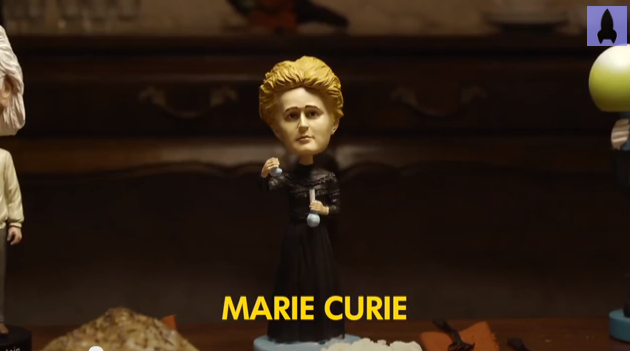
Wow.  I just do not know even what to say here really.  My Facebook feed is filling up with discussion about this video “A Very Special Thanksgiving Special | It’s Okay to be Smart” from PBS Digital Studios and I thought it would be important to share this with a wider audience.

The video includes scenes like the following:

Marie Curie is the only female scientist represented who says “It was very nice to be included”.

Later there is a scene of Einstein harassing Marie Curie.

Which ends with Einstein telling Marie Curie he wants her to “wear him like a Parka”


Einstein gets spontaneously naked at the party.
And then Einstein “accidentally” falls on Marie Curie and starts to sexually assault her.

Funny isn’t it?  Really funny no?

What a fu#*@ disgrace from PBS.  They should be ashamed.


UPDATE 11/16/13 9:45 AM

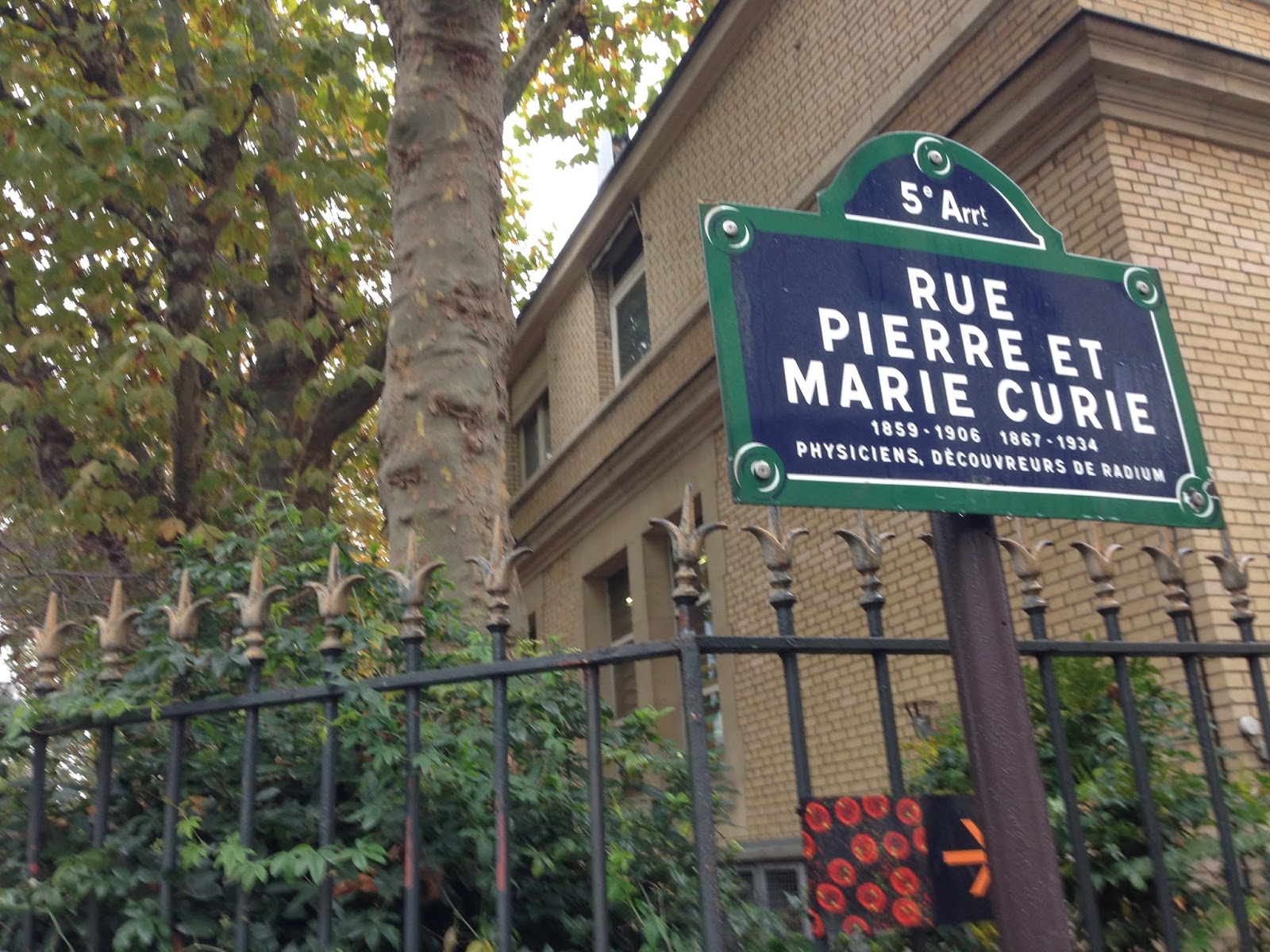
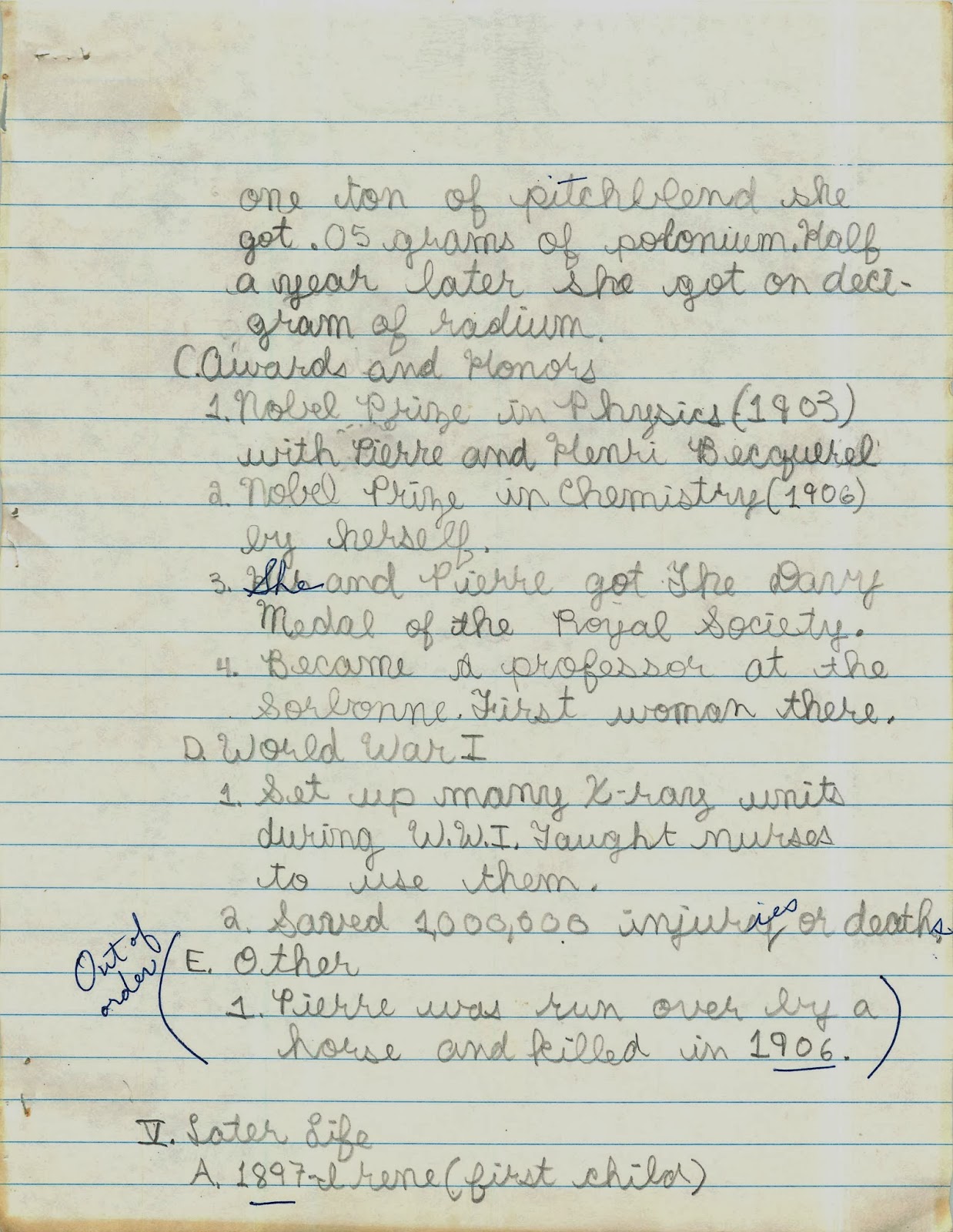
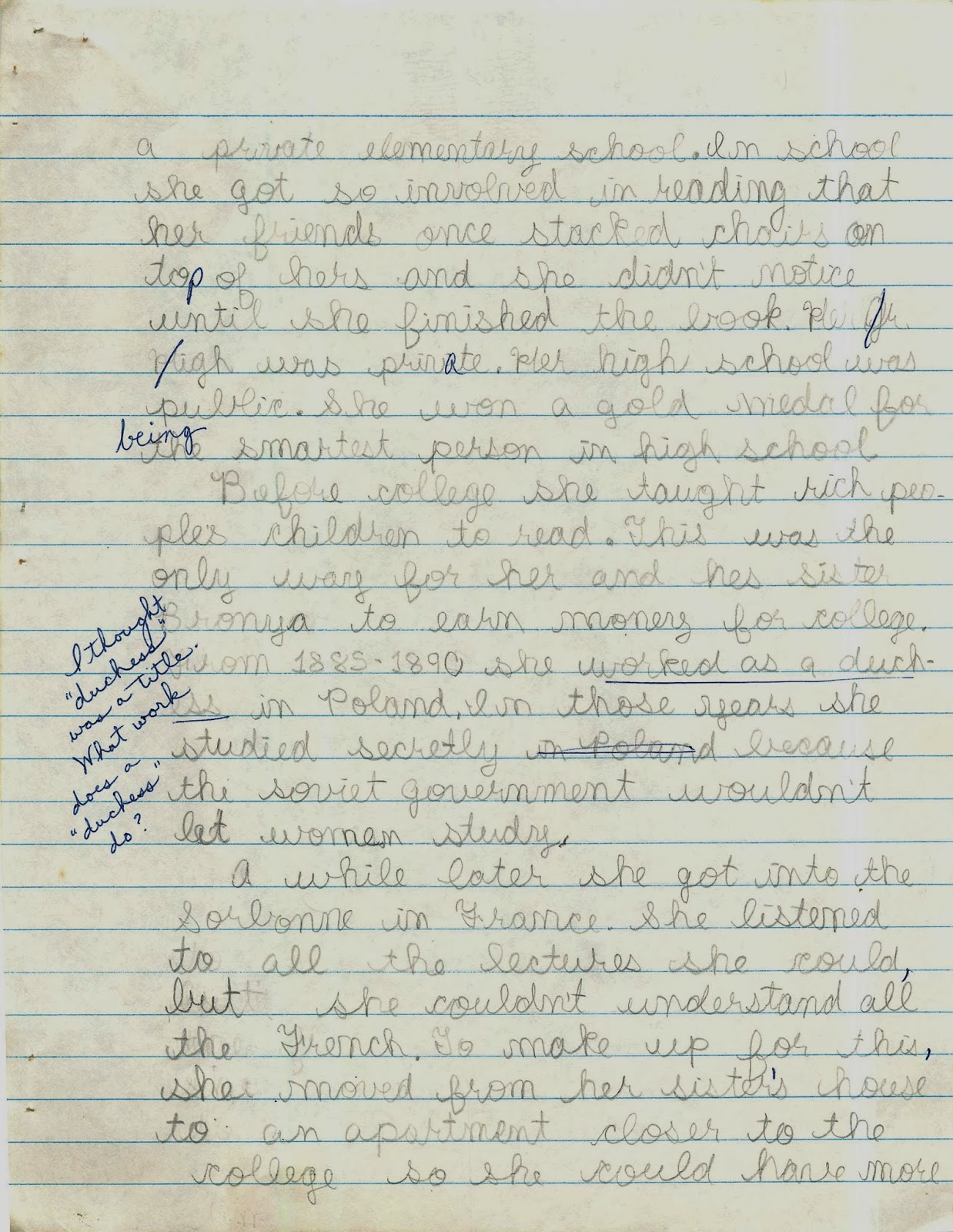
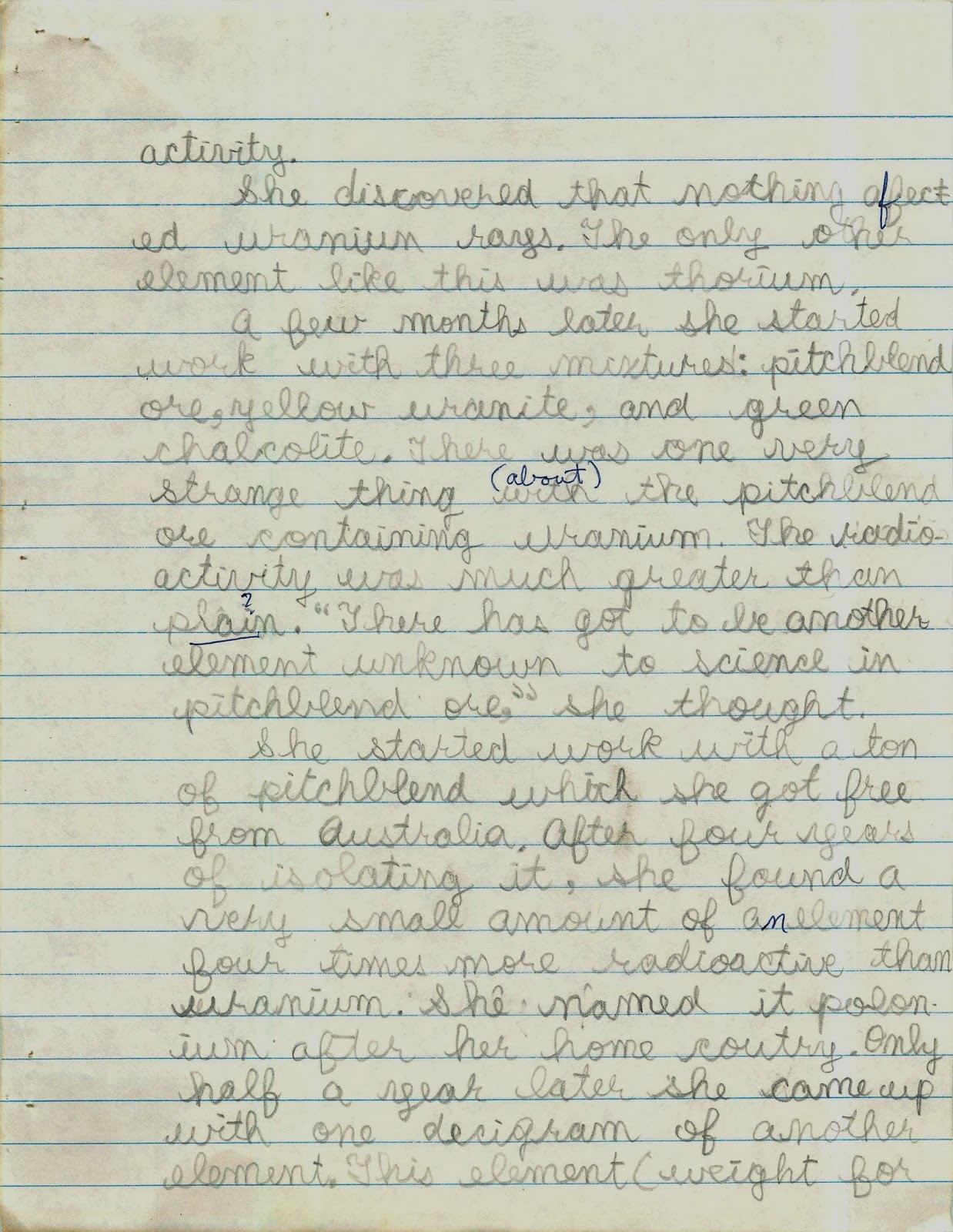
I just wanted to note one extra thing here.  I think this would be offensive no matter what female scientist was used as a character.  But it was extra painful to me that this had Marie Curie in it.  As a child I had one major hero – Marie Curie (yes, I was a bit of a geek – but my mom is a physical chemist so Curie appealed to me in many ways).  Every time there was an assignment to write about a historical figure or a famous person, I wrote about her.  So when I was in Paris for the first time last week I was very excited to go near places associated with Marie Curie.

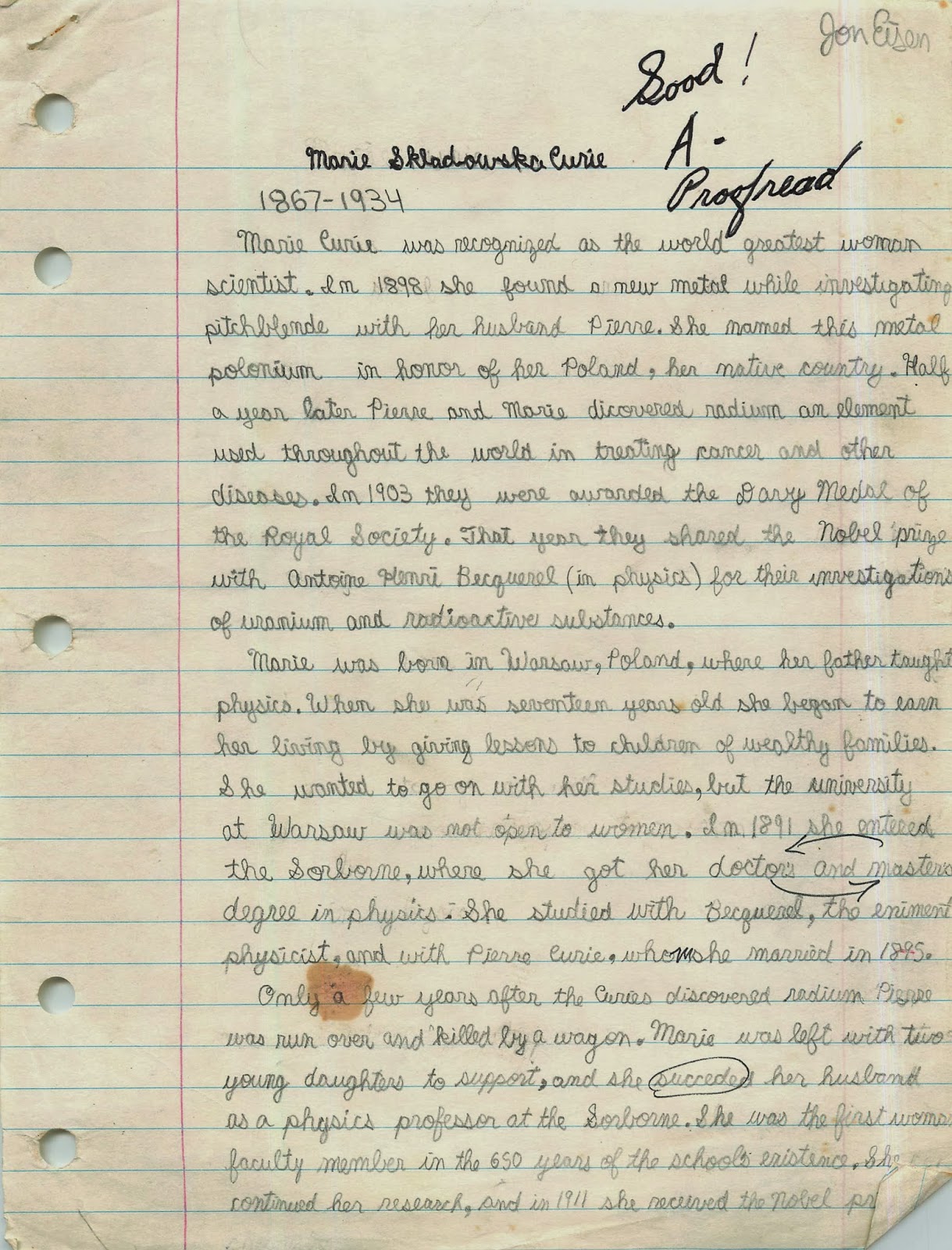
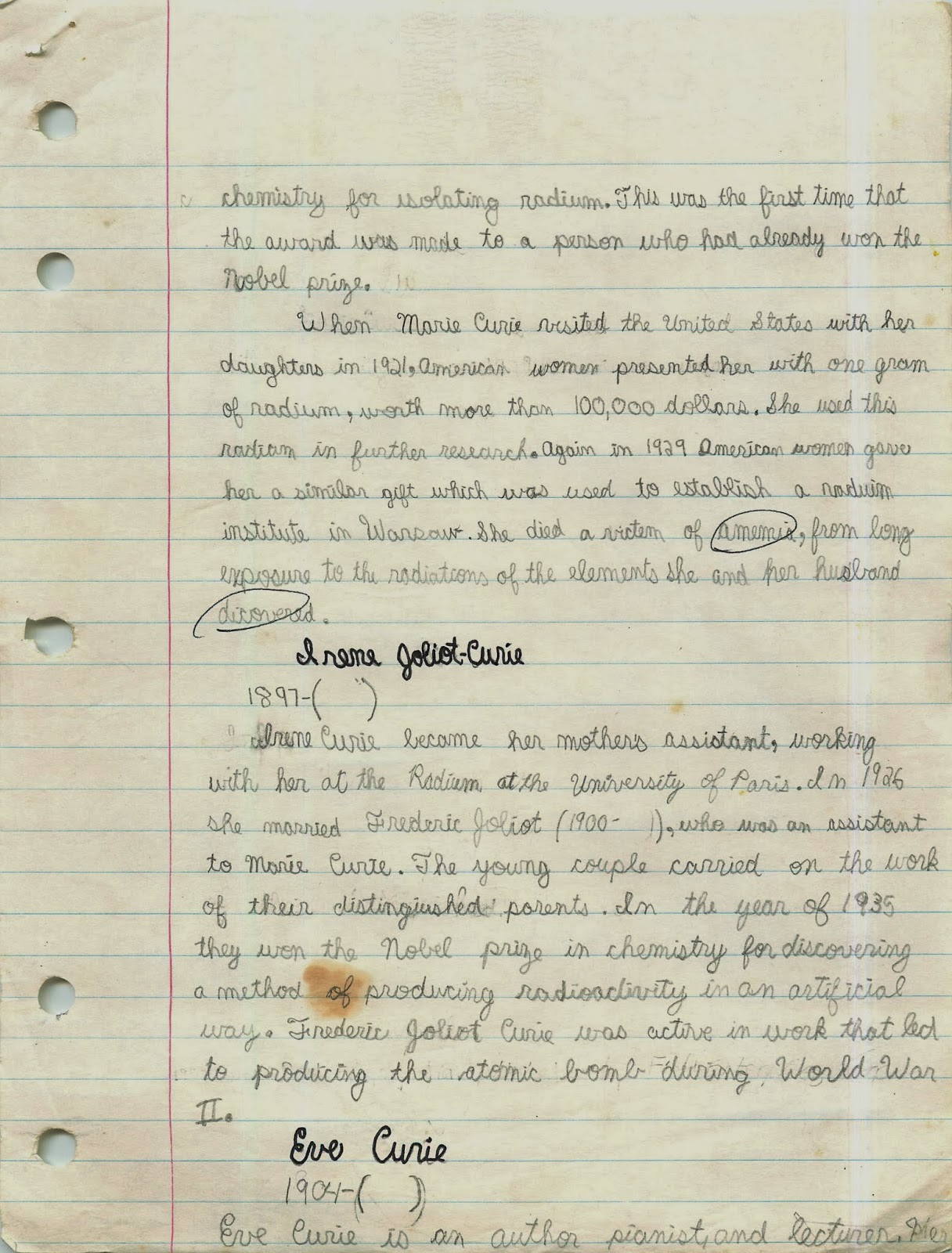
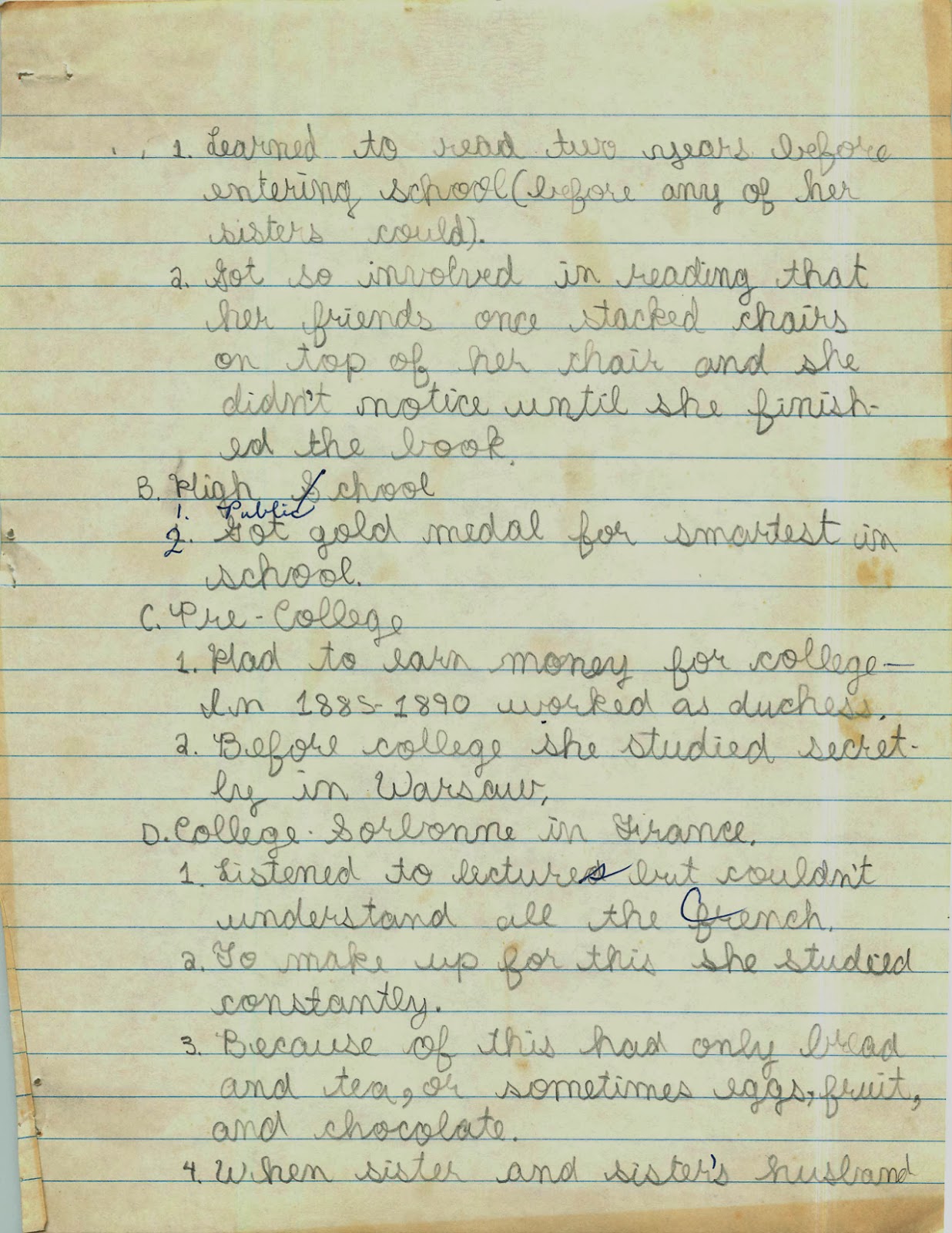
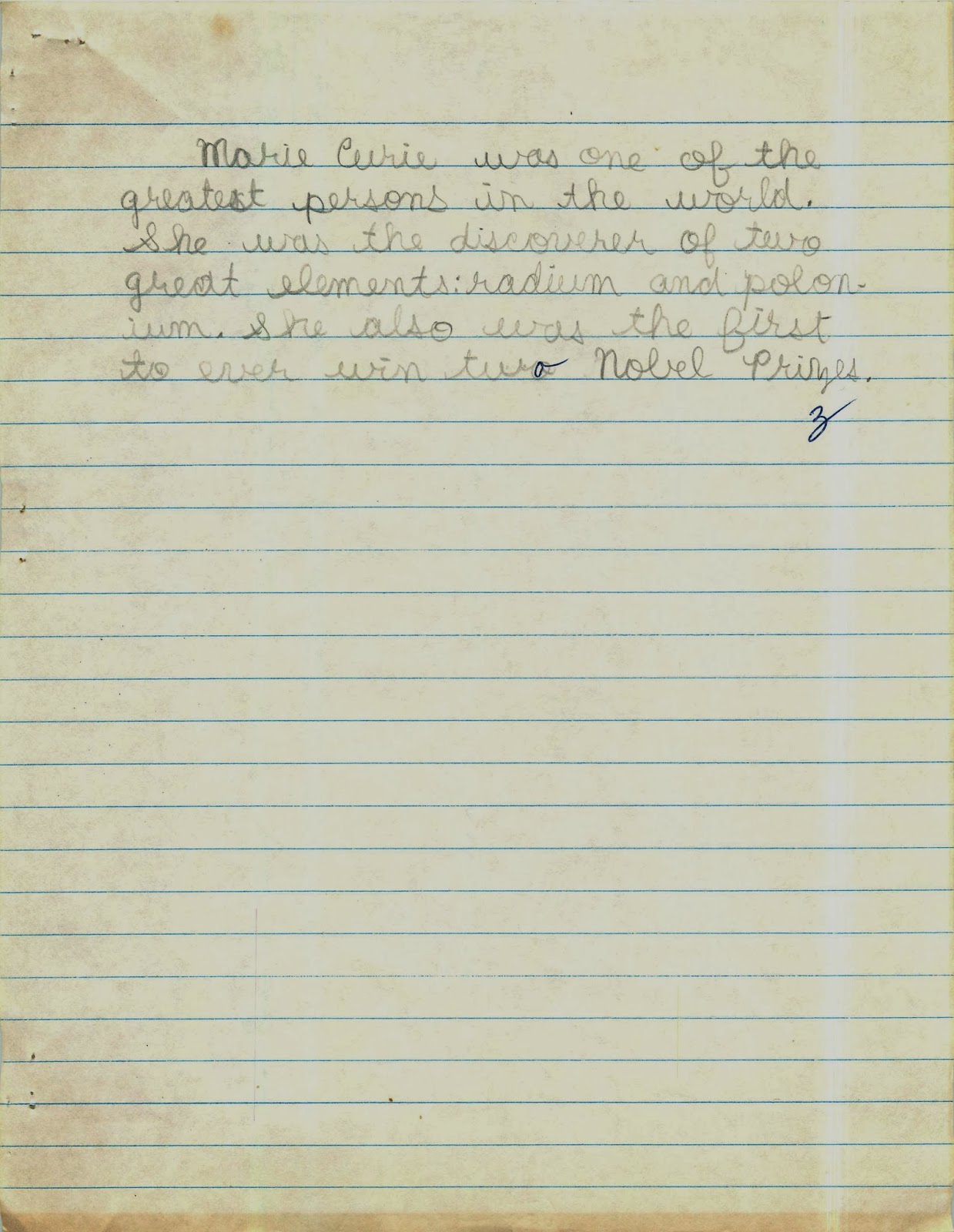
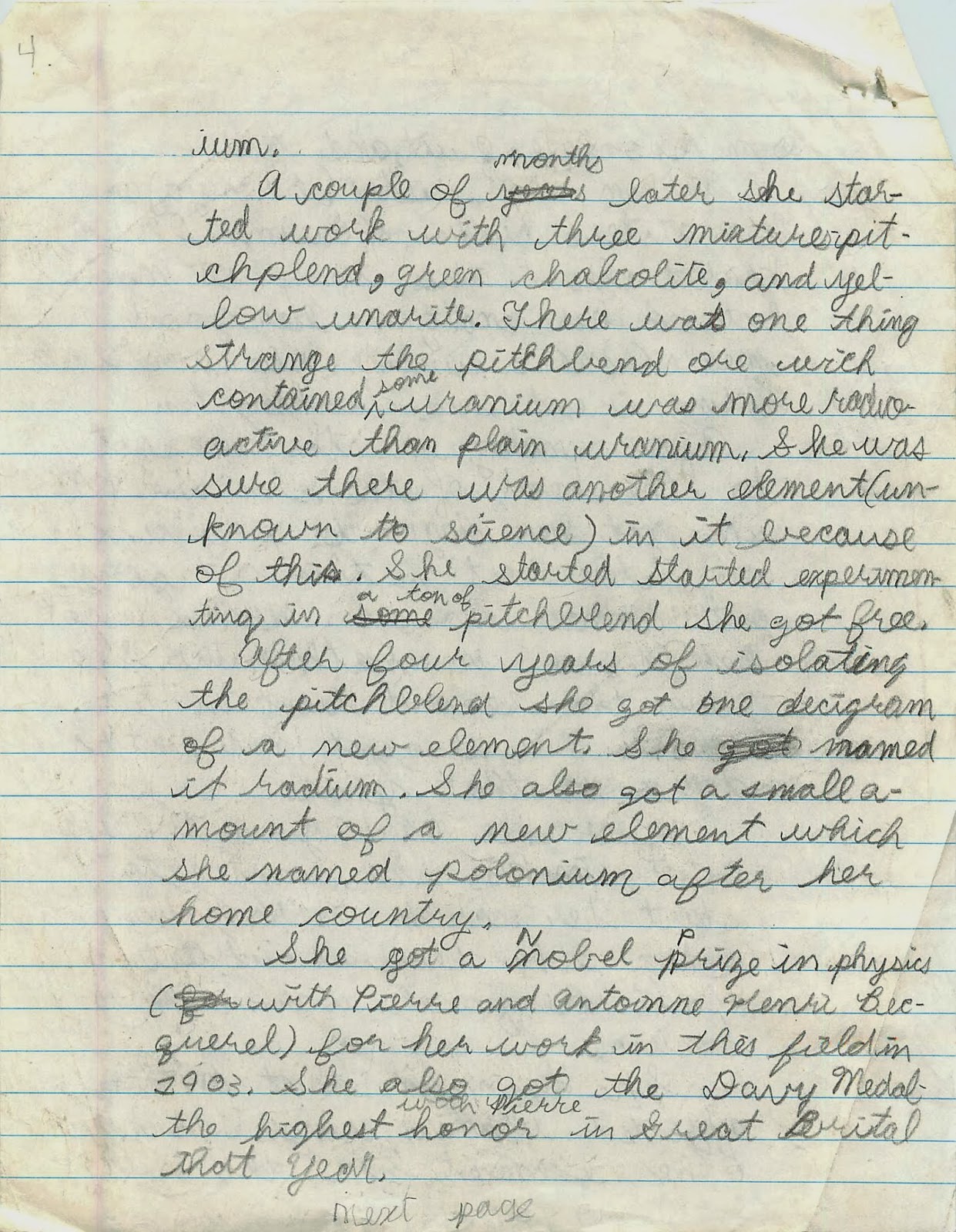
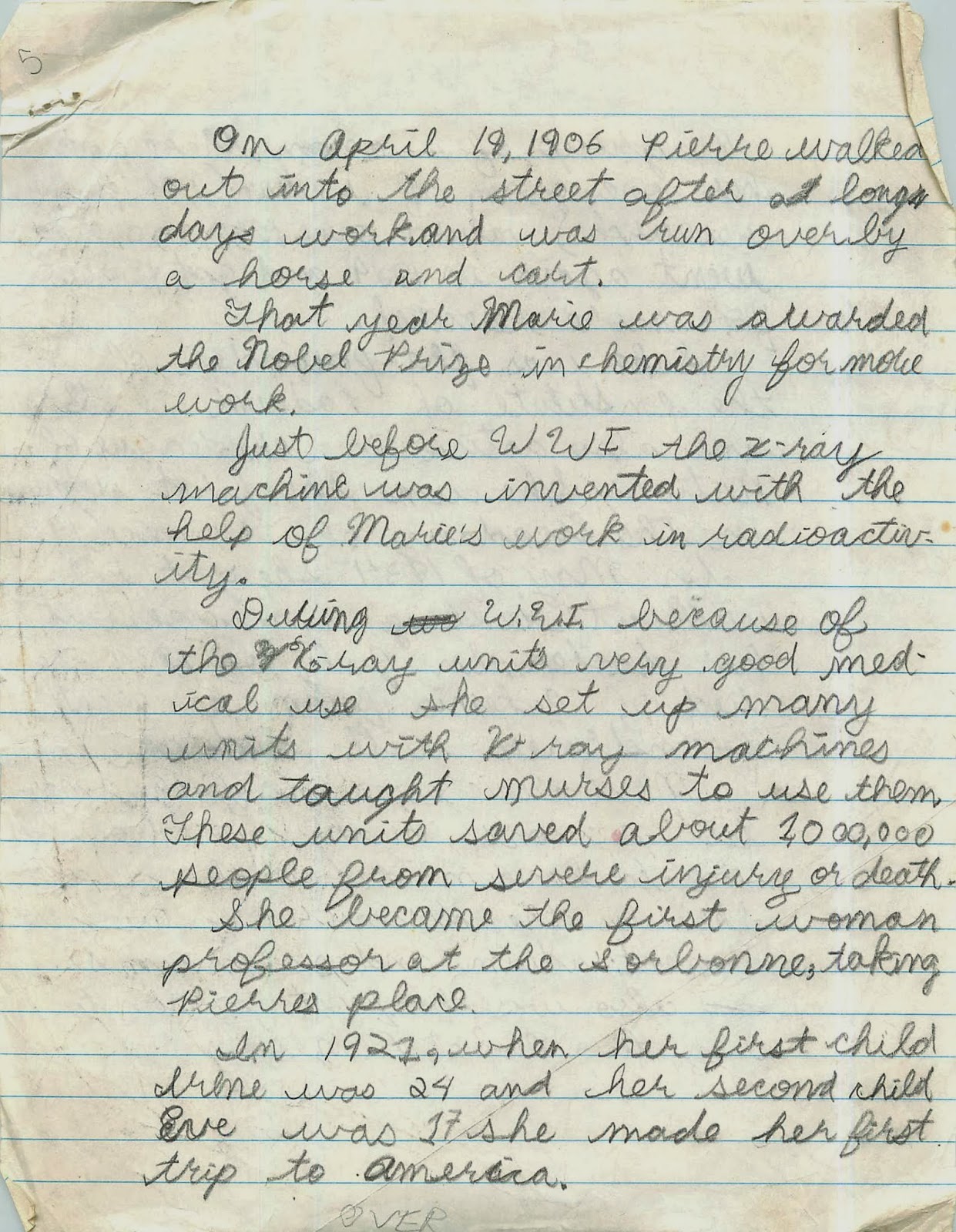
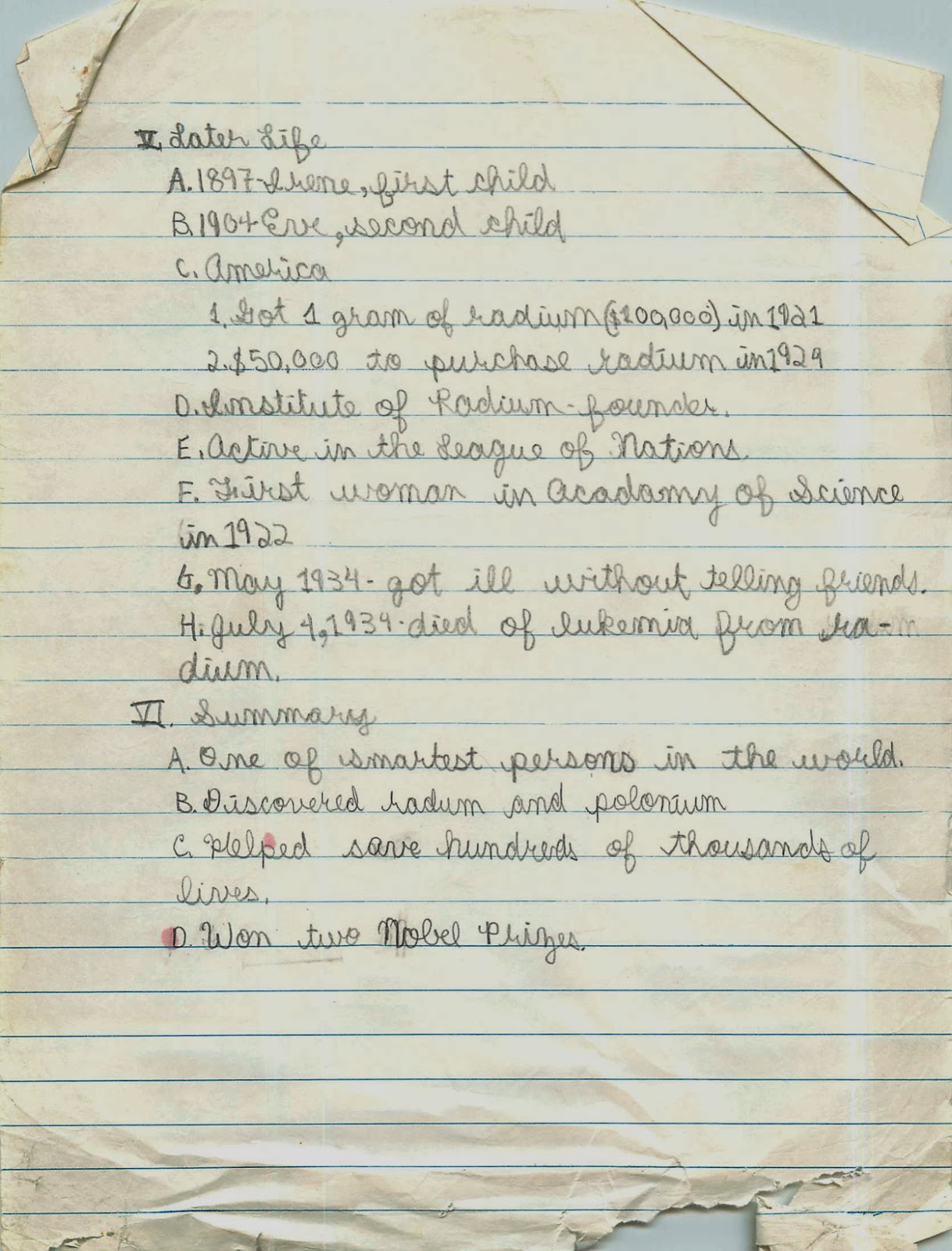
So this AM, after posting about this awful video,  I went in to my box of old papers and found some of those things I wrote about Marie Curie when I was in elementary and junior high school and I scanned them in.

Here are some of them:

Essay

Whole Booklet About Marie Curie

Essay Rough Draft

Notes for one essay


UPDATE 2: 11/17/13 4:52 AM: I made a Storify of some of the discussions of this post.


UPDATE 3: 11/17/13 5:20 AM Producer of the video has issued an apology / explanation.


UPDATE 4: 11/19/13 4:22 PM PBS Responds

The Ombudsperson for PBS has posted some comments about this here.  A key section:

What astounds me is that, while risk-taking is often to be applauded, this depiction of Einstein and Curie is so not funny, so off-the-wall, so not likely to be understood yet virtually guaranteed to anger a huge segment of a viewing audience for no good reason that one wonders how it was decided to show it. On the other hand, in an era where clicks count the most, maybe it is not so dumb.

He also posts what is supposedly an official PBS Response:

Joe Hanson issued a sincere apology on his blog, which is the channel he chose to discuss this issue. It included a detailed explanation of how the video was created, what he was trying to accomplish and the statement, “this video makes a joke to call attention to the sexual harassment that many women still today experience, often from wannabe Einsteins. The joke is uncomfortable because these issues are uncomfortable. To be very clear: that joke is not an endorsement of sexism in science. We aimed to ridicule miscues of science in society, past and present, using dolls, and we failed.” 

He also asks in the post that people form their opinions based on his past videos and writings, such as the video from the previous week, where he examines the fact that the vast majority of Nobel prize winners have been white men and criticizes women’s “Nobel snubbing” as a “symptom of a larger problem,” that “women are under-represented in science in general.” 

There have been a number of comments about “A Very Special Thanksgiving Special” since it debuted that have ranged from critical to laudatory. With this video, Joe has opened up an important, though difficult, debate. We believe we are meeting our public service mission by providing an open forum where this and other conversations about complex subjects can take place.

Are you fu$*## kidding me?  “With this video, Joe has opened up an important, though difficult, debate.”  Are they serious?  Joe opened up an important debate?  By posting an offensive video?  Seriously?  I mean – I have avoided ANY types of personal comments about the people behind this video.  But this response by PBS is awful, condescending, misleading, and, well pathetic.  What a joke.


UPDATE 5 11/21/13 1 AM The producer of the video has removed it from Youtube with the following comments:

I have decided to remove “A Very Special Thanksgiving Special” from the It’s Okay to Be Smart channel. We failed in using satire to shine some light on the problem of women’s under-representation in science and the on-going disrespect and harassment women face in the field. I hope it is clear that I never set out to offend anyone. Harassment is real and unacceptable — I never meant for my work to indicate anything other than that. I am looking forward to continuing what has always been my mission for It’s Okay To Be Smart: Inspiring people – all people – to learn about the beauty and wonder of science

Davis Faculty Assocatin – Petition in support of graduate student workers

The following message is being sent to the faculty at UC Davis on behalf of Davis Faculty Association chair Richard Scalettar:

Dear UCD Faculty,

On September 16th, the chairs of 33 departments at UC Berkeley signed a letter to their Dean of the Graduate Division, Andrew Szeri, to express their concern about the uncompetitively low graduate student stipends UC offers. On October 3rd, departmental chairs at UCSD sent a similar letter to their Graduate Studies Dean, Kim Barett.

The Board of the Davis Faculty Association (DFA) agrees that academic student employee wages are inadequate. According to UCOP’s own survey, these stipends lag at least $2,697 behind comparator institutions. Academic student employees are currently negotiating with UC for a pay increase, but UC’s latest offer of a 2% raise still leaves a wage-deficit in excess of $2,000 (and considerably more when compared to the programs of elite private institutions with which UC competes.)

The DFA’s sister chapter, BFA, has launched a petition to be sent to UCOP labor relations in support of the graduate student contract negotiations. (The current contract expired at the end of September). The DFA board endorses this petition and asks you to please sign it and spread the word amongst your colleagues.

http://petitions.moveon.org/sign/uc-faculty-in-support

Additionally, the academic student employee union’s next bargaining session for a new contract will be taking place at UC Davis this Monday and Tuesday, November 18th and 19th. Faculty are welcome to attend and give testimony in favor of increasing support for graduate student workers. The sign-up sheet is at:

https://docs.google.com/forms/d/1MkWmFrr4A_ExMdRqpTPWSzM3IHw6ejARZk7HE9uX1gI/viewform

Twitter chatter / links of interest: October 2013

Well, I post to Twitter a lot of links to stories of possible interest to readers of this blog.  If you want to keep up with all of this chatter and discussion from me and others, you should probably hang out on Twitter a bit.  But I know that is not for all.  So I am going to try to start posting some of the more relevant links here.

Crosspost: I never meta data I didn’t like – especially re: standards for the built environment #IndoorMicro

New paper out from the microbiology of the built environment community: MIxS-BE: a MIxS extension defining a minimum information standard for sequence data from the built environment. The joint first authors are Elizabeth Glass and Yekaterina Dribinsky. And the senior author is Lynn Schriml.

The paper is simple but I think very important – it describes the development of what is a “suggested list of parameters to record and report for each sequenced sample and to compare data across studies”. Or, in other words, it is a recommended list of metadata to collect and record about samples from the built environment that are being sequenced. If you are interested in microbial diversity and/or the indoor/built environment, this is worth a look.

Oh, and, full disclosure, I am an author too.

NEW #UCDavis Graduate Student Child Care Grant for all Graduate Students

Forwarding this:.

Dear Colleagues,

We are pleased that beginning this Fall, the childcare reimbursement available to Academic Student Employees (ASEs: TA, Reader, AI, Tutor) will be available to all graduate students. However, there are changes to the process. To minimize confusion and simplify the process for student parents, administration of programs providing financial assistance for childcare expenses have been consolidated to one access point under the campus WorkLife program.

The new program, Graduate Student Child Care Grant (GSCCG), is available to all graduate and professional students, (excluding those students in self-supporting degree programs). Every graduate student parent with a child up to 12 years of age will be eligible to receive up to $600 per quarter, to offset child care expenses; funding of child care for additional children may be available under other need-based programs also administered by WorkLife.

The GSCCG replaces the ASE Childcare Reimbursement Program and starting Fall quarter, students now apply for the funding directly through WorkLife. However, if an ASE has child care expenses incurred during Summer quarter 2013, they should be reimbursed through their hiring unit, as it was done previously.

Attached here is a flyer about the program and how students should apply. Please forward to students in your program. All questions should be directed to WorkLife. http://www.hr.ucdavis.edu/worklife-wellness/uc-davis-child-care-subsidy

GSCCG Flyer.pdf

Interview of me and my brother (@mbeisen) regarding history of #PLOSBiology …

Interview of me and my brother regarding the history of PLOS Biology …

UCDavis ADVANCE Reading of the Day: How not to run a women in science campaign

Interesting article in The Guardian the other day that is worth taking a look at: How not to run a women in science campaign | Science | theguardian.com.  It is by Alice Bell and discusses, among many things, the European Commission video from last year on “Science: It’s a Girl Thing” (shown below) that sparked a lot of controversy.  The article also discusses many issues of relevance of improving the representation of women and minorities in the sciences including: the leaky pipe, the whiteness of science, and social mobility.  It is definitely worth a read for anyone interested in issues relating to women in science and minorities in science.