
Just having some fun with/at Carl Zimmer who claims he has some news to post very soon. See
Eisen Lab Blog

Top five metaphors Darwin considered and rejected for "The Tree of Life"
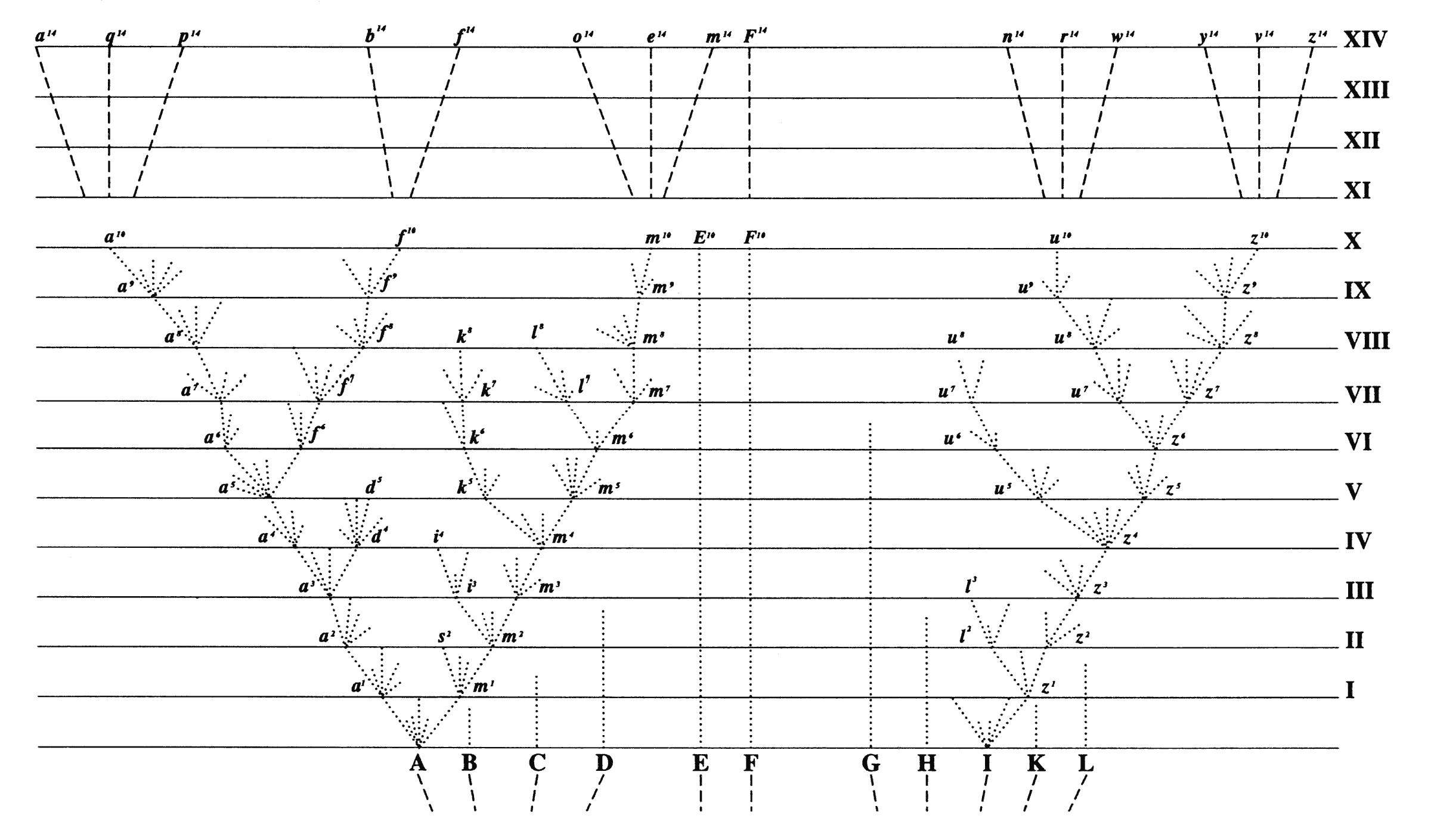
Well, as I am desperately trying to prevent Hollywood from corrupting the term “Tree of Life” and I got to thinking. Why did Darwin and others have to use the metaphor of a tree to represent the branching history of organisms through evolutionary time? Why did other metaphors not get used? Well, thanks to a little research I did by communicating with Darwin directly (as I did when he announced his endorsement of Obama), I have found out that Darwin went through many other metaphors before settling on the “Tree of Life.” (note the tree-like figure here which is based on the one figure in the Origin of Species).
And here are the top 5 other such metaphors for what is now known as “The Tree of Life”
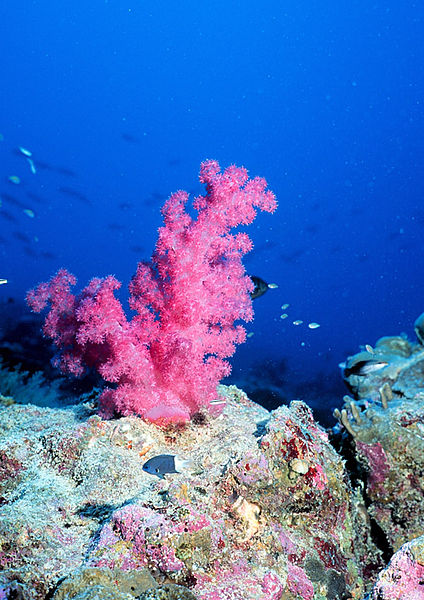
 The coral of life. Darwin particularly liked this one as he did some work on marine organisms. But ultimately he rejected it because he was worried about anti-evolutionists killing coral to get back at Darwin.
 The watershed of life. Rivers exhibit branching patterns much like trees. The big problem Darwin saw was that sometimes separate river branches reconnect to each other, which did not follow his model for descent. If only Darwin knew about lateral gene transfer.
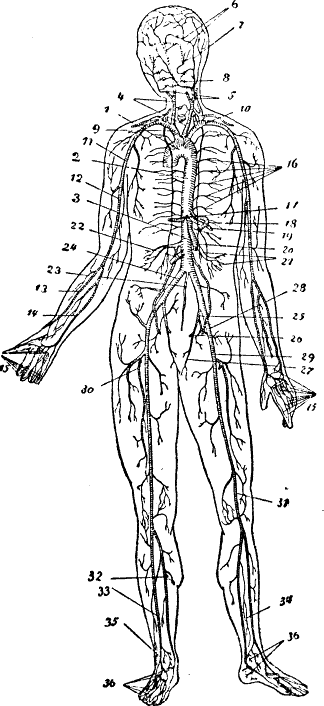
 The blood vessels of life. Darwin was desperate to find visceral connections for people to evolution. This one would have been great. The big problem here was the “going” and “coming” nature of arteries and veins.
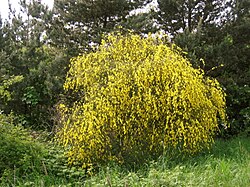
 The shrub of life. Thus turns out to have been one of Darwin’s favorites because it captures the richness of diversity more than a sparsely branching tree. However, shrub, even then, was used as a derogatory term to refer to height challenged individuals. And Darwin did not want to upset this key constituency so he avoided this term.
 The lungs of life. While this has some positive features (e.g., it is unidirectional like a tree), thankfully Darwin did not stick to this or we would have competition from “LOL” for all the domain names.
Other possibilities included “the Plumbing System of Life” and “the Highway Map of Life”. If you know of others Darwin may have considered, let me know.

Share this:

Hello world!
Welcome to WordPress.com. This is your first post. Edit or delete it and start blogging!
Share this:
Calling all evolutionary biologists – protect the "Tree of Life" from extinction by Hollywood
OK, I am getting worried. As I wrote a few weeks ago, there is a new movie coming out supposedly next year called “The Tree of Life” starring Brad Pitt, Sean Penn and others. Well, the movie sounds like it could be good. But though this may sound like a cool thing to those of you out there who study the Tree of Life in some way, we are at risk here. There will soon be 100s of blogs, web pages, news stories, etc. writing about the Tree of Life movie. And uses of the Tree of Life by evolutionary biologists will lose their google rankings. The term “The Tree of Life” is at risk of a form of extinction.
So what are we to do? I am calling on all evolutionary biologists and bloggers and biologists in general to to link to other sites that use the term as much as possible. For example, you can add a link to my blog, which is after all called “The Tree of Life.”
So please, add links to some Tree of Life pages. And start using the term yourself as much as possible.
Here are some places you should link to
- Jonathan Eisen’s “Tree of Life” blog (no selifsh interest here)
- Tree of Life Web Project
- Tree of life (science) – Wikipedia, the free encyclopedia
- Green Tree of Life at Berkeley
- Fungal Tree of Life Project
- Beetle Tree of Life project
- Fly Tree of Life project
- Mammal Tree of Life project
- Cypriniformes Tree of Life project
- Liverwort Tree of Life Project
- Early Bird Tree of Life project
- Early Bird Tree of Life project
- Angiosperm Tree of Life project
- Cnidaria Tree of Life Project
- Decapoda Tree of Life Project
Please post additional links in the comments here and please help save “The tree of life”
———————————-
Note – here are some sites responding and helping save “The tree of life”
- The Evilutionary Biologist John Dennehy talks about the tree of life in his post titled “Tree of life”.
- Nodalpoint is helping out.
- Jeremy at Another Blasted Weblog is saving the tree.
Share this:
Jelly Bellies in the New York Times
Well, Jelly Bellies, a semi-local institution (they are based in Fairfield for those who have not seem them from I-80) has gotten some good press in the Times today. I hear they have a nice tour that kids and adults like but we have not done it yet. I must say, I like their Sport Beans when I go for bike rides. Anyway, just good to see local businesses getting some props in the Times.
Share this:
Combinging two of my favorite things – chocolate and genomes
Well, the Mars company has really done it now (see Unwrapping the Chocolate Genome -from washingtonpost.com). They are planning to sequence the cacoa genome. Genomes and chocolate. Man are they going to get every bioinformatics person I know to apply to help out with this project …
Some little notes on the project:
- They plan to release the data for public use: “Mars plans to make the research results free and accessible through the Public Intellectual Property Resource for Agriculture, a group that supports agricultural innovation, as they become available. The intent is to prevent opportunists from patenting the plant’s key genes.”
- They are doing this in a collaboration with IBM
- Good quote by Howard Shapiro: “We have the ability as a private company to take charge of the future,” Howard-Yana Shapiro, global director of plant science for Mars, said.”
So -even though I pondered whether this was science by press release, a friend of mine convinced me it was not and this was just getting out the word on the project. For other details see
- Genome Technology
- BBC News
- Fungal genomes blog
- For the love of chocolate
- Another genome project? Sweet . . .
- A Genetic Quest for Better Chocolate
Share this:
Swimming the Mirror: Poems for My Daughter on KDVS Today at 5 PM
Brad Buchanan will be discussing and reading from his new book of poems, “Swimming the Mirror: Poems for My Daughter” (Roan Press) on KDVS 90.3 FM today (Wednesday) at 5pm. Please consider tuning in. Also available onlne at http://www.kdvs.org/listen/.
Why I am writing about this? Well Brad and I used to play street hockey together in grad. school at Stanford. No – neither of us started Google as did other street hockey players from Stanford. But you should check out Brad’s new book of poems from Roan Press and also can see some of his past stuff at an old blog here.
Roan Press is a new Sacramento area publisher. In the email I got they say
“Please mark your calendars for Roan Press’s first Book Launch Party at the Book Collector (1008 24th Street) on July 23 at 7:30 pm. Roan Press is a new Sacramento publisher with an interest in poetry, fiction, books of essays and other genres. We particularly welcome submissions from Northern California writers, but are open to work from anyone, anywhere. Please also watch for our website, http://www.roanpress.com, which is coming soon”
Share this:
Overselling genomics award #4: University of Western Ontario and Graham Thompson on honeybee altruism
In my blog I give out some snarky awards for things that annoy me including the Genomics by Press Release Award and the Adaptationomics Award and the Overselling Genomics Award. Sometimes I really want to give something an award but I am not sure what it should get. That is the case here. There is what I find to be a painful press release on “Selfish Genes” in honeybees put out by University of Western Ontario. This press release relates to a paper being published in Genetics. on QTL mapping in honeybees and searching for alleles/genes that suppress the reproductive activity in worker bees. This suppression is a form of altruistic behavior in a way and has been the subject of a good deal of research. Basically, the ended up mapping some of the suppression to a few regions of the genome.
The press release however, goes way way overboard in interpreting their results and claiming “New Discovery Proves ‘Selfish Gene’ Exists.” They imply throughout the press release that prior work simply suggested that selfish genes were theoretically possible in this case and that now with their results they have been proven. For example they quote the lead author Graham Thompson:
This means that the ‘selfish’ gene does exist, not just in theory but in reality.
This is way beyond an overstatement. Their results are nice and interesting but they are part of a continuum of work on bees (and other selfish systems) and do not in any obvious way suddenly prove the existence of this selfish gene compared to prior work that they imply was just guesswork. I am personally baffled by the extent of this claim — basically ignoring work by many others as well as work in a variety of systems outside of bees. They end the press release with the following:
“This basically provides a validation for a huge body of socio-biology,” says Thompson, who adds the completion of Honey Bee Genome Project in 2006 was crucial to this discovery.
For that last statement, I am thus giving them my “Overselling genomics award” #4. But they easily could have gotten a few others.
NOTE – I had changed the award to just U. Western Ontario and not including Thompson because it is the University that appears to be responsible for the press release not Thompson. However, a commenter (Oliver) convinced me that if we want to clean up press releases we need to make the scientists involved in the story help make sure the press releases are clean, so I put Thompson back in.
Hat tip to T. Ryan Gregory for pointing this out. And you should check out his new Genomics by press release “award” at his blog Genomicron. I will probably be writing about the same story soon.
Share this:
Extremophiles getting some props too
With the Mars Lander scratching the surface of the Red Planet looking for indications that life could exist there, the time is ripe for some public education about microbes and extremophiles. And fortunately the press is picking up on this possibility. For example, CNN.COM has picked up an AP story on extremophiles: Life in Earth’s toughest places; how about Mars? – CNN.com
In the article, Alicia Chang from AP writes:
But if there were past or present life on the red planet — a big if — scientists speculate it would likely be similar to some extreme life on Earth — microscopic and hardy, capable of withstanding colder-than-Antarctica temperatures and low pressures.
AND
Most living things on Earth thrive not only in the presence of water, but also need sunlight, oxygen and organic carbon. But the range of conditions in which life can survive has been expanded with recent discoveries of micro-organisms trapped in glaciers and rocks or living in volcanic vents and battery acid-like lakes.
The AP article is quite reasonable, as far as science reporting goes. However, there is some stink going on in the bloggosphere about AP bullying bloggers regarding fair use so you might want to check out AP: Stupid, it hurts! and AP Files 7 DMCA Takedowns Against Drudge Retort and AP/Drudge Retort “Resolution” Leaves Fair Use Questions Unanswered.
Share this:
UC Davis Bodega Marine Lab getting some props
Now, I have written here before about the spectacular site for UC Davis’ Bodega Marina Lab in Bodega Bay). And lest anyone not believe me, Bodega Bay and the Marine Lab has been written up in the San Francisco Chronicle in an article entitled: Marine lab a spectacular spot on Bodega Bay.
The article lead in is all you really need to know:
Mention Bodega Bay, and the first thing that comes to mind – even now, 45 years later – is Tippi Hedren getting her head pecked by a gaggle of sociopathic seagulls. The town’s visitor center hands out 8,000 maps a year pinpointing where Alfred Hitchcock filmed the most memorable scenes of the 1963 classic “The Birds.”
But each year, 10,000 to 12,000 people travel to a spectacular spot west of town to visit a less-famous site, the Bodega Marine Laboratory, a UC Davis outpost where about 100 graduate students and scientists study underwater life along the Northern California coast.
Each Friday afternoon, from 2 to 4, docents lead free, hourlong tours that wind through parts of the sprawling complex. It soon becomes clear that visiting a marine lab isn’t anything like visiting for-profit aquariums, with their polished tanks and fancy signs. Here, the only live exhibits are a tide pool and three small aquariums.
Mind you, Bodega Bay itself is not the most happening town in the world. But it has a few stores, restaurants and cafes (which they review some of in the Chronicle article). The lab is also the site for the “Workshop in Applied Phylogenetics.” One cool thing about this workshop is that the organizers have begun building a Wiki to gather information on phylogenetic methods and tools and this wiki is open to everyone to use and contribute to. So if you are interested in phylogenetics you might want to check out the wiki and start adding to it. And you might want to keep an eye out for announcements for next years course.
 Jonathan Eisen's Lab