What’s better than brain doping? Cello Scrotum is what.

OK I have a lot to learn. I was (and still am) pretty proud of the April 1 prank I pulled off this year with many other bloggers announcing a fake crackdown on brain doping. But my joke is not even close to this one. A letter in a recent issue of BMJ has announced that the malady known as Cello Scrotum was in fact made up. Why did they make this up? In response to a publication about guitar nipple (for more on this see CNN and the Times Online). And now they have confessed only 35 years later.

And I must say – God Bless Pubmed Central. Because here is the original very brief letter which I am posting below:

Brain Doping April 1 Joke still getting some press

Well, my April 1 collaborative joke on brain doping is still getting some press. See El Pais which reports

Como muestra, algo que empezó como una broma. “Los centros del NIH (los Institutos de Salud de Estados Unidos) pedirán a todos los científicos que quieran optar a sus ayudas y subvenciones a que pasen pruebas antidopaje para comprobar que no han tomado estimulantes cognitivos para aumentar su rendimiento intelectual”. Una supuesta World Anti-Brain Doping Authority (WABDA) se encargaría de los análisis. Es el mensaje de una nota de prensa falsa. Una fake lanzada en Internet el pasado 1 de abril, el día de los inocentes en Estados Unidos, por Jonathan Eisen, biólogo evolucionista de la Universidad de California. Comenzó como una travesura, pero el rumor acabó por extenderse por la red.

La broma apunta, sin embargo, a un debate abierto entre la comunidad científica. Si se controla el dopaje en deportes como el ciclismo, ¿por qué no controlarlo en la comunidad científica, donde también compite el intelecto por conseguir becas, ayudas e incluso premios en reconocimiento de su inteligencia? Esa era la reflexión original que, según explica Eisen, le llevó a colgar su broma de Internet. Sin embargo, también afirma que nunca aceptaría que se realizasen ese tipo de controles.

Humorous sciency signs #2: Squirrel liberation front


Here is another funny science related sign. I think this was from the Grand Canyon or somewhere near there, taken by my mother, many years ago.

Like I needed any more justification to not trust organisms bigger than a large protist.

Darwin on the Wall

Lots of other bloggers posting about this but I got to put it out there too.  Check out the remarkable story of the Darwin Shaped Wall Stain and how it is galvanizing the evolution community – See Evolutionists Flock To Darwin-Shaped Wall Stain.  It is from the Onion.  One of my favorite “news” sources.  Hat tip to many many people for pointing this out.

Predicting the future (for molluscs)

As many of you know, I spend a decent amount of my blogging time trying to come up with funny evolution or genomics related posts. Well, if you like that type of thing, you really have to check out this new site:

The Molluskan Zodiac

The site states

“While most people are familiar with western astrology and with the Chinese zodiac, much less is known about the ‘molluskan zodiac’ (sometimes known as the mariners zodiac). But ask any fisherman, and they will tell you instantly which of the ten signs of the molluskan zodiac they were born under.”

It is very very funny. And real of course. Kudos to Keith Bradnam, who happens to be from the UC Davis Genome Center (where I work) for revealing the inner secrets of these wonderful invertebrates. And while you are checking out the Zodiac, check out Bradnam’s new PLoS One paper on intron length which he authored with Ian Korf. Science humor, invertebrates, and Open Access publishing. Now what could be better than that?

Tracing the evolutionary history of Sarah Palin: links to a parasitic nematode and the pathogenic fungus Botryotinia fuckeliana

You see, as a total sequence analysis dork, when I see names, I frequently ask whether the letters in the name include only letters which are used as amino acid abbreviations. I started this game when the brilliant notes/letters came out in Science in the early 90s about whether ELVIS was overrepresented in protein sequences. Of course, despite being 20 years old, Science still keeps these under wraps requiring registration to see them (see for example the Stevens letter).

Anyway, alas, three of the major candidates for the US election have names that do not use traditional amino acid abbreviations so I am stuck with analyzing Sarah Palin. But that is OK because of her professed aversion to evolution and support to Creationism (and since sequence analysis is inherently an evolutionary study).

So – I took here name and went to the NCBI Blast page and did some searches. And what came up? Well, here are some of the top hits from the blastp searches (which I used to compare the pretend peptide “SARAHPALIN” with all the peptides in the non redundant collection at Genbank).

>ref|XP_001545292.1| Gene info hypothetical protein BC1G_16161 [Botryotinia fuckeliana B05.10]
gb|EDN25226.1| Gene info predicted protein [Botryotinia fuckeliana B05.10]
Length=383

GENE ID: 5425746 BC1G_16161 | hypothetical protein
[Botryotinia fuckeliana B05.10]

Score = 26.9 bits (56), Expect = 189
Identities = 8/9 (88%), Positives = 8/9 (88%), Gaps = 0/9 (0%)

Query 1 SARAHPALI 9
SARA PALI
Sbjct 209 SARAQPALI 217


>ref|YP_061725.1| Gene info homoserine dehydrogenase [Leifsonia xyli subsp. xyli str. CTCB07]
gb|AAT88620.1| Gene info homoserine dehydrogenase [Leifsonia xyli subsp. xyli str. CTCB07]
Length=451

GENE ID: 2939000 thrA | homoserine dehydrogenase
[Leifsonia xyli subsp. xyli str. CTCB07] (10 or fewer PubMed links)

Score = 26.9 bits (56), Expect = 189
Identities = 8/9 (88%), Positives = 8/9 (88%), Gaps = 0/9 (0%)

Query 1 SARAHPALI 9
SAR HPALI
Sbjct 267 SARVHPALI 275

>ref|ZP_02031476.1| hypothetical protein PARMER_01474 [Parabacteroides merdae ATCC
43184]
gb|EDN87136.1| hypothetical protein PARMER_01474 [Parabacteroides merdae ATCC
43184]
Length=299

Score = 26.1 bits (54), Expect = 340
Identities = 7/8 (87%), Positives = 8/8 (100%), Gaps = 0/8 (0%)

Query 3 RAHPALIN 10
RAHPAL+N

Sbjct 170 RAHPALVN 177

>ref|XP_567332.1| Gene info hypothetical protein CNJ01520 [Cryptococcus neoformans var. neoformans
JEC21]
ref|XP_773201.1| Gene info hypothetical protein CNBJ1950 [Cryptococcus neoformans var. neoformans
B-3501A]
gb|EAL18554.1| Gene info hypothetical protein CNBJ1950 [Cryptococcus neoformans var. neoformans
B-3501A]
gb|AAW45815.1| Gene info hypothetical protein CNJ01520 [Cryptococcus neoformans var. neoformans
JEC21]
Length=437

GENE ID: 3254188 CNJ01520 | hypothetical protein
[Cryptococcus neoformans var. neoformans JEC21] (10 or fewer PubMed links)

Score = 26.1 bits (54), Expect = 340
Identities = 8/9 (88%), Positives = 8/9 (88%), Gaps = 0/9 (0%)

Query 1 SARAHPALI 9
SAR HPALI
Sbjct 415 SARQHPALI 423


>ref|YP_001626035.1| Gene info citrate synthase [Renibacterium salmoninarum ATCC 33209]
gb|ABY24621.1| Gene info citrate synthase [Renibacterium salmoninarum ATCC 33209]
Length=386

GENE ID: 5822379 RSal33209_2898 | citrate synthase
[Renibacterium salmoninarum ATCC 33209]

Score = 25.7 bits (53), Expect = 456
Identities = 9/11 (81%), Positives = 9/11 (81%), Gaps = 2/11 (18%)

Query 1 SARAHP--ALI 9
SARAHP ALI
Sbjct 218 SARAHPYAALI 228


>ref|YP_001817256.1| Gene info integral membrane sensor hybrid histidine kinase [Opitutus terrae
PB90-1]
gb|ACB73656.1| Gene info integral membrane sensor hybrid histidine kinase [Opitutus terrae
PB90-1]
Length=936

GENE ID: 6208547 Oter_0366 | integral membrane sensor hybrid histidine kinase
[Opitutus terrae PB90-1]

Score = 25.2 bits (52), Expect = 611
Identities = 7/7 (100%), Positives = 7/7 (100%), Gaps = 0/7 (0%)

Query 3 RAHPALI 9
RAHPALI
Sbjct 256 RAHPALI 262


>ref|YP_001757871.1| Gene info putative anti-sigma regulatory factor, serine/threonine protein
kinase [Methylobacterium radiotolerans JCM 2831]
gb|ACB27188.1| Gene info putative anti-sigma regulatory factor, serine/threonine protein
kinase [Methylobacterium radiotolerans JCM 2831]
Length=331

GENE ID: 6141303 Mrad2831_5232 | putative anti-sigma regulatory factor,
serine/threonine protein kinase [Methylobacterium radiotolerans JCM 2831]

Score = 25.2 bits (52), Expect = 611
Identities = 7/8 (87%), Positives = 8/8 (100%), Gaps = 0/8 (0%)

Query 2 ARAHPALI 9
ARAHPAL+
Sbjct 299 ARAHPALV 306

>ref|ZP_01466013.1| hydrolase, TatD family [Stigmatella aurantiaca DW4/3-1]
gb|EAU63211.1| hydrolase, TatD family [Stigmatella aurantiaca DW4/3-1]
Length=209

Score = 25.2 bits (52), Expect = 611
Identities = 7/7 (100%), Positives = 7/7 (100%), Gaps = 0/7 (0%)

Query 3 RAHPALI 9
RAHPALI
Sbjct 79 RAHPALI 85


>ref|YP_001558323.1| Gene info glycosyl transferase group 1 [Clostridium phytofermentans ISDg]
gb|ABX41584.1| Gene info glycosyl transferase group 1 [Clostridium phytofermentans ISDg]
Length=357

GENE ID: 5743305 Cphy_1206 | glycosyl transferase group 1
[Clostridium phytofermentans ISDg]

Score = 25.2 bits (52), Expect = 611
Identities = 8/10 (80%), Positives = 8/10 (80%), Gaps = 0/10 (0%)

Query 1 SARAHPALIN 10
S RAHP LIN

Sbjct 113 SERAHPLLIN 122

There does not appear to be a perfect match in the NCBI NR protein database. But take a close look at the #1 scoring hit. That is right, it is from and organism called Botryotinia fuckeliana. No comment on the appropriateness of this name, but it does contain a term I will probably use a lot if she gets elected.

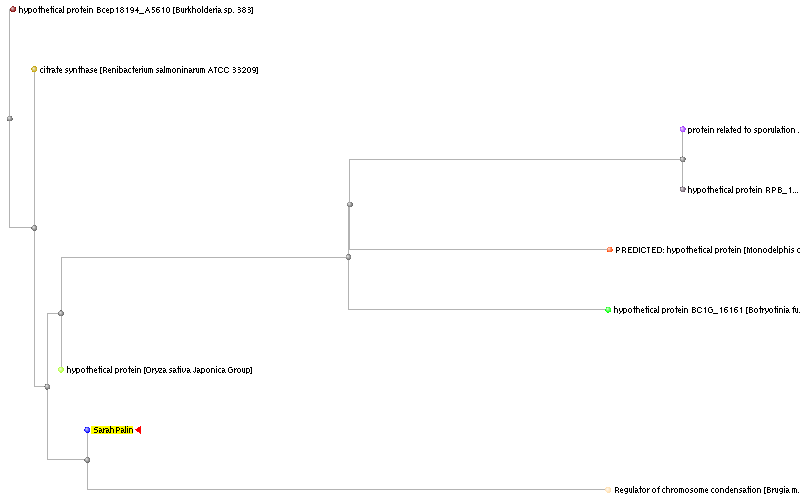
Of course, anybody who has heard me blather on and on about evolution knows that I am always talking about how blast top hits are not a good measure of relatedness per se (see my NAR paper where I first talked about this in 1995). So – I decided to build a tree of Sarah Palin. I used the NCBI Distance Tree option which you can do from blast searches.

Since most likely you cannot see that in enough detail – here is a zoom in.

That one did not come through on the Blog so well either so I decided to output the tree in Newick format and then I searched for a program that could draw a better figure on the web (we have tools in my lab to do this but I am trying to do this all on the web as an exercise). And I found a web site that makes drawtree available. And I plugged in the Newick format and it made a nicer one.


Though making trees from really short sequences is not ideal, in this tree, Sarah Palin is shown to be at the root of a branch including a protein from the parasitic nematode Brugia malayi. So if we take an evolutionary interpretation it seems that this causative agent of filariasis (well, a protein from this agent) is descended from SarahPalin. In other words, she seems to be ancestral to this parasite.

So in conclusion – by similarity – SarahPalin is closest to a plant pathogen with an unusual name. And by phylogeny SarahPalin is ancestral to a parasitic nematode. Sounds about right.

Top five metaphors Darwin considered and rejected for "The Tree of Life"


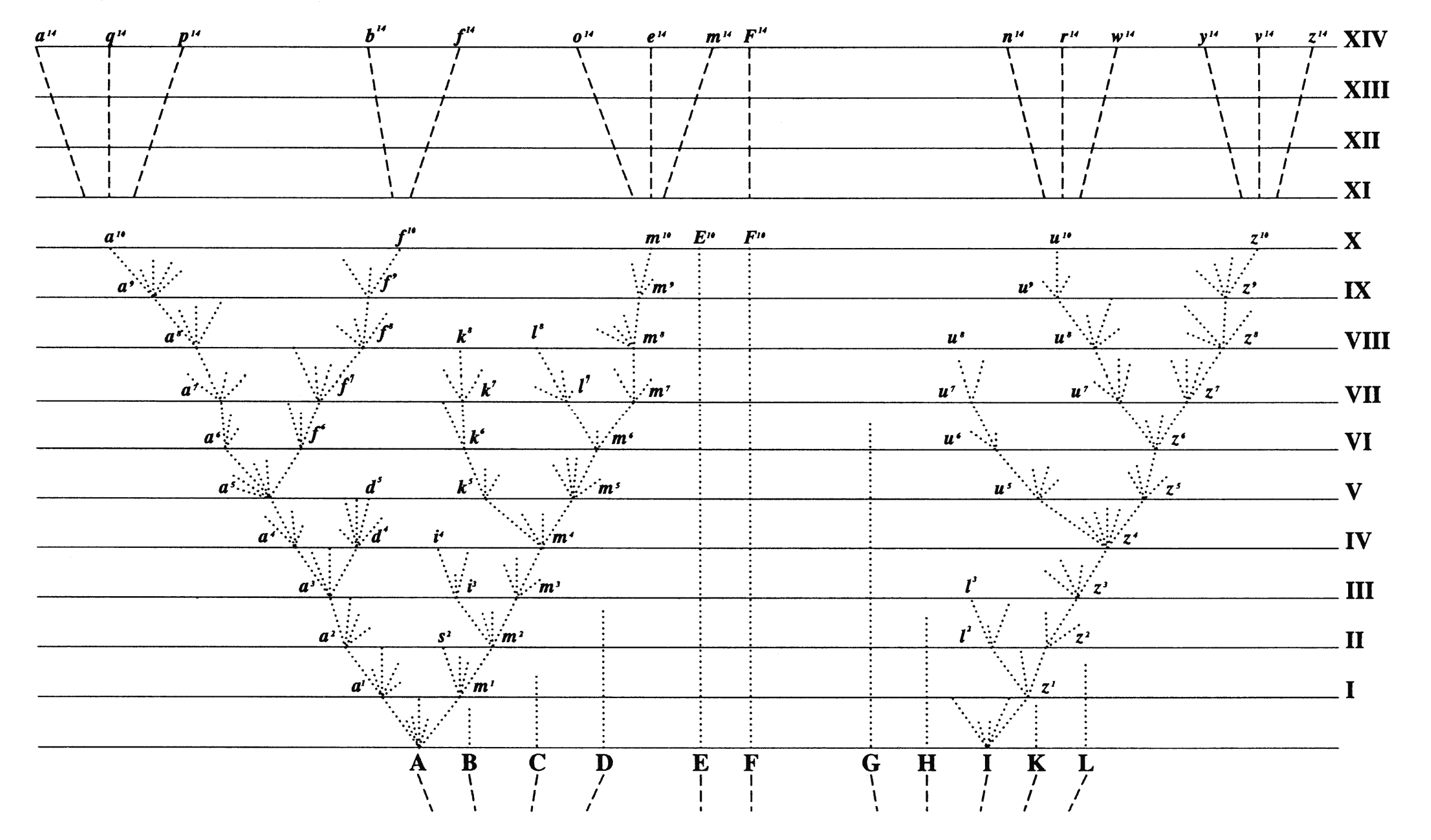
Well, as I am desperately trying to prevent Hollywood from corrupting the term “Tree of Life” and I got to thinking. Why did Darwin and others have to use the metaphor of a tree to represent the branching history of organisms through evolutionary time? Why did other metaphors not get used? Well, thanks to a little research I did by communicating with Darwin directly (as I did when he announced his endorsement of Obama), I have found out that Darwin went through many other metaphors before settling on the “Tree of Life.” (note the tree-like figure here which is based on the one figure in the Origin of Species).

And here are the top 5 other such metaphors for what is now known as “The Tree of Life”

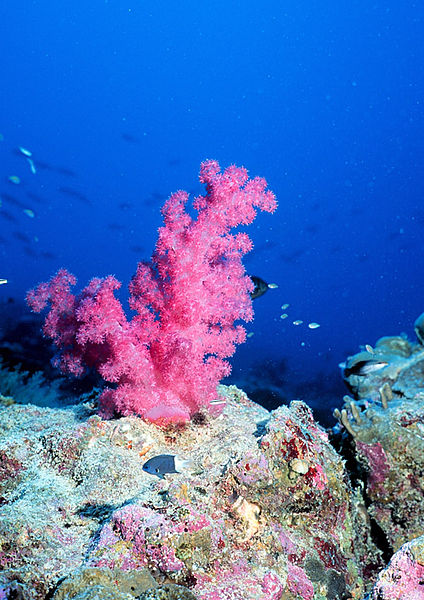
  1. The coral of life. Darwin particularly liked this one as he did some work on marine organisms. But ultimately he rejected it because he was worried about anti-evolutionists killing coral to get back at Darwin.
  2. The watershed of life. Rivers exhibit branching patterns much like trees. The big problem Darwin saw was that sometimes separate river branches reconnect to each other, which did not follow his model for descent. If only Darwin knew about lateral gene transfer.
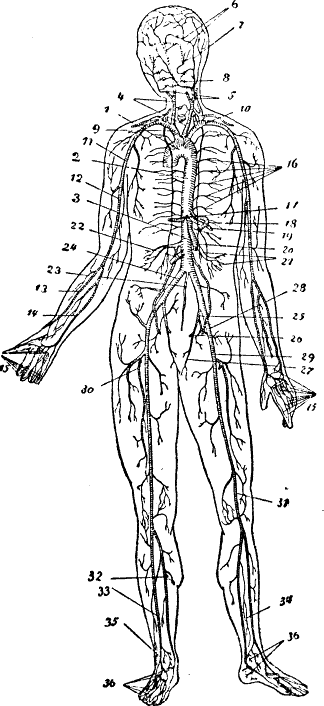
  3. The blood vessels of life. Darwin was desperate to find visceral connections for people to evolution. This one would have been great. The big problem here was the “going” and “coming” nature of arteries and veins.
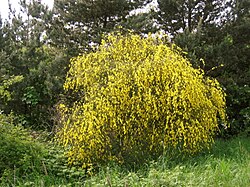
  4. The shrub of life. Thus turns out to have been one of Darwin’s favorites because it captures the richness of diversity more than a sparsely branching tree. However, shrub, even then, was used as a derogatory term to refer to height challenged individuals. And Darwin did not want to upset this key constituency so he avoided this term.
  5. The lungs of life. While this has some positive features (e.g., it is unidirectional like a tree), thankfully Darwin did not stick to this or we would have competition from “LOL” for all the domain names.

    Other possibilities included “the Plumbing System of Life” and “the Highway Map of Life”. If you know of others Darwin may have considered, let me know.

Are You Intellectually Clean?

Well, brain doping continues to be an issue, long after the buzz of April Fools Day is over. Now comes what I think must be a spoof of some kind: a site where people can make an “Academic Oath” saying they are clean by putting the following on their CV or WebSite:

For the honour of humanity and the integrity of the academy, I declare I have not, nor ever will, use any drug for an intellectual advantage. See, http://www.academicoath.com

This reminds me a bit of the PRISM spoof “PISD” but I am not sure if Academic Oath is really fake.

Confessions of an April Fool and the Dope on Brain Doping

Well, truth is imitating art in bizarre ways here. Nature today is running a news story by Brendan Maher (also see his forum here) and various related tidbits about a survey they conducted on brain doping. And the lead in to the news story? Well, it is the April 1 joke I coordinated where a group of co-conspirators (who I will name in a bit) and I posted stories about a new NIH crackdown on, yes, brain doping.

The US National Institutes of Health is to crack down on scientists ‘brain doping’ with performance-enhancing drugs such as Provigil and Ritalin, a press release declared last week. The release, brainchild of evolutionary biologist Jonathan Eisen of the University of California, Davis, turned out to be an April Fools’ prank. And the World Anti-Brain Doping Authority website that it linked to was likewise fake. But with a number of co-conspirators spreading rumours about receiving anti-doping affidavits with their first R01 research grants, the ruse no doubt gave pause to a few of the respondents to Nature ‘s survey on readers’ use of cognition-enhancing drugs.

So here I am going to tell the tale of the creation of this April 1 joke. In a way, it all started last April 1, when I created a fake New York Times story about how Craig Venter had been deceiving everyone with stories about sailing around the world studying microbes in the ocean, and in fact he has been studying the microbes living inside his body in order to scoop Francis Collins and others at the NIH on the “microbiome.” I made the fake story by taking an article by Nick Wade on Venter sequencing his own genome, downloading the html for the whole web page on the archive of the story, with all the NY Times background material, and editing the text, simply changing the story but keeping the main outline. For example, the title of the real Wade article was “Scientist Reveals Secret of Genome: It’s His” and I changed it to “Scientist Reveals Secret of the Ocean: It’s Him.”

I thought the html version of the story looked great. Here it is. And I tried to send it to people in email but they kept having problems viewing the thing. So in the end, I created a PDF file of the page and emailed that to a few key co-conspirators (who I knew knew a lot of people). And they sent it around. And around. And around. I did not originally post it on my blog, because, well I was worried that Venter would want to kill me. The funny part is, he liked it. And it was the real people who I had made up fake quotes from who wanted to kill me. ( I note, a friend of mine who works at Cold Spring Harbor Press and has the initials AG says he sent it to Nick Wade who also found it funny.)

Anyway, in the end, that April 1 joke worked OK but it has some limitations. First, since I did not post it on the web it did not really use the power of the blogging world to spread. Second, some people figured out it was fake when they went to YouTube or the New York Times web site to look for the things we claimed existed. So, I decided that for this year, if I could come up with a good April 1 joke, I would try and correct these issues.

So – somehow, I hit upon a funny story to do – a spoof in on the cycling and baseball controversies over performance enhancing drugs . But the target would be scientists. That was really the extent of my idea. And then I found the perfect venue to plan it. SciFoo camp (for more on it see here and here and here). Sponsored by Nature and the O’Reilly publishing group. At Google HQ. And with TONS of bloggers and other media types there. We ven considered having a session on humor in science. But that never happened. Fortunately, I cornered various people who seemed to think it would be fun to have a collaborative conspiracy to do an April 1 joke together. And they liked the performance enhancing drugs among scientists idea.

Alas, SciFoo camp was in August of 2007. April 1, 2008 was far away. And the plan slipped to the backburner. I created a private Blogspot blog for people to share information. And invited a few of the original co-conspirators. And we did not make much progress. And then I wrote to Bora (who, like Madonna, really does not need a last name). He was at SciFoo and I knew him through my new role in PLoS. And he knows EVERYONE. And I said:

Bora

Are you up for participating in a grand April 1 joke where I am
hoping to get lots of bloggers to write in different ways about the
same topic to make it really seem real?

J

And he agreed. And then he and I recruited some other bloggers. And then we saw a New York Times article on Brain Doping. We had not really completely formulated a plan to focus on brain doping per se yet (I still thought we could talk about EPO to have endurance at conferences, etc). And we got worried about being scooped by reality. But we soldiered on. At this point I thought maybe the best way to do the joke would be to have everyone separately write a story about some interaction with NIH that hinted at a crackdown on doping among scientists.

In the meantime, I came up with ANOTHER April 1 joke top do, but it seemed like this one had to be done before April 1 since for people to get it it needed to be done while the true news story was hot. So I posted a joke story spoofing the Eliot Spitzer resignation with my own fake resignation from my new position as Academic Editor in Chief of PLoS Biology over buying journal articles. I replaced his wife with my brother (and co-founder of PLoS) and placed a few friends in the story (Alex Gann at Cold Spring Harbor became my replacement, Emma Hill, who left PLoS Biology for a non fully OA journal became Kristen, and I made up a few quotes here and there). I had to post this before April 1 since I knew people would forget abouyt Spitzer quickly. And then I returned to the work on the brain doping joke.

And soon we saw that some people on the Nature Network were talking about trying to do a collaborative April 1 joke. And so I posted a message there and then recruited those who seemed interested. And we had a good core group of conspirators. And people were busy so not much happened. Although Chris Patil, who I used to work with at Stanford, made me freak out even more by posting a whole collection of stories about brain doping on our private blog.

And he and Anna Kushnir and others also said – we need a web site to link to and we need some story to jointly write about. So in a frenzy on March 31 I created a fake press release and a fake web site. To make the press release, I took a real NIH press release, and like with the New York Times story, I edited it a bit and then a bit more.

And fortunately, I had registered the domain name WABDA.ORG for the “World Anti-Brain Doping Authority) through Go Daddy and had paid a bit extra for their “WebSite Now” option, and using their not very easy to use system, I made a website and somehow got it live by about 12:10 AM on April 1.

And I sent the fake press release to the co conspirators, who did an amazing job or also writing fake blogs. And I send the story to lots of others too. And wrote my own fake blog post here. And then sat back and watched the story spread. Below are some of the formal or accidental co-conspirators blogs:

And then I got a call from Nature saying they were doing a REAL story on brain doping and wanted to interview me about the fake story we did. And I guess you can find out the rest at the Nature site.

Also see

Can a spoof be scooped by reality?

Well, if you read this blog, or a few others, you may already know that what I reported on here on April 1 regarding NIH cracking down on brain doping, was, in fact an April Fool’s joke. I will write more about this joke later and how we planned it, starting at something called scifoo camp at Google headquarters in the summer of last year. But I do want to write about one thing here — we sort of got scooped by reality. I had been planning for some time to do an April 1 joke on performance enhancing drug use among scientists. And as I was recruiting others to be involved in this plot, reality got in the way when Nature and then the New York Times started to report on brain doping as a real issue. It kind of took the absurdity away from our joke and made it seem like we were making some real commentary on brain doping when in fact, we were at least originally just trying to come up with something ridiculous but possibly believable at first look.

And now it has happened again. The second spoof I considered doing was to write about doing DNA and drug testing on some water bottles I collected from the Tour of California – a bike race that came 1 block from my house. I went for a little ride on the route of the race a few minutes after the peloton came by and got about 10 bottles from different teams. (This was real). And then I was going to pretend that we took those bottles and (1) figured out whose they were by DNA testing and (2) did drug tests of them. And this would allow me to write about 23 and me and other DNA testing companies as well as to make some fun of performance enhancing drug scandals. And I thought this would be ridiculous in a way because it could not possibly be legal to test someone’s DNA without any real just cause. And low and behold look at what comes along — Amy Harmon has an article in the Times yesterday on people doing exactly this type of thing — testing other people’s DNA (good article, by the way).

So now twice my spoofs end up getting scooped by reality. To me, a good spoof/April 1 joke is completely absurd in hindsight even if it is believable initially. So every time one of these jokes/pranks I want to pull gets close to reality, it becomes much much less funny to me. Who knows, maybe Craig Venter will in fact sequence his own microbiome, as I joked about last April 1.

Maybe before my next joke, I should call up Amy Harmon and other reporters to make sure they are not working on related stories first?