
My talk from the Compass Summit on the “Dark Matter of Biology” http://fora.tv/embed?id=14482&type=c
The Dark Matter of Biology from Compass Summit on FORA.tv
Tag: Misc.

Wanted – examples of "everyday" evolution
A colleague is working on an article on examples of rapid evolution in the context of our “everyday” lives (i.e., things people see/encounter frequently). What is needed are good examples, with citations, of recent rapid evolution.
Some candidate examples include
- Artemisinin resistance in malaria: see http://www.nejm.org/doi/full/10.1056/NEJMoa0808859
- Flu evolution and pandemics – many examples from swine flu, etc.
- MRSA evolution – many papers. See for example Evolution of MRSA During Hospital Transmission and Intercontinental Spread. Science, 327 (5964), 469-474
- PCB resistance in fish
- See this recent Economist article.
- Also see Hudson River Fish Evolves to Live With PCBs – NYTimes.com
Obviously, many will be of “resistance” evolution (e.g., antibiotics, toxins) or host-pathogen interactions in some way. Other examples of these would be great. But even better would be some other recent examples of things like the peppered moth story. Thanks
Share this:
Searching for a "University Librarian" at UC Davis; plus request for reading material on modern library challenges and opportunities
Well, I have trouble saying no. And thus I have a new committee role at UC Davis. I am a member of the University Librarian Recruitment Advisory Committee at UC Davis tasked with coordinating interviews for, well, the University Librarian position which was just advertised (I have reposted the text of the ad below).
I am writing this post for two reasons. First, I want to encourage qualified candidates to apply (and also encourage people to share the posting with qualified candidates). Second, I am requesting help in gathering material for me (and others) to read about new developments in library activities, especially in a University setting. Any good reviews of the challenges facing University libraries as well as any discussions of new opportunities for libraries would be greatly appreciated.
The Job Ad (taken from a PDF and converted to text/html by me)
The University of California, Davis, invites nominations and applications for the position of University Librarian. The campus seeks an innovative and effective leader to serve as its chief strategist and visionary in developing its next- generation library, combining the traditional strengths of a major research library with new information resources and technology programs that enhance its research, teaching and learning activities. The University Librarian provides overall leadership of the UC Davis General Library in support of University research, instruction, patient care, and community outreach and is responsible for transforming the General Library into an Academic Hub that promotes the effective and innovative use of digital information resources in discovery and learning for the future.
The University of California, Davis is a highly selective, research-intensive institution of approximately 32,000 students, including 7,500 graduate and professional students, an annual research budget that exceeds $600 million, a comprehensive health system and 13 specialized research centers. The university offers graduate study and more than 100 undergraduate majors in four colleges and six professional schools. UC Davis is one of the nation’s top public research universities and an integral part of the world’s pre-eminent public university system, the University of California. For more than 100 years, UC Davis has engaged in teaching, research, and public service that matters to California and transforms the world. The City of Davis, located in in the heart of the Central Valley, in an environmentally aware and socially innovative community of 65,000 people, is close to the state capital and San Francisco Bay area, and is a unique college town where close relationships between the campus and the local community are valued.
The General Library of the University of California, Davis, is a major U.S. academic research library, operating as an integral part of the University while recognizing obligations to a wider public, particularly the people of California. The University Librarian reports to the Provost and Executive Vice Chancellor and serves as a member of the Council of Deans and Vice Chancellors.
The colleges of Agricultural and Environmental Sciences, Biological Sciences, Engineering, and Letters and Science; the schools of Education, Management, Medicine, Nursing, and Veterinary Medicine; and the UC Davis Health System are all served by the UC Davis General Library, both in Davis and in Sacramento. The Library houses comprehensive, world-class agricultural and veterinary medicine collections, especially in viticulture and enology, environmental sciences and ecology, and comparative medicine as well as broadly based humanities, social sciences, and sciences collections. The Special Collections feature a diverse range of topics from agricultural sciences, to Western Americana, to photographs of rural California and Oregon, and a rich University Archives showcasing the campus’s 100-year history. The UC Davis General Library is an active contributor to the highly successful University of California collective efforts of campus libraries and the California Digital Library, providing system-wide online services and access to a wealth of books and journals (~33 million titles), electronic journals (~34,400 titles), large digital image and special collections via Calisphere and the Online Archive of California, and over 422 million web sites in the Web Archiving Service.
Already highly ranked among U.S. public universities, UC Davis aspires to raise its profile even further and recognizes the Library as a key contributor to that achievement. The successful candidate will position the UC Davis Library as a leader among research university libraries and introduce new digital programs to enhance the university’s research and teaching activities.
Specific responsibilities of the position include
- Strategic planning for and leadership in development of information resources and related programs and services, both print and digital, in collaboration with other organizations at Davis, across the UC system, and with relevant national and international organizations;
- Development of advanced, innovative e-research and educational technology information and publishing services;
- Oversight of library operations in support of the university’s strategic goals and current research and teaching activities;
- Lead the development of Library digital services, including digital reformatting of existing collections, creation of unique and original digital resources in various formats, and development of web-based interfaces to these resources;
- Leadership of a 120-plus member staff and responsibility for a budget of $24.7M, as well as philanthropic cultivation and stewardship;
- Strategic planning, including long-range planning for service, staffing, automation, and physical facilities to meet the needs of the greatest number of users with an eye to the rapidly evolving patterns of users’ preferred modes of access;
- Representing the library with the UC Davis administrative and academic departments and Davis in UC system- wide discussions, national and international research library and academic technology initiatives.
The University of California, Davis seeks outstanding candidates who have a deep understanding of the challenges and opportunities facing research university libraries, especially those involving new technologies for research and teaching; successful library management experience in a complex higher education setting; extensive experience conducting research on and implementing innovative library-based services in support of a major research university’s mission of teaching, research and public service; demonstrated knowledge of state-of-the-art information technologies and successful implementation of IT-based services; entrepreneurial experience and a record of success obtaining external funding through grants and resource development; strong analytical, interpersonal, oral and written communication, and collaboration skills; commitment to and record of promoting diversity and equal opportunity in the workplace; and the ability to be an effective spokesperson for the UC Davis General Library and a fully contributing member of the UC Davis senior leadership team. A Master of Science in Library and Information Science or other advanced degree is required.
Initial screening of applications will begin immediately and continue until an appointment is made; however, to receive full consideration, applications must be submitted by no later than November 11, 2011. Nominations (including the nominee’s contact information and materials) should be provided to Linda Fairfield at the following address by November 11, 2011:
Linda Fairfield
Senior Management Group Administrator
Human Resources Administration Building
Phone: 530-752-3954
ldfairfield@ucdavis.edu
Application materials should include a letter addressing how the candidate’s experiences match the position requirements, a resume and contact information for at least five references. Submission of materials as PDF attachments is strongly encouraged.
For more information about University of California, Davis, please visit the Web site at
http://www.ucdavis.edu/index.html
Share this:
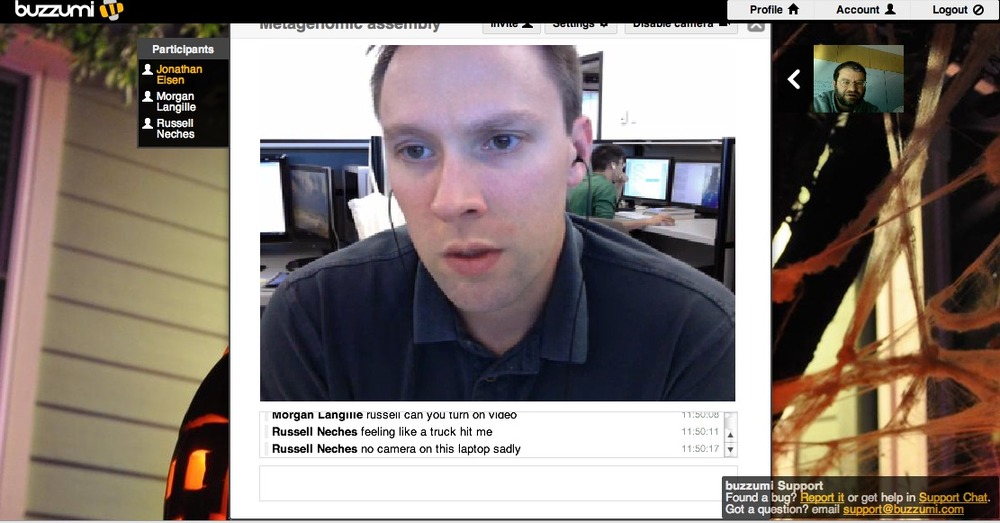
Playing with @buzzumi – did a video chat with @betascience discussing metagenomics
Buzzumi looks pretty nice. Was really easy to set up and get running and worked easily for a private video chat. Going to try to use it for a webinar next. Ignore the comments by Russell in the chat …
Share this:

Evolution pumpkins – from Darwin to Woese
OK I know I am a geek, but I do think these came out pretty well …
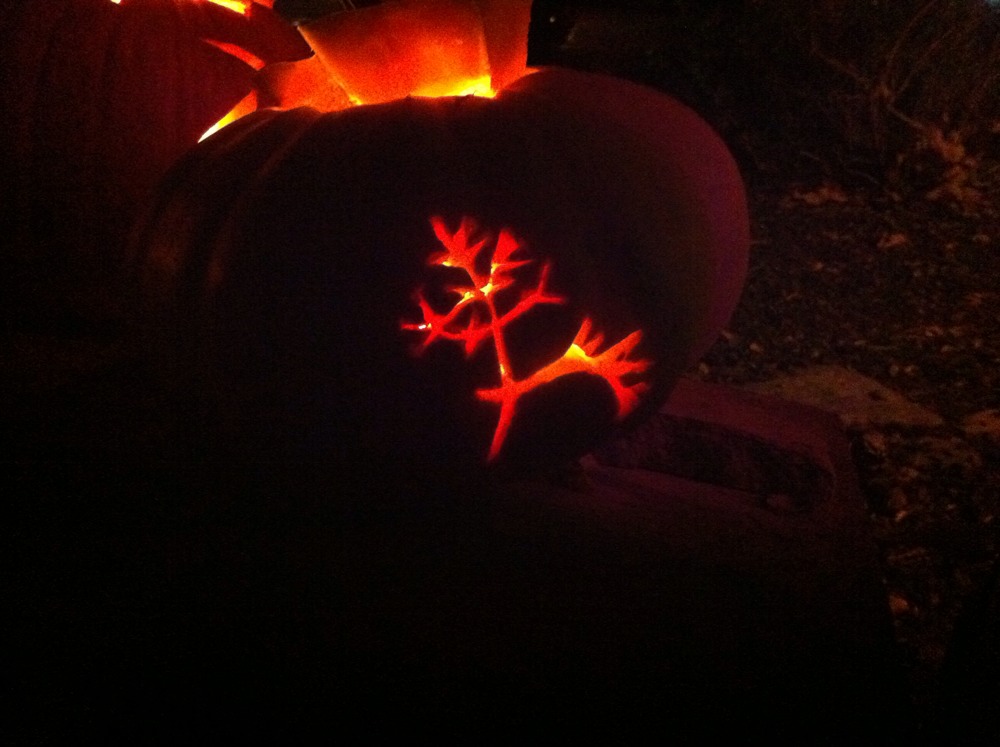 |
| “I think” in honor of Darwin |
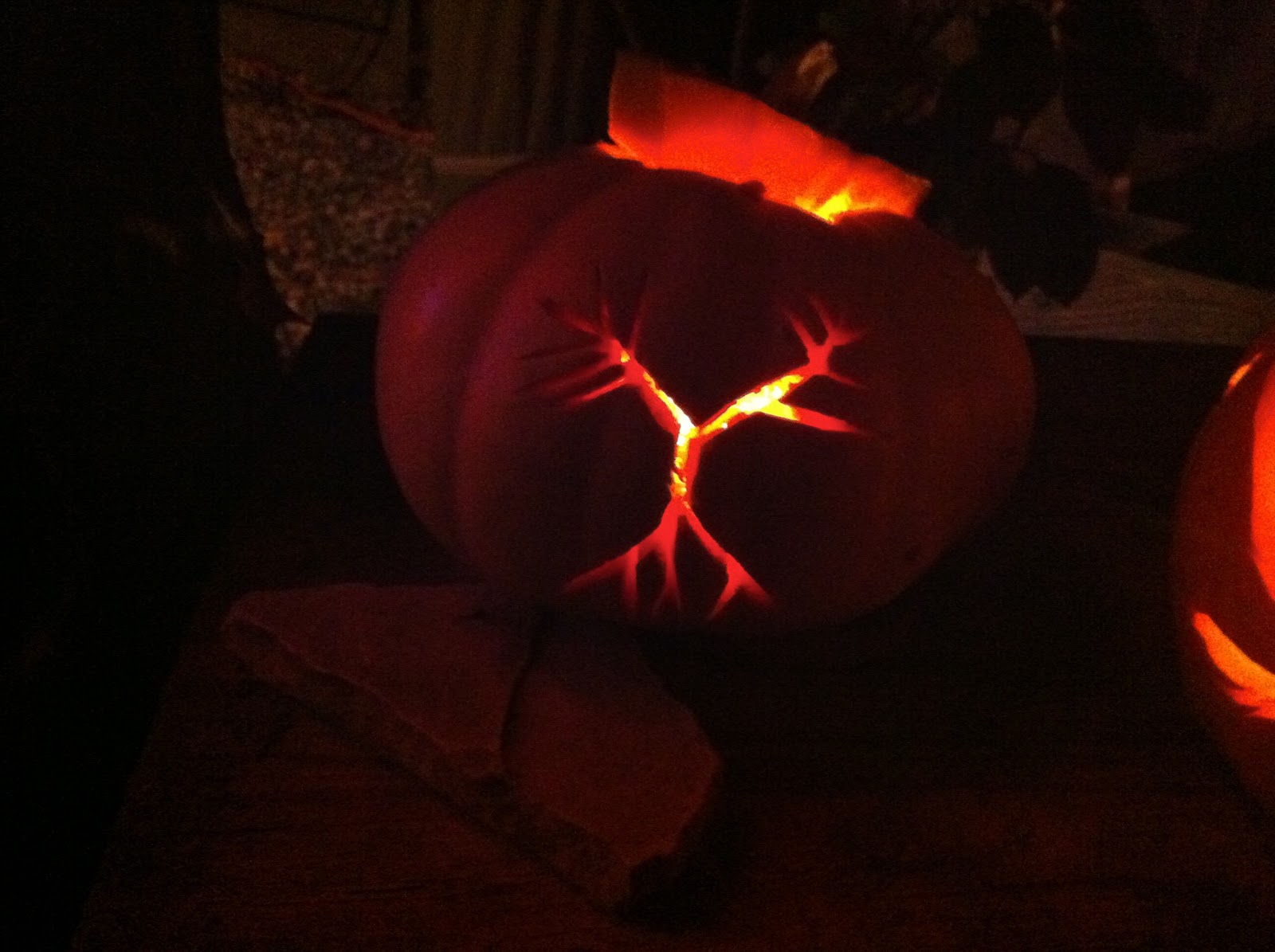 |
| Woese Tree of Life |

Share this:

Fun with a $1300 3D printer – featuring @ryneches in my lab
Just a quick one here. I am posting some links to videos and blog posts about efforts by a student in my lab – Russell Neches – to use 3D printing to help with carrying out high throughput studies of microbial diversity. Basically the idea is that we can use new very cheap 3D printer technologies to help with normalizing sample volumes by printing in essence micro titer dishes with variable well depth. For more on this see some of the links/videos/etc below:
From Russell’s blog:
Some of Russell’s videos
Aggie TV news story about Russell’s work on this:
Share this:
Further proof of the ascendancy of microbes: 2011 NSF "biodiversity" grants mostly focused on microbes
As if the readers of this blog needing any more proof of the ascendancy of microbes and microbiology. Well, regardless, here is more. The NSF Announced recipients of the 2011 grants on “Dimensions of Biodiversity” – see The National Science Foundation (NSF) News Diversity of Life on Earth: NSF Awards Grants for Study of Dimensions of Biodiversity
And the recipients are strongly biased towards microbes relative to the general past patterns at many funding agencies.
Microbial focused awards:
Title: Pattern and process in marine bacterial, archaeal, and protistan biodiversity, and effects of human impacts
PI (Principal investigator): Jed Fuhrman, University of Southern California
Summary: Very little about marine microbial systems is understood, despite the fact that these diverse groups dominate cycling of elements in the oceans. Fuhrman and colleagues will compare heavily affected harbor regions with relatively pristine ocean habitat in the Los Angeles basin to understand patterns and relationships in marine microbial communities.
PI (Principal investigator): Jed Fuhrman, University of Southern California
Summary: Very little about marine microbial systems is understood, despite the fact that these diverse groups dominate cycling of elements in the oceans. Fuhrman and colleagues will compare heavily affected harbor regions with relatively pristine ocean habitat in the Los Angeles basin to understand patterns and relationships in marine microbial communities.
Title: Diversity and symbiosis: Examining the taxonomic, genetic, and functional diversity of amphibian skin microbiota
PI: Lisa Belden, Virginia Polytechnic Institute & State University
Summary: All animals host internal and external symbiotic microbes; most cause no harm and many are beneficial. This study seeks to understand the regulation of microbial communities on the skin of amphibian species, and how they may limit infection by a chytrid fungus that has decimated many amphibian populations around the globe.
PI: Lisa Belden, Virginia Polytechnic Institute & State University
Summary: All animals host internal and external symbiotic microbes; most cause no harm and many are beneficial. This study seeks to understand the regulation of microbial communities on the skin of amphibian species, and how they may limit infection by a chytrid fungus that has decimated many amphibian populations around the globe.
Title: Lake Baikal responses to global change: The role of genetic, functional and taxonomic diversity in the planktonPI: Elena Litchman, Michigan State University
Summary: Microscopic plant- and animal-like plankton are the first links in aquatic food chains. This project will study the planktonic food web of the world’s largest, oldest, and most biologically diverse lake–Lake Baikal in Siberia–to predict how native vs. non-native plankton in this ecosystem will respond to accelerating environmental change
Summary: Microscopic plant- and animal-like plankton are the first links in aquatic food chains. This project will study the planktonic food web of the world’s largest, oldest, and most biologically diverse lake–Lake Baikal in Siberia–to predict how native vs. non-native plankton in this ecosystem will respond to accelerating environmental change
Title: Functional diversity of microbial trophic guilds defined using stable isotope ratios of proteinsPI: Ann Pearson, Harvard University
Summary: Studying the ecological interactions among microbes is difficult given their immense diversity and the scale of observation. This project will use isotopic ratios of carbon, nitrogen, hydrogen and sulfur produced during microbial metabolism to link microbes to their roles in biogeochemical and ecosystem processes. This novel approach will contribute to an understanding of what maintains diversity in microbes and, by extension, the roles microbes play in ecosystems.
Title: An integrated study of energy metabolism, carbon fixation, and colonization mechanisms in chemosynthetic microbial communities at deep-sea ventsPI: Stefan Sievert, Woods Hole Oceanographic Institution
Summary: The 1977 discovery of deep-sea hydrothermal vent ecosystems that obtain energy not through photosynthesis, but via inorganic chemical reactions greatly expanded the perception of life on Earth. However, there has been limited progress since then in understanding their underlying microbiology and biogeochemistry. This project will establish an international research program to better understand these deep-sea ecosystems and to place them in a global context.
Title: Functional diversity of marine eukaryotic phytoplankton and their contributions to carbon and nitrogen cyclingPI: Bess Ward, Princeton University
Summary: Marine phytoplankton form the base of food webs in the ocean’s surface layers, and thus represent the first incorporation of biologically important chemicals. This project will study two north Atlantic sites in two seasons to link the genetic diversity and species composition of phytoplankton communities to the carbon and nitrogen biogeochemistry of the surface ocean.
Summary: Marine phytoplankton form the base of food webs in the ocean’s surface layers, and thus represent the first incorporation of biologically important chemicals. This project will study two north Atlantic sites in two seasons to link the genetic diversity and species composition of phytoplankton communities to the carbon and nitrogen biogeochemistry of the surface ocean.
Title: IRCN (International Research Coordination Network): A Research Coordination Network for Biodiversity of CiliatesPI: John Clamp, North Carolina Central University
Summary: Ciliates are abundant, widespread protists found in all aquatic systems on Earth. However, it is estimated that science has described only 25 percent of these ubiquitous microorganisms, mainly in western European and eastern North American waters. This cooperative project is partially supported by the Natural Science Foundation of China, and will establish an International Research Coordination Network for Biodiversity of Ciliates (RCN-BC; including researchers from the United States, China, the United Kingdom and Brazil) to broaden exploration of these important protists.
Summary: Ciliates are abundant, widespread protists found in all aquatic systems on Earth. However, it is estimated that science has described only 25 percent of these ubiquitous microorganisms, mainly in western European and eastern North American waters. This cooperative project is partially supported by the Natural Science Foundation of China, and will establish an International Research Coordination Network for Biodiversity of Ciliates (RCN-BC; including researchers from the United States, China, the United Kingdom and Brazil) to broaden exploration of these important protists.
Amazingly, there are only three awards not focused on microbes:
Title: The climate cascade: Functional and evolutionary consequences of climatic change on species, trait, and genetic diversity in a temperate ant communityPI: Nathan Sanders, University of Tennessee, Knoxville
Summary: Sanders and colleagues will help us understand what mechanisms allow some species to adapt to shifts in climate, rather than migrating or going extinct. This project will reconstruct past adaptations to climate change in a foraging ant common in forests throughout the Eastern United States and sample ant nests introduced to outdoor experimental warming chambers to determine the ant’s capacity to adapt to heat stress.
Summary: Sanders and colleagues will help us understand what mechanisms allow some species to adapt to shifts in climate, rather than migrating or going extinct. This project will reconstruct past adaptations to climate change in a foraging ant common in forests throughout the Eastern United States and sample ant nests introduced to outdoor experimental warming chambers to determine the ant’s capacity to adapt to heat stress.
Title: Integrating genetic, taxonomic, and functional diversity of tetrapods across the Americas and through extinction risk
PI: Thomas Brooks, NatureServe
Summary: Most large-scale efforts to assess biodiversity have focused on genetic, taxonomic and functional dimensions individually; it is unknown how these dimensions relate to each other. Brooks and colleagues are using a database of the 13,000 land vertebrates in the Americas to determine how changes in one dimension of biodiversity influence changes in others. Understanding how species composition influences the diversity of certain traits, for example, will improve the efficiency and effectiveness of conservation actions.
PI: Thomas Brooks, NatureServe
Summary: Most large-scale efforts to assess biodiversity have focused on genetic, taxonomic and functional dimensions individually; it is unknown how these dimensions relate to each other. Brooks and colleagues are using a database of the 13,000 land vertebrates in the Americas to determine how changes in one dimension of biodiversity influence changes in others. Understanding how species composition influences the diversity of certain traits, for example, will improve the efficiency and effectiveness of conservation actions.
Title: Integrating dimensions of Solanumbiodiversity: Leveraging comparative and experimental transcriptomics to understand functional responses to environmental change
PI: Leonie Moyle, Indiana University
Summary: This research will highlight the role of drought and herbivore defense in driving the remarkable diversity of wild tomato species. With the economic importance of tomatoes and their relatives (such as peppers and potatoes), this study will help prepare society for the future challenges facing global food security.
PI: Leonie Moyle, Indiana University
Summary: This research will highlight the role of drought and herbivore defense in driving the remarkable diversity of wild tomato species. With the economic importance of tomatoes and their relatives (such as peppers and potatoes), this study will help prepare society for the future challenges facing global food security.
And if the PIs of these grants have any sense, they will likely include some microbial studies as part of their projects. Of course, in the end all ecosystems include a diversity of kinds of organisms, and focusing on microbes over other organisms is also a biased approach. But we (that is, “Science”) have spent so many years ignoring the dark matter of the biological universe (the term I now use to refer to microbial diversity) that we have to focus on microbes because there is a lot of catching up to do there.
Share this:
Single cell genomics even has its own software: SmashCell
Somehow I was not aware of this software called SmashCell even though it came out a while ago. But it is worth checking out if you are interested in single-cell genomics. There is an open access paper describing the software: SmashCell: a software framework for the analysis of single-cell amplified genome sequences.
Single cell genomics is becoming more and more important in studies of environmental microbiology as well as other fields like cancer biology. One of the challenges with single cell genomics is that the amplification processes used to make copies of the genome from single cells are not completely accurate or efficient so you frequently end up with partial, somewhat messed up samples of genomes. If you then sequence these amplified genomes it can be hard to make sense out of the data. Hopefully this software may be of use to some doing this type of work.
Note – for those interested in more see this PLoS One paper I am a coauthor on:
Assembling the Marine Metagenome, One Cell at a Time
Share this:
Wish I had access? Umm … no … and I will definitely not be recommending to my librarian.
Well, I got this email. I do not view it as a valuable message. But I thought I would share with others. I guess the tone annoys me “Wish you had access?” Well, not exactly. I wish EVERYONE had access. Therefore I wish that statisticians would publish in open access journals and that these journals would make more of their material freely available. See below.
| We are pleased to provide you with information on products and services that might be of interest to you. Want to keep receiving these valuable messages in your inbox? Click here to find out how. Online version | Mobile friendly |
|


|


|


|

|
||||||||||||||||


|


|
|
You have received this e-mail in the genuine belief that its contents would be of interest to you. To not receive these messages from Scientific Direct or other carefully selected organizations, please go to our preference page.
Scientific Direct 1500 Spring Garden Street 4th Fl Philadelphia, PA 19130 USA |

Share this:
Some microbe papers from the Royal Society archives
As many be aware, the Royal Society has made their entire archive of papers available for free. This has included some classics and has attracted a lot of attention (e.g., papers by Darwin and Franklin and others). Well, here are some of microbial interest
First I did a search for the term bacteria and searched by date (with oldest first): and found a few of interest.
-
1 January 1872 research-article Experiments on the Development ofBacteria in Organic Infusions C. C. Pode E. Ray Lankester The Royal Society is collaborating with JSTOR to digitize, preserve, and extend access to Proceedings of the Royal Society of London. http://www.jstor.org ?
-
1 January 1872 research-article Further Observations on the Temperature at Which Bacteria, Vibriones, and Their Supposed Germs Are Killed When Exposed to Heat in a Moist State; and on the Causes of Putrefaction and Fermentation…
-
1 January 1872 research-article Note on the Origin of Bacteria, and on Their Relation to the Process of Puterfaction H. Charlton Bastian The Royal Society is collaborating with JSTOR to…
-
1 January 1872 research-article On the Temperature at WhichBacteria, Vibriones, and Their Supposed Germs are Killed When Immersed in Fluids or Exposed to Heat in a Moist State H. Charlton Bastian…
-
1 January 1877 research-article Researches on the Effect of Light upon Bacteria and other Organisms Arthur Downes Thos. P. Blunt The Royal Society is collaborating with JSTOR to digitize, preserve, and…
-
1 January 1877 research-article Remarks on the Attributes of the Germinal Particles of Bacteria, in Reply to Prof. Tyndall J. Burdon Sanderson The Royal Society is collaborating with JSTOR to digitize, preserve, and extend…
But these were not old enough for me. So I decided to search for “Leeuwenhoek” and found a treasure trove – posted below. I am not going to get anything done for the net few days am I?
-
…1693 research-article A Letter from Mr. Anth. Van Leeuwenhoekconcerning the Seeds of Plants, with Observations…of the Propagation of Plants and Animals Anth Van Leeuwenhoek The Royal Society is collaborating with JSTOR…
-
…research-article An Extract of a Letter from Mr. Anth. Van.Leeuwenhoek, containing Several Observations on the Texture of the Bones…the Little Scales Found on the Cuticula, etc. Anth. Van.Leeuwenhoek The Royal Society is collaborating with JSTOR to digitize…
-
…research-article An Extract of a Letter from Mr. Anthony VanLeeuwenhoek, to the R. S. Containing His Obseruations on the Seeds of…the Figures of Seueral Salt Particles, etc. Anthony VanLeeuwenhoek The Royal Society is collaborating with JSTOR to digitize…
-
1 January 1698 research-article Part of a Letter from Mr. Anthony vanLeeuwenhoek, F. R. S. Concerning the Eyes of Beetles, etc. Anthony van Leeuwenhoek The Royal Society is collaborating with JSTOR to digitize, preserve, and…
-
…research-article A Letter from Mr Anthony Van Leeuwenhoek, F. R. S. concerning Spiders, Their Way of Killing…Spinning Their Webbs, Generation, etc Anthony van Leeuwenhoek The Royal Society is collaborating with JSTOR…
-
…research-article A Letter from Mr Antony van Leeuwenhoek, F. R. S. to Mr Chamberlaine, concerning the…Tastes of Waters and Edge of Razors Antony van Leeuwenhoek The Royal Society is collaborating with…
-
1700-1701 research-article Part of a Letter from Mr Antony vanLeeuwenhoek, concerning the Worms in Sheeps Livers, Gnats, and Animalcula in the Excrements of Frogs Antony van LeeuwenhoekThe Royal Society is collaborating with JSTOR to digitize…
-
1700-1701 research-article Part of a Letter from Mr Anthony vanLeeuwenhoek, F. R. S. to the Pablisher, concerning Several Microscopical Observations Anthony van Leeuwenhoek The Royal Society is collaborating with JSTOR to digitize…
-
…Two Letters from Mr Anthony Van Leenwenhoek, F. R. S. concerning Worms Pretended to be Taken from the Teeth Anthony van Leeuwenhoek The Royal Society is collaborating with JSTOR to digitize, preserve, and extend access to Philosophical Transactions…
-
1702-1703 research-article Part of a Letter from Mr Antony vanLeeuwenhoek, F. R. S. concerning Green Weeds Growing in Water, and Some Animalcula Found about Them Antony van LeeuwenhoekThe Royal Society is collaborating with JSTOR to digitize…
-
1704-1705 research-article A Letter from Mr Anthony VanLeeuwenhoek, F. R. S. concerning the Barks of Trees Anthony vanLeeuwenhoek The Royal Society is collaborating with JSTOR to digitize, preserve, and extend access to Philosophical Transactions (1683-1775). http://www.jstor.org ?
-
1704-1705 research-article A Letter from Mr Anthony VanLeeuwenhoek, F. R. S. concerning the Figures of the Salts of Crystal Anthony van Leeuwenhoek The Royal Society is collaborating with JSTOR to digitize, preserve, and extend access…
-
1704-1705 research-article A Letter from Mr Antony VanLeeuwenhoek, F. R. S. to John Chamberlain, Esq; S. R. S. concerning Tobacco Ashes Antony van Leeuwenhoek The Royal Society is collaborating with JSTOR to digitize, preserve, and extend…
-
1704-1705 research-article A Letter from Mr Antony VanLeeuwenhoek, F. R. S. concerning the Flesh of Whales, Crystalinc Humour…Other Creatures, and of the Use of the Eye-Lids Antony van Leeuwenhoek The Royal Society is collaborating with JSTOR to digitize…
-
1704-1705 research-article A Letter from Mr Antony VanLeeuwenhoek, concerning the Tubes or Canals That Convey the Yellow Sap…Called Chelidonium Majus, or Celandine, etc. Antony van Leeuwenhoek The Royal Society is collaborating with JSTOR to digitize…
-
…research-article Part of a Letter from Mr Anthony VanLeeuwenhoek, F. R. S. to John Chamberlayne, Esq; F. R. S. concerning the Vitrifyed Salts of Calcin’d Hay Anthony vanLeeuwenhoek The Royal Society is collaborating with JSTOR to digitize…
-
…research-article Observations on the Seed-Vessels and Seeds of Polypodium. In a Letter from Mr Anthony Van Leeuwenhoek, F. R. S. Anthony van Leeuwenhoek The Royal Society is collaborating with JSTOR to digitize, preserve, and extend access to Philosophical…
-
…Royal Society, from Mr Anthony Van Leeuwenhock, F. R. S. concerning Animalcula on the Roots of Duck-Weed, etc. Anthony vanLeeuwenhoek The Royal Society is collaborating with JSTOR to digitize, preserve, and extend access to Philosophical Transactions…
-
1706-1707 research-article Microscopical Observations on the Cortex Peruvianus: By Mr. Anthony Van Leeuwenhoek, F. R. S. Anthony van Leeuwenhoek The Royal Society is collaborating with JSTOR to digitize, preserve, and extend access to Philosophical…
-
…Letter Written to Signior Antonio Magliabechi, by Mr Anthony VanLeeuwenhoek, F. R. S. concerning the Particles of Silver Dissolved in Aqua Fortis, etc. Anthony van Leeuwenhoek The Royal Society is collaborating with JSTOR to digitize…

