At #UCDavis today: Emily Josephs The evolutionary genetics of gene expression in Capsella grandiflora

***** CPB Seminar Reminder for Tuesday, October 11, 2016, 4:10pm in 1022 Life Sciences *****

Speaker: Emily Josephs
NSF Postdoctoral Fellow, Coop, Maloof & Ross-Ibarra Labs, UC Davis
Title: The evolutionary genetics of gene expression in Capsella grandiflora

At #ucdavis today: Dr. Albert Barberan: From dust to dust: community ecology of airborne microorganisms.

Today we will have a research seminar at 3pm in 2342 Storer by Dr. Albert Barberan, titled: From dust to dust: community ecology of airborne microorganisms.

Albert is a postdoctoral research in Jorge Rodrigues’ lab in the Department of Land Air and Water Resources.

The seminar will begin at 3pm sharp.

Lecturer in Evolution and Ecology w/ Potential for Security of Employment at #UCDavis

Department of Evolution and Ecology College of Biological Sciences University of California Davis

Open Position: Lecturer with Potential for Security of Employment

The Department of Evolution and Ecology (EVE) invites applications for a full-time Lecturer with Potential for Security of Employment (LPSOE). Faculty in LPSOE positions are eligible for promotion to Lecturer with Security of Employment (LSOE), the equivalent of tenure for ladder rank faculty. LPSOE/LSOE faculty are Academic Senate faculty members whose expertise and responsibilities center on undergraduate education and on the scholarly analysis and improvement of teaching methods. We are interested in candidates with expertise and teaching ability in Ecology, Evolution or related areas (e.g. ecological or evolutionary focused research in biodiversity, genetics, genomics, phylogenetics, conservation, or behavior).

The successful applicant will be responsible for teaching lower, and possibly upper division undergraduate biology classes, as well as developing large-enrollment General Education courses for non-biologists. S/he will also be responsible for working with other faculty and LPSOE’s within the college to develop, implement, and assess course learning objectives and new pedagogical methods, and to promote the Evolution, Ecology and Biodiversity major. S/he will be expected to develop a record of excellence in teaching; as well as professional achievement through a research program in biological science education, assessment strategies, and/or research and publication in an academic discipline (in conjunction with mentoring of undergraduate students); and to play a leadership role in teaching and learning through service to the campus, community and/or profession.

Qualified applicants must have a (1) a Ph.D. in a biological science, (2) experience conducting scientific research in ecology, evolution or a related area, as demonstrated by published research in peer-reviewed journals; (3) potential or demonstrated excellence in teaching within their discipline. We prefer applicants with postdoctoral training in ecology, evolution (or related fields), or in science education. Other preferred qualifications include documented success in some or all of the following areas: teaching large undergraduate classes; use of evidence-based teaching practices; use of modern instructional technology; ability to identify and develop effective teaching strategies for diverse student populations; conducting life sciences education or assessment research; mentoring undergraduates in research, including those from diverse backgrounds; and curriculum and/or course design. Salary will be commensurate with education and experience.

Closing date: open until filled, but all application materials, including letters of recommendation, must be received by November 14, 2016 to be assured full consideration. We are hoping to interview in January 2017. Applicants should submit materials online at:

https://recruit.ucdavis.edu/apply/JPF01290.

Please submit a cover letter; curriculum vitae; a teaching statement that describes both teaching experience of and proposed teaching and research/leadership activities (not to exceed four pages); a research statement that describes disciplinary background and accomplishments (not to exceed two pages); a statement of contributions to diversity; a sample course syllabus and lecture material (e.g., PowerPoint slides) for one lecture (optional); and summaries of teaching evaluations from three courses (optional).

Applicants should also arrange to have three referees submit supporting letters online at the above website that can attest to your teaching experience and abilities as well as your disciplinary knowledge in chosen field. These letters are due by November 14, 2016. The administrative contact is Carla Munoz, camunoz, and the faculty contact is Gail Patricelli, gpatricelli. More information on the EVE department and the College of Biological Sciences is available online: (http://www-eve.ucdavis.edu/; http://biosci.ucdavis.edu/index_js.html)

The University of California is an affirmative action/equal opportunity employer committed to excellence through diversity and strongly encourages applications from all qualified applicants, including women and minorities. UC Davis is responsive to the needs of dual career couples, is dedicated to work-life balance through an array of family-friendly policies, and is the recipient of an NSF ADVANCE Award for gender equity.

LPSOE 2016 Job Ad.pdf

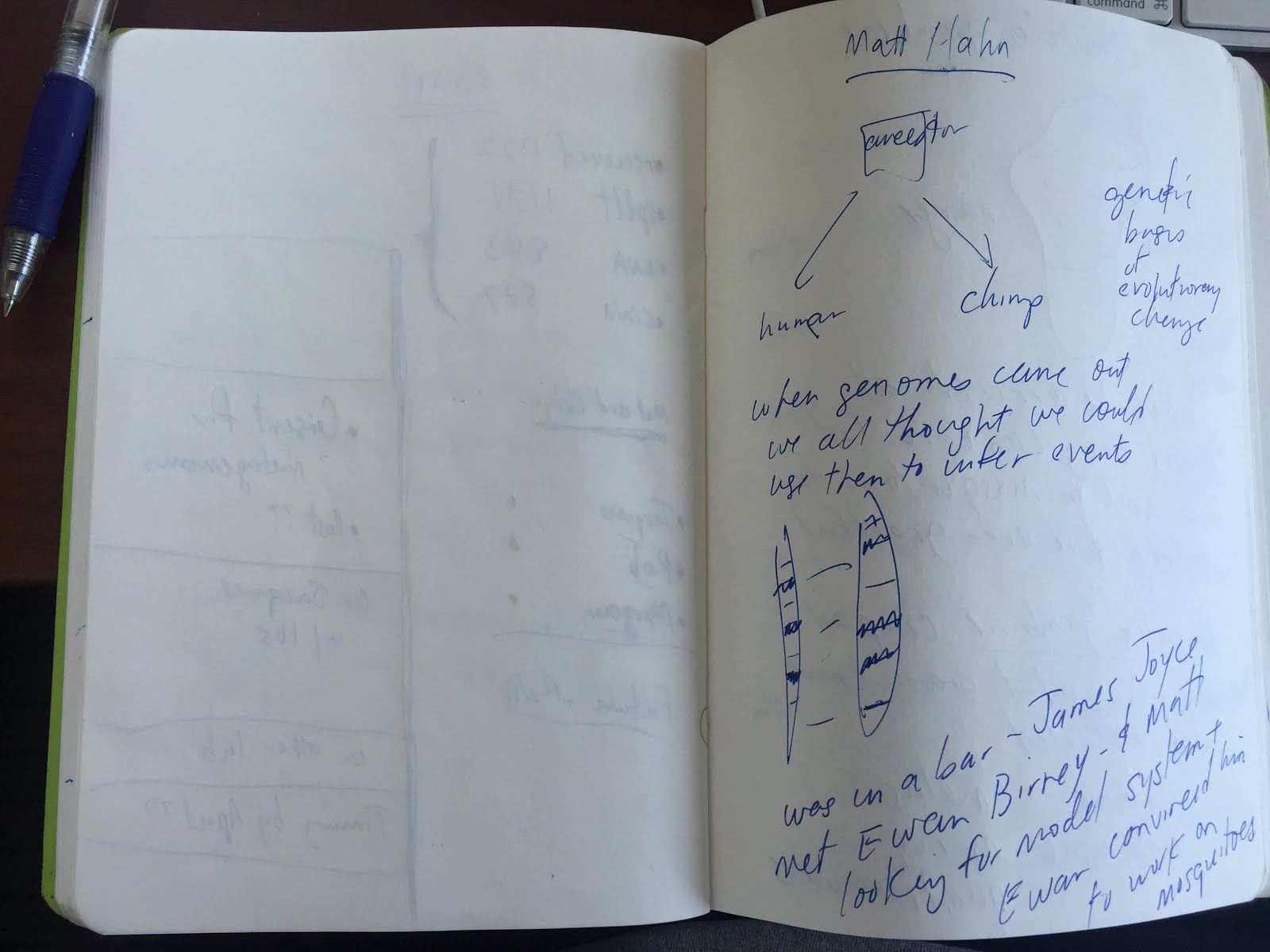
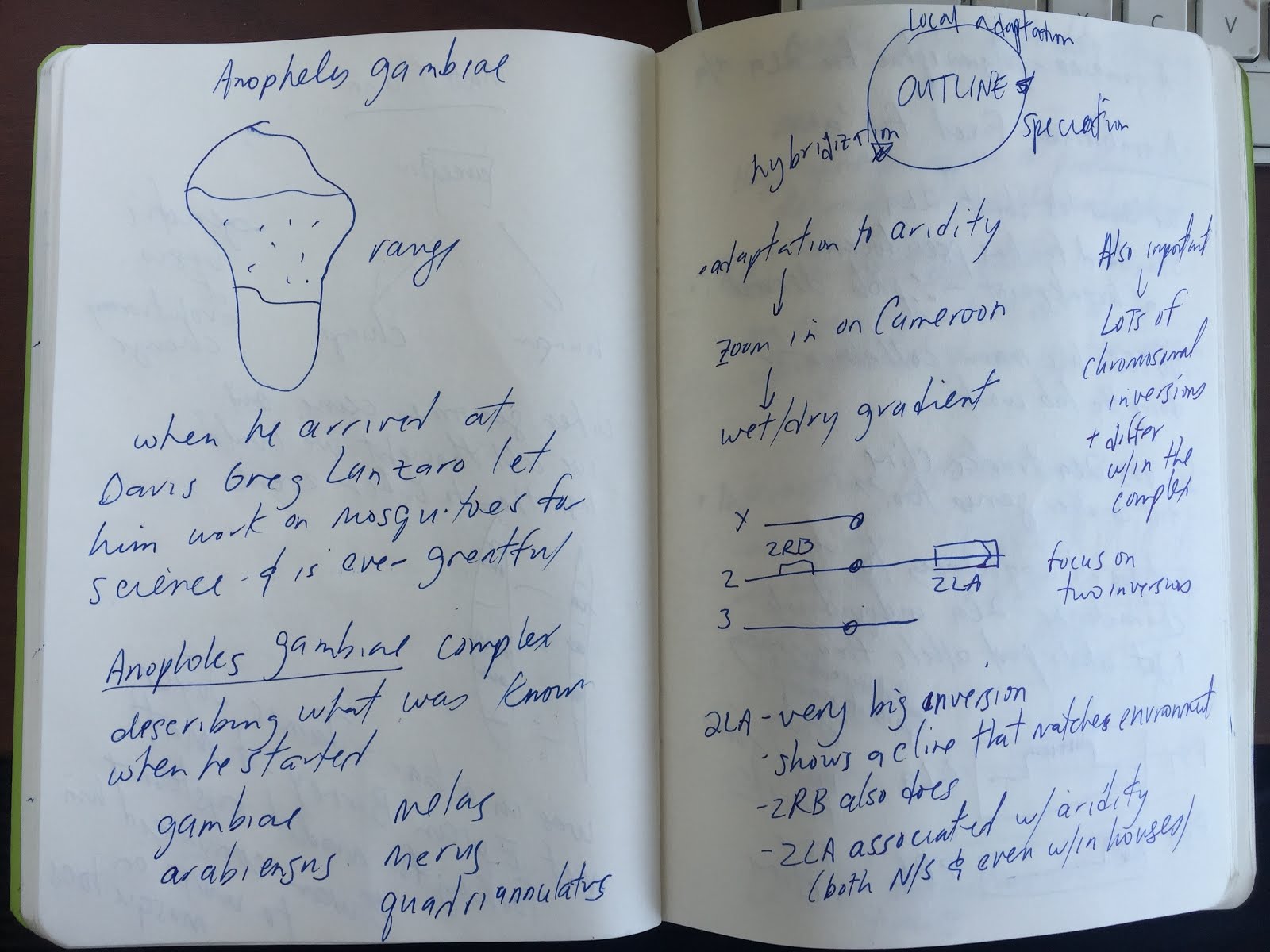
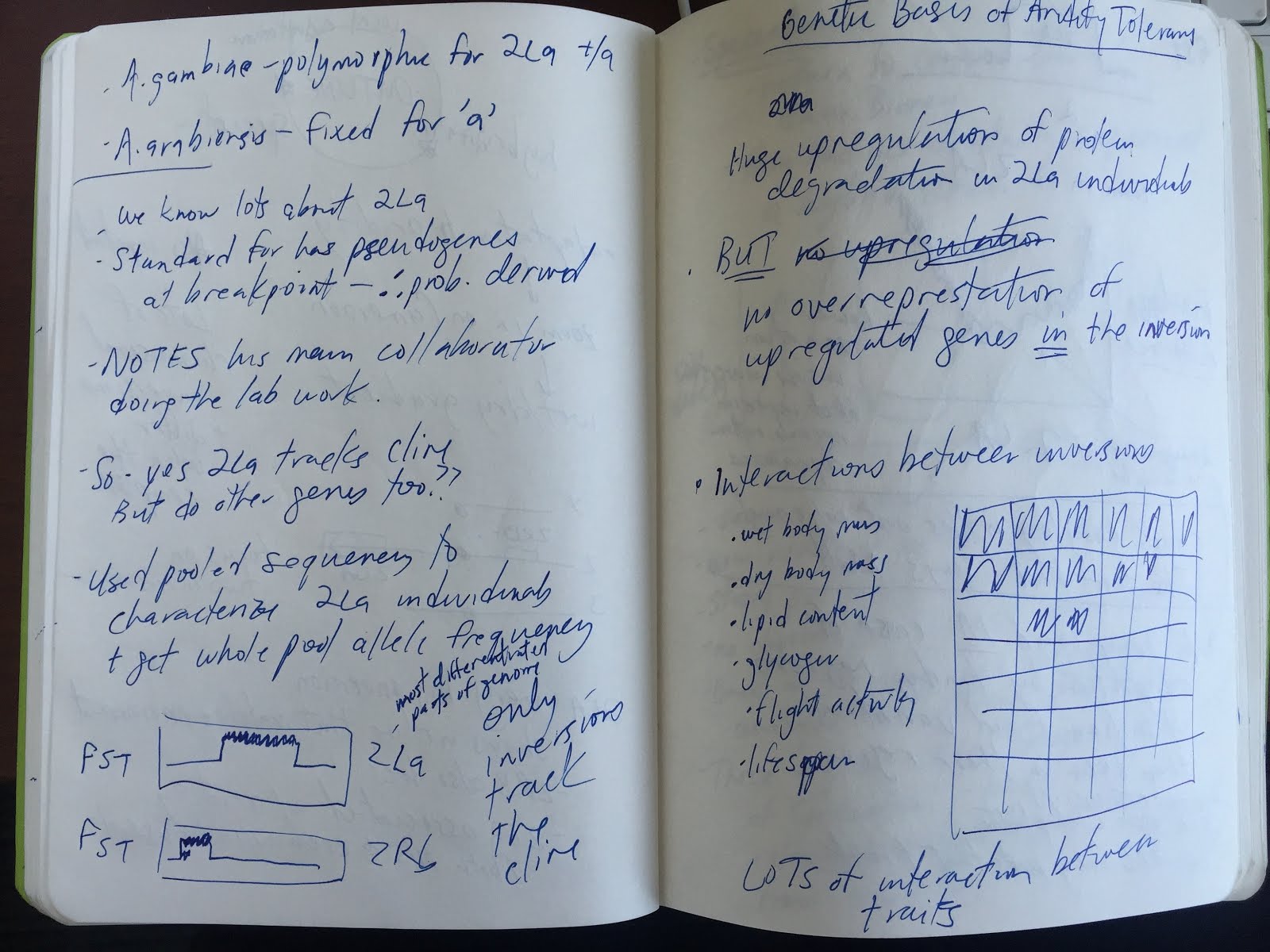
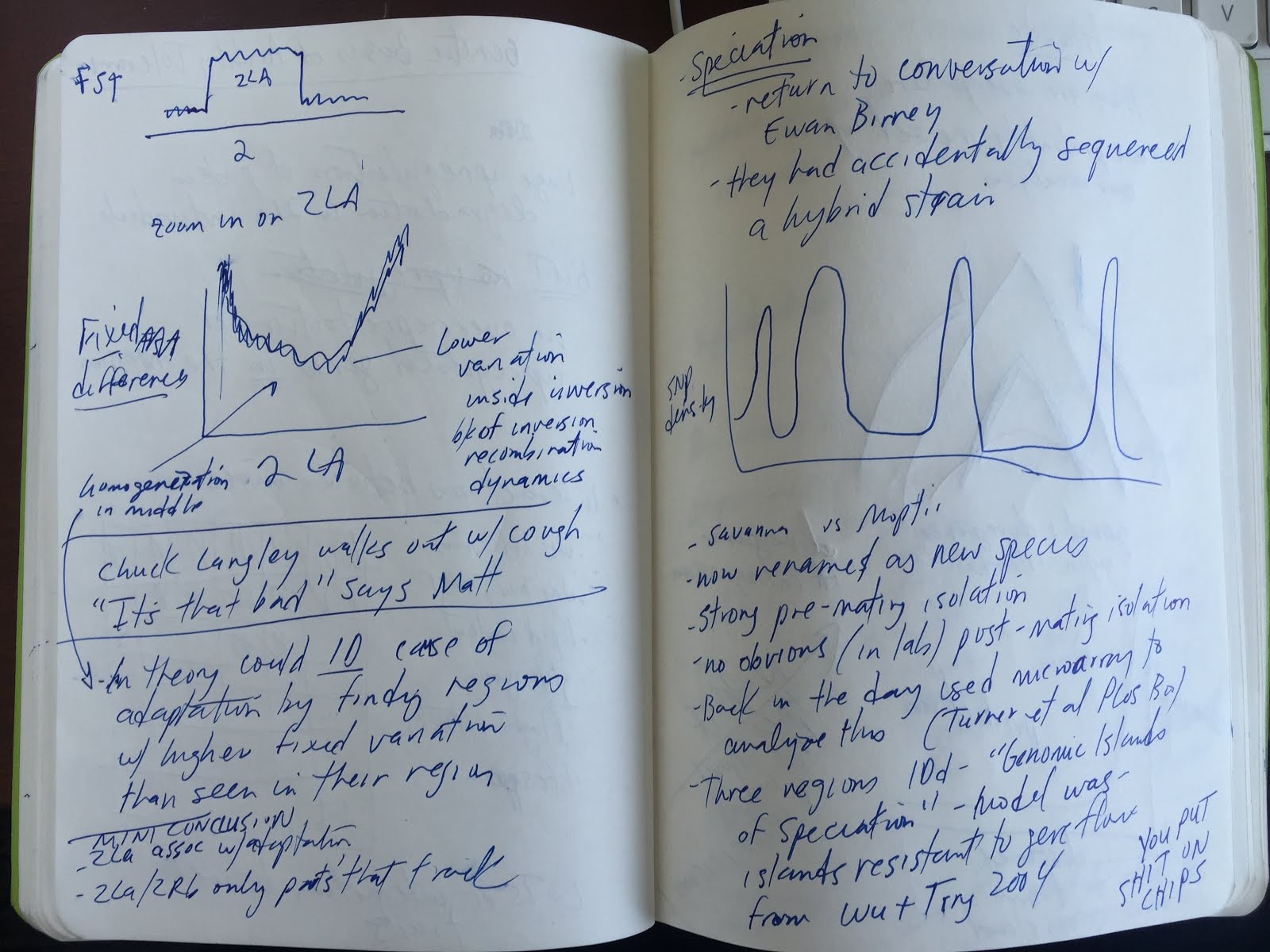
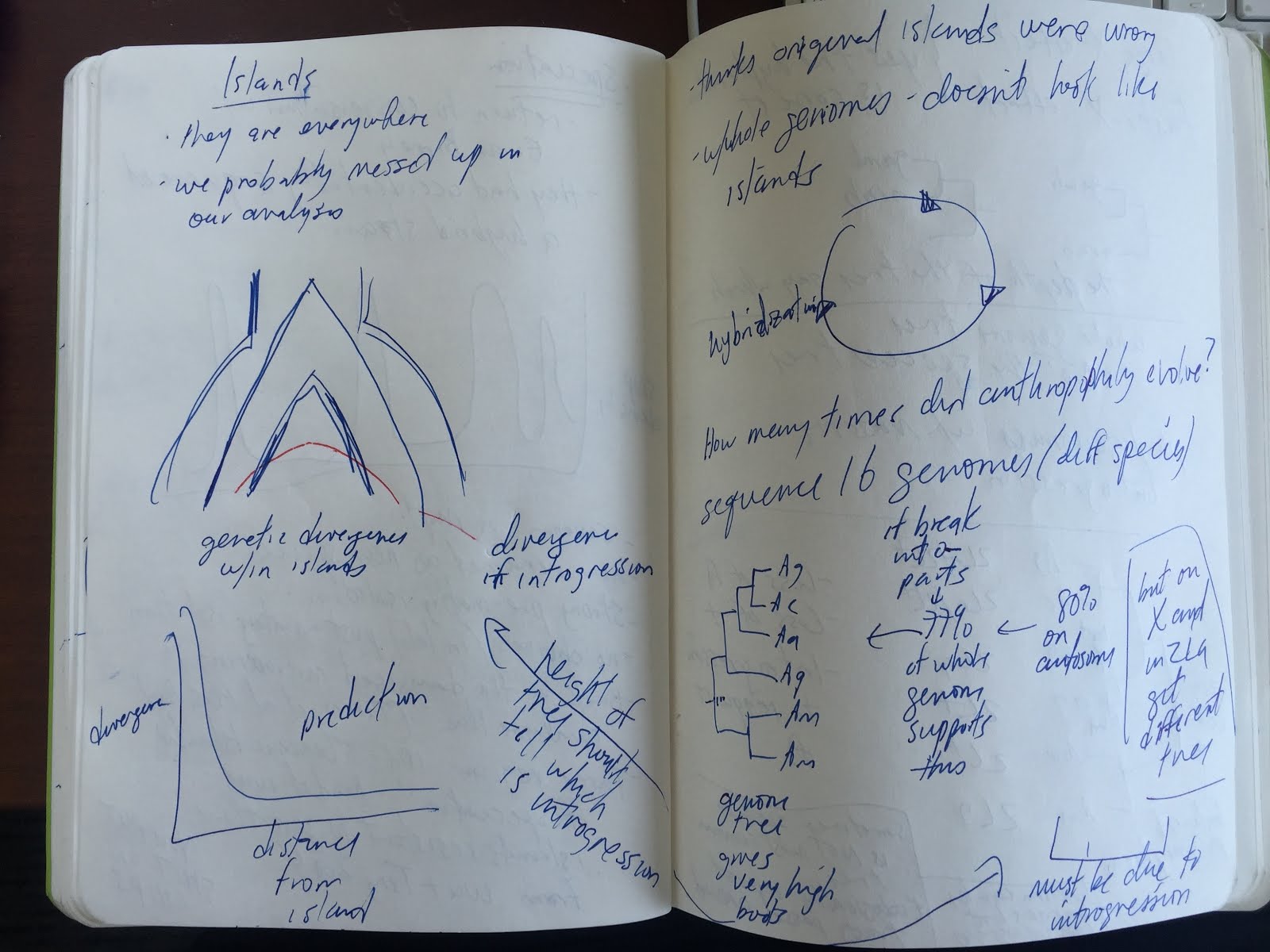
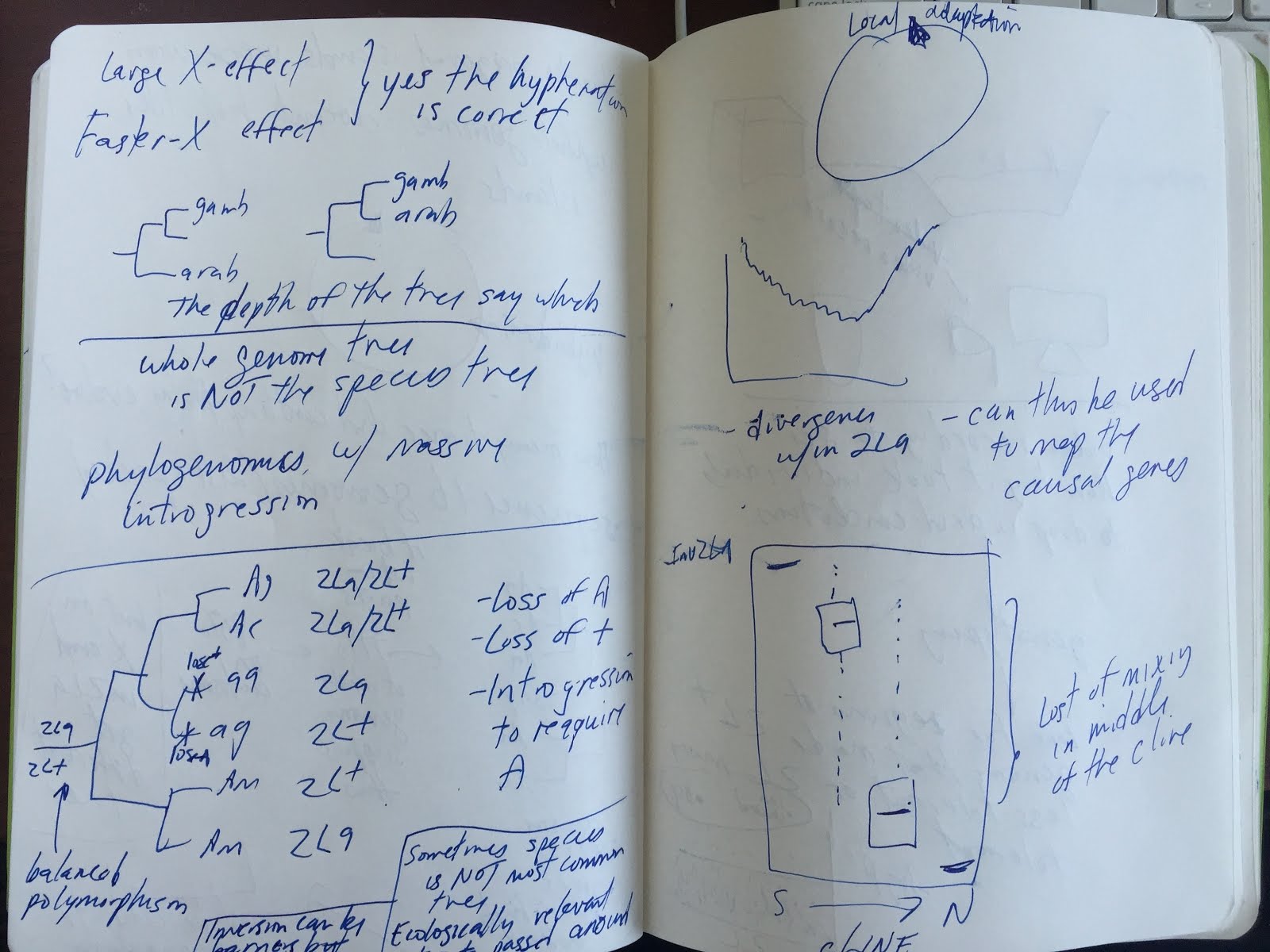
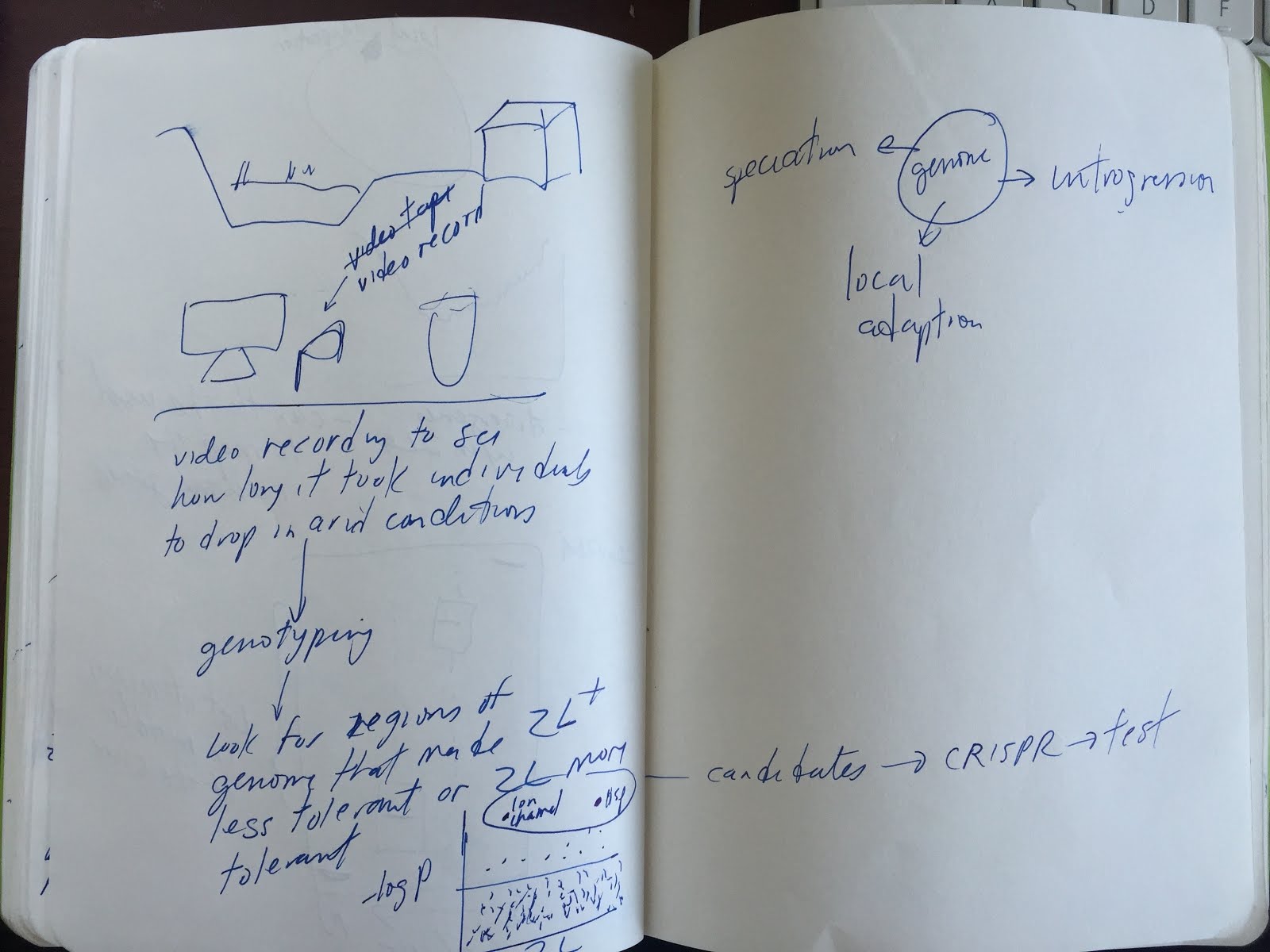
Matt Hahn @3rdreviewer talk at #UCDavis – pen and paper notes

Matt Hahn was at UC Davis giving a talk yesterday.

//platform.twitter.com/widgets.js I did not have my laptop available so took notes with – gasp – a pen and paper.  I thought it was quite a nice talk so am posting my notes here.  More about Matt and his work can be found here: http://www.indiana.edu/~hahnlab/.

At #UCDavis today Matthew Hahn @3rdreviewer “Adaptation and speciation: a virtuous cycle in Anopheles mosquitoes”

Today’s Ecology and Evolution seminar will be given by Matt Hahn from Indiana University, Bloomington. Matt and his lab study a variety of problems in population and speciation genomics. Matt will present results from Anopheles mosquitoes, which he started working on when he was a postdoc here at Davis.

See Matt’s website for more information about his research (http://www.indiana.edu/~hahnlab/).

The title of Matt’s talk is "Adaptation and speciation: a virtuous cycle in Anopheles mosquitoes" and will be presented in Giedt Hall 1003 on today, October 6 at 4:10pm

Swimming Upstream: Lessons Learned about Managing Career Challenges – Dr. Susan L Rosenthal

There are still seats available and this event is open to all.
Register online at: Register Here

WIMHS-Rosenthal-Flier.FINAL.pdf

US Culture Collection Network Internships

2016 US Culture Collection Network Internship Program

The US Culture Collection Network is pleased to present a new activity for living microbe collection stakeholders.

Beginning immediately we will accept applications for a collection internship at one of the USCCN participating collections.

US Students and researchers interested in learning how to preserve, store, and document living microbe specimens are invited to apply to the US Culture Collection Network for 2 – 12 day internships at some of the country’s leading microbial repositories.

To be considered for an internship please send a brief essay describing your reason for wanting to participate in the internship along with a CV/resume and a statement from your major professor/sponsor stating why this is important for your education to any member of the USCCN Steering Committee. The duration of lab visits will be decided by the applicant in discussion with the hosting laboratory. All applications will be reviewed by the USCCN Steering Committee. The deadline for applications is November 30, 2016 and internships should be completed by March 31, 2017. Support will include economy air-travel, local transportation and accommodations as well as a modest per diem. These internships should be educational in nature and not as a means to establish or conduct a research collaboration.

All participant expenses are to be compatible with the NSF recommendations: https://www.nsf.gov/pubs/manuals/gpm05_131/gpm6.jsp#618

Participant support allowances may not be paid to trainees who are receiving compensation, either directly or indirectly, from other Federal government sources while participating in the project. A non-NSF Federal employee may receive participant support allowances from grant funds provided there is no duplication of funding of items and provided no single item of participant cost is divided between his/her parent agency and NSF grant funds.

The USCCN does not discriminate on the basis of on the basis of race, color, ethnicity, national origin, gender, sexual orientation, gender identity, religion, age, ancestry, disability, genetic information, military status, or veteran status, in this internship program or in any the networks programs and activities as required by applicable laws and regulations.

At #UCDavis Tue 10/4 – Andrew Moeller on The evolution of the human gut microbiome

CPB Seminar Reminder for Tuesday, October 4, 2016, 4:10pm in 1022 Life Sciences

Speaker: Andrew Moeller
Miller Postdoctoral Fellow, Nachman Lab, UC Berkeley
Title: “The evolution of the human gut microbiome ”

Seminar today at #UCDavis: Xavier Darzacq

Quantitative Ecologist – Cornell University

QUANTITATIVE ECOLOGIST

DEPARTMENT OF ECOLOGY AND EVOLUTIONARY BIOLOGY

Cornell University

We invite applications for a tenure track position in quantitative ecology, at the level of Assistant or early Associate Professor. We seek candidates with expertise in analyzing large data sets or modeling of processes from the ecosystem to regional or larger scales, with an emphasis on the interactions of human-accelerated environmental change with ecological structure and function and sustainability. We will consider applicants with a strong theoretical, statistical, and/or computational background studying the interactions between organisms (including humans) and the environment as this influences biogeochemistry, ecological function, climate change, community assembly, or broad-scale patterns in biodiversity. The area of expertise could be in any ecosystem. We are particularly interested in individuals who are developing and applying quantitative methods, who are interested in understanding underlying ecological processes, who work at various scales, and who will collaborate with ecologists and evolutionary biologists as well as scientists in related disciplines across Cornell.

Faculty Position: Assistant or early Associate Professor, College of Agriculture and Life Sciences, in the Department of Ecology and Evolutionary Biology. Tenure track, academic-year (9-month) appointment with 50% research and 50% teaching.

Qualifications: Applicants should have a Ph.D., demonstrated excellence in research in some aspect of quantitative ecology, such as analyzing big data sets, remote sensing, ecological observation systems, or ecosystem-scale, regional-scale, or Earth system modeling. Candidates should have a strong interest in collaborative research, and a dedication to excellence in teaching. Post-doctoral experience is highly desirable.

Responsibilities: The successful candidate will be expected to develop a well-funded, innovative research program with a national and international reputation, to teach in an introductory ecology course, and to develop an advanced course in quantitative methods in his or her specialty area.

Salary: Competitive, commensurate with background and experience.

Start Date: July 2017

Application Procedure: Applications should be submitted via the website https://academicjobsonline.org/ajo/jobs/8040. Candidates should submit a short cover letter, curriculum vitae, a research statement, and a statement of teaching interests and experience. Candidates should also arrange for three letters of reference. Inquiries can be directed to Search Committee Chair, Christine Goodale, at quantecolsearch@cornell.edu. Applications from women and minority candidates are actively encouraged. Review of applications will begin Nov. 1, 2016, and continue until the position is filled.

Cornell University is an Affirmative Action, Equal Opportunity Employer.

Diversity and Inclusion are a part of Cornell University’s heritage. We are a recognized employer and educator valuing AA/EEO, Protected Veterans, and Individuals with Disabilities.