
Not much else to say here … Davis has beaten Stanford in the first game in the NCAA Baseball Playoffs. Good job Aggies.
Tag: Misc.

Colbert is now obsessed with Microbes
Yes that is right, Colbert is now obsessed with Microbes. He has started a new report … “The Microbe Beat”. On this first one, Colbert discusses Martian Microbes, Penicillin and other microbial things. This is perhaps the greatest coup for getting microbes the recognition they deserve since, well, since ever. Please make this the most watched Colbert video ever.
Thanks to my PhD student/employee Jenna Morgan for pointing this out.
http://www.comedycentral.com/sitewide/video_player/view/default/swf.jhtml
Share this:
Top 10 Things Francis Collins Might Do After NHGRI
As I have said, I think Francis Collins, upon leaving the NHGRI, is well set up to become an advisor to some presidential candidate (not that I would pick him as my advisor if I were running, but alas I am not running this time around).
But if he does not become Obama’s science sidekick or McCain’s genomics guru, well, there are lots of things he might do. Here are some possibilities:
- 1. The 1000 genome songs project. He is already further along in this than the 1000 genomes project …
- 2. Get a job at Craig Venter’s Synthetic Genomics. Hey, Collins says he wants to try something new. And Craig has a history of hiring people who used to work at funding agencies.
- 3. Sequence Jesus’ genome. More on this later.
- 4. Run the World Anti Brain Doping Agency (WABDA). We need a crusader to run the organization.
- 5. Start a blog. Hey, there are worse things one could do with free time. Not many. But there are some.
- 6. Start a genomic information anti-discrimination lobbying firm. Like others in government, he really should try to make money off of legislation he helped pass.
- 7. Dancing with the stars. He could even sing along too.
- 8. Start giving talks about genetic inferiority of various races and genders. Or did someone who once ran NHGRI already do that?
- 9. Try and apply for some of NHGRI’s money. Oh wait, he does not run a huge sequencing center, so he may not qualify.
- 10. Make jewelry out of disk shaped beads. Also known as sequinsing.
Share this:
Francis Collins SteepingStepping Down from NHGRI
Just got forwarded this email from Francis Collins to multiple people. Collins is stepping down. I wonder what specifically triggered this … my guess is he is being recruited by one of the presidential candidates to be some sort of advisor. Nothing like having a prominent scientist who also is born again being on your team ….
From: FSCollins (NIH/NHGRI)
Date: Wed, May 28, 2008 at 11:58 AM
Subject: NewsDear friends and colleagues in the many wonderful team projects that I have had the privilege of being part of,
I am writing to let you know of my plans to step down August 1, 2008 as Director of the National Human Genome Research Institute, a position that has been both a joy and privilege to hold for the past 15 years.
The key to success is having wonderful scientific opportunities and stellar colleagues with whom to work. Many challenges lie ahead as genomics increasingly becomes a leading force in medicine, and I leave my position supremely confident that NHGRI and NIH will continue to achieve notable success in meeting them.
Looking back, I’m tremendously proud of our collective work in leading the Human Genome Project (HGP) to its successful conclusion in 2003, and of our wide range of large-scale projects that built upon the foundation laid by the HGP. Collectively, these projects and the priceless data they generated have transformed biomedical research and empowered researchers all around the world. I’m also proud of these projects’ commitments to protecting the privacy of genetic information and addressing the ethical, legal and social implications of genome research.
My decision to step down as NHGRI Director came only after much personal deliberation and was driven by a desire for an interval of time dedicated to writing, reflection and exploration of other professional opportunities in the public or private sectors. Rest assured that NHGRI’s leadership will be in good hands. Alan E. Guttmacher, M.D., the current deputy director of NHGRI, will become acting director of NHGRI on August 1, and Mark Guyer, Ph.D., the long-time director of the Division of Extramural Research will continue his able leadership. A formal search process for a permanent NHGRI director will get underway shortly.
Finally, I’d like to let each of you know that while I may be leaving the NHGRI Director’s office in search of other challenges, I will be cheering for the success of your dedicated and creative scientific achievements over the coming weeks, months, and years.
Keep up the good work!
Francis
Share this:
What to do when a billionaire loves your brother …
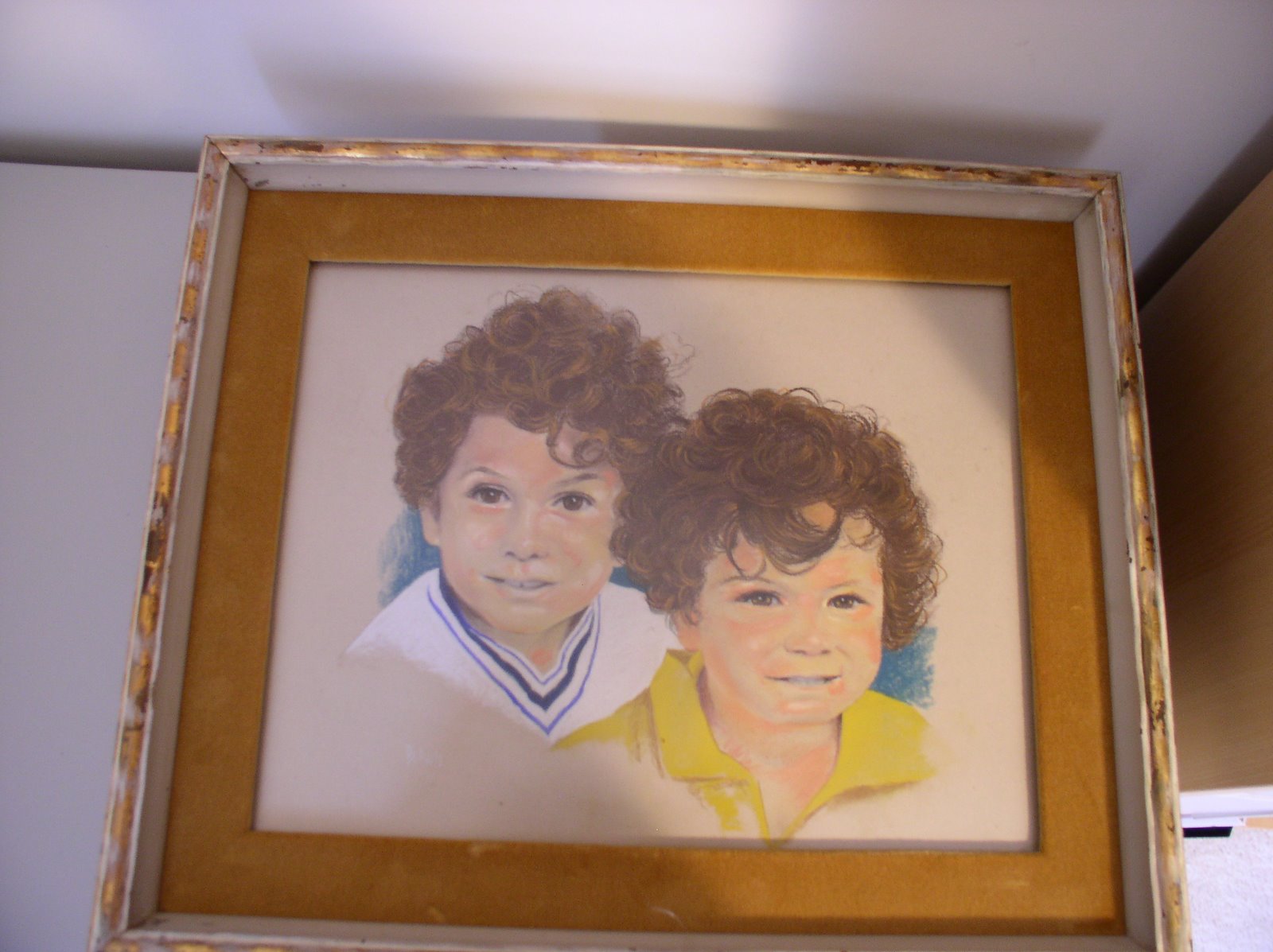
Well, many people confuse me with my brother, Michael. I guess, if they do not know us, it is understandable. He is at Berkeley. I am at Davis. He works on genomics related things. So do I. We both are passionate about PLoS and Open Access publishing. We both went to Harvard. We both spent time at Stanford. I could go on (we used to look a bit alike … see the lovely family portrait). Sure, sometimes I get sick of people asking me questions about microarray clustering software and Drosophila.
But most of the time, it only is good for me. Like today. If people want to confuse me with my brother today, fine by me. That is because today, HHMI announced the selection of their new “Investigators”. Becoming an HHMI Investigator is the scientific equivalent of getting a sugar daddy. They give you money to do whatever research you want to do. They call it “People, not Projects.” or something like that.
So – I saw some of the press on this and mostly it was very general – just talking about how HHMI is really important when NIH budgets are flat and all. But then this afternoon, I was listening to NPRs “Marketplace” when they do a story on the HHMI announcement. And I am thinking – wouldn’t it be cool if they mention my brother? And so my ears perked up. And they discussed some background a bit and then Tom Cech, the head of HHMI, was explaining why they want to give money to people with no restrictions and he said
TOM CECH: Often in the course of research, you stumble upon leads to your question that were different from what you originally proposed and by funding the person, not the project, we are freeing people up to follow those leads.
For example, he says, one investigator started out studying retroviruses, but he switched gears and started building miniature arrays to look at the expression of genes in an organism — don’t worry, I have no idea what that means either.
CECH: But before long, he was looking at typing various sorts of leukemias and lymphomas and breast cancers. So he moved into the cancer area with tremendous results.
Certainly sounds like he was talking about my brother, who worked on flu viruses for part of his PhD (ok, they are not retroviruses, but they are RNA viruses), and did a post doc working on arrays (with Pat Brown and David Botstein) and also then used arrays to do cancer classification studies. Sure, he could also be talking about Pat Brown but hey, I am going to pretend he was talking about my brother since it is pretty close.
So, sure, I am a bit peeved they did not select me (thankfully, it seems on first glance that they people they did pick all pretty much rock in terms of science so it is not like I lost out to a bunch of dolts). But I am not jealous. Proud would be more accurate.
Share this:

Search for life on Mars


Well the Phoenix lander has, well, landed on Mars. And it is, well, on a mission. To search for evidence of life (OK, that is not the only part of the mission, but it is the coolest part).
And it is time to place bets. Who out there thinks they will find some sort of evidence for life and how strong will that evidence be?
I for one think there will be life on Mars somewhere. And the Polar regions are not such a bad place to look for evidence of past or present life on the planet. Not sure what others out there think overall but here is some stuff from the web to consider:
Oliver Morton, my favorite Martian Blogger (interpret that however you want) says at MainlyMartian:
Having witnessed two Mars lander failures, Mars Polar Lander before this blog was even born and Beagle-2 back when it was young and active (Landing and prelanding in the December 2003 archive, and the whole sad story in the Beagle-2 archive), and having been absent for all the other attempts that have proved successful, it seemed to me only prudent not to cover the landing of Phoenix this weekend
Oliver also points to a “In the field” blog from Eric Hand.
Neil Saunders says:
If there ever was (or is?) microbial life there, Phoenix has a pretty good shot at finding the signs.
Others out there I am sure have more to say. What do you think?
(1) Is there life on Mars now?
(2) Was there ever life on Mars?
(3) Will Phoenix find and positive evidence?
Share this:

ASM Meeting Preview: Give your input to the National Science Foundation’s Microbiology Programs …
If you are interested in the funding of microbiology research from the National Science Foundation, there is a good opportunity coming up to find out what NSF’s plans are and to give your input. James Collins, the Assistant Directory of the Biological Sciences Division at NSF will give a presentation at the ASM Meeting in Boston.
His presentation will be June 4, 2008
At the ASM Meeting at the Boston Convention and Exhibition Center
Room 052A
12-1:30 PM
If you are in town and interested in microbiology research funding, it would be worth going to give your input.
And if you are going to be in the area for the meeting or otherwise, you might consider going to the Division R Symposium that is from 8-10:30 in Room 156A. The talks in that session are:
- Margrethe H. Serres — Convener
- Jonathan A. Eisen — Division R Lecture: Phylogenomics and the Diversification of Microbes
- Patricia Babbitt — Functional Promiscuity and the Evolution of New Enzyme Functions: Implications for Annotation
- Kimmen Sjölander –The PhyloFacts Microbial Phylogenomic Encyclopedia: Investigating Protein Superfamily Evolution across the Tree of Life
- Margrethe H. Serres –Protein Families Provide Support for Functional Annotation and Reflect Metabolic Diversity of Organisms
Share this:
Lederberg Workshop Rest of the Story
When I left off in my notes the first day of the workshop was basically ending. After the session ended, the speakers and the members of the Institute of Medicine Forum on Microbial Threats went out to dinner at a restaurant in Cleveland Park. A few of us walked over to the Metro together and talked along the way. Thankfully, I did not get lost, as (1) I grew up in the DC area (2) I worked around the corner from where the workshop was held for a summer 20 years ago and (3) Julian Parkhill from the Sanger Center was with us and I had sadly gotten very disoriented with him when I was at a NIH Human Microbiome meeting in Bethesda which is actually where I grew up.
The dinner was quite good and I had some good conversations with various folks about microbes and their lives as well as about science in general. Sometimes these types of events are a bit much for me but for whatever reason the whole dinner event was very pleasant. And this was despite the fact that I still had not even started working on my talk for the next day. Finally, as some people were getting coffee Stanley Cohen and a few others said they wanted to head back to the hotel so a gaggle of us left, and went back.
I then spent a few hours making an outline of my talk and finding some slides and worrying about what I was going to say. I was going to be the last talk of the meeting — in essence wrapping things up. Normally I do not get stressed about such things but here I was at this workshop in honor of one of the greatest biologists of the 20th century. And many scientist’s I really really respect were to be in the audience. To give those who know an idea of how big a deal I thought this workshop was – I wore a suit for both days of the meeting. Now, I have not worn a suit in probably two years. But it just seemed natural to do it here. Anyway, with all of these things together it was a big deal to me to give the closing talk of the workshop.
And so I slept very little piecing together a talk that I hoped would honor Lederberg and make people glad they stayed until the end. On a side note, I never met Lederberg. But I was trained in microbiology by one of his students – Ann Ganesan who worked as a Senior Scientist in Phil Hanawalt’s lab where I did my PhD. Ann was amazing — the grand guru of microbiology and I learned a great deal from her. And thus I felt a connection to Lederberg even if I did not know him.
And finally, after very little sleep, I headed out for day 2 of the workshop. And day 2 was as good or better than day 1. There was Stanley Cohen talking about Lederberg and plasmids, Julian Davies (one of my all time favorite speakers) discussing antibiotic resistance, Jo Handelsman talking about functional metagenomics and microbial commensals in insects, Steven S. Morse talking about emerging diseases, Peter Daszak from the Consortium for Conservation Medicine, Mark Woolhouse talking about the ecology of human pathogens, and then me. All of the talks before me were quite excellent. Thoughtful. Insightful. Entertaining. (I do not think I have ever been at a meeting like this – I normally cannot sit through more than a few talks in a day). Lederberg would have been proud.
And then me. I think I did a good job with the wrap up. A lot of the talks for the day had been about how we can use an understanding of the past to help predict the future. And I talked about the original of novelty and how understanding how new functions originate can certainly help us understand the present (e.g., analyzing genome sequences) and I tried to bring in examples from all the other talks at the meeting (ahh .. one of those times where having my laptop and modifying my slides during the day was a good thing).
And then there was a brief discussion session where some really good questions/suggestions came up and then it was over. But I did come back inspired. Lederberg was such an incredible scientist and person. His legacy hopefully lives on.
Share this:
Joshua Lederberg Papers on the Web (well, most of them)
As a follow up to my previous post about a symposium in honor of Josh Lederberg that is coming up in Washington on Tuesday. There is a nice collection of his “papers” on the web – Profiles in Science: The Joshua Lederberg Papers
By papers they mean everything – letters, notes, drafts, communications, etc. It is quite comprehensive and quite interesting including many discussions with other leading researchers key moments in the history of 20th century biological sciences research. It is worth checking out. I note – despite the availability of this great collection, one part of this life as a scientists is not completely freely available – his publications. Not all are at this site and many are hidden behind the walls of various journals. What a shame. Just about every one of his papers is worth reading.
Share this:
Microbial Evolution and co-Adaptation: A Workshop in Honor of Joshua Lederberg – Institute of Medicine
Well, in a few days I am off to a cool workshop in honor of Josh Lederberg (for more detail see this link Microbial Evolution and co-Adaptation: A Workshop in Honor of Joshua Lederberg – Institute of Medicine). The goal of the workshop is to “to inform the Forum and the general public about the many scientific and policy contributions of Dr. Joshua Lederberg to the life sciences, medicine, and public policy.”
The workshop is put on by the Institute of Medicine in Washington DC and it is open to the public. You have to register in advance and I am not sure how many more slots are available but it looks to be pretty good. The sessions topics are are: “The microbiome and co-evolution” “Microbial evolution and the emergence of virulence” “Mechanisms of resistance” “Anticipation of future emerging infectious diseases” and there are some heavy hitter speakers in there including David Relman, Jo Handelsman, Jill Banfield, Margaret Mcfall-Ngai, Stanley Falkow, Bruce Levin, Julian Parkhill, Stanley Cohen, Julian Davies, Steven Morse, Ian Lipkin, and well, me.
I will be blogging from there, but if you are in the DC area or can be, it could be a good workshop.
I am also going to be writing a bit more about Lederberg and his favorite bug (E. coli) in the next few days so stay tuned …
 Jonathan Eisen's Lab