Open Evolution – Open Taxonomy Mailing List

In my continuing series on Open Evolution I am posting an email I got regarding the creation of a new mailing list on “Open Taxonomy”. For more on Open Taxonomy see “The Other 95%” which has some really good stuff on it.

Under the umbrella of the Open Biomedical Ontologies project (OBO; http://obofoundry.org/) we have created a new mailing list, called obo-taxonomy, for the discussion of ontological representation of taxonomies and phylogenies. The OBO Foundry supports the development of orthogonal, interoperable reference ontologies for biological science.

The Phenoscape project (http://phenoscape.org) develops methods and tools for using ontologies to integrate comparative morphological data with mutant phenotypes of genetic model organisms. As such we are very interested in participation from members of the evolutionary biology community to explore how best to integrate taxonomy into an ontological framework. Issues include proper semantics of the relationship between taxonomic groups, and between specimens and species.

Subscribe to the mailing list:
https://lists.sourceforge.net/lists/listinfo/obo-taxonomy

Additional info:
http://blog.phenoscape.org/2008/05/15/taxonomy-as-ontology-opening-the-debate/

Acknowledgments:
The Phenoscape project (http://phenoscape.org/) is funded by NSF-BDI and supported by the National Evolutionary Synthesis Center (NESCent; http://nescent.org).

Calling all microbiologists — we need better PR to compete with the platypus and other cutesies

Well, much as I hate to admit it, I find myself agreeing with the notion that cuteness sells in genome sequencing. That is in essence the claim of Natalie Anger in an article in the New York Times about all the attention the platypus genome paper has been receiving over the last week (see
A Gene Map for the Cute Side of the Family – New York Times

Alas, microbiologists really do not have anything like this no? I mean, who feels that E. coli or yeast are, well, cute? (Well, even if you have one of those “giant microbes” stuffed animals, that just means you are a dork like me … the public does not collect those). Sure, Carl Zimmer can get some attention for all the geeky tattoos out there and some of them did have something to do with microbes, but again, a platypus they are not.

So what are we forlorn microbiologists to do? We need better PR and imagery. We need cute microbes. We need more dark and evil microbes too (I mean, if anyone sequenced the T-rex genome – for real – it would get attention too).

So – I am calling all microbiologists and microbiology fans — bring forth your imagery that will help microbes get the attention they deserve. And today I am suggesting just one simple thing we can all do to make a difference: get some new names.

That is, give your favorite microbe a good common name or nickname to bring out the cuddly or dark imagery we need. All microbes names should conjure up something to the public, like anthrax does (yes, I know, anthrax is the disease and not the microbe , but this adherence to rules is part of the problem we have).

Here are some proposed name changes for organisms I have worked on:

Wolbachia – “The Feminizer”
Tetrahymena – “The Hairy Beast”
Carboxydothermus hydrogenoformans – “Exploding Breath of Death”
Chlorobium tepidum – “Little Green Machine”

So – please – come up with nicknames for all your bugs and start to use them or at least post them here.

Explorit Videos on Youtube

A variety of videos are available from the Explorit Science Center on YouTube. They are worth browsing.

Icky Stuff at Long’s


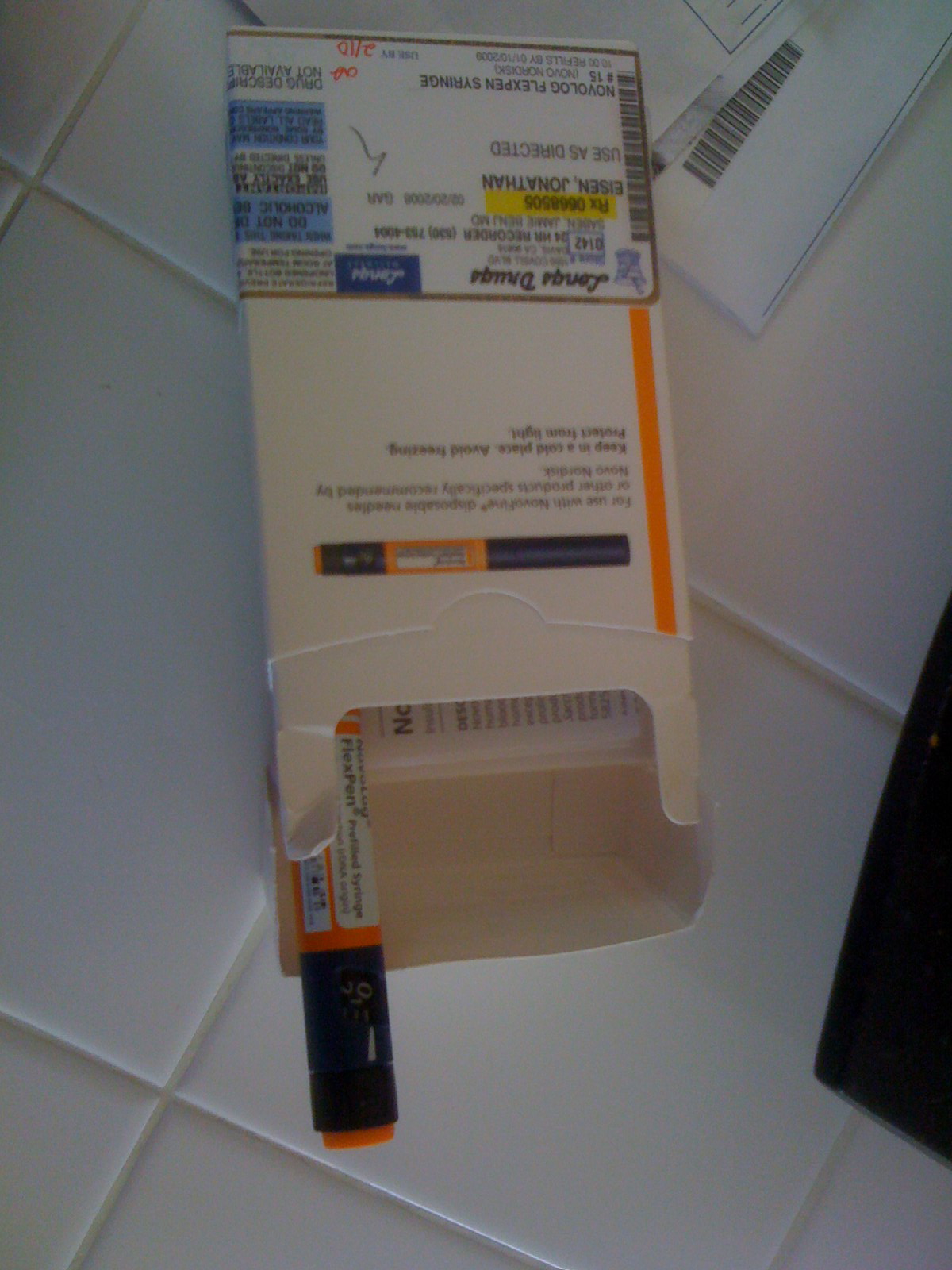
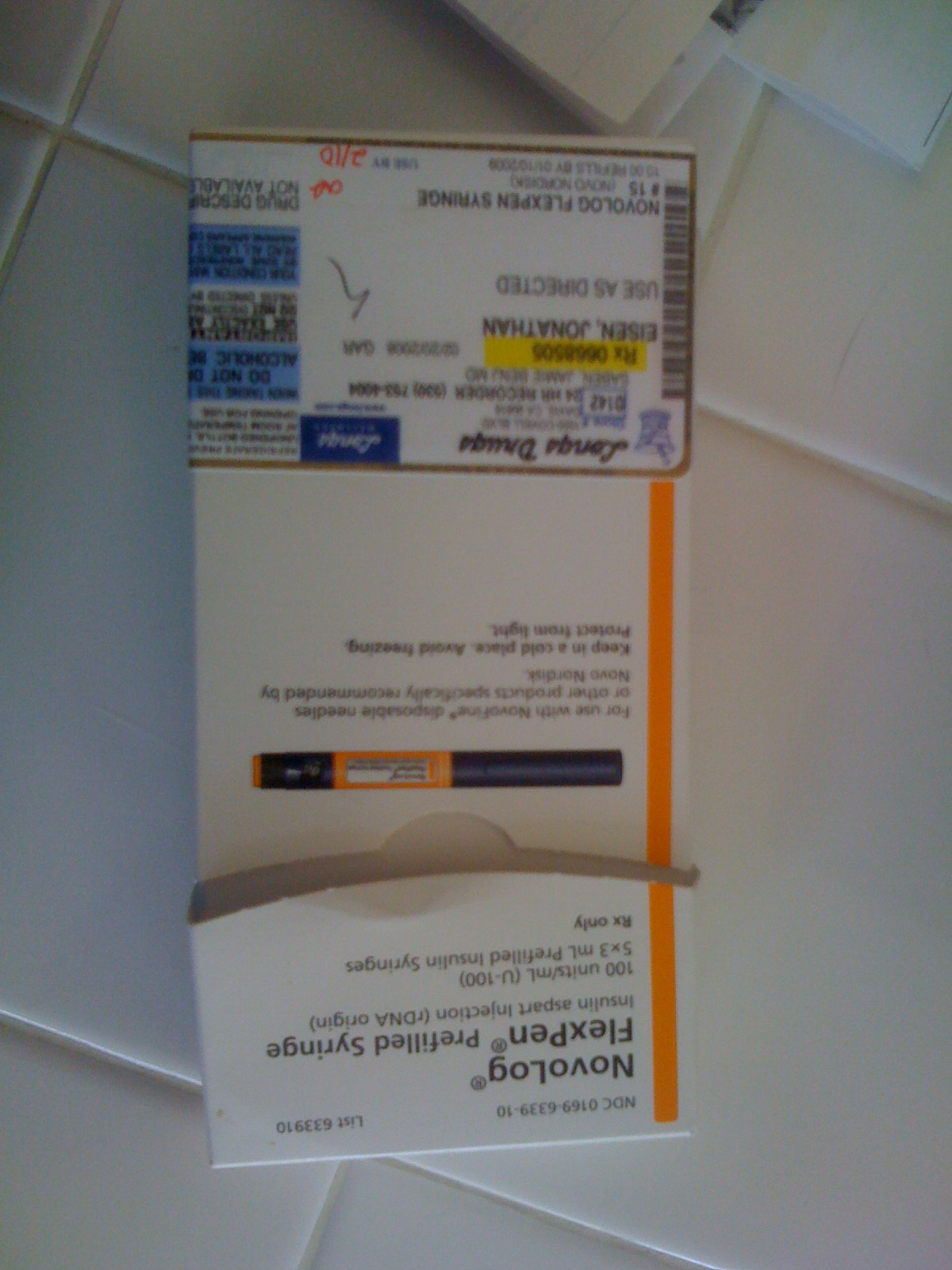
All I can say is I am glad I check my medicines before I take them.  I went to Long’s in East Davis the other day to pick up some insulin and was given a box of my insulin pens.  When I got home I found that there was only one insulin pen in the box and that pen was used.  Not exactly confidence boosting in my pharmacy.  Only later did I figure out what happened which was even scarier.  This was insulin I had returned months before because of a defect that Long’s was supposed to send back to the manufacturer (I had called the company who had handled this very well, and they told me a free box would be at Long’s and that Long’s would return the unused portion to them).  So I guess Long’s put it in the fridge and did not return it and then saw my name on it and gave it back to me.  Yuck.  Even worse, they did it again, I think the next time I went in.  Double yuck.  

Note that I wrote this when it happened but decided not to post it (but saved it in my blogger account), since it seemed a bit too personal. But now (2009) I am having problems with Long’s again and I figured I would make live some of my old postings about Long’s.

Kudos to New Scientist’s "24 myths and misconceptions" about evolution

New Scientist has a pretty good article on myths and misconceptions about evolution (see Evolution: 24 myths and misconceptions).

They really hit on many of my pet peeves on evolution. Among my favorites:

Many of these fit in well with my Adaptationomics Award which I will start giving out again soon ….

Help save Davis’ Schools …

Normally I do not put too many things about Davis here as I post them on my Davis Blog here. But I am cross posting today since I know many people from Davis read this blog.

There is a financial crisis of sorts going on in Davis. Please consider donating to the Davis Schools Foundation by May 15 in order to prevent cancellation of programs and/or termination of teachers.

See the video below which was made to showcase Davis’ children and what we stand to lose if we don’t all act fast!

See also Jamie Madison’s blog.

SPARC and Science Commons release guide to creating institutional open acces policies

A nice new release from SPARC and Science Commons is out. They put together a guide to creating institutional open access policies (see Press Release)

In the guide they have an overview of the new Harvard Open Access policy, suggestions for what one can do on one’s own campus and a plan of action for bringing about policy change. I know I am going try some of their suggestions here at Davis as I am hoping Davis and the UC in general adopts a policy like Harvard’s (they mention the UC consideration of such a policy in their site)

Science Commons » Blog Archive » Rockefeller U. Press Uses CC Licenses to Reduce Permission Barriers

Good Open Access news from Rockefeller Press. They have decided to change their publishing policies and are making them much more open. Emma Hill, who used to work at PLoS Biology and is now the Editor of J. Cell Biol. from Rockefeller has an editorial (with Mike Rossner) about the change including details of the new policy and some of the reasons for the change.

Among the changes they make and some of the reasons why

  • Giving copyright to the authors.
    • This is a good thing and about time for them to do it. They say: “Preying on authors’ desire to publish, and thus their willingness to sign virtually any form placed in front of them, scientific publishers have traditionally required authors to sign over the copyright to their work before publication. “
  • Adopting a Creative Commons license.
    • They say “What does this Creative Commons License mean? It means that our published content will be open for reuse, distribution, data mining, etc., by anyone, as long as attribution is made to the original work. Share-alike means that any subsequent distribution must follow the rules set out in this license. Non-commercial means that published work can be reused without permission, as long as it is for noncommercial purposes.”
    • This to me is the most important part of their policy. CC licenses change everything – they make it easy for everyone to use the material.
  • They retain an exclusive license for 6 months. After the 6 months, the material has the full CC license and can be distributed anywhere as long as it is attributed and not for commercial use.

Overall, I think this change is a good thing. It is still not the full Open Access I prefer, but it is a great step in the right direction. Also see a blog by Science Commons discussing the new policy – see Science Commons. They are overwhelmingly positive. See also Peter Suber here.

On extra nice thing about the policy is they are making it retroactive for all their publications in the past. So lots of Rockefeller press stuff from the past has now become much more open.

Metagenomics just keeps getting bigger …

Yet another tip of the hat form the scientific community to the growing field of metagenomics. Today Ed Delong, one of the pioneers of using metagenomic methods to study microbes, was elected to the National Academy of Sciences. Congrats to Ed for this well deserved recognition (now I note, he has done many things in ocean microbiology that are not metagenomics … but we will pretend here that this was all about his metagenomics work).

Other people elected of particular relevance to this blog — David Hillis, a great evolutionary biologist, and Rosemary Grant, of Darwin’s finches fame.

Francisco J. Ayala – Evolution – Scientists Who Believe in God – – New York Times

Good to see someone other than Francis Collins getting some press about bridging the gap between evolution and religion. Today it is Francisco Ayala, an evolutionary biologist at UC Irvine. There is an interesting story about him in the New York Times today (Francisco J. Ayala – Evolution – Scientists Who Believe in God ).

Now, I thought I knew a good deal about Ayala but I did learn a bit in the article about his life and background (e.g., he was a Dominican priest, which I did not know). I personally think the “religion” vs. “evolution” debate is pretty silly much of the time and succumbs to the modern obsession with controversy. Ayala’s new book “Darwin’s Gift to Science and Religion” apparently addresses this issue and I hope it does a better job than Collins’ book, which I found to be wanting in many areas. Of course, I guess I am a bit biased since I have had a soft spot for Ayala for many years and since he just wrote a very positive review of my new Evolution textbook. Now, if Collins wrote a positive review, I do not think I would like his book any more, but who knows …