Postdoc positions in O’Dwyer lab on theoretical ecology

Postdoctoral fellowships in theoretical ecology are available to work with PI James O’Dwyer on projects centering around the theme of "Macroecology for Microbes". Our primary goal is to develop new ecological theory to understand what drives universal behavior in large-scale, spatial and temporal patterns of taxonomic and phylogenetic diversity. A second focus of these projects will be to identify which macroecological patterns are more indicative of taxon-specific differences and ecological mechanism.

The O’Dwyer lab (http://publish.illinois.edu/odwyerlab/) at the University of Illinois is highly interdisciplinary, drawing from mathematics, physics, and bioinformatics, while the collaborative environment here at UIUC provides an opportunity for postdoctoral fellows to bridge multiple fields, across different departments and institutes. We are closely affiliated with the UIUC Program in Ecology, Evolution and Conservation (http://sib.illinois.edu/peec/) and the Institute for Genomic Biology (http://www.igb.illinois.edu/research-areas/biocomplexity).

We are seeking enthusiastic and talented individuals to join the lab, and the specific project will be determined in collaboration with the PI. We welcome candidates with training in theoretical ecology, and also in other quantitative fields. Start date is flexible, and funding is available for multiple years, contingent on satisfactory progress. To apply, send a CV, a one page statement of research interests, a representative paper, and contact information for three references to James O’Dwyer at jodwyer. Applications will be considered as they arrive, and informal inquiries are welcome.

Hoss Cartwright from Bonanza rocks the science world by joining many editorial boards

A few years ago I wrote about a brilliant and scary real world satire done by Burkhard Morgenstern:

Scary and funny: fake researcher Peter Uhnemann on OMICS group Editorial Board #JournalSPAM | The Tree of Life

Well he has done it again.  This time he has gotten a Hoss Cartwright, a fictional character from Bonanza onto the editorial board of many journals.

There he is listed as 

Dr. Hoss Cartwright, Senior Research Fellow, Ponderosa Institute for Bovine Research, Nevada, United States.

A little Googling found this blog post with more detail

So funny and painful at the same time.


The REAL Ghost-tree

Renowned parapsychologists Venkman, Stantz, Spengler and Zeddemore recently sat down with us to talk about their reactions to the newly released pre-print, “Ghost-tree: creating hybrid-gene phylogenetic trees for diversity analyses”.

“Initially we were really intrigued,” said Dr. Venkman,  “We thought that finally someone had paid attention to what our field really needed!”

However, it quickly became apparent to the parapsychologists that the paper wasn’t what it seemed.

“The farther I got in the paper, the more it became apparent that the authors had no real grasp of apparitional experiences and the science involved in studying them,” said Dr. Spengler, “It was as if the authors were from a field that was antithesis to the field of parapsychology.”

I asked Dr. Spengler if he was familiar with the field of mycology.

“Mycology… Never heard of it.”

At this point in the interview, I was increasingly curious as to what exactly the parapsychologists thought was wrong with the paper.

“Well, you see, it is lacking… in ghosts,” explained Dr. Stantz, “In fact, there are no ghosts in the entire paper! It is very misleading!”

I thought about pointing out that the word “ghost” actually appears several times in the pre-print (at least seventeen), but decided against it. Parapsychologists can be a little scary when they get worked up about a topic.

In fact, they got so worked up over the Ghost-tree paper that they decided to write their own paper titled, “The REAL Ghost-tree: a hybrid-media phylogenetic tree for diversity analyses in apparitional science”.

ghost-tree.png

ghost-tree
Figure 1. from their paper, a phylogenetic tree depicting the relationship between ghosts from different mediums (film, television, real-life, video games, etc). They used the small subunit ri-boo-somal DNA gene to produce the tree.

“In a way, that terrible Ghost-tree paper was actually a good thing for the field of apparational science,” said Dr. Venkman, “Now parapsychologists and citizen scientists everywhere can put their apparitional experiences into an evolutionary context.”

When asked if they had any comments that they would like related to the Ghost-tree authors, Dr. Zeddemore had the following to say,

“Next time, actually include ghosts.”

Guest post from Student Alex Martin on Kittybiome & Animal Shelters

We are nearing the end of our Kitty Kickstarter to fund research on the microbiome of cats (only three days left).  We have received some requests to learn more about our work with animal shelters. Here is a blog post by Alex Martin, a UC Berkeley junior who is working with us to study shelter cats in Berkeley.


The Berkeley Animal Shelter takes in all cats from within Berkeley city limits. Thus, cats who once varied markedly with regards to diet and home environment come to live under a fairly uniform set of conditions. It typically houses between fifteen and forty cats, but has held as many as seventy during the peak of breeding season. Recently we have begun collecting samples from cats at the Berkeley shelter in order to better understand their gut microbiomes.

A major dichotomy in the shelter cat population is the one separating house cats from feral cats. Both are considered domestic cats, members of the species Felis catus. If a kitten during its first few months of life is not exposed to humans, it develops behaviors to facilitate surviving in the wild, and grows up to become a feral cat. Some see feral cats as a nuisance, but the animals also tend to live difficult lives, enduring food shortages and a lack of medical care. Thus, a relatively new effort referred to as “trap-neuter-return”(TNR) aims to spay and neuter feral cats to slowly and humanely diminish the size and number of feral cat colonies. Differences in the gut microbiomes of feral cats versus their tamer counterparts is perhaps expected, as the two groups have vastly different diets and levels of environmental exposure. However, these differences have yet to be characterized.
In addition to the differences between feral and house cats, a small but important FIV(Feline Immunodeficiency Virus) population can potentially serve as an interesting point of comparison. Much like Human Immunodeficiency Virus, FIV attacks the immune system of infected individuals, making them markedly more susceptible to other infections. We think that this virus will affect the microbiome of FIV-positive cats in measurable ways. By identifying any differences, we will gain a better understanding of FIV as a whole and will hopefully be better positioned to one day develop more effective methods of treatment.

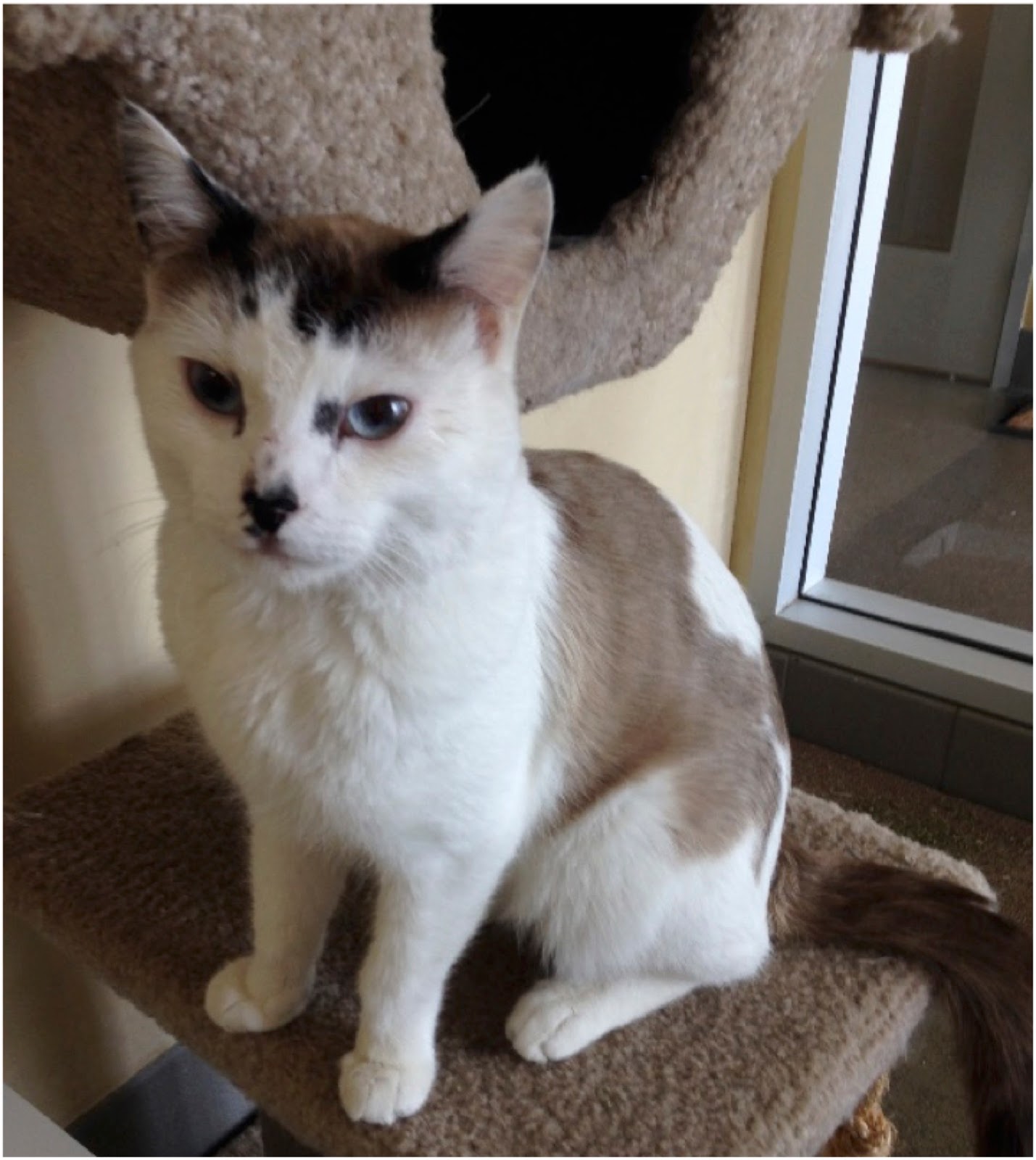
Geronimo is one Berkeley shelter cat whose gut microbiome will be analyzed. He was picked up as a stray just a few blocks from the shelter, and is three years old. Geronimo is exceptionally friendly, and loves playing with his wand toy and hiding in his cat tree to nap. He gets along well with other cats and was even introduced to a rabbit without incident. After spending about two weeks in the shelter, Geronimo was adopted into a loving home.

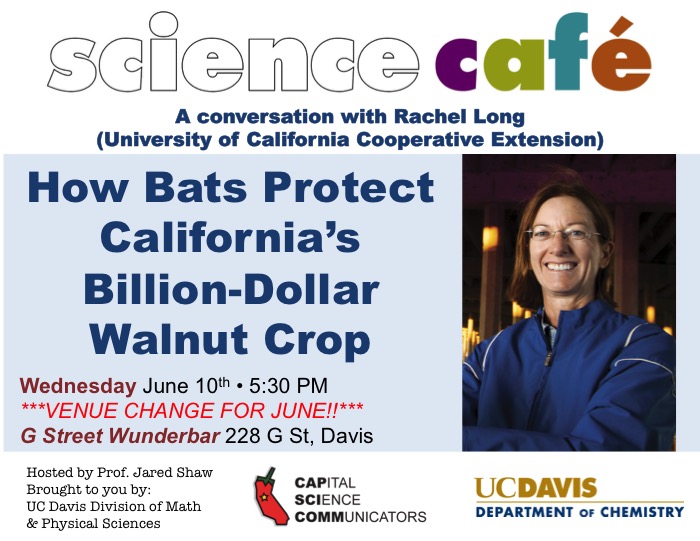
#DavisCA Science Cafe – 6/10 – Bats and Walnuts

Grad Scholar position at Bayer Biologics

The primary responsibilities of this role, as a Grad Scholar, are to:

• Participating in a multi-disciplinary team of scientists to offer bioinformatics, genomics, transcriptomics and metagenomics for controlling pests and diseases in plant and promoting plant health using microbes;

• Proactively identifying and incorporating new algorithms and technology to automate the analysis of microbial genomes and to extend the features of existing analysis pipelines;

• Understanding the dynamics of plant, microbe and pest/pathogen interaction using various omics technologies;

• Managing next-generation sequencing (NGS) data and analyses;

• Training scientific staff on the use of relevant bioinformatics software and tools;

• Working with other non-bioinformatics team member in the CLS group to understand their roles and to serve as backups as needed;

• Communicating effectively through listening, documentations and presentations, especially using compelling visualization tools to share analysis and interpretation of data.

Your success will be driven by your demonstration of our LIFE values. More specifically related to this position, Bayer seeks an incumbent who possesses the following:

• PhD in Computational Biology, Ecology and Evolution, Plant Biology,Bioinformatics, Genomics or related field with 0-1 year of post-graduate experience or a Master’s with 4+ years, or BSc. with 6+ years of post-graduate experience and currently enrolled in a graduate program.

• Proven ability to handle large data sets efficiently using scripts, databases, and other tools;

• Familiar with state-of-the-art open source and commercial bioinformatics tools;

• In depth familiarity with various public genomic databases, statistical software tools and packages such as R and bioinformatics algorithms, particularly for the analysis of NGS data (Illumina and PacBio);

• Should be comfortable enough with some basic statistical concepts and able to converse with other scientists about how to interpret basic statistical analyses such as ANOVA, linear regression, and power analyses.

• Experiences in three or more of the following areas: Comparative genomics; Transcriptome sequencing analysis; Phylogenetic analysis; Pathway modeling and analysis; and/or Metagenomics analysis;

Preferred Skills/Qualifications:

• Familiarity with SQL and relational database, particularly PostgreSQL;

• Fluent in Python, Perl, or other scripting languages;

• Previous laboratory experience;

• Knowledge of fungal, bacterial, insect, or plant genetics;

• Working with high performance computing clusters and/or cloud services.

Interested applicants should please send a resume and a cover letter to

Dilara Ally : email: dilara.ally

GradScholar.docx

Brooke Borel at #UCDavis 6/4 Discussing her New Bed Bug Book “Infested”

9780226041933

Brooke Borel

“Infested: How the Bed Bug Infiltrated Our Bedrooms and Took Over the World”

Thursday June 4, 2015

10:00 AM – 11:30 AM

UC Davis Memorial Union – MU II

Host: Jonathan Eisen


Brooke Borel is a science writer who is a Contributing Editor at Popular Science and has written for Slate, Aeon, PBS’s Nova Next, and many other publications and sites.  Her first book has just been published by the University of Chicago Press.  The book is   Infested: How The Bed Bug Infiltrated Our Bedrooms and Took Over the World and it is getting praise from all over the place (see some reviews below). She will be at UC Davis on June 4 to discuss the book and some of the fun, interesting, scary and wonderful things about bed bugs.


Some reviews of the book below:

New York Times Book Review (by Marlene Zuk)

“A book about bedbugs is, by necessity, a book about nearly everything: about travel and adventure, about our ­relationship to nature, about how scientists solve problems, about trust and whether we view strangers as friends or foes. It is a book about what people will do under extreme circumstances, and about environmental politics, and art and mental illness. It is even a book about kinky sex. Borel deftly takes us through this arthropod microcosm of the universe, as she traces the culture and biology of a resurgent scourge.”

Carl Zimmer, author of A Planet of Viruses

“Our encounters with bed bugs used to be limited to wishes for a good night’s sleep. But now they’re everywhere—in hotels, apartments, and even subways. In her fascinating book Infested,  Borel chronicles the renaissance of this frightful insect and leaves us marveling at their remarkable biology.”

Maryn McKenna, author of Superbug: The Fatal Menace of MRSA

“In an odyssey that begins with understandable loathing and ends with surprising sympathy, Borel takes us on a smart, subtle, witty journey through the biology and history of the bed bug—an insect that has been our companion for hundreds of millennia, yet one that we barely understand and have no clue how to control. Borel captures the persistence of the bug, the obsessiveness of its foes, and the eagerness of entrepreneurs to turn a quick profit with no thought for the long consequences. It is impossible to read Infested without experiencing fascination, respect—and just maybe, a phantom itch.”

Seth Mnookin, author of The Panic Virus: The True Story Behind the Vaccine-Autism Controversy

“Borel has done the seemingly impossible: written an absolute page-turner of a book about bed bugs. Infested is as engaging as it is erudite, as fun as it is informative. This is popular science writing at its best.”

Dan Vergano, National Geographic

“A fun, wild romp through the wily world of bed bugs and the folks hunting them down. Borel travels from Brooklyn bedposts to Bohemian benches on the trail of this burgeoning pest, itching for the reader as she goes. Infested unveils the secrets of these frankly weird bloodsuckers, right down to their unlikely sex lives, and introduces readers to the obsessives looking to stop their march into your own bed. A terrific science book.”

Guest Post: 5 Things You Probably Didn’t Know About Jonathan Eisen

5 Things You Probably Didn’t Know About Jonathan Eisen 

  1. He doesn’t know how to play Minecraft
  2. He mailed grass when he was a little kid
  3. His new phone is “precious” to him
  4. He loves Let it Go and Taylor Swift
  5. He has very ugly pink boots 
by his bored daughter A. I. Eisen

6/10 at #UCDavis: Workshop on “The Social Life of Medical Data”

The Social Life of Medical Data

A one-day workshop on sharing, pooling and appropriating medical information

http://icis.ucdavis.edu/?tribe_events=workshop-the-social-life-of-medical-data

Wednesday, June 10, 10 am to 5 pm
UC Davis campus (location TBA)

Once digitized, medical information – such as data, images, standards, and codes – travels across different spaces and communities. Smartphones produce and transmit data coming from our bodies, which is shared and discussed in social media platforms and then gathered and analyzed in data centers. Medical information intended for professional use can be appropriated, circulated and used to create communities of caring or participate in biomedical research. At the same time new power asymmetries can emerge, as public institutions and private corporations claim control over increasingly valuable health data.

In this one-day workshop we will analyze the trajectories of digitized medical data. We will discuss how patient communities, care providers, social activists, governments and corporations are designing, fostering and managing alternative approaches to healing and increasingly look towards open source, distributed, and participatory research to do this. Data created from bodies has the potential to expand our understanding of health-related research and scholarly communication practices.

In addition, we will explore different ways of including patient communities in participatory design of tools that assist in the management and analysis of health data. We aim to foster a discussion amongst anthropologists, media scholars and biomedical researcher about the emergent forms of sociality and the politics of health and illness in our digital era.

Speakers include:

Nick Anderson, UC Davis
Carlos Andres Barragan, UC Davis
Dav Clark, UC Berkeley
Alessandro Delfanti, UC Davis
Joe Dumit, UC Davis
Allison Fish, UC Davis
Marina Levina, University of Memphis
Hélène Mialet, UC Berkeley
Kim Surkan, MIT
Orkan Telhan, University of Pennsylvania

Detailed program TBA

Lunch will be served. Please RSVP at this link if you plan to attend http://bit.ly/1PxzbQ6

UC Davis Innovating Communication in Scholarship
icis.ucdavis.edu

Post-doctoral position in Human Microbiome Research and Women’s Health

POSTDOCTORAL POSITION BIOINFORMATICS & HUMAN MICROBIOME RESEARCH

The Institute for Genome Sciences at the University of Maryland School of Medicine encompasses an inter-disciplinary, multi-departmental team of collaborative investigators with a broad research program related to the genomics of infectious diseases, human microbial metagenomics, functional genomics, and bioinformatics.

TWO POSTDOCTORAL FELLOW positions are currently opened at the Institute for Genome Sciences for collaborative projects between Drs. Jacques Ravel and Rebecca Brotman. Qualified candidates will be enthusiastic, highly motivated and interested in studying the role of the human microbiome in relation to women’s health. The research in this position will focus on how the vaginal microbiome provides protection from sexually transmitted infections (STIs) and in the development of bacterial vaginosis (BV). Projects will apply computational, statistical and bioinformatics approaches on multi-omics’ datasets such as genome sequences, metabolomics, metagenomics, and metatranscriptomics.

The ideal applicant will possess a demonstrable understanding of bioinformatics and computational biology with a background in molecular biology, microbial ecology, statistics and/or molecular epidemiology. The candidate will have a doctoral degree in Genetics, Biology, Microbiology, Computer Science or a related field. Programming and statistical skills in languages such as Perl, Python, C/C++ and R, though not essential, are a plus.

Postdoctoral fellows at IGS benefit from a community of interactive research labs, bioinformatics experts and a variety of state of the art sequencing, and computational resources in a world-class institute dedicated to genomic, basic, and translational research.

To apply, please send a CV, a statement of research interests (2 pages maximum), and contact information for three references to IGS-jobs.

Additional inquiries about the position can be sent to Drs. Jacques Ravel and Rebecca Brotman

jravel@som.umaryland.edu
rbrotman@som.umaryland.edu

Ravel Brotman bioinformatics postdoc description.pdf