Microbiology in the news: How bleach kills germs

I am starting a new thread here – microbiology in the news. And my first posting is about bleach. Everyone probably has used it at one time or another to clean something. And some people use it to kill “germs” (aka microbes) too. Well, MSNBC is reporting (Mystery solved: How bleach kills germs – Science- msnbc.com) on a Cell article that presents evidence regarding how the active ingredient in bleach (hypochlorous acid) kills bacteria. Apparently, it works in a similar way to heat in destabilizing protein structures. Anyway, the researchers claim that this is relevant to killing of microbes inside of people because

“Hypochlorous acid is an important part of host defense,” Jakob said. “It’s not just something we use on our countertops.”

Whether this is true or not, I do not know. But what I do know is that microbes are in the news. And that is good.

For more on the bleach story see

ERIC, E. coli, and you

Just a little posting here. I have been playing around with a website called ERIC and thought I would post about it since it seems pretty useful. ERIC – Enteropathogen Resource Integration Center is

one of eight Bioinformatics Resource Centers (BRC) for Biodefense and Emerging/Re-Emerging Infectious Diseases. Funded by the National Institute of Allergy and Infectious Diseases (NIAID), ERIC serves as an information resource for five members of the bacterial family Enterobacteriaceae.

So if you want to learn more about E. coli and its relatives and their genomes, this is a good place to start

Suggestions for Obama’s CTO

Want to suggest priorities for Obama’s CTO? Go to http://www.obamacto.org.

Plug of the week – Extreme 2008: A Deep-Sea Adventure: University of Delaware

Just a little plug here to suggest people might want to check out the web site for a Deep Sea Research Cruise going on right now (Extreme 2008: A Deep-Sea Adventure: University of Delaware). The focus of the cruise is summarized as follows:

The scientists will focus on marine viruses and other tiny life called protists and their roles in the food chain. These organisms prey on bacteria, a primary food that sustains the vent ecosystem.

Some friends/colleagues of mine are involved in this adventure and it sounds like some cool stuff could come out of it. Also you might want to check out the blog of Lisa Z (ExtremeVirus), who is posting about the cruise.

This press release deserves some sort of award …

Just got pointed by Ruchira Datta to a new press release from Princeton (Princeton University – Evolution’s new wrinkle: Proteins with cruise control provide new perspective) that makes some interesting claims about evolution. Ruchira asked if the press release made sense to me. And alas, it does not. It has all sorts of bizarre evolution claims in it including the following

A team of Princeton University scientists has discovered that chains of proteins found in most living organisms act like adaptive machines, possessing the ability to control their own evolution.

“Our new theory extends Darwin’s model, demonstrating how organisms can subtly direct aspects of their own evolution to create order out of randomness.”

“What we have found is that certain kinds of biological structures exist that are able to steer the process of evolution toward improved fitness,”
….
Unlike Darwin, Wallace conjectured that species themselves may develop the capacity to respond optimally to evolutionary stresses. Until this work, evidence for the conjecture was lacking.
….
“In this paper, we present what is ostensibly the first quantitative experimental evidence, since Wallace’s original proposal, that nature employs evolutionary control strategies to maximize the fitness of biological networks,”

It sounds like complete nonsense to me. But I am not sure. Anyone else out there know more?

Underselling Genomics Award #1: David Whitworth for "Genomes and Knowledge: A questionable relationship"

I do not normally write too much here about non Open Access publications but this one is so good I had to. Everyone with access to Trends in Microbiology should check out Julian Parkhill‘s rebuttal to an article written by David Whitworth in the same issue. Whitworth’s article is “Genomes and knowledge – a questionable relationship? ” and it is in my opinion, filled with some unsuppoerted and over the top statements. In essence, he is arguing that we should stop genome sequencing because there are a bunch of genomes out there already and after all, all that matters is work on model organisms so if you have enough genomes related to your model organism you should move on. Alas I do not have time to detail them here. But fortunately, Parkhill does a great job of responding in his article Time to remove the model organism blinkers. The end of his article reflects how I feel too:

In the end, when faced with the astonishing diversity of microorganisms, if all we manage to do is to describe a few random organisms in painstaking detail, then we will have failed to understand microbiology. To suggest we curtail the remit of microbial genomics is bad enough; to suggest it now, when we are on the brink of finally being able to truly study genomic diversity, is absurd.

So sure, sometimes we in genomics oversell the benefits of genome sequence data (and in fact, I give out a little award here for those people). But Whitworth is at the other end of the spectrum, wearing, as Parkhill states “blinkers” to the benefits of genome sequence data. As a reflection of how much I disagree with most of Whitworth’s implications, I am giving him my first “Underselling Genomics Award”.

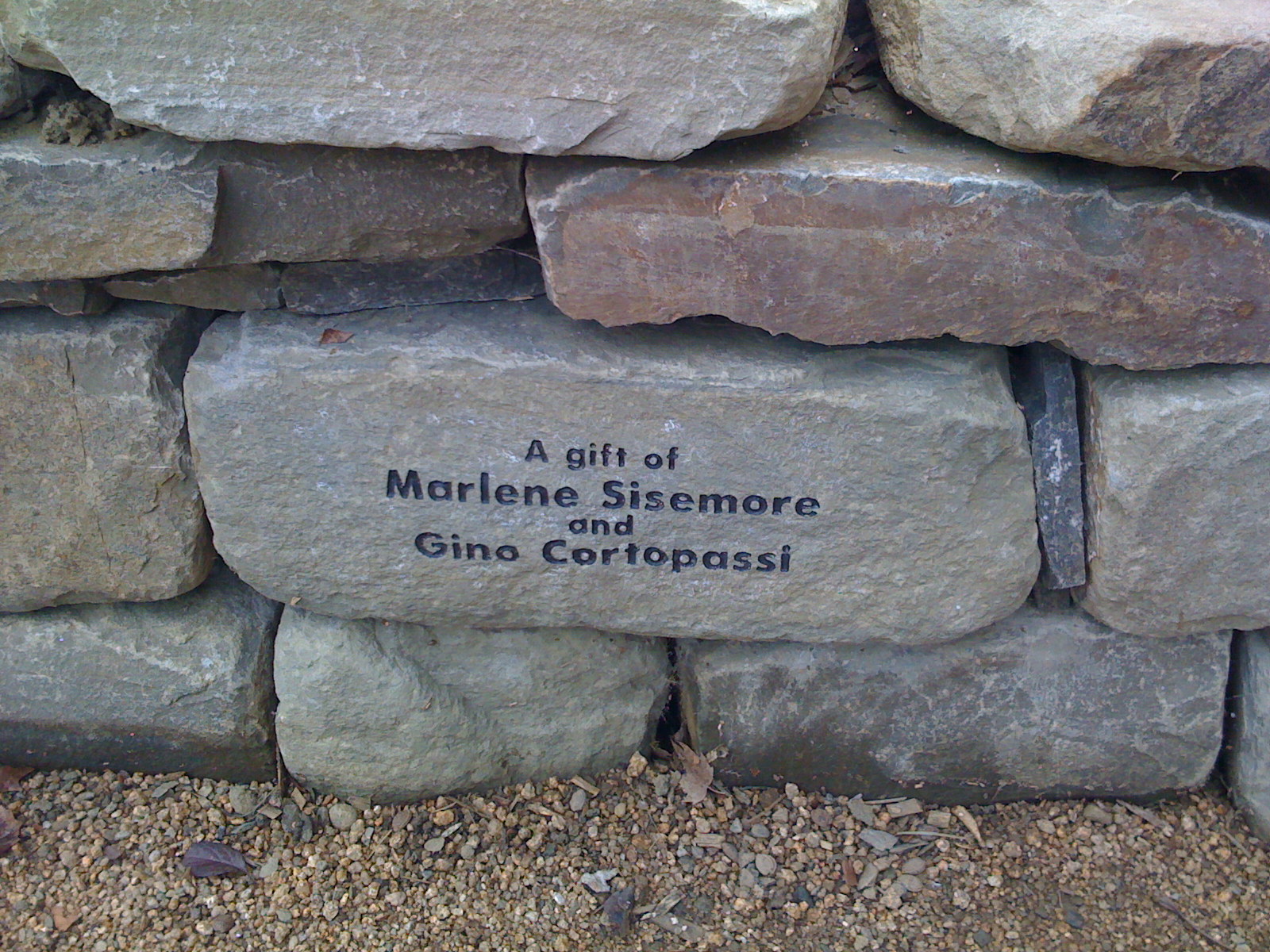
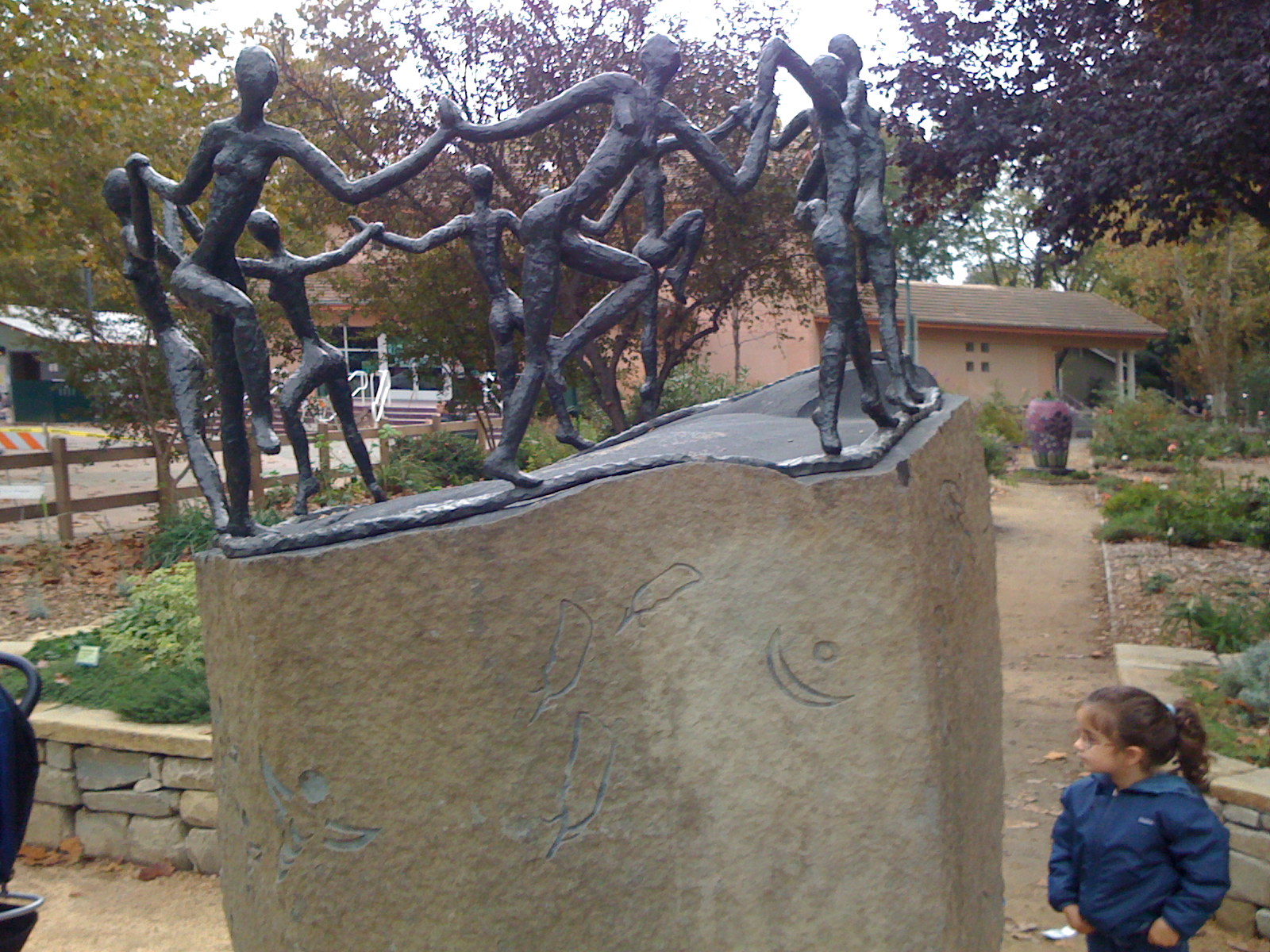
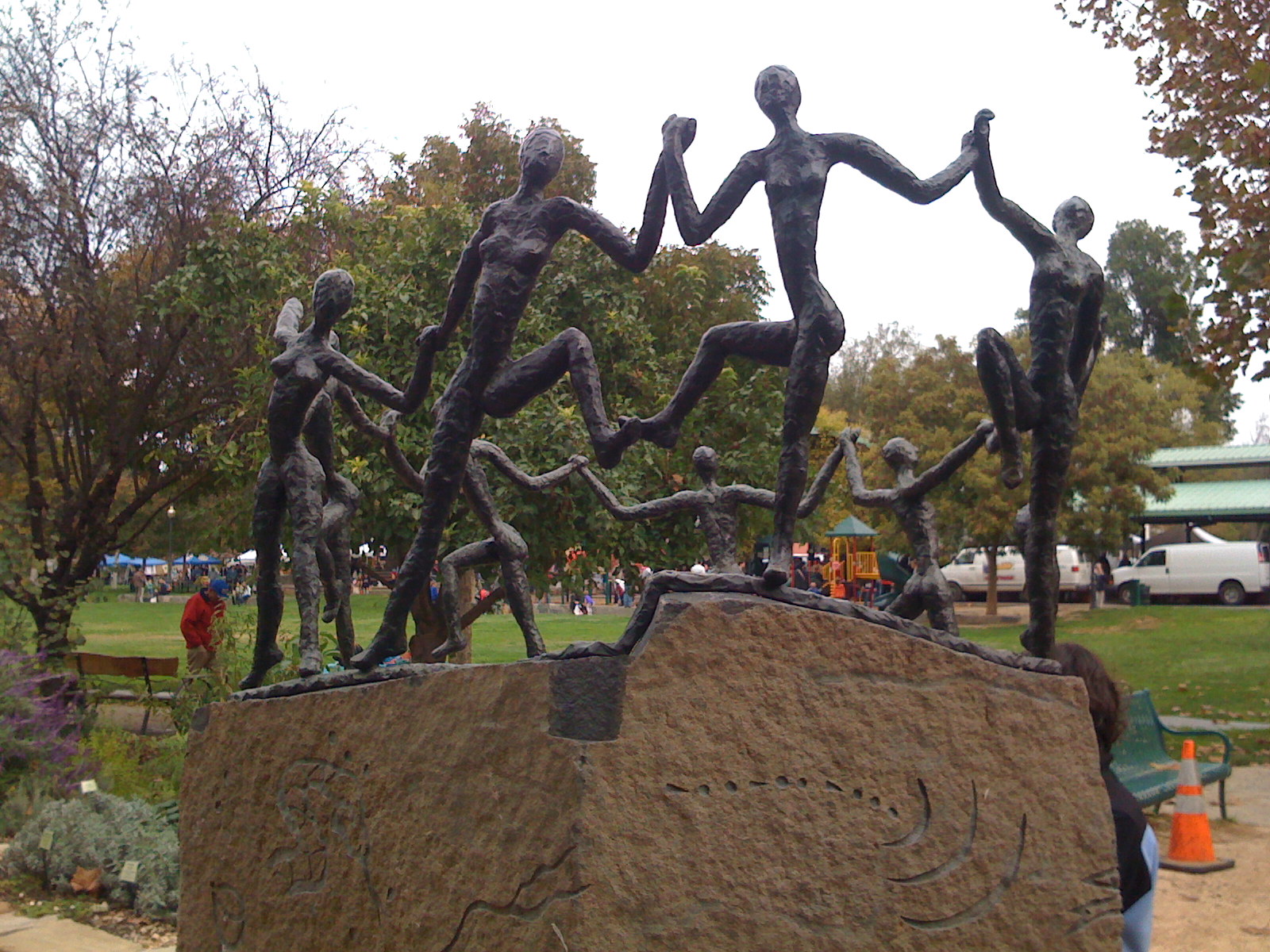
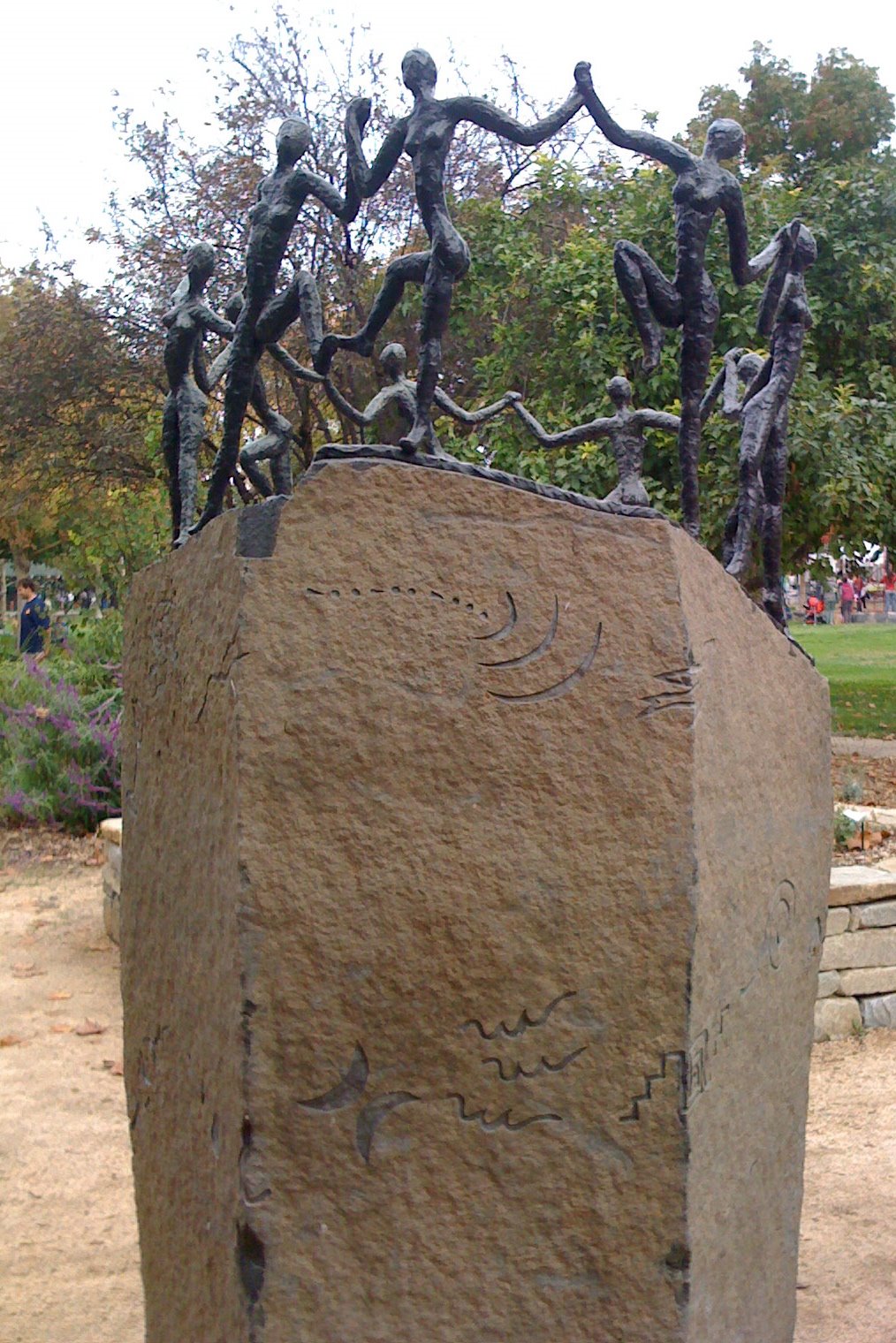
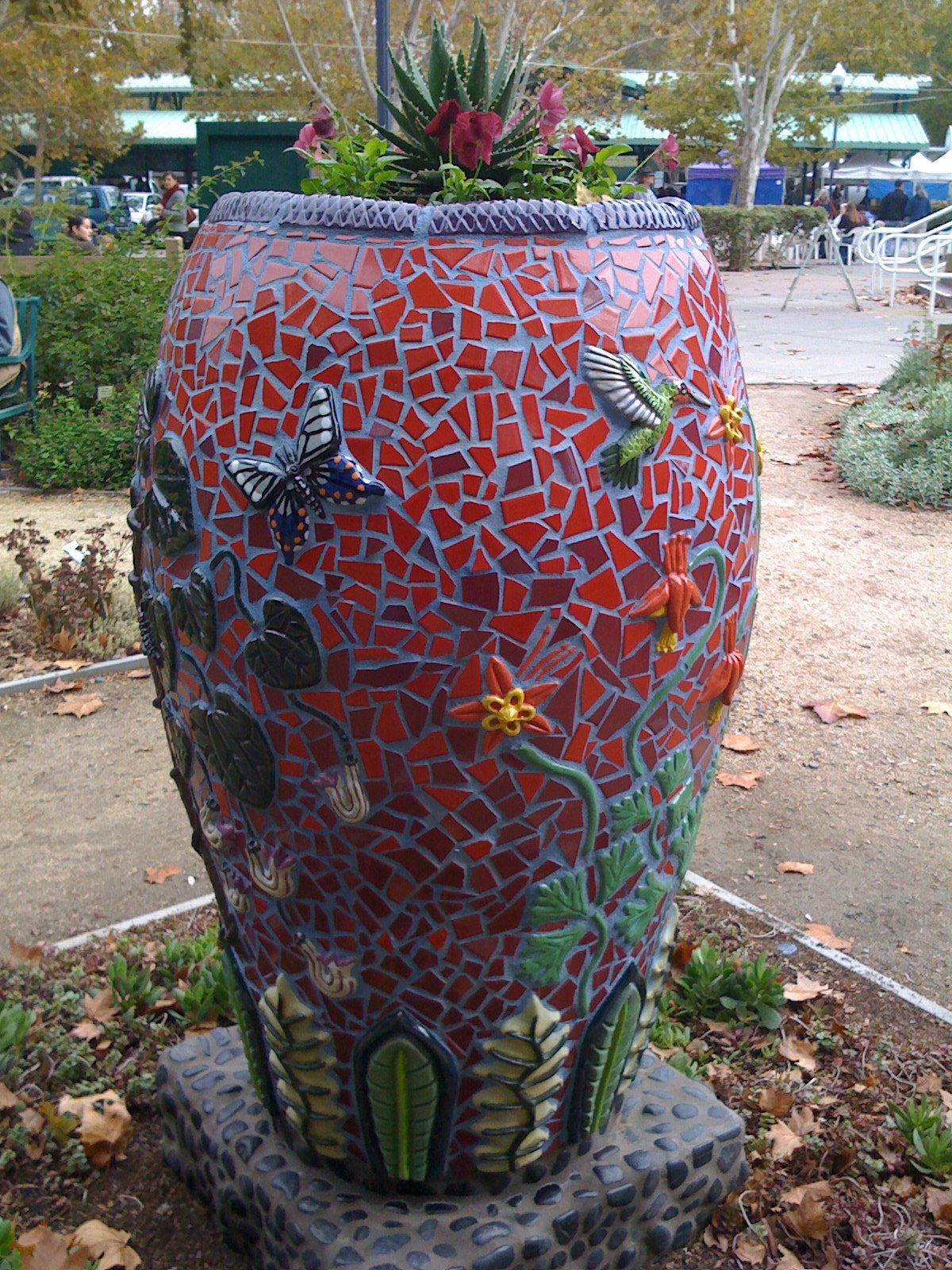
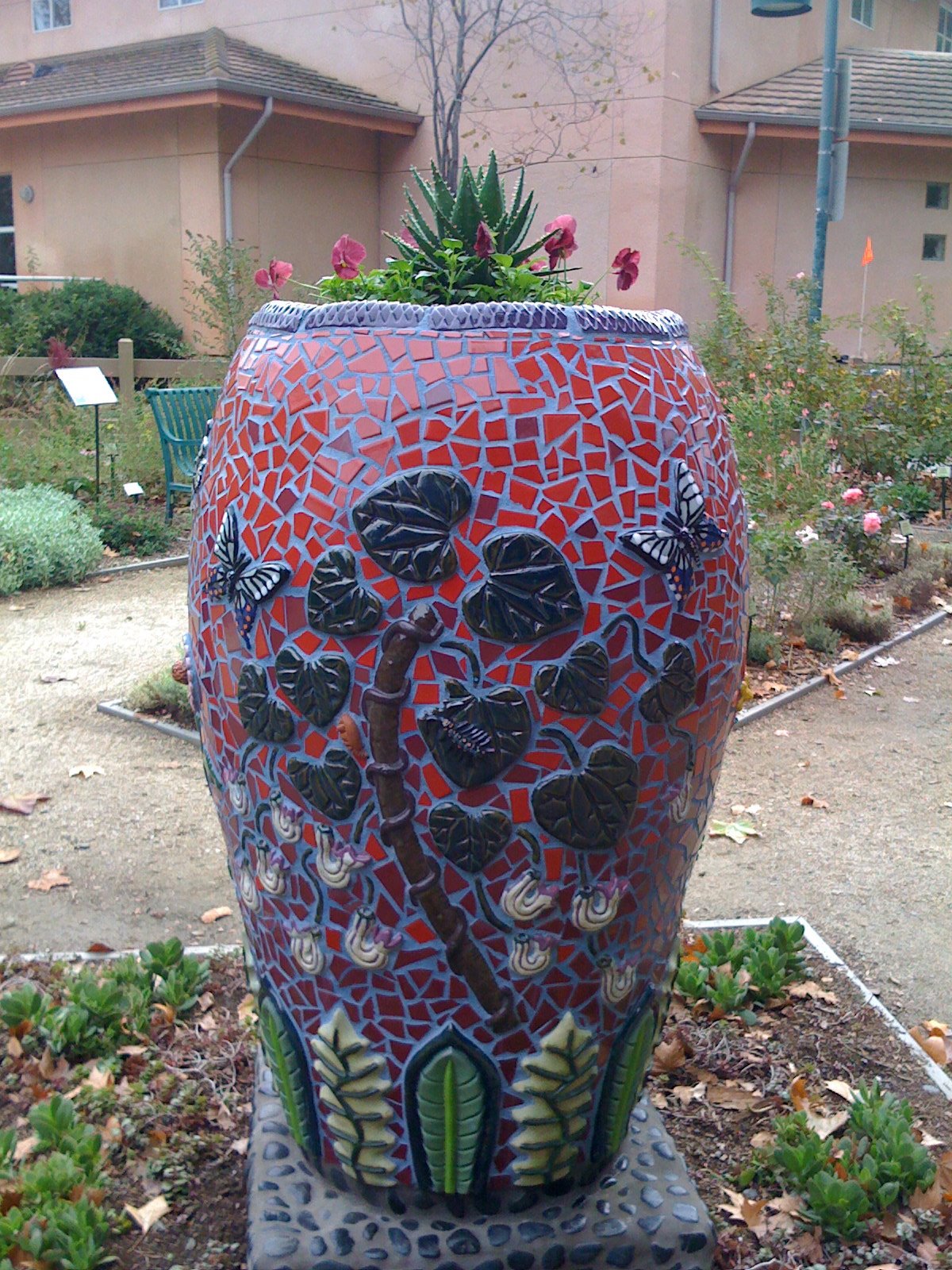
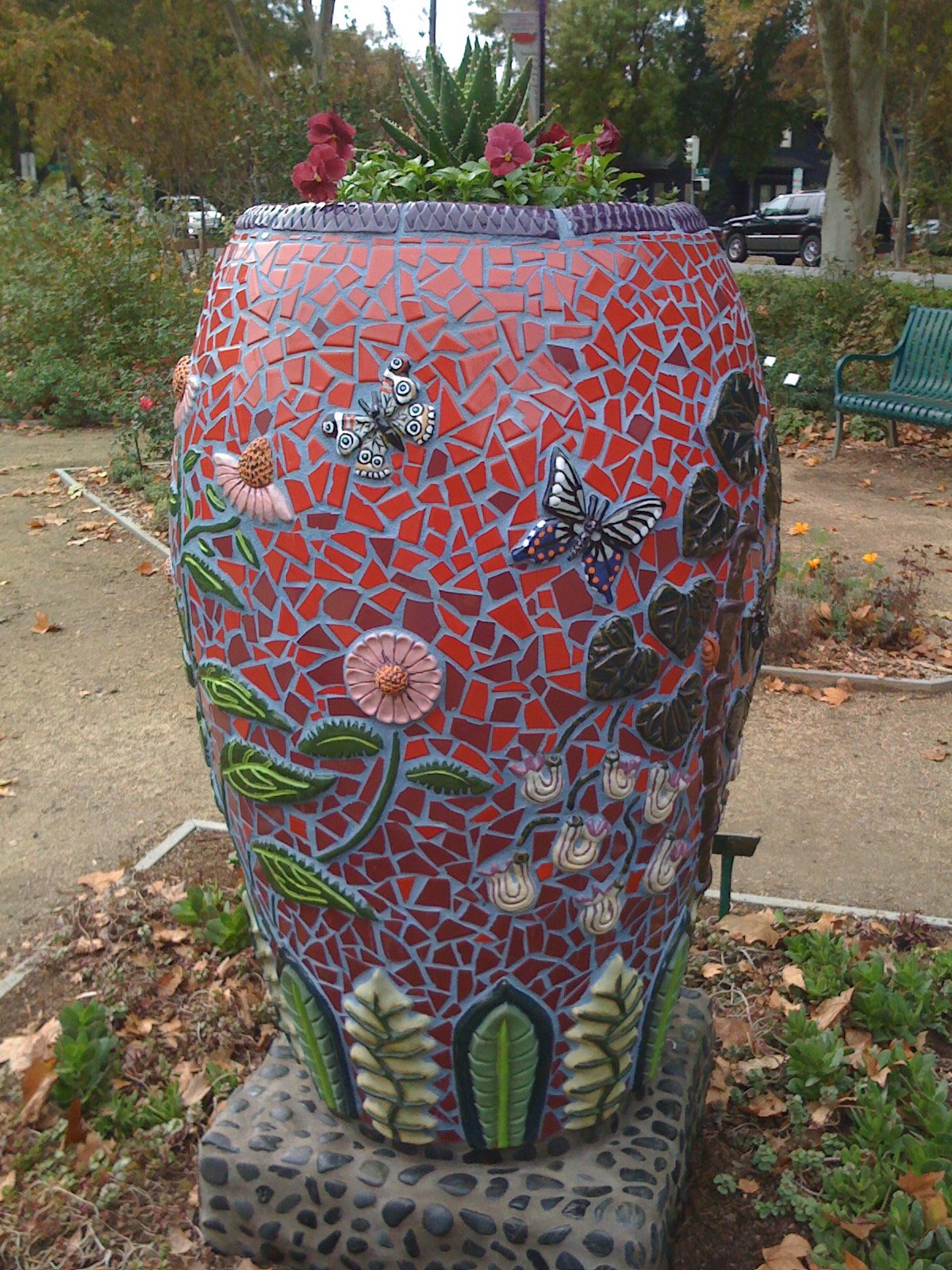
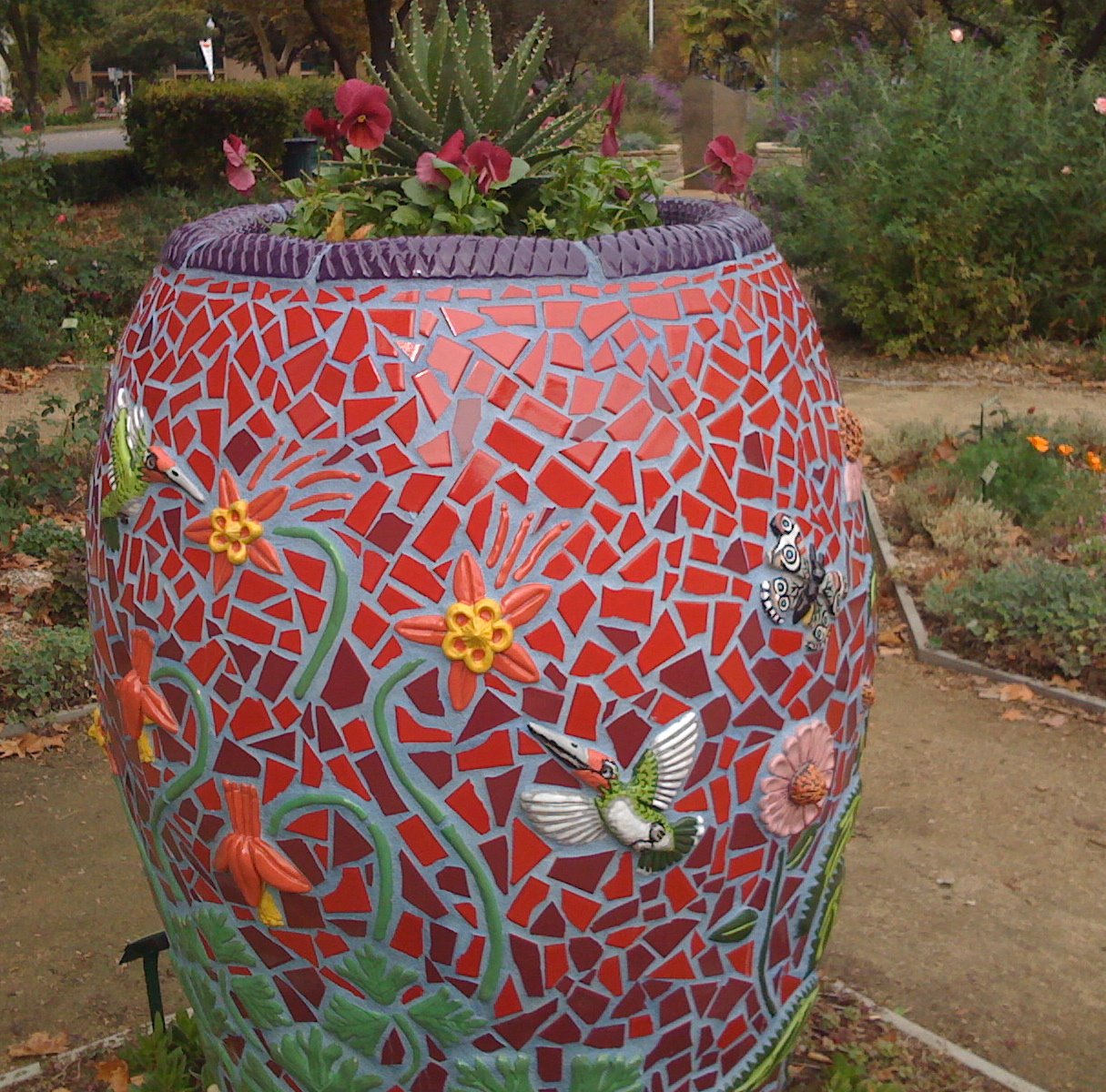
Outdoor art at the Farmer’s Market


Love the outdoor art in the renovated Gardens in Central Park in Davis …


DNA Dynasty "Company" – Stealing and Lying

Well, just adding my two cents to the pissed off blogosphere regarding a company in Singapore called DNA Dynasty.  Not only are they purveying complete crap in terms of genetics/genomics (e.g., they say they have a genetic test to determine the innate abilities of your children) but they have apparently stolen the logo of the DNA Network of which I am a member.  Lovely.  I figure, if we make enough blogging noise, then when people search for them with google they will at least also see some of our postings.  So here is mine.  See also

Metagenomics 2008 Meeting Notes

I am going to post notes here for the Metagenomics 2008 meeting.

#1 – most everyone here seems really happy about the election
#2 – mooched a ride this morning to the conference site from some of the folks who run “The Seed” and related annotation and analysis servers.  I have written about them before but people really should check them out if you are interested in microbial genome analysis. 
#3 – Alex Worden is talking now about picoeukaryotes.  Alex does some of the coolest environmental microbiology out there and just happens to focus on groups of organisms that are frequently ignored.  She just said a key quote “Physiology is not a bulk or an average property” basically saying what I say which is that an environment is not simply a bag of genes.  That is we need to remember that there are real compartments in communities.  Alex just showed an interesting figure on rRNA sampling of uncultured eukaryotes from the Sargasso See (Not et al. EM 2007).   Another key point she has made is that microbial eukaryotes are barely sampled in terms of genomics
#4 – a ridiculously short break (the organizers of this meeting really really need to change the scheduling to have more time to talk to people in breaks).  
#5 – Oded Beja is talking now.  He is really one of the key people behind the entire metagenomics revolution as he was the lead on many of the papers from the Delong Lab onthe discovery of proteorhodopsin
#6 – Shannon Williamson is showing an incredibly cool contraption that she uses to take water samples and size fractionate them in the bottom of the ocean.  It is basically a series of filter systems that works on a platform that is run by a deep sea submersible … this allows them to sample large volumes of water in the deep sea (larger volumes than they could bring back up to the surface)
#7 – a little note — already many talks referring to using IMG, IMG/M and MG-RAST tools to help with annotation and analysis of genomes and metagenomes.  Clearly there is enormous demand for getting ones data analyzed by some public or semi-public tools …
#8 – Yuri Gorby — gave a talk about nanowires which are basically little mini cables that cells use to connect to other cells and shuttle electrons around.  This stuff is beyond cool — it is completely fascinating.

Metagenomics Meeting — Competing with the Election

Well, I apologize but I am not going to post anything today about the metagenomics meeting in San Diego since I came late today as I wanted to be at home for the beginning of the election. But I made my way down to San Diego and made it to dinner. The dinner “entertainment” was a talk by one of the grand gurus of ocean microbiology – Steven Giovannoni. Alas, even he realized that he was competing with people wanting to know about the election and I confess I spent most of his talk hitting reload on my phone and surfing between sites. But So I have no notes to post about his talk. But I can say that I am happy about the election. And tomorrow I will try to post some notes about talks. But I may be still too happy to take notes …

((Note added later — in retrospect, I (and others I talked to) felt Steve G’s talk had way way too much detail for an after dinner talk so I spent the next day taking out much of the detail from my talk to lighten it up. What did this get me? After my talk and later after drinks Steve G. made it clear he thought it stunk because it was too light on details of something he thought should have been in it. Oh well, I guess this goes to show you cannot make everyone happy.)).