Journal club today on bacteria in toilets – posting some notes here

I am heading a journal club discussion today of the following paper: PLoS ONE: Microbial Biogeography of Public Restroom Surfaces
I am going to use this page/post to put up some notes for the discussion.  Fortunately I have a good guide in this – Rob Dunn wrote a nice commentary/review for Scientific American blogs: Public bathrooms house thousands of kinds of bacteria
Stay tuned/come back to this page as I will be posting some more notes. Any suggestions for other things to look at/discuss would be welcome.

Notes (I note – I am copying much of the text from the paper not rewriting it.)
What was sampled?

Ten surfaces (door handles into and out of the restroom, handles into and out of a restroom stall, faucet handles, soap dispenser, toilet seat, toilet flush handle, floor around the toilet and floor around the sink) in six male and six female restrooms evenly distributed across two buildings on the University of Colorado at Boulder campus were sampled on a single day in November 2010. 

How did they collect samples?

Surfaces where sampled using sterile, cotton-tipped swabs as described previously [14], [15]. As the 12 restrooms were nearly identical in design, we were able to swab the same area at each location between restrooms. In order to characterize tap water communities as a potential source of bacteria, 1 L of faucet water from six of the restrooms (each building having the same water source for each restroom sampled) was collected and filtered through 0.2 µm bottle top filters (Nalgene, Rochester, NY, USA). 

How did they get DNA?

Genomic DNA was extracted from the swabs and filters using the MO BIO PowerSoil DNA isolation kit following the manufacturer’s protocol with the modifications of Fierer et al. [14]. 

How did they get sequence data?

A portion of the 16 S rRNA gene spanning the V1–V2 regions was amplified using the primer set (27 F/338R), PCR mixture conditions and thermal cycling conditions described in Fierer et al. [15]. PCR amplicons of triplicate reactions for each sample were pooled at approximately equal amounts and pyrosequenced at 454 Life Sciences (Branford, CT, USA) on their GS Junior system. A total of 337,333 high-quality partial 16 S rRNA gene sequences were obtained from 101 of the 120 surface samples collected, averaging approximately 3,340 sequences per sample (ranging from 513–6,771) (Table S1) in 4 GS Junior runs, with the best run containing 116,004 high-quality reads. An additional 16,416 sequences (ranging from 2161–5084 per sample) were generated for five of the six water samples collected for source tracking analysis. Each sample was amplified with a unique barcode to enable multiplexing in the GS Junior runs. The barcoded sequencing reads can be separated by data analysis software providing high confidence in assigning sequencing read to each sample. Sequence data generated as part of this study is available upon request by contacting the corresponding author.

How did they analyze the data?

All sequences generated for this study and previously published data sets used for source tracking (see below) were processed and sorted using the default parameters in QIIME [16]. Briefly, high-quality sequences (>200 bp in length, quality score >25, exact match to barcode and primer, and containing no ambiguous characters) were trimmed to 300 bp and clustered into operational taxonomic units (OTUs) at 97% sequence identity using UCLUST [17]. Representative sequences for each OTU were then aligned using PyNAST [18] against the Greengenes core set [19] and assigned taxonomy with the RDP-classifier [20]. Aligned sequences were used to generate a phylogenetic tree with FastTree [21] for both alpha- (phylogenetic diversity, PD)[22] and beta-diversity (unweighted UniFrac) [23] metrics. The unweighted UniFrac metric, which only accounts for the presence/absence of taxa and not abundance, was used to determine the phylogenetic similarity of the bacterial communities associated with the various restroom surfaces. The UniFrac distance matrix was imported into PRIMER v6 where principal coordinate analysis (PCoA) and analysis of similarity (ANOSIM) were conducted to statistically test the relationship between the various communities [24]. In order to eliminate potential biases introduced by sampling depth, all samples (including those used in source tracking) were rarified to 500 sequences per sample for taxonomic, alpha-diversity (PD), beta-diversity (UniFrac) and source tracking comparisons.

Sourcetracking

To determine the potential sources of bacteria on restroom surfaces and how the importance of different sources varied across the sampled locations, we used the newly developed SourceTracker software package [25]. The SourceTracker model assumes that each surface community is merely a mixture of communities deposited from other known or unknown source environments and, using a Bayesian approach, the model provides an estimate of the proportion of the surface community originating from each of the different sources. When a community contains a mixture of taxa that do not match any of the source environments, that portion of the community is assigned to an “unknown” source. Potential sources we examined included human skin (n = 194), mouth (n = 46), gut (feces) (n = 45) [26] and urine (n = 50), as well as soil (n = 88) [27] and faucet water (n = 5, see above). For skin communities, sequences collected from eight body habitats (palm, index finger, forearm, forehead, nose, hair, labia minora, glans penis) from seven to nine healthy adults on four occasions were used to determine the average community composition of human skin [26]. The mouth (tongue and cheek swabs), gut and urine communities were determined from the same individuals although the urine-associated communities were not published in the initial report of these data [26]. While urine is generally considered to be sterile, it does pick up bacteria associated with the urethra and genitals [28], [29]. The average soil community was determined from a broad diversity of soil types collected across North and South America [27].

—————————————————————
Notes on Sourcetracking

Abstract to paper:

Contamination is a critical issue in high-throughput metagenomic studies, yet progress toward a comprehensive solution has been limited. We present SourceTracker, a Bayesian approach to estimate the proportion of contaminants in a given community that come from possible source environments. We applied SourceTracker to microbial surveys from neonatal intensive care units (NICUs), offices and molecular biology laboratories, and provide a database of known contaminants for future testing.

Some lines from paper

We developed SourceTracker, a Bayesian approach to identifying sources and proportions of contamination in marker-gene and functional metagenomics studies. Our approach models contamination as a mixture of entire source communities into a sink community, where the mixing proportions are unknown.

SourceTracker’s distinguishing features are its direct estimation of source proportions and its Bayesian modeling of uncertainty about known and unknown source environments.

SourceTracker outperformed these methods (NAIVE BAYES AND RANDOM FORESTS) because it allows uncertainty in the source and sink distributions, and because it explicitly models a sink sample as a mixture of sources.

SourceTracker also assumes that an environment cannot be both a source and a sink, and we recommend research into bidirectional models.

Based on our results, simple analytical steps can be suggested for tracking sources and assessing contamination in newly acquired datasets. Although source-tracking estimates are limited by the comprehensiveness of the source environments used for training, large-scale projects such as the Earth Microbiome Project will dramatically expand the availability of such resources. SourceTracker is applicable not only to source tracking and forensic analysis in a wide variety of microbial community surveys (where did this biofilm come from?), but also to shotgun metagenomics and other population-genetics data. We made our implementation of SourceTracker available as an R package (http://sourcetracker.sf.net/), and we advocate automated tests of deposited data to screen samples that may be contaminated before deposition.

Who was there?

A total of 19 phyla were observed across all restroom surfaces with most sequences (≈92%) classified to one of four phyla: Actinobacteria,Bacteroidetes, Firmicutes or Proteobacteria (Figure 1A, Table S2). Previous cultivation-dependent and –independent studies have also frequently identified these as the dominant phyla in a variety of indoor environments [10][13]. Within these dominant phyla, taxa typically associated with human skin (e.g. Propionibacteriaceae,Corynebacteriaceae, Staphylococcaceae and Streptococcaceae) [30]were abundant on all surfaces (Figure 1A). The prevalence of skin bacteria on restroom surfaces is not surprising as most of the surfaces sampled come into direct contact with human skin, and previous studies have shown that skin associated bacteria are generally resilient and can survive on surfaces for extended periods of time [31], [32]. Many other human-associated taxa, including several lineages associated with the gut, mouth and urine, were observed on all surfaces (Figure 1A). Overall, these results demonstrate that, like other indoor environments that have been examined, the microbial communities associated with public restroom surfaces are predominantly composed of human-associated bacteria.

Figure 1. Taxonomic composition of bacterial communities associated with public restroom surfaces.
(A) Average composition of bacterial communities associated with restroom surfaces and potential source environments. (B) Taxonomic differences were observed between some surfaces in male and female restrooms. Only the 19 most abundant taxa are shown. For a more detailed taxonomic breakdown by gender including some of the variation see Supplemental Table S2.
doi:10.1371/journal.pone.0028132.g001


Comparative analysis

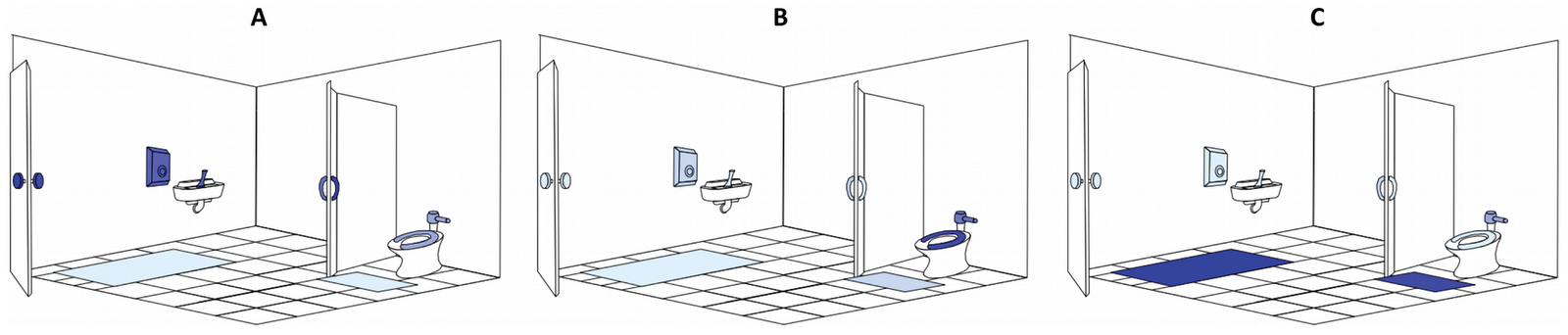
Comparisons of the bacterial communities on different restroom surfaces revealed that the communities clustered into three general categories: those communities found on toilet surfaces (the seat and flush handle), those communities on the restroom floor, and those communities found on surfaces routinely touched with hands (door in/out, stall in/out, faucet handles and soap dispenser) (Figure 2, Table 1). By examining the relative abundances of bacterial taxa across all of the restroom samples, we can identify taxa driving the overall community differences between these three general categories. Skin-associated bacteria dominate on those surfaces (the circles in Figure 2) that are routinely and exclusively (we hope) touched by hands and unlikely to come into direct contact with other body parts or fluids (Figure 3A). In contrast, toilet flush handles and seats (the asterisk-shaped symbols in Figure 2) were relatively enriched in Firmicutes (e.g.Clostridiales, Ruminococcaceae, Lachnospiraceae, etc.) andBacteroidetes (e.g. Prevotellaceae and Bacteroidaceae) (Figure 3B). These taxa are generally associated with the human gut [26],[33][35] suggesting fecal contamination of these surfaces. Fecal contamination could occur either via direct contact (with feces or unclean hands) or indirectly as a toilet is flushed and water splashes or is aerosolized [36][38]. From a public health perspective, the high number of gut-associated taxa throughout the restrooms is concerning because enteropathogenic bacteria could be dispersed in the same way as human commensals. Floor surfaces harbored many low abundance taxa (Table S2) and were the most diverse bacterial communities, with an average of 229 OTUs per sample versus most of the other sampled locations having less than 150 OTUs per sample on average (Table S1). The high diversity of floor communities is likely due to the frequency of contact with the bottom of shoes, which would track in a diversity of microorganisms from a variety of sources including soil, which is known to be a highly-diverse microbial habitat [27], [39]. Indeed, bacteria commonly associated with soil (e.g. Rhodobacteraceae, Rhizobiales, Microbacteriaceae and Nocardioidaceae) were, on average, more abundant on floor surfaces (Figure 3C, Table S2). Interestingly, some of the toilet flush handles harbored bacterial communities similar to those found on the floor (Figure 2, Figure 3C), suggesting that some users of these toilets may operate the handle with a foot (a practice well known to germaphobes and those who have had the misfortune of using restrooms that are less than sanitary).


Figure 2. Relationship between bacterial communities associated with ten public restroom surfaces.
Communities were clustered using PCoA of the unweighted UniFrac distance matrix. Each point represents a single sample. Note that the floor (triangles) and toilet (asterisks) surfaces form clusters distinct from surfaces touched with hands.
doi:10.1371/journal.pone.0028132.g002


Table 1. Results of pairwise comparisons for unweighted UniFrac distances of bacterial communities associated with various surfaces of public restrooms on the University of Colorado campus using the ANOSIM test in Primer v6.
doi:10.1371/journal.pone.0028132.t001


Figure 3. Cartoon illustrations of the relative abundance of discriminating taxa on public restroom surfaces.
Light blue indicates low abundance while dark blue indicates high abundance of taxa. (A) Although skin-associated taxa (PropionibacteriaceaeCorynebacteriaceae,Staphylococcaceae and Streptococcaceae) were abundant on all surfaces, they were relatively more abundant on surfaces routinely touched with hands. (B) Gut-associated taxa (ClostridialesClostridiales group XI, Ruminococcaceae,LachnospiraceaePrevotellaceae and Bacteroidaceae) were most abundant on toilet surfaces. (C) Although soil-associated taxa (Rhodobacteraceae, Rhizobiales, Microbacteriaceae and Nocardioidaceae) were in low abundance on all restroom surfaces, they were relatively more abundant on the floor of the restrooms we surveyed. Figure not drawn to scale.
doi:10.1371/journal.pone.0028132.g003

Comparisons 2 (Gender)

While the overall community level comparisons between the communities found on the surfaces in male and female restrooms were not statistically significant (Table S3), there were gender-related differences in the relative abundances of specific taxa on some surfaces (Figure 1B, Table S2). Most notably, Lactobacillaceae were clearly more abundant on certain surfaces within female restrooms than male restrooms (Figure 1B). Some species of this family are the most common, and often most abundant, bacteria found in the vagina of healthy reproductive age women [40], [41] and are relatively less abundant in male urine [28], [29]. Our analysis of female urine samples collected as part of a previous study [26] (Figure 1A), found that Lactobacillaceae were dominant in urine, therefore implying that surfaces in the restrooms where Lactobacillaceae were observed were contaminated with urine. Other studies have demonstrated a similar phenomenon, with vagina-associated bacteria having also been observed in airplane restrooms [11] and a child day care facility [10]. As we found that Lactobacillaceae were most abundant on toilet surfaces and those touched by hands after using the toilet (with the exception of the stall in), they were likely dispersed manually after women used the toilet. Coupling these observations with those of the distribution of gut-associated bacteria indicate that routine use of toilets results in the dispersal of urine- and fecal-associated bacteria throughout the restroom. While these results are not unexpected, they do highlight the importance of hand-hygiene when using public restrooms since these surfaces could also be potential vehicles for the transmission of human pathogens. Unfortunately, previous studies have documented that college students (who are likely the most frequent users of the studied restrooms) are not always the most diligent of hand-washers [42], [43].

Source Tracking


Human sources:

Results of SourceTracker analysis support the taxonomic patterns highlighted above, indicating that human skin was the primary source of bacteria on all public restroom surfaces examined, while the human gut was an important source on or around the toilet, and urine was an important source in women’s restrooms (Figure 4, Table S4). 

Soil not an apparent source:

Contrary to expectations (see above), soil was not identified by the SourceTracker algorithm as being a major source of bacteria on any of the surfaces, including floors (Figure 4). Although the floor samples contained family-level taxa that are common in soil, the SourceTracker algorithm probably underestimates the relative importance of sources, like soils, that contain highly diverse bacterial communities with no dominant OTUs and minimal overlap between those OTUs in the sources and those found in the surface samples. As soils typically have large numbers of OTUs that are rare (i.e. represented by very few sequences) and the OTU overlap between different soil samples is very low [27], it is difficult to identify specific OTUs indicative of a soil source. 

Other potential sources:

The other potential sources we examined, mouth and faucet water, made only minor bacterial contributions to restroom surface communities either because these potential source environments rarely come into contact with restroom surfaces (the mouth – we hope) or they harbor relatively low concentrations of bacteria (faucet water) (Figure 4). While we were able to identify the primary sources for most of the surfaces sampled, many other sources, such as ventilation systems or mops used by the custodial staff, could also be contributing to the restroom surface bacterial communities. More generally, the SourceTracker results demonstrate how direct comparison of bacterial communities from samples of various environment types to those gathered from other settings can be used to determine the relative contribution of that source across samples. Although many of the source-tracking results evident from the restroom surfaces sampled here are somewhat obvious, this may not always be the case in other environments or locations. We could use the same techniques to identify unexpected sources of bacteria from particular environments as was observed recently for outdoor air [44].
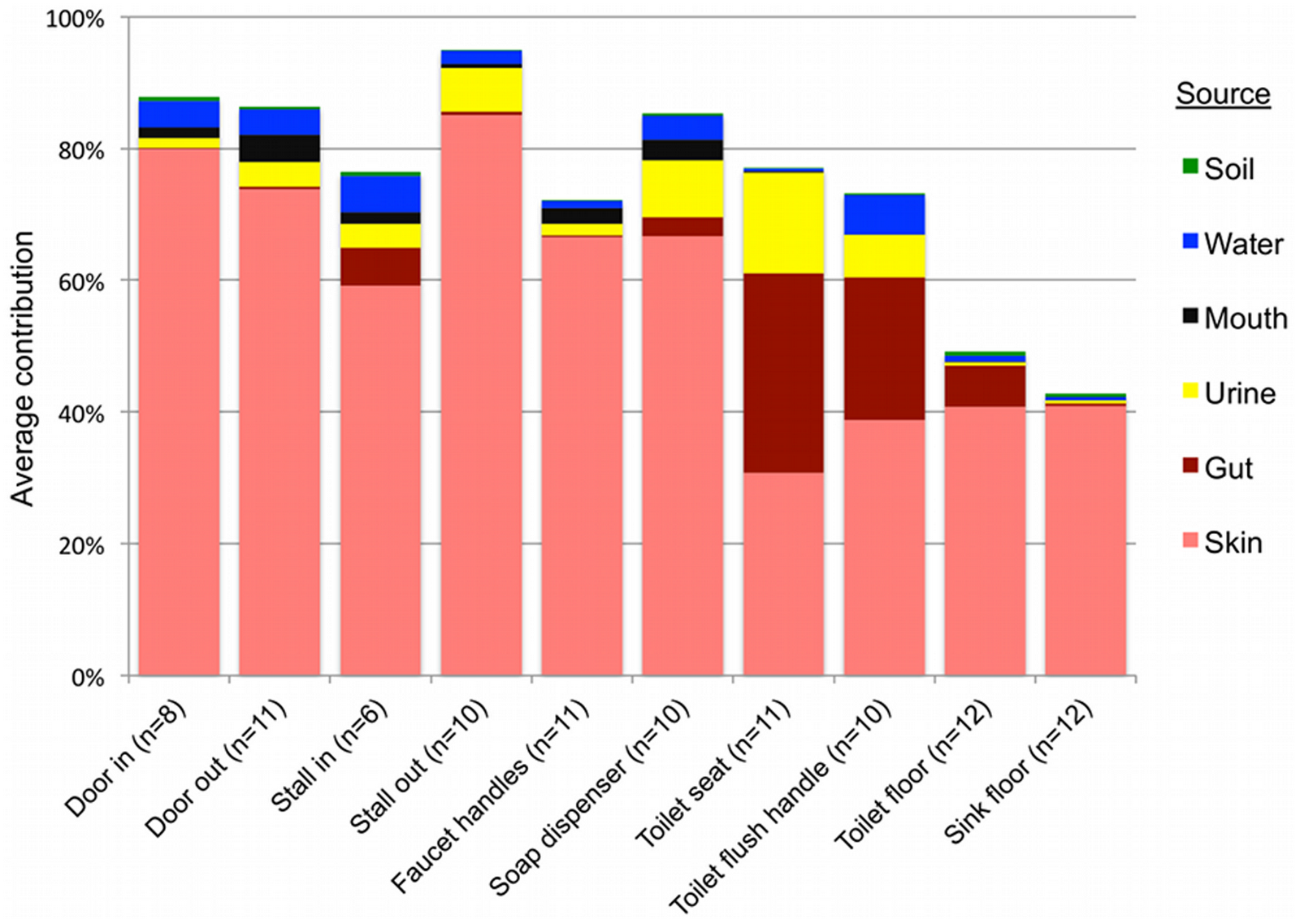
Figure 4. Results of SourceTracker analysis showing the average contributions of different sources to the surface-associated bacterial communities in twelve public restrooms.
The “unknown” source is not shown but would bring the total of each sample up to 100%.
doi:10.1371/journal.pone.0028132.g004
Conclusion

While we have known for some time that human-associated bacteria can be readily cultivated from both domestic and public restroom surfaces, little was known about the overall composition of microbial communities associated with public restrooms or the degree to which microbes can be distributed throughout this environment by human activity. The results presented here demonstrate that human-associated bacteria dominate most public restroom surfaces and that distinct patterns of dispersal and community sources can be recognized for microbes associated with these surfaces. Although the methods used here did not provide the degree of phylogenetic resolution to directly identify likely pathogens, the prevalence of gut and skin-associated bacteria throughout the restrooms we surveyed is concerning since enteropathogens or pathogens commonly found on skin (e.g. Staphylococcus aureus) could readily be transmitted between individuals by the touching of restroom surfaces.

Supporting Information Top

Public restroom surfaces sampled and comparison of alpha-diversity metrics for each restroom surface. Note that all alpha-diversity values were determined from 500 randomly selected sequences from each sample.
(DOC)

Average taxonomic composition of bacterial communities associated with female (F) and male (M) public restroom surfaces. Numbers in parentheses indicate the standard error of the mean (SEM). Taxonomy was determined using the RDP-classifier for 500 randomly selected sequences from each sample.
(DOC)

Results of ANOSIM test comparing the bacterial communities associated with male and female restroom surfaces.
(DOC)

Results of SourceTracker analysis showing percentage of microbial community contributions of different source environments to restroom surfaces. Values are the average of ten resamplings with the standard error of the mean reported in parentheses.
(DOC)

Town Hall #2 – Chancellor Katehi meets w/ Faculty/Staff; Katehi receives much support

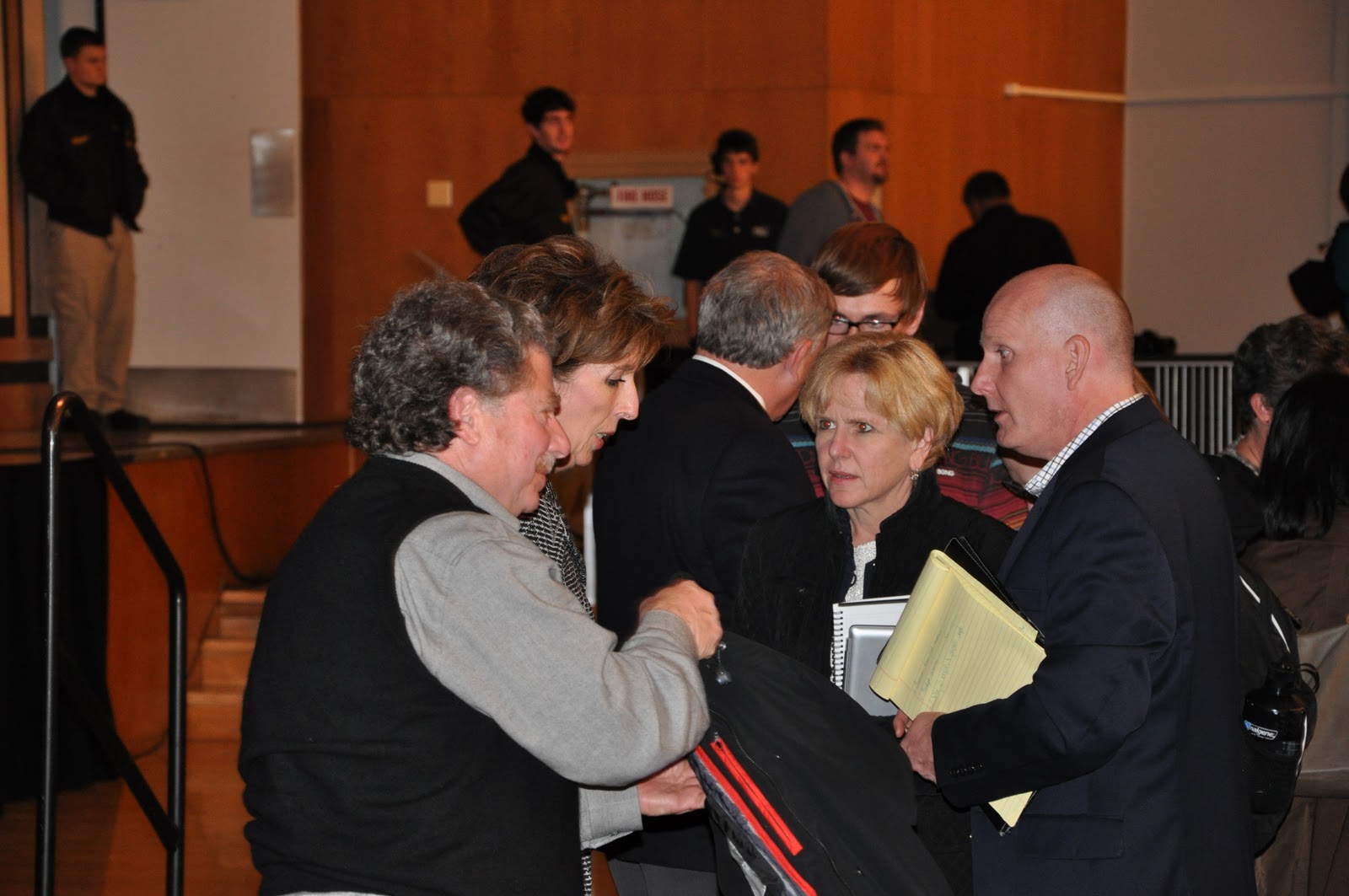
Quick post regarding the Town Hall meeting at UC Davis between the administration and faculty and staff.  I am going to tell it through pictures and twitter posts (mostly mine, with a few responses).  Will really try to write up a more essayish post ASAP.  I tried to match pictures to comments but some may be mismatched – please forgive me.  
If you want the punch line – it is pretty simple – lots and lots of support for Chancellor Katehi from faculty at staff with a few dissenting points of view.  Very few argued for the need for resignation (I think Nathan Brown was the only one but I may be wrong – Josh Clover and possibly others may have also said something along these lines).  And most said something positive about Katehi although most of the positive things were about how good a Chancellor people think she has been not about her handling of this incident and its aftermath.  Anyway – here are some pics and tweets … Also note I tried to record a few videos here and there and for some reason the only two that came out well were of two of the biggest critics of Katehi – Clover and Brown.  I am including those vids though if you only look at the vids you will get a mistaken impression regarding the amount of criticism vs. support for Katehi. 
Once again – banners are not allowed.  WTF?
phylogenomics
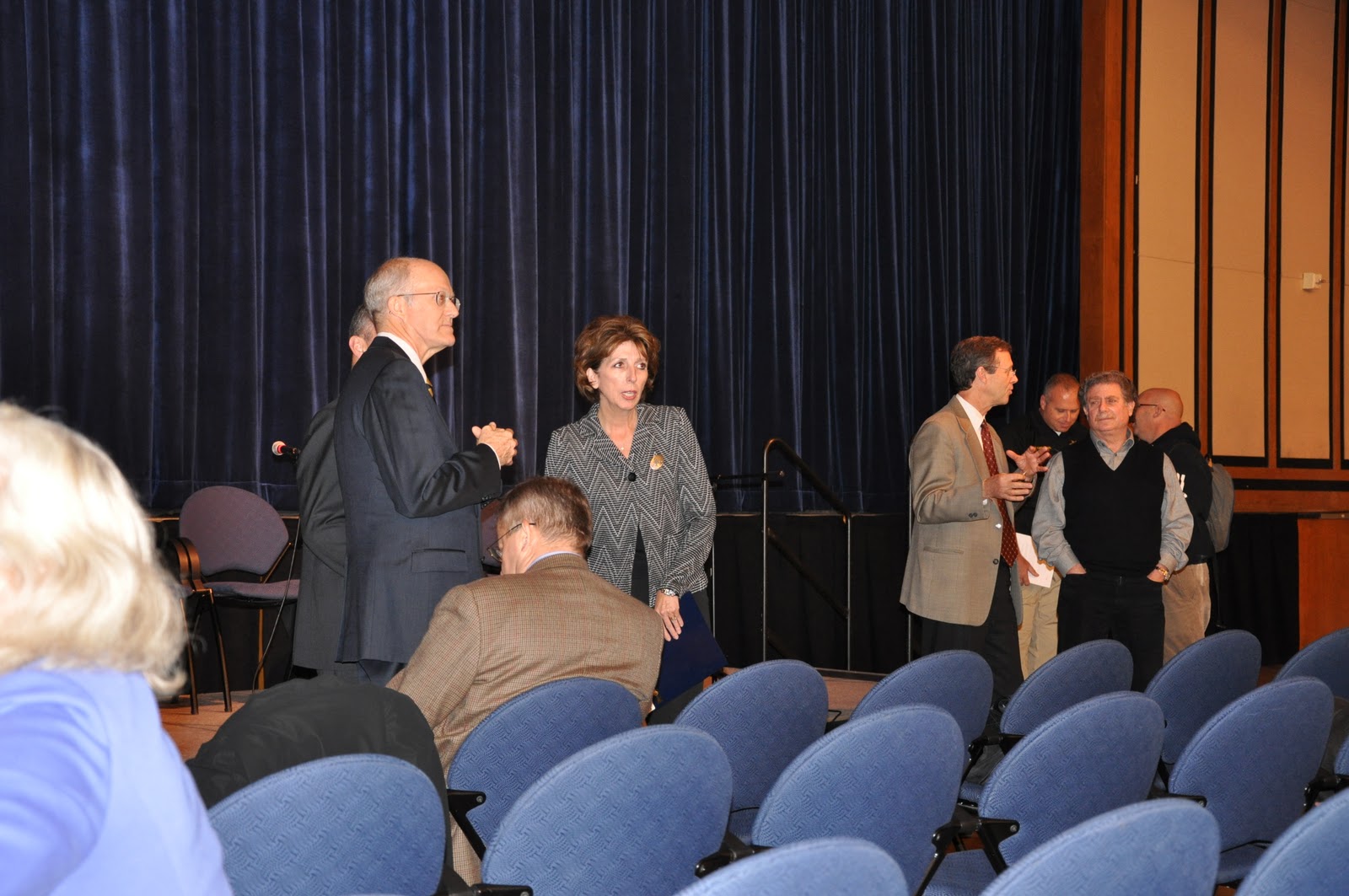
The Tree of Life: Faculty and staff arriving for Town Hall meeting with Chamcellor http://t.co/1cjHtgML
11/29/11 4:09 PM

michaelhoffman
@phylogenomics Why is the sign partially covered?
11/29/11 4:34 PM
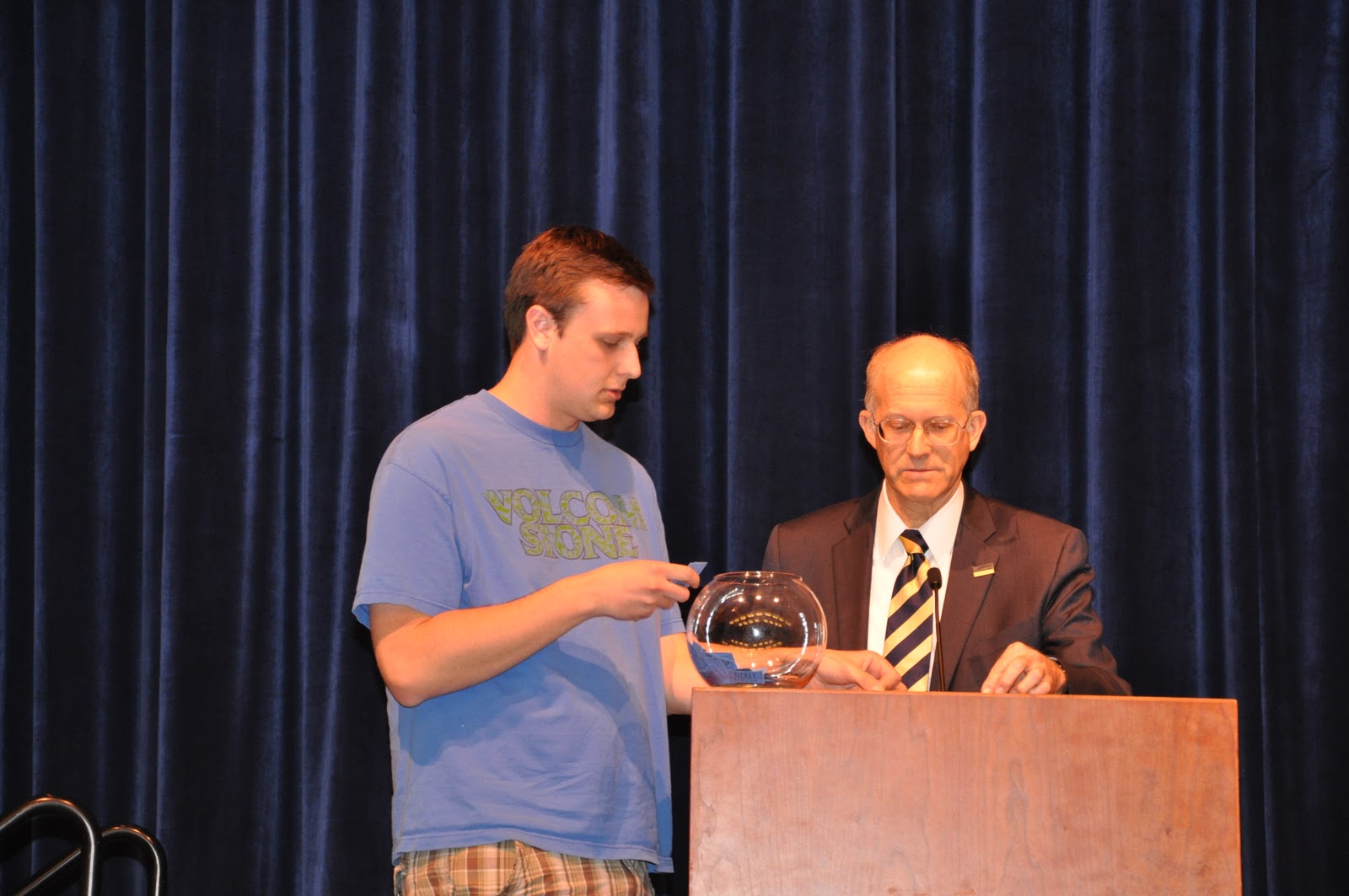
People getting lottery numbers to speak

Gratuitous extra picture

phylogenomics
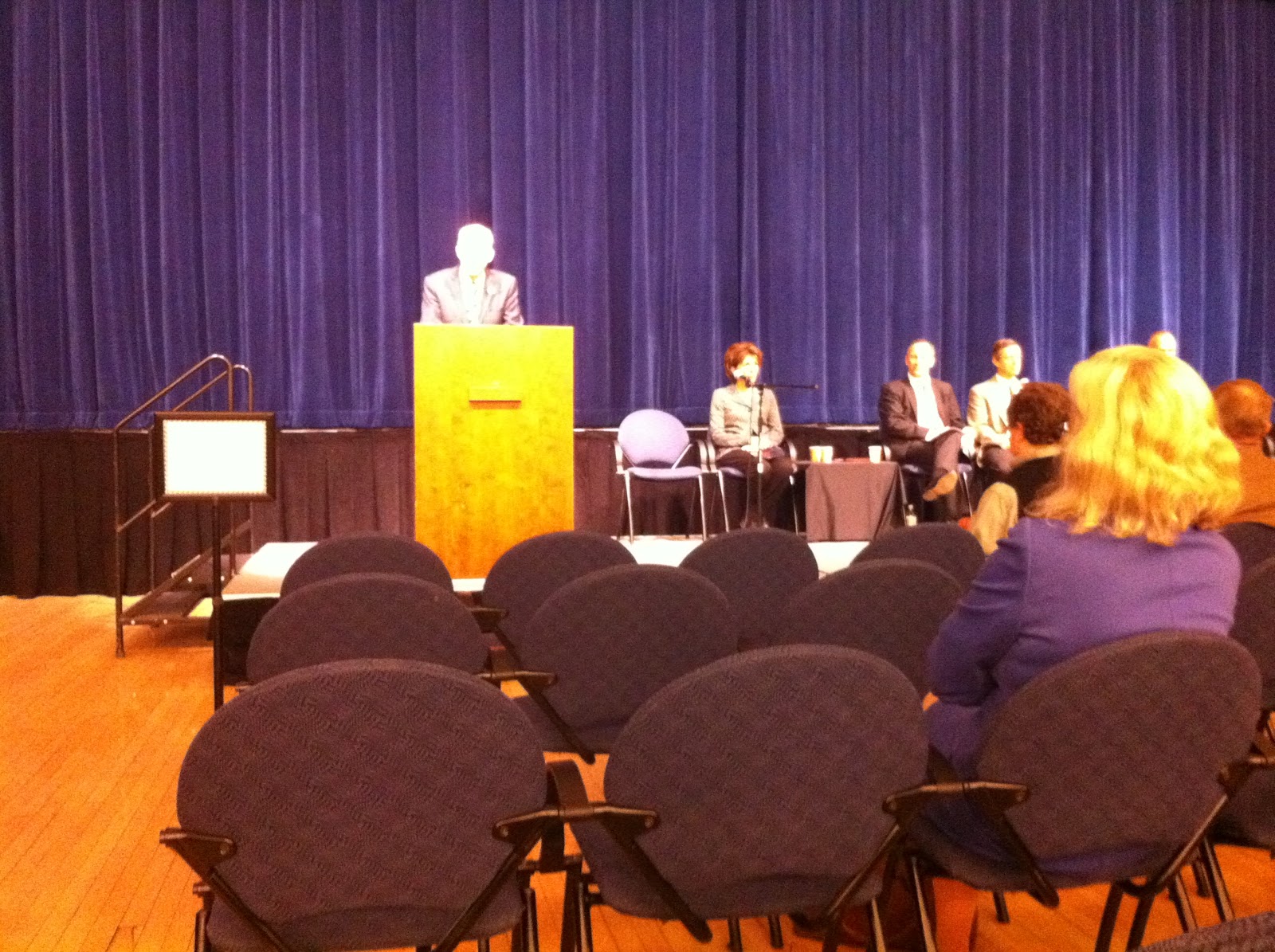
Chancellor Katehi is now giving an opening mini statement to Town Hall #OccuppyUCDavis http://t.co/011ZM0IC
11/29/11 4:11 PM

phylogenomics
Katehi is saying that this has been a very very difficult 10 days #ucdavis
11/29/11 4:12 PM

phylogenomics
Katehi also says there has been a lot of misinformation out there #ucdavis #OccuppyUCDavis http://t.co/plbmT3jN
11/29/11 4:14 PM
oceangyre
@phylogenomics For Katehi to decry “misinformation” when she’s been its biggest purveyor with regard to #OccupyUCDavis is rich. #OWS
11/29/11 6:31 PM
oceangyre
@phylogenomics Katehi has persisted in making insinuations about “outside elements” + health/safety @OccupyUCDavis that are all untrue. #OWS
11/29/11 6:33 PM

phylogenomics
Katehi says people responsible will be punished & that due process is needed & that there should not be a rush to judgement #OccuppyUCDavis
11/29/11 4:17 PM
phylogenomics
Katehi says she feels fully responsible for everything that happens on campus ( though I note – not sure what this means) #OccuppyUCDavis
11/29/11 4:18 PM

phylogenomics
Katehi says what happened at #UCDavis underscores much larger issues #OccuppyUCDavis
11/29/11 4:21 PM

phylogenomics
Front of hall here very empty-not sure if that is due to the silly “reserved” sign or some statement #OccuppyUCDavis http://t.co/EN0UYeK7
11/29/11 4:25 PM

xpeanutgalleryx
@phylogenomics so many empty seats.
11/29/11 5:12 PM

phylogenomics
Katehi: 5 ideas for response 1. More faculty interactions w/ admin 2. Conflict resolution council 3. Outreach to parents #occupyucdavis
11/29/11 4:27 PM

phylogenomics
Katehi continued 4. Alumni outreach 5. Police outreach – notes this is just a beginning #occupyucdavis
11/29/11 4:28 PM

thinktankhero
@phylogenomics it doesn’t sound like any of those ideas address increased tuition, institutional violence, or taking responsibility?
11/29/11 5:30 PM

phylogenomics
Provost says he is regularly bowled over by the greatness of this university and none of these are changed by this incident #occupyucdavis
11/29/11 4:30 PM
phylogenomics
Provost Hexter says nobody is a stronger advocate for #ucdavis than Chancellor Katehi #occupyucdavis http://t.co/6DKXBeL8
11/29/11 4:31 PM

phylogenomics
Provost and Chancellor both say they are limited due to investigations in providing certain details publicly about events #occupyucdavis
11/29/11 4:33 PM

KMBTweets
@phylogenomics That. Is. Bull. Shit.
11/29/11 4:34 PM

phylogenomics
Student drawing numbers from a bin to determine who makes comments #occupyucdavis http://t.co/0U0Gnymd
11/29/11 4:35 PM

phylogenomics
Prof Nina Amenta in support of Katehi – says she does not want this to turn into a circular firing squad http://t.co/KTvLlbsI
11/29/11 4:37 PM

phylogenomics
Speaker says he is glad to see administration re-engaged – also says he wants to know where $$ is going http://t.co/h9mfcc5O
11/29/11 4:38 PM

phylogenomics
Speaker says we should think about salaries and other expenses in terms of cost to students #occupyucdavis
11/29/11 4:39 PM

phylogenomics
Speaker also asks for more detail about the instructions Katehi gave to police – she says she cannot comment about it #occupyucdavis
11/29/11 4:40 PM

wilson_to
Sketchy… RT @phylogenomics Speaker asks for details about the instructions Katehi gave to police – says she can’tcomment #occupyucdavis
11/29/11 4:42 PM

the_eco_thought
@phylogenomics how convenient… Thanks for covering this
11/29/11 4:44 PM

phylogenomics
Nathan Brown has just spoken and critiqued Katehi but went over the time limit and was cutoff – crowd did not support him #occupyucdavis
11/29/11 4:48 PM

jrblough
@phylogenomics Was he actively booed or just not cheered?
11/29/11 4:49 PM

phylogenomics
Note – I do not agree with many things Nathan Brown said but I wish he had been allowed to finish #occupyucdavis
11/29/11 4:52 PM

phylogenomics
@jrblough booed and people tried to clap him off stage
11/29/11 4:53 PM

phylogenomics
@jrblough But pretty gently
11/29/11 4:55 PM

jrblough
@phylogenomics Interesting. Thanks.
11/29/11 4:54 PM
phylogenomics
Speaker calls Nathan Brown irresponsible for calling for disbanding of police #occupyucdavis http://t.co/R1UmKOoc
11/29/11 4:53 PM

phylogenomics
Speaker says rather than focusing on blaming should focus on what to do for students #occupyucdavis
11/29/11 4:55 PM

phylogenomics
Brown interrupted speaker when he said Davis Faculty association called for end of police; Brown said THEY did not but HE did #occupyucdavis
11/29/11 4:57 PM

phylogenomics
Multiple speakers express support for Katehi #occupyucdavis http://t.co/ssbqDWwo
11/29/11 4:58 PM

phylogenomics
Speaker asks about how Katehi is going to be transparent in decisions & asks her to not be evasive #occupyucdavis http://t.co/Ek8Uh4gU
11/29/11 5:00 PM

phylogenomics
Katehi says she needs to spend more time with students To discuss issues and she needs to earn trust #occupyucdavis
11/29/11 5:01 PM
KatehivilleNews
She’s certainly prone to understatement. RT: @phylogenomics Katehi says she needs to spend more time with students…earn trust.
11/29/11 5:17 PM

phylogenomics
Josh Clover cut in line and asked about police presence on campus and got into a mini debate about this issue #occupyucdavis
11/29/11 5:08 PM

phylogenomics
Clover suggested the police make students unsafe; Katehi says we need police and mentions V Tech; Clover says that is false fear mongering
11/29/11 5:09 PM

phylogenomics
Bob Ostertag : the first responses by Katehi was disaster & suggests UC admin angered students by that #occupyucdavis http://t.co/k59rQpNT
11/29/11 5:11 PM

phylogenomics
Ostertag says initial response by Katehi severely damaged university #occupyucdavis
11/29/11 5:13 PM

KatehivilleNews
This seems the crux of the issue. -> RT: @phylogenomics Ostertag says initial response by Katehi severely damaged university.
11/29/11 5:20 PM

phylogenomics
Ostertag also says not all students know medical bills will be paid #occupyucdavis
11/29/11 5:14 PM

phylogenomics
Speaker who has been here for 40 years & whose father was here says cannot use “danger” to justify what happens http://t.co/wNg4PDMl
11/29/11 5:16 PM

phylogenomics
Speaker says the university needs to support the message of the students – need to raise taxes on rich #occupyucdavis http://t.co/gHIos0xY
11/29/11 5:18 PM

phylogenomics
Speaker says the privatization of the university is unacceptable and that he administration needs to fight this #occupyucdavis
11/29/11 5:20 PM

phylogenomics
Speaker says camping on quad is nothing compared to “picnic day” here- should never have been an issue #occupyucdavis
11/29/11 5:21 PM

phylogenomics
Speaker says real leadership will involve actual acting on behalf of students #occupyucdavis
11/29/11 5:22 PM

phylogenomics
Prof. Epstein class of UC Davis 1940 expresses support for Katehi and says real issue is funds #occupyucdavis http://t.co/d2SgIkNz
11/29/11 5:24 PM

phylogenomics
Next speaker says Katehi is not responsible for California budget issues and that what is needed is to change prop13 #occupyucdavis
11/29/11 5:26 PM

phylogenomics
Speaker: claim that “safety” & “health” excuse to remove students was more like middle East actions #occupyucdavis http://t.co/2a5xXLyt
11/29/11 5:28 PM

phylogenomics
Speaker asks if we can get a statistical sample of faculty to see what they feel #occupyucdavis http://t.co/KyJWdBgd
11/29/11 5:30 PM

phylogenomics
Speaker: he got 100+ faculty to sign letter of support for Katehi and that this is more than those calling for resignation #occupyucdavis
11/29/11 5:31 PM

the_eco_thought
@phylogenomics btw he is incorrect…
11/29/11 5:32 PM

phylogenomics
@the_eco_thought just trying to report quickly – will comment later
11/29/11 5:33 PM

phylogenomics
Speaker then asks how Katehi and police will deal with those who dissent and want her out #occupyucdavis
11/29/11 5:33 PM

phylogenomics
Katehi says “it will not be an easy discussion with the English department” #occupyucdavis
11/29/11 5:34 PM

shlocky
RT @phylogenomics “Katehi says “it will not be an easy discussion with the English department” #occupyucdavis” Best thing I’ve ever heard.
11/29/11 6:24 PM

phylogenomics
Police Captain says he is opening doors to try and listen as learn to make campus as safe as possible #occupyucdavis
11/29/11 5:35 PM

phylogenomics
Speaker from Engineering says he is impressed with undergraduate education at #UCDavis reads letter from student http://t.co/VIEIOHWd
11/29/11 5:37 PM

phylogenomics
Letter from student being read- student was impressed that Katehi has been cutting admin not student $$ #occupyucdavis
11/29/11 5:38 PM

thinktankhero
fyi, @phylogenomics is live-tweeting the town hall w/ Chancellor Katehi over #occupydavis. Interesting mix of opinions being voiced.
11/29/11 5:38 PM

phylogenomics
Speaker invites those making more than $80k on campus to take a pay cut #occupyucdavis http://t.co/MAQE0sR0
11/29/11 5:40 PM

phylogenomics
Speaker says she knows that taking pay cuts will not solve budget but will be a message to kids #occupyucdavis
11/29/11 5:41 PM

phylogenomics
Speaker says not to forget inverse correlation between education funding and militarization of police #occupyucdavis http://t.co/cnaBFyGU
11/29/11 5:42 PM

phylogenomics
Speaker says university values are messed up with Capt Pike getting 100k while humanities profs get much less http://t.co/N2lu6bkR
11/29/11 5:43 PM

phylogenomics
Speaker asks if Katehi supports appointment of Bratton to head review – Katehi says she trusts Yudof to do right thing #occupyucdavis
11/29/11 5:44 PM

phylogenomics
Katehi says five investigations should reveal truth #occupyucdavis
11/29/11 5:45 PM

phylogenomics
And the town hall is over #occupyucdavis http://t.co/OkwvVXFg
11/29/11 5:46 PM

KatehivilleNews
From @phylogenomics summary of Chancellor’s townhall, sounds like many faculty still back Katehi – English & Physics excepted #OccupyUCDavis
11/29/11 5:56 PM

phylogenomics
@KatehivilleNews yes – definitely lots of support for Katehi at meeting
11/29/11 5:59 PM

phylogenomics
Summary from Town Hall: Chancellor Katehi has strong though not unanimous staff and faculty support though #occupyucdavis
11/29/11 6:02 PM

j_real
@phylogenomics I’m glad to hear that. I hate kneejerk resignation demands.
11/29/11 6:04 PM

phylogenomics
@j_real I do too – though I think the administration has handled post-pepper spray issues very poorly
11/29/11 7:14 PM

j_real
@phylogenomics I think that’s par for the course. academics aren’t trained to handle crisis mgmt & PR; I presume most admin were profs first
11/29/11 7:16 PM

thomsparrow
@the_eco_thought I’m astounded by what @phylogenomics reports about Katehi support. Have I been duped by media hype?
11/29/11 6:33 PM

phylogenomics
Well @thomsparrow @the_eco_thought I’ve posted many links/letters on my blog from faculty/staff who support her http://t.co/UFYi9KpJ
11/29/11 7:06 PM

phylogenomics
@thomsparrow @the_eco_thought and I have seen the letter signed by 100s of faculty expressing support – it was sent to the Davis Enterprise
11/29/11 7:08 PM

phylogenomics
@thomsparrow @the_eco_thought I note – I did not sign the letter -it did not express enough disappointment
11/29/11 7:10 PM

Faculty and staff arriving for Town Hall meeting with Chamcellor

Faculty and staff arriving for Town Hall meeting with Chamcellor

Wondering – can UC really force me to sign new patent agreement?

Just got this email

Dear UC Colleague, When you first joined the University of California, you signed a Patent Acknowledgment or Agreement (depending on when you joined UC) as a condition of employment or your ability to use UC research resources and facilities. Because of recent court decisions in the case Stanford v. Roche, it is necessary for you to sign an amendment to that document.


This amendment clarifies the original intent of the Patent Acknowledgment or Agreement you signed: to assign to the University rights to inventions and patents you may conceive or develop while employed by UC, using UC research facilities and/or resources, or using gift, grant or contract funds received through the University.
This is not a change in the Patent Policy; it is simply an amendment that clarifies the existing Acknowledgment or Agreement in light of the court decisions.


Your electronic signature on the Patent Acknowledgment/Agreement Amendment available here will ensure that the University is able to fulfill its intellectual property obligations to research sponsors, industrial partners, the federal government and others.


Signing the Amendment is easy. Simply write down your PIN number shown below; then click on the signature link to sign your Patent Acknowledgment/Agreement Amendment. You will also need your Employee ID number, which you can find by signing in to your personal account on At Your Service Online (https://atyourserviceonline.ucop.edu/).


Personal Identification Number : XXXXXX Link to Sign Patent Amendment (or paste this URL into your browser: http://www.vres.us/ucpatent.html.)


Thank you for promptly signing,


Please do not respond to this e-mail. This e-mail was sent by:


VR Election Services,


3222 Skylane Dr Bldg 100


Carrollton, TX, 75006.


VR Election Services, an independent firm, is conducting this election on behalf of the University of California. More details are available on At Your Service (http://atyourservice.ucop.edu/employees/policies_employee_labor_relations/patent-acknowledgment).


Please note: Your PIN is personalized for you and should not be shared with or forwarded to another.

It is a follow up to a previous email telling us that this email was coming. If one goes to the Web Site UC has made regarding this patent agreement it is pretty clear they think all employees have to sign this as a condition of employment. Seems a bit weird to say “You have to sign this or you will lose your job” – I do not remember when I was offered the job being told that I may be forced to sign various agreement made after I signed up. Anyone out there know – can UC really say I must sign this to keep my job?

———-
Here is the prior email about this issue

November 18, 2011

RE: Amendment to Patent Acknowledgment or Agreement

Dear Colleague,

I am writing to follow up on the recent letter from Provost and Executive Vice President Lawrence Pitts and Executive Vice President Nathan Brostrom about the requirement that all faculty, staff, and others who use University resources or facilities sign an amendment to the patent document you signed when you came to the University of California. This letter provides important information about the Patent Amendment process that commences the week of November 28, 2011.

Background

The Patent Acknowledgment or Agreement you previously signed requires you to promptly report and fully disclose potentially patentable inventions. You also acknowledged an obligation to assign to the University rights to inventions and patents conceived or developed while employed by the University or while using University research facilities or UC gift, grant, or contract research funds.  

As a result of recent court decisions, UC’s ability to meet its various obligations associated with rights to inventions and patents are at risk. It is important that you sign an Amendment to the Patent Acknowledgment or Agreement you previously signed. Patent amendments are not unique to UC. Other universities are taking similar action to protect their intellectual property rights.

Some particular points to highlight are:
·         The University Patent Policy itself is not changing.


·         The scope of inventions that are assignable to the University has not changed. 


·         The Amendment does not reach backward to pre-existing inventions.


·         The Amendment helps to protect the University and its employees should future consulting or visitor arrangements inadvertently give rights away.

Signature Process
UC has engaged VR Election Services Corporation (VRES) to administer an electronic process for signing the Patent Amendment. You may recall that VRES successfully conducted the recent election of staff representatives to the UC Retirement System Advisory Board.  
Beginning the week of November 28, VRES will send an email to your UC email address of record with a copy of the Patent Amendment and directions for submitting your electronic signature. The email you receive from VRES will appear as follows:
UC Patent Amendment@vres.us
Please check spam and junk folders so you do not miss this email and do please sign the Amendment promptly when you receive it.

If you do not have a UC email address, VRES will mail a paper copy of the Amendment to your address of record.  The mailing will include instructions for submitting your electronic signature or returning the signed amendment by mail.

More information about the Patent Amendment and the signing process, including answers to frequently asked questions (FAQs), is available on the At Your Service website (http://atyourservice.ucop.edu/employees/policies_employee_labor_relations/patent-acknowledgment/index.html ). If you have questions not answered in the FAQs, please contact Wendi Delmendo, our Chief Compliance Officer at wjdelmendo@ucdavis.edu.

This project is very important to the University’s ability to meet its intellectual property obligations, accept sponsored research funding, and establish relationships with outside partners.

Thank you for your ongoing contributions to the University and for your cooperation.

Sincerely,

Barbara A. Horwitz                                         Karen Hull
Vice Provost – Academic Affairs                   Associate Vice Chancellor – Human Resources

What’s Hot in Biology 2011? Why, the Genomic Encyclopedia paper I am senior author on #Yay?

And now back to some science. Got an email a few days ago from Nikos Kyrpides pointing to this: What’s Hot in Biology – 2011. Very cool – the paper on the “Genomic Encyclopedia of Bacteria and Archaea” project that I coordinated (and for which I am the senior author) has been identified as the hot biology paper of November/December 2011 by “Science Watch”. Plus they have a reasonably detailed story about it “BRANCHING OUT WITH PHYLOGENETICALLY DRIVEN GENOME SEQUENCING” by Jeremy Cherfas. I note – the project was done at the DOE-Joint genome Institute and involved an enormous number of people there (I have an Adjunct Appointment there). It was done in collaboration with the DSMZ – a microbial culture collection in Germany.
The paper A phylogeny driven genomic encyclopedia of bacteria and archaea apparently has been getting a lot of citations, which I guess is how it got picked as being “hot”.
If you want to know more about this project and paper see the following links:

Some videos of talks or interviews about the project

Talk at DOE JGI User Meeting 2009 http://www.scivee.tv/flash/embedCast.swf

Talk at GME Meeting 2008 http://www.scivee.tv/flash/embedCast.swf

JGI Video about the project http://www.scivee.tv/flash/embedCast.swf

Letter to UC Davis Faculty from Academic Senate Chair Linda Bisson Regarding Pepper Spray Incident #OccupyUCDavis

Below is an email letter I just received from Linda Bisson the Chair of the UC Davis Academic Senate and I thought it might be of interest.  It contains many details regarding the pepper spray incident and response(s) that I have not seen described anywhere else.

————————-
Dear Colleagues:

Many of you have asked me to issue a preliminary assessment of the events occurring on November 18, 2011, and to describe the actions taken to date by me and Executive Council. I know I have asked extraordinary patience of you while I undertake the job that I was appointed to do as your Chair of the Davis Division of the Academic Senate. As a scientist it is not in my nature to get ahead of the data; as a faculty member I put the students first. When I saw the first video of the brutality on the quad I felt as if I had been stabbed in the heart, a feeling I know the majority of you share.
My first communication to the Chancellor on Friday, November 18th was to make sure the charges against the students would be dropped and all medical bills would be covered; she had already made the decision to do so. My second immediate demand was that those directly involved be placed on leave. I learned that although she had requested this be done she has more limited authority than I thought over our police force. Finally, I asked that the police presence on or around the quad be diminished and if necessary I would have faculty patrol the quad to ensure the safety of our students. The members of Executive Council were prepared to be there themselves and to contact their committee members and faculties to back up this position. I had immediate responses from graduate and professional school students to also patrol the quad. The Chancellor assured me that this would not be necessary.

Executive Council members periodically went by the encampment once it was reestablished to check on the wellbeing of the students. Executive Council met with the students of the Occupy movement on Wednesday, November 23rd to ask if they felt safe and if there was anything we could do to make them feel safer. They said they felt safe as long as the police were kept away.

Many of you have sent me emails about the man in the grey suit filming the crowd on November 18th with concerns about the intent of that filming. I have asked the Chancellor and she has told me that she does not know who that individual is nor why he was filming the crowd and appeared to be with the police. I will continue to press on this issue.

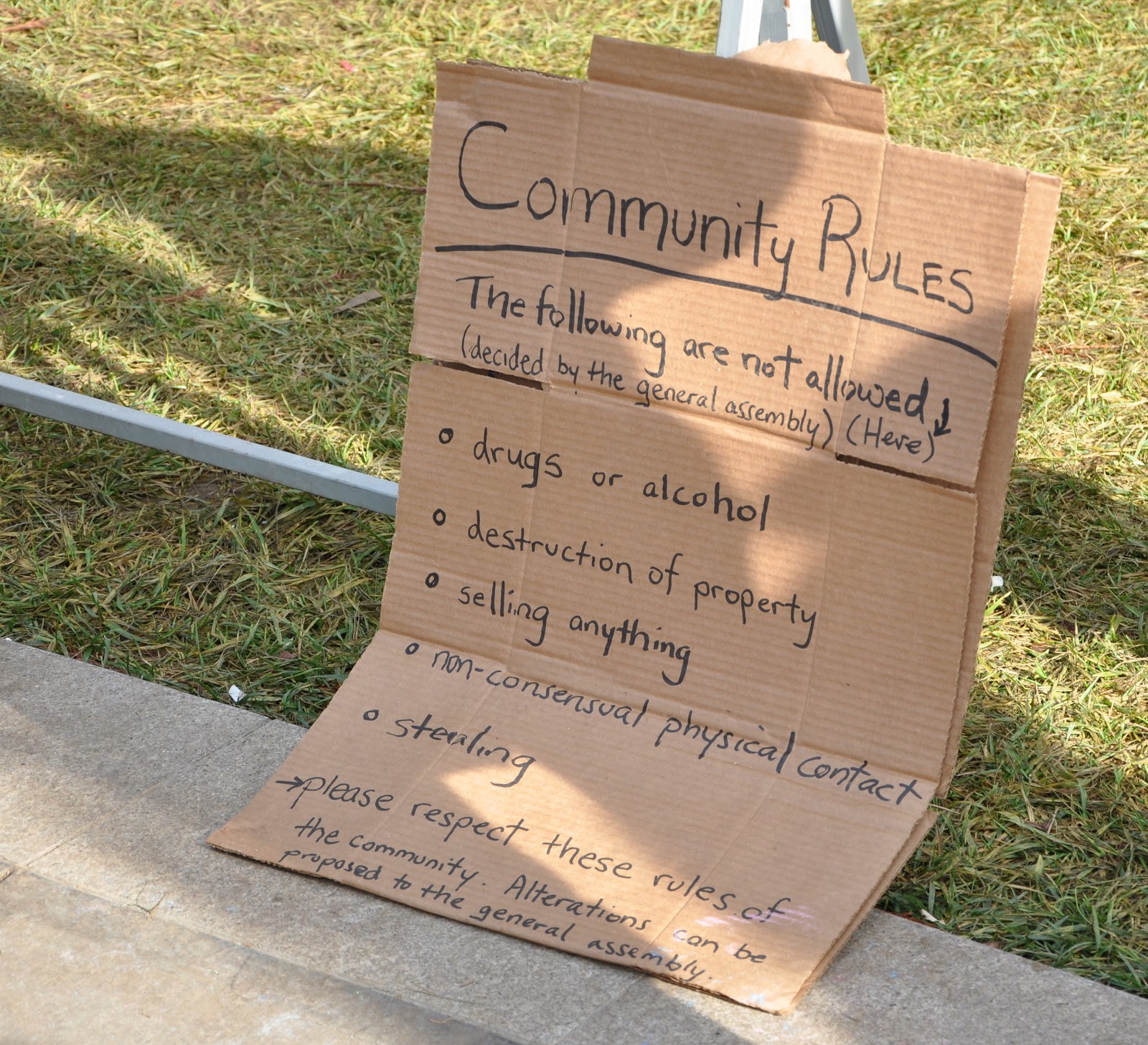
Second, during the tragedy on the quad we were holding an Executive Council meeting with the Chancellor. I had not been in the loop on decisions that were being made so I had as an agenda item a discussion of her intentions with respect to the Occupy movement and student demonstrations. We learned that she had already called for the tents to be removed and that this was happening as we were being told of her decision. There was no consultation with the Senate regarding this decision. She assured us at that time that although the police had been told to remove the tents as is apparently a UC policy, she had clearly instructed them to do it peacefully and without force unless physically threatened or attacked. Further the reasons for the order to remove the tents were health and safety related, due to poor sanitation practices. As a microbiologist, who teaches sanitation, I know this is indeed a problem. We registered our opposition to the use of excessive force probably just as it was happening. During the meeting, the Chancellor was seated next to me and I know she did not receive any communication from the field. She did get called to the hallway and came back and her report of what had happened was identical to the statement that she subsequently made to the press and that you all have heard and that turned out to be egregiously incorrect as evidenced by the videos released by the press. When I asked the Chancellor about this the next day, she said she had repeated what she had been told by her staff concerning the events of the quad, and it was not until later that she saw the videos released by the press herself. Some Executive Council members thought the clearing of the Occupy movement was timed deliberately during our meeting to prevent any meaningful consultation; others viewed it as simply unfortunate timing. As a consequence, the tenor of my conversations with the Chancellor has been quite different from that of the main campus and I will give a full report at the Representative Assembly meeting.

Third, I started investigating the culture and origin of our repressive policies. I received immediate assistance from the systemwide office of the Academic Senate in sourcing these policies. Bob Anderson called for an emergency teleconference meeting of Academic Council in which I participated. I believe our polices are historic, many a legacy of the incident involving the active shooter at Virginia Tech., and the sharp criticism in the press of campus police being “mall cops” at that time. I know changes were mandated by both state and local governments after that event. I personally do not think one should send inexperienced and untrained individuals against an active shooter. However, I also do not think one should send a SWAT team to issue citations for minor violations.

Executive Council has taken three actions: First, to issue our statement that many have thought was weak but that reflected a commitment to get the facts first. We called for an independent investigation into the events on the quad and I advised the Chancellor to abandon her plans for formation of a taskforce as it would likely not appear credible. Further, if an administrative task force was necessary I believed it should be formed by someone else. We continually emphasized the need for independence of the task force. The result of this request was the decision by the Office of the President to conduct the administrative inquiry. Second, we have formed our own Special Committee to examine the events leading up to the actions taken on the quad and also to review our policies, procedures, culture and climate to make strong recommendations for change. I have read the Brazil report issued by the Police Review Board of UCB in 2010 after an incident in 2009 and agree with most of their recommendations that obviously have not been adopted (http://administration.berkeley.edu/prb/6-14-10_prb-report.pdf). Our Special Committee may have different or additional recommendations of its own. I will do everything that I can to make sure our report is not ignored. Provost/Executive Vice President Pitts has assured me personally that policies will change. Third, I called for a special meeting of the Representative Assembly. I report directly to the Representative Assembly and will have more to say on Friday when we meet. Representative Assembly meetings are public and open to all faculty. The Chancellor will be there. We will hold the meeting in the Mondavi Center to allow for full attendance by the faculty. Executive Council intends to introduce a resolution at that meeting commending our students. I hope to have the text of that resolution finalized and out to all departments and their Representative Assembly members prior to the meeting on Friday.

I am continuing to look into the events of November 18th, and will issue periodic updates to the faculty. I have found many things that I would like to propose that we change, but ask for your continued patience as I am still uncovering new information.

Sincerely,

Original Signature on File

Linda F. Bisson, Chair
Davis Division of the Academic Senate
Professor: Viticulture and Enology

Just another Monday at #UCDavis: contentious UC regents meeting, a strike (sort of) & some occupying #OccupyUCDavis #OUCD

The Prelude

Well, today was interesting at UC Davis (and I note – it is only 5:15 PM as I start to write this).  Two major related events were happening on campus today.  First, there was a meeting of the UC Regents that had a presence on campus (more on this in a bit).  Second, partly in response to the Regents meeting, there was a call for a “Strike” by UC Davis students as well as “sympathy” events planned at all other UC Campuses (Cory Golden in the Davis Enterprise has a good summary of these two related events here).  I note, I am adding links to my posts about the various events for those interested.  I know this is a bit self centered but I think it may help explain my thinking on the various issues.
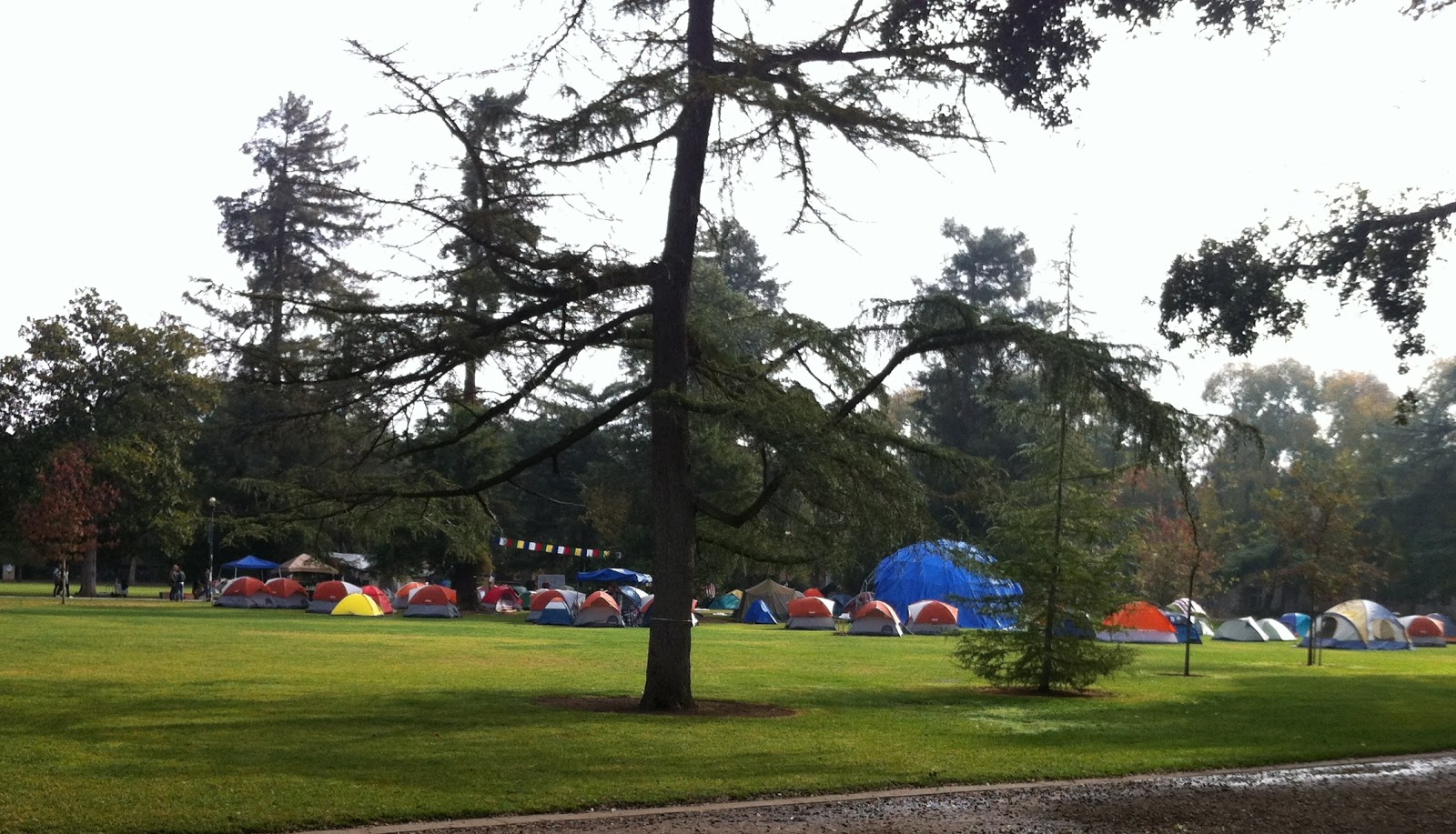
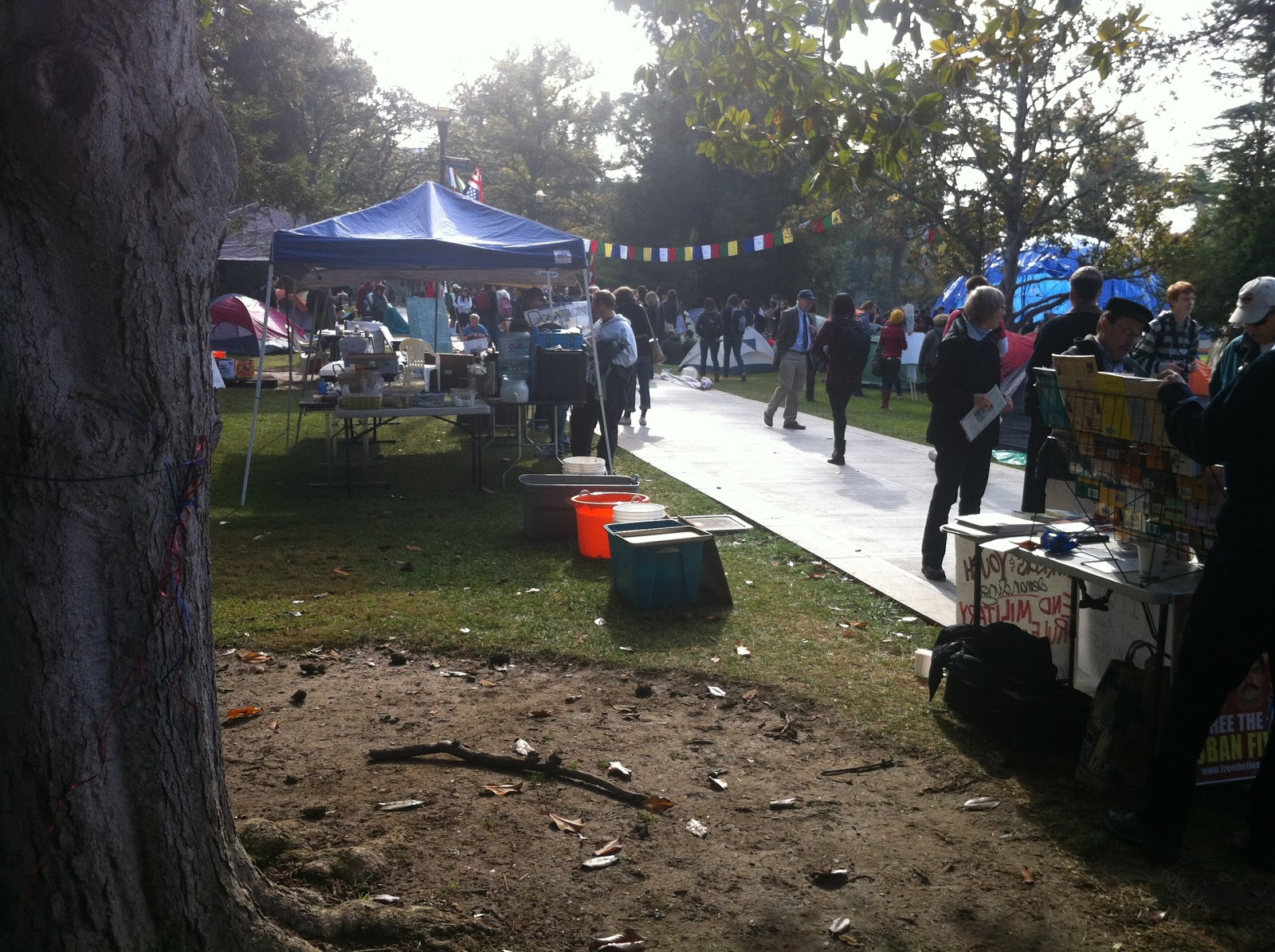
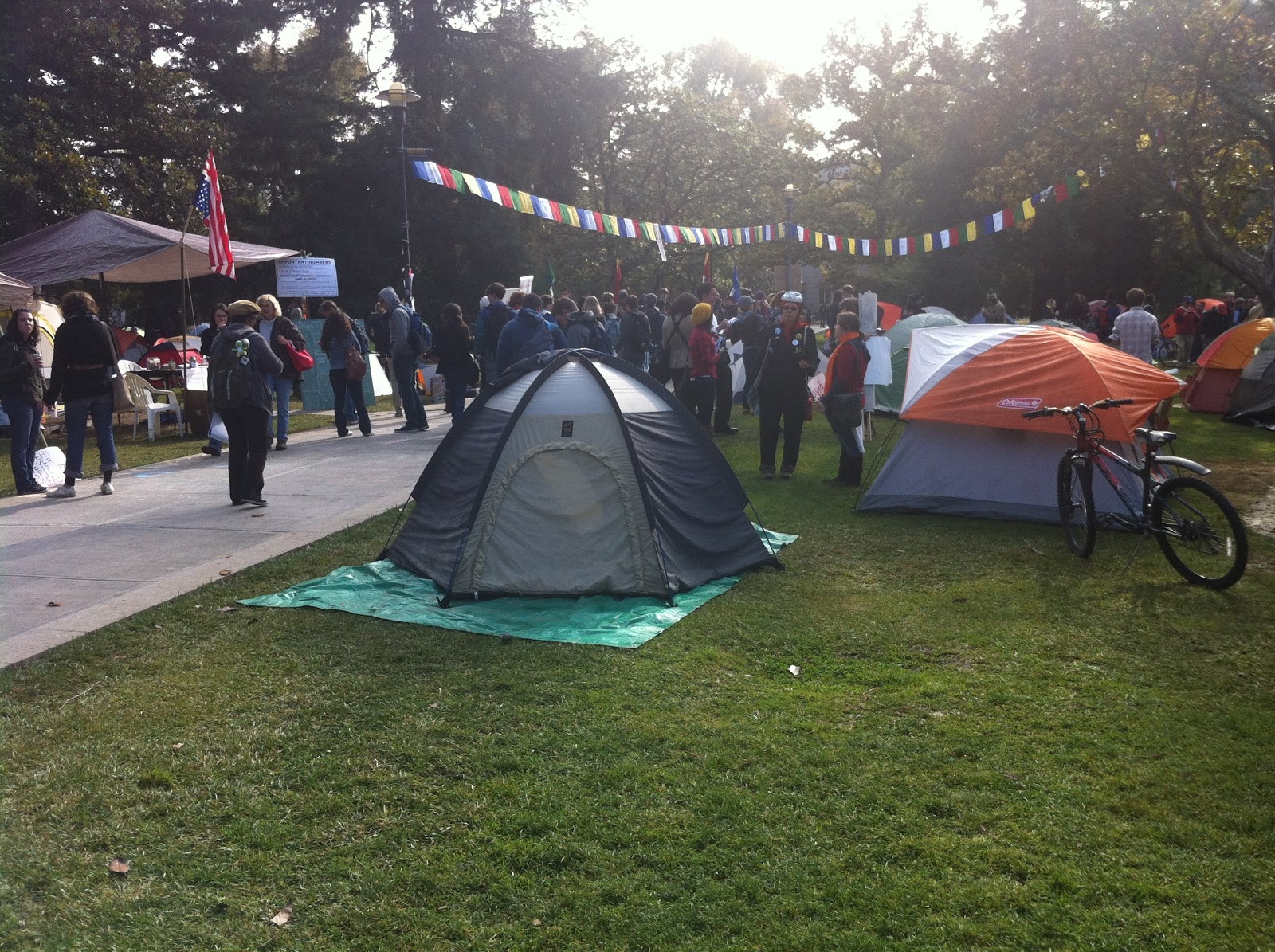
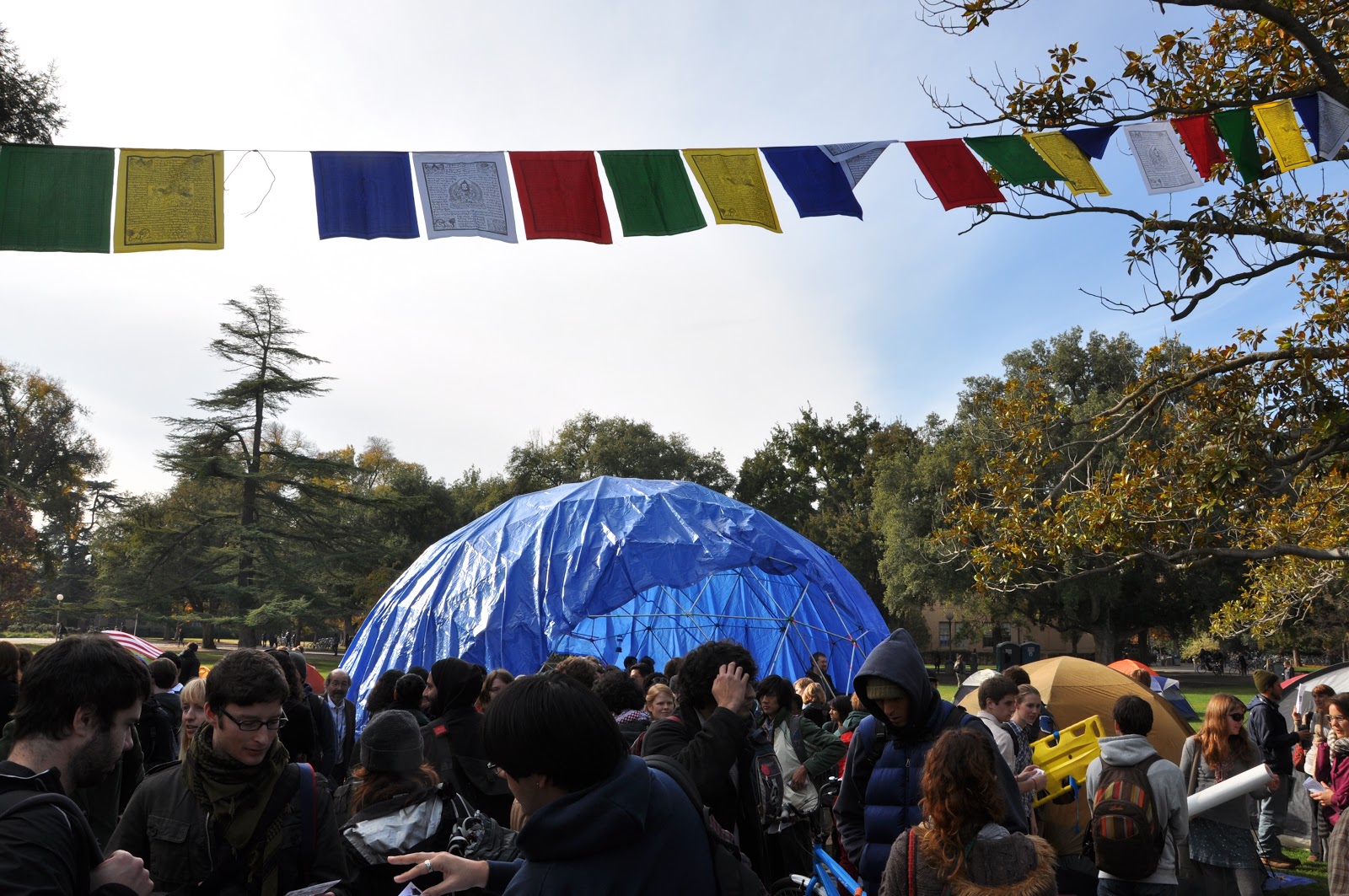
The momentum for the strike came from a rally on the UC Davis quad last Monday (see my post about that here: An exhausting and exhilarating day at the #OccupyUCDavis rally).  On that day there was enormous amount of passion to rise up and do something in response to the pepper spraying incident of last Friday (see my post about that day here: A day of almost pure joy in #DavisCA and at #UCDavis, until … #OccupyUCDavis).  1000s of people were there and though the Chancellor of UC Davis Linda Katehi talked, she did not assuage the crowd much if at all.  Then there was a General Assembly of sorts, out in the quad, where a vote was taken to hold a “strike” on Monday the 28th (i.e., today).  Some of the passion clearly came from the pepper spraying incident itself, some of it came from ongoing frustration with financial issues (e.g., tuition hikes) and some of it came from dismay and/or disappointment at the UC Davis administrations role in the incident as well as their response (e.g., the Saturday Press Conference did not go so well: My accidental encounter with the #OccupyUCDavis crowd at #UCDavis #impressed).  And one thing that happened that day was the “re-occupation” of the UC Davis Quad – this time with more tents, a geodesic dome, and many people.


The next day (Tuesday as we call it) the UC Davis administration held an open Town Hall meeting for members of campus to “address concerns”.  The meeting seemed to temper some of the anti-administration component of the passion on campus, but did not seem to stop the momentum behind a growing movement (Reporting from #UCDavis Town Hall meeting re: #OccupyUCDavis).  And on Wednesday (#UCDavis quad – a place for gatherings for a long time) the Occupy UC Davis crowd hunkered down for a long four day weekend while most people left campus.

I spent much of the long weekend obsessing with the events of the week.  I posted and posted and posted and tweeted and tweeted and tweeted.  And I tried to wrap my brain around everything going on.  My gut told me that a general strike, where faculty stopped teaching classes, seemed, well, misguided (Should #UCDavis faculty “walkout” from teaching to “support” students? I do not think so).  If only they had proposed a big march, or a picketing of some administrative buildings.  But how exactly would walking out on teaching help?  It just did not make sense to me.   And most of the people I talked to said the same thing.  So it seemed to me possible that with the long weekend, and with the limited support for a strike, that Monday might be a quiet day.  On the other hand, there were a growing number of “teach ins” being scheduled for Monday and for the rest of the week and these at least seemed interesting (thought I note, the list of events was extremely heavy on the Socialist point of view, which is not really my cup of tea).

I note I had wanted to go to the quad over the weekend but came down with a nasty cold and did not make it.  And then quicker than I expected, Monday arrived.  What follows is a bit of a quick update on the events of the day.

Regents Meeting (in absentia) at the ARC

My day started off a bit annoyed.  I had trouble sleeping, mostly due to my cold, and woke up at about midnight after having slept for about an hour.  I could not get back to sleep an eventually ended up browsing the web.  That’s when I discovered an announcement from UC Davis about the events coming up today and, well I got a bit annoyed about it since while trying to promote tolerance for free speech they also said “no banners” would be allowed in the Regents meeting.  Was that really necessary?  I mean, making sure people get to speak their mind is a good thing for these meetings.  But outlawing banners?  Uggh.  So I wrote a a blog post: UC Davis News Release: “A Day of Civil Discourse & Peaceful Expression” – except when not allowed #Uggh #OccupyUCDavis.  I posted a collection of things to twitter and then finally managed to get to sleep again.

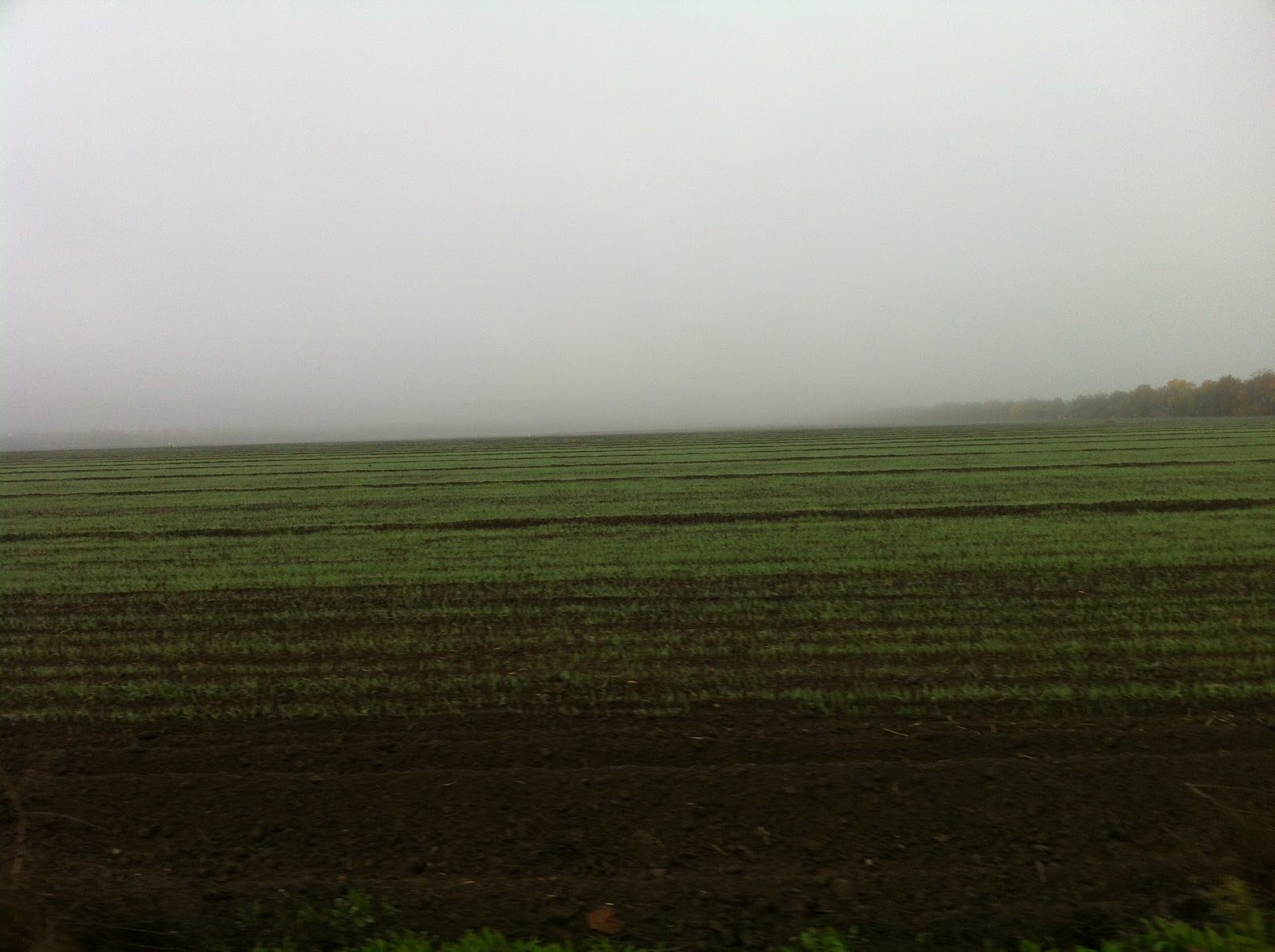
I got up pretty early (thus not much sleep) to help get my kids going as today they had to get to school.  And then I finally got out the door to head to the Regents meeting which was taking place at the “ARC“.  I note – this was not really a Regents “meeting” in that it was unclear if any Regents would show up at UC Davis and what was really going on was an “open mic” with an audio call to the Regents scattered around CA.  The meeting was to start at 9 AM and I did not get out the door until a minute after 9.  Fortunately the prelude to the meeting was being covered live on the radio (I think KDVS) and I got to listen to the Roll Call.  It was very very foggy which made me wonder how many people would come out to the rallies later in the day (i.e., if the fog did not burn off).

As I got to the ARC, there was a fire truck and an ambulance pulling in with sirens blaring and this freaked me out a bit worrying it might have something to do with the Regents meeting.  Apparently they were there for some bike accident instead (not a good thing, but I did breathe a sign of relief).

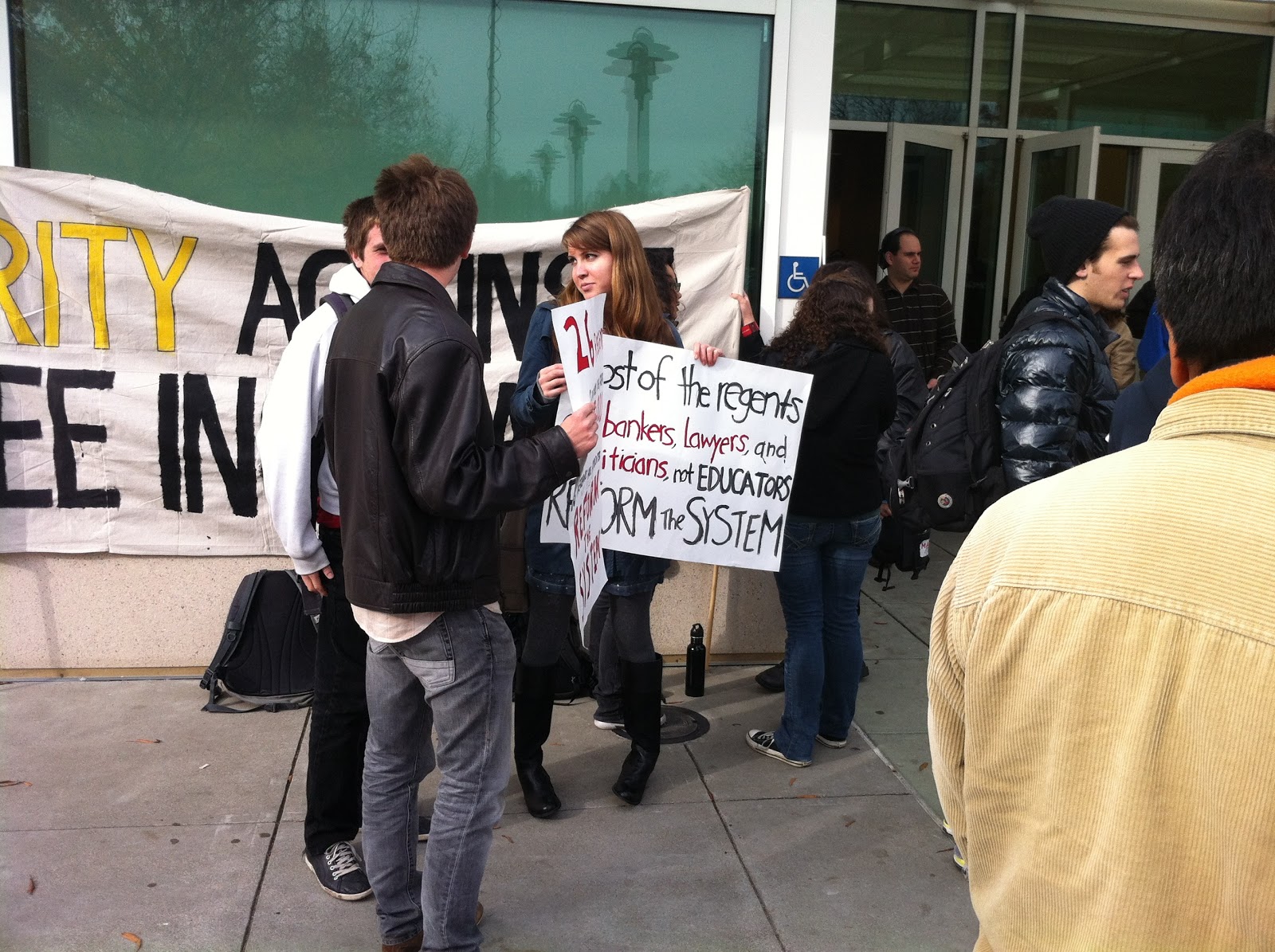
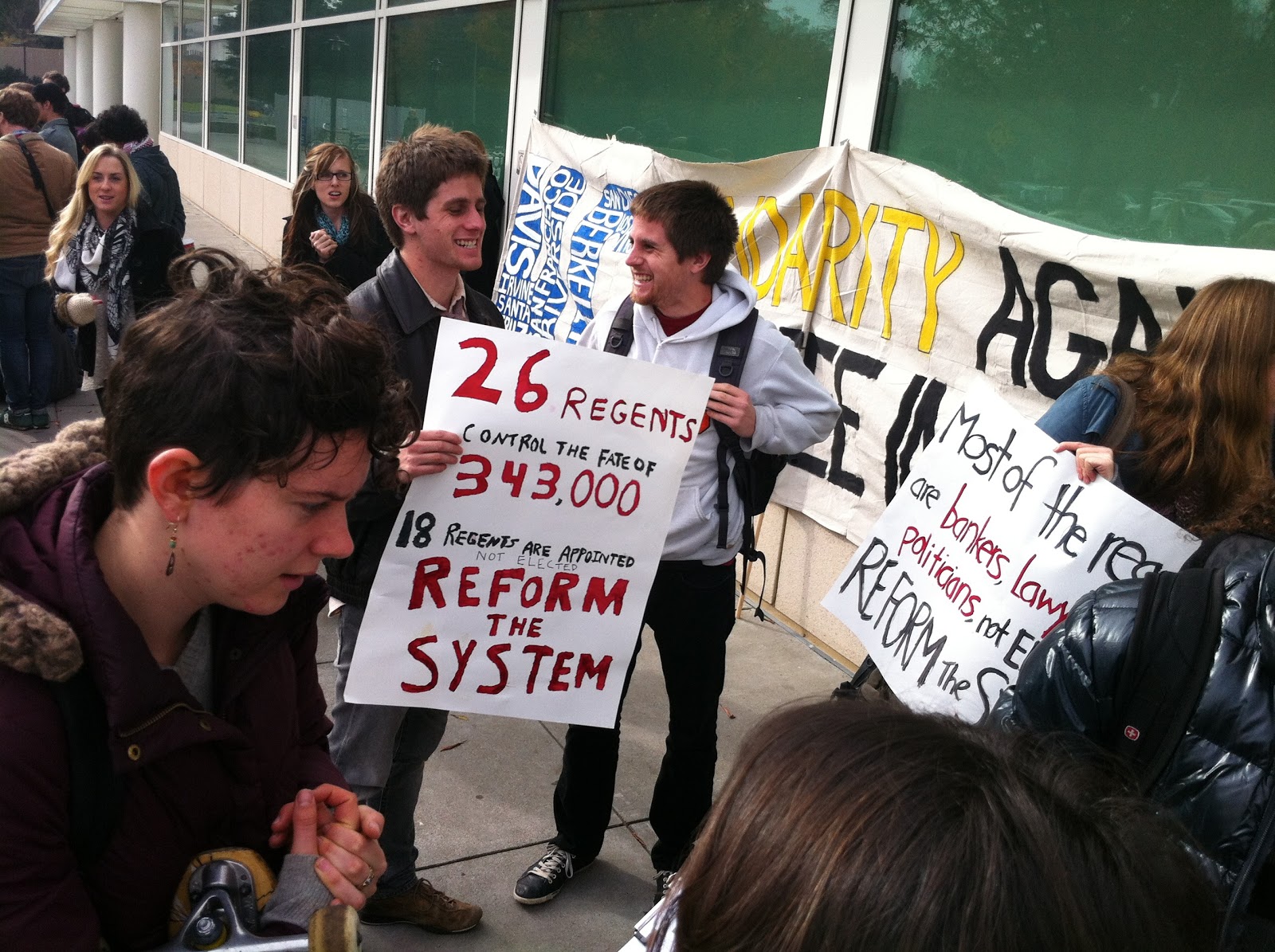
There was a small crowd outside the meeting area, some of whom had signs.  It was very quiet – just chatting going on.

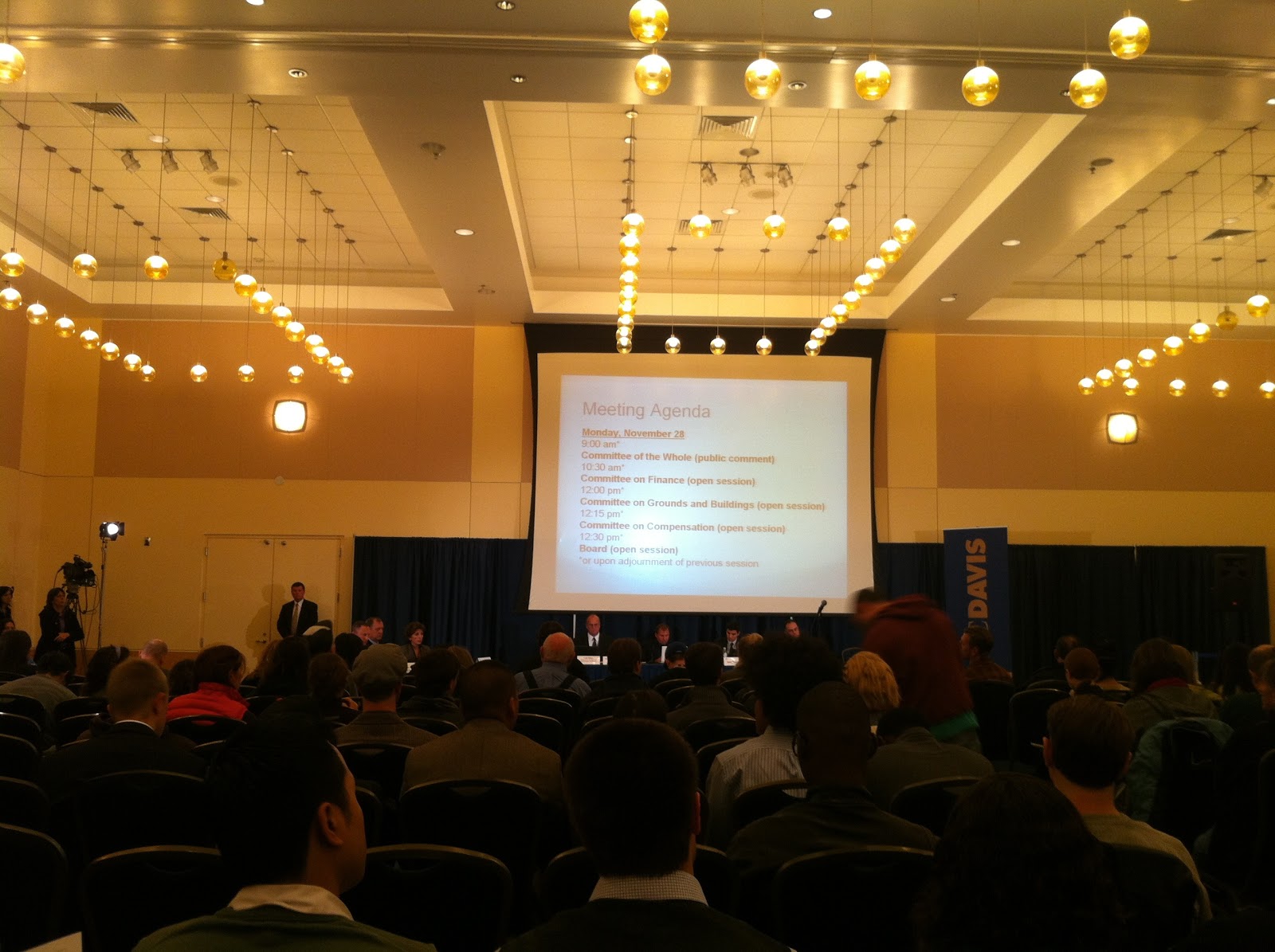
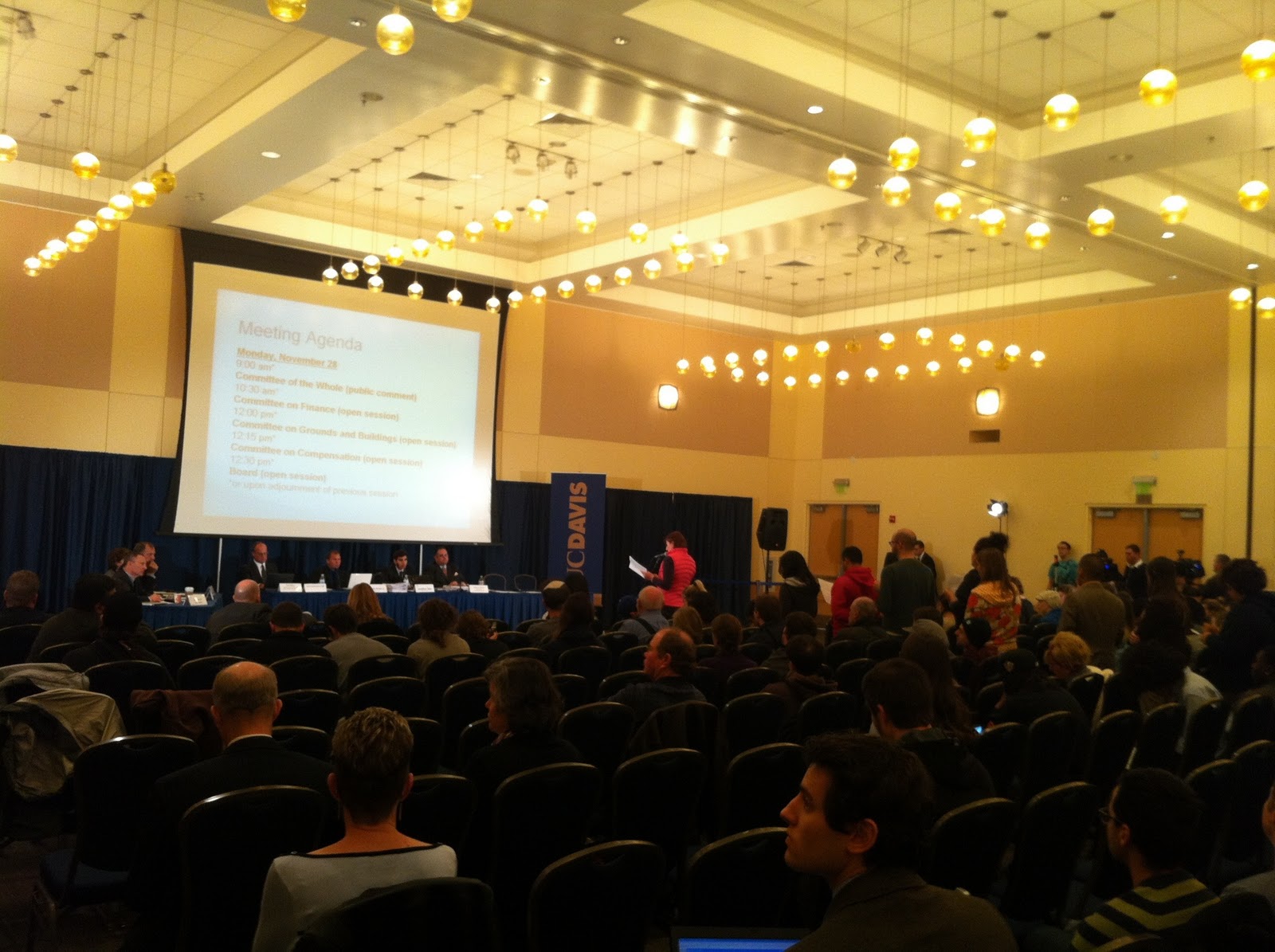
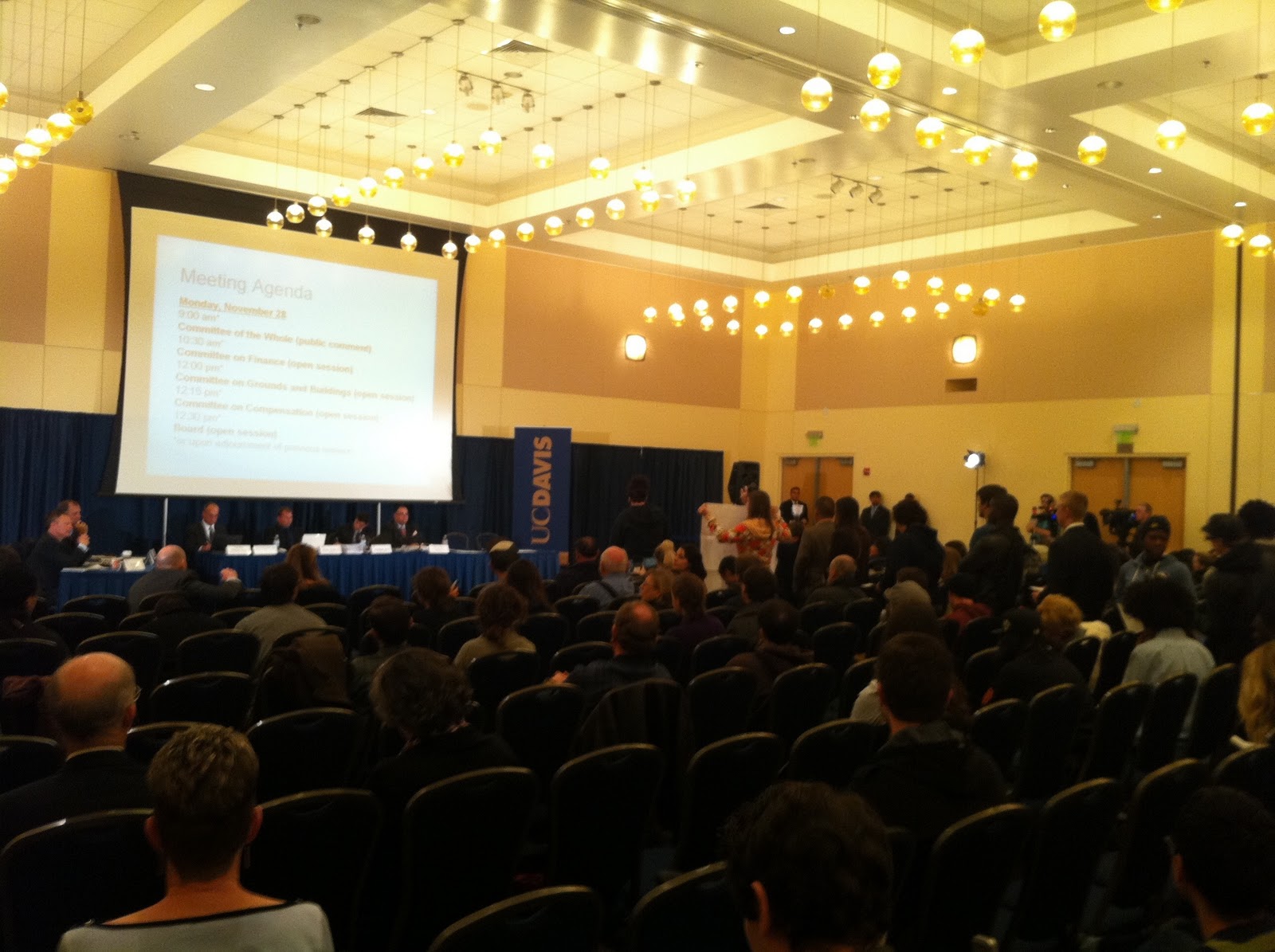
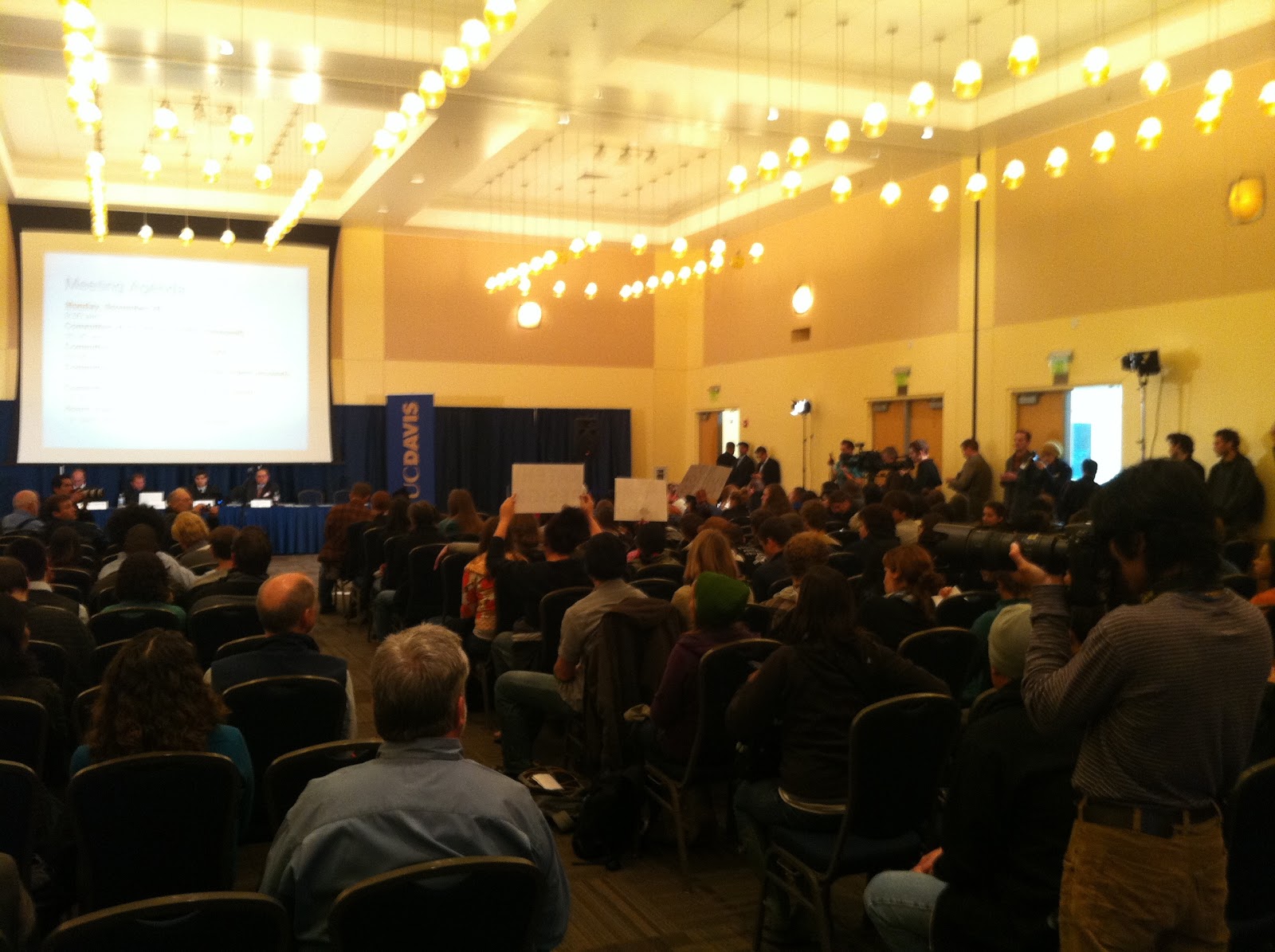
I went past them, up to the security gate and, after a brief screening, got inside.  And then I made my way to the ARC Ballroom.  I note, the last time I had been to the Ballroom (I think) was when I hosted a talk by Rebecca Skloot about her HELA book.  I then stood on the side and in the back and took a bunch of pictures and posted some updates to twitter about what was going on there.  First, some of the local “Regents” and other administrators got to say a few words.

This included the Speaker of the California Assembly John Perez.

I posted a few of his comments to twitter “Speaker John Perez says he objects to notion of tuition because education is supposed to be free in CA” “Speaker Perez thanks students for not backing down in face of appalling police activity” and “Speaker Perez – it is not enough to speak to people who agree with us about education funding – need to talk to others too”

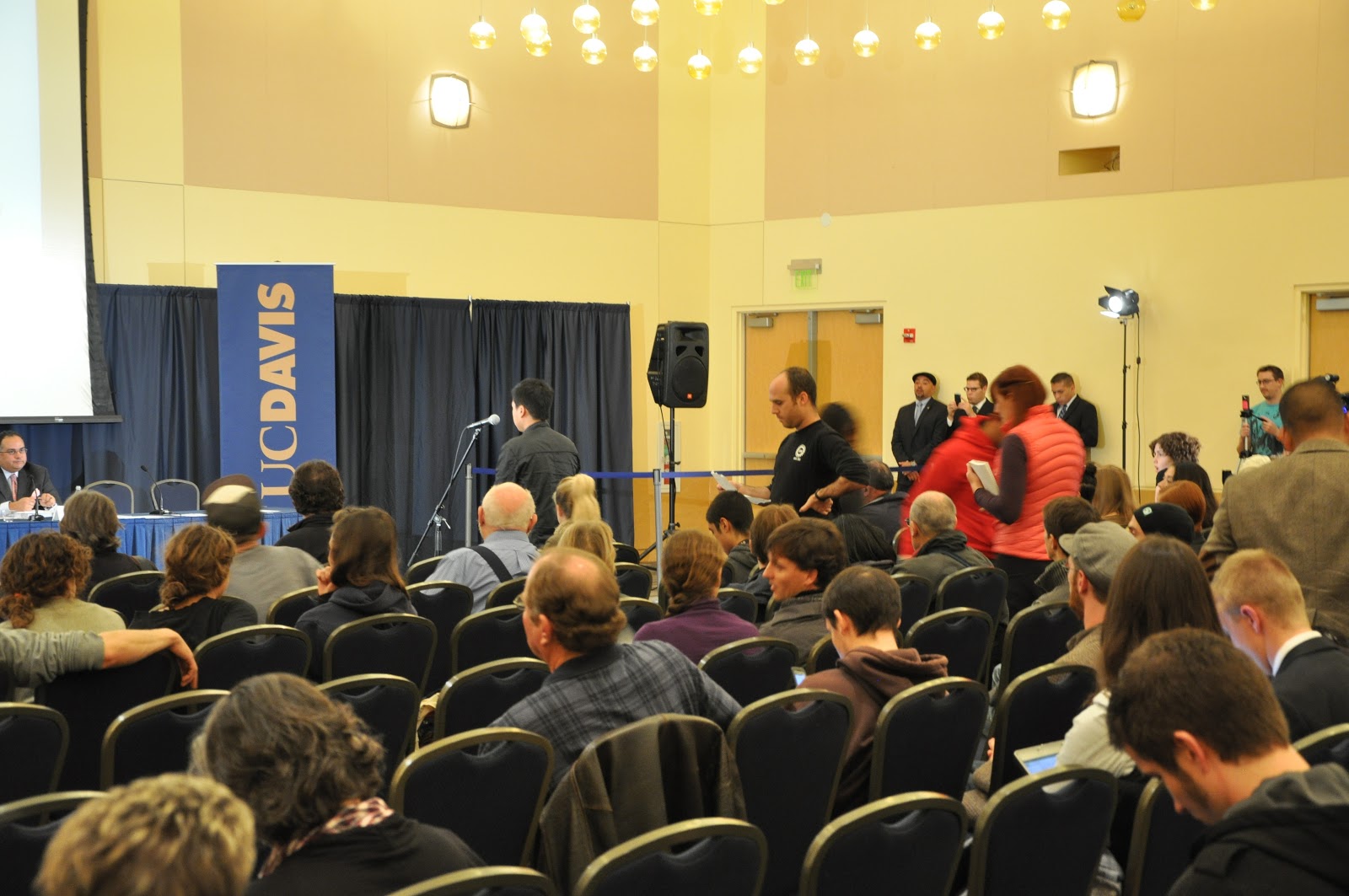
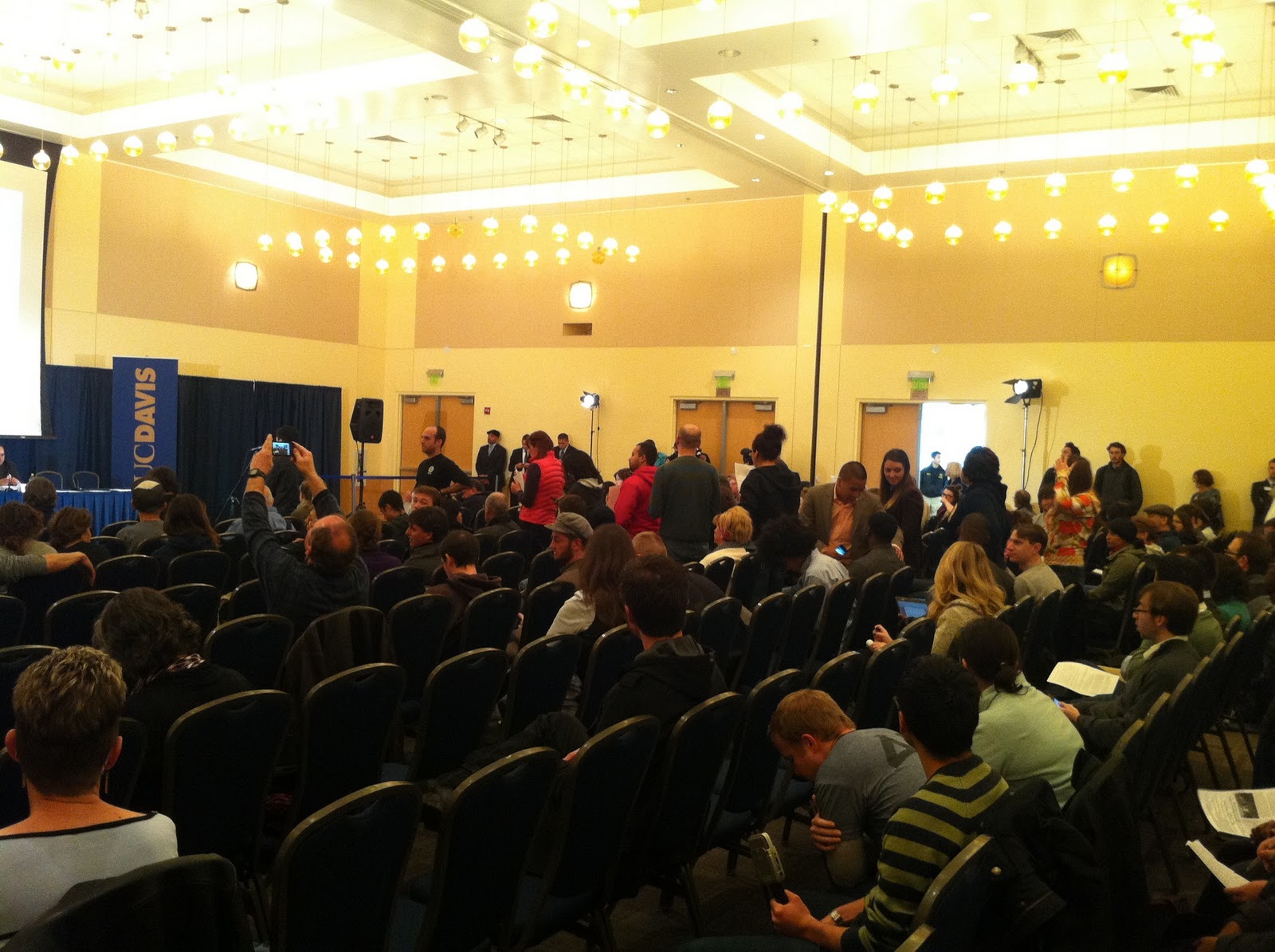
Overall he seemed quite concerned and vowed to do what he could to support students in the continuing budget wars in the California legislature.  Then some others spoke on the phone including I think the Chair of the Regents.  FInally it was time for the public comments from the four places where meetings were being held.  And Davis got to go first.  They called some “numbers” which I guess people had gotten online by registering a question and then people lined up to make statements.  They were told they would get one minute each.

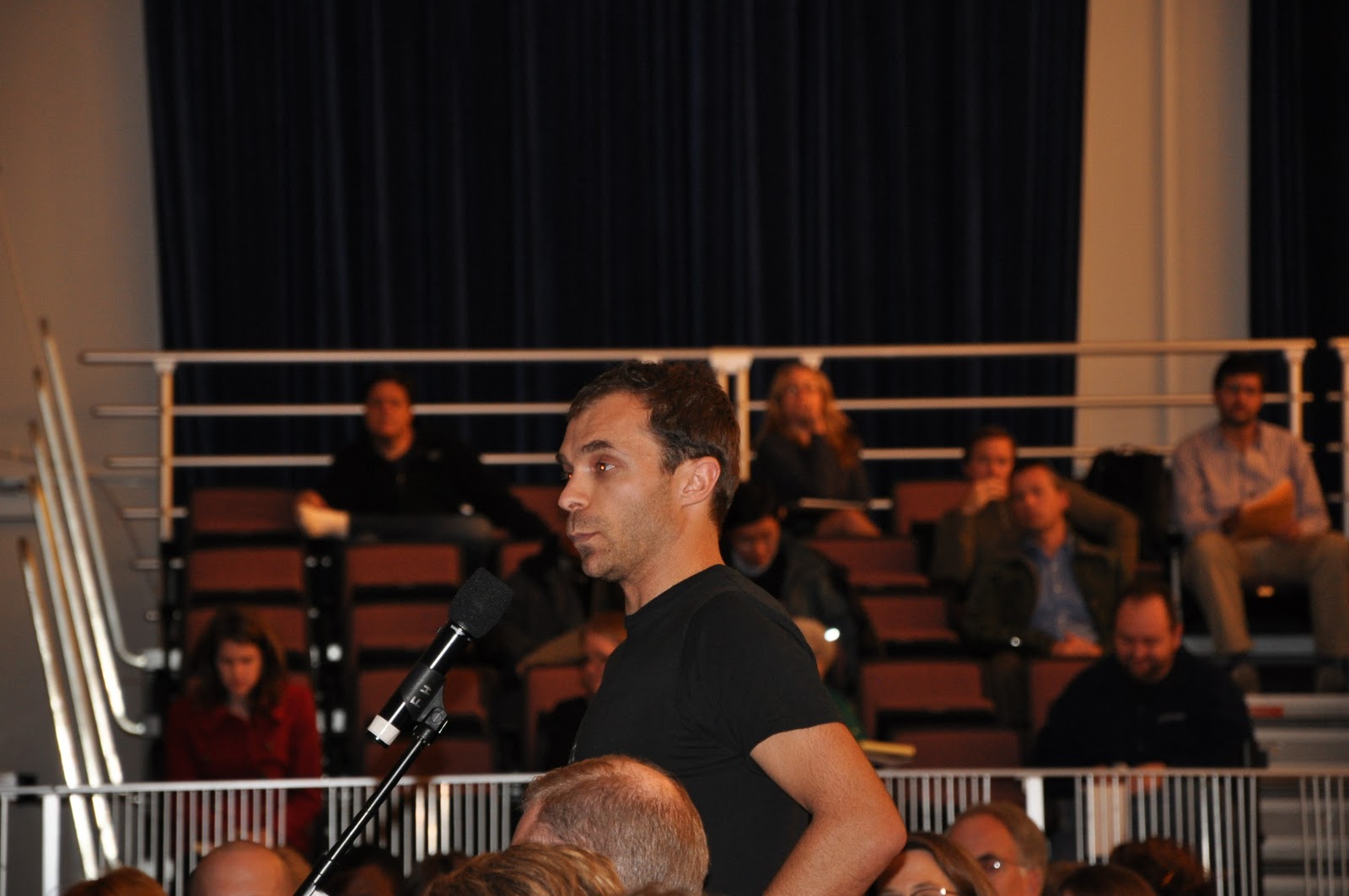
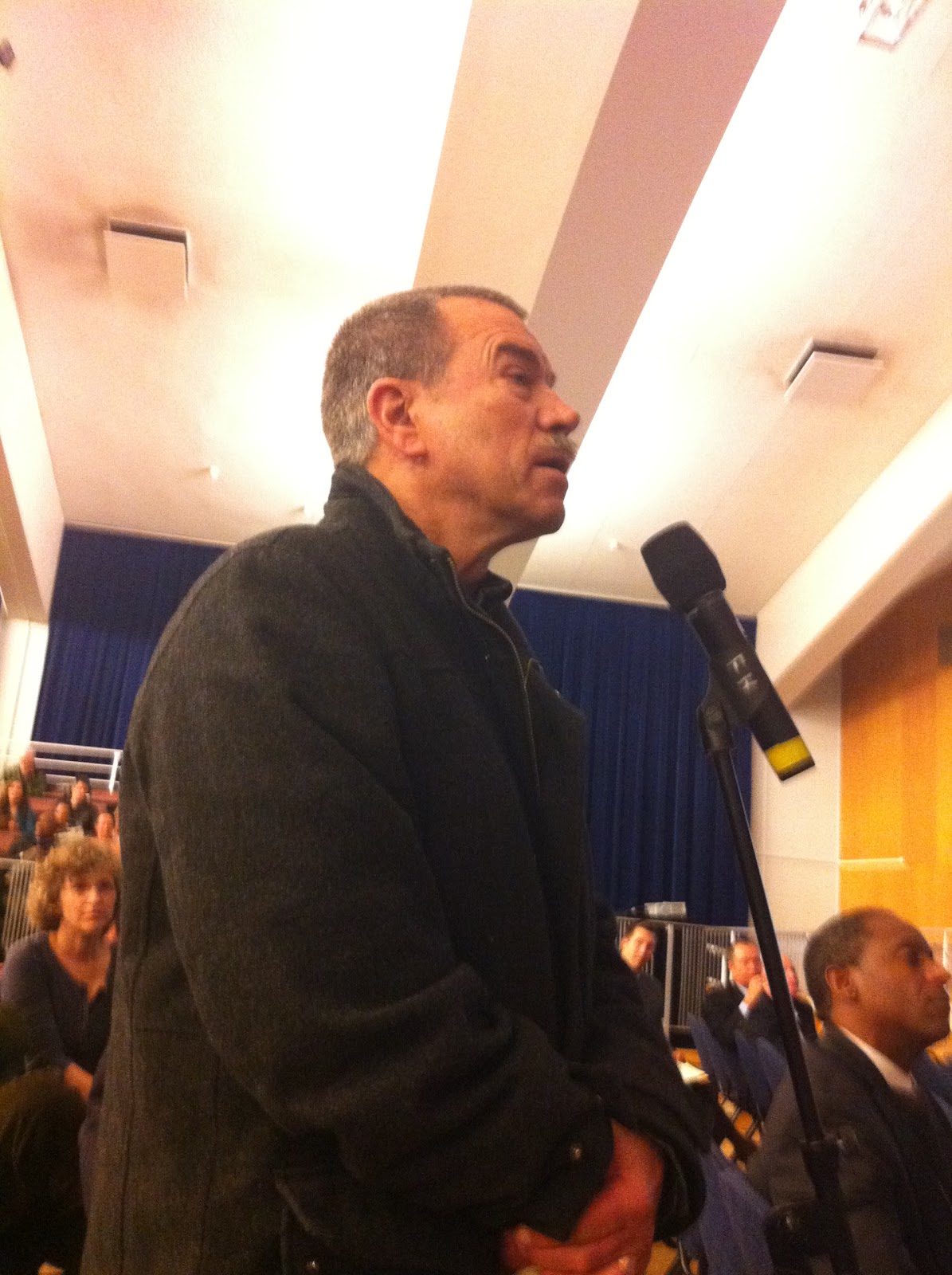
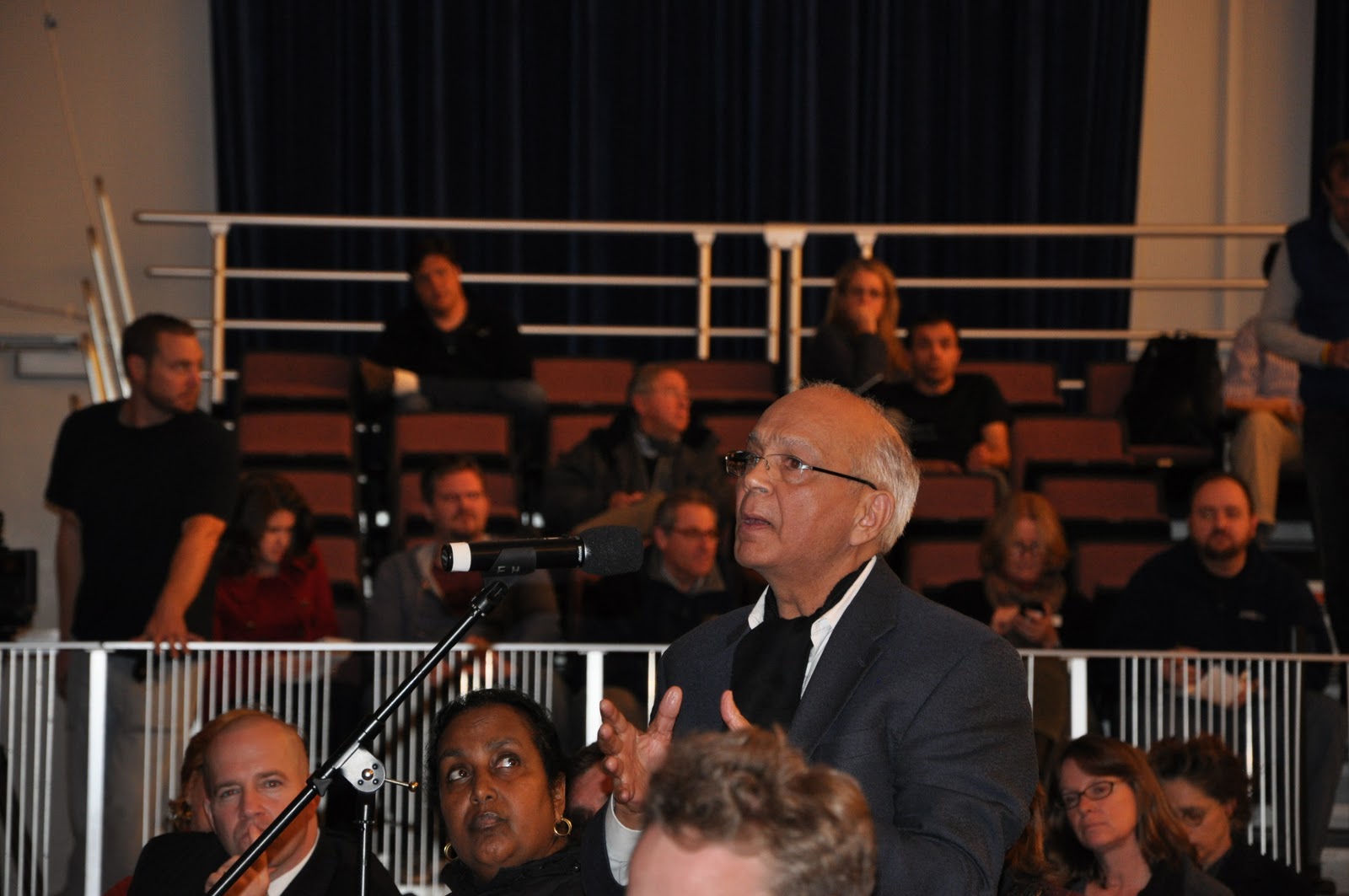
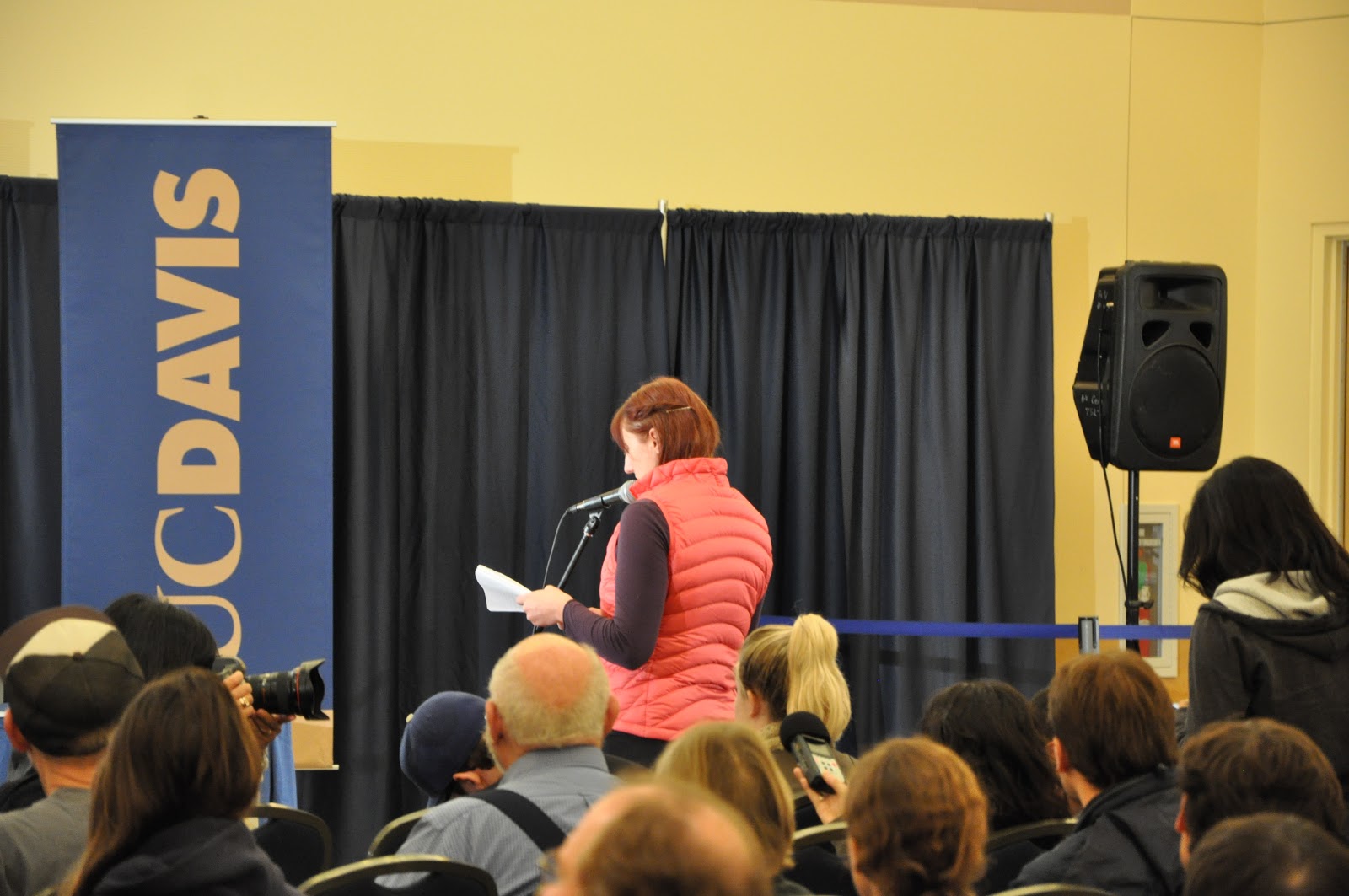
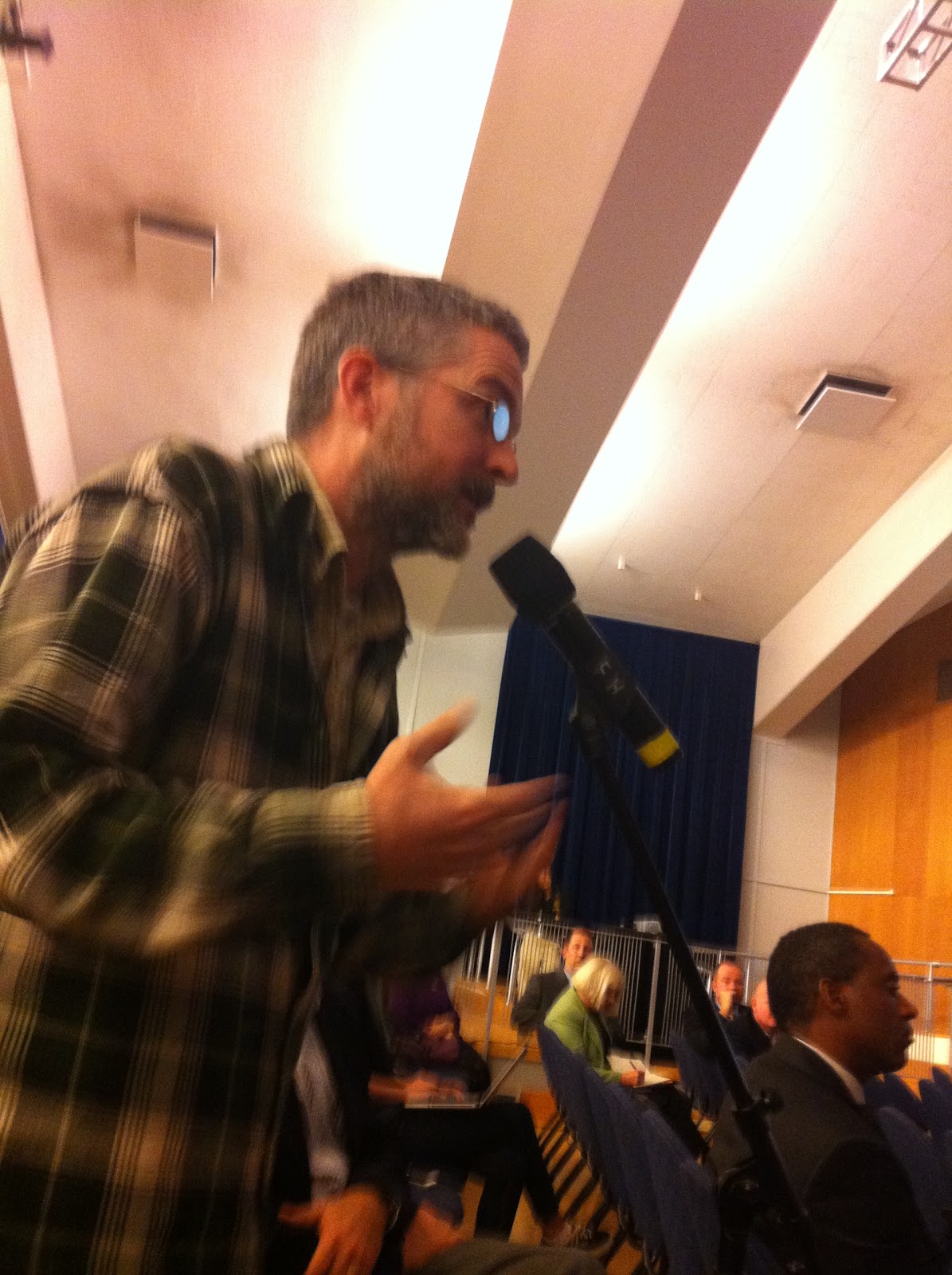
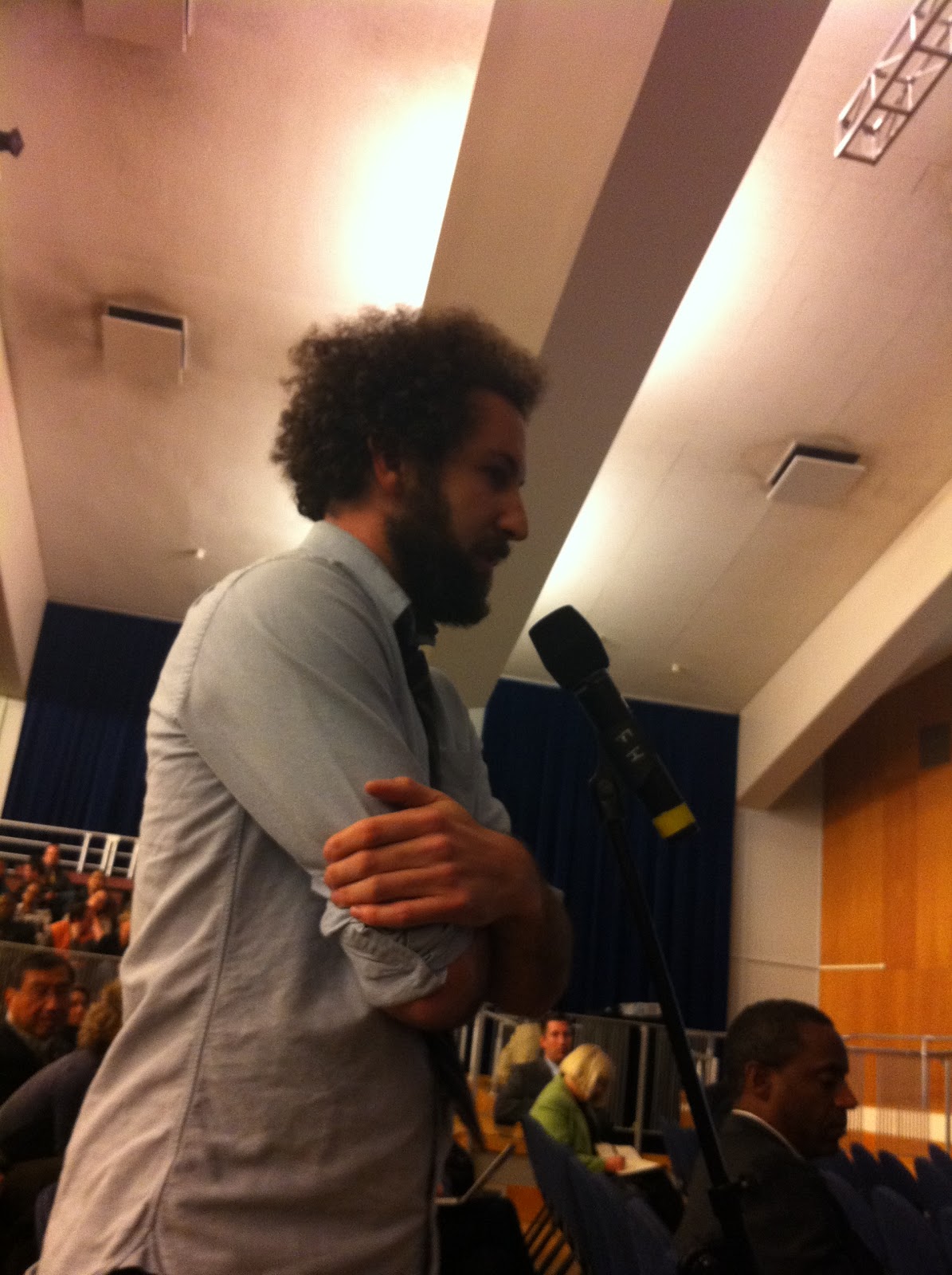
I took some pictures of the questioners and posted a few of their comments to twitter.  Here are some of the pics.

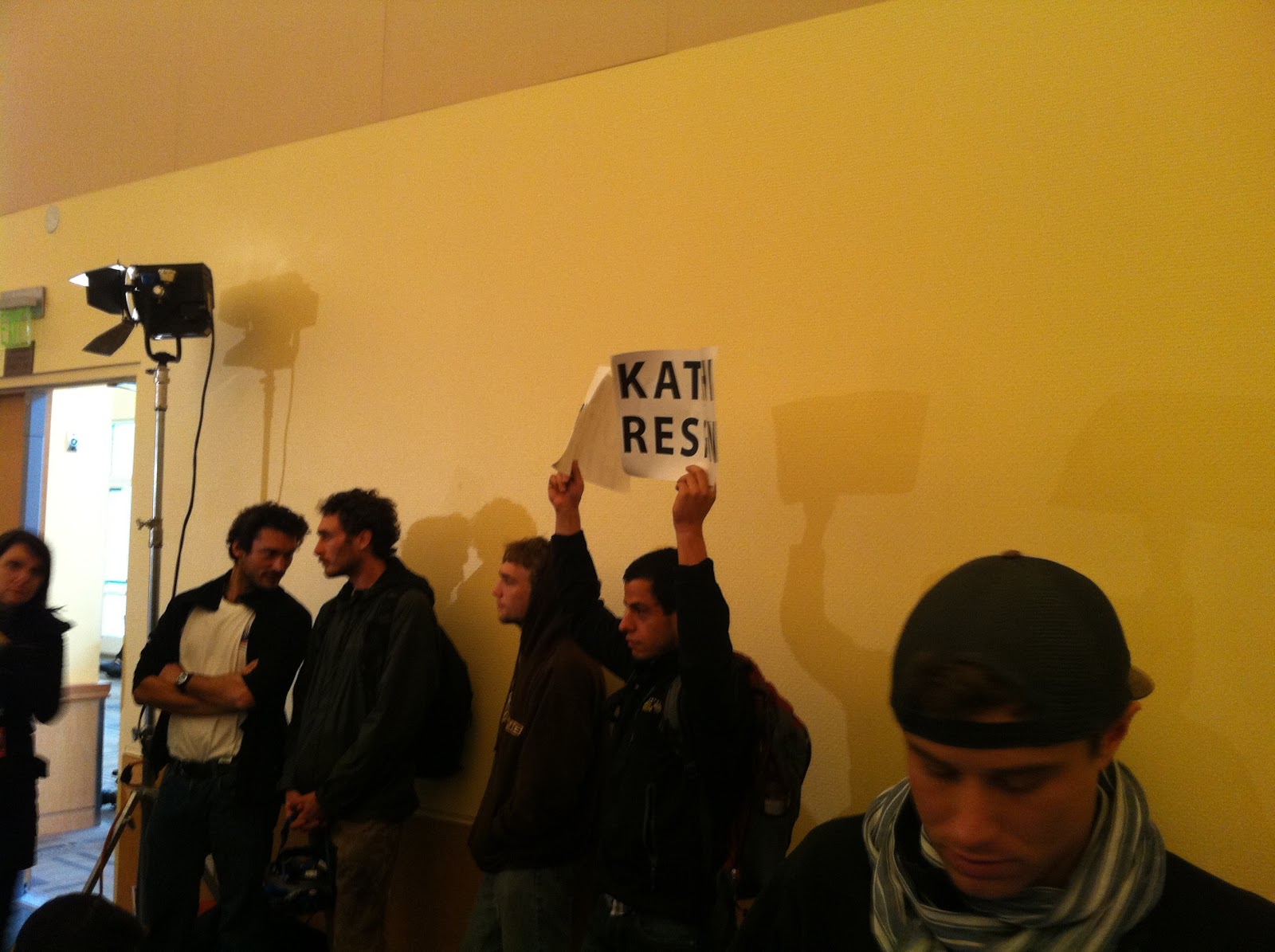
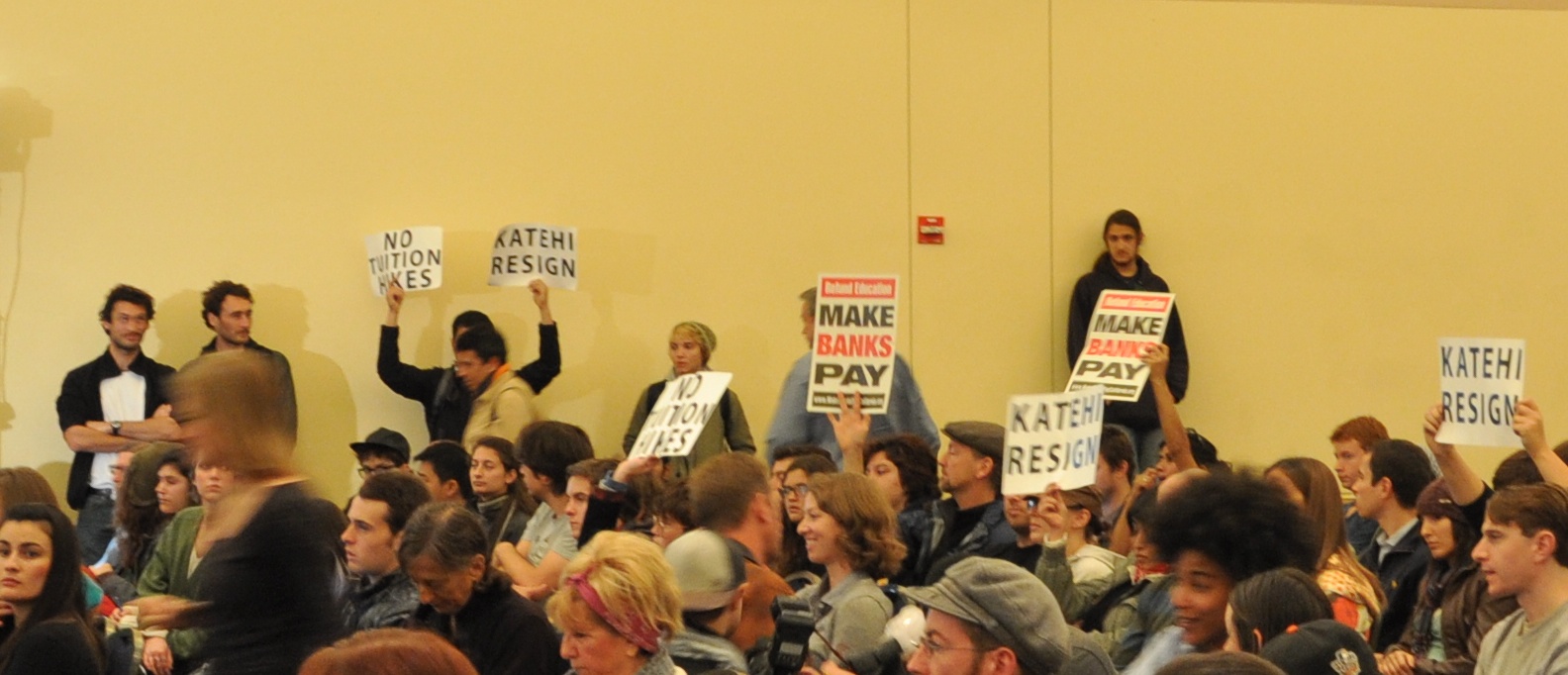
Comments included complaints about tuition hikes unequally affect minorities and working class, a call for student regents to have a voting voice, a student complaining about chancellors salaries vs. tuition increases, and a call for regents to sign pledge to public education just like UC requires pledge by faculty. The student who made this last call  got cut off for going to long.  And fortunately the next person just continued reading their statement.  And then I noticed something after my own heart.  A student started unfolding a (forbidden) banner. 

 I rushed over a took a closer pic and then when she came to the back took some more.

Statements continued.  Then more signs and banners started showing up.  Not that I agreed with everything they said.  But I LOVE freedom of speech, so this made me happy:

And then the Davis statements were done.  I lingered listening to statements from people at Merced and left in the middle of statements from UCLA.

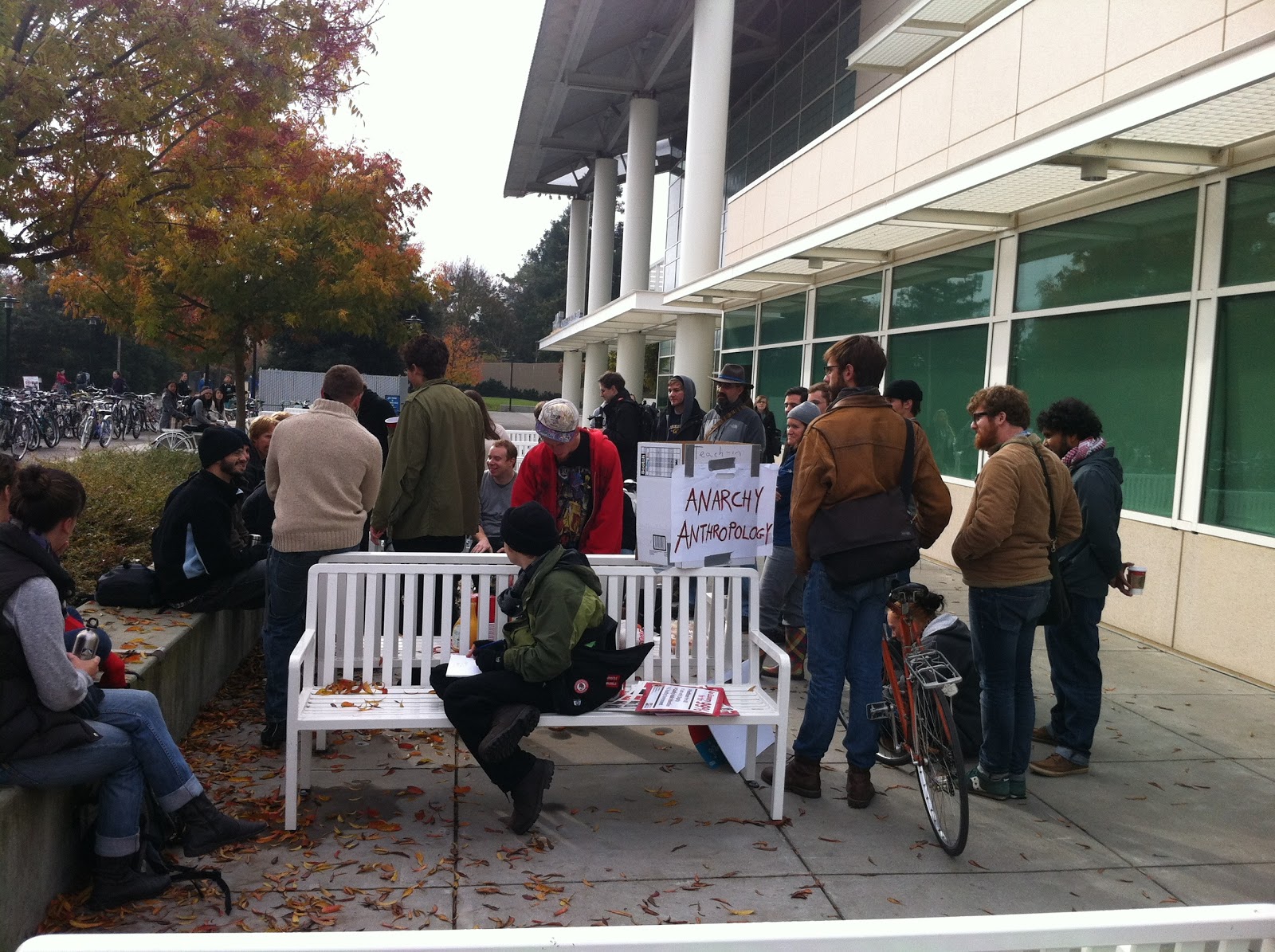
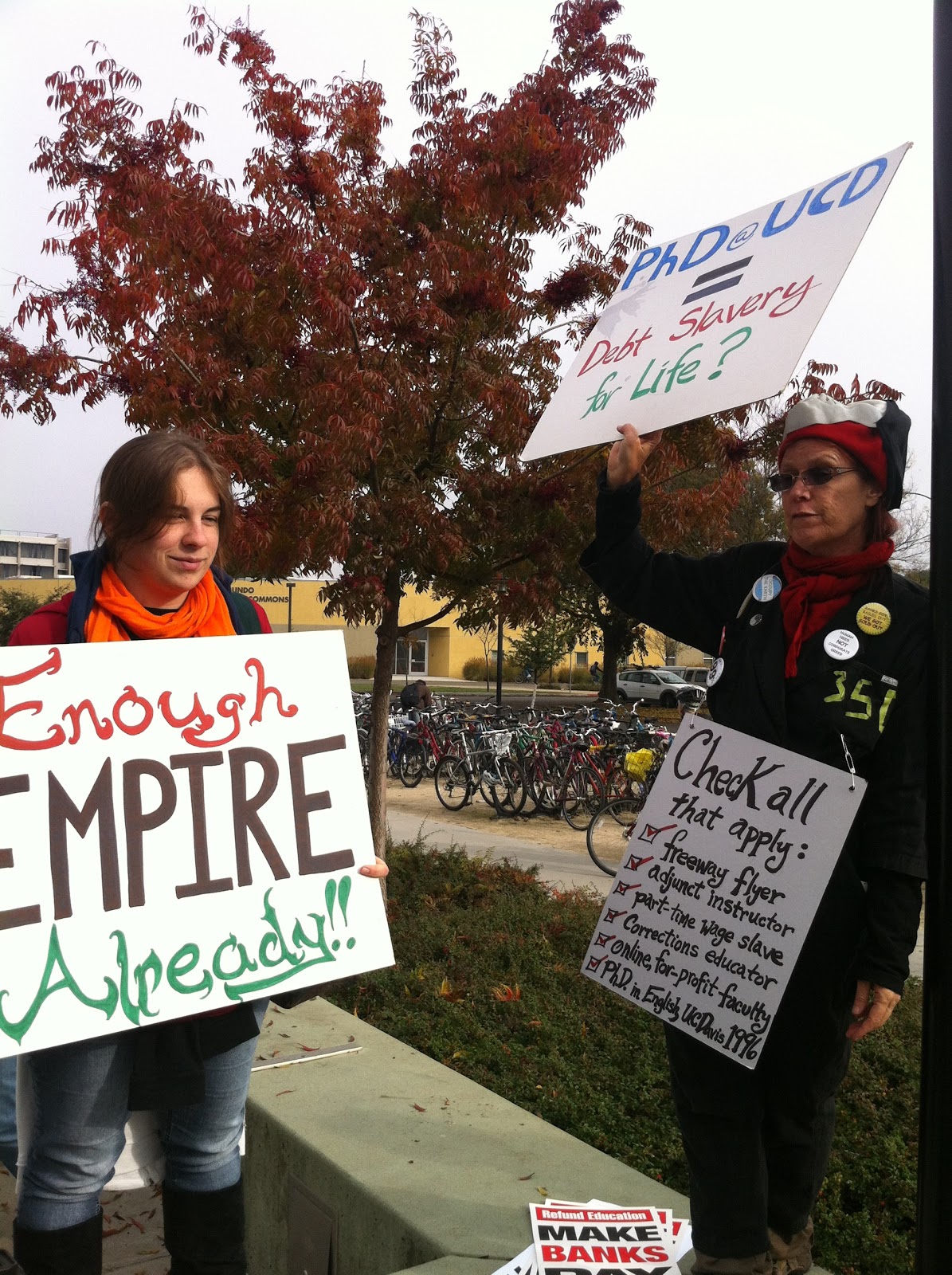
I took some pictures and talked to some of the protestors outside.  The tone was a bit muted compared to the people the previous week.  But it did seem like in a way they were just warming up.


First pass at the Quad

And then I headed on over to the quad on my bike (which I had brought in my car – normally would just ride to campus from home but with my cold was worried a bit about too much riding around and I had gotten started so late I wanted to get to the Regents meeting before too late) to see what was going on over there.  I got there at maybe 10:30 and it was quite quiet.

Intro Bio Class
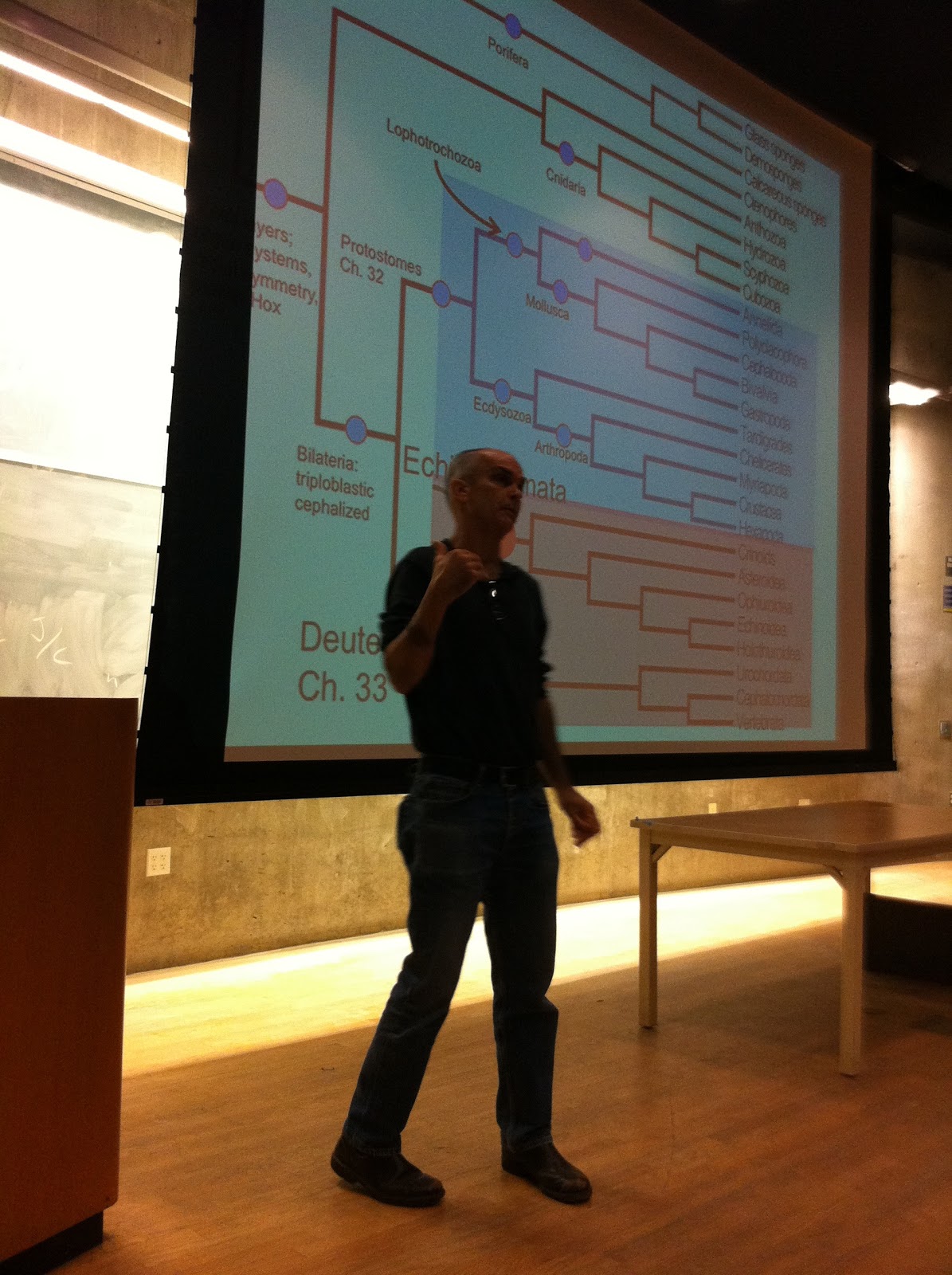
And then I grabbed some tea, sat down outside the coffee house, bumped into some parents of kids in the same Coop preschool (DCCNS) as my son, talked to then for a bit.  My Intro Bio class was meeting.  Now – I was not teaching today.  Brad Shaffer was.  And he clearly was in favor of teaching classes and not “walking out” though he did note on Friday that he would respect the decision of students who decided to walk out.  Our classes are all audio podcasted and slides are posted (when used) so those who would walk out would not be severely disadvantaged.

If I were teaching today I am not sure what I would have done.  Maybe I would have tried to do something a bit different – not a normal class or something.  Maybe a teach in of a kind.  But I probably would have held class.  As I said, it just did not make sense to me to walk out on class as a part of a protest relating to affordability of education.  But I do plan to do some sort of teach in later in the week about “open textbooks” and reducing costs for students in a variety of ways.  But again, canceling class seemed, well, not right.  Plus I had talked to many of the students in the class and none I talked to were enthusiastic about a walkout by the professors.  Maybe this was a science vs. humanities thing (many of the humanities students I have talked to supported the walkout).

Regardless, I was not on the line to decide about class.  And Shaffer was lecturing in a few minutes.  And then he walked by where I was sitting and I walked with him to class.  And it seemed like nobody was walking out since it was packed to the gills.  And I got to hear a nice lecture on Echinoderms.

Quad Pass Two

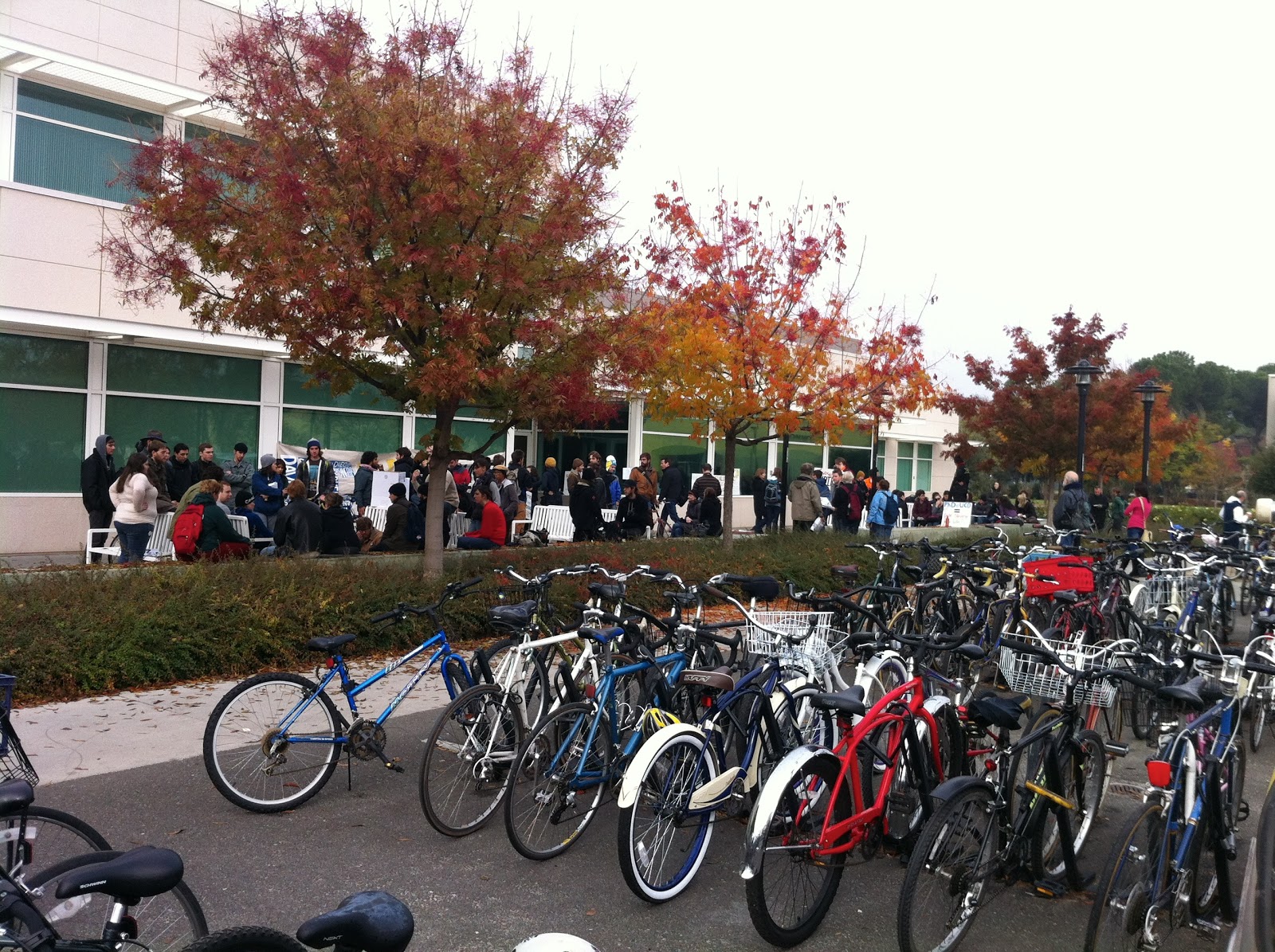
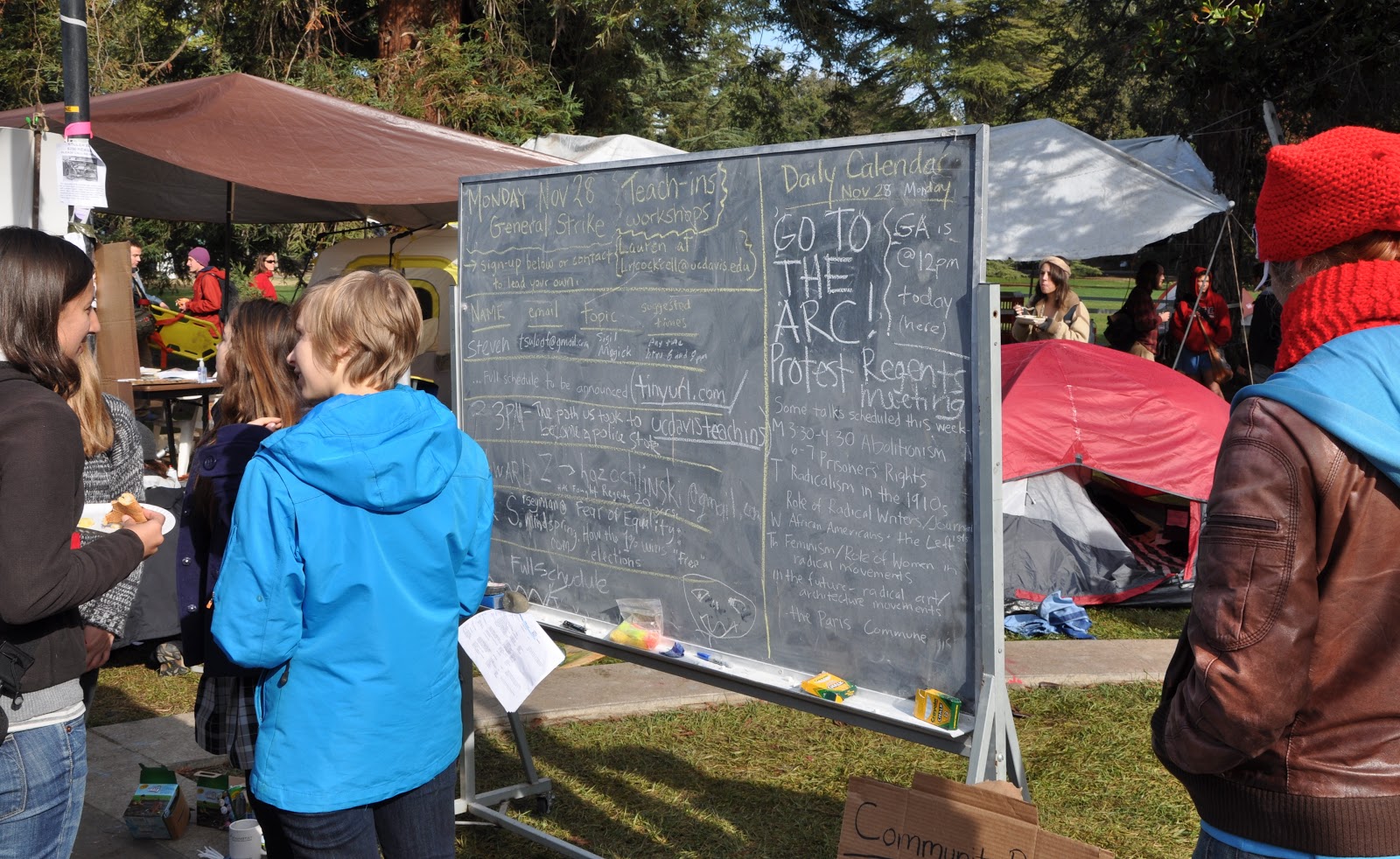
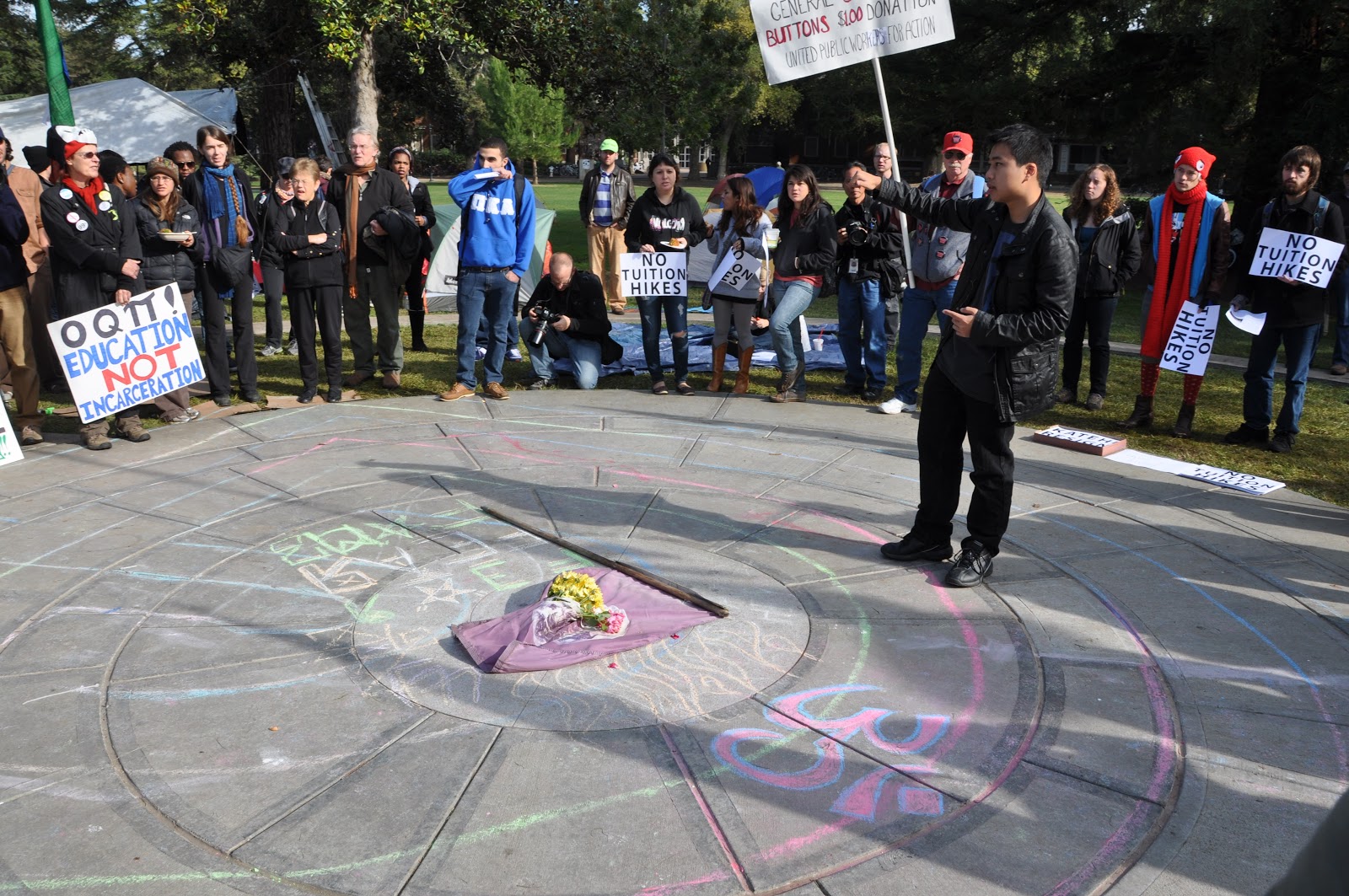
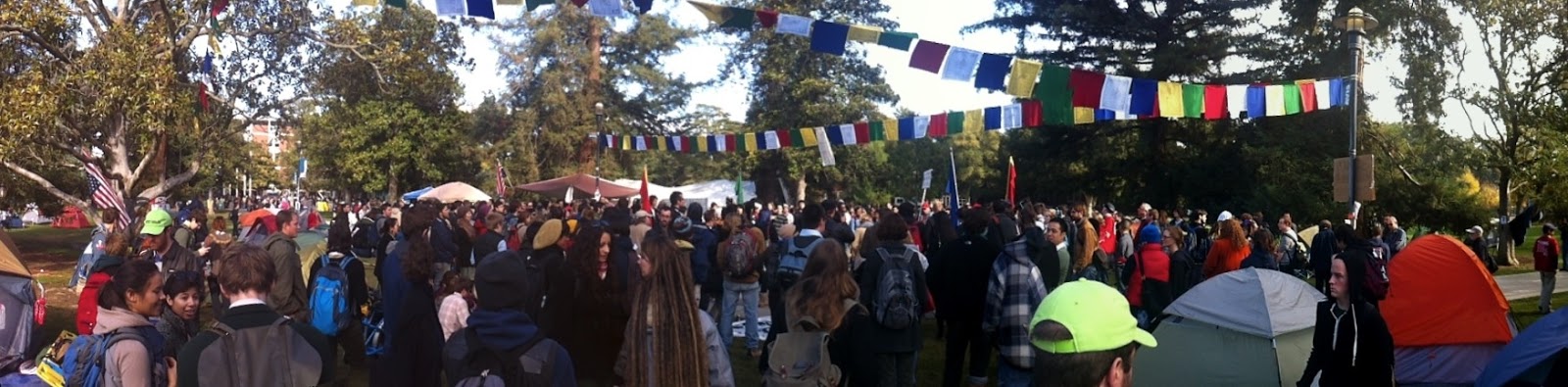
And then after I went back out to the quad to see what was going on.  And things had picked up a bit since 10:45.  There were some teach ins apparently going on and at least a hundred people or so milling around.

I took some pictures of the scene for a bit:

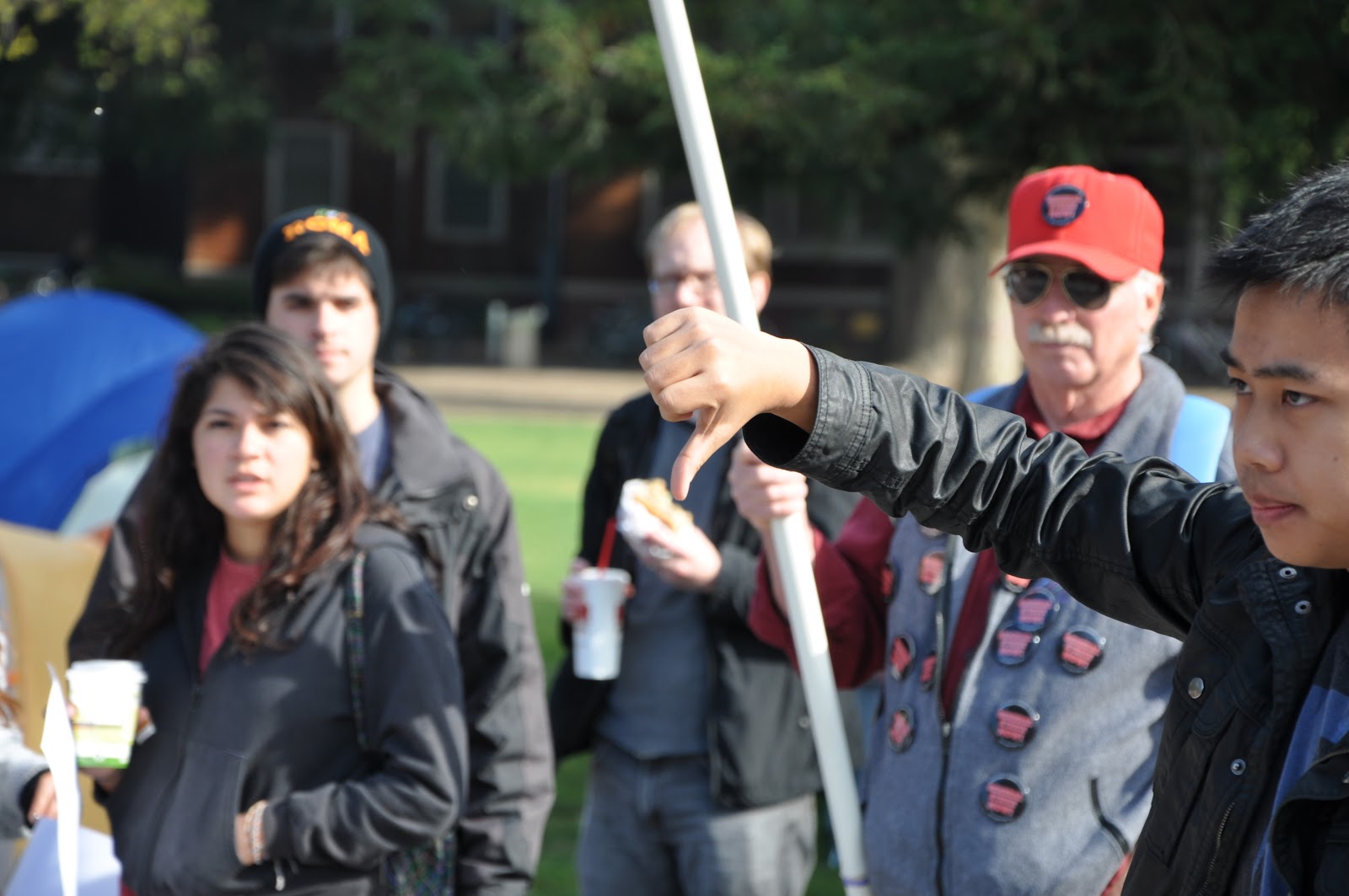
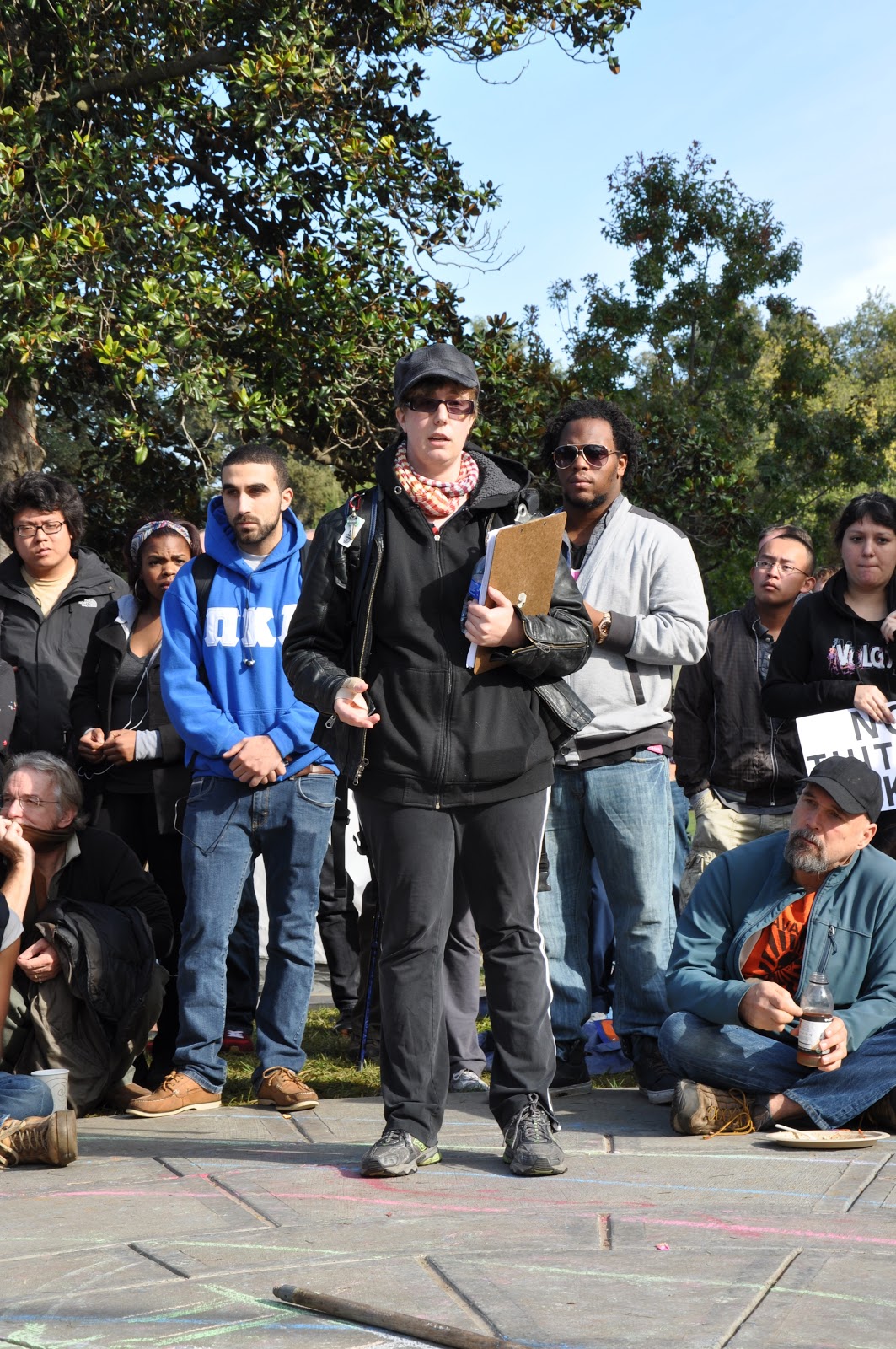
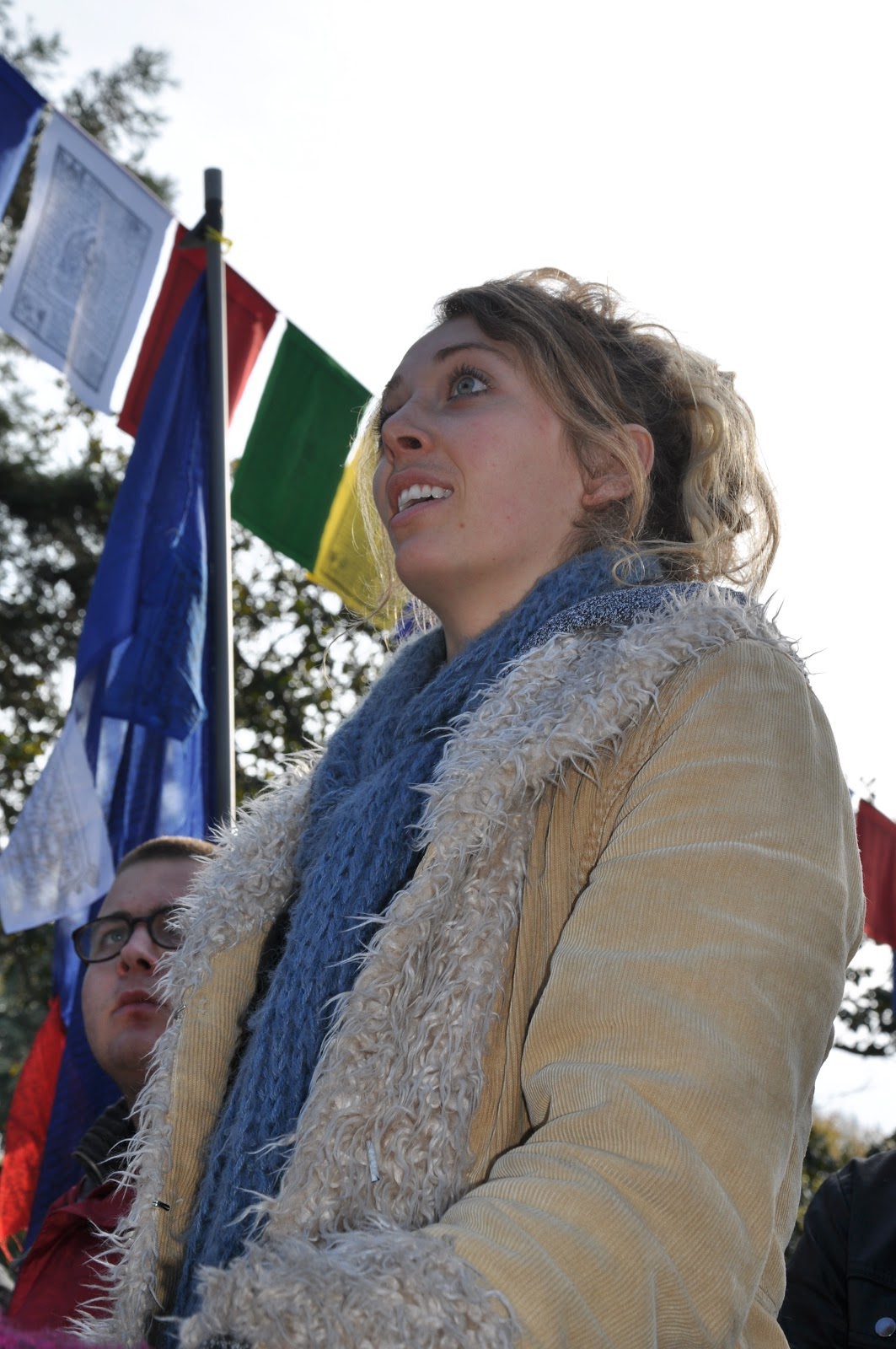
And then there was a mini assembly where people discussed plans for the rest of the day.  It was not, they noted, one of their “General Assemblies” but more of a discussion.  There was an interesting discussion of whether the strike was a good idea or not.  Some of the comments I posted to twitter: “speaker announcing a plan for a march to disrupt classes”, “Speaker saying that he does not think classes should be disrupted ” “Continued discussion about whether disrupting class is a good idea or not ” “Speaker says if this movement is about student rights – should not disrupt classes” “Continued discussion about whether or how to shut down classes ”  Basically people were expressing some very similar feelings to what I had.  And there was a discussion and then one person said “why don’t we just let people do whatever they want – some can protest – some can picket and some can do teach ins.”  And it was sort of left there.

And finally I decided it was time to head out for a bit.  Overall the “rally/strike” seemed a bit, well, quiet but that was fine.  The teach-ins were still getting going.  Students had just gotten back from break.  And the notion of a strike was clearly not what all the students or others wanted.  But maybe momentum would pick up for protests in some way.  I then headed back to where I had parked my bike.

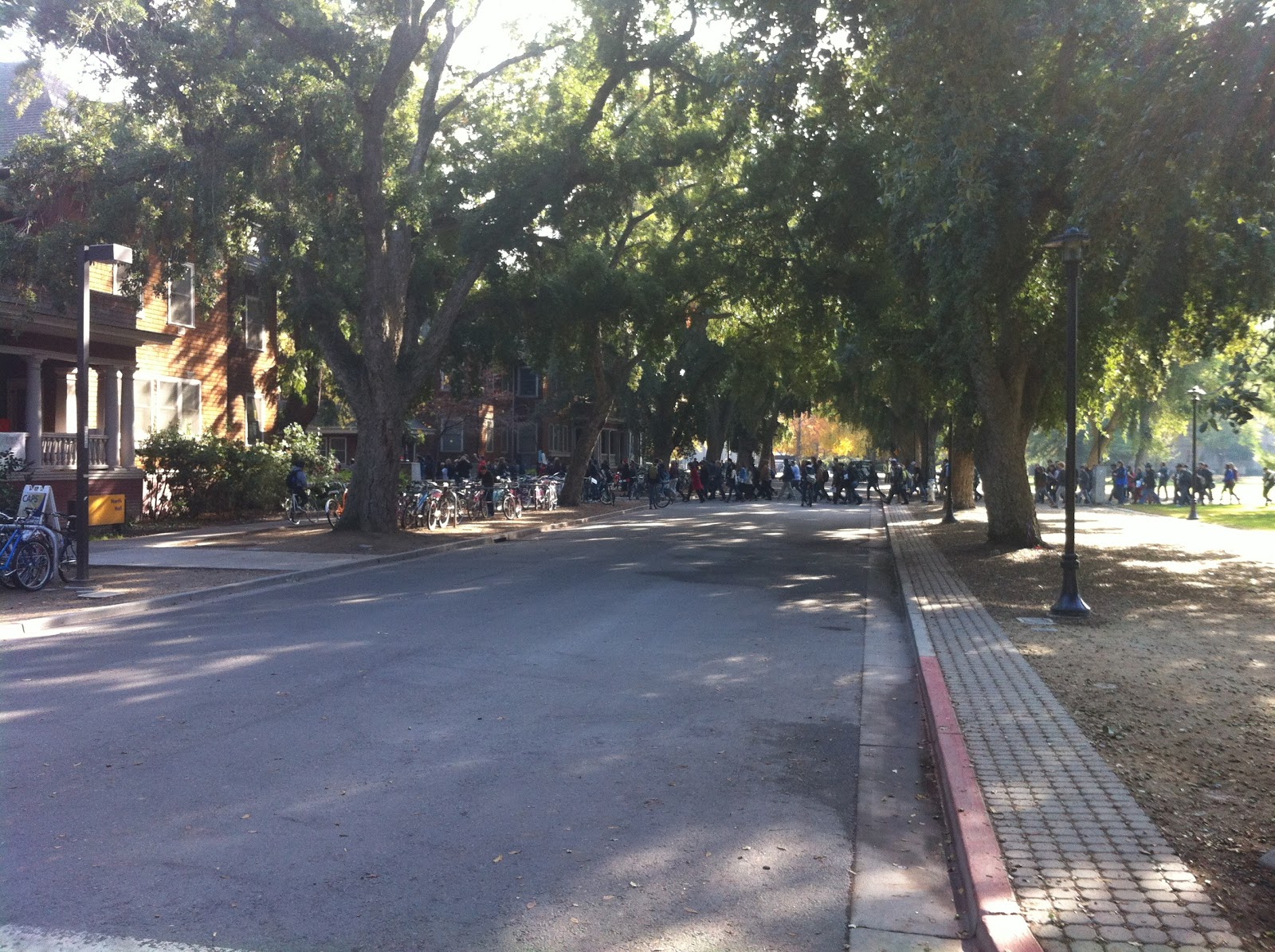
And just as I unlocked my bike, I heard chanting and the crowd was on the move.  So much for quiet. I took a few pics and made a few little videos (which I will post later).

I had left my bike unlocked and I decided to go back to grab it.  By the time I got to it, the crowd seemed to have disappeared.   So I headed off to my office/lab to at least check in with people there.  And I was there no more than about an hour and was still feeling crappy from my cold.  So I decided to head home.  And while heading to my bike to ride back to the ARC where my car was, I saw some tweets about “a take over of Dutton Hall”.  Hmm … that was right where the crowd was headed when I had left — I guess they had stayed there and done an occupation.  I guess things had picked up since I had left.  It was now gorgeous outside – probably mid 60s and crisp and sunny and my cold did not feel so bad – so I headed back to the Quad to see what was going on.  I parked my bike and then walked across the quad.  I got to see some sign making in progress:

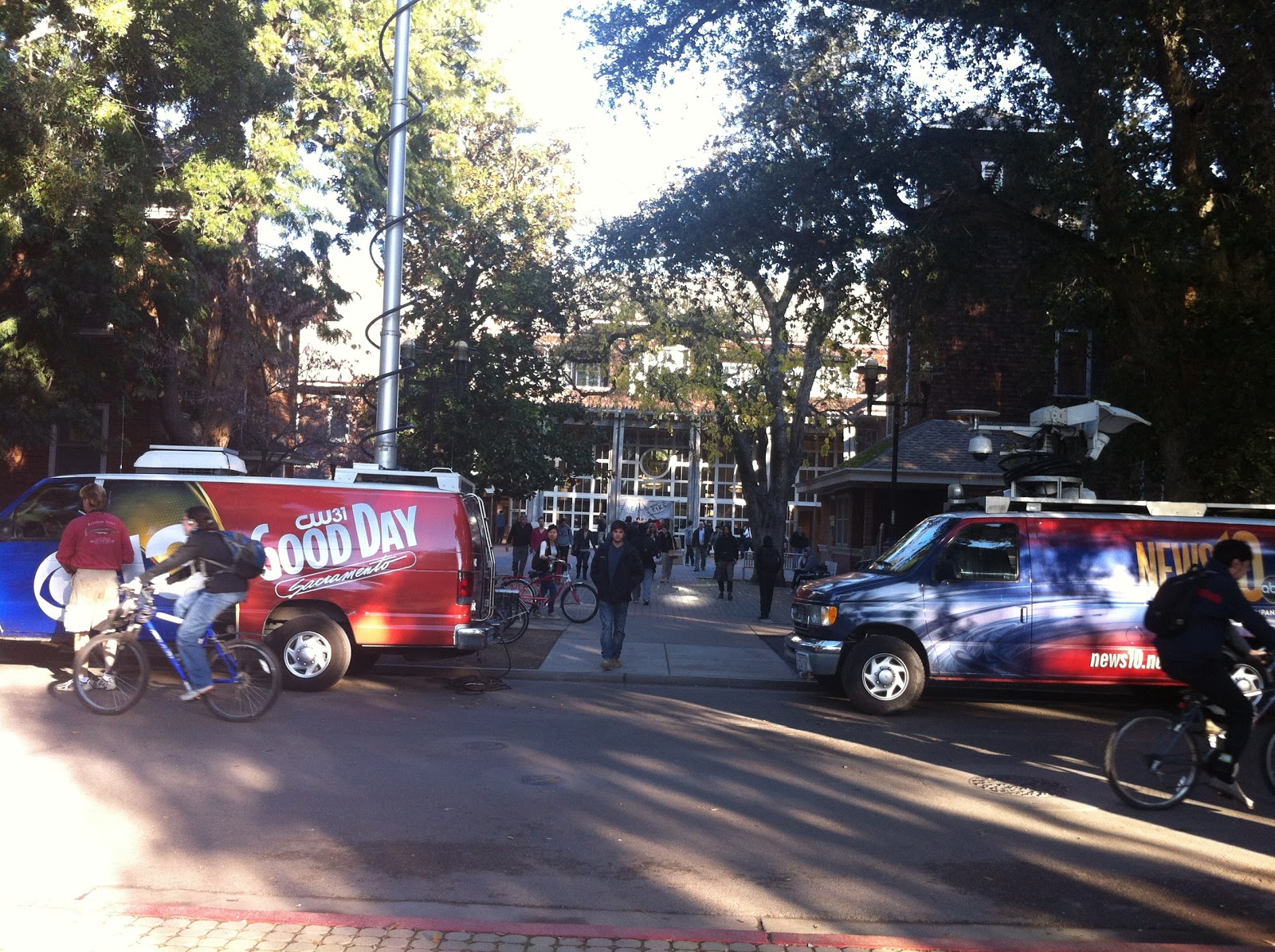
And then I walked across the Quad to Dutton Hall where there were some TV crews and a bunch of people coming out.  Turns out I had missed a “teach in” there by a few minutes by Nathan Brown (I think it was about Marx).

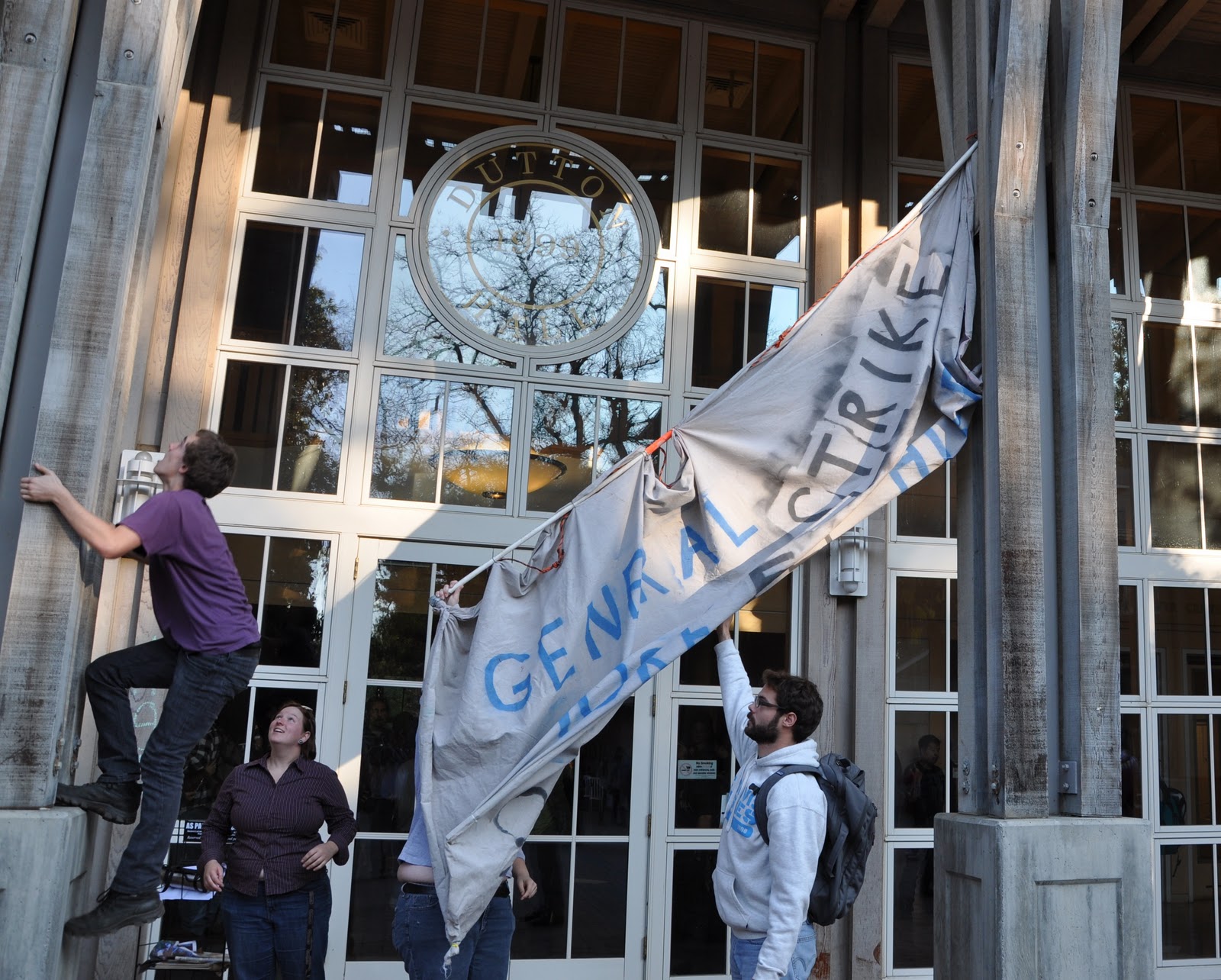
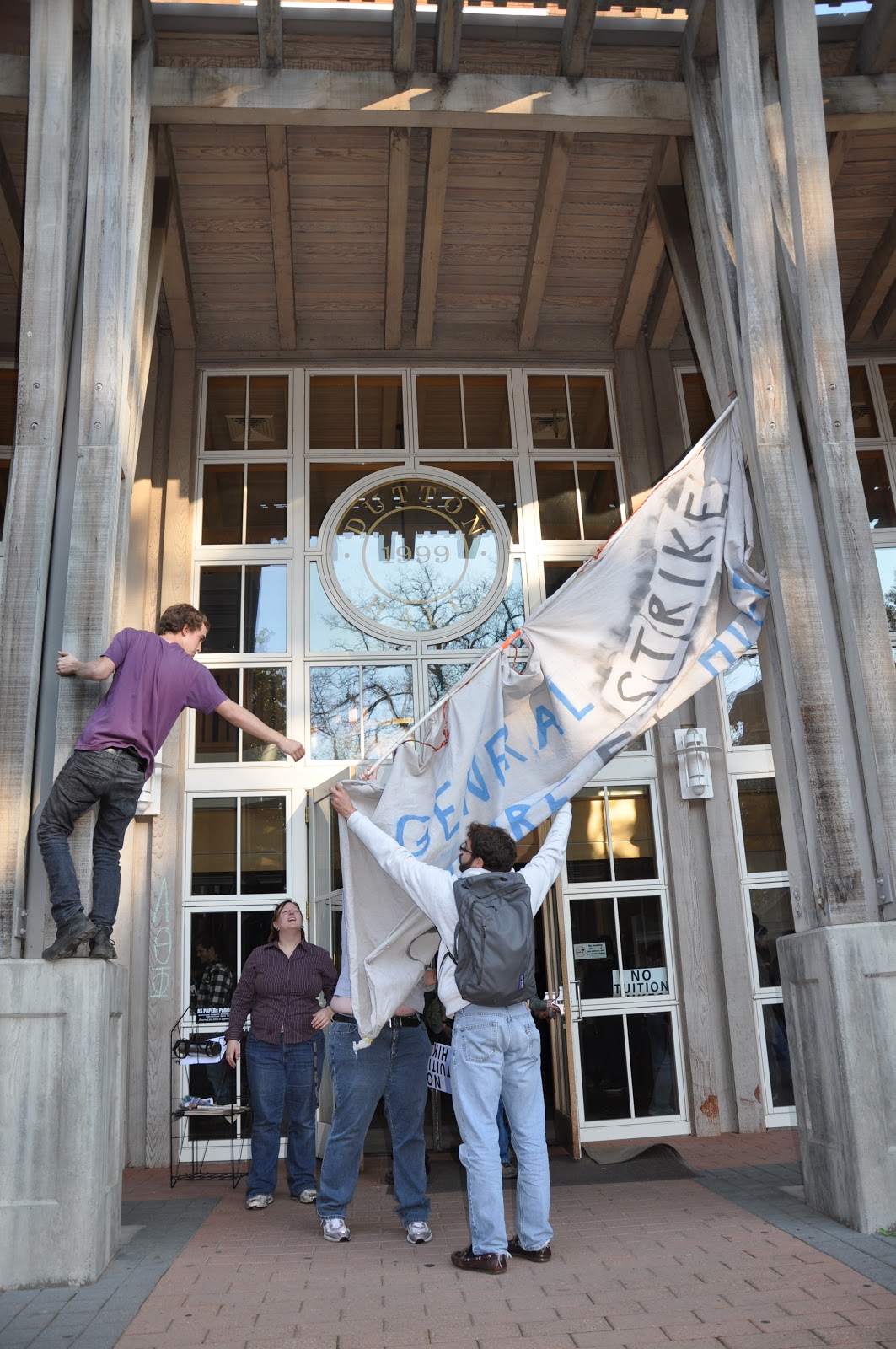
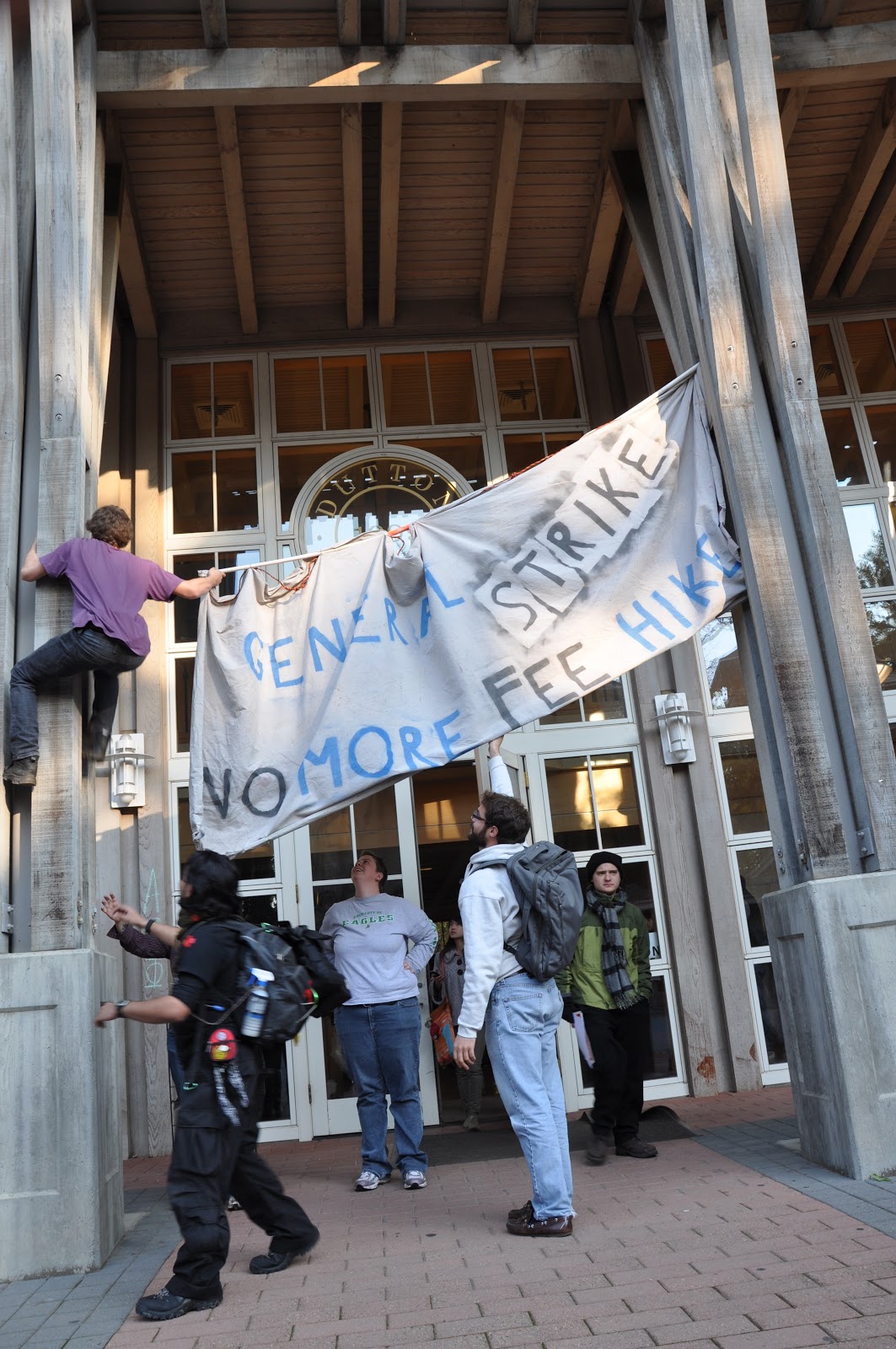
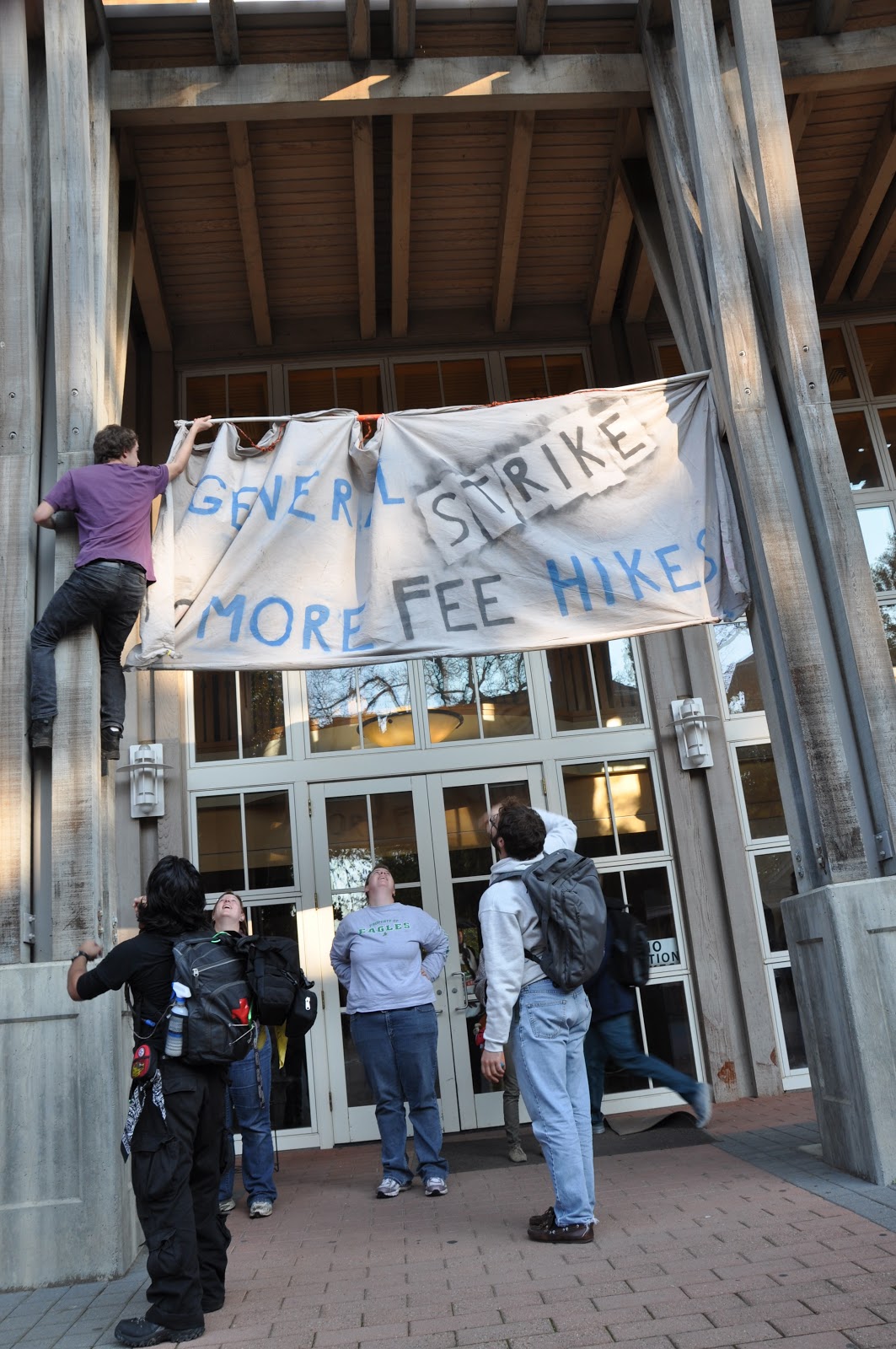
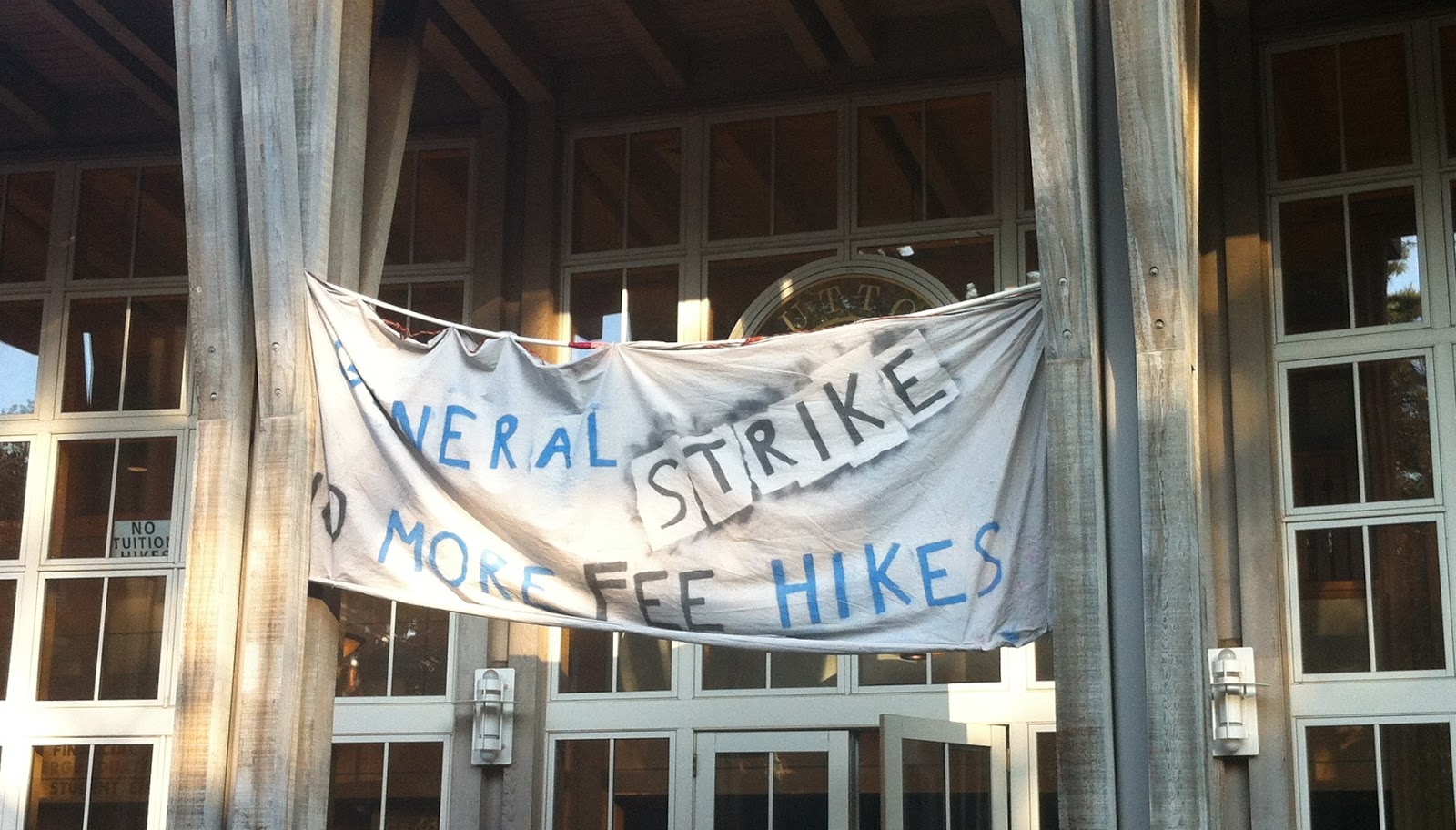
Yet, though many people were leaving, the Occupy folks were still lingering around inside and out.  I talked to a few people about what was going on – found out that part of the reason for the take over of Dutton was to support a takeover that was done of a building at Santa Cruz.  I also watched some banner hanging and then went inside and took some pics:

It was then time for me to go home.  With my cold I promised myself to take it easy today … So I headed back towards my bike and took some pics of the TV crews.

And then headed home.

I note – I think this day was very interesting in many ways.  I think the OccupyUCDavis crowd missed a bit opportunity in many ways by pushing the strike instead of some type of picketing of admin buildings or protest march or such.  I also think they alienated many people with the excessive push regarding socialism.  As on previous days, my interactions with UC Davis students consitently left me impressed.  My interactions with some of the outsiders were less positive.  I do hope that the movement can take advantage of this moment to lead to real change in how universities throughout the country deal with students and in increasing the affordability of public education at the university level and in reducing the excessive use of force against peaceful protestors. But I think things need to be done carefully so as to not alienate too many people —

I need to get my kids to sleep right now and then get some rest and I will then revise this post to add some details and more commentary.  Apologies for being somewhat incomplete for now …