Nathan Wolfe talk at #UCDavis Wrap Up #Storify #Viruses

Nathan Wolfe talked at UC Davis yesterday.  I met with him for 30 minutes just before his talk.  Many times I feel that 30 minutes is more than enough when meeting with outside seminar speakers.  I definitely would have enjoyed more time with Wolfe – he does some pretty fascinating stuff.

Anyway – I escorted him to his talk and then I took notes for it on Twitter as did Pam Ronald (who was sitting next to me).  I then made a “Storification” of the talk (using the Storify.Com system).

This is below:

http://storify.com/phylogenomics/nathan-wolfe-talk-at-ucdavis.js[<a href=”http://storify.com/phylogenomics/nathan-wolfe-talk-at-ucdavis” target=”_blank”>View the story “Nathan Wolfe talk at #UCDavis” on Storify</a>]

Wow – ALVIN submarine has potential to be vector for species movement cc: @deepseanews

Well, it is (relatively) common knowledge that surface ships can serve as unintentional vectors for the movement of organisms via things like ballast water (see for example this recent post on Deep Sea News which discusses this in part).  And the ecological favor wreaked by such ship-based-transport can be immense.

A new paper, and news story, call attention to an analogous process that might occur with deep-sea submarines (see news story here: U.S. News – Deep-sea aliens hitched ride by submarine to pristine area).  The basic summary is – researchers using the deep sea sub ALVIN have discovered that, contrary to expectations, some organisms from the deep were able to survive the sub surfacing, being brought on board the mother ship, and then being sent back down to another site.  Some limpets apparently hung out in some tubing for a day and were then “sampled” by the sub at another site.  Apparently, nobody had thought this might be an issue because they had assumed that the surfacing and bringing on deck and cleaning of ALVIN would kill any organisms from one site before traversing to the next place.  Apparently not.

I note one comment – it seems reasonable to think that microbes might be hitching a ride on ALVIN and other submersibles too … which brings me back to the recent post on Deep Sea News I linked to above.  It is by Holly Bik, a post doc in my lab, and in it she discussed the possibility that microbes might be getting moved around by surface ships.  Well, it seems that submersibles should be looked at too ..

Skeptical of this: Invitation to Participate in the East African Universities’ Lecture Series and a Safari

Hmm … this smells off. Must be as SCAM somewhere in here.
Updated 12/13/13. I do not think this is a SCAM.  But I am not quite sure what it is.

———- Forwarded message ———-
From: Tours of Purpose (TOP) <info@toursofpurpose.com>
Date: Wed, May 23, 2012 at 9:29 PM
Subject: Invitation to Participate in the East African Universities’
Lecture Series and a Safari

Dear University of California Faculty and Staff:

Tours of Purpose, TOP, a professor exchange agency dedicated to the
development and improvement of economic, academic and general welfare
in East Africa (i.e., Uganda, Kenya, Tanzania, Rwanda and Burundi) is
hereby extending a humble invitation to you to participate in our
ongoing program of lecture series taking place in our local
universities, colleges, high schools, primary schools and other
academic institutions.  Additionally, TOP would like to avail to you a
one in a lifetime opportunity to take a safari where you will see and
photograph lions, elephants, giraffes, leopards, zebras, hippos,
rhinos, among an array of wildlife, in addition to a rare opportunity
to visit the mountain gorillas and man’s closest relative, the chimp,
at a TOP’ scholars’ give away price. Winston Churchill took this trip
and immortally dabbed Uganda “The Pearl of Africa”, and Queen
Elizabeth was on such a safari when she learned that she had become
queen of England. The average visit lasts for about two weeks–with a
couple of days or so dedicated to visiting the said incredible African
wildlife reserves–although you may wish for your particular visit to
be shorter or longer. TOP would like to partner with a specific
professor, or any academician, in pursuing a possibility of coming to
East Africa to deliver lectures in any given dispositive academic
discipline.  TOP will cooperate with you in arranging and customizing
your travel details to Africa, including picking you up at the airport
in TOP state of the art SUVs, booking fair accommodation, arranging
your meals, setting and managing your speaking schedule, taking you on
a safari trip and other tours, and ultimately delivering you to the
airport for your flight home. TOP invariably offers the option of one
being paired with another educator from North America or Europe during
this trip, although traveling alone in East Africa is not complicated
nor precarious at all.

Thus, if TOP secures your willingness to participate, TOP will, first,
discuss with you the financial side of it, including revealing what
assistance may be available for you in this regard so that you can
achieve your $1,200 or so round trip air ticket.  Second, where a
Holiday Inn-style room costs about $180 a night in East Africa, TOP
offers you even better accommodation in our partnering hotel, Giraffe
Park Hotel, at $350 a week, breakfast and dinner inclusive. Lunch can
be packed or arranged very reasonably.  As a TOP scholar, you also
qualify for $200 towards your travel expenses.

Consider, too, should you have plans of traveling to or through
Europe, why not shoot two birds with one stone by detouring through
East Africa for the instant, noble purpose and halve the costs, not to
mention the time to be saved or to be well used. Take note, too, that
in addition to some of your students who may either just want to
accompany you or do an internship here, you can invite your family and
friends as well.

As such, your willingness to participate dwarfs all financial
concerns, for TOP stands with you to make this trip not only
economical but, most importantly, simple to handle all around. In
fact, as an American educator, you are due to discover that your worth
to the vast world’s academic needs is patently inestimable and that
sharing your expertise inures a hidden fulfillment.

In sum, this email cannot answer all the questions you might have
regarding this trip, therefore, you are encourage to contact me so
that we can further this conversation, including chatting on the
phone, if you desire.  Needless to say, I, or a TOP representative,
will be available to talk with you about either an immediate trip or
to muse about a distant future possibility for this lectureship, in
addition to whether TOP, in conjunction with our local institutions,
should promulgate a concrete, personalized proposal for your
consideration.

Lastly, feel very welcome to visit our website (http://www.toursofpurpose.com
) to learn more about us and to view photos and read up on
testimonials of past participants. Also, on the website you will be
able to either join us on Facebook or to follow us on twitter.

Therefore, we hope to hear from you soon.

Sincerely,

~Josephine Nakandi
Program Director


~~~~~~~~~~~~~~~~~~~~~~~~
Tours of Purpose, TOP
49 Nakawa Road, Suite 400
Kampala, Uganda, East Africa
Tel: +256 778 899 429
info@toursofpurpose.com
http://www.toursofpurpose.com
~~~~~~~~~~~~~~~~~~~~~~~~


UPDATE 12/12/13

Some miscellaneous stuff I found on the web relating to Tours of Purpose

Denis White, a Professor at U. Toledo has some doubts about financial behavior of “Teach and Tours Sojourner” which he reports has the same contact # as Tours of Purpose.
Teach and Tours Sojourners and Tours of Purpose both work with Stawa University

A reviewer of Teach and Tour Sojourners on Trip Advisor has some serious negative comments.

The “Meta Name” tag in the source of the current Tours of Purpose website reads:

” “

The “Title” tag in the current website reads “Tours of Purpose | Teach and Tour Sojourners, Kampala, Uganda, Entebbe”

Another negative review of TATS is here.

I note – there are also positive reviews out there of TATS and TOP.   Hard to know just what is going on here.  Could be that someone is trying hard and occasionally things go poorly.  I have no idea.

Kimberly-Clark’s deceptive self serving PR regarding germs in the workplace #BadReportingToo

First I saw of this story was here: Study: Bacteria fills office break rooms – Local News – Houston, TX – msnbc.com

Something sounded off with this.  I think it was the fact that it involved “Cleaning products company Kimberly-Clark” that raised some alarm bells.  The involvement of Charles Gerba also left me a bit queasy as I have seen his name associated with a few recent “studies” which are basically germaphobia funded by cleaning product companies.

After looking around a bit I got discouraged at the whole thing and put it out of my head for a few hours.  And then David Coil, a post doc in my lab, sent me a link to the press release behind this story.  And boy is it a doozy.

The PR basically makes the following dubious statements or implications
* All bacteria are bad.  The whole PR references a study that they imply is about detecting bacteria in various locations.  And when they detect high levels they conclude this is bad.  For example in the title “Where the Germs Are: New Study Finds Office Kitchens and Break Rooms are Crawling with Bacteria“.  Or in the text: “If you thought the restroom was the epicenter of workplace germs you don’t want to know about office break rooms and kitchens” “office germ “hot-spots,”” “Office workers are potentially being exposed to illness-causing bacteria right in their own lunchrooms” and much more.  Uggh.  Not all bacteria are bad.  Gerba and Kimberly-Clark must know this yet they purposefully mislead.

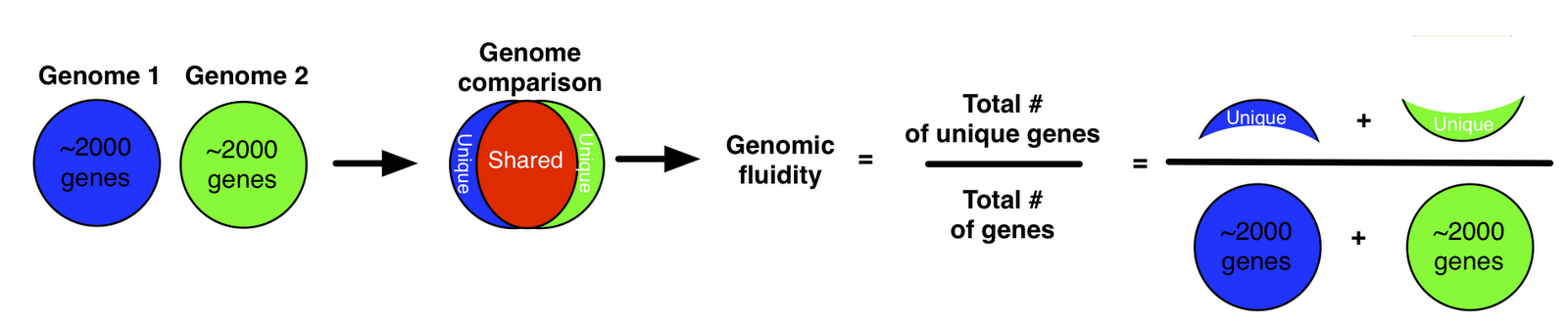
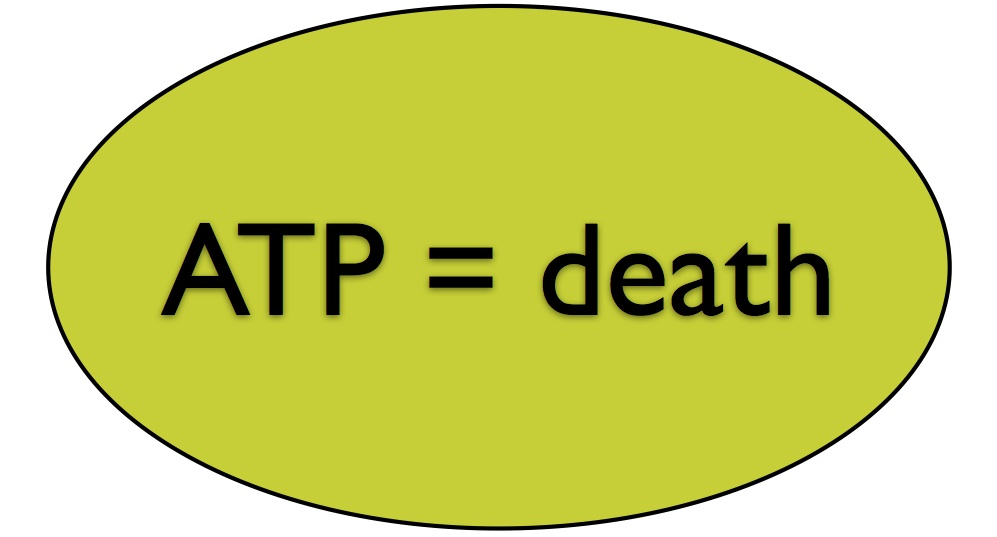
* Presence of ATP means presence of bacteria (and see above – this must imply presence of bad bacteria).  Wow.  Not sure what to say here.  But they use a test for ATP which they say  “ATP is present in all animal, vegetable, bacteria, yeast and mold cells. Detection of ATP indicates the presence of contamination by any of these sources. Everyday objects with an ATP reading of 300 or higher are considered to have a high risk for illness transmission.”  No citation given. And sounds highly dubious to go from ATP – > risk for illness.  Sounds completely dubious actually.

* That it is OK to make claims in Press Releases without presenting evidence behind the claims.  The PR tries to make this all seem very scientific.  Well, where is the paper behind this?  They claim “The findings are from a study carried out by Kimberly-Clark Professional* and is believed to be one of the most detailed and comprehensive studies ever conducted on identifying workplace hotspots where germs can lurk.”  Where is the actual data?  Where are the methods described?  Yuck.

Alas – despite the fact that the Press Release is at best a self serving piece of dubious scientific quality – the press has run with the story sucking up everything Gerba and Kimberly Clark are saying.  Ugg.  Here are some examples, many of which really do a poor job on the science and the conflicts of interest inherent in an unpublished study from a cleaning products company

I am getting sick and tired of crap like this.  Kimberly-Clark may make some useful products.  I don’t really know.  But deceptive press releases like this suggest that their dedication to science is, well, low.  They need to clean up their act.

Fall 2012 Introduction to Evolution (EVE 100) teaching position at #UCDavis

DEPARTMENT OF EVOLUTION AND ECOLOGY

FALL 2012

TEACHING POSITION AVAILABLE

LECTURER

Introduction to Evolution

(EVE 100)

FALL 2012 (September 24-December 14, 2012)

Responsibilities: A 60% position teaching EVE 100 – Introduction to Evolution (4 units). Lecture–3 hours, Discussion–1 hour. The course subject provides a general survey of the origins of biological diversity and evolutionary mechanisms. Estimated enrollment: 200

Requirements: Ph.D. and demonstrated effective teaching in the subject course or equivalent course.

Salary: Commensurate upon qualifications.

Please submit letter of application, including summary of qualifications, CV, two letters of recommendation and any applicable teaching evaluation summaries via the link below link which contains additional information about the position.

https://recruitments.ucdavis.edu/PositionDetails.aspx?PositionID=103&Title=Fall-2012-Lecturer—Introduction-to-Evolution-%28EVE-100%29

OPEN UNTIL FILLED. FOR FULL CONSIDERATION APPLICATION MUST BE RECEIVED BY JUNE 22, 2012.

This position may be covered by a collective bargaining unit.

The University of California is an Equal Opportunity/Affirmative Action Employer with a strong institutional commitment to the development of a climate that supports equality of opportunity and respect for diversity.

05/23/12

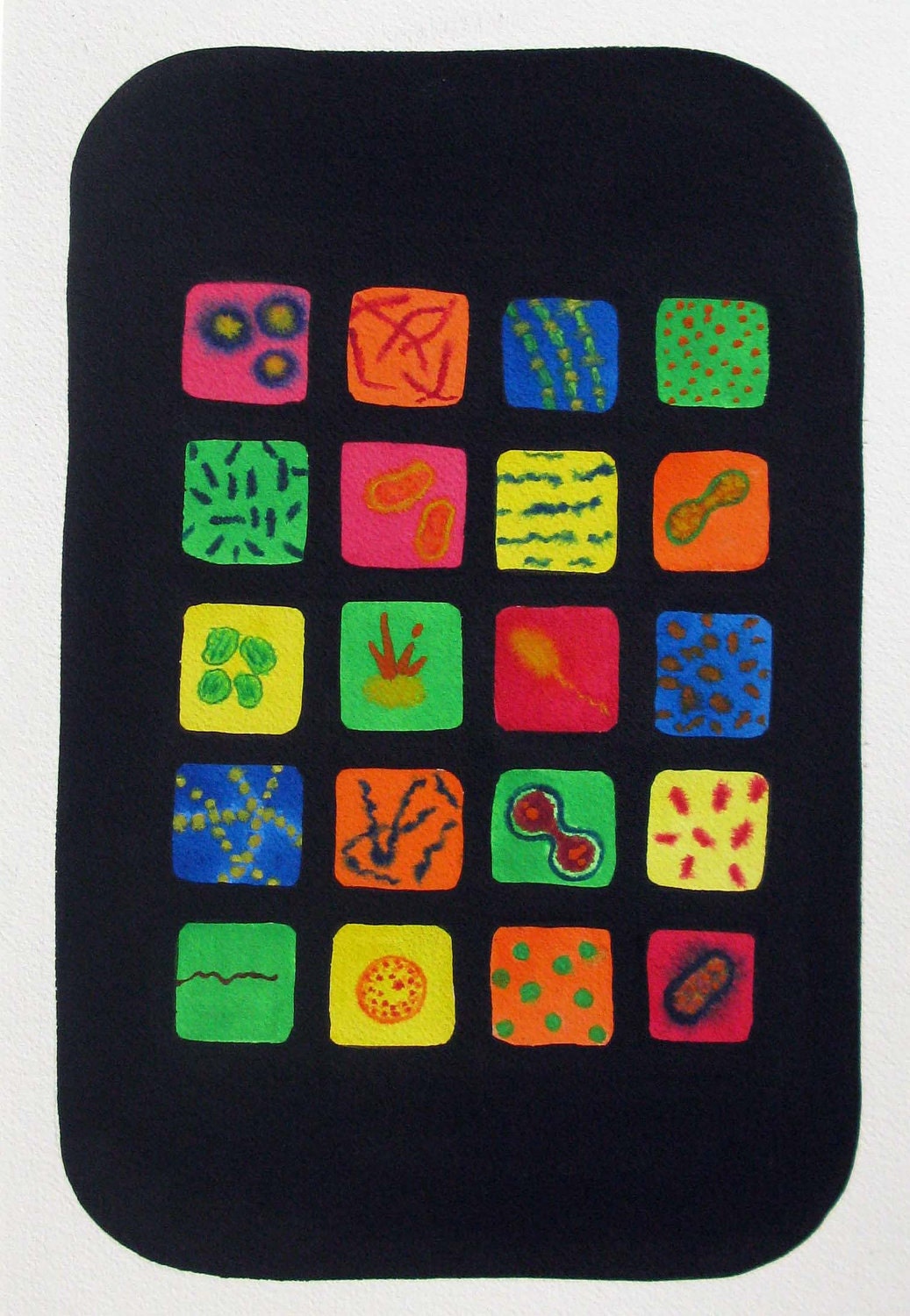
What to do – what to do – cool microbial art w/ a #badomics word — must resist purchasing — must resist …

OK – thanks to Dan Smith for pointing me to: Phonome original watercolor painting bacteria by artologica

This was inspired in part by phone sampling I helped Dan and Jack Gilbert do at the AAAS meeting.  And Michelle Banks (i.e., @artologica) has not only made microbial art out of it but has coined a new OME word.  I think she is aiming directly at me here … must resist.  Must resist.

Story behind the paper guest post on "Resolving the ortholog conjecture"

This is another in my ongoing “Story behind the paper series”. This one is from Christophe Dessimoz on a new paper he is an author on in PLoS Computational Biology that is near and dear to my heart.

See below for more. I am trying to post this from Yosemite National Park without full computer access so I hope the images come through. If not I will fix in a few days.

……………..

I’d like to thank Jonathan for the opportunity to tell the story behind our paper, which was just published in PLoS Computational Biology. In this work, we corroborated the “ortholog conjecture”—the widespread but little tested notion that orthologs tend to be functionally more conserved than paralogs.

I’d also like to explore more general issues, including the pitfalls of statistical analyses on highly heterogeneous data such as the Gene Ontology, and the pivotal role of peer-reviewers.

Like many others in computational biology, this project started as a quick analysis that was meant to take “just a few hours” but ended up keeping us busy for several years…

The ortholog conjecture and alternative hypotheses

The ortholog conjecture states that on average and for similar levels of sequence divergence, genes that started diverging through speciation (“orthologs”) are more similar in function than genes that started diverging through duplication (“paralogs”). This is based on the idea that gene duplication is a driving force behind function innovation. Intuitively, this makes sense because the extra copy arising through duplication should provide the freedom to evolve new function. This is the conventional dogma.

Alternatively, for similar levels of sequence divergence, there might not be any particular difference between orthologs and paralogs. It is the simplest explanation (per Ockham’s razor), and it also makes sense if the function of a gene is mainly determined by its protein sequence (let’s just consider one product per gene). Following this hypothesis, we might expect considerable correlation between sequence and function similarity.

But these are by no means the only two possible hypotheses. Notably, Nehrt and colleagues saw higher function conservation among within-species homologs than between-species homologs, which prompted them to conclude: “the most important aspect of functional similarity is not sequence similarity, but rather contextual similarity”. If the environment (“the context”) is indeed the primary evolutionary driving force, it is not unreasonable to speculate that within-species paralogs could evolve in a correlated manner, and thus be functionally more similar than their between-species counterparts.

Why bother testing these hypotheses?

Testing these hypotheses is important not only for better understanding gene function evolution in general, but it also has practical implications. The vast majority of gene function annotations (98% of Gene Ontology annotations) are propagated computationally from experimental data on a handful of model organisms, often using models based on these hypotheses.

How our work started

Our project was born during a break at the 10th anniversary meeting of the Swiss Institute of Bioinformatics in September 2008. I was telling Marc Robinson-Rechavi (University of Lausanne) about my work with Adrian Altenhoff on orthology benchmarking (as it happens, another paper edited by Jonathan!), which had used function similarity as a surrogate measure for orthology. We had implicitly assumed that the ortholog conjecture was true—a fact that Marc zeroed in on. He was quite sceptical of the ortholog conjecture, and around this time, together with his graduate student Romain Studer, he published an opinion in Trends in Genetics unambiguously entitled “How confident can we be that orthologs are similar, but paralogs differ?” (self-archived preprint). So, having all that data on hand, we flipped our analysis on its head and set out to compare the average Gene Ontology (GO) annotation similarity of orthologs vs. paralogs. Little did we think that this analysis would keep us busy for over 3 years!

First attempt

It only took a few weeks to obtain our first results. But we were very puzzled. As Nehrt et al. would later publish, we observed that within-species paralogs tended to be functionally more conserved than orthologs. At first we were very sceptical. After all, Marc had been leaning toward the uniform ortholog/paralog hypothesis, and I had expected the ortholog conjecture to hold. We started controlling for all sorts of potential sources of biases and structure in the data (e.g. source of ortholog/paralog predictions, function and sequence similarity measures, variation among species clades). A year into the project, our supplementary materials had grown to a 67-page PDF chock-full of plots! The initial observation held under all conditions. By then, we were starting to feel that our results were not artefactual and that it was time to communicate our results. (We were also running out of ideas for additional controls and were hoping that peer-reviewers might help!)

Rejections

We tried to publish the paper in a top-tier journal, but our manuscript was rejected prior to peer-review. I found it frustrating that although the work was deemed important, they rejected it prior to review over an alleged technical deficiency. In my view, technical assessments should be deferred to the peer-review process, when referees have the time to scrutinise the details of a manuscript.

Genome Research sent our manuscript out for peer-review, and we received one critical, but insightful report. The referee contended that our results were due to species-specific factors, which arise because “paralogs in the same species tend to be ‘handled’ together, by experimenters and annotators”. The argument built on one example which we had discussed in the paper: S. cerevisiae Cdc10/Cdc12 and S. pombe Spn2/Spn4 are paralogs inside each species, while Cdc10/Spn2 and Cdc12/Spn4 are the respective pairs of orthologs. The Gene Ontology annotations for the orthologs were very different, while the annotations of theparalogs were very similar. The reviewer looked at the source articles indetail, and noticed that “the functional divergence between these genes is more apparent than real”. Both pairs of paralogs were components of theseptin ring. The differences in annotation appeared to be due to differences in the experiments done and in the way they were transcribed. The reviewer stated:

“A single paper will often examine the phenotype of several paralogs within onespecies, resulting in one paper, which is presumably processed by one GO annotator at one time. In contrast, phenotypes of orthologs in different species almost always come from different papers, via different annotation teams.”

Authorship effect: an easily overlooked bias

At first, it was tempting to just dismiss the criticism. After all, as Roger Brinner put it, “the plural of anecdote is not data.” More importantly, we had tried to address several potential species-specific biases, such as uneven annotation frequencies among species (e.g. due to developmental genes being predominantly studied in C. elegans). And we had been cautious in our conclusions, suggesting that our results might be due to an as yet unknown confounder in the Gene Ontology dataset (remember that we had run out of ideas?). So the referee was not telling us anything we did not know.

Or was (s)he? Stimulated by the metaphor of same-species paralogs being “handled” together, we decided to investigate whether common authorship might correlate in any way with function annotation similarity. Here’s what we observed:

The similarity of function annotations from a common paper is much higher than otherwise! Even if we restrict ourselves to annotations from different papers, but with at least one author in common, the similarity of functional annotations is still considerably higher than with papers without a common author.

Simpson’s Paradox

In itself, the authorship effect is not necessarily a problem: if annotations between orthologs and paralogs were similarly distributed among the different types, differences due to authorship effects would average out. The problem here is that paralogs are one order of magnitude more likely to be annotated by the same lab than orthologs. This gives rise to “Simpson’s paradox”: paralogs can appear to be functionally more similar than orthologs just because paralogs are much more likely to be studied by the same people.

A classical example of Simpson’s paradox is the “Berkeley gender bias case” (Wikipedia article): the university was sued for bias against women applicants based on the aggregate 1973 admission figures (44% men admitted vs. 35% women). As it turned out, the admission rate for each department was in fact similar for both sexes (and even in favour of women in a few departments). The lower overall acceptance rate for women was not due to gender bias, but to the tendency of women to apply to more competitive departments.

Paper by Nehrt et al.

Finding the authorship effect meant that we had to reanalyse all our data, and completely rewrite our manuscript. A few months into this process, in June 2011, Matt Hahn and colleagues published their paper (Nehrt et al., Testing the Ortholog Conjecture with Comparative Functional Genomic Data from Mammals, PLoS Comput Biol 2011). Matt has written a very interesting story behind the paper on this blog, which is well-worth reading (including comments).

While we weren’t very surprised by the essence of their observations—they were very consistent with our initial (rejected) manuscript—we were nevertheless struck by the similarity in the presentation of the results:


On the left, plot 2A from Nehrt et al., PLoS Comput Biol 2011; On the right, plot from our initial, rejected manuscript. Note that their blue (within-spec outparalogs) and green (inparalogs) lines are combined in our plot (same-species paralogs, yellow line)

The publication of Nehrt et al.’s gave us mixed feelings. Obviously, their work was taking away some of the novelty in our study. But at the same time, they were drawing considerable attention to the problem (not least by coining a catchy name to describe the question!). And of course, we already knew at this point that their observations were confounded by factors such as the authorship effect, so it was not the end of the story.

Is it possible to draw reliable conclusions from observational data such as GO annotations?

Before I move to our findings, it’s worth pondering a bit more on the issue of biases in the data. Statisticians and epidemiologists make a strong distinction between experimental data (=data from a controlled experiment, designed such that the case and control groups are as identical as possible in all respects other than a factor of interest) and observational data (=data lying around). (On a side note, Ewan Birney recently wrote a great post on study design in genetic and phenotypic studies, with several ideas relevant to this issue.) Data pulled from the GO database clearly falls into the second category: observational data. We are at the mercy of potentially countless hidden effect biasing our conclusions in all sorts of ways.

Can we rely on this data at all? For some, the answer appears to be a categorical “no“. A more pragmatic stance was expressed by the GO consortium in a recent reply to Nehrt et al.’s paper, which identified potential confounding effects ignored in the study of Nehrt et al., such as species-specific annotation biases (they suggested, tongue-in-cheek, that the study instead supports the “biased annotation conjecture”), and stressed that “users of GO should ensure that they test for, and adjust for, potential biases prior to interpretation”.

In the end, I think that this debate, consistent with our experience, highlights the risks of working with observational data. But at the same time, observational data is often all we have (or can afford), so the best course of action seems indeed to control for known confounders, try to identify unknown ones, and cautiously process forward.

Resolving the conjecture

Controlling for the authorship effect and other biases—some previously known, others newly identified—we found that for similar levels of divergence, orthologs tend to be functionally more conserved than paralogs. This is true for different source of orthology/paralogy predictions, different types of function and sequence similarity measures, and different data sampling strategies. But in absolute terms, the difference is often not very strong, and varies considerably among species and types of functions. Our study confirms the ortholog conjecture, but at the same time it shows that the conjecture is not very useful in practice as it does not have much predictive power.

They were two crucial contributors to this study: the peer-reviewers, and open science. We are obviously indebted to the reviewer who rejected our paper on the basis of a potential authorship bias. The reviewers of the resubmission provided detailed and highly competent feedback As for open science, where would computational biology be without it? We often take it for granted, but without publicly available genome data and functional annotations, a study like this would never have happened. Chemistry suffers from having only very few publicly available databases (e.g. ChEMBL). People hard at work behind model organism databases have our deepest appreciation.

Upcoming discussions

As far as I can tell, Nehrt et al.’s study caused a considerable stir in our community, but many critics could not quite put their finger precisely on what was wrong (see Matt Hahn’s post, especially section “The fallout, and some responses”). Our work explains and reconciles their controversial observations.

This is by no means the end of the discussion. There will be a symposium dedicated to the ortholog conjecture at SMBE in Dublin next month (let me know if you want to meet up), and it will almost certainly be a topic of the next Quest for Orthologs meeting (tentatively scheduled for the summer 2013). Meanwhile, I hope this work will spur discussions on this blog (or, in French, on Marc Robinson-Rechavi’s blog!) and/or on Twitter (you can follow me at @cdessimoz, and Marc at @marc_rr).

Thanks to Marc Robinson-Rechavi and Mary Todd Bergman for their feedback on drafts of this post.

Interesting report from White House: National Bioeconomy Blueprint

Been reading the “National Bioeconomy Blueprint” from the WhiteHouse.  It is is definitely worth checking out (for some background information see his blog post from the White House:  National Bioeconomy Blueprint Released | The White House and this NY Times article White House Promotes a Bioeconomy – NYTimes.com from last month).  Also check out the main page describing this document: National Bioeconomy Blueprint | The White House.

The blueprint outlines five main objectives:

  1. Support R&D investments that will provide the foundation for the future U.S. bioeconomy.
  2. Facilitate the transition of bioinventions from research lab to market, including an increased focus on translational and regulatory sciences.
  3. Develop and reform regulations to reduce barriers, increase the speed and predictability of regulatory processes, and reduce costs while protecting human and environmental health.
  4. Update training programs and align academic institution incentives with student training for national workforce needs.
  5.  Identify and support opportunities for the development of public-private partnerships and precompetitive collaborations—where competitors pool resources, knowledge, and expertise to learn from successes and failures.
And then goes through some background and recommendations to help achieve these objectives.  
Other discussion of this includes:

Something fishy with this story: bacteria in fish pedicures

Well, the title drew me in, without a doubt: Fish Pedicures: Bacteria in Your Foot Soak.

To start with _ i guess I have been out of touch as I have never heard of fish pedicures before.  Sounds lovely I must say.

Though if you are considering doing this you might be dissuaded by some of the revelations in the article including that “fish are living creatures that deposit their waste products in the very water in which people are soaking” and “the impossibility of disinfecting or sanitizing live fish.”

Amazingly, fish pedicures are in fact apparently quite popular.  So popular that there are multiple investigations relating to this practice including that “British authorities investigated a reported bacterial outbreak among 6,000 Garra rufa fish ” and “Last spring, British fish inspectors went to London’s Heathrow Airport and intercepted Indonesian shipments of the silver, inch-long freshwater carp destined for British “fish spas.”

And now – the reason for this article – there is a new report in the journal Emerging Infectious Diseases on “Zoonotic Disease Pathogens in Fish Used for Pedicure.”  The article is actually somewhat fascinating and thanks to the CDC it is freely available.

Fun reading for the day …

Electronic Lab Notebook tech demo at #UCDavis 5/18

Just got this email and am sharing

Electronic Laboratory Notebooks–an information breakthrough for your lab?

Friday, May 18

3 pm

5206 GBSF

** AND **

12-2 pm

Day On the Dock

Behind Haring Hall

Dear UC Davis Researchers,

Is your research group tablet- or iPad- compatible? Would you like to find out?

Please come to a demonstration of electronic laboratory notebooks (ELN) in GBSF 5206 on Friday, May 18 at 3 pm. Rory MacNeil, from Axiope, (http://www.axiope.com) will be visiting from Scotland to discuss ELN in general, and the software he helped design, eCAT. This application is very suitable for academic research labs and
collaboration among a group.

If you cannot attend this demonstration, Rory will be at Day On the Dock, station #1, behind Haring Hall between 12-2 pm. Please stop by.

1. You may watch an extended (80 min) overview of ELN from LabManager webcast,
http://www.labmanager.com/?articles.view/articleNo/4575/article/Webinar–Next-Generation-Electronic-Laboratory-Notebooks–ELNs- (This presentation is primarily targeted to commercial labs; the latest generation of ELN’s are compatible with basic research groups. Three additional vendors discuss their products (Agilent, Accelrys, Waters).

2. You may watch the following brief video introducing inventory management in eCAT
http://www.axiope.com/electronic-lab-notebook/blog/product/?p=201

3. You may also sign up for a free personal account or a free trial of the group versions at
http://www.axiope.com/electronic-lab-notebook/free_trial.php