A path towards the extinction of "Impact Factor"

From Ewen Callaway in Nature News:

Beat it, impact factor! Publishing elite turns against controversial metric : Nature News & Comment

Best part – the news from ASM

“And in an editorial that will appear on 11 July in eight of its journals, the American Society for Microbiology in Washington DC will announce plans to remove the impact factor from its journals and website, as well as from marketing and advertising. 

“To me, what’s essential is to purge the conversation of the impact factor,” says ASM chief executive Stefano Bertuzzi, a prominent critic of the metric. “We want to make it so tacky that people will be embarrassed just to mention it.”

This is in relation to the recent preprint I posted about a few minutes ago …

Worth a read: A simple proposal for the publication of journal citation distributions

Worth a read: A simple proposal for the publication of journal citation distributions

This paper in BioRXiv is definitely worth checking out. Abstract is below:

Although the Journal Impact Factor (JIF) is widely acknowledged to be a poor indicator of the quality of individual papers, it is used routinely to evaluate research and researchers. Here, we present a simple method for generating the citation distributions that underlie JIFs. Application of this straightforward protocol reveals the full extent of the skew of distributions and variation in citations received by published papers that is characteristic of all scientific journals. Although there are differences among journals across the spectrum of JIFs, the citation distributions overlap extensively, demonstrating that the citation performance of individual papers cannot be inferred from the JIF. We propose that this methodology be adopted by all journals as a move to greater transparency, one that should help to refocus attention on individual pieces of work and counter the inappropriate usage of JIFs during the process of research assessment.

Source: A simple proposal for the publication of journal citation distributions | bioRxiv

(crossposted at the ICIS Blog)

Worth a read: A simple proposal for the publication of journal citation distributions

This paper in BioRXiv is definitely worth checking out.

Abstract is below:

Although the Journal Impact Factor (JIF) is widely acknowledged to be a poor indicator of the quality of individual papers, it is used routinely to evaluate research and researchers. Here, we present a simple method for generating the citation distributions that underlie JIFs. Application of this straightforward protocol reveals the full extent of the skew of distributions and variation in citations received by published papers that is characteristic of all scientific journals. Although there are differences among journals across the spectrum of JIFs, the citation distributions overlap extensively, demonstrating that the citation performance of individual papers cannot be inferred from the JIF. We propose that this methodology be adopted by all journals as a move to greater transparency, one that should help to refocus attention on individual pieces of work and counter the inappropriate usage of JIFs during the process of research assessment.

Source: A simple proposal for the publication of journal citation distributions | bioRxiv


Screen Shot 2016-07-09 at 8.56.53 AM


Screen Shot 2016-07-09 at 8.56.33 AM

Agilent – where men are thought leaders

Well this is disappointing.  Was googling for a person and found this Agilent “Thought Leaders Program“.  It is described as

This invitational program promotes fundamental scientific advancements by contributing financial support, products and expertise to the research of influential thought leaders in the life sciences, diagnostics, and chemical analysis.

Alas it might be described better as “Agilent Male Thought Leaders Program”. In my estimation (based on the pronouns used in the descriptions of the people and in Googling around for more information), of the 31 “thought leaders” 28 are male.  That comes to a bit more than 90%.  It seems like there is some sort of bias here.   Agilent should and could do better.

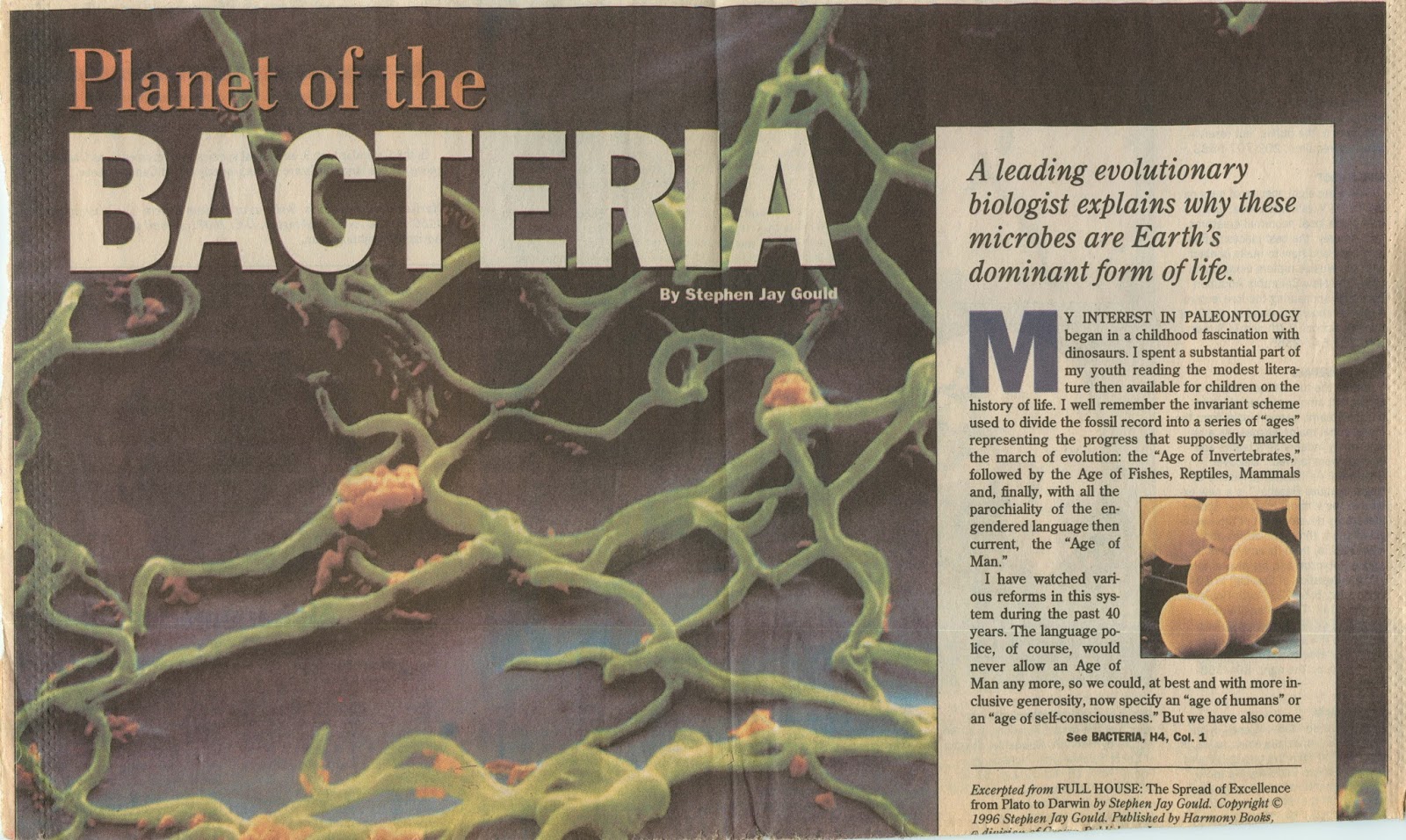
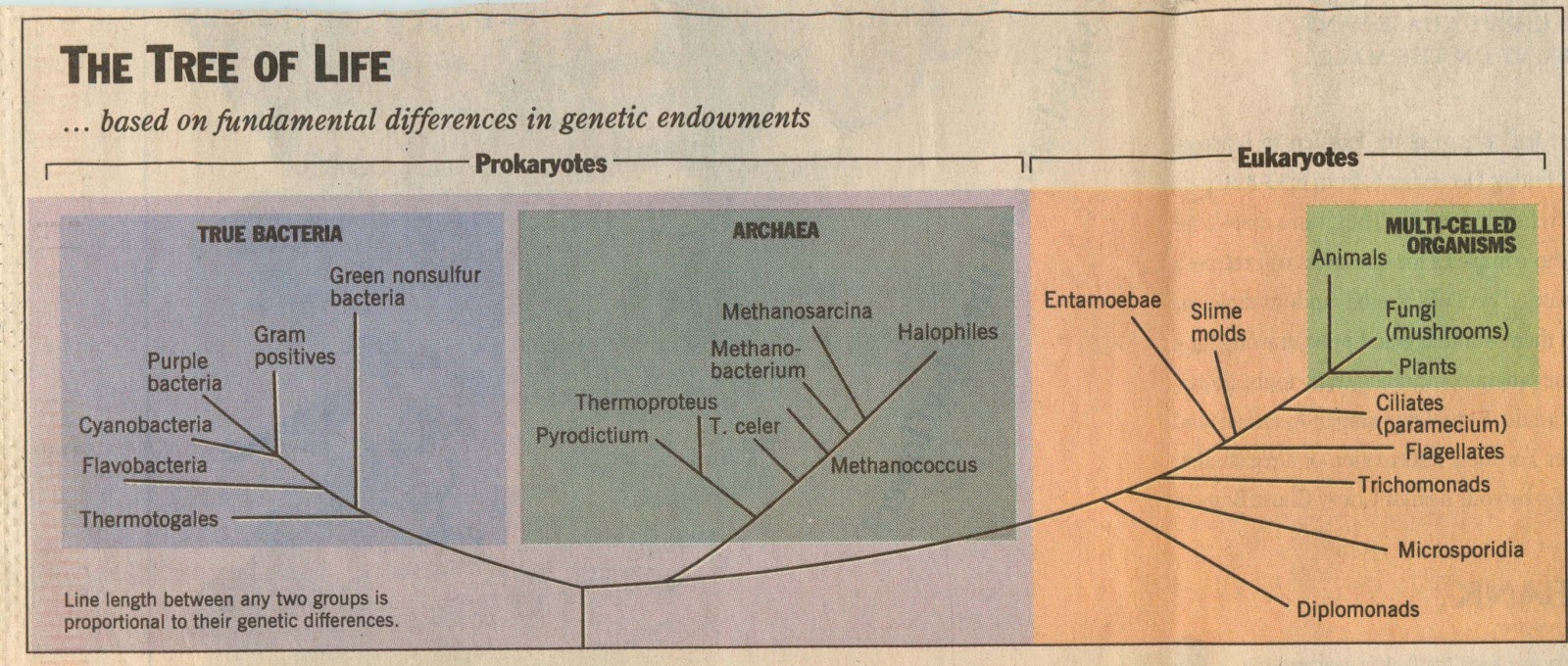
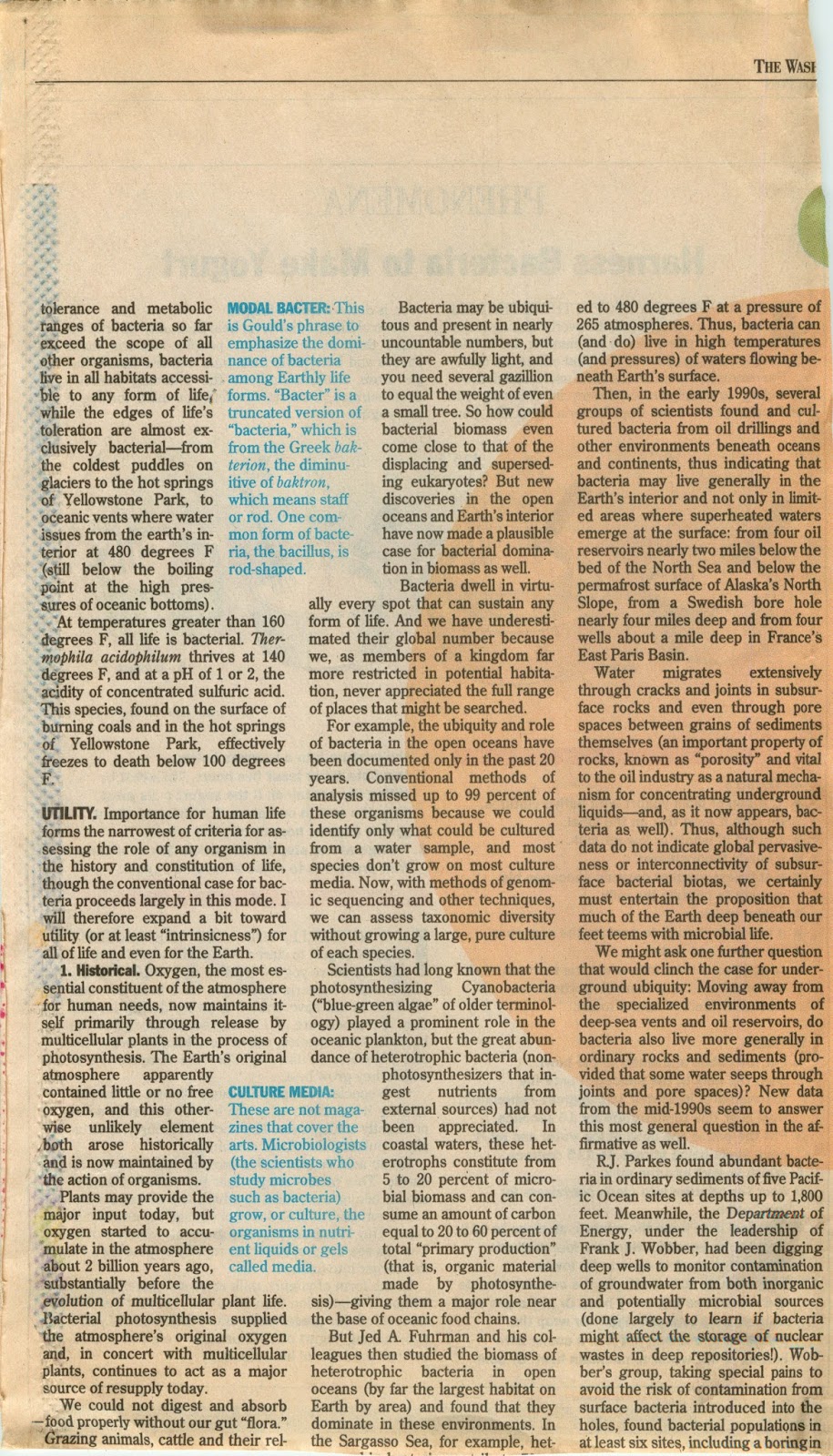
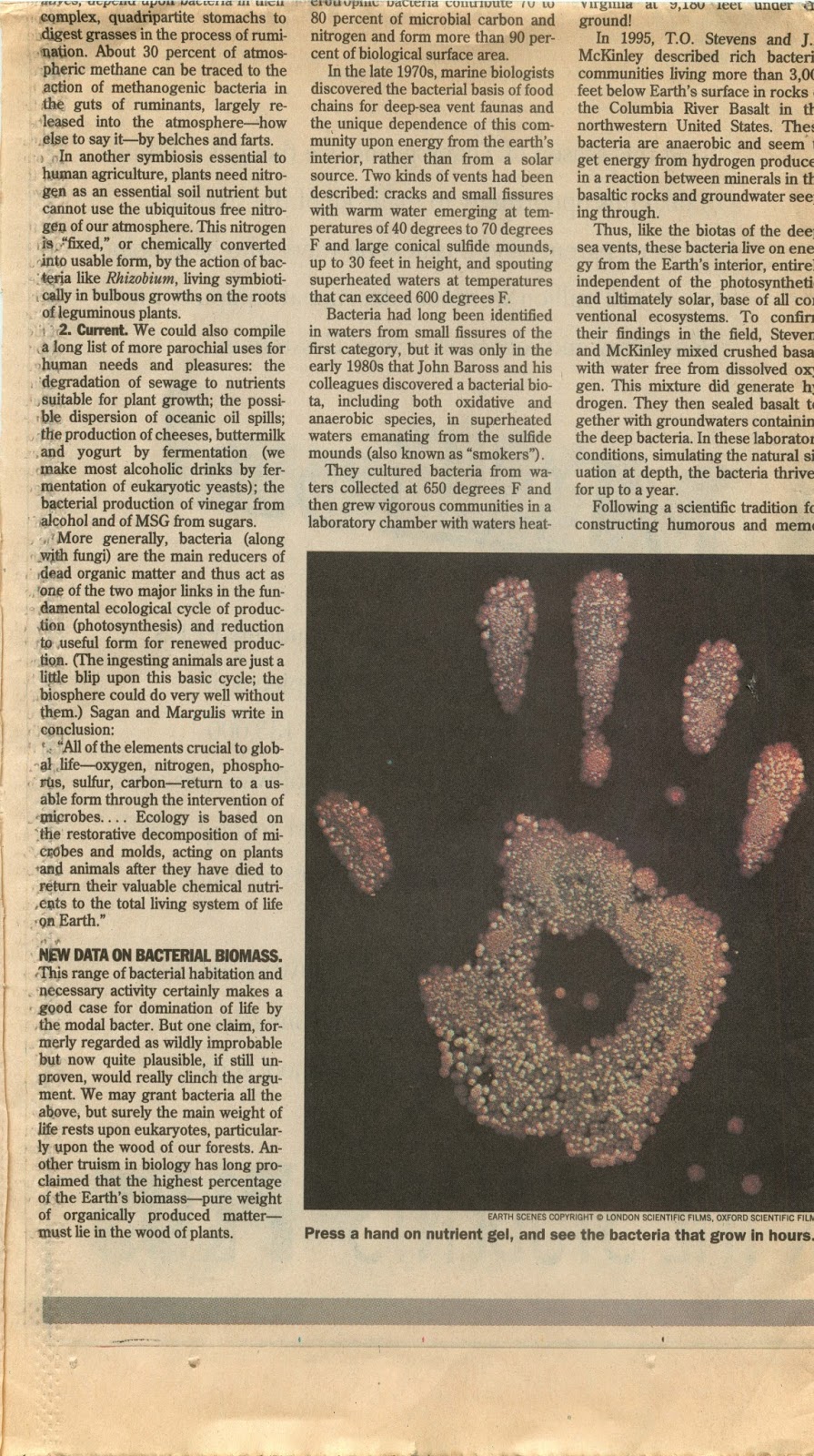
Blast from the past – Stephen Jay Gould on the "Planet of the Bacteria"

An influential article in my career development was this piece on the Washington Post in 1996 by Stephen Jay Gould. I was already convinced bacteria were important and interesting.  But it was nice to see the person who got me interested in evolution (via his books and then a class I took from him in college) emphasizing the bacteria.  Here is a link to the Post archive of it.

PLANET OF THE BACTERIA – The Washington Post

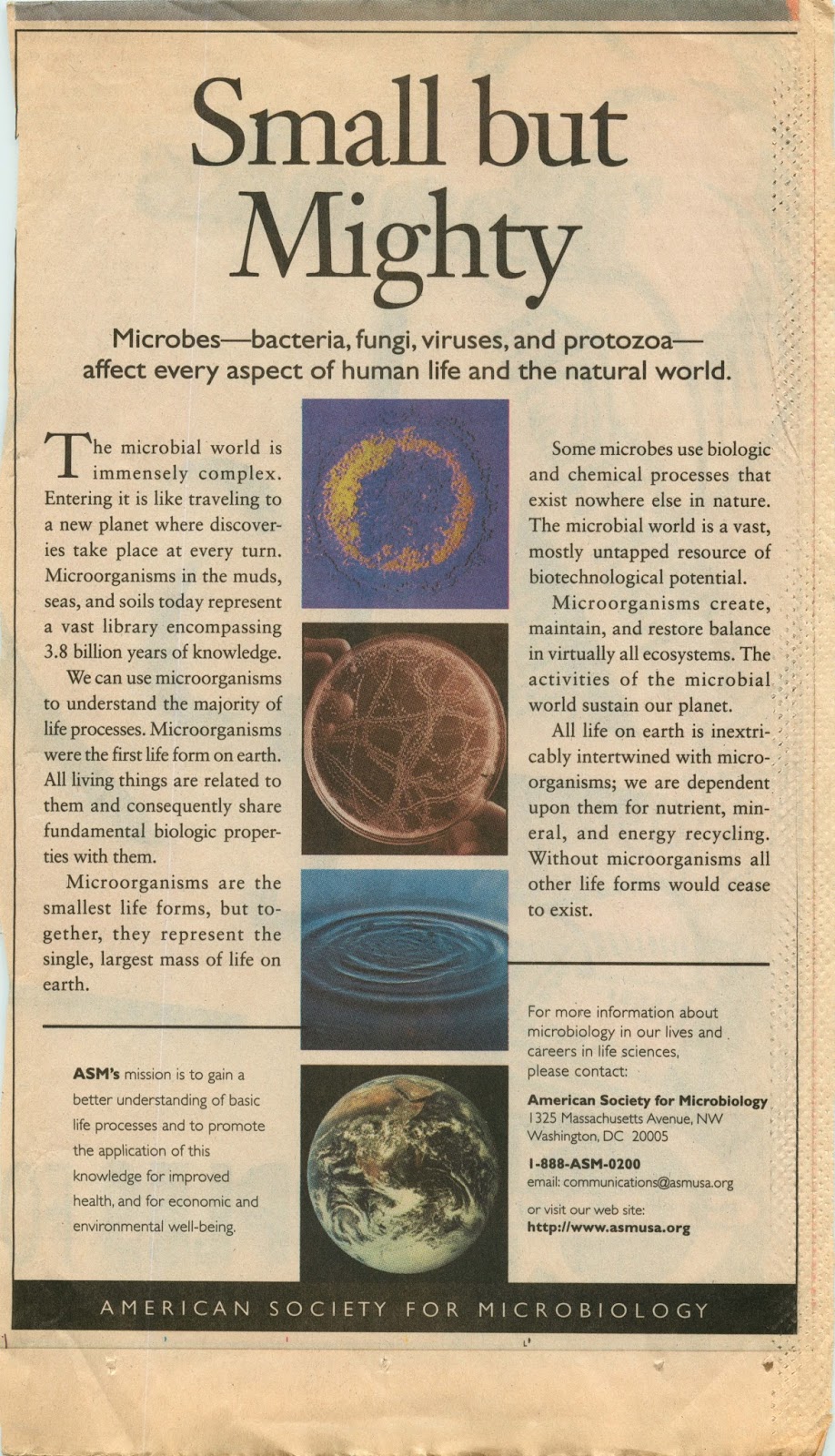
Well, my mom sent me a copy of it and I kept it all these years.  Just scanned it so, I thought I would share what it looked like in the paper since this is VERY different from looking at the text on the Post archive site.

I like the last part too – an ad for the American Society for Microbiology that went with the article. 

How to get some extra eyes on your publication – email everyone cited in it

Interesting way of getting people to look at a paper. I am sure other places do this but I have not seen it too often (though this was in SPAM and I only found it by searching SPAM for some key words which I occasionally do to find mislabelled messages.


——— Forwarded message ———-
From: Gabriel Valiente / De Gruyter Open <metagenomics.editorial@degruyteropen.com>
Date: Thu, Jun 9, 2016 at 6:45 AM
Subject: Metagenomics-Mathematical, Statistical and Computational Methods
To:

Dear Colleague,

It is my pleasure to inform you that your paper has been cited in an article “Machine learning for metagenomics: methods and tools” published recently in Metagenomics – Mathematical, Statistical and Computational Methods (http://www.degruyter.com/view/j/metgen).

Here is the link to the article:

http://www.degruyter.com/view/j/metgen.2016.1.issue-1/metgen-2016-0001/metgen-2016-0001.xml

Metagenomics – Mathematical, Statistical and Computational Methods is a fully peer-reviewed, open access, electronic journal covering the emerging field of metagenomics. The scope of the journal covers mathematical, statistical and computational methods for metagenomics and their use in biomedical and biotechnological applications.

The journal is now free both for readers and authors. We publish research papers as well as surveys on the subject and all accepted papers are quickly published online. All manuscripts should be submitted to the Editorial Office via metagenomics.editorial@degruyteropen.com.

Using this opportunity, we would like to invite you to consider publishing your work in Metagenomics – Mathematical, Statistical and Computational Methods.

Best regards,

Gabriel Valiente
EiC, Metagenomics
http://www.degruyter.com/view/j/metgen

Flow Cytometry Course for Aquatic Sciences @ Bigelow Laboratory Sept 12-16, 2016

Introduction to Flow Cytometry for Aquatic Sciences

September 12-16, 2016
Bigelow Laboratory for Ocean Sciences, East Boothbay, Maine, USA

Course information and Registration:
https://www2.bigelow.org/services/fac/education

This course is organized by Dr. Nicole Poulton, Director of the J.J. MacIsaac Facility for Aquatic Cytometry (https://fac.bigelow.org) and will include additional lecturers who are experts within their fields. Registration is limited to 10 participants.

The 5-day course will include both lecture and laboratory sessions, and provides aquatic and environmental scientists and/or commercial entities an introduction to flow cytometry, including the theory of operation as well as an introduction to different flow cytometric instrumentation (analyzers and cells sorters) including imaging cytometry tools (FlowCAM). Both breakfast, coffee breaks and lunch are provided on all days and will also include one group dinner with the lecturers (Maine Lobster Bake). Lodging is not included.

Throughout the week topics will include discussions on the wide number of applications within the aquatic sciences including, but not limited to:

1. Culture & Environmental sample enumeration (viruses, bacteria, phytoplankton and heterotrophic protists), including preservation techniques.

2. Cell Sorting for Biogeochemical analyses (C, N, & P)

3. Cell sorting for isolation and cultivation.

4. Imaging Cytometry for Aquatic applications (using FlowCAM).

5. Single cell sorting for whole genome amplification (WGA) and genome analysis.

Guest lecturers will include:

Dr. Michael Lomas, Director of the National Center for Marine Microalgae (https://ncma.bigelow.org)
Dr. Ramunas Stepanauskas, Director of the Single Cell Genomics Center (https://scgc.bigelow.org)

With additional assistance from the following Facility & Bigelow Laboratory staff members:
Dr. Steven Baer
Laura Lubelczyk
Brian Thompson

Corporate Participants include:

BioRad
Fluid Imaging Technologies

Please forward this information on to anyone interested in learning aquatic flow cytometric techniques in a laboratory-intensive week-long course on the coast of Maine this fall. For questions or additional information, or specific aquatic application requests, please contact Nicole Poulton: npoulton

Thank you!

Interesting: Letters from grad school

of possible interest – just got this in email


Call for submissions:
For every graduate student, graduate school is a different experience filled with ups, downs, failures, and successes. The goal of Letters from Graduate School is to build a collective of graduate school experiences from graduate students in the biomedical/biology PhD programs–your experience, in your own voice!
We are looking for graduate students who are interested in writing about their stories and experiences in graduate school–the good and the bad. We are creating a platform for sharing these stories to highlight the diversity of graduate school experiences. These stories will be shared through our web platform, and a selected set of entries will be compiled into a book.
We encourage your entry to be focused on a single topic that was formative in your graduate school experience. We have a few sample topics listed below, but don’t feel limited to our suggestions; we want to include as many unique perspectives as possible.
If you are interested in writing for us, please fill out the short form on our website lettersfromgradschool.org – and we will get back to you. All essays will be edited in collaboration with the author before publication. We will respect authors who wish to share their story anonymously.
For any questions, email us at editors@lettersfromgradschool.org
Looking forward to hearing from you,
 Kayla Lee
 Chiara Ricci-Tam
 Yarden Katz
The example topics below are divided into four sections, corresponding to graduate school stages: “Early years”, “The grind”, “Final stretch” and “Post-PhD”. Submissions should be under 2,000 words.
Early years
  • Why go to graduate school?
  • How to choose a lab?
  • Making friends in graduate school
  • Managing graduate school with a family
  • Rotations: getting the most out of them
The grind (mid-graduate school)
  • Intra-lab conflicts
  • On paper writing and publishing
  • Scooping: the threats, reality and recovery
  • Finance and graduate school
  • Depression and anxiety in graduate school
  • Switching labs
  • Deciding to quit graduate school
  • Being a minority in science
  • Sexism, racism, and classism in science
Final stretch (writing thesis)
  • Writing the thesis
  • Leaving things behind
  • Keeping in touch
Post-PhD (transitioning out of graduate school, finding next step)
  • Asking (and writing) your letters of recommendation
  • Finding a postdoc
  • Finding alternative (non-academic) paths
  • Learning from the graduate school experience

Special Seminar hosted by Alliance for Diversity in Science and Engineering_ Friday, June 24

Dr. Denneal Jamison-McClung will give a talk hosted by Alliance for Diversity in Science and Engineering – UC Davis (ADSE-UCD) on Friday, June 24th at 2:00-3:30 (see attached flyer).  Anyone interested in the subject matter is welcome to attend.

Denneal Jamison-McClung Diversity in Pathways.pdf

Faculty Positions at #UCDavis in Disease Biology (1 in Entomology, 1 in PlantPath)

UC DAVIS FACULTY POSITION ANNOUNCEMENTS

UC Davis is recruiting two faculty, one each in Entomology and Plant Pathology, to work on organisms related to disease biology. These hires are part of a number of recent and potential future hires in research and teaching in vector-borne diseases, virology, and other plant and animal health-related sciences and will complement a vibrant affiliated faculty community on the campus.

ASSISTANT PROFESSOR OF PLANT PATHOLOGY

The Department of Plant Pathology in the College of Agricultural and Environmental Sciences at the University of California, Davis, is recruiting an Assistant Professor of Plant Pathology, with an emphasis in Virology. This is an academic year (9-month), tenure track, Assistant/Associate Professor position that includes translational research and outreach relevant to the mission of the California Agricultural Experiment Station (AES). The successful candidate is expected to develop an independent, productive and competitively funded research program in fundamental and/or applied Virology, particularly regarding viruses and/or subviral agents associated with plants. The appointee will be responsible for teaching at the undergraduate level in courses supporting Plant Pathology and the Global Disease Biology major, and at the graduate level in virology supporting the graduate program in Plant Pathology. Mentoring of graduate students, undergraduate student advising, curricular development, participation in and development of outreach programs, and performance of departmental and university service is expected. Applicants should submit curriculum vitae including publication list, a statement of research and a separate statement describing teaching interests and background, a summary or abstract of the Ph.D. dissertation, and the names, addresses including e-mail, and telephone numbers of three references online at https://recruit.ucdavis.edu. A statement of contributions of diversity is required.

Inquiries should be directed to Dr. Bryce Falk, Search Committee Chair, bwfalk@ucdavis.edu; 530-752-0302. The position will remain open until filled but to ensure consideration, applications should be received by September 1, 2016. A more detailed job description can be obtained at http://plantpathology.ucdavis.edu.

ASSISTANT PROFESSOR OF ENTOMOLOGY

The University of California, Davis, is pleased to announce the recruitment for a tenure-track faculty position in the molecular and cellular basis of arthropod vector-human pathogen interactions. The successful candidate will join the Department of Entomology and Nematology in the College of Agricultural and Environmental Sciences at the rank of Assistant Professor. Criteria for appointment include: a Ph.D., M.D./Ph.D., or D.V.M./Ph.D. in Entomology or an appropriate field of Life or Biomedical Sciences, a record of excellence in scholarly research, and demonstrable potential to establish a competitively-funded research program. The appointee will be responsible for teaching undergraduate courses in Entomology and/or Animal Biology, be actively involved in undergraduate advising, curricular development and department and university service. The appointee is also expected to guide and mentor graduate students and participate in research and outreach/engagement programs consistent with the mission of the California Agricultural Experiment Station.

Applicants should submit materials via the following website: https://recruit.ucdavis.edu. Additional inquiries can be directed to Dr. Shirley Luckhart, Search Committee Chair, Professor, Department of Medical Microbiology and Immunology (School of Medicine) and Department of Entomology and Nematology (College of Agricultural and Environmental Sciences), Email sluckhart@ucdavis.edu. The position will remain open until filled but to ensure consideration, applications should be received by September 1, 2016.

UC Davis is an affirmative action/equal employment opportunity employer and is dedicated to recruiting a diverse faculty community. We welcome all qualified applicants to apply, including women, minorities, veterans, and individuals with disabilities.