Things I don’t understand episode 2000: Why in comparing humans & other animals the null hypothesis people always use (and thus try to disprove) is that humans ≠ animals

Well, this is something I just do not understand.  I am sure others out there have thought about this more than I have.  Just read this article: Considering the Humanity of Nonhumans – NYTimes.com discussing humans vs. non human animals.  And there is this extensive discussion in there about whether animals have self awareness, and whether they deserve legal rights, and such.  All very interesting I think.

But one part I do not understand.  It is very clear that humans and other animals have many homologous features.  It is very clear that humans are more closely related to some animals (e.g., primates) than to others.  For many comparative studies of animals, if one wants to claim that some animal has a feature that is different from it’s close relatives, it is frequently up to the person proposing such a difference to disprove the null hypothesis that the close relatives are the same.  This is the case when studying molecular processes, cell structures, physiology, genome structure, and so on.

Yet, there are a few biological features regarding humans for which it seems the null hypothesis everyone is forced to work with is the reverse.  In these cases the null hypothesis is that we (i.e., humans) are unique and those who wish to claim that humans and other animals are similar / the same have to disprove the null hypothesis.  This seems, well, awkward, at best.  Basically, for some features – especially those that relate to intelligence and behavior  –  if one wants to claim that they are not unique one has to disprove the null.  And yet, for all other features, the null hypothesis is that humans are not unique and those wanting to show uniqueness are forced to disprove this.  On the one hand, I get this.  There are many reasons why one might want to treat “humans are unique” in regards to intelligence and behavior – as the null hypothesis.  But on the other hand – this seems exceptionally anthropocentric and has almost certainly prevented us from discovering and understanding certain behaviors and intelligence-related issues in non human animals.  How do we as a community decided which null hypothesis to use for each phenotype?

Anyway – there it is.  Something I do not understand.

Seminar at #UCDavis 12/9 – Kimberly Seed on host/phage evolution

Department of Microbiology & Molecular Genetics Recruitment Seminar

Kimberley Seed, Ph.D.

(Tufts University School of Medicine)

"Microbial warfare: Evolutionary dynamics between epidemic Vibrio cholerae and a predatory phage"

Monday, December 9, 2013

10:00 am
1022 Life Sciences

Host: Prof. Rebecca Parales, Dept. of Microbiology & Molecular Genetics

*********************************

Seed 12-9-13.doc

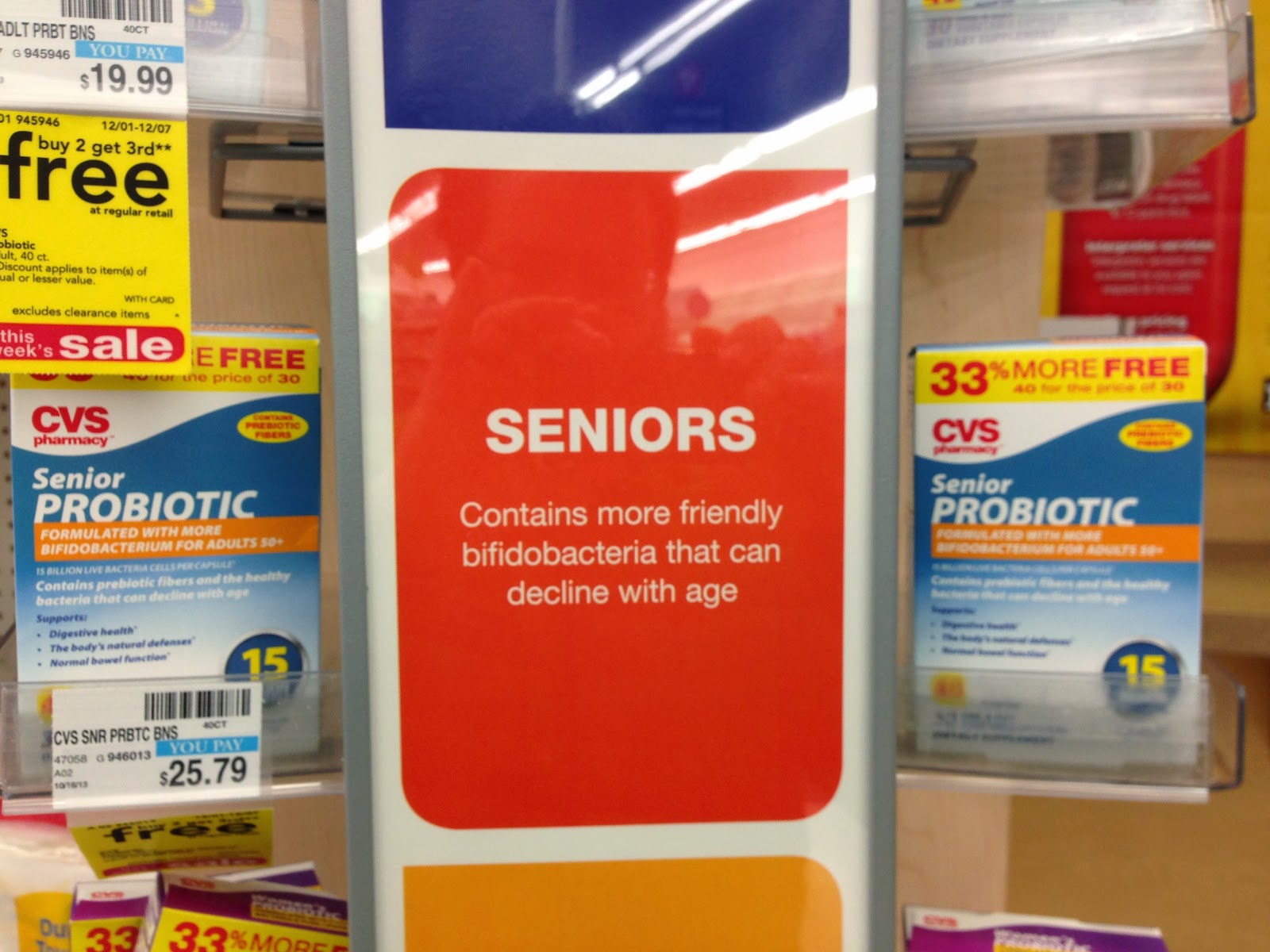
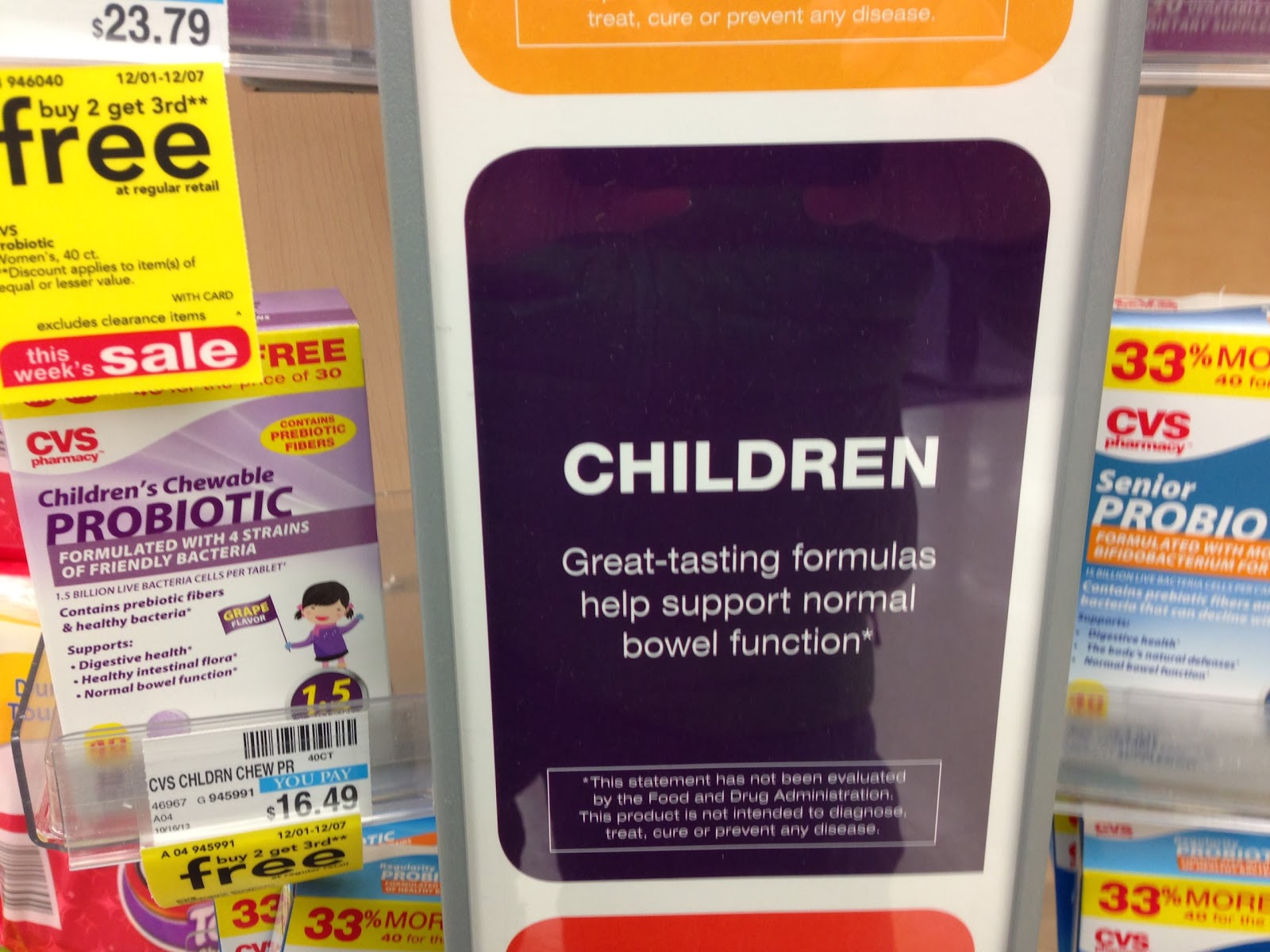
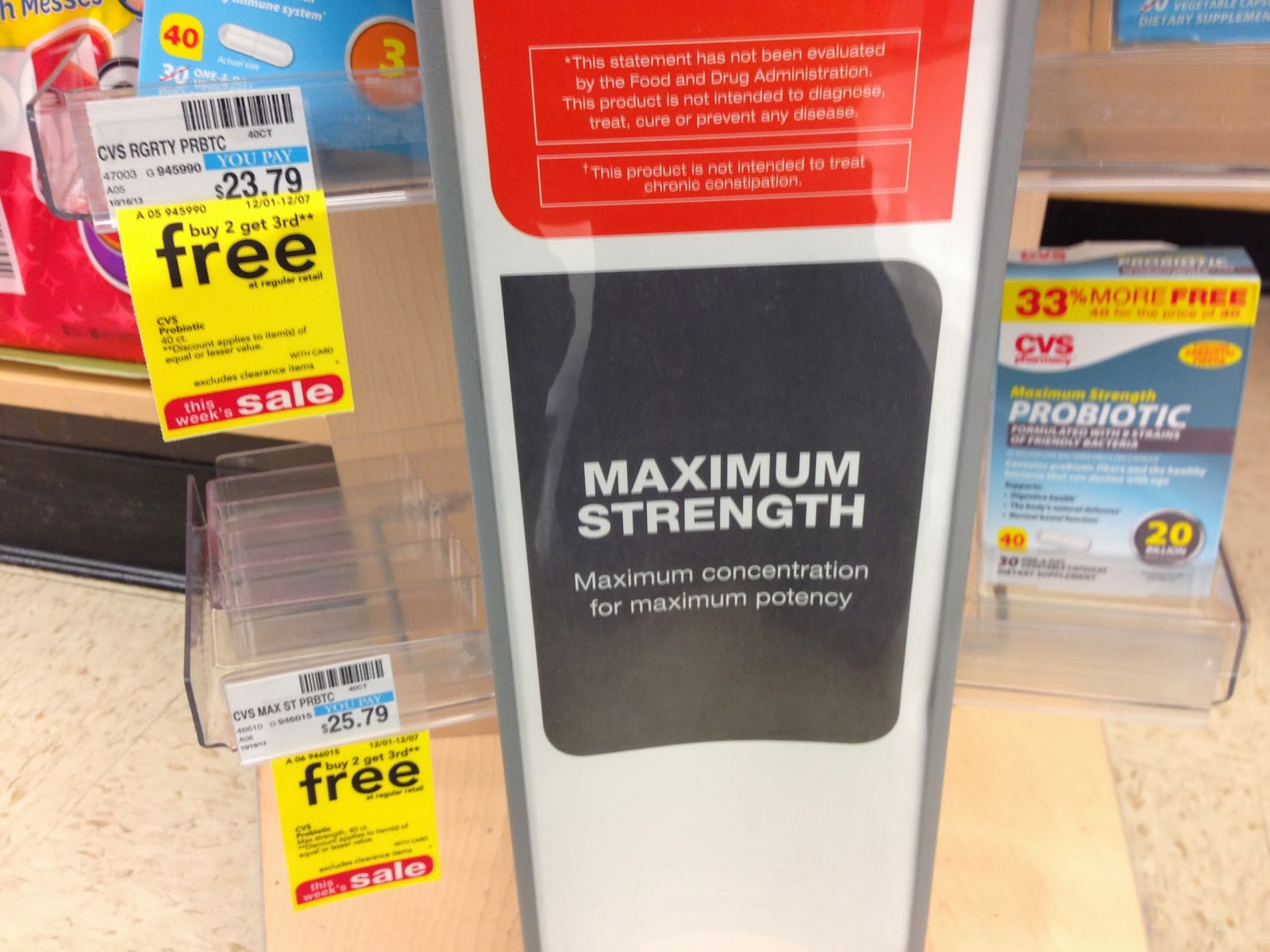
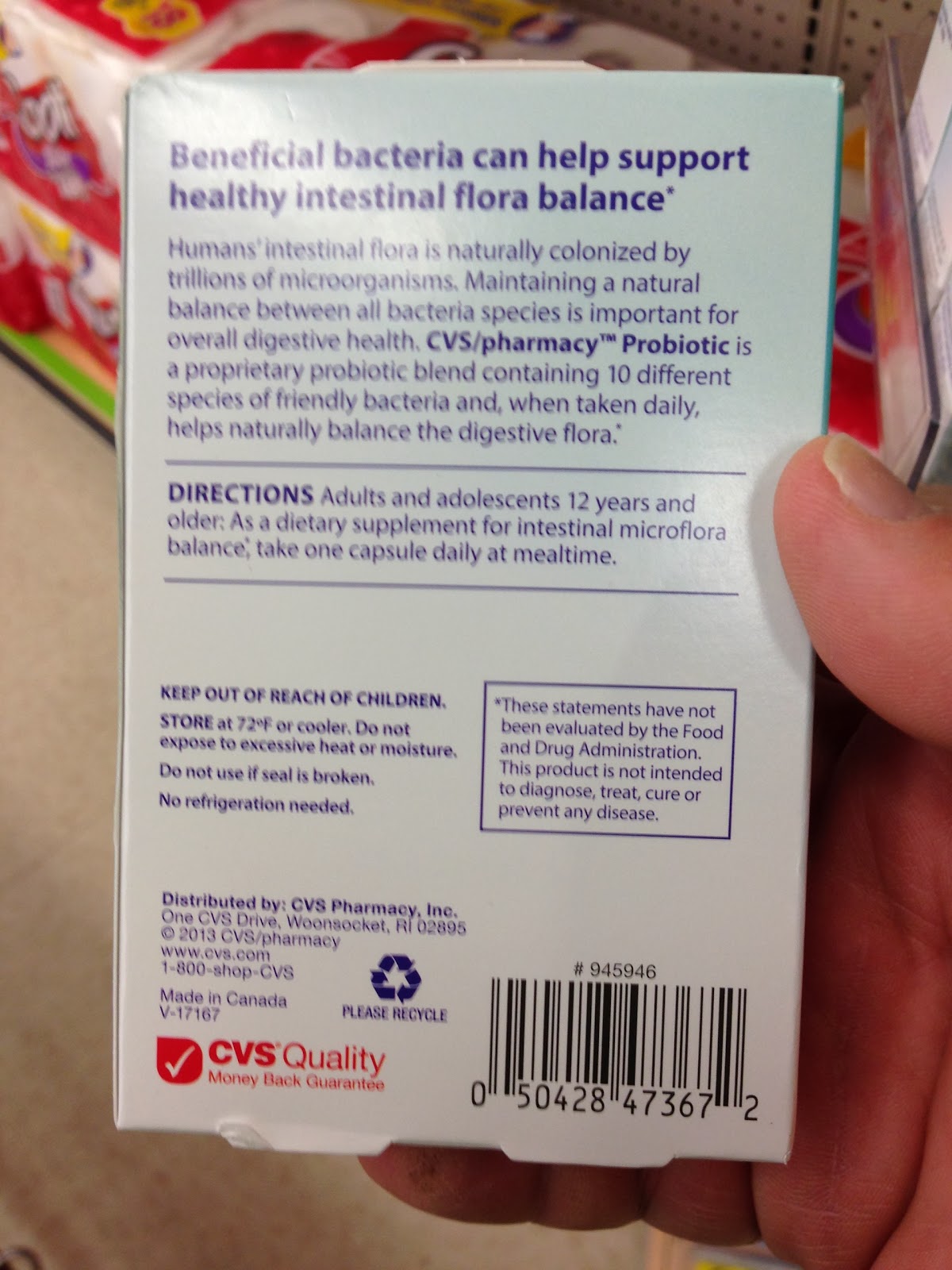
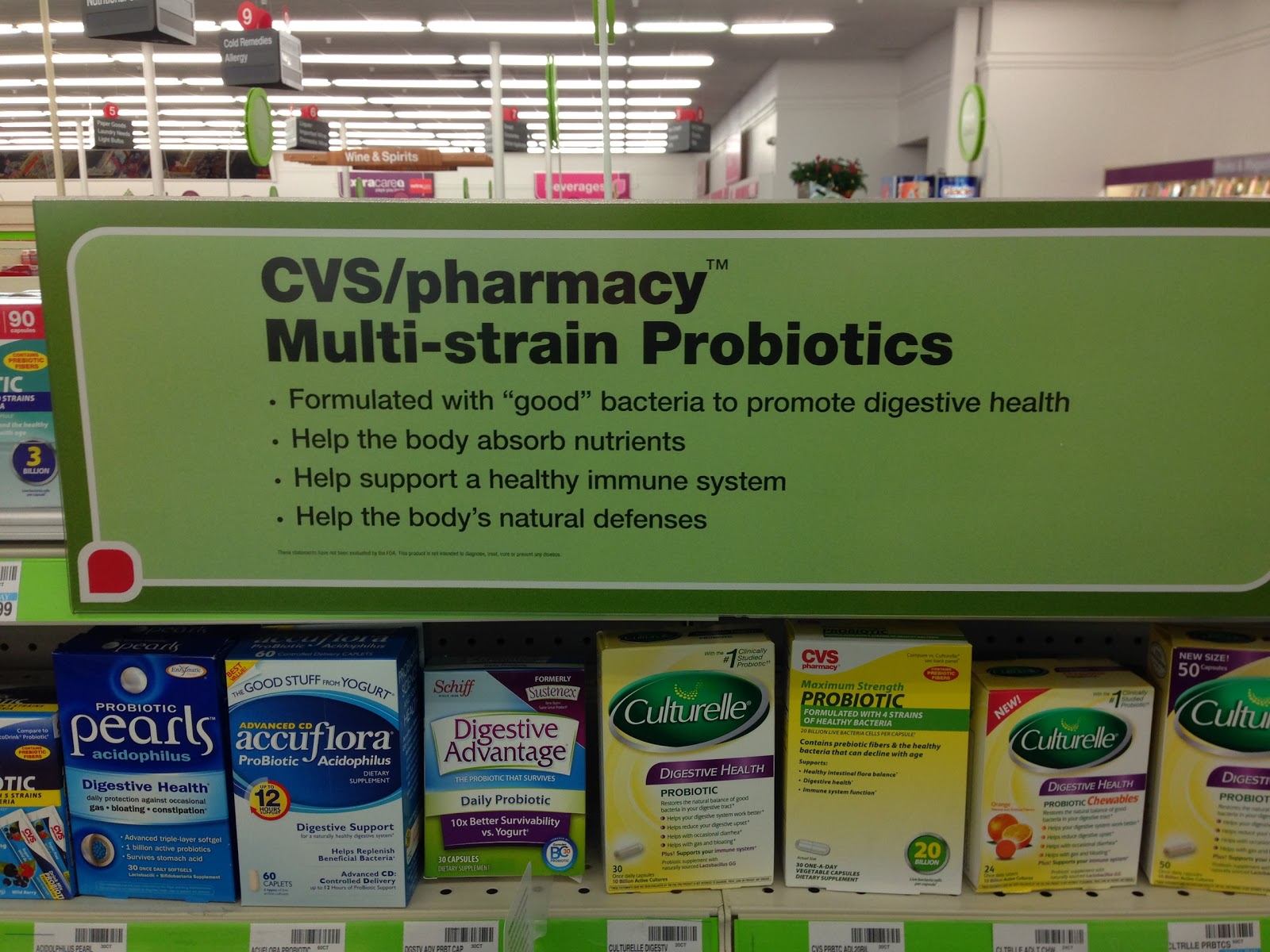
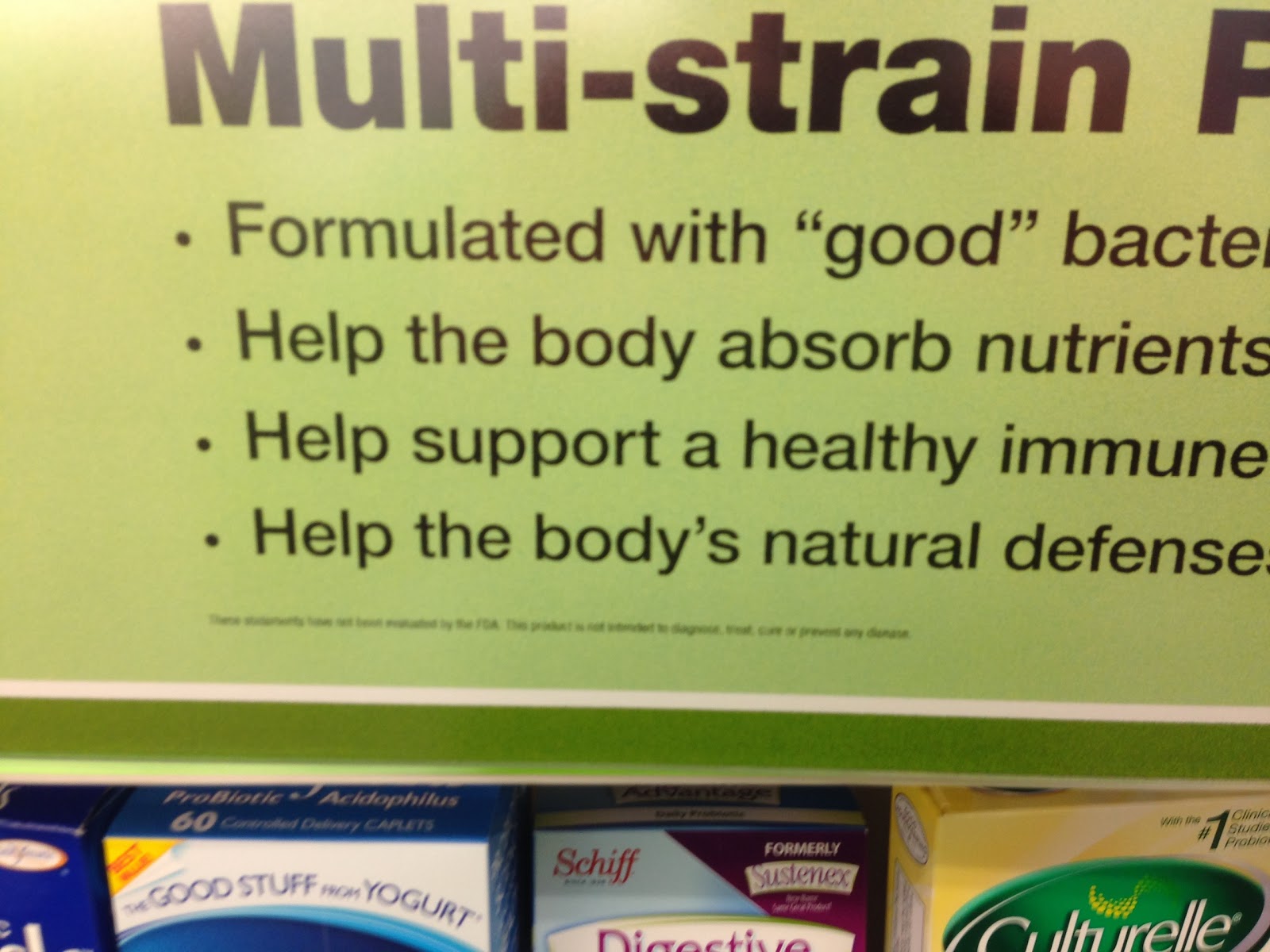
CVS marketing probiotics for everyone – even kids – & the disclaimers are barely visible

Just got back from the CVS drug store in Davis, CA and thought I would share some of the probiotic promotion they are doing.  Not only are the probiotics now right next to the pharmacy counter (moving up in the world I suppose) but the probiotics are being marketed to all sorts of targeted groups.  Alas, the science behind the claims here are dubious.  And – sadly – CVS makes the disclaimer barely visible in many of the signs.

Transitions in the CAMERA metagenomics database —

Just got this email announcement that I thought would be of interest:

Thank you for being a CAMERA user during its first phases of operation as a
resource for environmental genomics. During the past few years, CAMERA has
been able to offer a number of important community resources, including an
exceptionally well curated environmental genomic database, the ability for
researchers to deposit molecular sequence datasets with associated
environmental parameters (metadata), open access to computational resources
to enable metagenomic comparisons, educational resources and helpdesk
services. These efforts have been funded through the Gordon and Betty Moore
Foundation (GBMF) Marine Microbiology Initiative and the National Science
Foundation to serve the needs of the marine microbiology community and
other users.

As we announced earlier this year, CAMERA is undergoing a transition,
shifting from the Testing and Development phase of CAMERA 2.0 into multiple
entities that are supported by federal and foundation-funded projects for
developing and managing databases. Toward this end, we are re-prioritizing
access to the advanced data analysis capabilities of the system (see below)
while maintaining free and open access to CAMERA’s rich collection of
curated data and metadata. This will involve CAMERA being restructured into
a publicly accessible Data Distribution Center consisting of a simplified
website to enable streamlined access for downloading of sequence datasets
and associated metadata. This new interface will serve as an intuitively
accessible central repository, facilitating direct access to genomic,
metagenomic, transcriptomic, and metatransciptomic projects. Further, the
CAMERA 3.0 database will continue to grow and be maintained with the
inclusion of additional marine microbial datasets, such as the ~700 new
marine microbial eukaryote transcriptome datasets as part of the Marine
Microbial Eukaryote Transcriptome Sequencing Project
(marinemicroeukaryotes.org).

In the past, the CAMERA 2.0 compute resources, which include large-scale
BLAST capabilities and other workflow-enabled analysis capabilities, were
generously supported by the GBMF, the San Diego Supercomputer Center, the
NSF XSEDE program, and commercial Cloud computing resource providers,
Amazon and CODONiS. Due to increasing computational costs and the need for
scalability to larger, more complex datasets, it is now necessary for
CAMERA 3.0 to adopt a resource access model wherein projects will need to
identify sources of funding to cover their use of these advanced
capabilities. Starting January 1, 2014, CAMERA 3.0 will no longer offer the
use of computational resources to projects that cannot identify a source of
support for this component of CAMERA 3.0 services. As we shift to this new
usage model, we urge current users to download and save customized data
cart holdings and workflow analysis results before January 1, 2014.

While we are shifting to a restricted resource compute model, we will
continue to improve the capabilities of the system to expand the scientific
breadth of the data managed by CAMERA 3.0. For example, CAMERA 3.0 includes
fully functioning workflows for Illumina datasets, which can be made
available to those users who can identify a source of support for the
associated computational costs. In addition, CAMERA is actively seeking
resources to continue to take community data submissions. If you are now
collecting or have plans to collect data which you wish to deposit in
CAMERA, we urge you to contact us to help you to determine how to obtain
the resources required for these data to be archived and made available
through CAMERA.

Hope from sadness: Loreto Godoy Memorial Fellowship (needs $5K more to become permanently endowed)

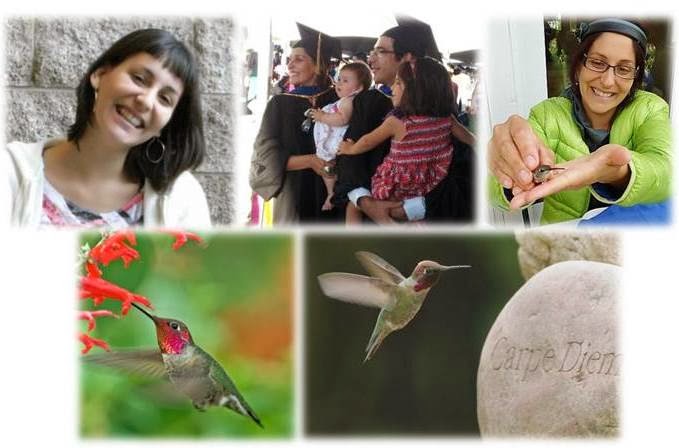
I received tonight an email from Dr. Holly Ernest, a colleague of mine who is a Professor at UC Davis and I am posting it below. The email relates to a fundraiser for a Memorial Fellowship in honor of Loreto Godoy who was a PhD student here at UC Davis in the Graduate Group in Ecology.  She tragically died this summer in a car crash that also took the life of her husband’s parents.  The email relates to a fund that was established in her honor – which needs only an additional $5000 to become a permanently endowed fund at UC Davis.  Holly Ernest was her PhD Advisor and I encourage everyone to read the email below and consider donating to the fund.  Life is so incredibly tragic sometimes.  Loreto was not just a brilliant scientist, but also a wonderful person and a mother of two young girls.  But hopefully through this fellowship some good things can happen for others and her memory can live on.


Dear Ecology community,

Our dreams for a permanently endowed Loreto Godoy Memorial Fellowship are nearly realized.

This fellowship is intended to be awarded regularly to UC Davis graduate students who exemplify Loreto’s ideals. Loreto was a PhD candidate in the Ecology Graduate group, brilliant scientist, a loving mother of two little girls, Chilean, veterinarian, and all-around wonderful sunny person.

In order to help us reach our goal of endowing the fellowship and having a lasting legacy of Loreto’s wonderful and generous life, my husband Bruce and I are making another gift of $1000 to help inspire others to donate (any size donation is very welcome).

With this donation and that of a new anonymous donor, the fund is now at $20,000. It needs to reach $25,000 to be permanently endowed by UC Davis for a lasting legacy to Loreto’s memory.

Please consider joining us to reach this goal!

Also – please feel free to share this email so that others can get involved.

Please send checks to the following address, and write, “for Loreto Godoy Fellowship Fund” in subject line of check:

University of California, Davis
Janet Berry—University Development
UC Davis Conference Center, 2nd floor
One Shields Ave.
Davis, CA 95616-5270

Questions can be directed to Janet by email jsberry@ucdavis.edu or phone (530) 902-1624. If you prefer to pay by credit card, you may also call Janet at this number in order to provide this information.

Thank you,

Sincerely Holly Ernest
Loreto’s graduate school adviser
530-754-8245
hbernest@ucdavis.edu

https://www.facebook.com/Loreto.Godoy.Scholarship

(Note by Jonathan Eisen – donations can also be made via the online site http://www.gofundme.com/loreto-godoy-scholarship). 

Leonardo Art Science Rendezvous at #UCDavis 12/2 w/ Amy Franceschini, Art Shapiro, Justin Schuetz, Mary Anne Kluth

LASER-UC DAVIS

Leonardo Art Science Evening Rendezvous

Monday, December 2, 2013

Location: 3001 PES (Plant and Environmental Sciences)

UC Davis Campus

Map: http://www.plantsciences.ucdavis.edu/plantsciences/visitors/map.htm

Speaker Schedule:

Monday December 2, 2013

6:30-7:00 Socializing/networking

7:00-7:25: Amy Franceschini

7:25-7:50 Arthur Shapiro

7:50-8:10 BREAK. (During the break anyone in the audience currently working within the intersections of art and science will have 30 seconds to share their work).

8:10-8:35 Justin Schuetz

8:35-9:00 Mary Anne Kluth

9:00-9:30 Discussion/Networking

Speaker Bios/Information:

7:00-7:25. Amy Franceschini. Title: “Excursions through Domains of Familiarity and Surprise.”

Bio: Amy Franceschini is an artist and founder of the San Francisco-based art and design collective, Futurefarmers. Her work is highly collaborative and usually involves a diverse group of practitioners who come together to make work that responds to a particular time and space. Amy creates tactile frameworks for exchange where the logic of a situation can disappear – where moments of surprise and wonder open the possibility for unexpected encounters and new perspectives on a particular situation. This situational approach emerges as temporary architectural interventions, public programs, choreography, radical journalism and museum exhibitions. Amy received her MFA from Stanford University. She is a Guggenheim Fellow and has exhibited at the New York Museum of Modern Art, New York Hall of Sciences and the Solomon R. Guggenheim Museum.

7:25-7:50. Arthur Shapiro. Title: “Butterflies in Illuminated Manuscripts and Renaissance Art–Homage to Vladimir Nabokov."

Bio: B.A. University of Pennsylvania 1966 (Biology), Ph.D. Cornell 1970 (Entomology); at UC Davis since 1971; current title Distinguished Professor of Evolution and Ecology; Fellow, American Assoc. for Advancement of Science, California Academy of Sciences, Royal Entomological Society (U.K.) and Explorers Club; 300 scientific publications (one book, Field Guide to Butterflies of the San Francisco Bay and Sacramento Valley Regions, U.Calif. Press, 2007), 16 completed doctoral and 15 masters students under his direction; Once a Fellow of the Davis Humanities Institute; He does a lot of stuff in Argentina; He works on butterfly biogeography, evolution, and ecology; and drinks Pabst Blue Ribbon by the gallon.

8:10-8:35. Justin Schuetz . Title: ”Approximating equations: visual and statistical explorations of truth.”

Bio: A.B. Bowdoin College (Biology, Studio Art), Ph.D. Cornell University (Ecology and Evolutionary Biology), MFA San Francisco Art Institute (Photography). As Director of Conservation Science for National Audubon Society I lead a team that aims to describe relationships between birds, people, and places so that we can better shape conservation outcomes. Much of our recent work has focused on reconstructing responses of birds to historical climate change and forecasting responses to future climate change. As a visiting faculty at San Francisco Art Institute I co-teach a class on scientific and artistic exploration of biological systems. Recently I have been using images and text to explore the ideas of a Japanese mathematician whose work has changed how biologists construct statistical models of the world.

8:35-9:00. Mary Anne Kluth. Title: "Narratives of Inquiry in a Contemporary Art Practice."

Bio: Mary Anne Kluth is an interdisciplinary artist and received an MFA from the San Francisco Art Institute in 2008 and a BFA from California College of Arts in 2005. Her work explores the nexus of landscape imagery, narrative, and information, and her most recent body of work deals with descriptions of landscape from the 1860s, and contemporary theme park simulations. She recently completed a residence at the Kala Art Institute and had museum exhibitions at the Museum of Art and History, Santa Cruz, and the Contemporary Art Center, Las Vegas. Her work has been featured in ARTnews, Beautiful Decay, and Harper’s, amongst other publications. Kluth has written catalog essays, reviews and contributed to various publications, including Art Practical, Artweek, Art Ltd. and Stretcher. She is represented by Gallery Wendi Norris in San Francisco. http://www.maryannekluth.com/

Moderator/Organizer:

Anna Davidson is currently a Ph.D. candidate in the Department of Plant Sciences at the University of California, Davis studying ecophysiology of fruit trees. She also makes bioart using fungus and other living materials as a medium. As a teacher for the UC Davis Art Science Fusion Program, she leads the found object and sculpture studio section of the class titled Entomology 1, Art, Science, and the World of Insects. She is very interested creative curriculum development in science.

For more information:

http://artsciencefusion.ucdavis.edu/

http://www.leonardo.info/isast/laser.html

http://www.scaruffi.com/leonardo/

Location: 3001 PES (Plant and Environmental Sciences)

UC Davis Campus

Map: http://www.plantsciences.ucdavis.edu/plantsciences/visitors/map.htm

Upcoming LASERS:


Thursday February 6th, 2013

Phillip Benn-Artist-Digital Artist-Oakland

Terry Nathan-Atmospheric Sciences and the Art Science Fusion Program UC Davis

Genevieve Quick-Artist-Bay Area

Maciej Zwieniecki-Professor of Plant Sciences, UC Davis

Monday, April 7th, 2014

Christina Cogdell-Professor of Design and Art History, UC Davis

Jesse Drew-Professor of Technoculutural Studies- UC Davis

Michael Neff-Professor of Computer Science and Program of Cinema and Technocultural Studies at UC Davis

Wendy Silk-Professor of Land, Air and Water Resources and the Art Science Fusion Program-UC Davis

Leonardo Art Science Evening Rendezvous Dec. 2.pdf

Nice PBS Newshour Piece on Alan Alda’s flame challenge and communicating science

This is worth watching …

Wanted – low cost system for publishing an #OpenAccess journal

Well, I figure, if I am going to write blog posts about academic publishing, why not post them here, rather than at my “normal” blog.  One area of great interest to many in academic publishing is in how one can publish a new journal at low cost  – and yet have the journal be Open Access.  Although there is a lot of chatter about this topic, I figured I would use social media to get some additional ideas in this area.  So I posted a request to Twitter yesterday about this and have gotten a decent diversity of responses.  I have created a Storify summary of these responses. Any other ideas or suggestions would be welcome.

Manual Kleiner talk 12/4 at #UCDavis Functional genomics and ecophysiological studies of the bacterial symbionts in a gutless marine worm

Department of Microbiology & Molecular Genetics Recruitment Seminar

Manuel Kleiner, Ph.D.

(Max Planck Institute for Marine Microbiology)

"Functional genomics and ecophysiological studies of the bacterial symbionts in a gutless marine worm"

Wednesday, December 4, 2013

10:00 am

1022 Life Sciences

Host: Prof. Douglas Nelson, Dept. of Microbiology & Molecular Genetics

*********************************

Kleiner 12-4-13.doc

Faculty jobs at Rochester in Microbial computational biology – biogeochemistry – data science

Tenure-Track Faculty Position in Interdisciplinary Research in Data Science: Global Biogeochemistry

The University of Rochester has made data science the centerpiece of its 5-year strategic plan, committing to 20 new faculty lines in diverse areas, a new building, and the establishment of the Institute for Data Science. We are currently seeking applicants for tenure track positions in interdisciplinary research areas within data science. The interdisciplinary search focuses on recruiting candidates who are excited about engaging in collaborative research that connects advances in computational approaches across disciplines, including engineering, or the life, social, or physical sciences.

Global Biogeochemistry is a focus area for one of this year’s interdisciplinary searches. We seek candidates who integrate biotic (e.g. microbial), chemical, and geological processes for an interdisciplinary research focus on understanding global geochemical cycling processes and/or global climate change. Applicants should have a strong computational and/or modeling component to their research aimed at mining, integrating, and/or interpreting large data sets.

Further information and instructions for this search can be found at: http://www.rochester.edu/rocdata/recruit/interdisciplinary.html.

Applicants at any rank will be considered, and the search will continue until the position is filled. For full consideration, individuals should provide complete applications by January 15, 2014. Applicants should hold a PhD and will be required to supply a set of refereed scholarly publications, names of references, and research and teaching statements. Applicants will be asked to select a set of disciplines most relevant to their research area.

The University of Rochester is a private, Tier I research institution located in western New York State. It consistently ranks among the top 30 institutions, both public and private, in federal funding for research and development. The university has made substantial investments in computing infrastructure through the Center for Integrated Research Computing (CIRC) and the Health Sciences Center for Computational Innovation (HSCCI). The university includes the Eastman School of Music and the University of Rochester Medical Center, a major medical school, research center, and hospital system. The greater Rochester area is home to over a million people, including 80,000 students who attend the 8 colleges and universities in the region.

The University of Rochester has a strong commitment to diversity and actively encourages applications from candidates from groups underrepresented in higher education. The University is an Equal Opportunity Employer.

biogeochemistry_job ad_final2.pdf

CompBioCompBioEngineering_job ad_fin.pdf