Cold Spring Harbor presents the men’s only view on the evolution of sequencing

On June 5 I posted a guest blog post by an anonymous person writing about the Programming for Biology workshop at Cold Spring Harbor Labs: Guest post on Yet Another Mostly Male Meeting (YAMMM) – Programming for Biology 

And this post generated some responses including yesterday a series of responses from whomever is behind the Cold Spring Harbor Meetings Twitter account.

//platform.twitter.com/widgets.js

//platform.twitter.com/widgets.js

//platform.twitter.com/widgets.js

//platform.twitter.com/widgets.js

//platform.twitter.com/widgets.js

Sounds great.  And I retweeted all of these.

And then I got an email invite to a new Cold Spring Harbor Meeting: The Evolution of Sequencing Technology: A Half Century of Progress

With a long long list of speakers.  Alas, the gender ratio here of speakers is abyssmal.  I have highlighted men in yellow and women in green (with the caveat that I always try to giver that assigning gender from names or appearance or records is not always accurate)

  1. Mark Adams, J. Craig Venter Institute
  2. Gillian Air, University of Oklahoma
  3. Shankar Balasubramanian, University of Cambridge, UK
  4. Hagan Bayley, Oxford Nanopore Technologies, Ltd.
  5. David Bentley, Illumina Cambridge, Ltd
  6. Sydney Brenner, Salk Institute for Biological Studies
  7. Nigel Brown, University of Edinburgh, UK
  8. George Brownlee, University of Oxford, UK 
  9. Graham Cameron, Bioinformatics Resource, Australia EMBL
  10. Piero Carninci, RIKEN Ctr.for Life Science Technologies, Japan
  11. Norman Dovichi, University of Notre Dame
  12. J. William Efcavitch, Molecular Assemblies, Inc.
  13. Miguel Garcia-Sancho, University of Edinburgh, UK
  14. Mark Gerstein, Yale University 
  15. Jack Gilbert, University of Chicago
  16. Walter Gilbert, Harvard University
  17. Philip Green, University of Washington
  18. Leroy Hood, Institute for Systems Biology
  19. Clyde Hutchison, J. Craig Venter Institute
  20. James Kent, University of California, Santa Cruz
  21. Jonas Korlach, Pacific Biosciences
  22. Victor Ling, BC Cancer Agency, Canada
  23. David Lipman, NCBI/NLM National Instiutes of Health 
  24. James Lupski, Baylor College of Medicine
  25. Thomas Maniatis, Columbia University Medical Center
  26. W. Richard McCombie, Cold Spring Harbor Laboratory
  27. Joachim Messing, Waksman Institute, Rutgers University
  28. Gene Myers, Max Planck Institute of Molecular Cell Biology & Genetics, Germany
  29. Richard Myers, HudsonAlpha Institute for Biotechnology
  30. Debbie Nickerson, University of Washington
  31. James Ostell, NLM/NCBI
  32. Stephen Quake, Stanford University/HHMI
  33. Charles Richardson, Harvard Medical School
  34. Richard Roberts, New England BioLabs
  35. Jane Rogers, The Genome Analysis Centre, UK
  36. Mostafa Ronaghi, Illumina, Inc.
  37. Yoshiyuki Sakaki, University of Tokyo
  38. Jay Shendure, University of Washington
  39. Melvin Simon, Caltech
  40. Hamilton Smith, J. Craig Venter Institute
  41. Lloyd Smith, University of Wisconsin-Madison
  42. J. Craig Venter, J. Craig Venter Institute
  43. Robert Waterston, University of Washington
  44. James Watson, Cold Spring Harbor Laboratory 
  45. Jean Weissenbach, Genoscope, France
  46. Barbara Wold, Caltech
  47. Huanming Yang, Beijing Genomics Institute, China
That is right.  47 speakers.  4 of which are female.  For a whopping 7.8 % female speakers.  This is one of the most extreme skews I have seen for any meeting.  This truly makes me sick to my stomach.   Since there are plenty of women who have had and still have fundamentally important roles in the field of sequencing and sequencing technology I infer that this most likely reflects some type of bias in the meeting organization and planning process.

The meeting page lists the organizers as

  • Mark Adams, J. Craig Venter Institute       
  • Nigel Brown, University of Edinburgh, UK
  • Mila Pollock, Cold Spring Harbor Laboratory     
  • Robert Waterston, University of Washington
And one of the major sponsors as Illumina.
I think they all have some explaining to do.
One last note – the meeting description says “The opening session will include a tribute to Frederick Sanger, the father of DNA sequencing, and will cover the early efforts in protein, RNA and DNA sequencing.”  Really?  The father of DNA sequencing?  Seems perfect for this meeting I guess.


UPDATE 6/29/15 7 PM PST

Apparently this meeting is part of a series on the history of molecular biology.  The meeting page says

The CSHL/Genentech Center Conferences on the History of Molecular Biology & Biotechnology (http://library.cshl.edu/hosted-meetings) aim to explore important themes of discovery in the biological sciences, bringing together scientists who made many of the seminal discoveries that began the field with others whose interests may include the current status of the field, the historical progress of the field, and/or the application of these techniques and approaches in biotechnology and medicine. Previous meetings in the series have included:  

Biotechnology: Past, Present & Future (2008)
History of Restriction Enzymes (2013)
Messenger RNA: From Discovery to Synthesis and Regulation in Bacteria and Eukaryotes (2014)
Plasmids: History & Biology (2014)

So I decided to take a peek at these meetings I started with Biotechnology: Past, Present & Future (2008).

Organizers

  1. Mila Pollock 
  2. Jan Witkowski

Advisors

  1. Sydney Brenner
  2. Peter Feinstein
  3. Lee Hood
  4. Tom Maniatis
  5. Richard Roberts 

Speakers are listed below:

  1. Garen Bohlin
  2. Robert Bud 
  3. Don Comb 
  4. Peter Feinstein
  5. Maryann Feldman 
  6. Herbert Heyneker 
  7. John H. Leamon
  8. Yuk-Lam Lo 
  9. Alan McHughen 
  10. Stelios Papadopoulos 
  11. Rich Roberts
  12. Robert Steinbrook
  13. Kenneth Thibodeau 
  14. Marc Van Montagu
  15. Charles Weissmann 
  16. Julie Xing
For speakers that comes to 14:2 male:female or 12.5 % female


Next I went to History of Restriction Enzymes (2013).

Organizers

  1. Herb Boyer, University of California, San Francisco
  2. Stu Linn, University of California, Berkeley
  3. Mila Pollock, Cold Spring Harbor Laboratory
  4. Richard Roberts, New England BioLabs

Speakers are listed below:

  1. Aneel Aggarwal, Mount Sinai School of Medicine
  2. Werner Arber, University of Basel, Switzerland
  3. Tom Bickle, University of Basel, Switzerland
  4. Herb Boyer, University of California, San Francisco
  5. Jack Chirikjian, Georgetown University
  6. Steve Halford, Bristol University, United Kingdom
  7. Ken Horiuchi, The Rockefeller University
  8. Clyde Hutchison, J. Craig Venter Institute
  9. Arvydas Janulaitis, Institute of Biotechnology, Lithuania
  10. Stu Linn, University of Califoria, Berkeley
  11. Bill Linton, Promega
  12. Arvydas Lubys, Institute of Biotechnology, Lithuania
  13. Matthew Meselson, Harvard University
  14. Rick Morgan, New England BioLabs
  15. Andrzej Piekarowicz, Warsaw University, Poland
  16. Alfred Pingoud, Institute of Biochemistry – Giessen, Germany
  17. Mila Pollock, Cold Spring Harbor Laboratory
  18. Rich Roberts, New England BioLabs
  19. John Rosenberg, University of Pittsburgh
  20. Ham Smith, J. Craig Venter Institute
  21. Bruno Strasser, Yale University & University of Geneva
  22. Geoff Wilson, New England BioLabs
OK that is 21:1 or 4.5 % women. Well, I guess this makes the meeting on sequencing look good.


Organizers:
  1. James Darnell, The Rockefeller University
  2. Adrian Krainer, Cold Spring Harbor Laboratory
  3. Mila Pollock, Cold Spring Harbor Laboratory

Speakers

  1. Arnold Berk, University of California, Los Angeles
  2. Douglas Black, HHMI, University of California, Los Angeles
  3. George Brawerman, Tufts University School of Medicine
  4. Sydney Brenner, Janelia Farm Research Campus, HHMI
  5. Stephen Buratowski, Harvard Medical School
  6. Louise Chow, University of Alabama
  7. Juan Pablo Couso, University of Sussex, UK
  8. James Darnell, The Rockefeller University
  9. Gideon Dreyfuss, HHMI, University of Pennsylvania
  10. Grigorii Georgiev, Russian Academy of Sciences, Russia
  11. Adrian Krainer, Cold Spring Harbor Laboratory
  12. Tom Maniatis, Columbia University Medical Center
  13. James Manley, Columbia University
  14. Lynne Maquat, University of Rochester Medical Center
  15. Matthew Meselson, Harvard University
  16. Melissa Moore, University of Massachusetts Medical School
  17. Bernard Moss, National Institute of Allergy & Infectious Diseases
  18. Arthur Pardee, Dana Farber Cancer Institute
  19. Mila Pollock, Cold Spring Harbor Laboratory
  20. Rich Roberts, New England BioLabs
  21. Robert Roeder, The Rockefeller University
  22. Mike Rosbash, Brandeis University
  23. Robert Schleif, John Hopkins University
  24. Robert Singer, Albert Einstein College of Medicine
  25. Nahum Sonenberg, McGill University, Montré, Quéc, Canada
  26. Joan Steitz, Yale University/ HHMI
  27. David Tollervey, Wellcome Center for Cell Biology; University of Edinburgh, UK
  28. Jonathan Warner, Albert Einstein College of Medicine
  29. James Watson, Cold Spring Harbor Laboratory

So so much better no? 24:5 Male: Female or 17% female (for the speakers).


Finally I checked out Plasmids: History & Biology (2014)

Organizers

  1. Dhruba Chattoraj, National Cancer Institute, Bethesda, MD
  2. Stanley N. Cohen, Stanford University
  3. Stanley Falkow, Stanford University
  4. Richard Novick, New York University
  5. Chris Thomas, University of Birmingham, UK
  6. Jan Witkowski, Cold Spring Harbor Laboratory, NY

Speakers

  1. Peter Barth, Helsby, Cheshire UK
  2. Susana Brom, Universidad Nacional Autonóma de México, Cuernavaca, Morelos Mexico
  3. Ananda Chakrabarty, University of Illinois
  4. Mike Chandler, Université Sabatier, Toulouse, France
  5. Dhruba Chattoraj, National Cancer Institute, Bethesda, MD
  6. Don Clewell, University of Michigan, Ann Arbor, MI
  7. Stanley N. Cohen, Stanford University
  8. Fernando de la Cruz, Universidad de Cantabria, Spain
  9. R. Curtiss III, Arizona State University, Tempe, AZ
  10. Julian Davies, University of British Columbia, Canada
  11. Stanley Falkow, Stanford University
  12. Laura Frost, University of Alberta, Edmonton, Alberta, Canada
  13. Barbara Funnell, University of Toronto, Toronto, Ontario, Canada
  14. Mathias Grote, Technische Universität Berlin, Germany
  15. George A. Jacoby, Lahey Clinic, Burlington, MA
  16. Mark Jones, Life Sciences Foundation, San Francisco, CA
  17. Saleem Khan, University of Pittsburgh
  18. Bruce Levin, Emory University, Atlanta, GA
  19. John Mekalanos, Harvard Medical School
  20. Marc van Montagu, Ghent University, Belgium
  21. Richard Novick, New York University
  22. David Sherratt, University of Oxford, UK
  23. David Summers, University of Cambridge, UK
  24. Chris Thomas, University of Birmingham, UK
  25. Eva Top, University of Idaho, Moscow, ID
  26. Gerhart Wagner, Uppsala University, Sweden
  27. Michael Yarmolinsky, National Cancer Institute, Bethesda MD
  28. Peter Young, University of York, UK

That comes to 24:4 for speakers or 14% female.


Notice any patterns?  The totals for these meetings come to 17 women out of 142 speakers.  Or ~12 %.  That is a dismal record for Cold Spring Harbor Labs and certainly does not convince me that they are trying at all to have diversity represented at their meetings.  I note – I truly love many things about CSHL.  This is definitely not one of them.

UPDATE 2 – Some discussion of this post on Twitter

//platform.twitter.com/widgets.js

//platform.twitter.com/widgets.js

//platform.twitter.com/widgets.js

//platform.twitter.com/widgets.js

//platform.twitter.com/widgets.js

//platform.twitter.com/widgets.js

//platform.twitter.com/widgets.js

//platform.twitter.com/widgets.js

//platform.twitter.com/widgets.js

//platform.twitter.com/widgets.js UPDATE 3: Made a Storify w/ some of the discussions

Postdoc positions in O’Dwyer lab on theoretical ecology

Postdoctoral fellowships in theoretical ecology are available to work with PI James O’Dwyer on projects centering around the theme of "Macroecology for Microbes". Our primary goal is to develop new ecological theory to understand what drives universal behavior in large-scale, spatial and temporal patterns of taxonomic and phylogenetic diversity. A second focus of these projects will be to identify which macroecological patterns are more indicative of taxon-specific differences and ecological mechanism.

The O’Dwyer lab (http://publish.illinois.edu/odwyerlab/) at the University of Illinois is highly interdisciplinary, drawing from mathematics, physics, and bioinformatics, while the collaborative environment here at UIUC provides an opportunity for postdoctoral fellows to bridge multiple fields, across different departments and institutes. We are closely affiliated with the UIUC Program in Ecology, Evolution and Conservation (http://sib.illinois.edu/peec/) and the Institute for Genomic Biology (http://www.igb.illinois.edu/research-areas/biocomplexity).

We are seeking enthusiastic and talented individuals to join the lab, and the specific project will be determined in collaboration with the PI. We welcome candidates with training in theoretical ecology, and also in other quantitative fields. Start date is flexible, and funding is available for multiple years, contingent on satisfactory progress. To apply, send a CV, a one page statement of research interests, a representative paper, and contact information for three references to James O’Dwyer at jodwyer. Applications will be considered as they arrive, and informal inquiries are welcome.

Hoss Cartwright from Bonanza rocks the science world by joining many editorial boards

A few years ago I wrote about a brilliant and scary real world satire done by Burkhard Morgenstern:

Scary and funny: fake researcher Peter Uhnemann on OMICS group Editorial Board #JournalSPAM | The Tree of Life

Well he has done it again.  This time he has gotten a Hoss Cartwright, a fictional character from Bonanza onto the editorial board of many journals.

There he is listed as 

Dr. Hoss Cartwright, Senior Research Fellow, Ponderosa Institute for Bovine Research, Nevada, United States.

A little Googling found this blog post with more detail

So funny and painful at the same time.


The REAL Ghost-tree

Renowned parapsychologists Venkman, Stantz, Spengler and Zeddemore recently sat down with us to talk about their reactions to the newly released pre-print, “Ghost-tree: creating hybrid-gene phylogenetic trees for diversity analyses”.

“Initially we were really intrigued,” said Dr. Venkman,  “We thought that finally someone had paid attention to what our field really needed!”

However, it quickly became apparent to the parapsychologists that the paper wasn’t what it seemed.

“The farther I got in the paper, the more it became apparent that the authors had no real grasp of apparitional experiences and the science involved in studying them,” said Dr. Spengler, “It was as if the authors were from a field that was antithesis to the field of parapsychology.”

I asked Dr. Spengler if he was familiar with the field of mycology.

“Mycology… Never heard of it.”

At this point in the interview, I was increasingly curious as to what exactly the parapsychologists thought was wrong with the paper.

“Well, you see, it is lacking… in ghosts,” explained Dr. Stantz, “In fact, there are no ghosts in the entire paper! It is very misleading!”

I thought about pointing out that the word “ghost” actually appears several times in the pre-print (at least seventeen), but decided against it. Parapsychologists can be a little scary when they get worked up about a topic.

In fact, they got so worked up over the Ghost-tree paper that they decided to write their own paper titled, “The REAL Ghost-tree: a hybrid-media phylogenetic tree for diversity analyses in apparitional science”.

ghost-tree.png

ghost-tree
Figure 1. from their paper, a phylogenetic tree depicting the relationship between ghosts from different mediums (film, television, real-life, video games, etc). They used the small subunit ri-boo-somal DNA gene to produce the tree.

“In a way, that terrible Ghost-tree paper was actually a good thing for the field of apparational science,” said Dr. Venkman, “Now parapsychologists and citizen scientists everywhere can put their apparitional experiences into an evolutionary context.”

When asked if they had any comments that they would like related to the Ghost-tree authors, Dr. Zeddemore had the following to say,

“Next time, actually include ghosts.”

Guest post from Student Alex Martin on Kittybiome & Animal Shelters

We are nearing the end of our Kitty Kickstarter to fund research on the microbiome of cats (only three days left).  We have received some requests to learn more about our work with animal shelters. Here is a blog post by Alex Martin, a UC Berkeley junior who is working with us to study shelter cats in Berkeley.


The Berkeley Animal Shelter takes in all cats from within Berkeley city limits. Thus, cats who once varied markedly with regards to diet and home environment come to live under a fairly uniform set of conditions. It typically houses between fifteen and forty cats, but has held as many as seventy during the peak of breeding season. Recently we have begun collecting samples from cats at the Berkeley shelter in order to better understand their gut microbiomes.

A major dichotomy in the shelter cat population is the one separating house cats from feral cats. Both are considered domestic cats, members of the species Felis catus. If a kitten during its first few months of life is not exposed to humans, it develops behaviors to facilitate surviving in the wild, and grows up to become a feral cat. Some see feral cats as a nuisance, but the animals also tend to live difficult lives, enduring food shortages and a lack of medical care. Thus, a relatively new effort referred to as “trap-neuter-return”(TNR) aims to spay and neuter feral cats to slowly and humanely diminish the size and number of feral cat colonies. Differences in the gut microbiomes of feral cats versus their tamer counterparts is perhaps expected, as the two groups have vastly different diets and levels of environmental exposure. However, these differences have yet to be characterized.
In addition to the differences between feral and house cats, a small but important FIV(Feline Immunodeficiency Virus) population can potentially serve as an interesting point of comparison. Much like Human Immunodeficiency Virus, FIV attacks the immune system of infected individuals, making them markedly more susceptible to other infections. We think that this virus will affect the microbiome of FIV-positive cats in measurable ways. By identifying any differences, we will gain a better understanding of FIV as a whole and will hopefully be better positioned to one day develop more effective methods of treatment.

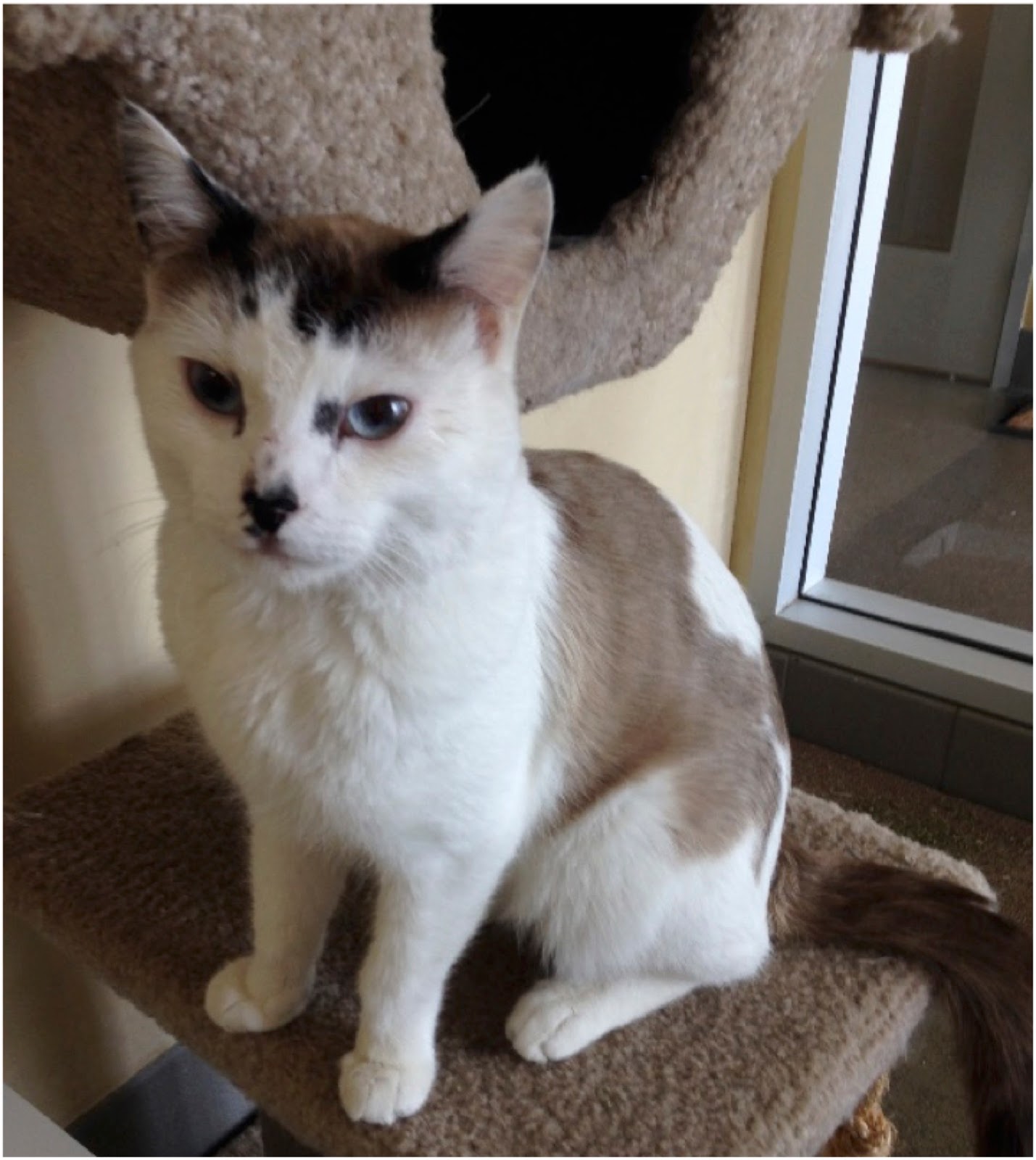
Geronimo is one Berkeley shelter cat whose gut microbiome will be analyzed. He was picked up as a stray just a few blocks from the shelter, and is three years old. Geronimo is exceptionally friendly, and loves playing with his wand toy and hiding in his cat tree to nap. He gets along well with other cats and was even introduced to a rabbit without incident. After spending about two weeks in the shelter, Geronimo was adopted into a loving home.

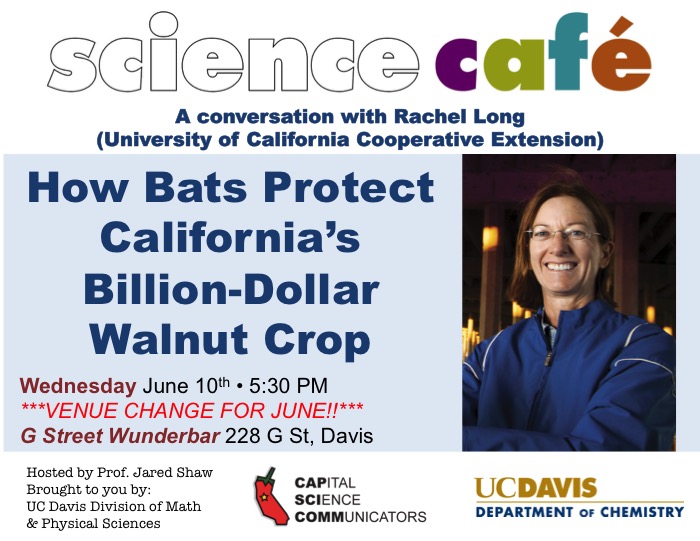
#DavisCA Science Cafe – 6/10 – Bats and Walnuts

Grad Scholar position at Bayer Biologics

The primary responsibilities of this role, as a Grad Scholar, are to:

• Participating in a multi-disciplinary team of scientists to offer bioinformatics, genomics, transcriptomics and metagenomics for controlling pests and diseases in plant and promoting plant health using microbes;

• Proactively identifying and incorporating new algorithms and technology to automate the analysis of microbial genomes and to extend the features of existing analysis pipelines;

• Understanding the dynamics of plant, microbe and pest/pathogen interaction using various omics technologies;

• Managing next-generation sequencing (NGS) data and analyses;

• Training scientific staff on the use of relevant bioinformatics software and tools;

• Working with other non-bioinformatics team member in the CLS group to understand their roles and to serve as backups as needed;

• Communicating effectively through listening, documentations and presentations, especially using compelling visualization tools to share analysis and interpretation of data.

Your success will be driven by your demonstration of our LIFE values. More specifically related to this position, Bayer seeks an incumbent who possesses the following:

• PhD in Computational Biology, Ecology and Evolution, Plant Biology,Bioinformatics, Genomics or related field with 0-1 year of post-graduate experience or a Master’s with 4+ years, or BSc. with 6+ years of post-graduate experience and currently enrolled in a graduate program.

• Proven ability to handle large data sets efficiently using scripts, databases, and other tools;

• Familiar with state-of-the-art open source and commercial bioinformatics tools;

• In depth familiarity with various public genomic databases, statistical software tools and packages such as R and bioinformatics algorithms, particularly for the analysis of NGS data (Illumina and PacBio);

• Should be comfortable enough with some basic statistical concepts and able to converse with other scientists about how to interpret basic statistical analyses such as ANOVA, linear regression, and power analyses.

• Experiences in three or more of the following areas: Comparative genomics; Transcriptome sequencing analysis; Phylogenetic analysis; Pathway modeling and analysis; and/or Metagenomics analysis;

Preferred Skills/Qualifications:

• Familiarity with SQL and relational database, particularly PostgreSQL;

• Fluent in Python, Perl, or other scripting languages;

• Previous laboratory experience;

• Knowledge of fungal, bacterial, insect, or plant genetics;

• Working with high performance computing clusters and/or cloud services.

Interested applicants should please send a resume and a cover letter to

Dilara Ally : email: dilara.ally

GradScholar.docx

Brooke Borel at #UCDavis 6/4 Discussing her New Bed Bug Book “Infested”

9780226041933

Brooke Borel

“Infested: How the Bed Bug Infiltrated Our Bedrooms and Took Over the World”

Thursday June 4, 2015

10:00 AM – 11:30 AM

UC Davis Memorial Union – MU II

Host: Jonathan Eisen


Brooke Borel is a science writer who is a Contributing Editor at Popular Science and has written for Slate, Aeon, PBS’s Nova Next, and many other publications and sites.  Her first book has just been published by the University of Chicago Press.  The book is   Infested: How The Bed Bug Infiltrated Our Bedrooms and Took Over the World and it is getting praise from all over the place (see some reviews below). She will be at UC Davis on June 4 to discuss the book and some of the fun, interesting, scary and wonderful things about bed bugs.


Some reviews of the book below:

New York Times Book Review (by Marlene Zuk)

“A book about bedbugs is, by necessity, a book about nearly everything: about travel and adventure, about our ­relationship to nature, about how scientists solve problems, about trust and whether we view strangers as friends or foes. It is a book about what people will do under extreme circumstances, and about environmental politics, and art and mental illness. It is even a book about kinky sex. Borel deftly takes us through this arthropod microcosm of the universe, as she traces the culture and biology of a resurgent scourge.”

Carl Zimmer, author of A Planet of Viruses

“Our encounters with bed bugs used to be limited to wishes for a good night’s sleep. But now they’re everywhere—in hotels, apartments, and even subways. In her fascinating book Infested,  Borel chronicles the renaissance of this frightful insect and leaves us marveling at their remarkable biology.”

Maryn McKenna, author of Superbug: The Fatal Menace of MRSA

“In an odyssey that begins with understandable loathing and ends with surprising sympathy, Borel takes us on a smart, subtle, witty journey through the biology and history of the bed bug—an insect that has been our companion for hundreds of millennia, yet one that we barely understand and have no clue how to control. Borel captures the persistence of the bug, the obsessiveness of its foes, and the eagerness of entrepreneurs to turn a quick profit with no thought for the long consequences. It is impossible to read Infested without experiencing fascination, respect—and just maybe, a phantom itch.”

Seth Mnookin, author of The Panic Virus: The True Story Behind the Vaccine-Autism Controversy

“Borel has done the seemingly impossible: written an absolute page-turner of a book about bed bugs. Infested is as engaging as it is erudite, as fun as it is informative. This is popular science writing at its best.”

Dan Vergano, National Geographic

“A fun, wild romp through the wily world of bed bugs and the folks hunting them down. Borel travels from Brooklyn bedposts to Bohemian benches on the trail of this burgeoning pest, itching for the reader as she goes. Infested unveils the secrets of these frankly weird bloodsuckers, right down to their unlikely sex lives, and introduces readers to the obsessives looking to stop their march into your own bed. A terrific science book.”

Guest Post: 5 Things You Probably Didn’t Know About Jonathan Eisen

5 Things You Probably Didn’t Know About Jonathan Eisen 

  1. He doesn’t know how to play Minecraft
  2. He mailed grass when he was a little kid
  3. His new phone is “precious” to him
  4. He loves Let it Go and Taylor Swift
  5. He has very ugly pink boots 
by his bored daughter A. I. Eisen

6/10 at #UCDavis: Workshop on “The Social Life of Medical Data”

The Social Life of Medical Data

A one-day workshop on sharing, pooling and appropriating medical information

http://icis.ucdavis.edu/?tribe_events=workshop-the-social-life-of-medical-data

Wednesday, June 10, 10 am to 5 pm
UC Davis campus (location TBA)

Once digitized, medical information – such as data, images, standards, and codes – travels across different spaces and communities. Smartphones produce and transmit data coming from our bodies, which is shared and discussed in social media platforms and then gathered and analyzed in data centers. Medical information intended for professional use can be appropriated, circulated and used to create communities of caring or participate in biomedical research. At the same time new power asymmetries can emerge, as public institutions and private corporations claim control over increasingly valuable health data.

In this one-day workshop we will analyze the trajectories of digitized medical data. We will discuss how patient communities, care providers, social activists, governments and corporations are designing, fostering and managing alternative approaches to healing and increasingly look towards open source, distributed, and participatory research to do this. Data created from bodies has the potential to expand our understanding of health-related research and scholarly communication practices.

In addition, we will explore different ways of including patient communities in participatory design of tools that assist in the management and analysis of health data. We aim to foster a discussion amongst anthropologists, media scholars and biomedical researcher about the emergent forms of sociality and the politics of health and illness in our digital era.

Speakers include:

Nick Anderson, UC Davis
Carlos Andres Barragan, UC Davis
Dav Clark, UC Berkeley
Alessandro Delfanti, UC Davis
Joe Dumit, UC Davis
Allison Fish, UC Davis
Marina Levina, University of Memphis
Hélène Mialet, UC Berkeley
Kim Surkan, MIT
Orkan Telhan, University of Pennsylvania

Detailed program TBA

Lunch will be served. Please RSVP at this link if you plan to attend http://bit.ly/1PxzbQ6

UC Davis Innovating Communication in Scholarship
icis.ucdavis.edu