
Category: Misc.

Bayer Crop Science is looking for a Microbiologist …
Share this:
Environmental Sequencing workshops at #ESA2014
As part of RCN EukHiTS, I’m leading two sessions at the Ecological Society of America 2014 Annual Meeting next month (taking place in Sacramento, August 10-15, 2014) – a Sunday workshop including QIIME and metagenomics tutorials, and a special session (most likely panel discussion) on Monday. I encourage anyone who is interested to register for these events:
Workshops #9884: “Environmental sequencing approaches and computational tools for ecologists”
Sunday, August 10, 2014
8:00 AM – 5:00 PM
Description: This workshop will bring together an interdisciplinary pool of researchers to discuss current approaches, challenges, and future directions for environmental sequencing studies (-omic studies of bacteria, archaea and microbial eukaryotes). The workshop program will introduce ecologists to common data types and scientific workflows currently employed for the analysis of high-throughput sequencing data (e.g. Illumina/454). Participants will be given overview presentations and hands-on demonstrations for a number of different approaches, including rRNA marker gene analysis, shotgun metagenomics, and metatranscriptomics. This workshop will introduce participants to computational biology tools and software pipelines which can be harnessed for DNA/RNA-based “ecometagenomic” studies. In addition, we aim to solicit feedback from workshop participants, fostering discussions on how to establish better links between traditional ecological research and new, high-throughput sequencing approaches.
Special Sessions #9883: “Ecometagenomics”
Monday, August 11, 2014
10:15 AM – 11:30 AM
Description: The goal of this session is to catalyze cross-disciplinary discussions between the ecology and environmental sequencing communities. High-throughput sequencing technologies now offer tremendous opportunities to make major inroads into our understanding of global biodiversity and biogeographic patterns. However, in order to make the most of emerging high-throughput sequencing approaches, we must move towards a “systems ecology” mindset, drawing expertise from diverse disciplines. For microbial eukaryotic taxa in particular, we can now conduct en mass biodiversity assessment using traditional loci (rRNA genes) at a fraction of the time and cost required for traditional (morphological) approaches. In addition, as databases of genes with functional descriptions expand, metagenomic approaches become useful for elucidating ecosystem function. Despite this promise, current bottlenecks and roadblocks lie in the development of useful distributed tools, links between molecules and morphology/ecology, and common data standards to allow global comparisons across individual studies. This session will begin with an overview of environmental sequencing approaches, introducing participants to the methods, data types and current advantages and limitations of DNA/RNA-based studies. The session is intended to be highly interactive, including brief talks, moderated discussion points, and solicitation of questions and feedback from audience members. This session would stimulate critical discussion related to the 2014 meeting theme of “Its all ecology.” DNA/RNA-based studies represent an emerging ecological discipline, and as such, it is imperative that the growing community of microbial ecologists begins to build strong links to the traditional ecological research that forms the center point of the ESA meetings.
Another ESA session linked to RCN EukHiTS is oral session OOS10: Ecological Genomics as an Emerging Field: Opportunities for Non-model Organisms (organized by Melis Akman, UC Davis)
Share this:
Paper of interest: Whole genome and exome sequencing of monozygotic twins discordant for Crohn’s disease
For those interested in microbiomes it is definitely worth looking at this paper: BMC Genomics | Abstract | Whole genome and exome sequencing of monozygotic twins discordant for Crohn’s disease
Simple summary – they have sets of identical twins where one twin has Crohn’s and the other does not. They looked for somatic mutations that could like the ones with Crohn’s and did not find any. Sure – a negative result. Could be anything. But the next obvious thing to do (which they report they are already doing) is to look at the microbioata in these people. Alas, they probably do not have data from before these people got Crohn’s, but still, this could be interesting …
Share this:
Pacific Northwest National Lab (PNNL) is looking for some microbial computational / genomics folks
Check out these job ads. PNNL is looking for a few good microbial people.
Postdoc Flyer.pdf
PNNL Assoc Director Microbiology.pdf
Share this:
“An Evening with the World’s Leading Marine Microbiologists” in San Jose
Just got this and am sharing:
Dear Dr. Eisen,
The Tech museum in San Jose wanted to invite you to a very special event of ours that might be of your interest. On July 30th, 16 exceptional marine microbiologists from all over the country will gather in The Tech for an evening of conversation with our local community.
The Tech would love for you to join us! I attached a more detailed description of the event below. Please don’t hesitate to contact me if you have any questions or concerns. And we would also highly appreciate if you could forward this email to any of your colleagues and students who might be interested in coming.
Thank you so much and look froward to hearing back from you!
Best Regards,
Haven Yang
The Tech Museum of Innovation
201 S. Market St., San Jose, CA 95113 | thetech.org
Exclusive Engagement!
An Evening with the World’s Leading Marine Microbiologists
A Creative Collisions Initiative
Wednesday, July 30, 2014
5:45 p.m.
The Tech Museum of Innovation’s Lower Level
General admission $25 in advance/$35 at the door
Members $15/$25
Students and Seniors $10/$15
Food & Beverage available for sale at event
Buy Tickets
“The oxygen in every second breath we take is produced by microbes in our oceans—they are thought to produce about 50 percent of the oxygen in the earth’s atmosphere. Yet, we know surprisingly little about these tiny organisms.”
—The Gordon and Betty Moore Foundation’s Marine Microbiology Initiative
The Tech welcomes 16 world-renowned scientists for an evening of discussion and discovery.
Please join us to learn more about our diverse ocean ecosystems through robust conversation with some of the most innovative minds of our time, and to connect with bio-focused community groups and individuals. Listen to Professor Kay Bidle of Rutgers University explore “The Invisible World of Marine Microbes: How Earth’s Smallest Living Things Have the Biggest Impact on How Our Ocean Works.”
Mingle with the 16 Investigators of the Gordon and Betty Moore Foundation’s Marine Microbiology Initiative:
- Andrew Allen, J. Craig Venter Institute
- Ginger Armbrust, University of Washington
- Kay Bidle, Rutgers University
- Edward DeLong, Massachusetts Institute of Technology
- Curtis Deutsch, University of Washington
- Nicole Dubilier, Max Planck Institute for Marine Microbiology
- Michael Follows, Massachusetts Institute of Technology
- Jed Fuhrman, University of Southern California
- David Karl, University of Hawaii
- Victoria Orphan, California Institute of Technology
- Ann Pearson, Harvard University
- Forest Rohwer, San Diego State University
- Mak Saito, Woods Hole Oceanographic Institution
- Roman Stocker, Massachusetts Institute of Technology
- Matthew Sullivan, University of Arizona
- Alexandra Worden, Monterey Bay Aquarium Research Institute
| Schedule | |
| 5:45—6:45 p.m. | Mingling over food, drinks and exhibits |
| 6:45—7:30 p.m. | Kay Bidle: “The Invisible World of Marine Microbes: How Earth’s Smallest Living Things Have the Biggest Impact on How Our Ocean Works,” followed by 15-minute Q&A |
| 7:30—10 p.m. | More mingling over food and drinks |
Click here to learn more about the event.
Share this:
National Research Council Fellowship opportunities to work at Federal Labs
Forwarding this announcement which might be of interest:
We are asking your assistance in forwarding this message to inform students and faculty in your department of these outstanding fellowship opportunities. More detailed information and an online application can be found at http://www.nationalacademies.org/rap.
The National Research Council of the National Academies sponsors a number of awards for graduate, postdoctoral and senior researchers at participating federal laboratories and affiliated institutions. These awards include generous stipends ranging from $45,000 – $80,000 per year for recent Ph.D. recipients, and higher for additional
experience. Graduate entry level stipends begin at $30,000. These awards provide the opportunity for recipients to do independent research in some of the best-equipped and staffed laboratories in the U.S. Research opportunities are open to U.S. citizens, permanent residents, and for some of the laboratories, foreign nationals.
Detailed program information, including online applications, instructions on how to apply, and a list of participating
laboratories, are available on the NRC Research Associateship Programs Web site (see link above).
Questions should be directed to the NRC at 202-334-2760 (phone) or rap@nas.edu.
There are four annual review cycles.
Review Cycle: August; Opens June 1; Closes August 1
Review Cycle: November; Opens September 1; Closes November 1
Review Cycle: February; Opens December 1; Closes February 1
Review Cycle: May; Opens March 1; Closes May 1
Applicants should contact prospective Adviser(s) at the lab(s) prior to the application deadline to discuss their research interests and funding opportunities.
Thank you for your assistance.
Sincerely yours,
H. Ray Gamble
Director of the Fellowship Programs
National Research Council
The National Academies
500 5th Street NW, Keck 568
Washington, DC 20001
Share this:
Readers’ wildlife photos
My hawk moth photos get posted on Why Evolution is True. See the post here.

by Matthew Cobb
Jonathan Eisen (aka @phylogenomics) tw**ted this lovely photo of a hawk moth feeding in his yard yesterday
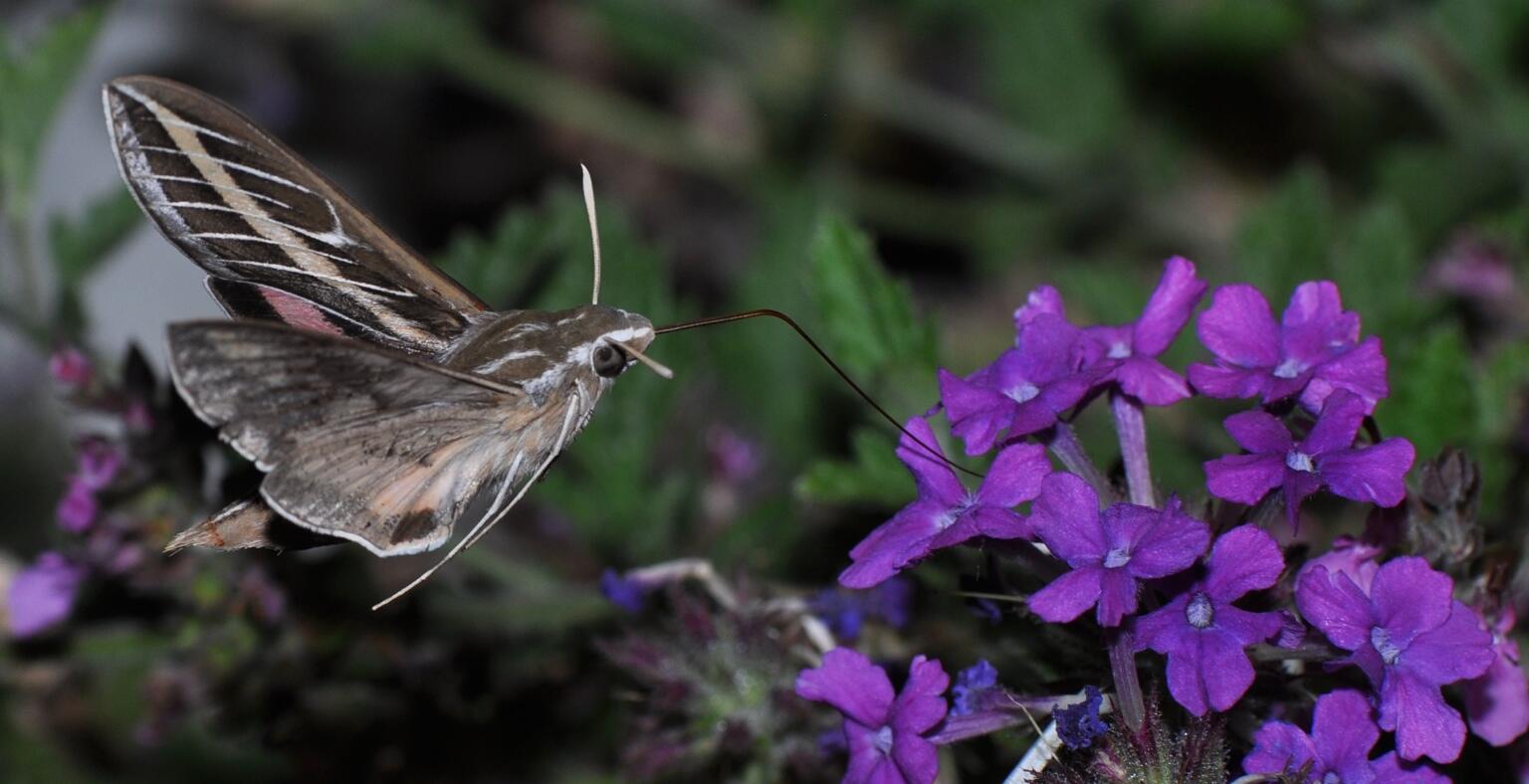
He followed it up with this:
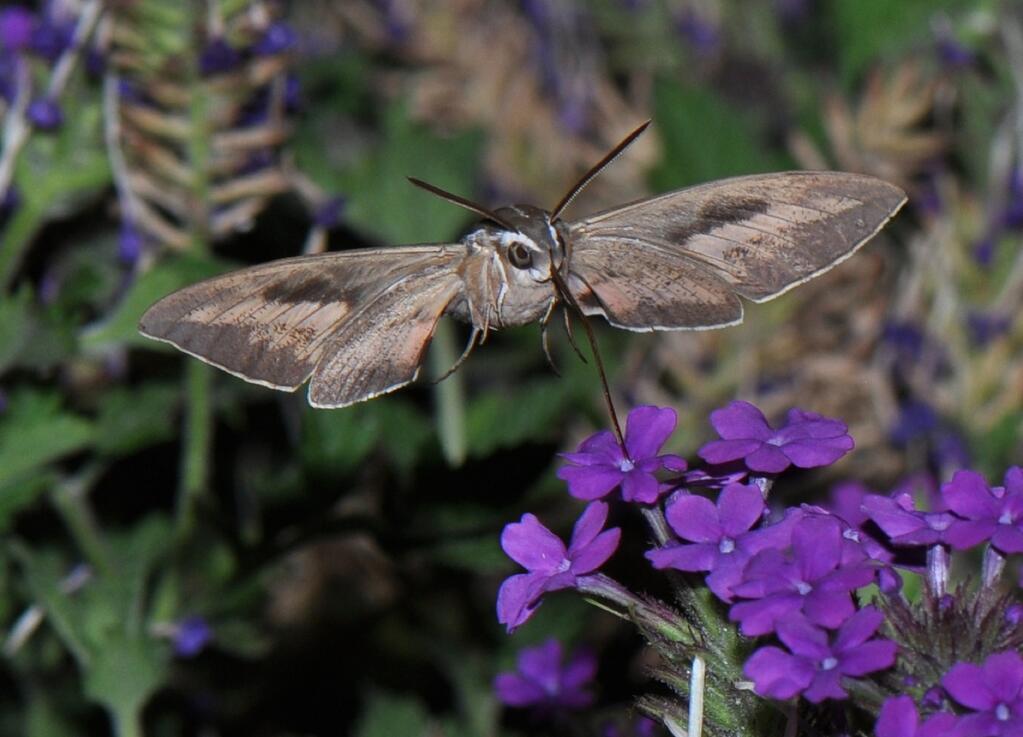
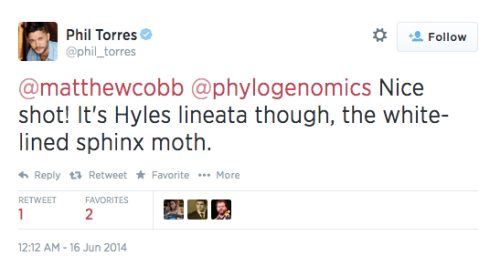
Jonathan tentatively ID’d the beast as Agrius cingulatus, but when I asked him if I could post the photos here (he said yes), Phil Torres chipped in:
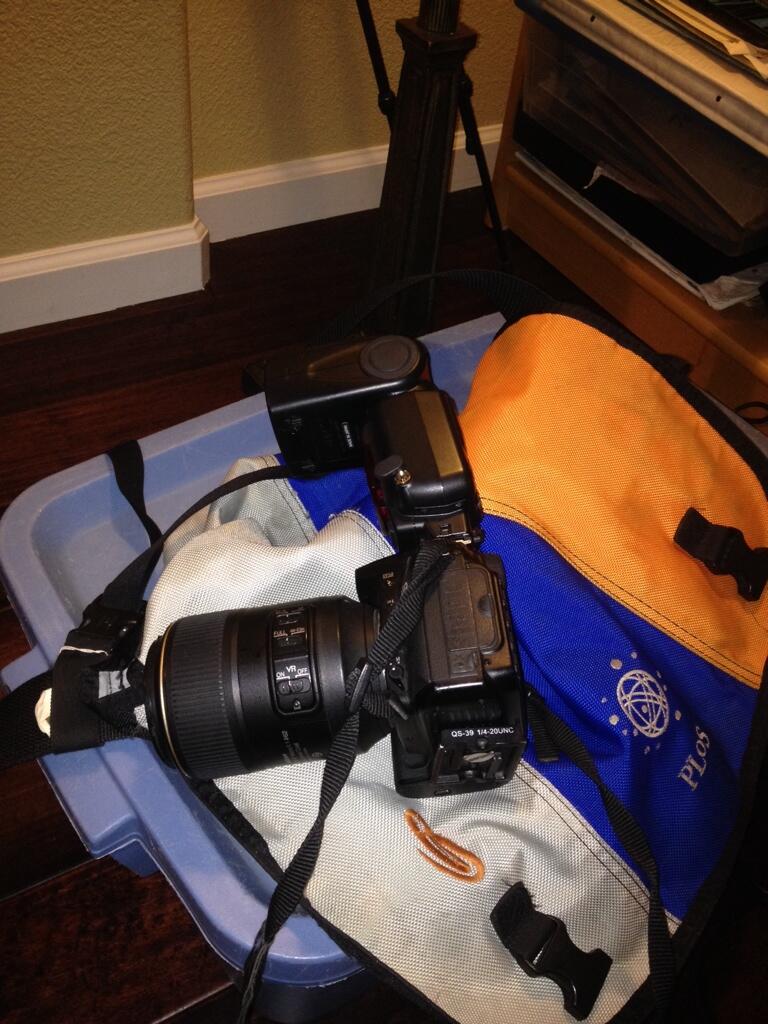
Someone asked him if it was taken on an iPhone – here’s the answer (note the PLoS [Public Library of Science] tote bag – Jonathan is one of the leading advocates of Open Access publication). He has a Nikon D90 w/ 105mm Nikkor Micro lens…
Now I know what I should have asked for for Father’s Day….
Share this:
Launching a new venture with a debate on peer review
Testing out the WordPress Reblogging System – not sure how it works or how well it works. But this article about Cofactor certainly worth reblogging …

The big day has arrived: this evening about 60 people will gather in Kings Cross, London, to launch my new company, Cofactor. Hopefully lots more will follow along online using the hashtag #PeerRevFactors, because this will not just be a launch, it will also be an evening of short talks and discussion about peer review. The theme is ‘What difference will changes in peer review make to authors and journals?’ and we have four great speakers:
- Giulia De Rossi, a PhD student who has published in several conventional journals and also F1000Research
- Maria Kowlaczuk, Deputy Biology Editor at BioMed Central
- Damian Pattinson, Editorial Director of PLOS ONE
- Alf Eaton, developer for PeerJ
I will also give a brief introduction to Cofactor and to the theme, and after the talks the audience of science, publishing and communications people will join in to discuss what they’ve…
View original post 749 more words
Share this:
Discussion of new pathogen discovery papers
Interesting discussion yesterday with authors of new pathogen discovery papers. I will try to write more about this later but am heading out the door so this Storify will have to do for now.
//storify.com/phylogenomics/discussion-of-pathogen-discovery-papers/embed?border=false//storify.com/phylogenomics/discussion-of-pathogen-discovery-papers.js?border=false[View the story “Discussion of pathogen discovery papers” on Storify]
 Jonathan Eisen's Lab