Nice #openaccess review on the ecology of chemosynthetic symbioses from @chicaScientific & Guus Roeselers

Figure 1 from 10.1007/s00253-011-3819-9. Sediment cross section 
exposing the characteristic Y-shaped burrow dug by S. velum. 
Positioning itself at the triple junction of the Y, the bivalve alternates
 between actively pumping oxygenated water from the upper arms of
 the burrow through the mantle cavity and across the gills and 
accessing reduced sulfur compounds diffusing up from the anoxic 
zones below and pumped through a ventral incurrent opening in the 
mantle. Scale bar equals 2.5 cm

For those who do not know, I got my first taste of microbiology research when I was an undergrad at Harvard and I did my senior/honors research project in the lab of Colleen Cavanaugh. Colleen studied (and in fact still studies) symbioses between invertebrates and chemosynthetic bacteria. The bacteria basically allow these invertebrates to function like plants in many ways. Some of these invertebrates (like the giant tube worms in hydrothermal vents) have lost their mouths and digestive systems and basically live by bringing in high energy chemicals for their symbionts which then make sugars, vitamins, amino acids and other goodies for the host.
Anyway – I am still very interested in these symbioses and have published a few papers on the topic here and there. All that lead in is to simply point everyone out there to a nice new Open Access review paper by Guus Roeselers and Irene Newton: On the evolutionary ecology of symbioses between chemosynthetic bacteria and bivalves. When I first saw the reference in the “Applied Microbiology and Biotechnology” journal I was worried I would not have access to it, but I clicked on the link and discovered it was published using Springer’s version of Open Access. Yippee.  The article is worth a look.

ResearchBlogging.org Roeselers, G., & Newton, I. (2012). On the evolutionary ecology of symbioses between chemosynthetic bacteria and bivalves Applied Microbiology and Biotechnology, 94 (1), 1-10 DOI: 10.1007/s00253-011-3819-9

My favorite new thing/site on the web: Download The Universe

I am completely fascinated by this new site: Download The Universe. It is a group effort from (so far) some 16 science writers. The main goal of the site is summarized in a post from Carl Zimmer who appears to be the instigator in chief of this effort:
“… It is still tough for readers to discover new science ebooks. Traditional book reviews limit themselves to works on paper. Some ebooks may appear in computer magazines, but buried in reviews of laptops and printers. In between, we need a community.
Download the Universe is a step towards that community. It is the work of a group of writers and scientists who are deeply intrigued by the future of science books. (You can find our names and links to our web sites on the right.) Here we review science ebooks–broadly defined, except for ebooks that are just spin-offs of print books. We hope to build up a library of titles that curious readers can browse. Some reviews will be positive, others negative. We welcome your own judgments, and we look forward to vibrant (but civilized) discussions in the comment threads. We will also write essays from time to time about the changes that publishing is undergoing.
As we continue to build Download the Universe, we may change our minds about the scope of its mission. We can’t say what those changes will be. We can only be sure they will be here before too long.”
I confess – I have never read an ebook of any kind – science or not. And I really really love “real” books – I have collected them for years and years. But I think I am going to start on the ebooks thing. And this site is giving me some ideas for what to start with … This site is definitely worth checking out, and keeping an eye on …

In case you didn’t hear – #openness WON – Research Works Act shelved

See this story from infojustice.org: Research Works Act Shelved by Sponsors
This is just awesome news. The act was completely inane.
Hooray for Open Access and Open Science and Openness in general.

John Stewart takes on H1N1 on hypochondriac update

The Daily Show with Jon Stewart Mon – Thurs 11p / 10c
Hypochondriac Update
www.thedailyshow.com
http://media.mtvnservices.com/mgid:cms:item:comedycentral.com:408965
Daily Show Full Episodes Political Humor & Satire Blog The Daily Show on Facebook

PCR amplification and pyrosequencing of rpoB as complement to rRNA

Figure 1. Number of OTUs as
 a function of fractional sequence difference
 (OTU cut-off) for the 16S rRNA marker
 gene (A) and the rpoB marker gene (B).

Interesting new paper in PLoS One: PLoS ONE: A Comparison of rpoB and 16S rRNA as Markers in Pyrosequencing Studies of Bacterial Diversity

In the paper they test and use PCR amplification and pyrosequencing of the rpoB gene for studies of the diversity of bacteria. Due to the lower level of conservation of rpoB than rRNA genes at the DNA level they focused on proteobacteria. It seems that with a little perseverance once can get PCR for protein coding genes to work reasonably well for even reasonably broad taxonomic groups (not totally new here but I am not aware of too many papers doing this with pyrosequencing). Anyway, the paper is worth a look.

Citation:
 Vos M, Quince C, Pijl AS, de Hollander M, Kowalchuk GA (2012) A Comparison of rpoB and 16S rRNA as Markers in Pyrosequencing Studies of Bacterial Diversity. PLoS ONE 7(2): e30600. doi:10.1371/journal.pone.0030600 ResearchBlogging.org Vos, M., Quince, C., Pijl, A., de Hollander, M., & Kowalchuk, G. (2012). A Comparison of rpoB and 16S rRNA as Markers in Pyrosequencing Studies of Bacterial Diversity PLoS ONE, 7 (2) DOI: 10.1371/journal.pone.0030600

Second video of the week: Mackenzie Smith on Open Licenses

Interesting piece by John Rennie at Smartplanet: What comes after antibiotics?

Interesting piece by John Rennie at Smartplanet: What comes after antibiotics? | SmartPlanet. It discusses a variety of topics including antiomicrobial peptides, nanotechnology, Kary Mullis, Michael Zasloff, DARPA, Maryn McKenna, and more. Definitely worth checking out.

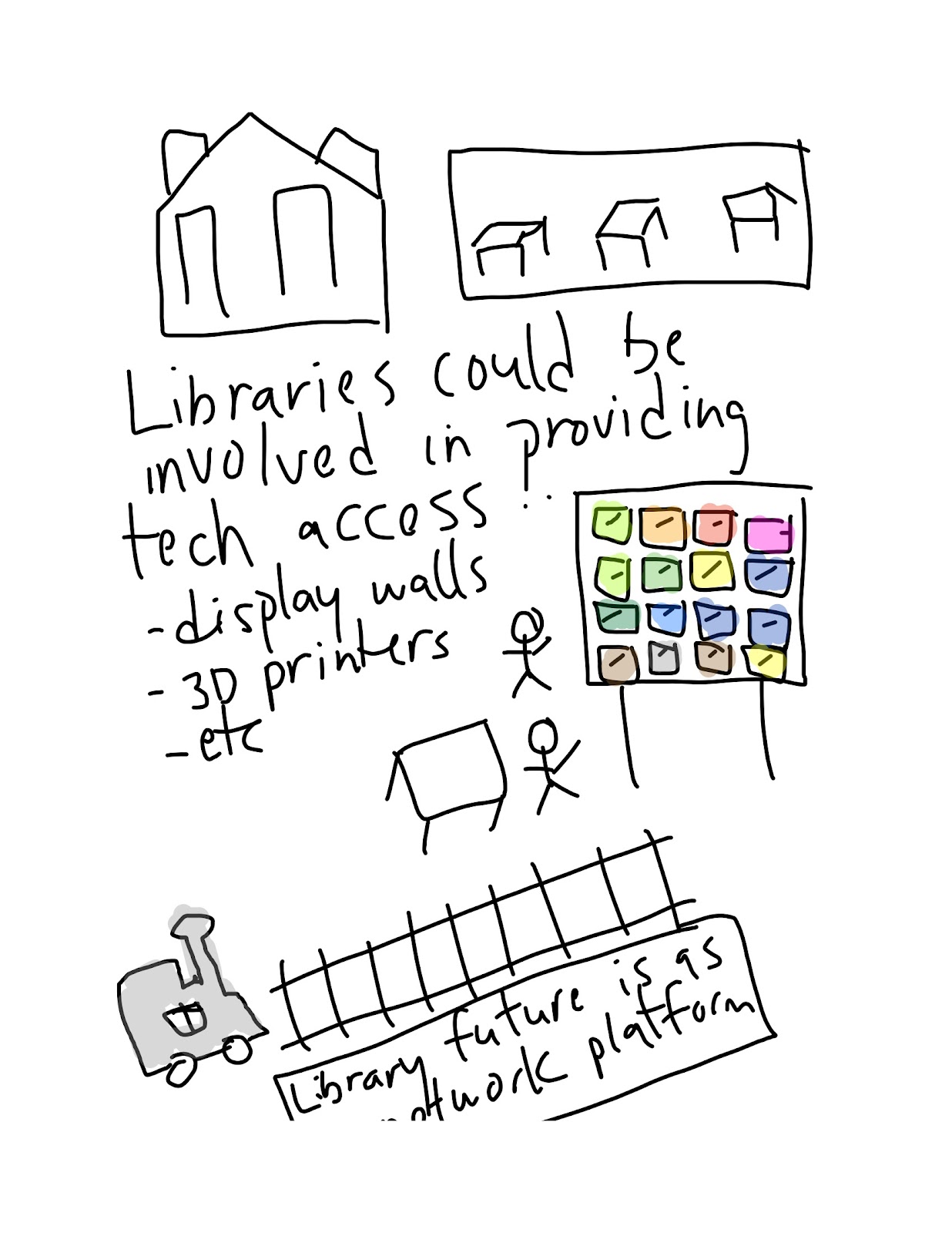
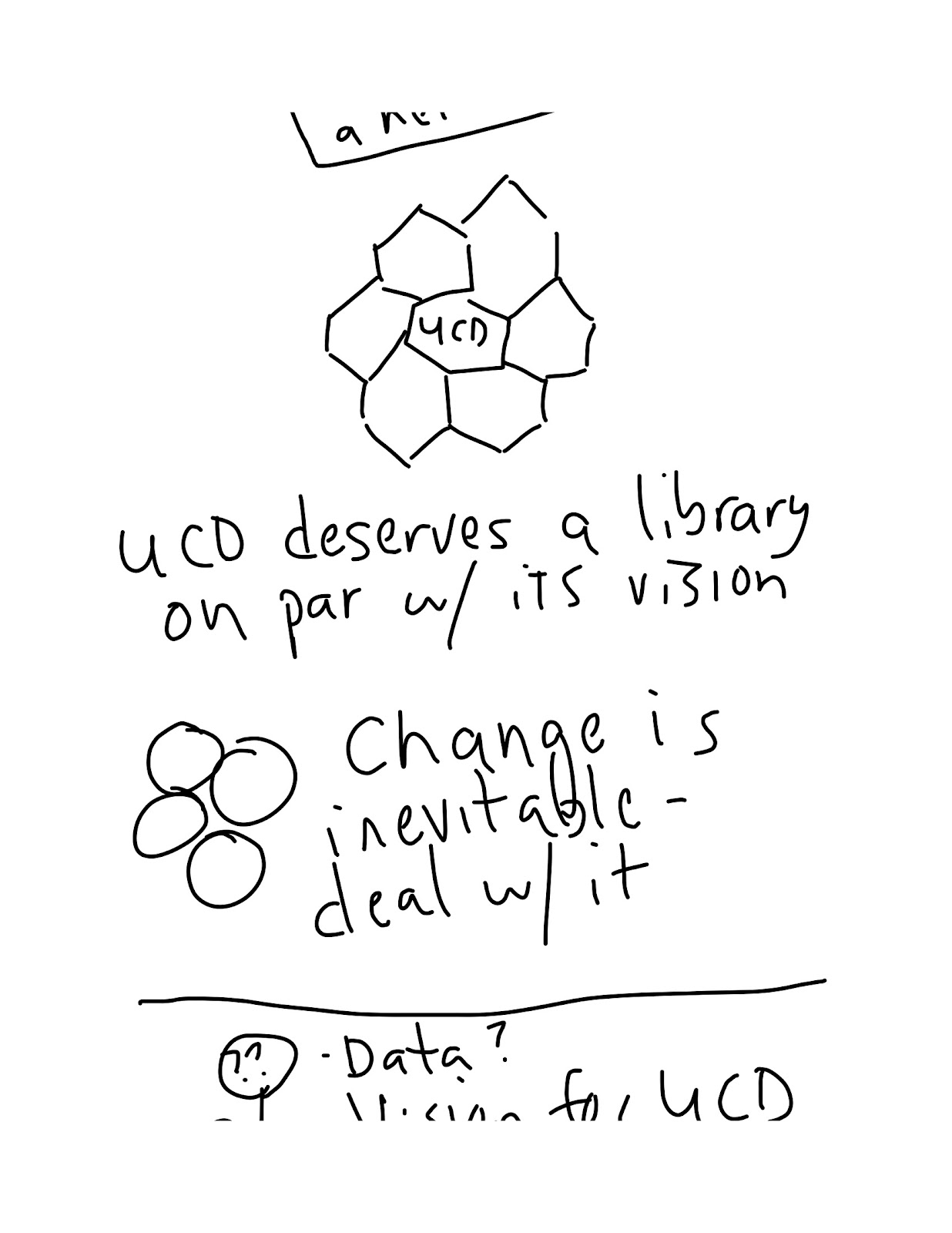
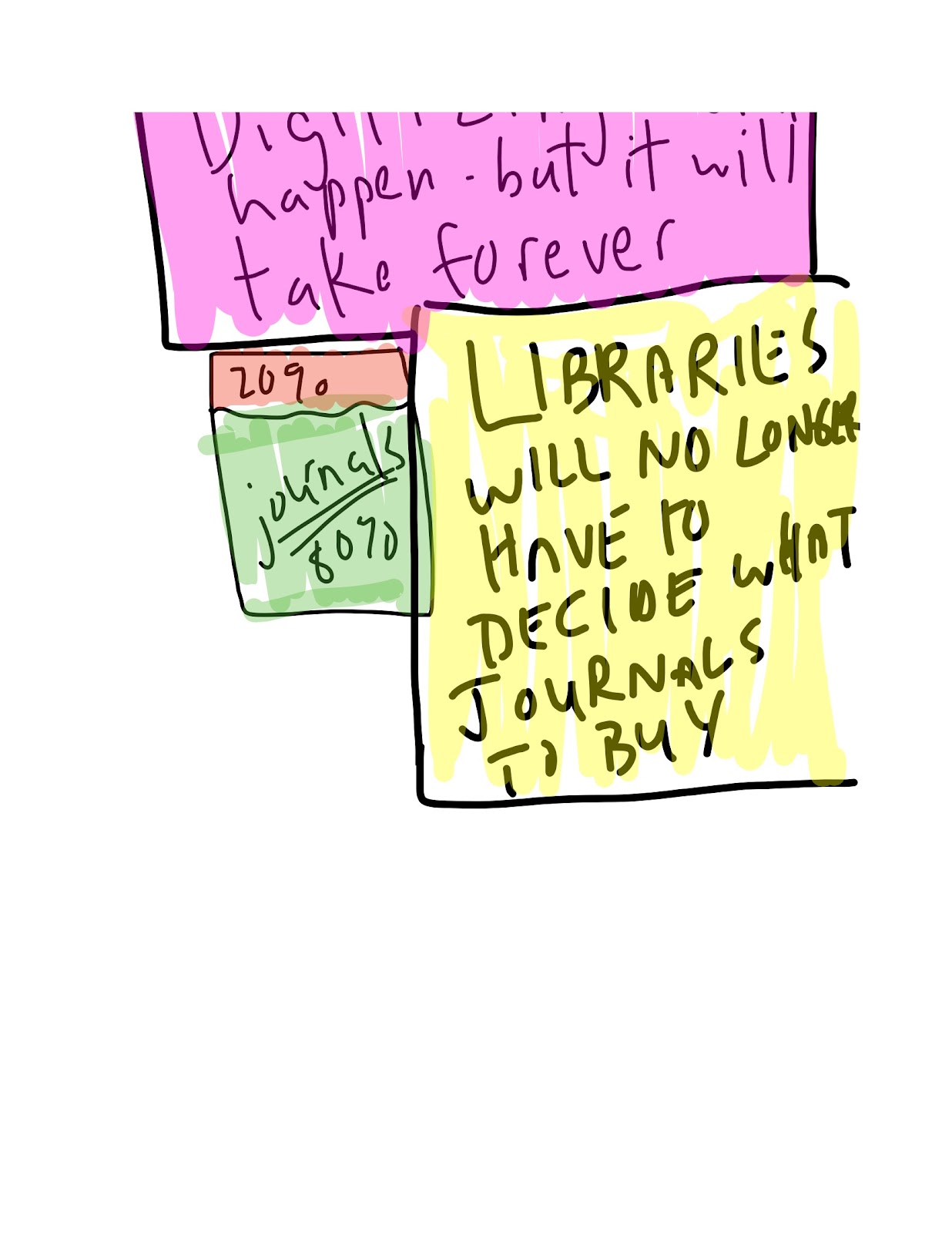
Notes for talk by Mackenzie Smith – candidate for #UCDavis University Librarian position

Here are some notes I took using my iPAD for a talk by Mackenzie Smith about libraries: Note Feb 21, 2012
She is a candidate for the UC Davis University Librarian position for which I am on the committee.  This is the first time I have taken and posted notes from a talk using my iPAD – so please bear with me – it is an experiment of sorts. Note to do this I used an iPAD2, a Bamboo Stylus and the Notability App. I then exported to PDF and posted it (the Note above).  For the images below I then had to export single pages to JPGs.  If anyone knows an easy way to export a multipage PDF as a single JPG I would appreciate information … Inspiration provided by Kosta.

http://storify.com/phylogenomics/mackenzie-smith-talk-at-ucdavis.js?template=slideshow[<a href=”http://storify.com/phylogenomics/mackenzie-smith-talk-at-ucdavis” target=”_blank”>View the story “Mackenzie Smith talk at #UCDavis” on Storify</a>]

Antibiotic use in animals (may) lead to superbugs in people #mBIO

New paper in mBIO of potential interest from Lance Price et al.:  Staphylococcus aureus CC398: Host Adaptation and Emergence of Methicillin Resistance in Livestock.  For those not in the know, mBIO is a relatively new Open Access journal from the American Society for Microbiology.  The paper discusses genomic studies of MRSA which has led the authors to conclude that antibiotic use in animals may contribute to the rise and spread of superbugs in people.

From here. Maximum-parsimony tree of the 89 CC398 isolates (including ST398SO385) based on 4,238 total SNPs, including 1,102 parsimony-informative SNPs with a CI of 0.9591. Clades and groups of importance are labeled in a hierarchical fashion to facilitate description in the text. The tree was rooted with clade I based on an iterative selection process that identified this group as the most ancestral (see Materials and Methods). COO, country of origin; AT, Austria; BE, Belgium; CA, Canada; CH, Switzerland; CN, China; DE, Germany; DK, Denmark; ES, Spain; FI, Finland; FR, France; GF, French Guiana; HU, Hungary; IT, Italy; NL, The Netherlands; PE, Peru; PL, Poland; PT, Portugal; SI, Slovenia; US, United States; P, pig; H, human; R, horse; T, turkey; B, bovine; MET, methicillin susceptibility; R, resistant; S, susceptible.

The figure above is the only figure in the main text of the paper.  There are others in supplemental information which seems a bit strange to me – why put anything in supplemental information when the paper is only released online?  Or at least have thumbnail images for all figures in the main text …

Anyway, the paper and press release got picked up by many newsy places.  See for example:

I note – the Press Release is MUCH better than the last one that was about a paper by Price that I wrote about here: The Tree of Life: #PLoSOne paper keywords revealing: (#Penis #Microbiome #Circumcision #HIV); press release misleading …  Lance was awesomally quick to respond to my complaints about that PR.  The PR for this paper is not so bad — a bit over the top in some of the quotes – but no need for comments I think. 
Citation:
Price LB, et al. 2012. Staphylococcus aureus CC398: host adaptation and emergence of methicillin resistance in livestock. mBio 3(1):e00305-11. doi:10.1128/mBio.00305-11.

UPDATE 2/21 5:30 PM: an alternative (and much more pleasing) press release from ASM is here.

Slideshow w/ audio of my talk on "A Field Guide to the Microbes" from the AAAS Meeting #AAASMtg

I recorded the audio of my talk on “Towards a field guide to the microbes” from the AAAS meeting on Saturday AM. Here is a slideshow of the talk with audio synched to the slides (I did this using Keynote on a Mac with the “record Slideshow” function).

My slides from the talk are available at Slideshare.