Eisen Lab Blog

Wow – Google Scholar "Updates" a big step forward in sifting through the scientific literature

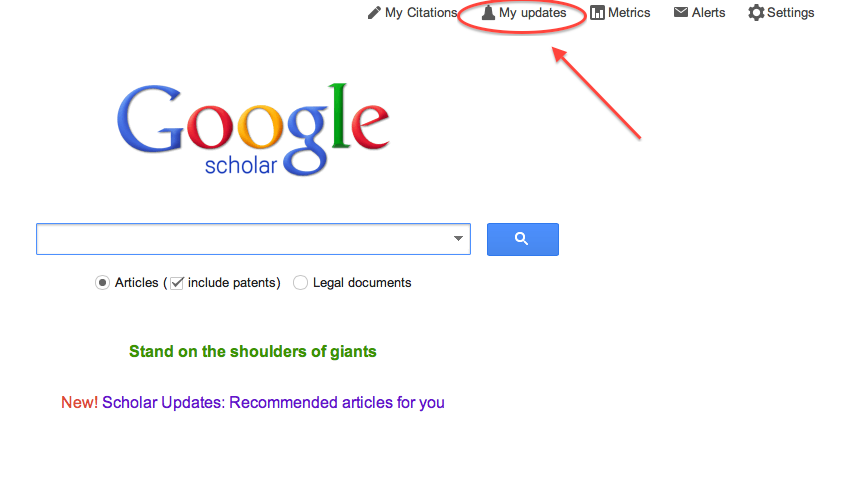
I logged on to Google Scholar a few minutes ago and discovered something very new

This “updates” thing was not there earlier in the day.  So I clicked on the link and got to this page: Scholar Updates: Making New Connections – Google Scholar Blog where James Connor from Google reports

Since Google Scholar launched nearly eight years ago, we’ve been helping people find the research they’re looking for.  But often the spark for discovery comes from making a new connection or looking in a direction that you hadn’t yet considered and that — before your aha! moment — you wouldn’t have known to look for.  Today we hope to start fostering these new connections with Scholar Updates. 

We analyze your articles (as identified in your Scholar profile), scan the entire web looking for new articles relevant to your research, and then show you the most relevant articles when you visit Scholar.  We determine relevance using a statistical model that incorporates what your work is about, the citation graph between articles, the fact that interests can change over time, and the authors you work with and cite.  You don’t need to configure updates or enter any queries.  We’ll notify you about new updates by displaying a preview on the homepage and highlighting a bell icon on search results pages: …

To get article updates relevant to your work, all you need to do is create a public Scholar profile. Article updates will automatically start to appear within a few days. 

Wow.  Completely awesome if it works well.  So, well, let’s see if it works well.  For me the system recommends the following

Evolutionary Diversity of the Mitochondrial Calcium UniporterAG Bick, SE Calvo… – Science, 2012 

REGEN: Ancestral Genome Reconstruction for BacteriaK Yang, LS Heath… – Genes, 2012

Both have some relevance to me.  The first one is about evolution of a gene family and has a line in the abstract that clearly might have driven the automated suggestion: “Here, we characterize the phylogenomic distribution of the uniporter’s membrane-spanning pore subunit (MCU) and regulatory partner (MICU1).” But, well, I am not too interested in this paper.  Not really my thing.

But paper number 2 seems a bit closer to my heart: REGEN: Ancestral Genome Reconstruction for Bacteria.  And bonus – it is freely available.  And so, well, I read over it.  And it is definitely related to what I do and I probably would not have seen it without this notification.  Cool.
So I give Scholar Updates a 1.5 / 2 score which translates to a 7.5 out of 10.  Not bad.  But could be better.  So I clicked on the “See all Updates” link to see what else was there.  And this was a pleasant surprise.  Here is what I got (showing the first page).
50 papers in all with the “Top” selection selected at the top of the page.  And some even come with a comment like Cites A phylogeny-driven genomic encyclopaedia of Bacteria and Archaea or 
The first 25 of the papers are listed below:
  1. Defining the human microbiome
  2. Measures of phylogenetic differentiation provide robust and complementary insights into microbial communities
  3. VIROME: a standard operating procedure for analysis of viral metagenome sequences
  4. Complete Genome Sequence of Paenibacillus strain Y4. 12MC10, a Novel Paenibacillus lautus strain Isolated from Obsidian Hot Spring in Yellowstone National Park
  5. Phylogenetic stratigraphy in the Guerrero Negro hypersaline microbial mat
  6. Non-contiguous finished genome sequence and description of Clostridium senegalense sp. nov.
  7. Non contiguous-finished genome sequence and description of Bacillus timonensis sp. nov.
  8. Complete genome sequence of Pyrobaculum oguniense
  9. Complete genome sequence of the moderately thermophilic mineral-sulfide-oxidizing firmicute Sulfobacillus acidophilus type strain (NALT)
  10. The Metadata Coverage Index (MCI): A standardized metric for quantifying database metadata richness
  11. Complete genome sequence of the aromatic-degrading deep-terrestrial-subsurface alphaproteobacterium Novosphingobium aromaticivorans type strain (F199 T), …
  12. Complete genome sequence of Thauera aminoaromatica strain MZ1T
  13. Non-contiguous finished genome sequence and description of Anaerococcus vaginalis
  14. Non-contiguous finished genome sequence and description of Alistipes senegalensis sp. nov.
  15. Metabolic potential of a single cell belonging to one of the most abundant lineages in freshwater bacterioplankton
  16. Predicting kinase-substrate interactions in the era of proteomics
  17. REGEN: Ancestral Genome Reconstruction for Bacteria
  18. Targeted recovery of novel phylogenetic diversity from next-generation sequence data
  19. A call for an international network of genomic observatories (GOs)
  20. Large and linked in scientific publishing
  21. The Biological Observation Matrix (BIOM) format or: how I learned to stop worrying and love the ome-ome
  22. Evaluation of methods to concentrate and purify ocean virus communities through comparative, replicated metagenomics
  23. Ultrafast clustering algorithms for metagenomic sequence analysis
  24. IMG/M-HMP: A Metagenome Comparative Analysis System for the Human Microbiome Project
  25. Microbiomes
  26. Metagenomic analysis of hadopelagic microbial assemblages thriving at the deepest part of Mediterranean Sea, Matapan‐Vavilov Deep
  27. Distance-Decay diversity patterns of phyllosphere bacteria on Tamarisk trees across the Sonoran Desert
  28. Exposure of Soil Microbial Communities to Chromium and Arsenic Alters Their Diversity and Structure
  29. Reconstruction of Ribosomal RNA Genes from Metagenomic Data
  30. Genome Sequence of the Unclassified Marine Gammaproteobacterium BDW918
  31. Surprising results on phylogenetic tree building methods based on molecular sequences
  32. Road map of the phylum Actinobacteria
  33. Building non-coding RNA families
  34. Bacterial assemblages of the eastern Atlantic Ocean reveal both vertical and latitudinal biogeographic signatures
  35. Metagenomic microbial community profiling using unique clade-specific marker genes
  36. Unlocking the potential of metagenomics through replicated experimental design
  37. Coordinating Environmental Genomics and Geochemistry Reveals Metabolic Transitions in a Hot Spring Ecosystem
  38. Minimizing the average distance to a closest leaf in a phylogenetic tree
  39. Parallel-META: efficient metagenomic data analysis based on high-performance computation
  40. Complete genome sequence of Dehalogenimonas lykanthroporepellens type strain (BL-DC-9T) and comparison to “Dehalococcoides” strains
  41. Complete genome sequence of the orange-red pigmented, radioresistant Deinococcus proteolyticus type strain (MRPT)
  42. Genome sequence of the ocean sediment bacterium Saccharomonospora marina type strain (XMU15T
  43. Genome sequence of the soil bacterium Saccharomonospora azurea type strain (NA-128T)
  44. Evolutionary Diversity of the Mitochondrial Calcium Uniporter
  45. Phylogenetic Clustering Reveals Selective Events Driving the Turnover of Bacterial Community in Alpine Tundra Soils
  46. A comparative evaluation of sequence classification programs
  47. Complete genome sequence of the facultatively anaerobic, appendaged bacterium Muricauda ruestringensis type strain (B1T)
  48. Complete genome sequence of the termite hindgut bacterium Spirochaeta coccoides type strain (SPN1T), reclassification in the genus Sphaerochaeta as …
  49. Complete genome sequence of the aquatic bacterium Runella slithyformis type strain (LSU 4T)
  50. Permanent draft genome sequence of the gliding predator Saprospira grandis strain Sa g1 (= HR1)
And well, I’ll be damned.  I kind of want to read almost all of them.  Son based on the top 50 I would give Scholar Updates a score of something like 47/50 or 9.4 / 10.  Many have complained about the limited developments in Google Scholar over the years but this is definitely a nice development.  I hope it means Google will be putting more effort into other developments.
Now – off to read some papers.  And if you do not have a Google Scholar page – you should definitely think about making one now as this is how you open up this feature.

———————–
UPDATE 1 8/9 1:45 AM

Just noticed that now in the top of the page when I go to Google Scholar there is also now a link to “Updates”

UPDATE 2: 8/9 10 AM – Some other posts about this

UPDATE 3: 8/9 10 AM – Other stuff from around the web about this

Silly microbiologist, genomes are for mutualists

New paper in PLoS Genetics of possible interest: PLoS Genetics: Population Genomics of the Facultatively Mutualistic Bacteria Sinorhizobium meliloti and S. medica.

The abstract does an OK job with the technical details:

Abstract:
The symbiosis between rhizobial bacteria and legume plants has served as a model for investigating the genetics of nitrogen fixation and the evolution of facultative mutualism. We used deep sequence coverage (>100×) to characterize genomic diversity at the nucleotide level among 12 Sinorhizobium medicae and 32 S. meliloti strains. Although these species are closely related and share host plants, based on the ratio of shared polymorphisms to fixed differences we found that horizontal gene transfer (HGT) between these species was confined almost exclusively to plasmid genes. Three multi-genic regions that show the strongest evidence of HGT harbor genes directly involved in establishing or maintaining the mutualism with host plants. In both species, nucleotide diversity is 1.5–2.5 times greater on the plasmids than chromosomes. Interestingly, nucleotide diversity in S. meliloti but not S. medicae is highly structured along the chromosome – with mean diversity (θπ) on one half of the chromosome five times greater than mean diversity on the other half. Based on the ratio of plasmid to chromosome diversity, this appears to be due to severely reduced diversity on the chromosome half with less diversity, which is consistent with extensive hitchhiking along with a selective sweep. Frequency-spectrum based tests identified 82 genes with a signature of adaptive evolution in one species or another but none of the genes were identified in both species. Based upon available functional information, several genes identified as targets of selection are likely to alter the symbiosis with the host plant, making them attractive targets for further functional characterization.

I think the author summary is a bit more, well, friendly:

Facultative mutualisms are relationships between two species that can live independently, but derive benefits when living together with their mutualistic partners. The facultative mutualism between rhizobial bacteria and legume plants contributes approximately half of all biologically fixed nitrogen, an essential plant nutrient, and is an important source of nitrogen to both natural and agricultural ecosystems. We resequenced the genomes of 44 strains of two closely related species of the genus Sinorhizobium that form facultative mutualisms with the model legme Medicago truncatula. These data provide one of the most complete examinations of genomic diversity segregating within microbial species that are not causative agents of human illness. Our analyses reveal that horizontal gene transfer, a common source of new genes in microbial species, disproportionately affects genes with direct roles in the rhizobia-plant symbiosis. Analyses of nucleotide diversity segregating within each species suggests that strong selection, along with genetic hitchhiking has sharply reduced diversity along an entire chromosome half in S. meliloti. Despite the two species’ ecological similarity, we did not find evidence for selection acting on the same genetic targets. In addition to providing insight into the evolutionary history of rhizobial, this study shows the feasibility and potential power of applying population genomic analyses to microbial species.

I have highlighted the section dissing pathogen studies …

As with every good paper, it starts with a tree

Figure 1. Neighbor-joining trees showing relationships among 32 S. meliloti (blue squares) and 12 S. medicae (red circles). 
A) chromosomes, B) pSymA and pSMED02, and C) pSymB and pSMED01. Trees were constructed using sequences from coding regions only. The length of the branch separating S. medicae from S. meliloti strains is shown at a scale that is 5% of the true scale. The 24-strain S. meliloti group is marked by asterisks. All branches had 100% bootstrap support unless otherwise indicated. Branches with <80% bootstrap support were collapsed into polytomies. An identical tree with strain identifications is provided as Figure S2.

The tree lays out the phylogeny of the strains sequenced in this study.  And it provides the main framework for much of the rest of the paper.  
Some comments:
  • The genomes were sequenced to ~ 100x coverage with on an Illumina GAIIx.
  • Reads were then aligned to reference genomes of close relatives of the sequenced strains.
  • These alignments were then used for various comparative and population genetic analyses
  • As far as I can tell no de novo assemblies were done
  • I am quite confused about their methods for detecting putative regions that have undergone horizontal gene transfer:
    • In the methods: “We identified genes likely to have experienced recent horizontal gene transfer by comparing the ratio of polymorphisms that were shared between species to fixed differences between species. Based on the whole-genome distribution of this ratio (Figure S3) we identified putatively transferred genes as those with a ratio of shared polymorphisms to fixed differences >0.2.”
    • Not sure how/why this should work.  Not saying it is a bad idea – I just don’t really understand it.
  • They also examine various population genetic parameters including possible selection, SNPs, Tajima’s D, and more. 
It is worth a read.  They summarize their various findings with:

Population genetic analyses of nucleotide diversity segregating within Sinorhizobium medicae and S. meliloti have provided unprecedented insight into the evolutionary history of these ecologically important facultative symbionts. While previous analyses have detected evidence for horizontal gene transfer between these species, our data reveal that gene transfer is restricted almost exclusively to plasmid genes and that the plasmid regions that show evidence of transfer have less interspecific divergence than other genomic regions. Interestingly, nucleotide variation segregating within a 24-strain subpopulation of S. meliloti is highly structured along the chromosome, with one half of the chromosome harboring approximately one-fifth as much diversity as the other. The causes of the difference between the two chromosome halves may be a selective sweep coupled with extensive hitchhiking, if this is correct it would suggest that bouts of strong selection may be important in driving the divergence of bacterial species. Finally, we’ve identified genes that bear a signature of having evolved in response to recent positive selection. Functional characterization of these genes will provide insight into the selective forces that drive rhizobial adaptation.

Curiosity on Mars

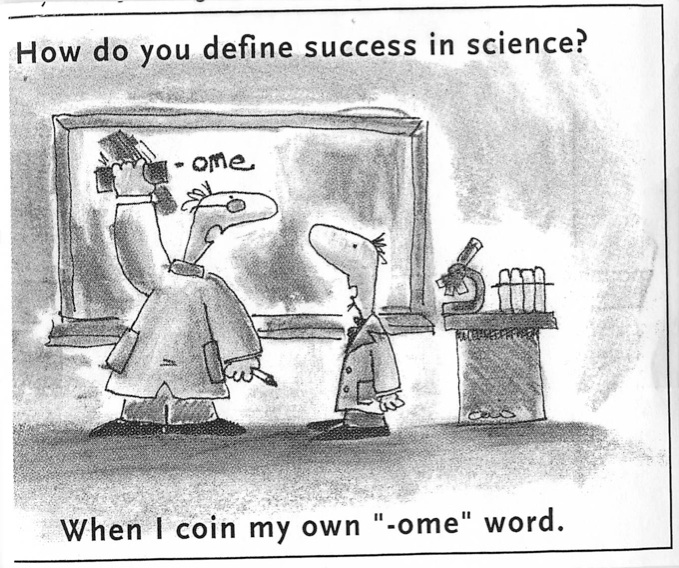
Trying to track down source of cartoon about coining "ome" words #badomics

I have this cartoon of direct relevance to my crusade to end the use of badomics words.  I have been trying to track where it came from for – like – ever.  And though I did not want to post it without getting permission I have decided to do so to try and track it’s source.  Here it is

I note – I tried using Google Image search (see a discussion of how to do this here) and it finds some other versions of this cartoon online but none of them have a source for it either.  

So – does anyone out there know where this came from?

Scifoo Notes via Storify

http://storify.com/phylogenomics/scifoo-2012.js?template=slideshow[View the story “scifoo 2012” on Storify]

#PLoSOne paper on the "horse #microbiome" and colitis; wonder if they will study ‘poo tea’

There is a new paper on the horse microbiome: PLoS ONE: Comparison of the Fecal Microbiota of Healthy Horses and Horses with Colitis by High Throughput Sequencing of the V3-V5 Region of the 16S rRNA Gene

They discuss the microbial community in the feces of healthy horses and those with colitis.  In the conclusions, they also discuss the possibility of “fecal transplants” to treat problems in the gut microbiome.

Bacterial species richness and diversity are thought to be important components of a ‘healthy’ intestinal microbiome. Decreases in richness and diversity have been associated with conditions such as chronic diarrhea and recurrent C. difficile infection (CDI) in humans [24], [40]. Restoration of bacterial diversity and richness is the principle behind fecal microbiota transplantation, an approach that has received much attention recently for successful treatment of recurrent CDI [41], [42]. Surprisingly, equine colitis was not associated with loss of diversity and richness, but further studies using more uniform groups of horses with specific etiologies are required. Microbiota transplantation might potentially be an effective treatment to restore this complex environment towards is considered more ‘normal’.”

I find it very surprising that they do not discussion “transfaunation” which is basically fecal transplantation in animals.  For more on transfaunation see:

And I think they should have / could have mentioned “poo tea” which some old school horse caretakers make for horses with colitis.  For more on that I suppose you can watch my Tedmed/Ted talk where I talk about this issue briefly

http://video.ted.com/assets/player/swf/EmbedPlayer.swf

A centralized journal commenting system? Who would comment there? Volunteers?

Well, just got off the phone with someone who is working on an open, centralized, system to comment on/rate all journal articles.  If all scientists used such a system that could be quite useful though I told the person, as I have said many times before, I am skeptical that people will use such a system when they can (and do) comment on papers in their social networks.  Anyway, this person asked if I could come up with a list of people who might be interested in being Beta testers of such a system.  So I am asking here – any volunteers?  Any recommended people who you know do a lot of commenting already in other places?

Thanks

Lab meeting August 8th, 2012

Guillaume Jospin will be presenting for this week’s lab meeting.
We will be meeting in room 5206 of the genome center from 1:30 to 3:30pm.

What #Scifoo did to me in 2006, 2007

In 2006 and 2007 I went to this amazing meeting called Science Foo camp, or “SciFoo.”  More about my previous experiences with it are here:Holy s$&# – I am going back to #SciFoo

Right now I want to note something that for me is pretty unusual.  In 2006 I gave a mini presentation on microbial diversity at SciFoo.  I just posted my slides to Slideshare here:

The next year I was not sure if I was going to try to present anything and then, while at SciFoo someone (can’t remember whom) asked me if I could do a presentation on “The Human Microbiome.”  Silly me – I said – sure.  Alas – it meant staying up very very late in the Wild Palms hotel because, well, I had never given a presentation on the Human Microbiome before that.  My slides from that are below:

Why am I writing this?  Well, doing that presentation is largely what moved me into being interested in the human microbiome and the microbiomes of various plants and animals.  Prior to that I had done very little work on communities of microbes associated with animals or plants.  I had done a lot of genomics, and studies of microbial diversity and even metagenomics.  But most of work on plant or animal associated microbes was one cases where there were a small number of symbionts living in or on a host – simple systems.  The complexity of the “microbiome” of plants and animals kind of scared me off.  I was thinking about doing more work on microbes associated with Drosophila but not yet convinced it was the right thing to do.  And that presentation – as well as the response from the people at SciFoo (e.g., Freeman Dyson said he found it fascinating) helped spur me on to do much more work on plant and animal associated microbial communities.

I wonder what will happen this year … SciFoo starts tonight …

Mars Curiosity discussion on Colbert

The Colbert Report Mon – Thurs 11:30pm / 10:30c
John Grunsfeld
www.colbertnation.com
http://media.mtvnservices.com/mgid:cms:item:comedycentral.com:417293
Colbert Report Full Episodes Political Humor & Satire Blog Video Archive