Eisen Lab Blog

Twisted Tree of Life Award #9: Nature News on the "Marsupial" platypus

OK, though this is not as bad as printing the wrong form of DNA on the cover Nature has another faux pas. In a recent Nature News story discussing a recent paper on the characterization of venoms in the platypus, Ewen Callaway reports in Poisonous platypuses confirm convergent evolution : Nature News:

By some accounts, being poisoned by a platypus could qualify as punishment in one of Dante’s circles of hell. In one case report2, Australian doctors described their treatment of a 57-year-old man a few hours after he grabbed one of the small marsupials while fishing. The pain was “so bad I started to become incoherent” the man said, and far worse than the shrapnel wounds he took as a soldier. Ibuprofen and morphine provided no relief, and one finger was swollen and ached more than 4 months after the run-in.

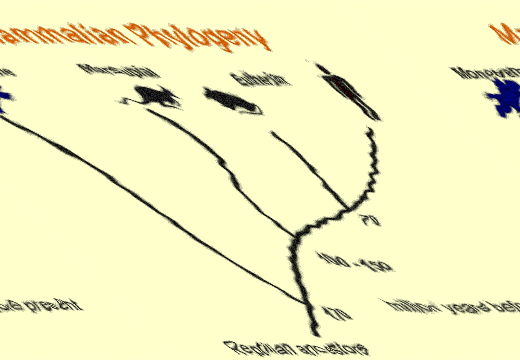
The only problem with this is that the platypus is a monotreme, not a marsupial.

From http://kaboodle.nescent.org/?q=node/594

Fortunately Nature does get this correct on the headline for the story “Genome analysis shows that the monotremes and snakes have similar venoms” but the damage is done in the middle.

The mistake in the middle of the article may seem a very minor thing to most of you out there.  But @an_dre_a is calling for action on twitter from the monotreme antidefamation league.  And I am now posting here and giving Nature my coveted “Twisted Tree of Life Award” (the ninth) to bring attention to this horrendous horrendous offense to monotremes everywhere.

Hat tip to @recher_she on twitter who called my attention to the Nature article because it mentions the “venome” a really #badomics word that I will be writing about later. 

10:10 AM on 10/10/10 Happy binary day

Just a quick happy binary day to all you 10101010101010101010101010101010 fans out there.

Twisted Tree of Life Award #7 #8: Alroy on "Changing the rules of evolution"

Twisted Tree of Life

Every once in a while I give out an award here for bad discussions of evolution in the media or scientific publications. I call this the “Twisted Tree of Life Award.” And here is a doozy. It comes from a recent paper in Science: The Shifting Balance of Diversity Among Major Marine Animal Groups — Alroy 329 (5996): 1191 — Science

The paper is actually pretty interesting. But the last line of the abstract. OMG. It is beyond awful. Here is the full abstract:

The fossil record demonstrates that each major taxonomic group has a consistent net rate of diversification and a limit to its species richness. It has been thought that long-term changes in the dominance of major taxonomic groups can be predicted from these characteristics. However, new analyses show that diversity limits may rise or fall in response to adaptive radiations or extinctions. These changes are idiosyncratic and occur at different times in each taxa. For example, the end-Permian mass extinction permanently reduced the diversity of important, previously dominant groups such as brachiopods and crinoids. The current global crisis may therefore permanently alter the biosphere’s taxonomic composition by changing the rules of evolution.

That last line saying that the current extinction crisis may change the rules of evolution really really really bugs me. Changing the rules? Please. If they are rules, then, just how, exactly do they change? If they do change, perhaps they should not be rules no?
And as an aside, what is up with Science not printing the full first name of authors? Does that really save space?
Anyway – not much to say here other than that J. Alroy is the winner of my the 8th “Twisted Tree of Life Award” for suggesting that the evidence presented in this Science paper changes the rules of evolution. And a half award goes to the editors of Science for letting this BS get into the abstract.
Previous recipients of this award are

Stanford Magazine and a veneer of science: helping the world buy "human pheromones"

Wow.  This ad for “Athena Pheromones” definitely caught my eye in Stanford Magazine in the September-October 2010 issue.   So I decided to scan it in and share.

The whole thing is, sadly, pretty lame actually.  These “pheromones” come from the Athena Institute, which they say was started by Winnifred Cutler who was a post doc at Stanford.  They claim, on their web site and in this ad, that she “Co-discovered human pheromones in 1986” and use this to I guess imply that whatever potions they sell must therefore work the way they claim.

Sure, the claims they make for what the potions they sell are not as outrageous as many things relating to sexual interactions.  In fact, they are pretty tame:

  • But 10X does this with the special power of human pheromones. 
  • Men who used 10X in their aftershave experienced increased romantic attention and affectionate behavior from women.
  • Some men report 10X improves their business relationships.

But what annoys me about this is the attempt to use science smoke and mirrors to support the claims.  As far as I can tell, they are using a series of tricks to make you think that this stuff really works.

First, they seem to be overinflating the scientific credentials of the founder of the company.  Sure she seems like she might be a decent scientist.  But they give her credit for the discovery of human pheromones.  And the evidence for this discovery is a bunch of news coverage from 1986.  But it seems from looking at the literature, not too many other scientists refer to these papers as having discovered human pheromones.  So my guess is one creatively written press release led to a lot of press and now, 24 years later they are still trying to ride the wave of publicity from the news coverage.

Second, they do some creative writing to make it seem that the scientific evidence of the effectiveness of the pheromones that they claim to include in their potions is overwhelming.  But upon closer examination, the work they cite is pretty minimal.  On one page they cite a poster abstract from a meeting in 1998.  On another they reference a 2002 paper by what appears to be an outside group that did a controlled trial of sorts – so at least there is some science here.  But it is pretty minimal.  Amazingly, and very annoyingly, if you want to read more detail about these studies they tell you: “to order reprint of full study click here)  and then you have to pay to get reprints.  
Third, and most troubling, is that it is very hard to figure out what exactly is in the little vials they sell for hundreds of dollars each.  Is it the same thing in the papers?  What is the concentration?  Is this homeopathic pheromonetherapy?  They say it is a trade secret – which does make some sense if it is real – but it is hard to evaluate without such information.

They must hope that we make the following connections (1) founder is a pioneer in scientific  studies of human pheromones (2) they have shown that some human pheromones really have effects (3) they sell vials supposedly with human pheromones -> therefore anyone interested in attracting more “mates” should buy the vials, since they must work. 

Many other aspects of the site are like this – referencing science, giving some sort of faux science veneer, but the science is actually pretty limited.  Not that I am saying human pheromones do not exist – most likely they do.  But is there something in these vials that is an effective human pheromone?  And if so, how much exactly do you get for $100?  My guess is, the true answers to these questions would lead most to stop buying this stuff.  

Here’s hoping molecular classification/systematics of cultured & uncultured microbes wins #NobelPrize in medicine

From Wu et al. 2009. A phylogeny driven genomic encyclopedia of bacteria and archaea. Nature 462, 1056-1060 doi:10.1038/nature08656  http://bit.ly/8Y8xea

Well, I am always hopeful.  Every year when the Nobel Prizes come around I am alway hoping that one of them goes to someone involved in studying microbial diversity in some way.  And really, there is a potential Nobel Prize in Physiology or Medicine out there in this area.  Sure they do not give out a Nobel in biology, or evolution or ecology.  But I think a good argument could be made for giving out a Nobel Prize in Physiology or Medicine to those who have worked on molecular systematics of cultured and uncultured microbes.

Why should this attract the attention of those giving out the Nobel Prizes?  Well, without molecular systematics of microbes we would be completely lost in a sea of microbial diversity.  And with such molecular systematics we can not only make much more sense out of the biology of cultured organisms, but we can go to environments and determine who is out there by sampling their genes.  And this type of work has undoubtedly revolutionized medicine, from determining what antibiotics are most likely to be useful in infections, to tracking emerging infectious diseases, to studying the vast diversity of microbes we have not yet cultured in the lab.  Certainly with the growing importance of the human microbiome in medical studies and the growing application of molecular systematics (e.g., rRNA surveys) to all sorts of aspects of microbiology, the time is ripe for an award in this area.

And who would get an award if one was given.  Well, certainly one of the people should be Carl Woese, who pioneered the use of comparative analysis of the sequences of rRNA genes to the study of systematics of microbes.  Woese of course was responsible for proposing the existence of a third branch in the tree of life – the archaea.  And even if you do not personally believe that the “three domain” tree of life is perfectly correct, Woese and colleagues (e.g., George Fox, who was a coauthor on some of the pioneering papers) were responsible for making microbial systematics a much more rigorous science than it had been.

And I think a good argument could be made for including Norm Pace in this Nobel as he was the one mostly responsible for pushing the sequencing and analysis of rRNA genes for studying microbes in the environment (though I note, others like Mitch Sogin also helped pioneer this field).  There is a direct path from Woese through Pace to much of modern molecular studies of microbes in the environment, including the latest approach – metagenomics.  In fact, there has even been a Nobel Prize already given that depended on much of this work – the one in 2005 to Barry Marshall and Robin Warren for discovery of the role of Helicobacteri pylori in causing stomach ulcers.

Anyway – just a short post about this – maybe more later.  But I sincerely think this would be a well deserved area in which to hand out one of those Nobel Prizes.  Not holding my breath, but always hopeful.

Here some potentially related things that I have written that may be useful to read:

Foundation: Nobel Prizes to be awarded via reality shows incl. Nobel Survivor, Sweden’s Next Model (System) & The Amazing Particle Race

In a surprise last minute press release the Nobel Foundation has announced that this year’s Nobel Prizes will be given out via reality show style competitions rather than by the traditional committee deliberations.

Marcus Snorch, Chairman of the Board of Directors of the Nobel Foundation said in at a press conference announcing the new system “We have noticed that in the last 5-10 years there has been a diminishing interest in the Nobel Prizes. This decrease appears linked to the steady increase in popularity of so-called reality show competitions. We felt like it was time for the Nobel Prize to try and attract a younger audience. Our reality Nobel series should be highly popular.”

Barbara Connon, chairman of the Nobel Foundation Board of Trustees concurred, “We all felt like a shake up was necessary. The Nobel Prize is so important for the world, yet nobody was paying attention anymore. Our new approach, where semifinalists are announced in advance and then a competition decides the winner, should bring new attention to the Prizes”

The announcement represents an agreement between the many institutions involved in awarding the Nobel Prizes including the Royal Swedish Academy of Sciences that presides over the prizes in Chemistry, Physics and Economics; the Nobel Assembly at the Karolinska which awards the Prize in Medicine, the Swedish Academy which awards the Literature prize and the Norwegian Nobel Committee that awards the Peace Prize.

At the press conference, the Nobel Foundation presented the new reality series, one for each Nobel Prize. The example they highlighted relates to this years prize in Physiology and Medicine which will be given out via “Nobel Survivor.” This show will feature Nobel Semifinalists living on a remote tropical island and the competitions will feature major medical “events” that one member of each team will experience.  Each week the team that responds least well to the challenge will have to vote off one member.  The challenges will include infections by schistosomes and filarial nematodes, a series of autoimmune disorders, premature aging, erectile disfunction, and severe body odor.  The competitions will be presided over by Hugh Laurie.

“Many of the Physiology and Medicine prizes have been criticized for being too disconnected from actual Medicine.  So we figured what better way to pick the winner than to make them actually do some medicine, but without all the comforts of home,” said Barbara Connon. This years semifinalists who will be participating include J. Craig Venter, Lee Hood, Joan Steitz, Alec Jeffreys, Carl Woese, Norm Pace, Mary Claire King, Douglas Coleman, Elaine Fuchs, and James Till.

Other shows for this and future year’s prizes include:

Sweden’s Next Model (System)
The 2011 Medicine and Physiology prize will feature a competition to determine what is the best model organism.

Real Literature Idol
The 2010 Nobel Prize in Literature will be given out via a literature reading and slam poetry series dubbed “Real Literature Idol”

The Amazing Particle Race
The 2010 Nobel Prize in Physics will be given out to the scientist who is best able to maneuver their particle through a month long journey around the globe.

Dancing Peacefully With the Stars
Enough with Peace Prizes being given to people who work on abstract global issues.  The 2010 Nobel Peace Prize will be given out through a dance competition.  All “stars” selected for the competition will be notorious for their difficulty in getting along with others and will include Mel Gibson, Alex Rodriguez, Lindsay Lohan, Barbara Streisand, Kanye West, Dick Cheney, Amy Winehouse, and Courtney Love.

The Swedish Chef
In order to make chemistry more “Real” for the public, the 2010 Nobel Prize in Chemistry will be awarded in a Swedish Cooking competition.

The Nobel Apprentice
The Prize in Economic Sciences (though not technically a formal Nobel Prize) will be awarded via a collaboration with an existing reality show “The Apprentice.” Candidates for the prize will compete to be Donald Trumps economic advisor.

The Nobel Foundation is also soliciting feedback, right here on this blog, for ideas for other Nobel Prize related reality shows for future awards.  Please submit suggestions.

So crappy it is awesome: Paper from Poo

Well, here is one for you microbiome fans out there.  Went to the UC Davis Vet School store on the way to work and found a display selling Paper from Poo. Not human poo of course but from animals that have a lot of fiber in their diet, like pandas, cows, horses and elephants. Some of the slogans are great such as:

“We take the ‘OO’ out of Poo!”

“We’re number one at number two”

Here are some pics of the display:

http://picasaweb.google.com/s/c/bin/slideshow.swf

For more on this see the PooPooPaper website.

BIS002C "Biodiversity & the tree of life" Lecture2&3 more on phylogeny & trees

Well, tomorrow is going to be a bit crazy for me.  I teach four lectures tomorrow for “BIS002C – Biodiversity and the Tree of Life” and UC Davis.  Well, actually, I do each of two lectures twice.  This happens for two reasons.  First, there are two sections for the class and the way we do it, each faculty gives each lecture for which they are responsible twice.  Second, on Mondays, we do two lectures for each section.  In total there are four lectures per week and our schedule is as follows

Section A:  MWF 11-12 M 6-7
Section B: MWF 3-4 M 7-8

So tomorrow at 11 AM I give Lecture 2 for the class to Section A.  Then at 3 PM I give Lecture 2 to Section B.  Then at 6 PM I give Lecture 3 to Section A.  Then at 7 PM I give Lecture 3 to Section B.  Well, enough trying to make it seem like I am working hard.  Especially after PZ Myers gave me a little grief about this on twitter since, well, my teaching load is not actually that big compared to many.

Anyway – back to the class.  I am going to be posting about the class here as much as I can.  To give people an idea of the whole course this is the general highly simplified schema:

Lectures 1-5 Phylogeny (me)
Lectures 6-13 Microbes (Bacteria, Archaea, microbial euks) (me)
Lectures 14-21 Plants and relatives (Jim Doyle)
Lectures 22-24 Fungi  (Jim Doyle)
Lectures 25-36 Metazoa (Susan Keen)
Lectures 37-38 Wrap up, symbioses, etc (Susan Keen)

I do Lectures 1-13 and possibly 37-38.

For the first week or so I am introducing the students to various aspects of phylogeny and phylogenetic trees.  We do this in part because the rest of the class is oriented around using phylogenies and phylogenetic trees so it is important that the students really understand them.

To that end, tomorrow here is the plan:

Lecture 2 will focus on (a) the components of a phylogenetic tree and what they mean plus (b) taxa and groups in trees.  Among the topics we will cover are rooted trees, rotating trees (e.g., vertical vs. horizontal), rotating branches in trees, monophyletic groups/clades, non monophyletic groupings, outgroups vs. ingroups and more.  Oh in addition we will show the awesome Tree of Life movie that we did not get to on Friday. See below

Lecture 3 will then focus on characters and on tracing character evolution on trees.  Among the topics we will cover include traits vs states, homology, ancestral vs. derived, synapomorphies, and the many faces of homoplasy.  Am planning to start posting slides from the class after lecture hopefully starting soon.  But I keep refining them so not going to post before I am close to done ….

Any comments or suggestions welcome …

BIS002C "Biodiversity & the tree of life" Lecture 1 tomorrow: Intro to phylogeny; #UCDavis

Well, tomorrow begins some serious craziness here at UC Davis for me.  School started today for the Fall Quarter here and tomorrow a class I am co-teaching (with Jim Doyle and Susan Keen) has its first lecture.  The course is labelled BIS002 C “Introduction to Biology”.  It is the third class in a three course/three quarter series.  BIS 002A covers molecular and cellular biology, genetics and related topics (just lecture).  BIS 002B covers the principles of ecology and evolution (with a lab).  And BIS 002C covers “Biodiversity and the Tree of Life” (also with a lab).

A few things to note.  First, each of these courses has to get taught each quarter here, since so many students major in or do something related to life sciences here at Davis.  And on top of this, each course has some 6-700 students (or more).  Alas, since we do not have a lecture hall big enough for this number of students, we have to give each lecture twice.  This means that, for BIS 002C which I only teach a little over a third of, I end up giving 24 lectures over three weeks (2 sections x 4 lectures per week per section = 8 lectures / week).  It is a bit crazy shall we say.  But fun too.  In total, some 2500+ students go through the series per year.

So, tomorrow it begins for me for 3+ weeks of intensity.  But I look forward to it I guess each year since the topics I cover I hold near and dear to my heart.  For the first week of the class, I will introduce the students to phylogeny (what is it, what are phylogenetic trees, how do we infer them, how do we use them).  Then I spend two whole weeks discussing microbial diversity – phylogenetic and functional.  I view this as a privilege in many ways as it is somewhat unusual for 8 lectures to be used in an introductory course on microbial diversity.

Anyway, I will be posting here some comments and details about the class and I thought I would give this tiny introduction.  Tomorrow we will spend some time introducing the course and discussing practical details and then I will get 20-30 minutes to introduce students to phylogenetic trees.  The whole series currently uses as a textbook “Life: The Science of Biology, 8th Edition” by Sadava et al (we are switching over to the 9th edition but not for this quarter) and for class I try to use as many figures from the text as possible.  But I also mix in my own here and there.

Here is an outline for tomorrow after the course intro

1. Introduction to biodiversity of life
2. Discussion of phylogeny
   * Definition
   * Show a few trees
3. Discuss how trees are oversimplifications of true evolutionary history but are useful
   * Populations not shown
   * Not all lineages shown
   * Complication of reticulation/gene transfer
4. Describe different components to a tree
5. Walk through the course outline using a tree of life as a guide
6. 3-4 examples of uses of phylogenetic trees
7. If time permits show a little movie (see below)

Quick Tip: if you want someone to share job ads, announcements, etc, send links to web sites not attachments

OK I have had it. I have had it with people who send me job ads and meeting announcements and other things they want me to “share” with colleagues or students. I got six such requests today – two for job ads, two for course announcements and two for meeting announcements.

But this rant may not be what you think. I am not annoyed that they want me to share something. I actually like doing this. What I am annoyed with is how people do this. 95% of the time people send these email requests with an attachment and expect me to forward this on to all who might be interested. And much of the time these attachments are big files, sometimes written in programs that only some people can open.

Does this work some of the time? Sure. Do I sometimes forward these on? Sure. But that approach is so 2005. Here in 2010 there are better ways than email blasts to people who mostly just click delete. In my opinion, the best way to get someone to share something like this is to post your announcement on the web somewhere and then send people a link to the web site. Include a brief summary in the email you send around and if people want more information they can go to the web site. Not only does this save some bandwidth and not clutter up peoples email servers, but it also allows those of us who share via Twitter and Friendfeed and Facebook and so on to more easily send the announcement around. I am sure many people prefer the attachments, but I for one get 50+ attachments a day, almost all of which do not get looked at.

UPDATE 9/23/2012
So – the post above was written two years ago, almost to the day.  And not much has changed.  Excepted perhaps the way people share links (I mention Friendfeed above — I guess I that could be replaced by Google+).

What is an easy way to post a document and then send people a link?  There are many ways to do this including

  • Post as a Google Doc/Presentation in Google Drive and send the link
  • Upload to Dropbox or another such site and, well, share the link
  • Post as a blog post (if you have a blog) or friggin start a blog and post it there
And of course many many other ways.  But please please please stop sending all these files around.  For a while I was posting them to my blog (I can autopost by forwarding email messages to the right address).  But I am sick of doing this for other people and am going to stop.