Eisen Lab Blog

Day 2 on the pump

Well, Day 2 on the pump was better than Day 1. The night went well — was a little weird to have a thing attached to me all night but not so bad – slept in some nice big Livestrong sweatpants with big pockets where I put the pump.

Earl AM went fine – had some issues with the pump in mid day – not sure what exactly was going on but still fine tuning the dosing and all the parameters with trying to make the pump mimic a pancreas.

Anyway – enough about me. Most important thing to post today is that tomorrow is World Diabetes Day. Lots of events and activities and other things going on in the real and cyber world.

Holy Slingjaw Wrasse and the power of twitter

OK I am now a bit blown away by twitter.

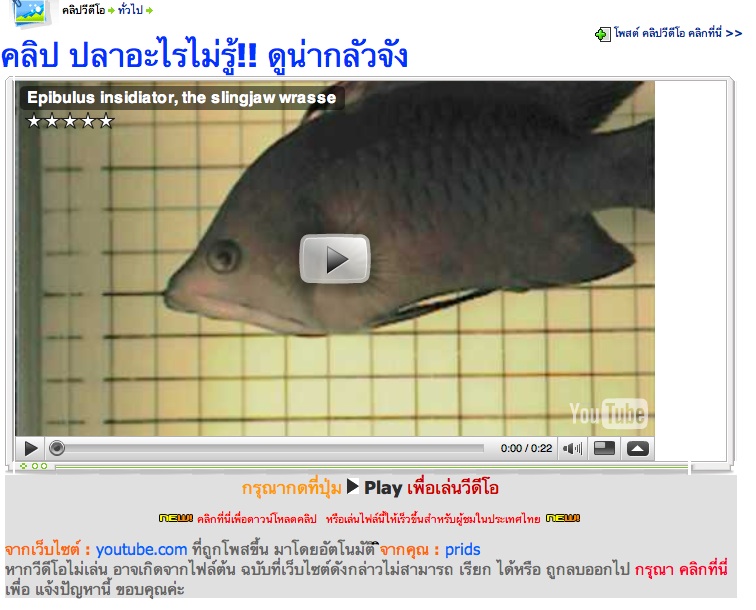
“Peter Wainwright showed this crazy slingjaw wrasse video in our class at#UCDavis yesterday:http://tinyurl.com/ybqv429

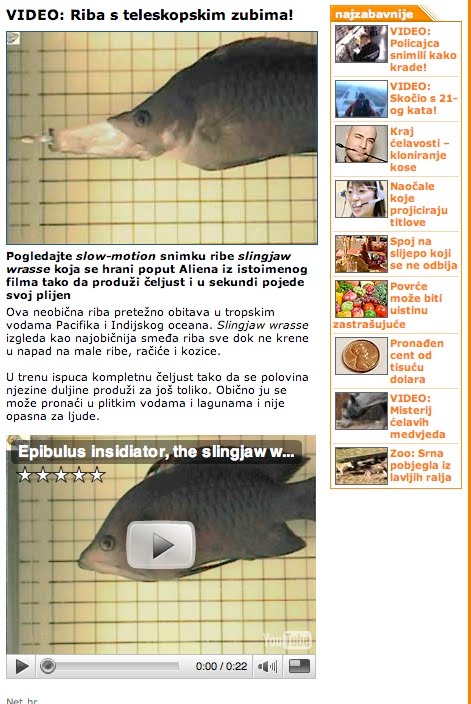
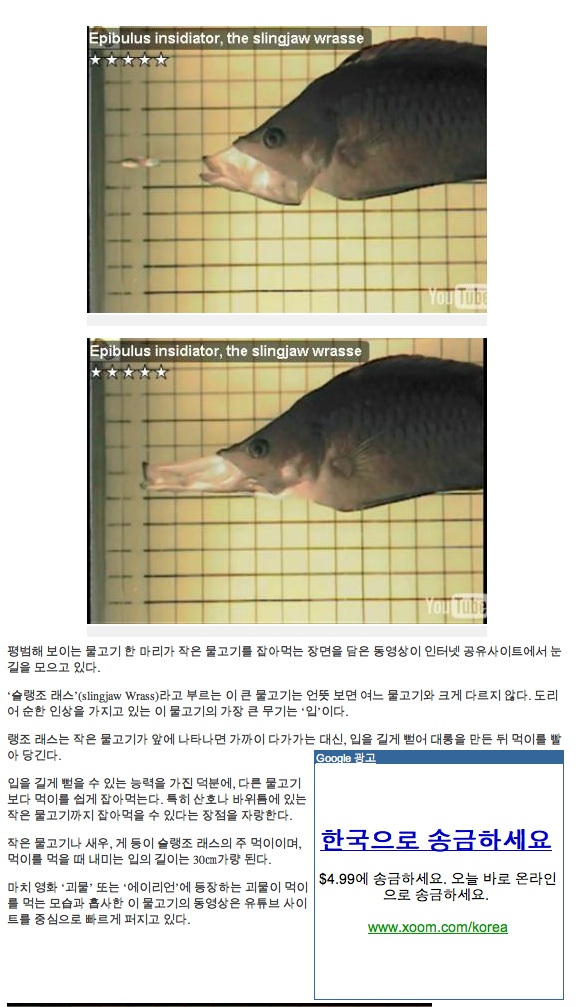
The video indeed is awesome:
And then a few others retweeted/commented on this.
Then Carl Zimmer blogged about it on “The Loom” in a post “The last thing the mosquitofish saw“.
And that is really when the fish hit that fan.
On Tuesday, Tom Chivers at the Telegraph wrote about it “Weird feeding habits of the slingjaw wrasse” saying

“Almost 6,000 people have watched the YouTube footage of Epibulus insidiator, a strange predator found in tropical waters in the Pacific and Indian Oceans.”

Little did he know what would happen next. It seems to have then gotten picked up by all sorts of web news sites around the world and KABOOM, like the fishes jaw, this video went crazy.
See for example
Now there have been 165,000 views. Completely deserving I must say. But pretty surprising too …
———————————–

And here are some more links:

Day 1 – Pumping Again

I was torn about whether to blog about this whole thing or not, but inspired by Lance Armstrong’s openness about this cancer treatments, I have decided that it might be useful to some people — so here goes….

Well, after a HORRENDOUS experience with the Insulin Pump last summer, I am trying it again. Last summer, I spent 2.5 weeks on the pump. Week 1 was freaky – getting used to the whole concept after 25 years on insulin. Week 2 was pretty nice – getting used to the whole thing. Week 3 was the worst – got a very bad infection at the pump insertion site. After a few days went off the pump and then spent 1.5 months dealing with something akin to MRSA. Never got the organism typed (which was really really dumb in retrospect) but when the third antibiotic I went on started to work it seemed like MRSA.

Anyway – more on the disaster later.

Today is for new beginnings. Starting on the Insulin Pump again. Got trained by the Medtronic specialist, which went much better this time than last time. And was up and running in ~ 2 hours. And then I went off with the pump connected, a cyborg again for the first time in over a year.

I went to work for a bit for my lab meeting (a student was presenting and I already delayed her presentation last week so could not ditch her again this week). And after talking to people a bit after lab meeting, I went home.

This time around, with a year to think about things, I feel much better being on the pump Of course I could still get an infection but hopefully that will not happen and things will go better this time.

1000 Complete Bacterial and Archaea Genomes -wow


1000 Complete Bacterial and Archaeal Genomes in Genbank. Big MileStone. Good day for a microbial genome party. This whole thing is amazing to me. I moved to TIGR in 1998 in order to get in early on the “genome sequencing revolution” as we called it then. We were amazed when the 10th genome came out. We were then thrilled when TIGR sequenced its 20th genome. And now, there are 1000. Amazing.

And as Nikos Kyrpides just told me (he is sitting next to me right now) – actually if you go to GOLD (Genomes Online) (Nikos runs this DB) you can see there are actually a few more than 1K there. Even more amazing.

Posted using ShareThis

Bay Area Bioinformatics Group

OK – so in the era of H1N1 it is definitely yucky to have REAL meetings with people, but this “Bay Area Bioinformatics” meetup group seems like a good idea. They have a meetup in Berkeley 11/14 at Cafe Strada. Folks can sign up here: BayBIFX (El Cerrito, CA) – Meetup.com

Seems like they are focused on East Bay but want to get Davis, and other people involved …

Bay Area Biosystematists Mtg 11/10, #UCDavis, on Community Phylogenetics

Bay Area Biosystematists Meeting: Tuesday, 10 November, 2009

at UC Davis, 1022 Life Sciences (LSA)

“Community Phylogenetics”

Featuring Jean H. Burns of the Center for Population Biology, UC Davis
Plus contributions from panel discussants:
Paul Fine, Integrative Biology, UC Berkeley
William Cornwell, Integrative Biology, UC Berkeley

Come and hear about this emerging synthesis of systematics and ecology that promises to transform the way we do both!

Schedule and venue:
5:30 – social gathering with beverages and informal pizza dinner:
cost ca. $12, to be collected at door, 1022 Life Sciences Bldg. (LSA),
UC Davis campus.
7:00 – talks followed by discussion, in same room.

Please email reservations to your host, Kristy Deiner, at alpinedna@gmail.com by Monday, Nov. 9th

All are welcome, members or not. If you want to join the Biosystematists, a venerable yet exceptionally lively group that provides the only inter-institutional seminar/discussion forum addressing evolutionary topics in the Bay Area, sign up for our mailing list at: https://calmail.berkeley.edu/manage/list/listinfo/babs-l@lists.berkeley.edu

For a map of this region of the UCD campus, use the link below.
http://www.cevs.ucdavis.edu/map/map_detail.cfm?centerTile=7_6

Posting Notes from NAS Microbes and Health Meeting here on my blog

I am going to be posting notes on the NAS Meeting on Microbes and Health Here

http://friendfeed.com/treeoflife/9ab60359/dennis-kasper-from-harvard-brigham-is-now-up-at?embed=1

http://friendfeed.com/treeoflife/21a50e16/beta-version-of-qiime-software-from-rob-knight?embed=1

http://friendfeed.com/treeoflife/afe12ea8/now-speaking-at-nasmh-gunnar-hanson-on-mucus?embed=1

http://friendfeed.com/treeoflife/6dde23dc/getting-ready-for-david-mills-from-ucdavis-to?embed=1

http://friendfeed.com/treeoflife/501f92f3/ruth-ley-at-nasmh-talking-about-development-of?embed=1

http://friendfeed.com/treeoflife/4fee5fdd/karen-guillemin-from-u-orgeon-is-now-talking-at?embed=1

http://friendfeed.com/treeoflife/7e249d3d/michiel-kleerebezem-is-talking-at-nasmh-about?embed=1

http://friendfeed.com/treeoflife/07aae71d/david-relman-from-stanford-now-talking-about?embed=1

http://friendfeed.com/treeoflife/5f1eb001/forest-rohwer-now-talking-at-nasmh-meeting-on?embed=1

http://friendfeed.com/treeoflife/96b1c26d/may-shift-from-twitter-to-friendfeed-for?embed=1

Elaine Holmes at #NASMH studying metabolomics & microbes vs. human hypertension & BMI & type II diabetes – strong IDing signals

Vaughan at #NASMH using “Simulator of the Human Intestinal Microbial Ecosystem” aka SHIME Reactor

@DavidSela There goes my 30 minutes of twitter fame …

Vaughan at #NASMH performing human ‘intervention study’ using tea & grape/wine polyphenols – each person is their own control

Keijser at #NASMH using microarray to survey rRNAs from oral samples – calls this the “OC” chip

Elaine Holmes #NASMH “dosed up post docs w/ Chamomile tea” & compared metabolites & microbes (hard to prevent EToH consumption though)

Elaine Vaughan from UNILEVER at #NASMH discussing bioconversion of dietary polyphenols by gut microbiota

RT @Scitable Cucumber genome published http://www.eurekalert.org/pub_rel… Guide to pumpkin, melon and plant vascular system #UCDavis

Bart Keijser at #NASMH talking about exploring oral microbiota in kids – using traveling “dental bus” – every kids nightmare

Keijser at #NASMH – w/ array get correlations betw. oral health status & certain organisms – these may be new targets for intervention

Vaughan at #NASMH looking at polyphenol metabolites from grape/wine extract & black tea – steps by microbiota vary greatly

Elaine Holmes at #NASMH trying to correlate specific metabolites w/ specific organisms – very difficult

Keijser at #NASMH using 454 rRNA sequencing to compare oral microbiota over time in permanent vs. “deciduous” teeth

Elaine Holmes at #NASMH is talking about metabolomics of microbes – see here home page here http://www1.imperial.ac.uk/medicin…
Monday from Twitter – Comment – Share – Edit

Elaine Holmes at #NASMH is talking about metabolomics of microbes – see here home page here http://www1.imperial.ac.uk/medicin…

Elaine Holmes at #NASMH looking at metabolites & microbes in model of bariatric surgery in rats

Elaine Holmes at #NASMH looking at metabolic profiles in different ethnic groups re; obesity epidemic

Elaine Holmes at #NASMH – using metabolomics of faecal H20 to compare normal & vancomycin treated mice

Elaine Holmes at #NASMH discussing study infecting germ free mice with microbiota from human babies http://www.nature.com/msb…

Elaine Holmes at #NASMH – metabolomics of urine from rats gives insight into gut microbiota (very cool)

Elaine Holmes at #NASMH – metabolomics of gnotobiotic (aka germ free) mice w/ and w/o colonization by microbes

R. Knight #NASMH discussing ecological “convergence” in microbial communities species assemblages

R. Knight #NASMH showing amazing study of microbes all over people’s bodies (27 or so locations)

R. Knight #NASMH – comparison of mammal gut communities shows clustering by diet

R. Knight #NASMH “much as we love rRNA at Boulder we accept that we have to look at other parts of the genome”

R. Knight #NASMH – deep sequencing gives us samples of rare biosphere – though unclear what these rare organisms do

R. Knight #NASMH using 454 sequencing to survey microbial communities – expensive but saves money in long run

Knight #NASMH – UNIFRAC comparison of all communities suggests vertebrate gut communities are very unique

Getting reads for my talk at #NASMH

Knight at #NASMH says “hierarchical clustering as w/ microarrays” -good 2C my brother’s work referred this way http://www.pnas.org/content…

Rob Knight at #NASMH discussing how UNIFRAC uses tree of life as organizing theme http://bmf2.colorado.edu/unifrac…

N. Moran #NASMH – aphid defense against parasitoids by H. defensa due to phage encoded toxins

Rob Knight – microbiome is good for personalized medicine b/c there is much variation between people

Rob Knight #NASMH discussing how van Leeuwenkoek was first to look at “Human Microbiome” using tooth scrapings

N. Moran #NASMH – many symbionts on border between bacteria & organelle – though more on the bacteria side

N. Moran #NASMH aphid resistance to parasitoid wasps due to presence of facultative symbiont H. defensa http://www.pnas.org/content…

# Rob Knight from CU-Boulder talking at #NASMH on 16s rRNA “enlightenment”

R. Knight #NASMH – was a major need for methods to compare rRNA data from different microbial communities

N. Moran #NASMH summary: symbioses major force in evolution, source of adaptation in changing envir, source of host constraints

N. Moran #NASMH comparing symbiont DNA repair genes: all missing some, some missing all, leads to incr. mutation rate & DNA biases

N. Moran #NASMH – once endosymbionts lose genes – never coming back b/c no lateral transfer – has profound effects on host ecology

R. Knight at #NASMH says next generation sequencing helps saves toothpicks previously used for colony picking

N. Moran #NASMH – accidental selection in lab for symbionts to lose heat shock response – see #PLoS Bio http://www.plosbiology.org/article…)

N. Moran #NASMH: organisms w/ small genomes lose non essential genes & also useful genes by drift b/c population sizes low

N. Moran #NASMH aphid resistance to parasitoid wasps due to presence of facultative symbiont H. defensa http://www.pnas.org/content…

# Rob Knight from CU-Boulder talking at #NASMH on 16s rRNA “enlightenment”

R. Knight #NASMH – was a major need for methods to compare rRNA data from different microbial communities

N. Moran #NASMH summary: symbioses major force in evolution, source of adaptation in changing envir, source of host constraints

N. Moran #NASMH comparing symbiont DNA repair genes: all missing some, some missing all, leads to incr. mutation rate & DNA biases

N. Moran #NASMH – once endosymbionts lose genes – never coming back b/c no lateral transfer – has profound effects on host ecology

Watching Nancy Moran, 1 of my favorite scientists, talk on symbioses at NAS Microbes&Health mtg (#NASMH) http://www.nasonline.org/site…

Nancy Moran at #NASMH: bacteria are incredibly diverse & plastic whereas animals are not so plastic & need some metabolic help

N. Moran #NASMH: in many symbioses host & symbiont phylogenetic trees are congruent -must be due to ancient associations

Nancy Moran defines symbiosis as I do: “members of more than 1 genetic lineage associate closely, often for mutual benefit” #NASMH

Nancy Moran: studies of symbionts used to be very hard b/c most cannot be cultured – molecular methods have revolutionized studies #NASMH

Nancy Moran is talking about symbioses

SHowing rRNA tree of life

Bacteria very diverse – in many ways – and very plastic and dynamic

Animals do not do this much

Essential roles of symbionts in animals – many examples

Giving props to Paul Buchner who documented associated involving bacteria buyt had not molecular methods and no culturing

More on the PLoS Special Collection on the Genomic of Emerging Infectious Diseases

In case people have not seen in. There is a new collection out from PLoS on the Genomics of Emerging Infectious Diseases. The collection, edited by me and Catriona MacCalum, one of the PLoS Biology Editors. It was sponsored by Google.Org who have a growing interest in emerging infectious diseases. Also heavily involved were Carol Featherstone a freelance writer/editor and Maggie Brown the copy editor.


An Editorial by me and Catriona describing the collection is here: PLoS Biology: Genomics of Emerging Infectious Disease: A PLoS Collection

The papers in the collection are listed below. It truly is an amazing collection of papers all on genomics of emerging infectious diseases and all completely open. Take the material from these papers. Reprint it. Reuse us. Mash it up. Use the figures. And most of all, help in the fight against emerging infectious diseases. Thanks to all the authors, all the PLoS folks (especially Catriona) and all the Google.Org people for working on this. And also thanks to Dr. Kiki for handling the interview for the podcast about the series which is available here.

http://www.flickr.com/apps/slideshow/show.swf?v=71649

Some more on the series from the web:

Eisen, J., & MacCallum, C. (2009). Genomics of Emerging Infectious Disease: A PLoS Collection PLoS Biology, 7 (10) DOI: 10.1371/journal.pbio.1000224

Genomics Faculty Jobs at the Joint Genome Institute


Just got an email from Eddy Rubin the Director of the Joint Genome Institute (JGI) advertising faculty jobs in genomics at the JGI. Looks like this could be very nice. I have an Adjunct Appointment at JGI and do a lot of work there and am hoping that some great people apply for these jobs …

Dear JGI User Community,
I would like to bring to you attention an elite early career faculty position presently available at the DOE Joint Genome Institute. The Divisional Fellow position that we are advertising (in Nature and Science, attached) is equivalent to a tenure-track faculty position at a university, and is appropriate for highly-qualified scientists with a Ph.D. or M.D. degree, who have completed post-doctoral training or equivalent experience. We are specifically seeking individuals to direct a genomics-based research program in the study of either plants, microbes, metagenomes or genome informatics. Divisional Fellows are appointed to five-year term, provided with research and salary support and an accelerated path for achieving promotion to Senior Scientist status at the end of this term.

I urge you to contact me directly if you have questions about the position while interested parties should submit CV, summary of research interests, and references to recruiter Bill Cannan: WRCannan@lbl.gov.

For more information see: http://jobs.lbl.gov/LBNLCareers/details.asp?jid=23646&p=1

Personal Medicine Panel Discussion at American River College

Genetics as a Consumer Good: The Personal Side of Medicine, What It Means,
and Who Should Know?
You can obtain a scan of your personal genetic code with just the internet and a credit card—
for as low as $100! Consumer Genomics can be part of your medical care in the 21st century.

• Will this information enable us to take charge of our own health?
• Is it a form of medical “self-malpractice”?
• How will Consumer Genomics affect patient privacy?

Explore these issues with leading experts in the field:

FREE Public Forum at American River College
Date & Time: Saturday, November 7, 2009 * 2:00 – 4:00 PM
Location: ARC Main Theatre * 4700 College Oak Dr. Sacramento
Free Parking in Lot D – Corner of College Oak Dr. & Myrtle Ave.

Speakers Include:
• Andro Hsu Ph.D.: Science and Policy Liaison, 23andMe (a pioneering Direct to Consumer
Genomics Company)
• Lynn Dowling, MA, MBA: Consultant to El Camino Hospital’s Genomic Medicine Institute (one of
the first hospitals to incorporate genetic analysis with traditional medical practice)
• Kelly Ormond, MS CGE: Program Director, Human Genetics and Genetic Counseling MS
Program, Stanford University (one of only four genetic counseling programs in the Western US)

For more information contact the North Valley Biotechnology Center at: (916) 484-8660