Jason Stajich set up a friendfeed room for today. See below where I am using the FriendFeed embed function …
http://friendfeed.com/rooms/jgi-user-meeting/realtime?embed=1

Jason Stajich set up a friendfeed room for today. See below where I am using the FriendFeed embed function …
http://friendfeed.com/rooms/jgi-user-meeting/realtime?embed=1
Well, I am at the JGI (Joint Genome Institute) User Meeting – and I am going to try and do some live blogging right here. I am going to do it differently than I have previously and do things in the comments not in the main page here. If it works, great. If not I might switch to FriendFeed. So check out the comments for new updates ….
Check out the website Extreme Ice Survey and the NOVA tonight. It is guaranteed to be spectacular.
From their web site they say
“The Extreme Ice Survey is the most wide-ranging glacier study ever conducted using ground-based, real-time photography. EIS uses time-lapse photography, conventional photography, and video to document the rapid changes now occuring on the Earth’s glacial ice. The EIS team has installed 27 time-lapse cameras at 15 sites in Greenland, Iceland, Alaska, and the Rocky Mountains. EIS supplements this ongoing record with annual repeat photography in Iceland, the Alps, and Bolivia.”
Went to a dinner last night that was in honor of Sean Carroll who is visiting Davis as part of the “Storer” lecture series. It was the first time I have met Sean — but I have followed him and his writing extensively. I already found him to be one of the best of the best in science and in explaining evolution. I really liked “The Making of the Fittest” and now he has a new one — which I have not read but it sounds great. It is called “Remarkable Creatures: Epic Adventures in the Search for Origin of Species“. He was also quite entertaining at the dinner and handled being peppered with questions very well. Alas I have to miss his talk today since I am at the Joint Genome Institute for a discussion about metagenomic sequencing of samples from Yellowstone National Park.
Just a little post here pointing out a new community blog at PLOS. Looks pretty cool … but of course I am a bit biased.
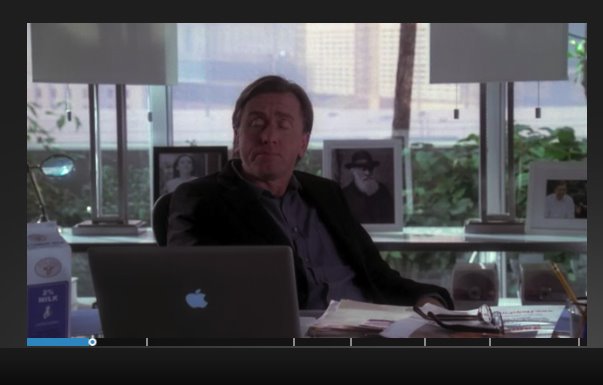
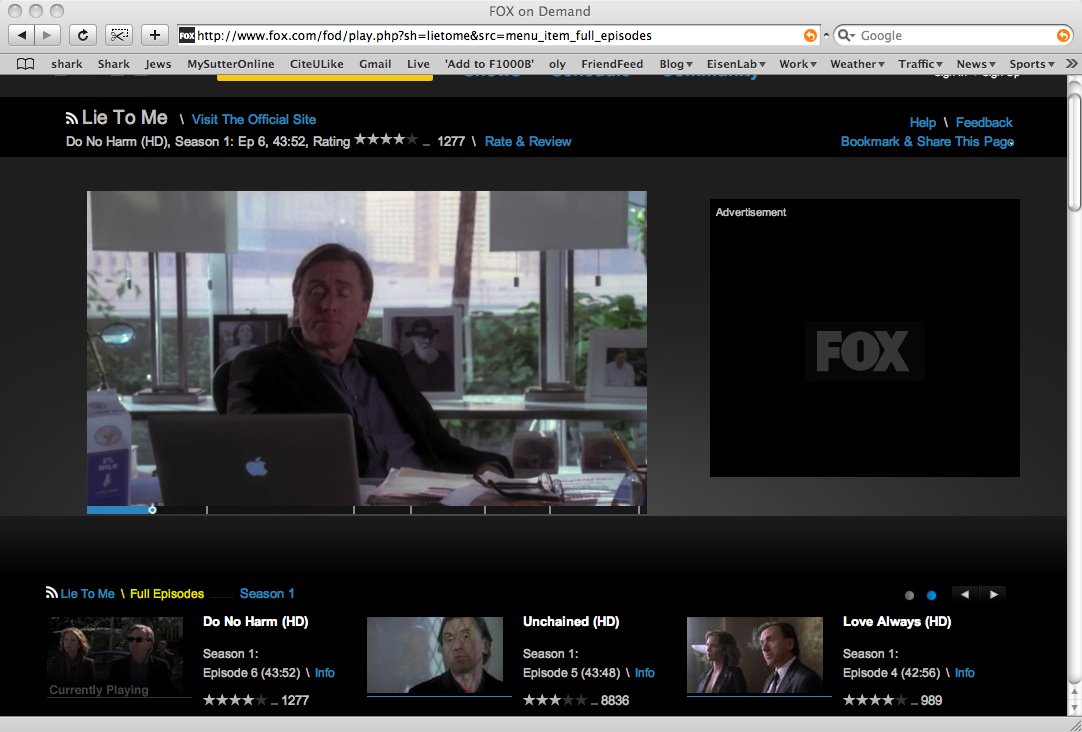
Hey – that looks like good old Charlie D. in the room of the lead character in Fox’s Lie to Me. Seems likely that it is, given that the show is advised by Paul Ekman from UCSF who is into Darwin. And of course, it really looks like some of the classic pics of Charlie. Good to see Fox TV is not too sold by the lame anti-evolution rhetoric sometimes spouted on Fox News.
Microbial Metagenomics
MMG 490/MMG 890 Section 432
Drs. Thomas Schmidt and Jay Lennon, MSU
June 15th — June 27th
Kellogg Biological Station
MTuWThFSat 9am – 5pm
*Admission to this class is by application only; Scholarship support is available!*
Just got this from the good folks at Nescent …
PHYLOINFORMATICS SUMMER OF CODE 2009
http://hackathon.nescent.org/Phyloinformatics_Summer_of_Code_2009
The Phyloinformatics Summer of Code program provides a unique opportunity for undergraduate, masters, and PhD students to obtain hands-on experience writing and extending open-source software for evolutionary informatics under the mentorship of experienced developers from around the world. The program is the participation of
the US National Evolutionary Synthesis Center (NESCent) as a mentoring organization in the Google Summer of Code(tm) (http://code.google.com/soc/).
Students in the program will receive a stipend from Google (and possibly more importantly, a T-shirt solely available to successful participants), and may work from their home, or home institution, for the duration of the 3 month program. Each student will have at least one dedicated mentor to show them the ropes and help them complete their project.
NESCent is particularly targeting students interested in both evolutionary biology and software development. Initial project ideas are listed on the website. These range from hardware accerelation for phylogenetic inference, to tree visualization within a wiki, to
alignment of next-gen sequencing data, to development of a reusable ontology term markup module for biocuration. All project ideas are flexible and many can be adjusted in scope to match the skills of the student. We also welcome novel project ideas that dovetail with student interests.
TO APPLY: Apply online at the Google Summer of Code website (http://socghop.appspot.com/), where you will also find GSoC program rules and eligibility requirements. The 12-day application period for students opens on Monday March 23rd and runs through Friday, April 3rd, 2009.
INQUIRIES: phylosoc {at} nescent {dot} org. We strongly encourage all interested students to get in touch with us with their ideas as early on as possible.
2009 NESCent Phyloinformatics Summer of Code: http://hackathon.nescent.net/Phyloinformatics_Summer_of_Code_2009
Google Summer of Code FAQ: http://socghop.appspot.com/document/show/program/google/gsoc2009/faqs
Cyberinfrastructure Traineeships (managed separately from GSoC; postdocs also eligible): http://hackathon.nescent.org/
Cyberinfrastructure_Summer_Traineeships_2009
Posting some notices here I have been getting from various federal agencies …
National Science Foundation
Office of the Director
Arlington, VA 22230
March 18, 2009
Notice No. 131
IMPORTANT NOTICE TO
PRESIDENTS OF UNIVERSITIES AND COLLEGES
AND HEADS OF OTHER NATIONAL SCIENCE FOUNDATION
AWARDEE ORGANIZATIONS
Subject: American Recovery and Reinvestment Act of 2009
On February 17, 2009, President Obama signed the American Recovery and Reinvestment Act of 2009 (Recovery Act) into law. One of the principal purposes of the law is to “provide investments needed to increase economic efficiency by spurring technological advances in science and health”.[1] During the signing ceremony President Obama stated,
“Even beyond energy, from the National Institutes of Health to the National Science Foundation, this recovery act represents the biggest increase in basic research funding in the long history of America’s noble endeavor to better understand our world. Just as President Kennedy sparked an explosion of innovation when he set America’s sights on the moon, I hope this investment will ignite our imagination once more, spurring new discoveries and breakthroughs that will make our economy stronger, our nation more secure, and our planet safer for our children.”[2]
In response to this landmark legislation, NSF has developed policies, procedures, and Frequently Asked Questions for use by the awardee community. These documents provide up-to-date information regarding NSF’s implementation of the Recovery Act, and are available at http://www.nsf.gov/recovery. The key elements of NSF’s implementation of the Recovery Act are highlighted below.
NSF Programs Receiving Recovery Act Funding
The Recovery Act supplements NSF fiscal year 2009 funding by $3.0 billion. NSF currently has many highly rated proposals that it has not been able to fund. For this reason, NSF is planning to use the majority of the $2 billion available in Research and Related Activities for proposals that are already in house and will be reviewed and/or awarded prior to September 30, 2009.
The Foundation also expects to expeditiously award funds as specified in the Recovery Act for: the Math and Science Partnership program (funded at $25 million); the Robert Noyce Teacher Scholarship Program (funded at $60 million); the Major Research Equipment and Facilities Construction Account (funded at $400 million); the Academic Research Infrastructure (ARI) program (funded at $200 million); and the Science Masters program, (funded at $15 million). Solicitations for these latter two programs will be posted this spring.
NSF will post a solicitation this spring for the Major Research Instrumentation Program (MRI) in order to make a sufficient number of awards to utilize the $300 million provided in the legislation. The Foundation currently anticipates that no other solicitations will be posted that are solely in response to the Recovery Act.
Funding Prioritization
NSF will ensure that Recovery Act funds are awarded in a timely manner while maintaining its commitment to its established merit review processes.
In keeping with this, NSF’s overall framework for Recovery Act investments emphasizes the following:
All grants issued with Recovery Act funds will be standard grants with durations of up to 5 years. This approach will allow NSF to structure a sustainable portfolio.
Funding of new Principal Investigators and high-risk, high-return research will be top priorities.
With the exception of the MRI, ARI and Science Masters programs, the majority of proposals eligible for Recovery Act funding include those that are already in house and will be reviewed and/or awarded prior to September 30, 2009.
NSF also will consider proposals declined on or after October 1, 2008. The reversal of the decision to decline must be based on both the high quality of the reviews received on the initial submission and the lack of available funding at the time the original decision was made. The cognizant program officer will contact the institution when a reversal is being considered by NSF. Specific procedural information regarding this new process is available on the NSF Recovery website.
Special Award Conditions
The Recovery Act mandates a significant level of transparency and accountability. The law and implementing guidance identify specific award conditions for awards made with Recovery Act funding. Therefore, award notices will include special award conditions identifying the funding as coming from the Recovery Act, and indicate the specific awardee reporting responsibilities mandated by Section 1512 of the Recovery Act.
Given the goals of the Recovery Act, awardees will be informed that they are expected to expend funds in a timely manner on allowable award costs and that NSF will be monitoring awards for expenditures. If, after 12 months, no allowable expenditures have taken place, NSF may consider reducing or terminating the award and reallocating the funds.
Working in Partnership
NSF is honored by the recognition of the Foundation’s role in stimulating the American economy with its inclusion in the Recovery Act. The law and implementing guidance issued by the Office of Management and Budget (OMB) set clear expectations for accountability and transparency from both Federal agencies and from recipients of Recovery Act funding.
The high expectations embodied in the Recovery Act acknowledge the contributions that NSF and its partners in the research and education community have made to the economy and welfare of the nation over the past six decades. This partnership is one of the nation’s greatest strengths, and we look forward to working with you as we continue to pursue the promise of science and engineering and meet the goals of the Recovery Act for securing the nation’s future.
Arden L. Bement, Jr.
Director
[1] P.L. 111-5, Section 3 (a) (3). The full text of the American Recovery and Reinvestment Act of 2009 is available electronically at: http://frwebgate.access.gpo.gov/cgi-bin/getdoc.cgi?dbname=111_cong_bills&docid=f:h1enr.pdf
[2] The full text of President Obama’s remarks at the signing ceremony is available at: http://www.whitehouse.gov/the_press_office/Remarks-by-the-President-and-Vice-President-at-Signing-of-the-American-Recovery-and-Reinvestment-Act/
All NSF official issuances can be found on Inside NSF at http://infoshare.nsf.gov.
If you need a paper copy of this issuance, contact the Supply Unit on P-1 at ext. 8134.
[NSF Official Issuance]
=======================================
InfoShare
http://infoshare.nsf.gov/
Please send questions and comments to feedback-int@nsf.gov
In case you are not aware, my brother (Michael Eisen) and Larry Lessig have been engaging in a public “debate” with John Conyers over Conyers’ sponsorship of a bill to revoke the NIH policy on Open Access to publications. First the elder Eisen and Lessig wrote a posting:Is John Conyers Shilling for Special Interests? which they then followed up with John Conyers, It’s Time to Speak Up. Now Conyers has written a reply: A Reply to Larry Lessig (which I note should have been titled A Reply to Eisen and Lessig, but that is for another day). Anyway it is worth reading them all and if I had not been sick for the last like 3-4 weeks I would write more but I have a million things to catch up on now that I have mostly gotten rid of nasty microbe #3.


 Jonathan Eisen's Lab