Eisen Lab Blog

Boston University adopts Open Access policy

Just saw a nice story about BU adopting an Open Access policy.

See the BU Today article

Some detail with some nice quotes in support of OA:

Boston University took a giant step towards greater access to academic scholarship and research on February 11, when the University Council voted to support an open access system that would make scholarly work of the faculty and staff available online to anyone, for free, as long as the authors are credited and the scholarship is not used for profit.

“Open access will really highlight the tremendous productivity of our faculty,” says Millen. “Among the more important things needed to make it work is a collaboration between the libraries and our faculty to get their research onto the Web. It’s not an inconsequential task.”

….
“This vote sends a very strong message of support for open and free exchange of scholarly work,” says Hudson. “Open access means that the results of research and scholarship can be made open and freely accessible to anyone. It really has increased the potential to showcase the research and scholarship of the University in ways that have
not been evident to people.”

Hat tip to Tom Tullius …

Some pics from the Tour in Davis

Well, it was really really really wet out there but tons of people were out in Davis nevertheless. I got some pics — although my phone cam was not working great in the pouring rain. Anyway – here they are, including one of Floyd Landis ..

http://picasaweb.google.com/s/c/bin/slideshow.swf

Tour of California before the start in Davis

Here comes the tour (of California) — Davis is going big —

Very excited that the Tour of California is starting in Davis this year (for Stage 1 on Sunday). It should be a good stage — from Davis to Santa Rosa.

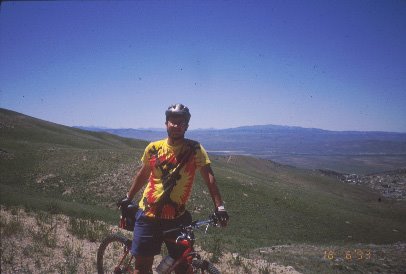
And there are many many big names in the tour this year – even more than last year. In particular of course is Lance Armstrong. I have been a big fan of Lance for many many years — since I encountered him in Palo Alto when I was a grad. student. He had just won the World Championship and was in town to sing autographs and hang out at Wheelsmith, the best bike shop in the area. I was just getting into cycling and was going to Wheelsmith for some other reason and there was Lance. I got him to sign a few things and then thought, what would be coolest would be if he signed my favorite T-shirt (which I am wearing in the picture here). And he made my day by saying “Cool shirt” and asking where I got it.

Anyway — it is going to be a big big day in Davis tomorrow with Lance Armstrong, and a whole gaggle of big time cyclists here in the best biking town in the country.

And here are some links related to the race …

NSF looking OK in revised stimulus bill

Just downloaded what I think is the current bill that the House just passed for the stimulus.  And it looks like the National Science Foundation is coming out OK.  It says

NATIONAL SCIENCE FOUNDATION
NSF is directed to submit to the House and Senate Committees on
Appropriations a spending plan, signed by the Director, detailing its intended
allocation offunds provided in this Act within 60 days of enactment of this Act.
RESEARCH AND RELATED ACTIVITIES

For research and related activities, the conference agreement provides a total
of $2,500,000,000, to remain available until September 30,2010. Within this
amount, $300,000,000 shall be available solely for the major research
instrumentation program and $200,000,000 shall be available for activities
authorized by title II of Public Law 100-570 for academic facilities modernization.
In allocating the resources provided under this heading, the conferees direct that
NSF support all research divisions and support advancements in supercomputing
technology.

EDUCATION AND HUMAN RESOURCES
The conference agreement includes $100,000,000 for education and human
resources, to remain available until September 30, 2010. These funds shall be
allocated as follows:
Robert Noyce Scholarship Program …………………….. .
Math and Science Partnerships …………………………… .
Professional Science Master’s Programs ……………… .
$60,000,000
25,000,000
15,000,000
MAJOR RESEARCH EQUIPMENT AND FACILITIES CONSTRUCTION
The conference agreement includes $400,000,000 for major research
equipment and facilities construction, to remain available until September 30,
2010.
OFFICE OF INSPECTOR GENERAL
The conference agreement includes $2,000,000 for the Office of Inspector
General, to remain available until SeptemberJO, 2013.

Google LOVES Darwin


Love that image on Google in honor of Darwin’s 200th.  You go google. 

Charles Darwin relic hidden in the chimp and human genomes

So – in honor of Charles Darwin and as a follow up to my analysis of Sarah Palin’s name (which amazingly showed as a best hit a fungus called B. fuckeliana) I decided today to do some blast searches with old Charlie D.’s name. You see CHARLES DARWIN includes letters that all are abbreviations of amino acids that make up proteins, so you can compare his name, pretending it is a protein, to proteins from other organisms.

So I went to the NCBI blast page and did a BLASTP search. Blastp searches a peptide against a database of peptides and identifies in the database sequences if one or more have similar amino-acid sequences to the one used to search (which is known as the query) . To make this work, I had to adjust some of the default parameters to make it possible to better detect short matches (I raised the # of expected matches to 10000).

Alas, no good matches convincing matches to known or predicted proteins came up. So I was sad. Then I said, what if Darwin was hiden in the genome of some organism? So I did a “translational” blast search called tblastn which takes a peptide and searches it against a DNA database and translates the DNA into all possible peptides it could encode. When one does this, one can possibly find “hidden” proteins or relics of proteins in the DNA that may not have been labelled as proteins by whomever analzyed the DNA data.

And what did I find by this Tblastn search? A jackpot to make evolutionary biologists VERY happy. The best matches for CHARLESDARWIN the peptide? Pan troglodytes. AKA Chimps. And humans (the matches were equally strong).

So – hidden in the human and Chimp genomes is a relic of one Charles Darwin. Happy Birthday Charlie.

———————————————-
See search results below:

Score E
Sequences producing significant alignments: (Bits) Value

gb|AC199643.3| Pan troglodytes BAC clone CH251-444E8 from chr… 25.8 1930
gb|AC093749.3| Homo sapiens BAC clone RP11-30B7 from 4, compl… 25.8 1930
gb|AF250324.1|AF250324 Homo sapiens chromosome 4q35 BAC clone… 25.8 1930
gb|AC217674.3| Pan troglodytes BAC clone CH251-398H5 from chr… 25.0 3549
gb|AC195095.2| Pan troglodytes BAC clone CH251-577A14 from ch… 25.0 3549
gb|AC188794.3| Pan troglodytes BAC clone CH251-69H24 from chr… 25.0 3549
gb|AC183104.3| Pan troglodytes BAC clone CH251-567E15 from ch… 25.0 3549
gb|AF105153.3| Homo sapiens alpha-satellite centromere border… 25.0 3549
emb|AL353763.14| Human DNA sequence from clone RP11-87H9 on c… 25.0 3549
gb|AC116618.4| Homo sapiens BAC clone RP11-98L17 from 4, comp… 25.0 3549
emb|CR786580.6| Human DNA sequence from clone RP11-764K9 on c… 25.0 3549
emb|AL591385.7| Human DNA sequence from clone RP11-391M20 on … 25.0 3549
emb|AL445925.19| Human DNA sequence from clone RP11-403A15 on… 25.0 3549
emb|AL592183.10| Human DNA sequence from clone RP11-297D8 on … 25.0 3549
ref|XM_787798.2| PREDICTED: Strongylocentrotus purpuratus sim… 24.3 6861
ref|XM_001201471.1| PREDICTED: Strongylocentrotus purpuratus … 24.3 6861
gb|AC195625.1| Pan troglodytes BAC clone CH251-895L14 from ch… 23.9 7711
gb|AC175749.2| Pan troglodytes BAC clone CH251-1124N9 from ch… 23.9 7711

Download subject sequence spanning the                                    HSP Pan troglodytes BAC clone CH251-444E8 from chromosome 7, complete sequence Length=155150
Score = 25.8 bits (55), Expect = 1930, Method: Composition-based stats. Identities = 8/13 (61%), Positives = 11/13 (84%), Gaps = 0/13 (0%) Frame = -2

Query 1 ____ CHARLESDARWIN 13
_____________CH RLE D+++IN
Sbjct 145762 CHVRLEQDSKYIN 145724

gb|AC093749.3| Download subject sequence spanning the                                    HSP Homo sapiens BAC clone RP11-30B7 from 4, complete sequence Length=163102 Score = 25.8 bits (55), Expect = 1930, Method: Composition-based stats.
Identities = 8/13 (61%), Positives = 11/13 (84%), Gaps = 0/13 (0%) Frame = -3

Query 1 ___ CHARLESDARWIN 13
____________CH RLE D+++IN
Sbjct 31925 CHVRLEQDSKYIN 31887

10 simple ways to honor Charlie D (aka Darwin)

If you do not know, Thursday is a big day – Darwin Day 2009. A global celebration in honor of the 200th anniversary of Charles Darwin’s birth. Today I am making a suggestion of 10 simple things you can do to honor Darwin:

  1. Read one of his books OTHER than Origin of Species (see Darwin online for some there). My favorite is the Voyage of the Beagle but there are many others.
  2. Stop using the terms Darwinism and Darwinian evolution (see Safina for more on this – I thought this article was a bit of overkill but still has some important points).
  3. Vote against anyone who says Intelligent Design should be taught in science class or that you should “teach the controversy.” Or at least endorse right thinking candidates.
  4. Contribute to evolution education in some way – teaching, writing a book, releasing teaching materials, donate to a museum (e.g., California Academy) or other organization (e.g., NCSE) or even the cool HMS Beagle Project. Just help educate the world about the science of evolution.
  5. Attend some Darwin Day celebration(s).
  6. Get a cool evolution tattoo (see Zimmer for more) or display your support in some outward way.
  7. Support the National Science Foundation (if you are in the US) as they are the strongest supporters of Evolution related research.
  8. Name your kid or pet or boat or city after him.
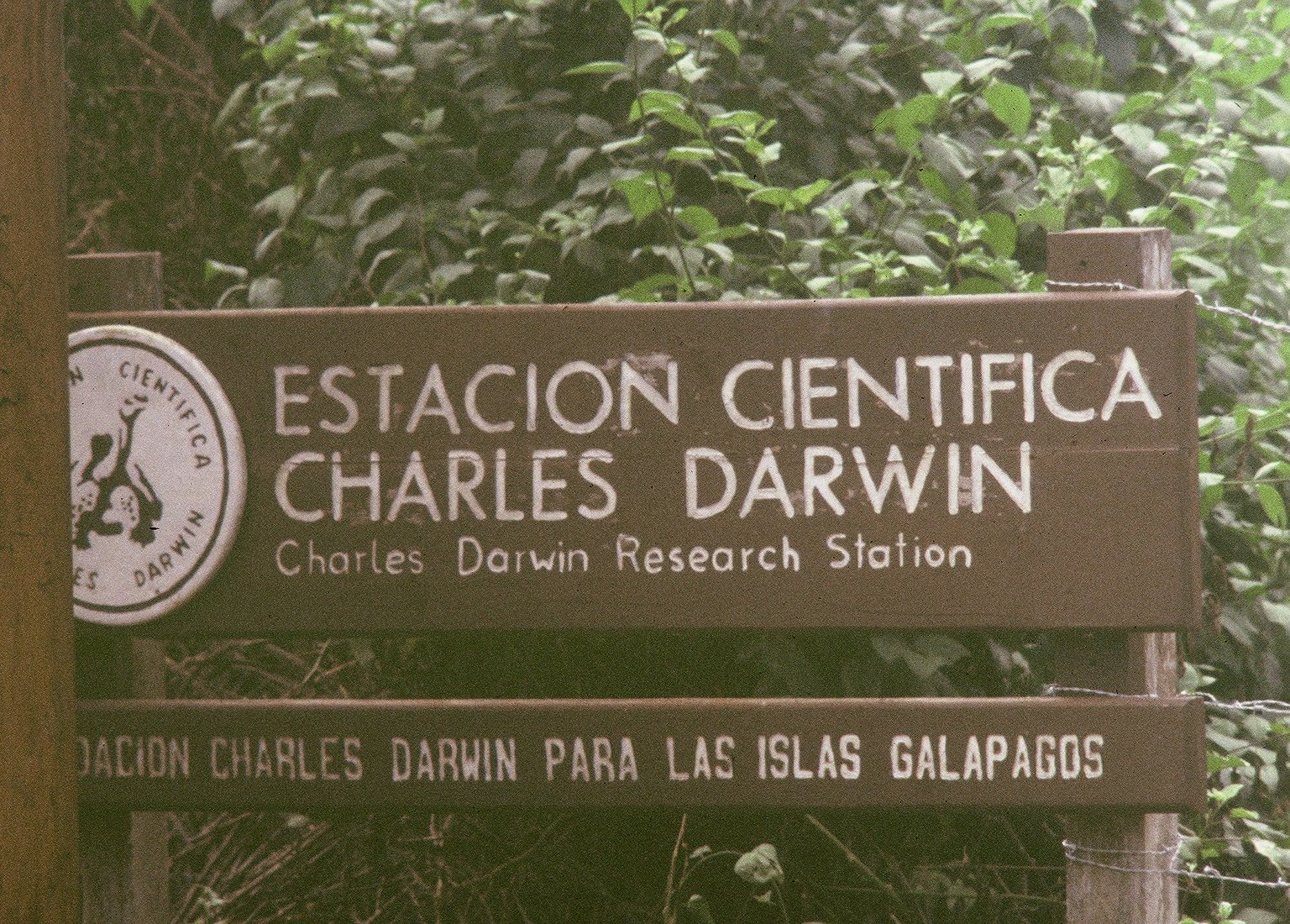
  9. Visit the Galapagos or at least check out the Darwin Station online.(see pics below …)
  10. Insert your own here …..

Open Evolution: Kudos to SMBE for creating a new Open Access publication – Genome Biology and Evolution

Another sign that Open Access is spreading.  SMBE, which publishes the journal MBE (Molecular Biology and Evolution) is announcing the creation of a new journal – Genome Biology and Evolution (GBE).  And happily it will be an Open Access journal being published by Oxford under the Oxford Open system (not quite a full creative commons license like PLoS journals, but pretty good).  I am VERY pleased to see this, especially since I quit the Editorial Board at MBE mostly because they were not moving fast enough to Open Access for me.  Kudos to SMBE, Bill Martin (the new Editor in Chief of GBE) and all the folks at Oxford for doing a good thing.

Please – bash my latest paper – for the benefit of humanity

My lab has a new paper that just came out on the sequencing and analysis of the genome of a pretty cool (or hot actually) bacterium, Thermomicrobium roseum, which was isolated from a Toadstool Spring, an alkaline siliceous hotspring in Yellowstone National Park. This paper is from a grant we had when I was at TIGR as part of the “Assembling the Tree of Life” program at NSF. Our grant was focused on generating genome sequences from phyla of bacteria for which no genomes were available.

At the time this species was a representative of a phylum that had no genomes. After we started sequencing, the phylum was dissolved, but never mind that for now. We report what I think are some very interesting things in the paper. Among them:
  • We report the first example of a plasmid that encodes all the genes needed for chemotaxis including all the genes for making a flagellum. Given that they are on a plasmid this suggests that motility could be easily transfered between species.
  • We report experimental work and genome analysis that helps understand the novel membrane and cell wall structure in this species.
  • This is the first thermophile known to oxidize carbon monoxide
But I am not writing per se about the things I like about our paper. I am instead asking people out there to find things wrong with our paper. Why am I doing this? Because this paper is part of a broader experiment in publishing in that it is in PLoS One. And one of the main benefits of PLoS One is the features that allows commenting on publications. I personally believe such features are part of the future of scientific publication. But it is currently unclear just how effectively such commenting features are used (note Euan Addie is doing a survey about comments on PLoS One papers here).

So I am offering up my paper as a case study. If you comment and ask questions or make critiques, I will try to respond. And if you think something in our paper is wrong or weird, please say so. If you think something in our paper is supported by other work we do not cite, please say this too. If you have anything useful to say, please make comments.

How do you do this?

  • Go to the paper at the PLoS One Web Site.
  • In the upper right click on “Login” if you have an account or “Create account” if you do not.
  • Return to the paper once you are logged in
  • Find some part of the text you want to comment on
  • Highlight that text and click over on the right “Add a note” or “Make a comment”
  • Fire away.