Eisen Lab Blog

EMBO Symposium “A New Age of Discovery for Aquatic Microeukaryotes” 1/26-29, 2016

Posting this notice I receive from Jon Kaye at the Gordon and Betty Moore Foundation:

Colleagues –

We have lined up a fantastic group of speakers for the upcoming EMBO Symposium on aquatic protist ecology and evolution and are seeking additional speakers and poster contributions to be selected from submitted abstracts!

Abstract submission deadline is approaching — October 22. The symposium is stimulated by the completion of the Marine Microbial Eukaryote Transcriptome Sequencing Project (MMETSP) and major milestones achieved by the Tara Oceans and Malaspina expeditions. The goal is to bring together the MMETSP, Tara Oceans, Malaspina, and well-established protist model systems communities. The Symposium will take place in Heidelberg, Germany from 26–29 January 2016.

http://www.embo-embl-symposia.org/symposia/2016/EES16-01/index.html

Invited speakers include the following scientists whose specialties range from marine and freshwater microeukaryote ecology to studies of long-standing protist model systems such as Tetrahymena and Chlamydomonas:

http://www.embo-embl-symposia.org/symposia/2016/EES16-01/speakers_gallery/index.html

The sessions are:

1. And You May Ask Yourself, “Well…How Did I Get Here?”: Biodiversity Patterns across Space and Time
2. Love–Hate Relationships: Intimate Interactions, from Trophic Interactions to Symbiosis
3. Weird and Wonderful Organelles and Symbionts—Photosynthesis, Respiration, and Beyond
4. Knock, Knock—Who’s There? Extracellular Signaling
5. Genetic Transportation: Causes and Consequences of Gene Exchange in Protists
6. Small Microbe, Big World: Microeukaryotes in Aquatic Ecosystems
7. Situation Normal, All Stressed Out
8. Evolutionary Tipping Points: How Do Protists Adapt?

The organizers will be selecting poster and additional oral presentations from the submitted abstracts. The abstract submission deadline is 22 October 2015, and the registration deadline is 3 December 2015.

Wrap up of talk by Rich Lenski at UC Davis

Rich Lenski gave a talk today at UC Davis – part of a two talk series. This was a presentation more for the public and tomorrow he gives one more for the science crowd. Today’s talk was a really nice overview of Lenski’s work on long term evolution experiments in E. coli. I made a Storify of the tweets about the talk:

Volkswagen: Diesel Transplants Reveal Likely Culprit Behind Deiselgate: Car Microbiomes

Screen-Shot-2015-10-06-at-9.30.41-AM-1038x576.png

By Morten Blaser

WOLFSBURG (AP) – Volkswagen held a press conference earlier today to present the results of their preliminary investigation into the “dieselgate” controversy.

Volkswagen’s CEO to be Hans Dieter Poetsch himself oversaw the press conference in Wolsfburg where the company presented the results of this investigation .

“We are determined to get to the core of the problems with the vehicle testing anomalies. We have begun testing many theories, including what we thought was the most likely explanation – that a rogue engineer in secret without the knowledge of anyone else wrote millions of lines of code to rig the smog tests” reported Poetsch. “Although this still seems plausible we have found another possible explanation, which has led us to hold this press conference today.”

Poetsch then turned over the lectern to Volkwagen’s Chief Scientist Josephine Candelsman.  She gave a six hour PowerPoint presentation on the investigation.  The key came right at the end:

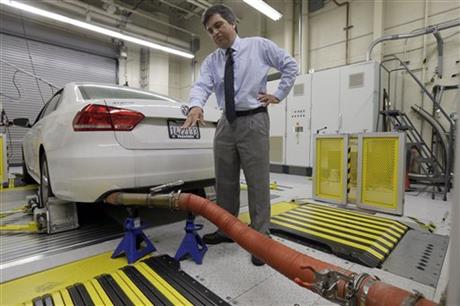
“To test one possible explanation – we carried out a diesel transplant where we took the diesel from one vehicle that had failed the test and removed it and transferred it to another vehicle that had passed the test.”

460x.jpg
Diesel transplant being carried out

The crowd was hushed when she reported the key finding:

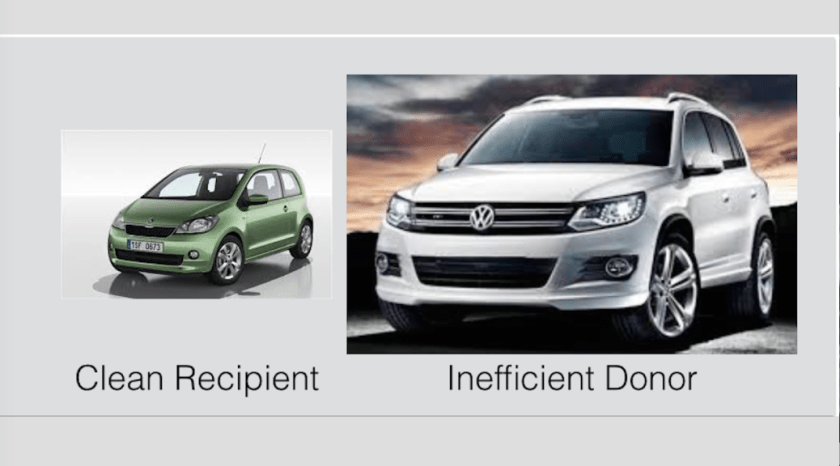
“Amazingly, the recipient vehicle went from being lean, green and energy efficient to being an incredibly inefficient, pollution pumping vehicle. In other words, something in the diesel transferred the inefficiency from one vehicle to another.”

Screenshot-2015-10-05-00.29.47-300x136.png

Gordon then turned over the presentation to Volkswagen’s Chief Microbiologist Jeferina Gordon:

We ran the diesel from the donor and recipient vehicles through a series of tests – especially an array of genomic analyses.  And what we found was that the microbes in the donor diesel were very different from those in the recipient.  This “dieselome” analysis also showed that after a diesel transplant from a sick vehicle, the microbes in the previously healthy, efficient vehicle become more like those from the sick donor.

Screenshot 2015-10-05 00.12.03

Screenshot-2015-10-05-00.12.03.png

Gordon concluded by saying:

“It is clear to us that the problem is not actually in software but it is in the microbes in the vehicles.  Somehow the microbes in the vehicles that were failing the test were different than in the healthy vehicles.”

This reporter then asked Gordon if they had any explanation for what could have caused the difference.  She responded:

We are unsure of the causes.  But we believe the most likely explanation is excessive use of antimicrobial cleansers in the cleaning of vehicles, or possible the choice of air filtration systems that may have eliminated beneficial microbes from the vehicles. We are investigating.

At #UCDavis 10/8: MicroRNAs and the diabetic beta cell

Dr. Anath Shaleve

Professor of Medicine

Nancy R. and Eugene C. Gwaltney Family Endowed Chair in Juvenile Diabetes Research

Director, Comprehensive Diabetes Center

University of Alabama at Birmingham

“MicroRNAs and the diabetic beta cell”

Thursday, October 8, 2015

4:10 p.m.

1022 Life Sciences

Host: Mark Huising

(mhuising)

(If you wish an appointment with the invited speaker, please contact the host.)

Shalev_Mtg Notice.pdf

Faculty position: Plant Evolutionary Biologist at CSUN

Dear Colleagues:

Cal State Northridge is hiring a Plant Evolutionary Biologist and I’m seeking your help to identify any qualified candidates. Ideally, we’re looking for somebody with expertise in molecular systematics, but we’ll consider anybody that works on evolutionary questions associated with plants and has a strong record.

Although Cal States don’t have the reputation of most R-1 schools, CSUN is an exception in that our President and Provost are pushing research more than most Cal States and putting their money where their mouth is. Despite having to teach slightly more than some places, I’ve found enough time and resources to do what I want here (well, at least as much time as any of us have to do what we want). I’d appreciate your forwarding this along to people that you think might be appropriate.

Qualifications:

California State University, Northridge, seeks a Plant Evolutionary Biologist to become a tenure-track Assistant Professor of Biology. Applicants’ research should address evolutionary questions in plant biology, with a preferable focus on molecular systematics. Applicants must have a Ph.D. and postdoctoral experience. Teaching will include Evolutionary Biology, Flowering Plants, and/or an upper division course developed by the applicant. The successful candidate is expected to develop a vigorous research program involving undergraduate and M.S. students, aggressively seek extramural funding, demonstrate teaching excellence, and provide effective instruction to students of diverse backgrounds in a multicultural setting.

The successful candidate is expected to establish a productive research lab, preferably involving research on plants in their natural habitat and to collaborate with others in the department using molecular tools, including next-generation sequencing technologies. The Department of Biology has a fully functional Molecular Core Facility with an in-house Illumina Sequencer. Faculty in the department’s Ecology and Evolution area have a strong commitment to teaching courses in field biology and to offering students research experiences testing evolutionary ideas. We seek applicants who share this vision and have a strong interest in field research/teaching. The successful applicant will be expected to teach Evolutionary Biology (upper division majors course) and Flowering Plants (an upper division field and laboratory course), as well as specialty upper division majors and/or graduate level course(s) in their area of expertise.

At time of appointment, the successful candidate, if not a U.S. citizen, must have authorization from the Bureau of Citizenship and Immigration Services to work in the United States.

Responsibilities:

• Develop a vigorous research program involving undergraduate and M.S. students and seek extramural research funds. • Demonstrate teaching excellence in coursework at multiple levels.
• Participate in department, college, and university service.

Application Deadline:

Screening will begin on November 1, 2015. Priority will be given to applicants who meet the screening deadline. However, the position will remain open until filled. Applicants should submit (1) a cover letter, (2) CV, (3) summary of research experience, (4) summary of teaching philosophy and experience, including how his/her teaching reaches a diverse student body, and (5) PDFs of three publications to: Applicants should also arrange for three letters of recommendation to be sent to plantevosearch. Although electronic applications are strongly encouraged, materials may also be sent to: Plant Evolutionary Biologist Search Committee, Department of Biology, California State University, 18111 Nordhoff Street, Northridge, California 91330-8303, USA. In later phases of the search process, applicants may be requested to provide verification of terminal degrees, licenses and certificates.

In later phases of the search process, applicants may be requested to provide verification of terminal degrees, licenses and certificates.

The full job ad can be found here: http://www.csun.edu/biosphere/PlantEvoSearch_aa1.pdf

Today at #UCDavis; Wolbachia population biology: from natural spatial spread to possible dengue control

This should be very interesting:

CPB Fall Quarter Seminar Reminder – Tuesday, September 29, 2015 – 4:10pm – 1022 Life Sciences *****

September 29: Michael Turelli

Professor, Department of Evolution and Ecology, UC Davis
Title: “Wolbachia population biology: from natural spatial spread to possible dengue control”

Journal Club at #UCDavis on Co-evolution of Microbiomes and Hosts – ideas wanted

I am going to be running a journal club this quarter at UC Davis for the Population Biology Graduate Group.  The topic is Co-evoution of Microbiomes and Hosts.

Meeting time is 12:10-1:00 PM if you want to participate let me know.

A link to the Draft Outline is here. And I am trying to embed it in this post …
  https://docs.google.com/document/d/15lvfiqJ5IbPGZ9u22ajfY048sUPXxhk2mNCwBHaLJtk/pub?embedded=true 

If anyone has other ideas for interesting papers on co-evolution of microbiomes and hosts, please let me know and I will add them to the list. Stay tuned as each week I will post about the discussion topics and notes from the discussions.

Farm to Table Academy Saturdays 10am in October at #UCDavis

Posting this email I received:

Greetings,

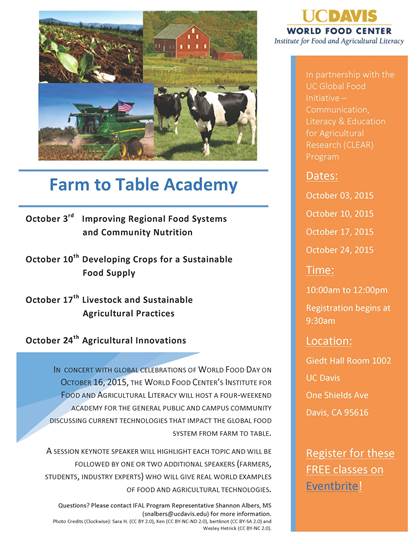
In concert with global celebrations of World Food Day on October 16th, the World Food Center’s Institute for Food & Agricultural Literacy (IFAL) will host a four-weekend academy for the general public and campus community discussing current technologies that impact the global food system from farm to table.

image003Farm to Table Flyer

A session keynote speaker will highlight each topic and will be followed by one or two additional speakers (farmers, students, industry experts) who will give real world examples of the technologies discussed.

October 3rd Improving Regional Food Systems and Community Nutrition

October 10th Developing Crops for a Sustainable Food Supply

October 17th Livestock and Sustainable Agricultural Practices

October 24th Agricultural Innovations

The sessions are FREE; register on Eventbrite for the dates you would like to attend (attendance of all four sessions is highly encouraged): https://www.eventbrite.com/e/farm-to-table-academy-tickets-18439560221.

Danforth Center Junior Faculty position in Plant Biology

Colleagues- The Danforth Center is conducting a junior faculty search. Please share the attached ad with any promising junior scientists you know.

Danforth Center Faculty Position

Description
The Donald Danforth Plant Science Center, in St. Louis, Missouri, is an independent, not-for-profit research organization dedicated to improving the human condition through plant science. The Danforth Center addresses global challenges by facilitating fundamental discovery and enabling translation into entrepreneurial and humanitarian solutions. Currently home to 20 independent labs and with a new wing opening in 2016, the Danforth Center is seeking new faculty at the Assistant and Associate ranks. Candidates are sought who are using creative approaches in any area of science that can be applied to plants. The Center has made significant recent investments to expand and strengthen genome-scale approaches, computational and quantitative biology, robotics, phenotyping and synthetic biology platforms. Candidates for Assistant Member positions must have postdoctoral experience and a record of excellence in research; candidates for Associate Member should have several years of productive, independent faculty-level experience. All candidates should be integrative and collaborative, and interested in contributing to the Center’s mission. Candidates should also possess the ability to raise external grant funds, and exhibit excellent leadership and communication skills. We encourage applications from underrepresented groups, including minorities, women, and people with disabilities. Members of the Center constitute the faculty, and typically have adjunct appointments at partner universities. Salary structures follow a typical academic model. More information about the Center is available at www.danforthcenter.org.

Please submit a cover letter, curriculum vitae, a statement of research plans, three relevant publications and names and addresses of three references online at FacultySearch

The Donald Danforth Plant Science Center is an equal opportunity/affirmative action employer

Cheers

Ivan

##########################################

Ivan Baxter

Research Computational Biologist

USDA-ARS Plant Genetics Research Unit

Donald Danforth Plant Sciences Center

www.baxterlab.org

ivan.baxter

ibaxter

314-587-1438

##########################################

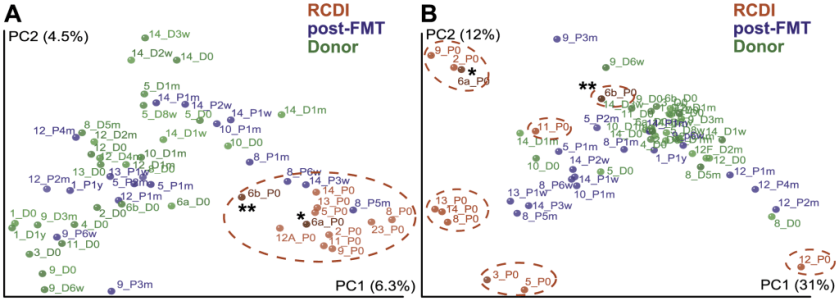
Breakthrough method in microbial ecology: fMRI analysis of ordination plots.

As anyone who has read a recent article on microbial ecology knows, the name of the game is ordination plots. Looking for post-hoc patterns in 16S and metagenomics surveys is pretty much par for the course. Depending on your question and statistical inclinations there are a huge variety of ordination plots to choose from; NMDS, PCA, PCOA… not to mention the distance metrics; UniFrac (weighted or unweighted), Bray-Curtis, Jaccard, etc. One approach is to simply run all these analyses (QIIME does this by default) and then to look for patterns.

journal.pone_.0081330.g004-1024x367.png

journal.pone.0081330.g004
Figure from http://journals.plos.org/plosone/article?id=10.1371/journal.pone.0081330

But how to choose?   If one plot shows a pattern and another shows a different pattern, how is a researcher to decide? Statistics is one possible approach, but we all know what Mark Twain said about statistics.

Better than statistics, is a new approach described in this week’s issue of QIIME THERAPY. In “fMRI analysis of ordination plots”, the authors describe a breakthrough approach for rapid and accurate classification of ordination plots for microbial ecology. Instead of arbitrary statistics, the researchers harbor the power of the unconscious human mind.   Any human can look at a series of dots and see patterns but computers struggle with this simple task.   Ask a 5-year old what shapes they see in an ordination plot and they’ll have ideas.   But, as the authors describe, there are problems when scientists are involved… they tend to overthink the process and focus on irrelevant details like axis labels (meaningless in a PCA plot for example). In this work, the researchers circumvent the conscious brain by placing subjects in an fMRI machine and passing images of ordination plots through their field of vision. Patterns are classified on the basis of the strength of the reaction to the image. The authors show that this method is 93% accurate on mock community data and also unveiled patterns in tests data sets that had been missed by statisticians. In addition, this method takes 10% of the time and requires about 25% of the cost of a statistical analysis.

As a proof of principle, the authors applied this methodology to previously analyzed data from the Human Microbiome Project.   While generally supporting previous conclusions, the authors also found that weighted UniFrac analysis suggested a novel correlation between the microbiome of the Hallux (big toe) and the microbiome of the non-dominant hand of participants. They plan further research to understand the causality of this connection.