I guess I had hoped that perhaps they would try to change their practices after I and other people criticized them for their past record. So – I went to the web site for the ICG10 meeting advertised in the Tweet. Oh well, silly me for hoping.
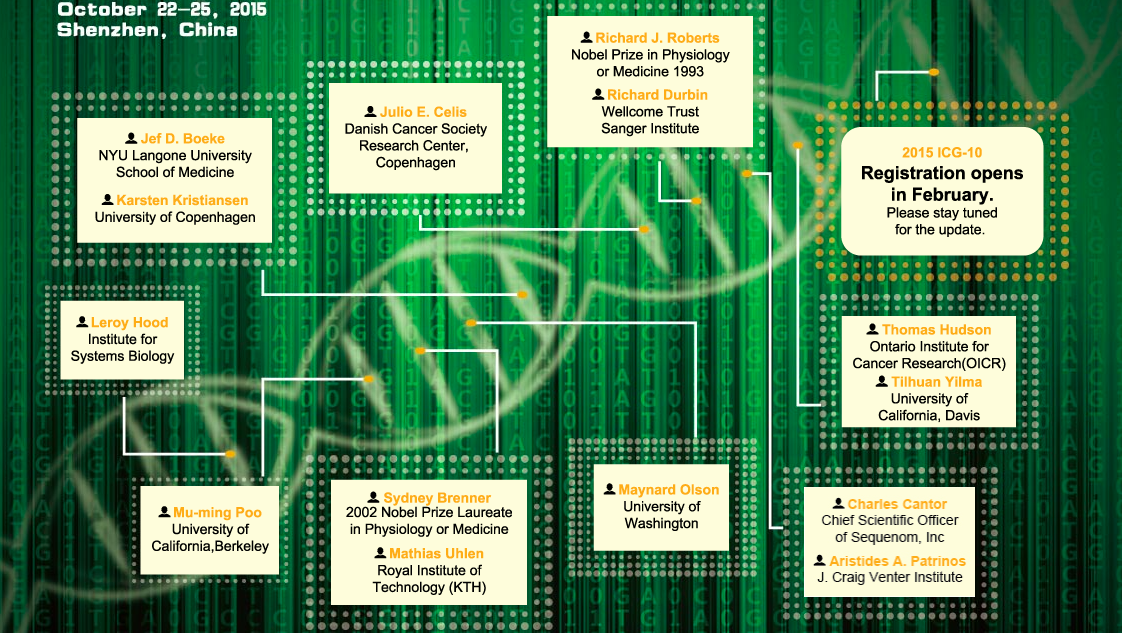
On the front page they have 14 speakers they are promoting – all of them male.
Screen shot from ICG10 web site
On the announcement page they have a slightly different list where the ratio is 14:1
Jef Boeke, NYU Langone University School of Medicine, USA
Sydney Brenner, 2002 Nobel Laureate in Physiology or Medicine, Singapore
Charles Cantor, Sequenom, Inc., USA
Julio Celis, Danish Cancer Society Research Center, Denmark
Richard Durbin, Wellcome Trust Sanger Institute, UK
Leroy Hood, Institute for Systems Biology, USA
Thomas Hudson, Ontario Institute for Cancer Research, Canada
Maria Leptin, Chair of EMBO, Germany
Maynard Olson, University of Washington, USA
Aristides Patrinos, J. Craig Venter Institute, USA
Mu-ming Poo, University of California, Berkeley, USA
Richard Roberts, New England Biolabs, 1993 Nobel Laureate in Physiology or Medicine, USA
Eils Roland, Heidelberg University, Germany
Mathias Uhlen, Royal Institute of Technology, Sweden
Tilhuan Yilma, University of California, Davis, USA
Regardless, this is a consistent pattern of not having an even remotely balanced ratio of male to female speakers at their meetings. And please, avoid their meetings until they change this.
Alas, Winfred Roberson, superintendant of the Davis, CA schools (also known as the DJUSD) told the Davis Enterprise that the schools here would not be making any changes in response to this report:
“While DJUSD won’t be modifying start times, our role as an educational institution can be to find ways to support our students by giving them the tools that will help them to think through, make adjustments and prioritize their competing forces that may be cutting into the recommended sleep time,” Roberson said. “These are life skills we are helping to build that will help students to function even after graduation.”
And I had missed out on this quote, thankfully, but became aware of it when my wife showed me this letter by Steve Carlip in the Davis Enterprise today: Don’t ignore the science Davis Enterprise. I quote from it below:
The superintendent’s response, as reported in Tuesday’s Enterprise, was to simply ignore the science. Instead, he said, the schools will help student “build life skills” to “prioritize their competing forces that may be cutting into the recommended sleep time.”
Really? The high school is going to teach students to control their circadian rhythms? It’s going to give them the “life skills” to regulate the timing of their bodies’ secretion of melatonin? It will educate them to overcome biological sleep-wake phase delay by sheer force of will?
He completely nailed it here. I hope Winfred Roberson and the Davis School district rethink their attitude towards scientific studies. ———————————–
Today I found out that the Davis School Board may actually be listening to the science. For the next school board meeting which is February 5 there is an agenda item on this topic c. Update on the Formation of a DJUSD Sleep Study Committee. The description of the agenda item is as follows:
In August 2014, the American Academy of Pediatrics released a scientific sleep study report that recommended an 8:30 am start time for schools, which would allow secondary students more time to sleep. The report generated community discussions and concerns since Davis secondary schools start before 8:30 am. In response, the superintendent initiated the formation of a Sleep Study Committee (made up of students, teachers, counselors, parent/community members and administrators) to examine the benefits and logistical challenges of an earlier school start.
This update is a report of the formation of the Sleep Study Committee and their charge. For reiteration, at this time, staff is not offering recommendations about a modified start time. Staff will wait to review the work of the Sleep Study Committee before offering formal recommendations to the Board.
So I started digging around for more on the topic and found some things worth reading But the most interesting thing I found was that there has been a discussion about this exact issue in the county where I grew up: Montgomery County Maryland. Some of the articles about this area listed below:
It seems to me that Davis, CA really needs to consider this as a possibility. It could help students in many ways and seems to be a relatively easy (though not free of course) way to improve the lives and learning of students in our town. I am thrilled that the Board is bringing the topic up again. Any examples out there of places that have shifted start times based on the AAP recommendation would be great (and what happened …).
Postdoctoral Research Scholar Institute of Ecology and Evolution
Posting: 14431 Location: Eugene Closes: Open Until Filled
Revised Posting Postdoctoral Position in Microbial Ecology and Evolution Jessica Green at the University of Oregon (http://pages.uoregon.edu/green/) is currently seeking a postdoctoral researcher to collaborate on the Seagrass Microbiome Project (http://seagrassmicrobiome.org).
Applicants should have a Ph.D. in a biological, computational, mathematical, or statistical field and strong writing skills. The ideal candidate will have experience developing and applying models to understand the ecology, evolution, and/or function of complex systems. Experience in the analysis of environmental sequence data is highly desirable, but not required.
The successful candidate will have the opportunity to creatively and independently tackle one or more of the science questions outlined in the Seagrass Microbiome Project grant proposal (http://seagrassmicrobiome.org/2014-grant-proposal/), funded by the Gordon and Betty Moore Foundation.
At the University of Oregon, the candidate will benefit from ongoing microbiome research programs including the Microbial Ecology and Theory of Animals Center for Systems Biology (http://meta.uoregon.edu/) and the Biology and Built Environment Center (http://biobe.uoregon.edu/).
The position is available for 1 year with the possibility for renewal depending on performance. The start date is flexible. Please email questions regarding the position to Jessica Green (jlgreen@uoregon.edu). To apply A complete application will consist of the following materials: (1) a brief cover letter explaining your background and career interests (2) CV (including publications) (3) names and contact information for three references Submit materials to ie2jobs@uoregon.edu. Subject: Posting 14431
To ensure consideration, please submit applications by March 10, 2015, but the position will remain open until filled. Women and minorities encouraged to apply. We invite applications from qualified candidates who share our commitment to diversity. The University of Oregon is an equal opportunity, affirmative action institution committed to cultural diversity and compliance with the ADA. The University encourages all qualified individuals to apply, and does not discriminate on the basis of any protected status, including veteran and disability status.
I had the incredible luck to be on an assignment in the midwest this week visiting the lab of Jock Giblet, one of the world’s experts in the new and merging superfield of microbiome forensics. Giblet has been at the forefront of forward thinking on using foreheads and foreskins and other microbiome rich samples to do forensics. His lab has already been involved in hundreds of criminal investigations where microbial forensics was used to do important things like (1) show that microbes were on people involved in crimes (2) that analysis of microbes can be used to reveal who was last in a room (making a few assumptions like, you know who was in the room and what their microbes look like and who was not in the room) and (3) the microbes could be considered as possible instigators of various crimes.
Anyway – I was there to interview Giblet about his latest amazing work on the how microbiome analysis can be used to cheat at card games. But he was distracted by something. He called me into his spacious yet somehow very dark and depressing office and said “Can I let you in on a secret?” Of course I said yes. Alas, for him, he never said “Can this be off the record?” so I am reporting to you what I then found out, along with some secret recordings I made with my awesome Google Glass recording device.
Over the next 24 hours I witness Giblet and members of his microbiome lab then do a top secret microbiome driven analysis of the deflategate controversy. It was so exciting to be witness to this edge cutting research. Below is a description of what I witnessed.
1. Giblet and team travel to the airport to collect footballs from the NFL
The footballs lined up waiting to be picked up
2. Giblet brings footballs back to the lab and also collect wan assortment of other materials for control experiments
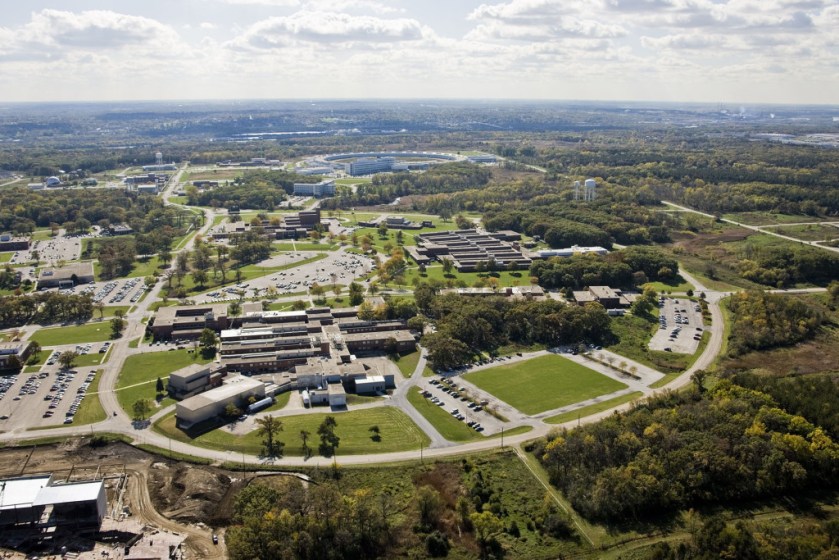
Aerial of the Top Secret Lab where Dr. Giblet works
3. They then set up a microbiome analysis in their top secret lab with some key samples for testing and as part of the experiment
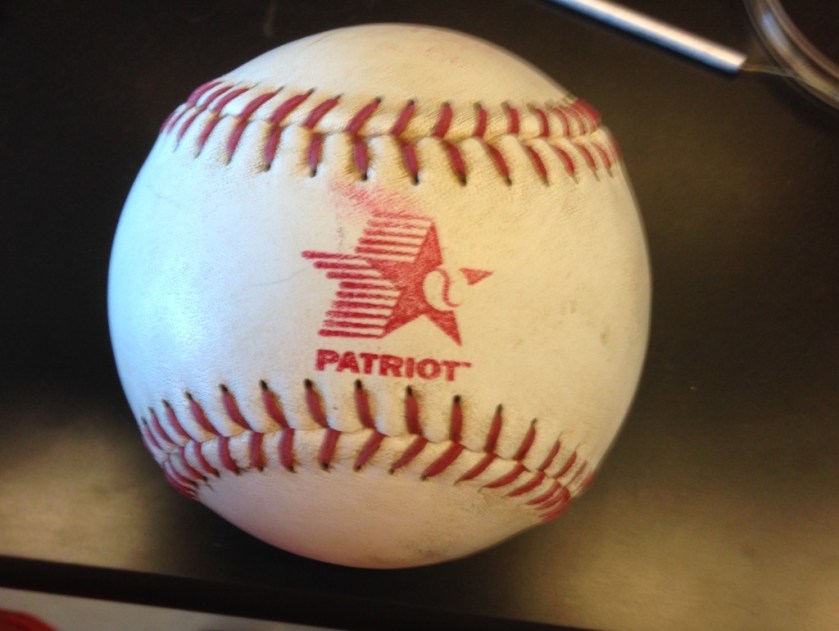
Another kind of footballA key control – a Patriots softballYet another kind of footballA regulation footballA football collected at halftime from the Patriots gameNew, sterile examples of the suspected tampering tools
4. It was here that I was able to finally activate the video recording on my Google Glass. It only worked sporadically but I did get some video of the Giblet lab in action carrying out a microbiome forensic study. Basically, they used these really complicated secret sampling devices that came hidden in a tube:
Top secret microbiome sampling device
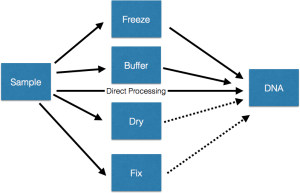
And they used this to collect microbiomes from multiple sources including hands, the suspected deflation devices (before and after handling), and the balls before and after handling. Here is what I could get:
After doing some test samples the then got the footballs from the NFL that they had picked up at the airport and sampled them too. They also spent a lot of time on the phone discussing some sort of sampling of the hands of all employees of the Patriots and the other team. And while we were sampling the footballs someone showed up in the lab with a bag of more of these special sampling devices labelled with names of various people.
They then took all the special sampling devices and “got the fu#*(#@ DNA out of them, for sure”. It was exciting to watch.
5. Sequencing
The DNA from the sampling devices was then dripped into a small device that plugged into a laptop computer via a USB port. It looked a bit like a thumb drive. Dr. Giblet spent a lot of time looking at the screen, typing some stuff, and crying and cursing. He then said “Screw these minions. I am going back to the Illuminati” and he carried a box of samples out the door, cursing, in a strange accent. I am not sure how he was connected to the Illuminati but nevertheless, he returned eight hours later (I was getting really impatient, and hungry, sitting there waiting for him, still wearing my Google Glasses). And he looked happier. And he said “Booyah – we have data”.
He then explained to me how he had taken the DNA out of the microbes in the samples and did some special chemistry and got out a file with information that would help determine what microbes were in each sample.
6. Analysis
Dr. Giblet and two other people who seemed to be employees of his, then sat in front of an old IBM computer doing something. I am not sure but I think their names were Jane Jane and Sir Robert. Very interesting people I note. Anyway, the cursed a lot, typed a lot, kept talking about some sort of chime they kept hearing. These were smart people I think. But really secretive and talking in code all the time. In fact, they kept asking Sir Robert to do more code, though I note, I had no idea what he was saying anyway.
Nevertheless, after 10 more hours they finally woke me up (I had fallen asleep on the lab floor) and said “We have the answer.” And then they had me sit in front of a computer to look at some pictures. By this point my Google Glasses were really acting up. The best pics I could get are shown below.
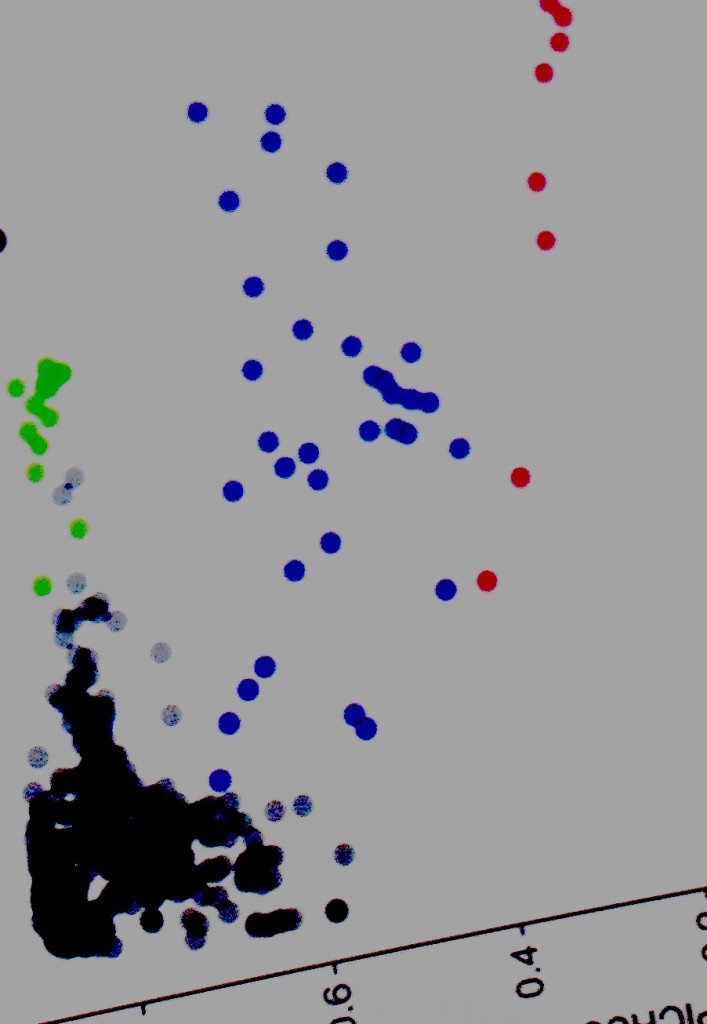
Apparently these graphs showed that the culprit behind the NFL DeflateGate controversy was none other than Jock Giblet himself. That is, the samples from the Patriots’ footballs most resembled samples from Giblet’s hands. He swore to his friends and colleagues that it was not him and that he would never do something like that. But as they called 911 they said “Sorry Jock. We will miss you.”
Then they shuffled me out the door too. They never noticed the Google Glass, but I have been cut off from my sources so not sure what happened to Jock after he was taken away.
On Sunday, February 8, six UC Davis natural history museums will once again open their doors to the public for tours and family-friendly activities. The museums are: The UC Davis Center for Plant Diversity (herbarium), the Botanical Conservatory, The Bohart Museum of Entomology, The Anthropology Collections, the Paleontology Collections, and the Museum of Wildlife and Fish Biology.
Attached is a map of where the museums are on campus. The UC Davis Botanical Conservatory is behind Storer Hall and the Center for Plant Diversity is in the Sciences Laboratory Building.
“Spatial food-web dynamics in the Serengeti ecosystem”
John Fryxell, University of Guelph
Dr. John M. Fryxell
Professor
Research
My research focuses on interactions between behavior and consumer-resource dynamics. A mix of theoretical and empirical approaches is used to consider the dynamics of specific systems. Theoretical questions of interest include herbivore and carnivore movement in relation to resource availability and predation risk, optimal diet, patch selection, and dispersal patterns in heterogeneous environments, the effect of social interference and territoriality on consumer-resource interactions, and impacts of harvesting by humans on fish and mammal populations.
Empirical work has been concentrated on 3 different terrestrial ecosystems over the past decade: large herbivores and carnivores in Serengeti National Park (Tanzania), woodland caribou, wolves, and moose in boreal forests of northern Ontario (Canada), and mustelid carnivores and other small mammals in boreal forests of northern Ontario. In each case, my graduate students and I conduct detailed field and experimental studies of behavioral ecology of both predators and prey. Theoretical models are then used to assess the implications of behavioral strategies on population and community dynamics and model predictions are then tested against long-term observational data from terrestrial ecosystems.
Kevin McCann and I recently initiated a collaborative research program on spatial food web dynamics of phytoplankton and zooplankton populations in massive aquatic mesocosms in the new Limnotron facility at the Biodiversity Institute of Ontario. Initial experiments relate to resource- vs predator- and ratio-dependent functional and numerical responses, responses of predator and algal populations to pulsed versus continuous nutrient influx, resource- and density-dependent diffusion patterns by zooplankton and phytoplankton, and spatial pattern formation in relation to population fluctuations.
An ongoing applied research interest relates to sustainable harvesting of fish and mammal populations. Key questions relate to long-term stability of harvested populations due to dynamic variation in harvester effort, effects of bioeconomic dynamics on long-term stability of fish stocks and prices, and spatial processes in harvested populations with and without no-harvest reserves.
Shirley Tilghman, ex president of Princeton, gave a talk at UC Davis yesterday as part of the Chencellor’s Colloquium. I live Tweeted the talk and made a Storify of some of the Tweets and responses. Here it is
Please join us for our next Equity in STEM and Entrepreneurship (ESTEME) event happening on Thursday, January 29th at 5:30PM in GBSF auditorium! We will be having a special event featuring local broadcast and television station KVIE to debut our next film showing of Makers: Women in Politics! Refreshments will be provided!
ESTEME’s mission is to serve as a leadership training program that teaches valuable skills to emerging graduate student leaders. Moreover, ESTEME serves the local community by raising awareness surrounding equity and access, hosting workshops to increase leadership skills, and leading outreach to K-12 schools to encourage young girls in STEM. ESTEME is led by a powerhouse team of students from the Biotechnology Program at UC Davis. If you are interested in participating as a volunteer and in future event planning, please email esteme.ucd.












 Jonathan Eisen's Lab