Interested in sex? How about in bacteria? Then these #PLoSGenetics papers are for you

Well I was torn about this. Should I title the post ” ICE, ICE, Bacterial BABIES” or say something about sex? I settled on sex, but not sure if that was wise.

Anyway – quick post to say that there are two papers from PLoS Genetics last month that caught my eye. They are

The latter is a “review” paper linked to the first one which is a research paper. The papers together provide both a good background and a window into modern studies of “ICEs” or integrative conjugative elements in bacteria.

I like the summary from the first paper:

Some mobile genetic elements spread genetic information horizontally between prokaryotes by conjugation, a mechanism by which DNA is transferred directly from one cell to the other. Among the processes allowing genetic transfer between cells, conjugation is the one allowing the simultaneous transfer of larger amounts of DNA and between the least related cells. As such, conjugative systems are key players in horizontal transfer, including the transfer of antibiotic resistance to and between many human pathogens. Conjugative systems are encoded both in plasmids and in chromosomes. The latter are called Integrative Conjugative Elements (ICE); and their number, identity, and mechanism of conjugation were poorly known. We have developed an approach to identify and characterize these elements and found more ICEs than conjugative plasmids in genomes. While both ICEs and plasmids use similar conjugative systems, there are remarkable preferences for some systems in some elements. Our evolutionary analysis shows that plasmid conjugative systems have often given rise to ICEs and vice versa. Therefore, ICEs and conjugative plasmids should be regarded as one and the same, the differences in their means of existence in cells probably the result of different requirements for stabilization and/or transmissibility of the genetic information they contain.

That should be enough to get people started. And that is alas all I have time to write about here.

Bacteria & archaea don’t get no respect from interesting but flawed #PLoSBio paper on # of species on the planet

ResearchBlogging.org

Uggh. Double uggh. No no. My first blog quadruple uggh. There is an interesting new paper in PLoS Biology published today. Entitled “How many Species Are There on Earth and in the Ocean?” PLoS Biol 9(8): e1001127 – it is by Camilo Mora, Derek Tittensor, Sina Adl, Alastair Simpson and Boris Worm. It is accompanied by a commentary by none other than Robert May, one of the greatest Ecologists of all time: PLoS Biology: Why Worry about How Many Species and Their Loss?

I note – I found out about this paper from Carl Zimmer who asked me if I had any comments.  Boy did I.  And Zimmer has a New York Times article today discussing the paper: How Many Species on Earth? It’s Tricky.  Here are my thoughts that I wrote down without seeing Carl’s article, which I will look at in a minute.

The new paper takes a novel approach to estimating the number of species. I would summarize it but May does a pretty good job:
“Mora et al. [4] offer an interesting new approach to estimating the total number of distinct eukaryotic species alive on earth today. They begin with an excellent survey of the wide variety of previous estimates, which give a range of different numbers in the broad interval 3 to 100 million species”
….
“Mora et al.’s imaginative new approach begins by looking at the hierarchy of taxonomic categories, from the details of species and genera, through orders and classes, to phyla and kingdoms. They documented the fact that for eukaryotes, the higher taxonomic categories are “much more completely described than lower levels”, which in retrospect is perhaps not surprising. They also show that, within well-known taxonomic groups, the relative numbers of species assigned to phylum, class, order, family, genus, and species follow consistent patterns. If one assumes these predictable patterns also hold for less well-studied groups, the more secure information about phyla and class can be used to estimate the total number of distinct species within a given group.”
The approach is novel and shows what appears to be some promise and robustness for certain multicellular eukaryotes. For example, analysis of animals shows a reasonable leveling off for many taxonomic levels:

Figure 1. Predicting the global number of species in Animalia from their higher taxonomy. (A–F) The temporal accumulation of taxa (black lines) and the frequency of the multimodel fits to all starting years selected (graded colors). The horizontal dashed lines indicate the consensus asymptotic number of taxa, and the horizontal grey area its consensus standard error. (G) Relationship between the consensus asymptotic number of higher taxa and the numerical hierarchy of each taxonomic rank. Black circles represent the consensus asymptotes, green circles the catalogued number of taxa, and the box at the species level indicates the 95% confidence interval around the predicted number of species (see Materials and Methods).
From Mora C, Tittensor DP, Adl S, Simpson AGB, Worm B (2011) How Many Species Are There on Earth and in the Ocean? PLoS Biol 9(8): e1001127. doi:10.1371/journal.pbio.1001127

They also do a decent job of testing their use of higher taxon discovery to estimate number of species.  Figure 2 shows this pretty well.

Figure 2. Validating the higher taxon approach. We compared the number of species estimated from the higher taxon approach implemented here to the known number of species in relatively well-studied taxonomic groups as derived from published sources [37]. We also used estimations from multimodel averaging from species accumulation curves for taxa with near-complete inventories. Vertical lines indicate the range of variation in the number of species from different sources. The dotted line indicates the 1∶1 ratio. Note that published species numbers (y-axis values) are mostly derived from expert approximations for well-known groups; hence there is a possibility that those estimates are subject to biases arising from synonyms.

So all seems hunky dory and pretty interesting.  That is, until we get to the bacteria and archaea.  For example, check out Table 2:

Table 2. Currently catalogued and predicted total number of species on Earth and in the ocean.

Their approach leads to an estimate of 455 ± 160 Archaea on Earth and 1 in the ocean.  Yes, one in the ocean.  Amazing.  Completely silly too.  Bacteria are a little better.  An estimate of 9,680 ± 3,470 on Earth and 1,,320 ±436 in the oceans.  Still completely silly.

Now the authors do admit to some challenges with bacteria and archaea. For example:

We also applied the approach to prokaryotes; unfortunately, the steady pace of description of taxa at all taxonomic ranks precluded the calculation of asymptotes for higher taxa (Figure S1). Thus, we used raw numbers of higher taxa (rather than asymptotic estimates) for prokaryotes, and as such our estimates represent only lower bounds on the diversity in this group. Our approach predicted a lower bound of ~10,100 species of prokaryotes, of which ~1,320 are marine. It is important to note that for prokaryotes, the species concept tolerates a much higher degree of genetic dissimilarity than in most eukaryotes [26],[27]; additionally, due to horizontal gene transfers among phylogenetic clades, species take longer to isolate in prokaryotes than in eukaryotes, and thus the former species are much older than the latter [26],[27]; as a result the number of described species of prokaryotes is small (only ~10,000 species are currently accepted).

But this is not remotely good enough from my point of view. Their estimates of ~ 10,000 or so bacteria and archaea on the planet are so completely out of touch in my opinion that this calls into question the validity of their method for bacteria and archaea at all. 
Now you may ask – why do I think this is out of touch. Well because reasonable estimates are more on the order or millions or hundreds of millions, not tens of thousands. To help people feel their way through the literature on this I have created a Mendeley group where I am posting some references worth checking out.

I think it is definitely worth looking at those papers.  But just for the record, some quotes might be useful.  For example, Dan Dykhuizen writes

we estimate that there are about 20,000 common species and 500,000 rare species in a small quantity of soil or about a half million species.

And Curtis et al write:

We are also able to speculate about diversity at a larger scale, thus the entire bacterial diversity of the sea may be unlikely to exceed 2 × 10^6, while a ton of soil could contain 4 × 10^6 different taxa.

Are their estimates perfect?  No surely not.  But I think without a doubt the number of bacterial and archaeal species on the planet is in the range of millions upon millions upon millions.  10,000 is clearly not even close.  Sure, we do not all agree on what a bacterial or archaeal species is.  But with just about ANY definition I have heard, I think we would still count millions.

Given how horribly horribly off their estimates are for bacteria and archaea, I think it would have been better to be more explicit in admitting that their method probably simply does not work for such taxa right now.  Instead, they took the approach of saying this is a “lower bound”.  Sure.  That is one way of dealing with this.  But that is like saying “Dinosaurs lived at least 500 years ago” or “There are at least 10 people living in New York City” or “Hiking the Appalachian Trail will take at least two days.”  Lower bounds are only useful when they provide some new insight.  This lower bound did not provide any.
Mind you, I like the paper.  The parts on eukaryotes seem quite novel and useful.  But the parts of bacteria and archaea are painful.  Really really painful.
Mora, C., Tittensor, D., Adl, S., Simpson, A., & Worm, B. (2011). How Many Species Are There on Earth and in the Ocean? PLoS Biology, 9 (8) DOI: 10.1371/journal.pbio.1001127

Get to know Jack & the story behind the paper by @gilbertjacka "Defining seasonal marine microbial community dynamics"

ResearchBlogging.org A few days ago I became aware of the publication of a cool new paper: “Defining seasonal marine microbial community dynamics” by Jack A. Gilbert, Joshua A Steele, J Gregory Caporaso, Lars Steinbrück, Jens Reeder, Ben Temperton, Susan Huse, Alice C McHardy, Rob Knight, Ian Joint, Paul Somerfield, Jed A Fuhrman and Dawn Field.  The paper was published in the ISME Journal and is freely available using the ISME Open option. If you want to know more about Jack (in case you don’t know Jack, or don’t know jack about Jack) check out some of his rantings material on the web like his Google Scholar page, and his twitter feed, his LinkedIn page, his U. Chicago page. But rather than tell you about Jack or the paper, I thought I would send some questions to the first author, Jack Gilbert and see if I could get some of the “story behind the paper” out of him.  Since Jack likes to talk (and email and do things on the web), I figured it was highly likely I could get some good answers.  And indeed I was right. Here are his answers to my quickly written up questions (been out of the office due to family illness)


1. Can you provide some detail about the history of the project … How did it start ? What were the original plans ? (not this much sequencing I am sure)

The Western English Channel has been studied for over 100 years, and is in fact it is the longest studied marine site in the world. It is the home, essentially of the Marine Biological Association, and has a long history. The idea to start contextualizing the abundant metadata (www.westernchannelobservatory.org) was started in 2003 by Ian Joint, a senior researcher at Plymouth Marine Laboratory (www.pml.ac.uk), who saw the benefit of collecting microbial life on filters and storing these at -80C. It was his vision to create and maintain this collection that enabled us to go back through this frozen time series and explore microbial life. I started working for PML in 2005, and basically was charged with trying to identify a potential technique to characterize the microbial life in these samples. initially we got funding through the International Census of Marine Life to performed 16S rDNA V6 pyrosequencing on 12 samples. We chose 2007 as the first year, almost arbitrarily, and published that work in Environmental Microbiology in 2009 (http://onlinelibrary.wiley.com/doi/10.1111/j.1462-2920.2009.02017.x/abstract). However, we had already decided to go ahead, and with help from Dawn Field (Center for Ecology and Hydrology, UK) we were able to secure funding to pyrosequence 60 further amplicon samples, essentially we did 2003-2008. We deposited all these in the ICoMM dataset (link below) and it quickly became the largest study in the series. This was also a gold standard study for the Genomic Standards Consortium’s MIMARKS checklist (http://www.nature.com/nbt/journal/v29/n5/full/nbt.1823.html). We published the first analysis of these data in Nature Preceedings in 2010 (http://precedings.nature.com/documents/4406/version/1). We continued to characterize the microbial communities of the L4 sampling site in the Western English Channel by employing Metagenomic and Metatranscriptomic along side more 16S rRNA V6 pyroseqeuncing across diel and seasonal time scales throughout 2008 (the final year of the 6 year time series. This study was published in PLoS ONE also in 2010 (http://www.plosone.org/article/info%3Adoi%2F10.1371%2Fjournal.pone.0015545). This study also included our first analysis fo archaeal diversity in the English Channel, which was also funded through the ICoMM initiative. We owe a lot to Mitch Sogin’s group for the first attempts at data analysis for the 16S rDNA profiles. We had a lot of difficulty getting the message right for the 6-year paper that was recently published in ISME J. Basically it was an issue of sequencing data as Natural History, we were generating data catalogs, and not doing enough to characterize the ecology interactions that occurred there.  So we reached out to the community, and found research groups who could help us plug that gap. Those involved Rob Knight’s team, Alice McHardy’s team, and Jed Fuhrman’s team. We worked a lot of improving this paper, and had some valuable help from a wide selection of other researchers, including Steven Giovannoni, Doug Barlett, among many others.

The publication of this study however, is just the start. 

2. Who collected the samples? Any good field stories?

Samples were all collected by the fantastic boat staff at Plymouth Marine Laboratory, who routinely go out every Monday morning to collect water and specific samples for the whole laboratory. They were the life blood of that organization. One specific I always like to relate is that during the 2008 sampling season which generated samples for both the new ISME J paper (http://www.nature.com/ismej/journal/vaop/ncurrent/full/ismej2011107a.html) and the 2010 PLoS ONE paper (http://www.plosone.org/article/info%3Adoi%2F10.1371%2Fjournal.pone.0015545), we wanted to get diel sampling effort during the winter spring and summer. Unfortunately the only time I could convince my group to go out sampling for 24 hours was during the summer….some times science is limited by enthusiasm ;-). Also, the site is outside the Plymouth Sea Wall – which I think is still the largest concrete structure in the UK and was built in the 19th century, so taking people out to see the site (for what it was worth ;-)) meant taking them into usually very choppy water….which made people quite sick sometimes.In May 2009, J. Craig Venter and his crew came through to start the European leg of this Global Ocean Sampling expedition at L4, specificallly the Western English Channel. Together, our team at PML on our fishing boat, Plymouth Quest, and his team on-board the 100ft yacht, Sorcerer II sampled L4 and E1 (another monitoring site) in the Western English Channel. Excitingly these data form the first part of the attempt to start cataloguing the viral and Eukaryotic metagenomic and metatranscriptomic analysis of these communities. This analysis is being also further characterized using meta-metabolomics run by Carole Llewelyn at PML and Mark Viant at University of Birmingham. Increasing the multi’omic nature of these data.

3. Can you give some web links for data, people involved , etc?

  • People on the paper – not an exhaustive list of those involved….this is a huge community effort.

4. What else do you want people to know ?

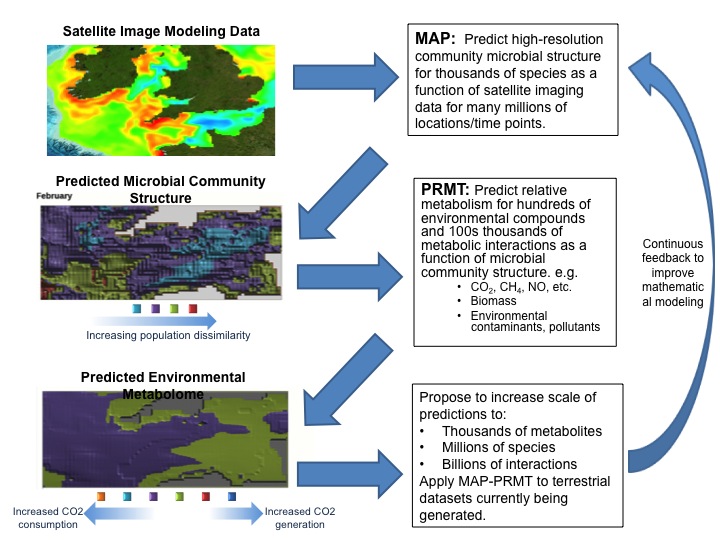
We have recently started to model the English Channel from both a taxonomic and functional perspective. I have attached a presentation that has cool gifs that demonstrate this, people can email me and request the gifs if necessary. These are generated by Peter Larsen at Argonne National Laboratory.This modelling is being driven by two new tools:(1) Predicted Relative Metabolic Turnover, which uses fucntional annotations from metagenomes to create predicted metabolomes, which enable us to accurate predict the turnover (relative consumption or production) of more than 1000 metabolites in the English Channel (http://www.microbialinformaticsj.com/content/1/1/4).(2) Microbial Assemblage Prediction, which enables the prediction of the relative abundance of every bacterial taxon at any given location and time, the predictions are driven by in situ or remotely modeled environmental parameter data. We used satellite data to produce the figures above, truely BUGS FROM SPAAAAACCCCCEEEE…..This is the new paradigm – creating information and predictive models from data – no longer will metagenomics be descriptive Natural History – it is now becoming ECOLOGY. These tools will form the corner stone the Earth Microbiome Project’s (www.earthmicrobiome.org) data analytical initiative to create predictive models of microbial taxonomic community abundance structure and functional capability defined as the ability of a community to turnover metabolites.

Note – as a bit of a side story – I am disappointed in the ISME Journals “Open” option for publishing which, though it uses a creative commons license, it is a pretty narrow one that says, for example “You may not alter, transform, or build upon this work.” That is pretty limiting.  It means, for example, that the text cannot be reworded into a database of full text of papers where one uses intelligent language processing methods to play with the text.  It also means technically I probably cannot take the figures and modify them in any way to, for example, make an interesting movie using them.  Imagine if Genbank worked this way.  Imagine if you could only look at sequences but could not make alignments of them.  It is, well, not very open. So really this should be called the ISME “No charge” option or something like that since this is not “open access” to me – I think “open access” should really be reserved for material that is free of charge and free of most/all use restrictions (I prefer  the broader version of the “open access” definition described by Peter Suber.).  Sure – the fact that ISME makes some stuff available at no charge is nice.  And that they use CC licenses is good too since these are very straightforward to interpret compared to other licenses.  But their use of the no derivatives option seems silly. Anyway – nice paper.  And I hope some of the story behind the paper is useful to people.

Reference:

Gilbert JA, Steele JA, Caporaso JG, Steinbrück L, Reeder J, Temperton B, Huse S, McHardy AC, Knight R, Joint I, Somerfield P, Fuhrman JA, & Field D (2011). Defining seasonal marine microbial community dynamics. The ISME journal PMID: 21850055

Fun with Google Books – Old Books on Bacteria

After discovering a copy of this great 100 year old book on “Bacteria in relation to Country Life” on Google Books I decided to snoop around for other old books on bacteria: Microbiology of the Built Environment – as of ~ 100 years ago: Bacteria in relation to country life

The Bacteria by Antoine Magnin in 1880

Lectures on bacteria – Page 1 – by Anton Bary 1887
If you expand the search to “microbes” you get some other interesting ones
I am sure there are many others that are fascinating there. It is always interesting to me to see what people were thinking about in terms of microbes in the past. And Google Books is one heck of a convenient way to do this.

Rare, not rare, rare, not rare (and this is not about burgers, it’s about ocean bacteria)

Nice little press release/story for bacteria and ecology lovers out there: ‘Rare’ bacteria in the ocean ain’t necessarily so, researchers report. This is about work by some colleague of mine including in particular Barbara Campbell at the University of Delaware. I worked with her on a genome project a few years ago (of a bacteria found on the surfaces of some deep sea worms – see Adaptations to submarine hydrothermal environments exemplified ….). Alas, the new paper, in PNAS is not Open Access but the story covers it reasonably well.

Some relevant links:

Updated Again: Compilation of articles, news, blogs about the "arsenic bacteria" NASA study

Lots of new stuff on the arsenic-bacteria front.  For those interested I am compiling some of the more useful links here:

News stories:

Blogs:
  • A Bacterium That Can Grow by Using Arsenic Instead of Phosphorus
    • Felisa Wolfe-Simon
    • Jodi Switzer Blum
    • Thomas R. Kulp
    • Gwyneth W. Gordon
    • Shelley E. Hoeft,
    • Jennifer Pett-Ridge
    • John F. Stolz
    • Samuel M. Webb
    • Peter K. Weber
    • Paul C. W. Davies,
    • Ariel D. Anbar
    • and Ronald S. Oremland

Can’t wait for this meeting on Microbial Communities as Drivers of Ecosystem Complexity

I truly can’t wait for this meeting: Keystone Symposia Conference | Microbial Communities as Drivers of Ecosystem Complexity – Program

Organizers: Jacques Ravel, Vincent B. Young, Mitchell Sogin and Trina McMahon. March 25 – 30, 2011 • Beaver Run Resort  •  Breckenridge, Colorado

The current program is listed below.  Still time to register.  Oh, and it is in Breckenridge, CO, which is kind of nice.  If you are interested in microbial communities, especially molecular studies of said communities, this could be the place to be …

  • Norman R. Pace, University of Colorado at Boulder, USA 
    Molecular Analysis of Microbial Communities – Historical Perspective
  • Mitchell Sogin, Marine Biological Laboratory, USA Long-Tailed Microbial Communities
  • Susan Lynch, University of California, San Francisco, USA Microbial Community Analysis Using the PhyloChip
  • Jonathan A. Eisen, University of California, Davis, USA Phylogenetic and Phylogenomic Approaches to Metagenomic Analysis
  • Joseph Petrosino, Baylor College of Medicine, USA Sequencing Technologies Applied to Studying Microbial Ecology
  • Patrick D. Schloss, University of Michigan, USA Developing and Validating Tools for Computational Microbial Ecology
  • Rob Knight, University of Colorado, USA Quantitative Insights into Microbial Ecology
  • Jed Alan Fuhrman, University of Southern California, USA Integrating Molecular and Environmental Data to Evaluate Community Patterns
  • John Heidelberg, University of Southern California, USA Metagenomic Analysis of Marine Microbial Communities
  • Peter J. Turnbaugh, Harvard University, USA Metagenomic Analysis of the Human Gut
  • Susannah Tringe, DOE Joint Genome Institute, USA Bioenergy Metagenomics
  • Stanislav Dusko Ehrlich, Institut National de la Recherche Agronomique (INRA), France A Human Gut Microbial Gene Catalogue Established by Metagenomic Sequencing
  • Trina McMahon, University of Wisconsin-Madison, USA Functional Genomics of Polyphosphate Accumulating Bacteria: ‘Eco-Systems’ Biology for Wastewater Treatment
  • Gregory J. Dick, University of Michigan, USA Talk Title to be Determined
  • Robert L. Hettich, Oak Ridge National Laboratory, USA A Proteogenomic Approach for Characterizing the Molecular Activities of Gut Microbiomes
  • Brendan Bohannon†, University of Oregon, USA Environmental Microbial Ecology
  • Claire Horner-Devine, University of Washington, USA Biogeography of Microbial Communities
  • Thomas Schmidt, Michigan State University, USA Ecologic Strategies of Environmental Microbes
  • Margaret Riley, University of Massachusetts Amherst, USA Antibiotic-Induced Changes in the GI
  • Jacques Ravel, University of Maryland School of Medicine, USA The Temporal Dynamics of the Vaginal Microbiota
  • Forest Rohwer, San Diego State University, USA RNA Virus Communities Associated with Human
  • Zoe G. Cardon, Marine Biological Laboratory, USA Soil Microbial Ecology
  • David A. Stahl, University of Washington, USA Metabolic Modeling of a Mutualistic Microbial Community
  • Jay P. Tiesman, Procter & Gamble, USA Microbial Community Analysis from a Systems Biology Perspective
  • Edward F. Delong, Massachusetts Institute of Technology, USA Systems Biology of Planktonic Marine Microbial Communities
  • David A. Relman, Stanford University, USA Perturbation of the Human Microbiome: Unrest at Home
  • Julie Segre, NHGRI, National Institutes of Health, USA The Skin Microbiome
  • Vincent B. Young, University of Michigan, USA Integrating Human Microbial Ecology in a Clinical Setting

More (you know you wanted it) on fecal transplants and the microbiome

ResearchBlogging.org

Image from
I Heart Guts blog

There is an interesting mini review in the Journal of Clinical Gastroenterology’s September issue that may be of interest to some out there. It is entitled “Fecal Bacteriotherapy, Fecal Transplant, and the Microbiome” by Martin Floch and well, the title is indicative of the article.

Yes, the fecal transplant meme is here to stay. Sure, the cognoscenti already knew about fecal transplants. Perhaps they had read Tara Smith’s discussion of it in her Aetiology blog in 2007. Perhaps they had pondered it when they read the article from my lab on intestinal transplants. Perhaps they had seenthis discussion on MSNBC, or various other stories out there such asthis or this post from Angry by Choice. Or, maybe you just learned about it from Bora’s Carnival of Poop.

But the meme on fecal transplants really spread and many may have first heard about fecal transplants from Carl Zimmer’s New York Times article a month or so ago “How microbes defend and define us

In the article Zimmer discussed how Dr. Alexander Khoruts used a fecal transplant to treat a woman with a persistent and severe Clostridium infection. And Zimmer discusses how, thought such transplants had been done before, this was the first time that the microbial community was carefully surveyed before and after. (Note, my favorite part of the article is this part, where my friend Janet Jansson describes her reaction:

Two weeks after the transplant, the scientists analyzed the microbes again. Her husband’s microbes had taken over. “That community was able to function and cure her disease in a matter of days,” said Janet Jansson, a microbial ecologist at Lawrence Berkeley National Laboratory and a co-author of the paper. “I didn’t expect it to work. The project blew me away.”

Anyway Zimmer’s article, as with many of his, garnered a lot of response and got many people discussing the poop on fecal transplants.

Well, this issue of the Journal of Clinical Gastroenterology may now be the biggest pile of information about fecal transplants around. That is because, in addition to this little review mentioned above, there are in fact three articles in this issue relating to fecal transplant. Alas, most of you out there will probably only be able to read the review since the other articles are behind a pay wall.

But the review is good. And I think this is not the last you will hear about this. (Though I note that, even though I think fecal transplants have some major potential, they seem to be being oversold a bit by many as some cure all — fodder for a future “Overselling the Microbiome Award” I am sure).

I will end with this line from the review which raises some other issues about fecal transplants:

Probably one of the major problems is to define how this therapy can become socially accepted. (Can you imagine the Food & Drug Administration discussion?)

Floch, M. (2010). Fecal Bacteriotherapy, Fecal Transplant, and the Microbiome Journal of Clinical Gastroenterology, 44 (8), 529-530 DOI: 10.1097/MCG.0b013e3181e1d6e2

Grehan, M., Borody, T., Leis, S., Campbell, J., Mitchell, H., & Wettstein, A. (2010). Durable Alteration of the Colonic Microbiota by the Administration of Donor Fecal Flora Journal of Clinical Gastroenterology, 44 (8), 551-561 DOI: 10.1097/MCG.0b013e3181e5d06b

Khoruts, A., Dicksved, J., Jansson, J., & Sadowsky, M. (2009). Changes in the Composition of the Human Fecal Microbiome After Bacteriotherapy for Recurrent Clostridium Difficile-associated Diarrhea Journal of Clinical Gastroenterology DOI: 10.1097/MCG.0b013e3181c87e02

Yoon, S., & Brandt, L. (2010). Treatment of Refractory/Recurrent C. difficile-associated Disease by Donated Stool Transplanted Via Colonoscopy Journal of Clinical Gastroenterology, 44 (8), 562-566 DOI: 10.1097/MCG.0b013e3181dac035

Overselling the microbiome award: Stephen Barrie on pre and probiotics at the Huffington Post

Yes, I think the microbes that live in and on people are important, interesting, cool, and worthy of lots and lots of attention. However, I am getting sicker and sicker of the ways in which the effects of these microbes are, well oversold. So today I am starting a new series here on the Tree of Life – the “Overselling the Microbiome and Probiotics Award.”

And, we have a winner today. The winner is Stephen Barrie who has posted something at the paragon of high quality science – the Huffington Post (for more on the dubious science at Huffington Post, a good place to look is Bora’s Blog Around the Clock). Well, Barrie really takes the cake on this one

Stephen Barrie, ND: The Keys to Maintaining a Healthy Gut

He starts off OK – referring to the number of microbes in the human ecosystem and even quoting Jeroen Raes, who does some great work.

Then he mentions how

“These bacteria have a profound influence on human physiology, your immune system, your nutrition, and are crucial for human life.”

OK I can go with this — maybe an exaggeration but still within reasonable confines. Then the woppers begin

“The health of your body and mind is largely tied to the health of your gut”.

Wow- that is one serious jump – from these microbes have a profound influence to the gut driving health of body and MIND.

Then he goes back to some OK territory again, discussing some functions known for gut microbes, like vitamin production, preventing infection, etc. But just after this he switches to the woppers again claiming that out of balance microbes can cause allergies, inflammatory bowel disease, eczema, arthritis, irritable bowel disease, obesity, autism and personality changes including paranoia, hostility, aggression and so on. Completely ludicrous actually. What we know about these issues is that researchers have found that microbial populations may be altered in people with these maladies. But that does not mean the alteration in the microbes caused these maladies. It could be that other factors cause both the malady and the microbial alteration or the malady itself could lead to altered microbial populations.

But wait, it gets a bit better. Now that he has established that microbes cause all these problems, he tells us how to

“avoid one of the emerging causes of both obesity and food allergies? Lower your risk of inflammatory bowel disease, irritable bowel disease, eczema, colon cancer (15) strengthen your immune system? All this while reducing any levels of paranoia or hostility (and retaining your Jon Stewart sense of humor).”

The recipe for prevention is as follows:

  • Eat a low fat diet rich in vegetables, fruits and complex carbohydrates
  • Limit consumption of animal protein
  • Reduce sugar consumption
  • Increase pre-biotic and probiotic intake
  • Consume enough soluble and insoluble fiber to maintain a daily bowel movement. A slow bowel transit time leads to increased exposure of your body to toxic bowel contents.
  • Reduce dietary sulfate consumption.

Again, I am all for more research into the microbiome.  And I think microbes that live with us must have all sorts of positive and negative effects on our health.  And yes, I understand why “probiotics” and “prebiotics” are getting lots of hype.  But because Barrie has gone from what must be a gut feeling (sorry) to making medical claims without evidence and prescribing treatments to cure ailments that probably don’t exist, he is the recipient of my first “Overselling the microbiome award”.

Lack of neutrality in bacteria and where pseudogenes go when they die

ResearchBlogging.org

Pseudogenes, which are in essence regions of the genome that used to be genes but no longer able to produce a functional unit, have long been considered to be models of the genetic equivalent of Switzerland’s neutrality. With this assumption of neutrality in hand, researchers have used studies of pseudogenes to better understand what happens to DNA when it is not visible to any form of natural selection. That is, pseudogenes have been thought to be neither harmful (as in, they are not under negative selection) or helpful (i.e., they are not under positive selection).

And from this assumption we have supposedly learned about mutation rates and patterns (because if they are neutral then the changes in pseudogenes should be reflective of mutational processes, not selection) as well as all sorts of other features of genome evolution.
Over the years, some have challenged the assumption of neutrality of pseudogenes (e.g., see here) like many have questioned whether Switzerland is really neutral. But overall, the feeling that pseudogenes were mostly neutral seems to have stuck. However, that may change a bit with a new paper from Chih-Horng Chu and Howard Ochman in PLoS Genetics (PLoS Genetics: The Extinction Dynamics of Bacterial Pseudogenes).
In their paper they report: (this is their authors summary)

Pseudogenes have traditionally been viewed as evolving in a strictly neutral manner. In bacteria, however, pseudogenes are deleted rapidly from genomes, suggesting that their presence is somehow deleterious. The distribution of pseudogenes among sequenced strains of Salmonella indicates that removal of many of these apparently functionless regions is attributable to their deleterious effects in cell fitness, suggesting that a sizeable fraction of pseudogenes are under selection.

Basically, what they did was the following
1. Compare Salmonella genomes. Identify putative pseudogenes and trace their evolution onto a phylogeny of the species.
Figure 1. Distribution of pseudogenes among Salmonellagenomes.
The phylogenetic tree was inferred from 2,898 single-copy genes shared by all fiveS. enterica subsp. enterica strains and the outgroup S. enterica subsp. arizonae.

doi:10.1371/journal.pgen.1001050.g001


2. Carry out a variety of analyses of the pseudogenes such as
  • looking at ratios of Ka/Ks (this is in essence a ratio of amino acid changes – aka non synonymous substitutions to “silent” synonymous changes which occur when the DNA sequence changes but the same amino acid is encoded).
  • examining the types and frequencies of gene inactivating mutations
3. Then they looked at the “ages” of pseudogenes – with age being estimated by the position in the tree in which the pseudogenes appear to have arise.
4. Finally the examined the age class distribution of pseudogenes as well as whether there were other differences between pseudogenes of different ages. And what they found was inconsistent with a neutral model. Instead, what they conclude is that something is making it advantageous to delete pseudogenes more rapidly than one might expect.
What explains this? After testing multiple possibilities the authors conclude that their is some negative selection against pseudogenes (or I guess positive selection for deletion of pseudogenes).
They conclude by suggesting this is likely to be pervasive across all bacteria and even in archaea. And furthermore make a connection to possible selection on intron size in eukaryotes. Anyway – the paper seems quite interesting and worth a read. Still pondering what it all means, so I would welcome comments.

Kuo, C., & Ochman, H. (2010). The Extinction Dynamics of Bacterial Pseudogenes PLoS Genetics, 6 (8) DOI: 10.1371/journal.pgen.1001050