It’s Miller Time – Lake Arrowhead Microbial Genomes Conference — about to begin

Well, I am back.  Every two years I come back to this small meeting about small genomes.  The meeting is officially the “16th Annual International Meeting on Microbial Genomics at Lake Arrowhead, CA” but in reality, every two years it is at Lake Arrowhead and every other two years it is elsewhere.  And I rarely go to the other one — but I keep coming back to Lake Arrowhead.

Why?  Well, you might guess it is because it is at UCLA’s conference center up in the mountains.  But you would be wrong.  You might guess it is because I generally hate big meetings and this one is nice and small/medium.  But you would be wrong again.  For there are lots of meetings in pretty places.  And there are lots of medium sized meetings an omnivore like me could go to.  I go back every two years because of Jeffrey H. Miller, the organizer.  He invites me.  I can never say no.  
Why? Well, many reasons.  Sure one is that I like him.  Another is that he does meetings in the right way (not too many talks in one day — some time to relax and talk with other people and to interact, etc).  But the truth is, I say yes because he is one of the few people I know who is interested in both DNA repair processes and microbial genomes.  And his meetings reflect this interest.  So I guess even though I do not spend enough time working on DNA repair any more, I did do my PhD on it, and I did basically try and copy some classic Jeffrey Miller mutator experiments.  So I just have to go to this meeting.  And here I am (see my 2006 meeting notes here) – despite having been very sick this summer and getting ready to teach a new class in the fall with 400+ students.
Anyway – More on the meeting coming.Here are the talks for those interested
James C. Liao
University of California, Los Angeles, CA
“Non-fermentative Pathways for Synthesis of Branched-Chain Higher Alcohols as Biofuels”

Jonathan Eisen
University of California, Davis, CA
“A Genomic Encyclopedia of Bacteria and Archaea”

Bernhard Palsson
University of California, San Diego, CA
“The Genetic Basis for Adaptive Evolution in E. coli”

George Weinstock
Baylor College of Medicine, Cambridge, MA
“The Human Microbiome: Progress and Challenges”

Gary Siuzdak
The Scripps Research Institute, La Jolla, CA
“Metabolomics Reveals Large Effect of Gut Microflora on Biochemistry and Activation of a Host Response”

Jim Bristow
DOE Joint Genomme Institute, Walnut Creek, CA
“Microbial Sequencing for Biofuels Applications”

 Eric Wommack
University of Delaware, Newark, DE
“Making sense of the chaff: What will metagenomic approaches tell us about viral ecology?

Valérie de Crécy-Lagard
University of Florida, Gainesville, FL
“Making Sense of Genomes: Linking Gene and Function by Comparative Genomics”

Trent Northen
The Scripps Research Institute, La Jolla, CA
“High Throughput Mass Spectrometry Based Metabolomic and Enzymatic Assays for Functional Genomics”

Matteo Pellegrini
University of California, Los Angeles, CA
“New Methods for Processing High-throughput Sequencing Data: Improving the Solexa/Illumina Data Analysis Pipeline”

Sabeeha S. Merchant
University of California, Los Angeles, CA
“Transcriptomics of Nutritional Copper Homeostasis in Chlamydomonas”

Lynn L. Silver
LL Silver Consulting, LLC, Springfield, NJ
“The State of Antibacterial Discovery in 15 minutes”

Julian Parkhill
Welcome Trust Sanger Institute, Cambridge, UK
“Discovering Variation in Genetically Monomorphic Bacteria: SNPs and the Evolution of Salmonella Typhi”

Tiffany Williams
Baylor College of Medicine, Houston, TX
“Global Health and Next Generation Sequencing Technologies: Streptococcus pneumoniae sertoype 1 in Africa”

Kim Lewis
Northeastern University, Boston, MA
“Persister Cells and Biofilm Resistance”

Jeffery F. Miller
University of California, Los Angeles, CA
“Diversity-Generating Retroelements”

Steven A. Benner
Foundation for Applied Molecular Evolution, Gainesville, FL
“Molecular Paleoscience”

Joe Zhou
University of Oklahoma, Norman, OK
“Metagenomics Insights of the Feedback Responses of a Grassland Ecosystem to Elevated Atmospheric CO2”
Heather Allen
University of Wisconsin-Madison, WI
“Using Functional Metagenomics to Discover Antibiotic Resistance Genes in Natural Environments”

David A. Relman
Stanford University School of Medicine, Stanford, CA
“Response of the Human Distal Gut Mircobiota to Disturbance: The Effect of Antibiotics”

Ashlee Earl
Harvard Medical School, Boston, MA
“Bacillus subtilis Biofilm Diversity”

Mary E. Lidstrom
University of Washington, Seattle, WA
“Coupling Function to Phylogeny via Single-Cell Phenotyping”

John Dueber
University of California, Berkeley, CA
“Use of Synthetic Protein Scaffolds to Balance Pathway Flux of Engineered Metabolic Pathways”

Maria L. Ghirardi
National Renewable Energy Laboratory, Golden, CO
“Hydrogen Fuel Production by Microalgae: Issues and Future Directions“

Caroline S. Harwood
University of Washington, Seattle, WA
“Redirection of Metabolism of Hydrogen Production”

Byung-Kwan Cho
University of California, San Diego, CA
“The Reconstruction of the Transcriptional Regulatory Network in E. coli ”

E. Virginia Armbrust
University of Washington, Seattle, WA
“Molecular Insights into Silicon Bioprocesses in Marine Diatoms”

Athanasios Typas
University of California, San Francisco
“High-throughput Quantitative Analysis of Genetic and Chemical-Genetic Interactions in E. coli”

Devaki Bhaya
Carnegie Institution for Science, Stanford, CA
“Germ warfare in a microbial mat community: CRISPRs provide insights into the co-evolution of host and viral genomes.”

Erin Sanders-Lorenz
University of California, Los Angeles, CA
“Integrating Discovery-based Undergraduate Research Experiences into UCLA Courses Using a Collaborative Curriculum Model”

Cheryl Kerfeld
DOE Joint Genome Institute, Walnut Creek, CA
“The JGI Microbial Genome Annotation Program”

Fredrick Blattner
University of Wisconsin, Madison, Wisconsin
“Insights from the Genomes of Commonly Used Lab Strains”

Colin J. Ingham
Wageningen University, Wageningen, The Netherlands
“Reinventing the Petri Dish: Miniaturized Tools for High Throughput Microbial Culture”
Maureen Hillenmeyer
Stanford University, Stanford, CA
“The Chemical Genomic Portrait of Yeast: Uncovering a Phenotype for All Genes”

Simon Prochnik
DOE – Joint Genome Institute, Walnut Creek, CA
“The Genome Sequence of the Deep-Branching Amoeboflagellate Naegleria gruberi Reveals Ancestral Eukarotic Functions”

Elizabeth Fozo
National Institute of Allergy and Infectious Diseases, Bethesda,MD
“Regulating Bacterial Expression of Short Hydrophobic Toxic Proteins with Small RNAs”

Mariusz Nowacki
Princeton University, Princeton, NJ
“RNA-mediated Epigenetic Programming of a Genome-Rearrangement Pathway”

Barry L. Wanner
Purdue University, West Lafayette, IN
“Development of the http://www.EcoliHub.org Information Resource”

Hirotada Mori
Nara Institute of Science and Technology, Nara, Japan
“Systematic Analysis of Genetic Interaction of Esccherichia coli”

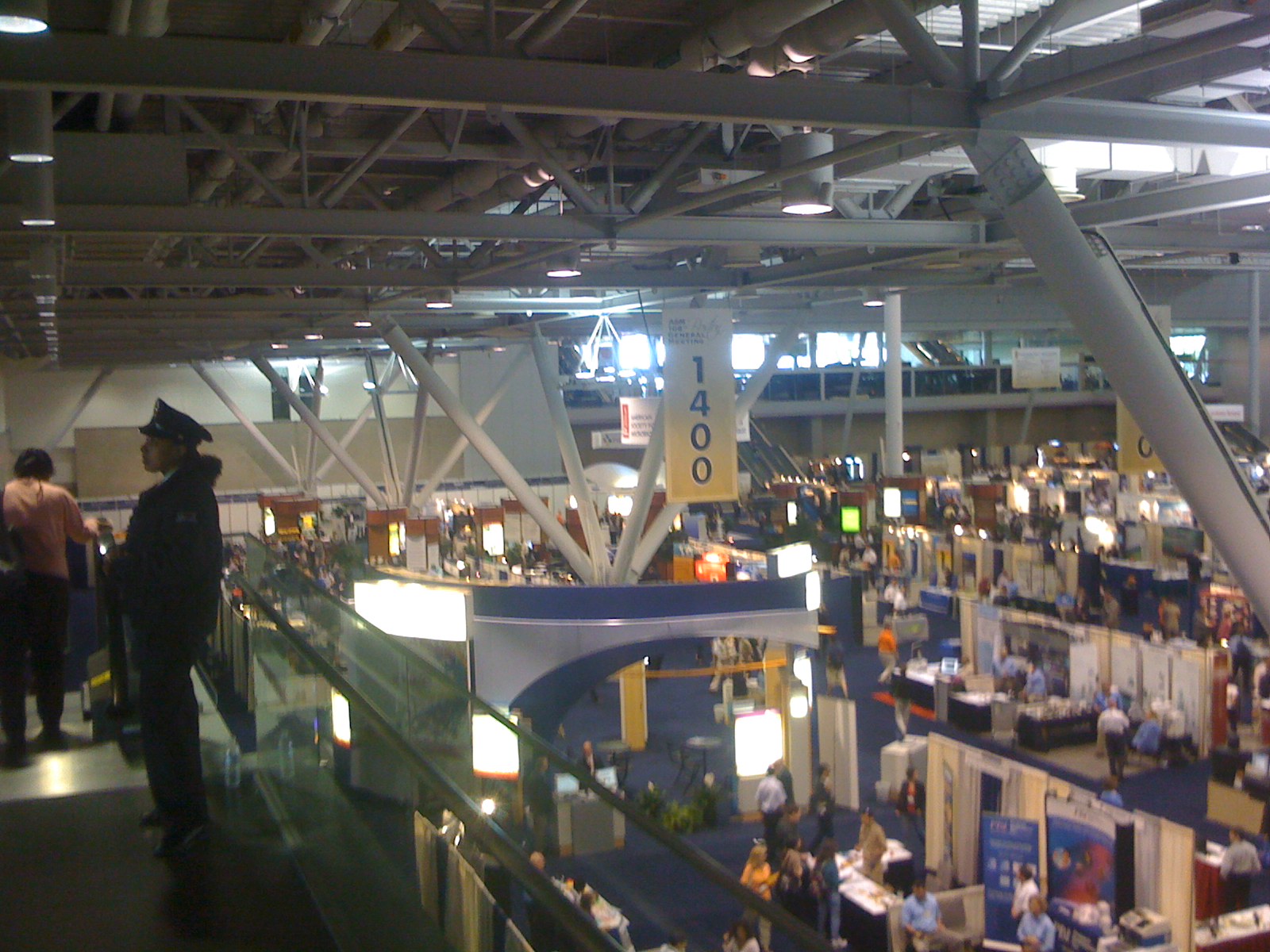
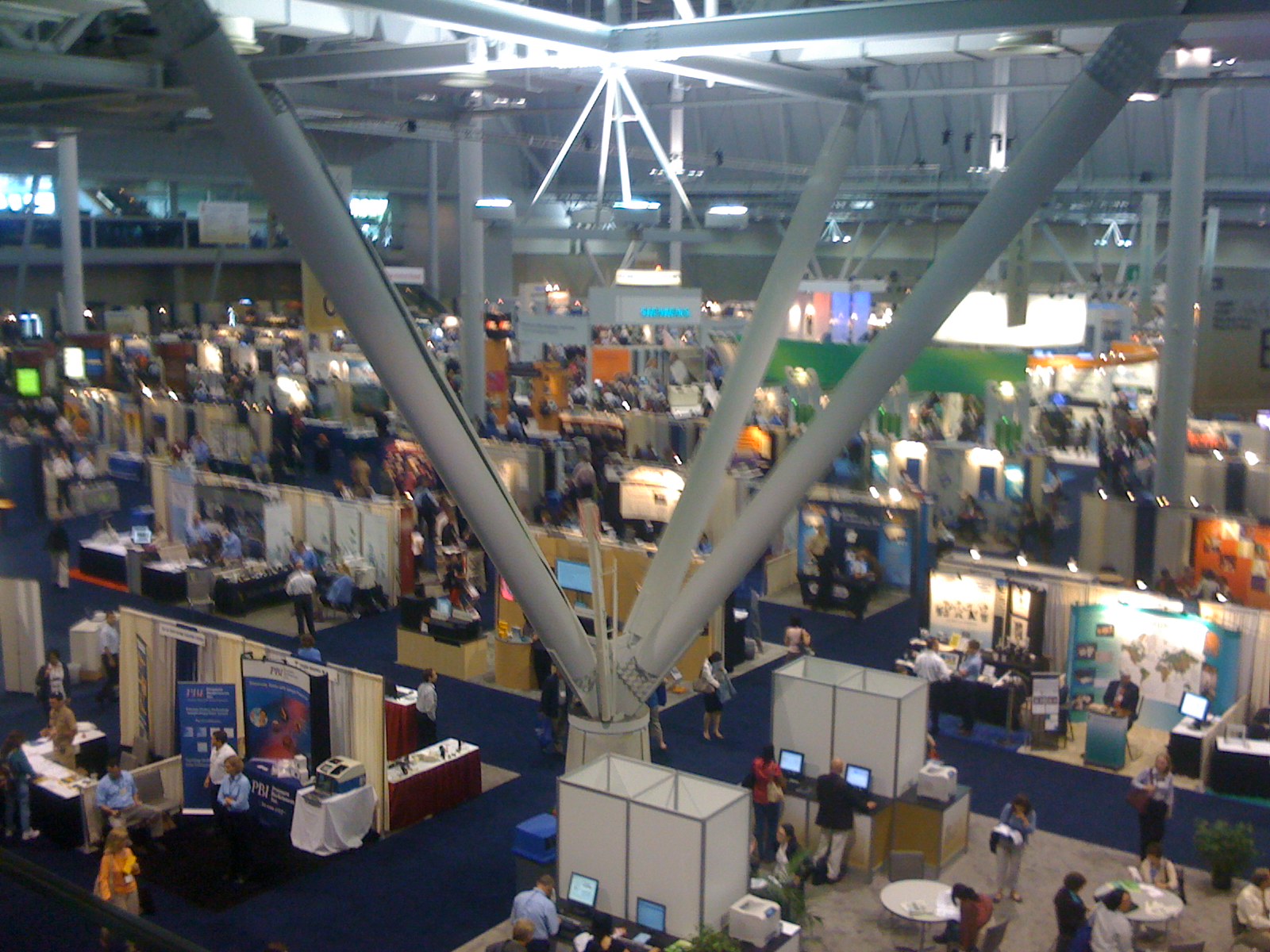
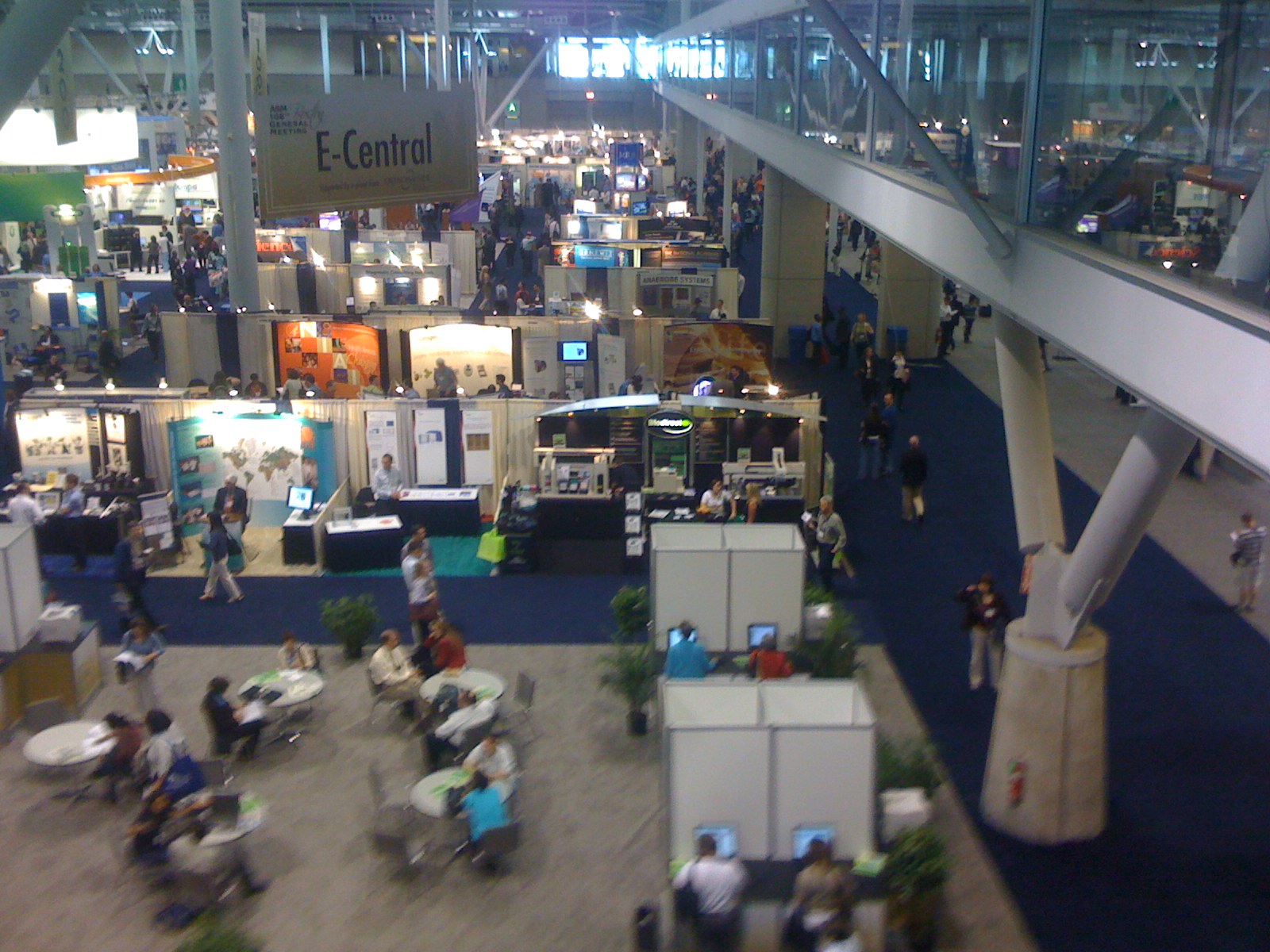
You know the conference you are at is too big when ….

Now – I confess I was really impressed with how ASM handled this enormous meeting I was just at. If you are going to have a big meeting, ASM does a smashing job. And I can see how such big meetings can have their appeal – the diversity of work and activities relating to Microbiology are amazing. However, big meetings are still not my cup of tea.

So here is my top 10 list of “You know the conference you are is too big when …”. All are based on experiences from this meeting.

  1. People communicate within the conference venue by email and cell phones
  2. They give you a foldout map showing the locations of all the different venues/activities/
  3. Colleagues contact you electronically after your talk rather than in person
  4. The lines for food are longer than the lines for security at the airport
  5. There are more:
    • counters at the registration booth than at the airport ticket area
    • meeting staff than scientists at the last conference you attended
    • promotional booths than active players in Major League Baseball (OK, we are not quite there with this meeting but we are close)
  6. The abstract book weighs more than your laptop computer
  7. People use GPS to find their way in the conference center (I wish I had pictures but I saw this happening)
  8. The bus/shuttle scheduling system is more complex than the travelling salesman problem
  9. You need to plan your own schedule by searching a database
  10. You do more walking inside the conference center than outside

Lederberg Workshop Intro

Well, I am sitting in the Lederberg workshop right now with David Relman talking about Lederberg and the workshop. He is emphasizing how “microbes as threats” (which is similar to the name of the panel that convened this workshop) is a bit of a biased view point and that beneficial microbes are important too and that Lederberg recognized this. Relman is also mentioning the importance of Esther Lederberg (Josh Lederberg’s first wife).

Now – some update on last night. I got to the hotel around 3 went walking around DC and then came back to the hotel. All the speakers were supposed to be staying there so I lingered in the lobby hoping to bump into people I knew and find someone to go to dinner with. And I sat down and started reading a book I just got – Microcosm by Carl Zimmer. Zimmer’s book is about E. coli and the history of studies of this magnificent organisms. And I started by lookng up in the index the stuff on Lederberg and read that. The book really seems to be quite excellent — it covers a wide range of topics in biology at the same time as highlighting the importance of this organism. And then the gurus of microbiology started coming by. And I snookered my way into dinner with Julian Davies, Bruce Levin and Stanley Cohen.  And it ewas a great time — talking about Lederberg, microbes, plasmids, selection, etc.   A good start to the meeting for me.  More later.

Genomes of Energy and the Environment – JGI Users Meeting

Just a little post here — if you are interested in Metagenomics, or Bioenergy or Microbes, consider going to the JGI Users Meeting March 26-28. Speakers include at least one Nobel Laureate (Steve Chu) as well as Mitch Sogin, Jill Banfield, Terry Hazen, and many others.

Marco Island – Saving Some of the Best for Last

Well, the Marco Island AGBT meeting just wrapped up and I they definitely saved some of the best for the end. I do not have a ton of time but here are my favorites:

Stephan Schuster gave a funny, entertaining and interesting talk on mammoth mitochondrial genomics. He riddled the talk with funny stories and one liners about his efforts to sequence old DNA and to publish the results. He did a good job of showing why Roche-454 sequencing is quite ideally suited for studies of old DNA.

John Leamon from Raindance Technologies summarize some of their work on droplet based microfluidics. He showed videos of droplets moving through their system and showed how it sould be used for various digital PCR-like activities.

But it was the last talk of the whole meeting that really did blow my mind. It was from Steve Turner from Pacific Biosciences. He presented an overview of their sequencing technology as well as a tiny bit of data. Now, normally I am uninterested in marketing talks where little data is presented. But this talk was different. First, their technology clearly has enormous potential for revolutionizing the sequencing field. Basically, what they are doing is reading the activity of a DNA polymerase as it replicates a single DNA molecule and they do it in real time. He referred to this as using the DNA polymerase as a sequencing engine and then he took the crowd through the details of the technology and some of the modifications they have made to make it work better. I will try to post later with more detail on their methods.

No – they are not quite ready for prime time yet. But the potential is pretty absurd. I see two key major advantages of their method if it can be fine tuned to work well — (1) it is screamingly fast – because they let the polymerase do all the work in essence (2) it can potentially get long reads — right now he claimed they could do up to 1500 base pairs and theoretically it could go much higher. If they can get this to work with reads of 10,000 bases for example, this will completely reconfigure the field. No longer will one have to worry about the complexities of mapping short reads as with many of the current “new” methods. And the long reads, coupled with many molecules per run, plus the high speed, this technology is the first I have seen that has shown some results and that could really lead to the $1000 human genome. Again, not clear when/if they will be ready for release to the world so don’t hold off buying one of the other systems that currently work (i.e., Illumina, Roche, ABI Solid) if you want to do “next gen” sequencing. But this company is one to keep an eye on.

NOTE – SEE ALSO

Marco Island sequencing frenzy – are we getting lost in all the data?

So – the Marco Island meeting could be summed up as a sequencing frenzy. Everyone and their mother presented something about how the next generation sequencers are revolutionizing their work. People are using these systems (well, people are using mostly Illumina and Roche sequencers and some are using ABI Solid) to do all sorts of new things – RNAi, gene expression, methylation, mutations, population genetics, comparative genomics, metagenomics, infectious disease, etc etc etc.

Certainly, much of this new work is truly revolutionary. Sequencing has gotten so cheap, and so easy, relative to even 3-4 years ago, that it can be used in all sorts of new ways. And new developments in sequencing seem poised to happen too, to make sequencing even cheaper and even better. Sequencing will get even better for a few reasons.

First, the current players in the market (Roche, Illumina, and possibly soon ABI Solid) are improving both their systems and their informatics such that they are getting more and more robust and easy to use and producing more data (Roche for example presented details on how they can extend their sequence reads to ~350 base pairs mostly by software and reagent changes). Lots of companies can say “We have some sequencing system about ready to be introduced” And lots of them are doing this at this meeting. But there is nothing like having sequencers in the hands of scientists to really test how well they work and to really help push the development of the technology.

Second, it does seem like some competitors for Illumina and Roche are coming. ABI presented multiple results from ABI Solid technology that makes it seem like these systems are ready for prime time. Whether other systems are ready for prime time is unclear. Helicos presented what could be seen as data. It was disappointingly minimal on detail but though I am rooting for them, it was far from convincing. But the discussions in the hallway seemed to suggest that Helicos is getting close. And there are 5+ other players itching to get into the market (some of which are apparently presenting later today). Some will fail. Some will succeed. And as long as their are a couple of good systems, the competition will push further development and reductions in costs. Thus everyone at the meeting I talked to said basically the same thing — this is an exciting time in sequencing.

So – sequencing is getting better and cheaper. That certainly will be good in many ways. But there are some negative aspects to this frenzy. I see two in particular. The first, which was discussed extensively at the meeting, is that nobody is really prepared to deal with the sheer volume of data coming out of these new systems. Data storage, transfer and analysis will unquestionably be the rate limiting steps in turining the new sequence data into knowledge.

And this is the other negative aspect of the new frenzy. Right now there seems to be a mad rush to apply the new sequencing methods to everything under the sun. And the data piles up. And piles up. And the biology seems to have taken a back seat in some cases. Perhaps the bext example of this is exemplified by something Neil Hall pointed out yesterday to me. There has been almost no mention at this whole meeting of things related to function of genes. For example, I have not heard “gene ontology” once. I do not think I have even heard “annotation” once. Function and process have been replaced by terms like “systems biology” and “SNPs” and “networks” and “massively parallel.” We have in a way regressed in terms of treating organisms (or communities) as a black box. Fine scale detail has been lost in a sea of data. In a way, we have all become born again geneticists. And I do not mean to disparage genetics. But I mean the part of genetics that treats organisms as a bit of a black box and focuses just on transmission of traits. We need to find a way to not get lost in all the data. I am not sure how to do that, but when we do, then the full potential of the new sequencing methods will be realized.

More notes from Marco Island/ AGBT

Some notes on talks here:

My favorite talk yesterday morning was David Cox from Perlegen. He had as usual some good one liners including “Everybody and their mother is doing this so doing this is not so novel. What is novel about it is that it worked.” I should add that David Cox helped shape my career indirectly in many many ways. When I was a PhD student at Stanford, I got into genomics in part by teaching a course with David Botstein, Rick Myers and David Cox. When Craig Venter offered me a job at TIGR in 1998, I was not sure if moving to a non university was a good idea or not. So I asked many people for their opinions. Some said “You must do an academic post doc or you will never get a faculty job” I pretty much knew to ignore those folks. Cox gave the best advice. He said as long as I published things while at TIGR, it would not hurt me in any way. It probably would help. And so I took the job. And no doubt that was a great career move.

Other talks that were good were one by Joe Ecker, who discussed methylation in Arabidopsis and one by Andy Clark.

I skipped out on some of the lunch time to finish my talk for the PM session and also worked on my talk in the back of the room during the other PM talks. The PM session was on metagenomics and the most pleasing thing was that David Relman did not show up and he was replaced by Peter Turnbaugh from Jeffrey Gordon’s lab. Now – I wam not saying it was good that Relman was not there — he usually gives smashingly good talks. But Turnbaugh, a PhD student, stepped in as pinch hitter and gave a great talk on gut microbiome studies, really setting the stage for the whole session. I do not know if he was nervous stepping into a session like this but it did not show if he was. He certainly seemed relaxed when he said “Thanks to Dr. Relman for getting stuck in Chicago”

Forest Rowher gave a good talk on metagenomics and pointing out that viruses still get ignored in this field relative to their likely importance in communities. I have written about Forest before so I am going to discuss the other talks more … but if you have not heard him talk before try to find a way. He has a VERY different perspective on genomics and metagenomics than most of the people doing it. And he is dead right about the need to do more work on viruses.

Garth Ehrlich gave a talk on “bacterial plurality” and why he thinks gene content variation within communities of microbes in biofilms is important. His data certainly seemed solid and he showed some results that call into question the claims that some aspects of the “pangenome” hypothesis (he showed that the total number of genes in the Steptococcus strain collection does seem to level off after sequencing ~ 30 genomes and thus that the number of genes is not infinite as some people have suggested). So I liked some aspects of his talk. But he did make some evolution statements I found disagreeable (for those who care about the nitty gritty – he showed a cluster diagram of strain similarity and then used the position of strains within the cluster diagram to reflect relative branching order and historical patterns. A cluster diagram is a bad thing to use and one should use a phylogenetic tree for this. In addition he implied that one could make a genome-phylogeny from gene presence/absence information that would be more robust than a standard alignment phylogeny. This is not a reasonable thing
in my opinion — gene presence/absence patterns tend to end up grouping together unrelated lineages that have separately undergone gene loss. I just do not understand why people so badly want to not use alignments to build trees). Anyway – overall many of the things he said were interesting but I find certain non-evolution evolutionary analyses really grating.

Anyway – I was going to ask him a question after his talk about this, but then decided that, since I was talking next, getting into an argument with him just before my talk might seem lame. So I passed on the question. And then I gave my talk on the need to fill in the tree of life in terms of genome sequencing projects. I discussed a project we are just wrapping up that was part of the NSF “Tree of Life” program in which we sequenced genomes of eight bacteria that are from phyla that at the time had no genomes available. And then I talked about a new project I am coordinating at the Joint Genome Institute in which we are sequencing 100 genomes to really fill in some of the bacterial and archaeal tree. Next week I will post more about this project but I note – this is not done to study the tree of life per se. It is being done because if we have reference genomes from across the tree, all of our genome analyses of other systems and of metagenomes get better.

After dinner and some shell cllecting on the beach, there were evening talks and I went to the informatics session. Some of the talks there were good but the best thign I saw there was someone (I think Ben Blackburne) saying his slides were going to be on something called slideshare.net. I had never heard of this and checked it out and it seems pretty cool. I may use it in the future … but gotta go off to other things.

AGBT Marco Usland Update – Long Live Sequencing

Well, I am sitting in the back of the room at the AGBT meeting and just heard Eric Green give the introduction and Joe Ecker is talking right now. And the theme of the meeting is pretty clear:
LONG LIVE SEQUENCING

Basically, the meaning of this is that, though many said sequencing was dead a few years ago, sequencing is alive, thriving, and going a bit crazy. With the new massively parallel high throughput sequencing machines sequencing is being used for everything and anything. For example, Ecker is using sequencing to study methylation of the genome of Arabidopsis. And others are usign sequencing for expression studies. And of course there is population genetics. And genetic mapping. And my favorite – metagenomics. And so on. So, despite the push to move into a “post genomics” world, sequencing is growing in use not shrinking.

Advances in Genome Biology and Technology Meeting – First Post

Well, I have just finally gotten online at the “Advances in Genome Biology and Technology Meeting” also known as the Marco Island Genome Meeting (because it is held in Marco Island in Florida), or, as we used to call it at TIGR when I worked there, the “I don’t want to go to Venter’s Genome Meeting Meeting”.

My flight in had some issues so alas I missed the workshop today on new technologies, and cannot report on that here, but I think I will get enough on the new technologies at the rest of the meeting to report later.

I got in to Ft Myers Airport at about 5 PM and took a shuttle bus ride from the airport to the Marriott on Marco Island. As usual, I blabbed away on the bus ride. Somehow, I always end up talking about my time at TIGR and my interactions with Craig Venter and Claire Fraser and my witnessing the fights between the Venter camp and the TIGR camp (if you do not know what I am talking about, feel blessed).

I checked in, dumped my bags and then went to the meeting registration where I got a free backpack full of meeting marketing material. Then I bumped into some colleagues and friends including Neil Hall, who was on the faculty at TIGR when I was there and has now moved back to the UK to Liverpool. I also saw Elaine Mardis, who was just at Davis giving a talk about new sequencing technologies (I missed her talk but took her out to lunch in Davis).

After ditching the backpack full of dead trees, I went to the reception/party by the pool. The food was not so bad, the drinks were free, and I bumped into many other colleagues, some of whom I have not seen in many years, and some who I should see more often (e.g., Chuck Langley, who is a colleague at Davis was there as was Len Pennacchio who is at the Joint Genome Institute where I have an Adjunct Appointment and where I try to spend some time, but alas, usually do not).

Anyway – I will post notes and pictures from the meeting as the days go by … I will try to do it in some regular manner but we will see how that goes.

Ten things to NOT do at a conference

Well, overall I am liking the GME meeting I am at. But not all of it. And some things here are instructional for what NOT to do at a conference, either as an attendee or as a presenter or as an organizer. Here are some of them

DO NOT:

  1. Go way over your allotted time to speak. Even if the chair of a session lets you do this, don’t. It is rude to the audience and to other speakers.
  2. Lack empathy for your audience. Take a few minutes to imagine what the audience might want to get from your talk. Some of the speakers here are much more concerned with what they will get from the presentation.
  3. Use a lot of slides with way way way too small text or images.
  4. Answer cell phone calls in the middle of the audience. Yes, that’s right, scientists can be jackasses. Imagine that.
  5. Corner people who are on the way to the restroom. Let people go.
  6. Make an opening statement when asking questions like “That was a great talk” or “That was an interesting talk” or anything like that. Don’t be a suckup. Just ask your question.
  7. Be rude to the meeting helpers when you forget something. Come on. If you are not registered for the meeting it is most likely that you screwed something up, not the meeting.
  8. Ask many follow up questions after your question. If you want to have a discussion, buy a beer for someone. If you have a straightforward question that is answerable – ask it. If you want to make a simple statement, fine. If you want to go on and on … get a room.
  9. Write in your blog in the back of the room (hey, I did not say I was perfect).
  10. Have too little time for breaks. The best part of conferences is the coffee and other breaks. No need to have too many talks. Have lots of breaks.

I am sure there are other things to not do … but these are those that come to mind right now.