TWIMO: This week in microbiome overselling – how the microbiome destroyed the Ego, Vaccine Policy, and Patriarchy

Well.  I guess thanks are in order to my friend and colleague David Pollock who pointed me to this on Facebook and asked if it fit the mold for an Overselling the Microbiome Award: How The Microbiome Destroyed the Ego, Vaccine Policy, and Patriarchy.  And, well, it certainly does.  This is just so so so so so painful I do not really even know what to say.  So I am just going to quote some of the worst parts here for everyone to think about

A bold beginning

The relatively recent discovery of the microbiome is not only completely redefining what it means to be human, to have a body, to live on this earth, but is overturning belief systems and institutions that have enjoyed global penetrance for centuries.

 And more boldness

A paradigm shift has occurred, so immense in implication, that the entire frame of reference for our species’ self-definition, as well as how we relate fundamentally to concepts like “germs,” have been transformed beyond recognition

Got to invoke some Copernicus

a Copernican revolution when it comes to forming the new center, genetically and epigenetically, of what it means in biological terms to be human

A little side throw at vaccines

This concept is of course intellectually infantile, and if you do some investigating you’ll find it was never quite grounded in compelling evidence or science.

And of course, the patriarcy must be attacked too

The microbiome has also fundamentally displaced a latent patriarchal prejudice concerning the relative importance and contribution of the man and woman towards the health and ultimately the continuation of our species.

And the microbiome is clearly trying to counter the patriarchy

it follows that most of our genetic information as holobionts is maternal in origin. 

and

if 99% of what it means to be human is microbiome-based, and if the mother contributes most, if not all, of the original starting material, or at least the baseline and trajectory of future changes in the inner terrain, then her contribution becomes vastly more important than that of the father.

This is perhaps the best part:

In other words, being born in a hospital via C-section and vaccination, will produce, genetically and epigenetically, a human that is so different – qualitatively – from one born at home, naturally, that they could almost be classified as different species, despite sharing nearly identical eukaryotic DNA (remember, only 1% of the holobiont’s total). 

And let’s attack men some more

In light of the new, microbiome-based view, the male role in protecting the health of women and children will be irrevocably downgraded in importance, not just professionally and medically, but biologically.

And then, well, this

The birth process, also, has been described as the closest thing to death without dying (it is ironic that anesthesiology, which could also be described in the same way, makes obstetrical interventions like C-section and epidural possible, at the same moment that it negates the spiritual experience of natural birth/women’s empowerment we are describing), offering women a window into the ‘in between’ and a direct experience of Source that men, less likely to experience it naturally would later emulate and access through the various technologies of shamanism.

And all of this then justifies environmental protection

This means we can’t simply live in a hermetically sealed bubble of shopping for organic, non-GMO certified foods at Whole Foods, while the entire planet continues to go to post-industrial hell in a hand basket.  Our responsibility becomes distributed across everything in the world, and every impactful choice then becomes relevant to the fundamental issue and imperative at hand. With the microbial biodiversity in Big Ag, GM-based agricultural zones fire-bombed with biocides, by the very same corporations that either own or distribute the “organic brands” we all love to think will save our bodies, if not the planet, we need to step deeper into our activism by stepping out of the diversions and palliative measures that don’t result in lasting change.

 I think the words speak for themselves.  But not for me.  Or my microbes.

Innovative Genomic Initiative Post Doc Fellowship at #UCDavis and some other Bay Area universities

Got this in email:

The IGI is pleased to announce its first Postdoctoral Fellowship Award.

This Award will provide 2 years of financial support to a promising new postdoctoral researcher at one of these 5 Bay Area universities (UC Berkeley, UCSF, Stanford University, UC Davis, UC Santa Cruz) to pursue an exciting new research project employing next generation tools to investigate genome editing, transcriptional regulation, epigenetics, DNA repair, etc. The deadline for submitting
applications is September 1, 2015.

Applications are now being accepted online:
https://innovativegenomics.org/postdoctoral-fellowship-award/

Please forward this message to those who may be interested in applying. We appreciate your help.

UPDATE – the application deadline has been extended to October 1. 

Possibly the worst press release on the microbiome ever: Greenlaw and Ruggiero and the third brain.

Well, this is a combination of horrendous, frustrating and painful: Discovery of Microbiome “Third Brain” Confirmed by Scientific Research in Japan | Business Wire. This is a press release that focused on Peter Greenlaw and Marco Ruggiero so I assume it came from him.

It starts off discussing a new paper from

the prestigious peer-reviewed scientific Journal “Anticancer Research” 

which according to the PR:

“describes the properties of a food product that is reminiscent of the “super food for the third brain.”  

Note – no link is provided to the paper.  Not surprisingly, the PR then transitions to being something else – in this case a new book by Greenlaw:

 “this finding supports the discoveries revealed in the book “Your Third Brain,” co-authored by Peter Greenlaw, Dr. Marco Ruggiero and Drew Greenlaw, with the forward written by author John Gray, Ph.D.” 

So this is not really about the new paper – this is a kind of bait and switch. Then comes one of the doozies “

Four and a half years ago, a huge discovery was made. In 2010, a team of researchers discovered a new organ that had gone undetected for more than 3,000 years in Human Anatomy. They called this newly discovered organ the microbiome.

What?  The human microbiome was discovered four and a half years ago?  That is of course complete BS.  I note – there is something a tad bit off here with the “3000 years too”.  Is this a religious reference of some kind?
Then comes another amazing section.  Underlining by me

The microbiome is much more than the gut microflora. It is a complex organ that is responsible for the development and function of all the other organs and systems, from the brain inside our heads to the immune system. The influence of the microbiome, that is located all over our body and not only inside the gut, on our behavior and intellectual functions is so significant that it can be aptly named “the third brain” as it is described in the book.

Wow.  I mean sure there is some evidence that the human microbiome can impact the brain.  But first of all, it is ridiculous to consider it “the third brain”.  Also, to say it is responsible for the development of the rest of the body is just plain silly.

How about this next section?

Dr. Ruggiero’s team is working hand in hand with the complete cooperation and unprecedented collaboration of medical doctors, with the goal of extending the highest possible quality of life for their patients for as long as possible. And although Dr. Ruggiero did not personally discover the microbiome, he did identify it as the third brain.

OK – so is this meant to imply other people don’t collaborate with medical doctors?  And other people do try to extend quality of life for parients?  
So many other bad sections I am not sure which other ones to point out.  How about this:

Before this book was written, man did not know that his thoughts, feeling, emotions, behaviors, his supposed free will were under the control of a non-human organ whose existence had gone undetected until very recently, the microbiome.

This sounds like the voice over you might have in a science fiction horror movie.  Except – this is real fiction and from a horror show of a press release. 
I must say – Greenlaw and Ruggiero are clearly very proud of themselves.  I will just leave everyone with the last paragraph for people to ponder how humble and understated it is.

This book describes what is and how we can take control of this non-human third brain and aspire to bring out the superman that is inside us. As the Philosopher wrote: ‘Let your will say: the overman shall be the meaning of the earth… Man is a rope, tied between beast and overman—a rope over an abyss … what is great in man is that he is a bridge and not an end.’ Thanks to the information contained in this book, for the very first time in the history of mankind we can transform ourselves and reach this end

I am hereby awarding Greenlaw and Ruggiero an “Overselling the Microbiome” award.  But that seems too small for them.  They deserve some sort of “Biggest pile of BS ever” award.  I will consider starting such a new award series in their honor.

A Phoenix Rises from the Ashes: A new discovery emerges from the 2009 retraction.

This is a post in my continuing series of the “Story Behind the Paper.” series. This post is from Benjamin Schwessinger, Pamela Ronald, Rory Pruitt, Anna Joe, and Ofir Bahar.


A Phoenix Rises from the Ashes: A new discovery emerges from the 2009 retraction.
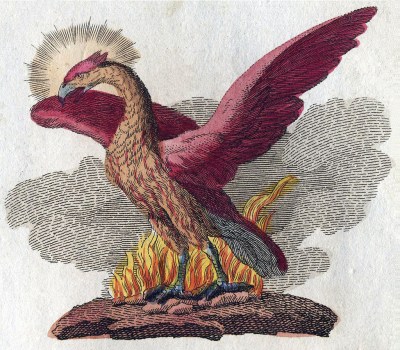
A phoenix depicted in a book of legendary creatures by FJ Bertuch (1747–1822).
Via Wikipedia Commons – based on this

This is the story behind our report published today in Science Advances.

The Background

In Science Advances we report that one class of bacteria produces a previously undescribed, and long sought after, molecule recognized by plants carrying a specific receptor.

The story began in the 1970s, when Professor Gurdev Khush and colleagues demonstrated that a wild species of rice was immune to most strains of the Gram-negative bacterium Xanthomonas oryzae pv. oryzae (Xoo), causal agent of a serious disease of rice globally. In the 1990s Ronald began studying the rice/Xoo interaction. Because both rice and Xoo are genetically tractable, the rice/Xoo biological system proved to be an excellent system for studies of the molecular mechanisms governing the plant immune response. In 1995, two postdoctoral fellows in Ronald’s lab at the University of California, Davis- Guoliang Wang and Wenyuan Song-reported that this rice immune response was controlled by a single receptor kinase, called XA21.

The predicted structure of the XA21 protein, with a predicted leucine rich repeat extracellular domain and an intracellular kinase domain, suggested that XA21 could sense a secreted microbial molecule and then activate an immune response.

A few years after the discovery of the XA21 receptor, the fly Toll and mouse Toll-like receptors (Tlr4) were shown to share striking structural similarities with XA21 and other plant receptors. The animal receptors also recognized and responded to microbial molecules. Together these discoveries demonstrated that plants and animal use similar mechanisms to protect against infection. Professors Bruce Beutler and Jules Hoffman were awarded the 2011 Nobel Prize in Physiology or Medicine for their important work.

The Ronald laboratory then spent twenty years trying to identify the microbial molecule that is recognized by XA21. The research led to the identification of a number of microbial genes that are required for activation of XA21-mediated immunity (rax genes). These genes encode a tyrosine sulfotransferase, RaxST, and three components of a predicted type 1 secretion system: a membrane fusion protein, RaxA; an ATP-binding cassette transporter, RaxB; and an outer membrane protein, RaxC. raxST, raxA, and raxB are located in a single operon (raxSTAB). Based on these findings, we hypothesized that the activator of XA21-mediated immunity is a tyrosine sulfated, type 1-secreted protein.

We were excited about this idea because sulfation has emerged as an important posttranslational modification controlling receptor-ligand interactions. It is a common posttranslational modification of eukaryotic proteins and plays important roles in regulating development and immune responses. The importance of this area of research to biology and medicine is reflected in the recent report of a novel drug that blocks HIV infection. To achieve this breakthrough, the researchers exploited the observation that HIV binds tyrosine sulfated amino acids for cell entry (Gardner et al., 2015).

Despite a clear model and diverse supporting data suggesting that Xoo secretes a sulfated peptide, the identity of this molecule remained elusive.

In 2009, the Ronald laboratory reported that XA21 recognized a sulfated peptide. However we later discovered major errors in this work and in 2013, we retracted the paper. We discussed these mistakes in several lectures, post and articles including a Keystone symposium, Scientific American, Nature, and Schwessinger’s blog (here and here). The process with which we addressed the problems was highlighted as “Doing the right thing” by Retraction Watch, a blog that reports on retractions of scientific papers. The retraction was included as one of the top 10 retractions of 2013.


The new Discovery

Today, in Science Advances, we are delighted to report the identification of the microbial molecule that activates XA21-mediated immunity. As predicted, it is a tyrosine-sulfated protein. We named this microbial protein RaxX.
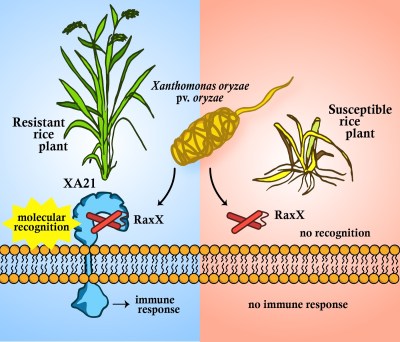
The rice immune receptor recognizes the bacterial molecule RaxX and initiates an appropriate immune response. Illustration by Kelsey Wood.

To isolate this molecule, postdoctoral fellow Rory Pruitt systematically created bacterial mutants carrying deletions near the RaxSTAB operon. He showed that one of the deletion mutants lost the ability to activate the XA21-mediated immune response. The deleted region encodes a small open reading frame that we named RaxX. Xoo strains lacking RaxX and Xoo strains that carry mutations in the single RaxX tyrosine residue (Y41) are able to evade XA21-mediated immunity. Postdoctoral fellow Anna Joe, together with collaborators at the University of Texas, Austin and at the Joint Bioenergy Institute in Emeryville, showed that Y41 of RaxX is sulfated by the prokaryotic tyrosine sulfotransferase RaxST. Postdoctoral fellow Benjamin Schwessinger, graduate student Nick Thomas and collaborators showed that sulfated, but not nonsulfated, RaxX triggers hallmarks of the plant immune response in an XA21-dependent manner. A sulfated, 21–amino acid synthetic RaxX peptide (RaxX21-sY) is sufficient for this activity. Xoo field isolates that overcome XA21-mediated immunity encode an alternate raxX allele, demonstrating the co-evolution of host and pathogen. RaxX is highly conserved in many Xanthomonas species.

Our results indicate that the presence or absence of sulfation is decisive for the ability of RaxX to trigger XA21-mediated immunity.

The new insights gained from the discovery and characterization of RaxX may be useful for the engineering of resistant crop varieties and for the development of therapeutic reagents that can block microbial infection of both plants and animals.

The rice XA21 receptor kinase, the first innate immune receptor discovered in plants or animals, provides resistance against Xanthomonas oryzae pv oryzae through recognition of RaxX, a tyrosine-sulfated protein secreted by the bacterium.

Illustration by Maurice Vink


Notes on the publication process

The scientific life is the most complex of all to write about. In the case of scientists, impulse becomes compulsion”. — Carol Shields

After we discovered mistakes in our previous paper, we spent several years correcting the scientific literature both by retracting the original Science paper (Lee et al. 2009) and by following up with publications to further correct the literature (Bahar et al. 2014). We made extra efforts to control the results in this current report.

Wrestling with the retraction and discovering the new molecule in rapid succession was an enormous challenge. Here we share some of the lessons learned.


Pamela Ronald, Professor, Department Plant Pathology and the Genome Center, UC Davis; Director of Grass Genetics, the Joint Bioenergy Institute:

I would not wish a retraction on anyone. Scientists are supposed to catch their mistakes before publication. Still, I am astonished to conclude that the process has in some ways been positive.

On an administrative level, the lab is running more efficiently. I have instituted new practices for the lab: created duplicate stocks of key strains (validated and maintained by the lab manager), mandated electronic notebooks for each lab member and required that all new assays be independently validated by three independent researchers before publication.

But the best part of this bad situation has been working with this particular team. It has been an immense privilege to watch each person work through the situation in their own way, collaborate, and make new discoveries. Respect for each other and for the scientific process was paramount. After figuring out what went wrong (no easy task), they tried not to look back. They did not give up, even when it would have made sense to do so. Their persistence and optimism in face of this daunting challenge buoyed all of our spirits. I will always be in awe of their work and will always be grateful.

Equally stunning was the supportive and kind response from the scientific community. We received many letters of encouragement – even from complete strangers. It helped us keep going.

There are still hills to climb. Some scientists may be extra skeptical of results from my lab for a long time to come. For example, in a critique of our submission, one of reviewer’s asked, “how do we know the strains weren’t mixed up again this time?”


Rory Pruitt, postdoctoral scholar in the Ronald lab.

I was only a few months into my postdoc when I became convinced that the majority of the Ax21 story was incorrect (Ax21 was the proposed elicitor of XA21-mediated immunity in the retracted papers). My mind was filled with questions. How could this happen? What results can I believe? Admittedly, the biggest question that hounded me was “Should I be looking for a new job?” There were a few key factors that led to my decision to stay in the lab. I think these factors were also critical to this story working out as a “success.”

Early on, I went to Pam with some of my doubts. It was terrifying to approach my new boss and I say I didn’t believe some of her published work (including a Science paper!). But I needed to know that I could be honest with her and not feel pressured into only showing results that fit the established model. Pam listened to my concerns and those of others in the lab. Most importantly, she showed that she was committed to getting the story right and correcting the literature if need be.

In addition to Pam, there was a great team of postdocs and graduate students who were equally devoted to correcting the science. At times it seemed a long, painful process with little reward (there’s not a good space on a CV for working towards a retraction). Nevertheless, it needed to be done so that we and other labs could move forward. I was encouraged by Ofir, Ben, and others who worked persistently on this.

A final factor in my decision to stay is the prospect of new discovery. If Ax21 isn’t the activator of XA21-mediated immunity, what is? Maybe we can find it! It’s that hope of new discovery that keeps us coming back to the lab bench. My postdoctoral experience has had some highs and lows, but I am glad I stuck it out. With persistence, enthusiasm, and a good team committed to reliable science, we were able to not only correct earlier mistakes but also move forward.


Benjamin Schwessinger, former Ronald Laboratory postdoctoral scholar and now independent research fellow in Australia, at the Australian National University in Canberra.
You have much to lose as an early career researcher if you are thrust into a situation where results cannot be reproduced. In a hyper competitive environment irreproducible results you are trying to build on are a big problem, no matter how smart, privileged, and gifted you are. Lengthy delays in publishing as a postdoc can cause great harm to a career. Here are the main factors that made us successful in the face of adversity.

(Be lucky) have your own funding

Your own funding makes you financially and also scientifically more independent. It ensures your academic freedom. I was grateful to have been supported independently by the Human Frontier Science Program. It made me bolder and braver in speaking out. I was able to choose to stay or go. Because of the team I believed in I decided to stay!

Get confidential outside advice

Getting some outside confidential impartial advice on how to approach this problem is very important. Many senior figures have most likely seen similar cases in the past and have more insight. Following through with this advice is a total different matter. I decided to stay!

Collaborate

Work through it together as a team. Build on each other’s strength and talk about all possibilities. Repeat each other’s experiments with all required controls. Invite well respected figures in the field to independently test (and confirm) core experiments.

Admit mistakes and retract
Everyone makes mistakes. They are part of the scientific discovery and science has to be self-correcting. Retractions are an integral part of this process. Not to retract is NOT an option! It obstructs all future progress in the subject matter.

Follow the data

Do controls, repeats, and repetitions of conclusive experiments. Seeing is better than believing.


Ofir Bahar, former Ronald Laboratory postdoctoral scholar and now principal investigator, Plant-Microbe Interaction Research Group, the Volcani Center, Israel,

I remember the day, early 2013, when we were driving back to Davis from a happy and relaxed baby shower at Benjamin’s place in Oakland, Rory mentioned to me “you know, I deleted an upstream and a downstream region to raxSTAB. The downstream mutant was no different than wild type, but the upstream mutant forms long lesions on XA21 plants…”

This was the turning point; I immediately knew this was a big discovery and a major break through for the lab.

But before that moment, we were a bunch of enthusiastic post docs that just loved doing science. We wrote these nice proposals to get our fellowships, based on the amazing story of the rice immune receptor XA21 and its (thought to be) elicitor Ax21.

It was a fascinating story we were all so excited about having read it in Science. Of course we joined the Ronald lab to follow up on this initial discovery, but well… the building upon part did not work as we all might have wished. We had to dig deep, real deep, to figure out what was going on and what went wrong before our arrival to the lab. So, a year….. year-and-a-half in our new positions we finally reached the ultimate conclusion that there was a big hole in the model – there’s no elicitor! Or, there is, but it’s not Ax21 and we don’t have a clue what the identity of this molecule might be. It felt like we were thrown back 10 years, to 2004 with the da Silva paper just published describing the requirement of the three Xanthomonas genes RaxST, RaxA and RaxB for XA21 immune activation.

Those were ‘dark ages’ and difficult times. Understanding that most of the time you invested so far was, at least in practical terms (e.g. publications), for nothing, and that there is no biological model to work on, but that it needs total reboot. To be honest I was feeling a bit worried at that time for my scientific career. But then, a series of exciting discoveries (including some that are not published yet) gave me hope again. Well… isn’t this how science goes, bad, bad, bad, bad, good, bad, bad, bad, good and so on. I remember Pam telling me: “you know why I love a big group? There has got to be some positive results coming all the time”

Later, a few months after Rory shared with me his finding, we already knew what it was, and we were very certain, this is the ONE. Unfortunately, or luckily, I got a position offered at my home country and I gladly accepted it. So I actually wasn’t there for the flower stage (you know… the decorations), but I was very happy to have been there when the bud of this beautiful flower to be emerged. Every time I think of this story its like, WOW, can you believe all this has happened in just 3-4 years, unbelievable.

My lesson is, never lose hope, be critical, believe it when you see it, work on multiple projects, enjoy science and openly share science


Anna Joe, postdoctoral scholar in the Ronald lab.

I was in my final year grad school and looking for a postdoc position in early 2013. The Ronald lab was on the top of my wish list because I was fascinated by the Ax21 story in Science 2009. But just before I applied for a position in the Ronald lab I learned that something went wrong with Ax21 and that the original paper would be retracted. Many thoughts crossed my mind. Main one was “Do I still want to join the Ronald lab?”. Actually it was easy to answer the question once I spoke with Pam about it and talked with her lab members during the visit for my formal interview. “Yes, I’d like to work in the lab which just retracted two papers”. This for sure sounds crazy to most people. However, the whole experience of my visit gave my many reasons to join the Ronald lab. Correction of errors is a part of science (I knew this because I also had difficult time to track down a mix up plants problem before) but not many people are brave enough to admit mistakes. Pam and all lab members honestly, clearly stated to me what the errors were and how they verified the problems. They communicated well with each other, shared idea freely and respected other’s opinions. Their open mind and transparency attracted me.

On top of that I was very curious about the unexplored, new Xa21 activator. All other lab members might have felt the same curiosity and channeled its energy to continuously work through the problems during last several years. Although I did not share the “dark period”, I could see everybody in the lab was persistent with the common effort to correct the science. I experienced incredibly good teamwork and great collaboration. All of those are the driving force of our success. Finally, I’d like to mention that we could not make it without the support and encouragement from the scientific community. Many scientists shared their thoughts and advice and were rooting for us. Most collaborators unhesitatingly complied with our requests for assistance. They helped us not only “do the right thing”, but also do better science.

Medical Informatics World Conference – bringing you men, men and more men

Just got this email

Cambridge Healthtech Institute and Bio-IT World are happy to announce the 4th Annual Medical Informatics World Conference 2016 to be held April 4-5, 2016 in Boston, MA. The web site is now posted and features summaries of the five conference tracks and highlights from the 2015 gathering. We are now accepting speaking proposals via the web site’s online submission form.

Medical Informatics World Conference 2016Improving Outcomes and Delivery Value with IT Innovation
April 4-5, 2016 • Seaport World Trade Center • Boston, MA
www.medicalinformaticsworld.com
ONLINE SUBMISSION FORM
http://www.medicalinformaticsworld.com/hit_content.aspx?ekfrm=140243
Track #1: Value-Based Delivery Models and Cross-Industry Data Collaboration: Integrating Data Analysis to Manage Costs and Improve Outcomes in the Health Care Ecosystem
 Track #2: Coordinated Care, Patient Engagement and Connected Health: Delivering Care to Patients and Consumers in all Settings to Improve Outcomes
 Track #3: Population Health Management, Risk Modeling, and Patient Stratification: Using Technology and Analytics to Predict Outcomes, Target High-Risk Populations and Improve Quality
 Track #4: Achieving Global Interoperability in Healthcare Datasets and Systems: Delivering Data-Driven Infrastructures to Support Clinical and Financial Transformation
 Track #5: Quantitative Imaging, Radiomics and Advanced Medical Image Analysis: Functional Imaging and Integration of Imaging, Genomic and Other Datasets to Improve Outcomes
 Please feel free to share this announcement with your peers and please do submit a speaking proposal for review by August 19.

Kind regards,
Micah

Micah Lieberman
Executive Director, Conferences
Cambridge Healthtech Institute (CHI) & Bio-IT World

Sounded possibly interesting.  So I checked out the meeting site and then looked up the speakers.  For example here is a link to the Keynotes.

(UPDATE – THE LINK FROM THE MEETING PAGE GOES TO KEYNOTES FROM THE 2015 MEETING, WHICH ARE LISTED BELOW.  NO INFO IS POSTED FOR 2016 AS FAR AS I CAN TELL)

Here are the speakers on Day 1
  • Micah LiebermanMicah Lieberman
  • Tariq Abu-Jaber, MA, MPH, Vice President, Medical Informatics, Harvard Pilgrim Health CareTariq Abu-Jaber
  • Phil PolakoffPhil Polakoff, 
  • Steven StackSteven Stack, 
  • Jason BurkeJason Burke,
And then a discussion session

  • Tariq Abu-JaberModerator: Tariq Abu-Jaber,
  • Jason BurkeJason Burke
  • Stanley Huff, M.D., Chief Medical Informatics Officer, Intermountain Information SystemsStanley Huff, 
  • Steven StackSteven Stack
  • Phil PolakoffPhil Polakoff,
Day 2

  • Micah LiebermanMicah Lieberman,
  • Stanley Huff, M.D., Chief Medical Informatics Officer, Intermountain Information SystemsStanley Huff, 
  • John HalamkaJohn Halamka
  • Jonathan WeinerJonathan Weiner,
  • StephenWarrenStephen Warren
And then a discussion
  • Eric GlazerEric Glazer, 
  • Gowtham RaoGowtham Rao,
  • Jason BurkeJason Burke,
  • StephenWarrenStephen Warren
  • J.D. WhitlockJ.D. Whitlock,
  • John HalamkaJohn Halamka,
Isn’t that awesome.  21 slots for presenters for the Keynote sessions.  And all of them are men.  Sorry, but I will not be going to this meeting nor should anyone else.  


postdoc at UMN studying the phytobiome

We are currently hiring a postdoc to study the determinants and consequences of the plant microbiome (bacterial, fungal, and viral), including work spanning the globally-distributed Nutrient Network experiment (www.nutnet.org). We’re looking for applicants with experience and ability in lab techniques for high-throughput sequencing and skills for manipulating and analyzing metagenomic data sets. Applicants will work with a team of PIs, postdocs, and graduate students spanning University of Minnesota’s Ecology, Evolution, and Behavior and Plant Pathology departments. A fuller description is attached. We’d like to hire as soon as possible.

Applications can be submitted via the UMN Human Resources website, http://tinyurl.com/negnlvy .

Please pass this information along to potential applicants or others who may know of good applicants.

Thanks,
Elizabeth

Macrosystems-Post-DocJobAd2015.pdf

Faculty Positions at University of Arizona- GI Microbiology and Virology

~~~~~~~~~~~~~~~~~~~~~~~~~~~~~~~~~~~~~~~~~~~~~~~~~~~~~~~~~~~~~~~~~~~~~~~~
The University of Arizona’s College of Agriculture and Life Sciences and
BIO5 Institute are supporting two tenure-eligible faculty hires to be based at the School of Animal and Comparative Biomedical Sciences (ACBS).
Successful applicants will also become a "BIO5 fellows". ACBS houses over
120 faculty and staff working across diverse areas of agriculture and biomedical sciences, while the BIO5 Institute is an interdisciplinary research unit bringing together researchers from Agriculture, Engineering, Medicine, Pharmacy and Science. Both positions offer excellent opportunities for collaborations with faculty members in basic science and clinical departments throughout campus and include access to start-up funding and laboratory facilities.

*Assistant/Associate Professor in Gastrointestinal Microbiology*: We are seeking candidates with a primary disciplinary focus in gastrointestinal microbiology and a secondary focus in gut-brain axis biology, obesity, colorectal cancer, host-microbe interactions, food safety, metagenomics, metabolomics, or microbial pathogenesis are encouraged to apply. Expertise in the application of advanced computational biology and wet lab approaches to further understanding of the human and vertebrate animal microbiome is preferred. For detailed information about this position, including how to apply online, please see:
www.uacareertrack.com/applicants/Central?quickFind!6943

*Assistant/Associate Professor in Virology:* We seek individuals with a demonstrated interest in applying virology and immunology approaches to understanding animal and/or human health and developing novel therapeutic approaches. In keeping with the BIO5 mandate, expertise in the application of advanced computational biology approaches to investigating virus-host, virus-virus or virus-microbe interactions is preferred. For detailed information about this position, including how to apply online, please see:
www.uacareertrack.com/applicants/Central?quickFind!6940

EMBO Symposium “A New Age of Discovery for Aquatic Microeukaryotes” January 26-29, 2016

Just got this email announcement for this meeting from my Program Officer at the Moore Foundation. And I note – I checked out the invited speaker list and it looks very good and relatively well balanced in terms of gender diversity.

Colleagues,

Save the date!

With great enthusiasm I would like to share information about an upcoming EMBO Symposium on aquatic protist ecology and evolution stimulated by the completion of the Marine Microbial Eukaryote Transcriptome Sequencing Project (MMETSP) and major milestones achieved by the Tara Oceans and Malaspina expeditions. The goal is to bring together the MMETSP, Tara Oceans, Malaspina, and well-established protist model systems communities. The Symposium will take place in Heidelberg, Germany from 26–29 January 2016.

http://www.embo-embl-symposia.org/symposia/2016/EES16-01/index.html

Invited speakers include the following scientists whose specialties range from marine and freshwater microeukaryote ecology to studies of long-standing protist model systems such as Tetrahymena and Chlamydomonas:

http://www.embo-embl-symposia.org/symposia/2016/EES16-01/speakers_gallery/index.html

The sessions are expected to be:

1. And You May Ask Yourself, “Well…How Did I Get Here?”: Biodiversity Patterns across Space and Time
2. Love–Hate Relationships: Intimate Interactions, from Trophic Interactions to Symbiosis
3. Weird and Wonderful Organelles and Symbionts—Photosynthesis, Respiration, and Beyond
4. Knock, Knock—Who’s There? Extracellular Signaling
5. Genetic Transportation: Causes and Consequences of Gene Exchange in Protists
6. Small Microbe, Big World: Microeukaryotes in Aquatic Ecosystems
7. Situation Normal, All Stressed Out
8. Evolutionary Tipping Points: How Do Protists Adapt?

The organizers will be selecting poster and additional oral presentations from the submitted abstracts. The abstract deadline is 22 October 2015, and the registration deadline is 3 December 2015.

Please share this announcement with your colleagues.

LiveStreaming 7/27-28 – Workshop: Computational Advances in Microbiome Research

**Please forward to interested colleagues. Flyer attached.**

The National Institute for Mathematical and Biological Synthesis (NIMBioS) invites you to join the live stream of our Investigative Workshop, "Computational Advances in Microbiome Research," to be held July 27-28, 2015, at NIMBioS.

Objectives: Recent years have seen a tremendous upswing in microbial community research, ranging from studies of the human microbiome to investigations of biogeochemical cycling in global soil and oceans and coral mucus ecosystems. This has been triggered in large part by the decreasing cost, increasing ubiquity, and democratization of analysis methods for high-throughput sequencing, which has made both amplification-based and shotgun metagenomic profiling of microbial communities accessible to diverse research fields. Microbial community studies have a long history derived from a variety of research areas, however, including ecology, soil and ocean biochemistry, human and environmental toxicology, air quality and environmental monitoring, agriculture, and biodefense. As the methods necessary for modern data analysis have become more complex, new computational approaches have developed independently in many of these subfields, but there have been few opportunities to integrate knowledge and bioinformatic techniques across microbial community research areas.

The overarching goal of this workshop is to bring together and integrate novel bioinformatic techniques from diverse areas of microbial community research. This will allow us more specifically to:

  • Share the state of the art in microbial community analysis from diverse fields.
  • Identify techniques from one field that are useful in others.
  • Identify gaps in computational and statistical techniques not currently addressed in any subfields.
  • Identify gaps in biological knowledge that could be addressed by new quantitative methods.

The workshop is designed as a small, focused workshop bringing together the top thought leaders in computational microbial community analysis techniques from a variety of biological application areas. We anticipate this will foster new ideas, accelerate the pace of biological discovery by disseminating current techniques across fields, provide a starting point for new collaborations, and identify gaps that might be targeted by future funding opportunities. Participation in the workshop is by invitation only.

Co-Organizers: Jill Banfield, Earth and Planetary Science and Environmental Science, Policy and Management, Univ. of California, Berkeley and Curtis Huttenhower, Biostatistics (Computational Biology and Bioinformatics), School of Public Health, Harvard Univ.

Live Stream. The Workshop will be streamed live. Note that NIMBioS Investigative Workshops involve open discussion and not necessarily a succession of talks. In addition, the schedule as posted may change during the Workshop. To view the live stream, visit http://www.nimbios.org/videos/livestream. Join the discussion on Twitter using #CAMRws.

For more information, visit http://www.nimbios.org/workshops/WS_microbiome

The National Institute for Mathematical and Biological Synthesis (NIMBioS) (http://www.nimbios.org) brings together researchers from around the world to collaborate across disciplinary boundaries to investigate solutions to basic and applied problems in the life sciences. NIMBioS is sponsored by the National Science Foundation, with additional support from The University of Tennessee, Knoxville.

microbiomeWS_flyer.pdf

Cold Spring Harbor presents the men’s only view on the evolution of sequencing

On June 5 I posted a guest blog post by an anonymous person writing about the Programming for Biology workshop at Cold Spring Harbor Labs: Guest post on Yet Another Mostly Male Meeting (YAMMM) – Programming for Biology 

And this post generated some responses including yesterday a series of responses from whomever is behind the Cold Spring Harbor Meetings Twitter account.

//platform.twitter.com/widgets.js

//platform.twitter.com/widgets.js

//platform.twitter.com/widgets.js

//platform.twitter.com/widgets.js

//platform.twitter.com/widgets.js

Sounds great.  And I retweeted all of these.

And then I got an email invite to a new Cold Spring Harbor Meeting: The Evolution of Sequencing Technology: A Half Century of Progress

With a long long list of speakers.  Alas, the gender ratio here of speakers is abyssmal.  I have highlighted men in yellow and women in green (with the caveat that I always try to giver that assigning gender from names or appearance or records is not always accurate)

  1. Mark Adams, J. Craig Venter Institute
  2. Gillian Air, University of Oklahoma
  3. Shankar Balasubramanian, University of Cambridge, UK
  4. Hagan Bayley, Oxford Nanopore Technologies, Ltd.
  5. David Bentley, Illumina Cambridge, Ltd
  6. Sydney Brenner, Salk Institute for Biological Studies
  7. Nigel Brown, University of Edinburgh, UK
  8. George Brownlee, University of Oxford, UK 
  9. Graham Cameron, Bioinformatics Resource, Australia EMBL
  10. Piero Carninci, RIKEN Ctr.for Life Science Technologies, Japan
  11. Norman Dovichi, University of Notre Dame
  12. J. William Efcavitch, Molecular Assemblies, Inc.
  13. Miguel Garcia-Sancho, University of Edinburgh, UK
  14. Mark Gerstein, Yale University 
  15. Jack Gilbert, University of Chicago
  16. Walter Gilbert, Harvard University
  17. Philip Green, University of Washington
  18. Leroy Hood, Institute for Systems Biology
  19. Clyde Hutchison, J. Craig Venter Institute
  20. James Kent, University of California, Santa Cruz
  21. Jonas Korlach, Pacific Biosciences
  22. Victor Ling, BC Cancer Agency, Canada
  23. David Lipman, NCBI/NLM National Instiutes of Health 
  24. James Lupski, Baylor College of Medicine
  25. Thomas Maniatis, Columbia University Medical Center
  26. W. Richard McCombie, Cold Spring Harbor Laboratory
  27. Joachim Messing, Waksman Institute, Rutgers University
  28. Gene Myers, Max Planck Institute of Molecular Cell Biology & Genetics, Germany
  29. Richard Myers, HudsonAlpha Institute for Biotechnology
  30. Debbie Nickerson, University of Washington
  31. James Ostell, NLM/NCBI
  32. Stephen Quake, Stanford University/HHMI
  33. Charles Richardson, Harvard Medical School
  34. Richard Roberts, New England BioLabs
  35. Jane Rogers, The Genome Analysis Centre, UK
  36. Mostafa Ronaghi, Illumina, Inc.
  37. Yoshiyuki Sakaki, University of Tokyo
  38. Jay Shendure, University of Washington
  39. Melvin Simon, Caltech
  40. Hamilton Smith, J. Craig Venter Institute
  41. Lloyd Smith, University of Wisconsin-Madison
  42. J. Craig Venter, J. Craig Venter Institute
  43. Robert Waterston, University of Washington
  44. James Watson, Cold Spring Harbor Laboratory 
  45. Jean Weissenbach, Genoscope, France
  46. Barbara Wold, Caltech
  47. Huanming Yang, Beijing Genomics Institute, China
That is right.  47 speakers.  4 of which are female.  For a whopping 7.8 % female speakers.  This is one of the most extreme skews I have seen for any meeting.  This truly makes me sick to my stomach.   Since there are plenty of women who have had and still have fundamentally important roles in the field of sequencing and sequencing technology I infer that this most likely reflects some type of bias in the meeting organization and planning process.

The meeting page lists the organizers as

  • Mark Adams, J. Craig Venter Institute       
  • Nigel Brown, University of Edinburgh, UK
  • Mila Pollock, Cold Spring Harbor Laboratory     
  • Robert Waterston, University of Washington
And one of the major sponsors as Illumina.
I think they all have some explaining to do.
One last note – the meeting description says “The opening session will include a tribute to Frederick Sanger, the father of DNA sequencing, and will cover the early efforts in protein, RNA and DNA sequencing.”  Really?  The father of DNA sequencing?  Seems perfect for this meeting I guess.


UPDATE 6/29/15 7 PM PST

Apparently this meeting is part of a series on the history of molecular biology.  The meeting page says

The CSHL/Genentech Center Conferences on the History of Molecular Biology & Biotechnology (http://library.cshl.edu/hosted-meetings) aim to explore important themes of discovery in the biological sciences, bringing together scientists who made many of the seminal discoveries that began the field with others whose interests may include the current status of the field, the historical progress of the field, and/or the application of these techniques and approaches in biotechnology and medicine. Previous meetings in the series have included:  

Biotechnology: Past, Present & Future (2008)
History of Restriction Enzymes (2013)
Messenger RNA: From Discovery to Synthesis and Regulation in Bacteria and Eukaryotes (2014)
Plasmids: History & Biology (2014)

So I decided to take a peek at these meetings I started with Biotechnology: Past, Present & Future (2008).

Organizers

  1. Mila Pollock 
  2. Jan Witkowski

Advisors

  1. Sydney Brenner
  2. Peter Feinstein
  3. Lee Hood
  4. Tom Maniatis
  5. Richard Roberts 

Speakers are listed below:

  1. Garen Bohlin
  2. Robert Bud 
  3. Don Comb 
  4. Peter Feinstein
  5. Maryann Feldman 
  6. Herbert Heyneker 
  7. John H. Leamon
  8. Yuk-Lam Lo 
  9. Alan McHughen 
  10. Stelios Papadopoulos 
  11. Rich Roberts
  12. Robert Steinbrook
  13. Kenneth Thibodeau 
  14. Marc Van Montagu
  15. Charles Weissmann 
  16. Julie Xing
For speakers that comes to 14:2 male:female or 12.5 % female


Next I went to History of Restriction Enzymes (2013).

Organizers

  1. Herb Boyer, University of California, San Francisco
  2. Stu Linn, University of California, Berkeley
  3. Mila Pollock, Cold Spring Harbor Laboratory
  4. Richard Roberts, New England BioLabs

Speakers are listed below:

  1. Aneel Aggarwal, Mount Sinai School of Medicine
  2. Werner Arber, University of Basel, Switzerland
  3. Tom Bickle, University of Basel, Switzerland
  4. Herb Boyer, University of California, San Francisco
  5. Jack Chirikjian, Georgetown University
  6. Steve Halford, Bristol University, United Kingdom
  7. Ken Horiuchi, The Rockefeller University
  8. Clyde Hutchison, J. Craig Venter Institute
  9. Arvydas Janulaitis, Institute of Biotechnology, Lithuania
  10. Stu Linn, University of Califoria, Berkeley
  11. Bill Linton, Promega
  12. Arvydas Lubys, Institute of Biotechnology, Lithuania
  13. Matthew Meselson, Harvard University
  14. Rick Morgan, New England BioLabs
  15. Andrzej Piekarowicz, Warsaw University, Poland
  16. Alfred Pingoud, Institute of Biochemistry – Giessen, Germany
  17. Mila Pollock, Cold Spring Harbor Laboratory
  18. Rich Roberts, New England BioLabs
  19. John Rosenberg, University of Pittsburgh
  20. Ham Smith, J. Craig Venter Institute
  21. Bruno Strasser, Yale University & University of Geneva
  22. Geoff Wilson, New England BioLabs
OK that is 21:1 or 4.5 % women. Well, I guess this makes the meeting on sequencing look good.


Organizers:
  1. James Darnell, The Rockefeller University
  2. Adrian Krainer, Cold Spring Harbor Laboratory
  3. Mila Pollock, Cold Spring Harbor Laboratory

Speakers

  1. Arnold Berk, University of California, Los Angeles
  2. Douglas Black, HHMI, University of California, Los Angeles
  3. George Brawerman, Tufts University School of Medicine
  4. Sydney Brenner, Janelia Farm Research Campus, HHMI
  5. Stephen Buratowski, Harvard Medical School
  6. Louise Chow, University of Alabama
  7. Juan Pablo Couso, University of Sussex, UK
  8. James Darnell, The Rockefeller University
  9. Gideon Dreyfuss, HHMI, University of Pennsylvania
  10. Grigorii Georgiev, Russian Academy of Sciences, Russia
  11. Adrian Krainer, Cold Spring Harbor Laboratory
  12. Tom Maniatis, Columbia University Medical Center
  13. James Manley, Columbia University
  14. Lynne Maquat, University of Rochester Medical Center
  15. Matthew Meselson, Harvard University
  16. Melissa Moore, University of Massachusetts Medical School
  17. Bernard Moss, National Institute of Allergy & Infectious Diseases
  18. Arthur Pardee, Dana Farber Cancer Institute
  19. Mila Pollock, Cold Spring Harbor Laboratory
  20. Rich Roberts, New England BioLabs
  21. Robert Roeder, The Rockefeller University
  22. Mike Rosbash, Brandeis University
  23. Robert Schleif, John Hopkins University
  24. Robert Singer, Albert Einstein College of Medicine
  25. Nahum Sonenberg, McGill University, Montré, Quéc, Canada
  26. Joan Steitz, Yale University/ HHMI
  27. David Tollervey, Wellcome Center for Cell Biology; University of Edinburgh, UK
  28. Jonathan Warner, Albert Einstein College of Medicine
  29. James Watson, Cold Spring Harbor Laboratory

So so much better no? 24:5 Male: Female or 17% female (for the speakers).


Finally I checked out Plasmids: History & Biology (2014)

Organizers

  1. Dhruba Chattoraj, National Cancer Institute, Bethesda, MD
  2. Stanley N. Cohen, Stanford University
  3. Stanley Falkow, Stanford University
  4. Richard Novick, New York University
  5. Chris Thomas, University of Birmingham, UK
  6. Jan Witkowski, Cold Spring Harbor Laboratory, NY

Speakers

  1. Peter Barth, Helsby, Cheshire UK
  2. Susana Brom, Universidad Nacional Autonóma de México, Cuernavaca, Morelos Mexico
  3. Ananda Chakrabarty, University of Illinois
  4. Mike Chandler, Université Sabatier, Toulouse, France
  5. Dhruba Chattoraj, National Cancer Institute, Bethesda, MD
  6. Don Clewell, University of Michigan, Ann Arbor, MI
  7. Stanley N. Cohen, Stanford University
  8. Fernando de la Cruz, Universidad de Cantabria, Spain
  9. R. Curtiss III, Arizona State University, Tempe, AZ
  10. Julian Davies, University of British Columbia, Canada
  11. Stanley Falkow, Stanford University
  12. Laura Frost, University of Alberta, Edmonton, Alberta, Canada
  13. Barbara Funnell, University of Toronto, Toronto, Ontario, Canada
  14. Mathias Grote, Technische Universität Berlin, Germany
  15. George A. Jacoby, Lahey Clinic, Burlington, MA
  16. Mark Jones, Life Sciences Foundation, San Francisco, CA
  17. Saleem Khan, University of Pittsburgh
  18. Bruce Levin, Emory University, Atlanta, GA
  19. John Mekalanos, Harvard Medical School
  20. Marc van Montagu, Ghent University, Belgium
  21. Richard Novick, New York University
  22. David Sherratt, University of Oxford, UK
  23. David Summers, University of Cambridge, UK
  24. Chris Thomas, University of Birmingham, UK
  25. Eva Top, University of Idaho, Moscow, ID
  26. Gerhart Wagner, Uppsala University, Sweden
  27. Michael Yarmolinsky, National Cancer Institute, Bethesda MD
  28. Peter Young, University of York, UK

That comes to 24:4 for speakers or 14% female.


Notice any patterns?  The totals for these meetings come to 17 women out of 142 speakers.  Or ~12 %.  That is a dismal record for Cold Spring Harbor Labs and certainly does not convince me that they are trying at all to have diversity represented at their meetings.  I note – I truly love many things about CSHL.  This is definitely not one of them.

UPDATE 2 – Some discussion of this post on Twitter

//platform.twitter.com/widgets.js

//platform.twitter.com/widgets.js

//platform.twitter.com/widgets.js

//platform.twitter.com/widgets.js

//platform.twitter.com/widgets.js

//platform.twitter.com/widgets.js

//platform.twitter.com/widgets.js

//platform.twitter.com/widgets.js

//platform.twitter.com/widgets.js

//platform.twitter.com/widgets.js UPDATE 3: Made a Storify w/ some of the discussions