Pete Seeger, RIP, on women in engineering …

When I was growing up, we went to Pete Seeger and Arlo Guthrie concerts every year at Wolf Trap. I have loved Seeger since then and thus was very sad to hear he died a few days ago. My mom is visiting right now and she and I have been talking about “Women in Science” issues (and for example she brought me some nice presents which I posted about Monday).

//platform.twitter.com/widgets.js And in talking to my mom today she reminded me of this song Seeger used to sing every year when we saw the show. It is by his sister. And it is a good rallying cry for “Women in STEM” fields, I think. Here it is:

Kudos to the DOE-JGI for organizing a genomics meeting w/ a good gender ratio – no kudos to BGI – yet again.

Very happy to see the preliminary speaker list for The Annual DOE JGI User Meeting.  As many are aware, I have blogged and posted extensively about gender ratio at conferences and in particular at conferences related to genomics.  And alas, many people running genomics related meetings seem incapable of organizing a meeting with a reasonable gender ratio.  Some of my past posts on this and related topics include

But of course, there are some meetings out there that do a good job in having speakers represent at least some aspects of the diversity of scientists.  I am for example proud of the 2012 Lake Arrowhead Small Genomes meeting I co-organized: Lake Arrowhead Microbial Genomes Meeting 2012 Speaker Gender Ratio #LAMG12.  But I do not frequently write about meetings that are doing a good job with gender ratio and I am trying to also give props to such cases here.  And thus I was very pleased when I received an email telling me about the The Annual DOE JGI User Meeting.  From their web site here are the current confirmed speakers:

Keynotes:

  • Annalee Newitz, io9 “How humans will survive a mass extinction”
  • Steve Quake, Stanford University “Single cell genomics”

Other confirmed speakers:

  • Martin Ackermann, ETH Zurich – “A single cell perspective on bacterial interactions”
  • Luke Alphey, Oxitec – “Genetic control of mosquitoes”
  • Mary Berbee, University of British Columbia – “Genomes of early-diverging fungi reveal evidence of enzymes for breakdown of plant cell walls”
  • David Berry, University of Vienna (Austria) – “Single cell isotope probing of microbes via Raman microspectroscopy: A new way of in situ functional analyses and cell sorting”
  • Nicole Dubilier, Max Planck Institute for Marine Microbiology “Metagenomic and metaproteomic analyses of symbioses between bacteria and gutless marine worms”
  • Katrina Edwards, University of Southern California – “Genomics and proteomics of zeta proteobacteria”
  • Michael Fischbach, University of California, San Francisco -“A gene-to-molecule approach to the discovery and characterization of natural products”
  • Phil McClean, North Dakota State University -“Uncovering signatures of domestication using genomic resequencing and association mapping”
  • June Medford, Colorado State University -“Making better plants: synthetic approaches in plant engineering”
  • Maria Mercedes Roca, Zamorano University (Honduras) -“Synthetic biology & bioenergy: helping the good guys and stopping the bad”
  • Anne Osbourn, John Innes Centre -“Plant specialized Metabolites – Synthesis, function and mechanisms of metabolic diversification”
  • Pamela Ronald, UC Davis – “Whole genome sequencing of rice mutants to identify genes controlling response to strss and cell wall saccharification”
  • Steve Rounsley, Dow Agrosciences – “Cassava genomics – applying genomic technologies to benefit smallholder farmers in Africa.”
  • Kankshita Swaminathan, University of Illinois, Urbana-Champaign – “Genome biology of Miscanthus”
  • Rytas Vilgalys, Duke University -“Understanding the forest microbiome: a fungal perspective”
  • Dan Voytas, University of Minnesota – “Precise engineering of genomes with sequence-specific nucleases”
So that is a ratio of 9:9 male to female and a ratio of 1:1 for keynote speakers.  Good to see.  Now if only everyone else would do this.  In contrast to DOE-JGI consider the recent BGI organized meeting  “The 8th International Conference on Genomics” that was at the end of October in 2013.  By browsing through the interactive list of Speakers and their Agenda I come up with the following:
Keynote talks: Male 2: Female 0
Session Chairs Male 15: Female 4
Any role:  96 male: 17 female

Pretty painful.  It is even more painful to me to look at the whole list.  The full list with people I have classified as men highlighted in yellow and women in green.  Just look at the overrepresentation of yellow. 

Opening Remarks

  • Jun Wang, BGI
  • Huanming Yang, BGI

Keynote Speech

  • Technologies for Reading, Writing & Interpreting Omes –George Church, Harvard Medical School

Plenary Session 1: Emerging Technology Innovation

  • Chairman: Radoje Drmanac, Complete Genomics
  • Advanced Diploid Genome Sequencing Using Long Fragment Read Technology Radoje Drmanac, Complete Genomics
  • The Application of SmartChip on Target Region Capture Sequencing Hui Jiang, BGI
  • What Happens When Sequencing Becomes Really Cheap, Really Easy, and Really Fast Stefan Roever, Genia Technologies
  • Ion Torrent Semiconductor Technology – Targeted & Exome Sequencing Made Simple Andy Felton, Life Technologies

Plenary Session 2: Human Genome Projects and Big Data Management

  • Chairman: Stephan Beck, UCL Cancer Institute
  • TBC George Church, Harvard Medical School
  • Genomic Medicine in China and HVP-China Database Ming Qi, BGI
  • Population Genomics: Pan Asia Population Genomics Initiative and Korean Personal Genome Project Jong Bhak, Genome Research Foundation/Personal Genomics Institute
  • Gene Discovery and Data Sharing in Genome Wide Association Analyses: Lessons Form AIDS Genetic Restriction Genes Steve O’Brien, St. Petersburg State University
  • Systems Thinking in Clinical Genomics: a Requirements Perspective Sanjay Joshi, EMC

Plenary Session 3: Crowdsourcing and Crowdfunding Open-source Genomics, a New Model of Scientific Research

  • Chairman: Scott Edmunds, GigaScience
  • uBiome-Sequencing the Human Microbiome Using Citizen Science Zachary Apte, uBiome
  • Crowdsourcing Analyses of the Emergent Pathogen Ash Dieback Dan MacLean, The Sainsbury Laboratory
  • Parrots of the Caribbean: from One Genome to an Evolutionary Model of Island Evolution Taras Oleksyk, University of Puerto Rico
  • TBC Jacob Shiach, Brightwork CoResearch

Keynote Speech

  • The Omics World: To Explore the Unexplorable – Personalized Health will Depend on Your Gut Flora Jun Wang, BGI

Session 4: Clinical Transomics

  • Chairman: Vince Gao, BGI
  • Clinical Transomics Approaches for 4 P Medicine Vince Gao, BGI
  • Insights Into The Lethal Phenotype of Prostate Cancer Colin Collins, Vancouver Prostate Centre
  • Metabonomics in Clinical Research Jia Li, Imperial College London
  • The Ultimate Genetic Test: Accurate and Affordable WGS for Advanced Reproductive Health and Genomic Healthcare Radoje Drmanac, Complete Genomics

Session 5: Newborn and Reproductive Health

  • Chairman: Yutao Du, BGI
  • Pre- and Postimplantation Aneuploidy Testing in Germany Tina Buchholz, Centre for Reproductive Genetics
  • Metabolomics in Newborn Health: Newborn Screening for the Identification of Metabolic Disorders of Inborn Errors of Metablism (IEM) Enzo Ranieri, SA Neonatal Screening Centre
  • The Application of Molecular Biological Technologies in Prenatal Diagnosis Tze Kin LAU, The Chinese Fetal Medicine Foundation
  • NGS Technology in Clinical Genetic Practice in India – Successes and Pitfalls Ishwar Verma, Sir Ganga Ram Hospital

Session 6: Animal Genomics

  • Chairman: Robin Gasser, University of Melbourne
  • The Genomics of Socioeconomically Important Parasites – Recent Breakthroughs and Prospects Robin Gasser, University of Melbourne
  • Strategies for de novo Assembling Complex Genomes Xiaodong Fang, BGI
  • Poultry Genomics: Current Status and Future Trends from Next Generation Sequencing David W. Burt, The Roslin Institute, University of Edinburgh
  • Genomics and Genetic Design of Pigs Lars Bolund, Aarhus University
  • Mining Important Agronomic Trait Genes by Evolutionary Genomics Wen Wang, Kunming Institute of Zoology, CAS

Session 7: Crop Genomics

  • Chairman: Yong Pyo Lim, Chungnam National University
  • Genetics to Genomics : Dissecting Brassica Genome for Applied Breeding Yong Pyo Lim, Chungnam National University
  • The Draft Aegilops tauschii Genome Sequencing and Its Application in Wheat Gene discovery and Breeding Jizeng Jia, Crop Science Research Institute, CAAS
  • Dynamic Changes of Rice Transcriptome Revealed by Large-scale RNA-seq Analysis Takeshi Itoh, National Institute of Agrobiological Sciences
  • New Trends in RNA Sequencing and the Emerging Impact on Crop Genomics David L. Delano, Illumina
  • Whole Genome Molecular Marker Assisted Selection—from Concepts to Application Gengyun Zhang, BGI
  • Next Generation Genomics for Hexaploid Wheat Mario Caccamo, The Genome Analysis Centre
  • Using Genetics to Protecting the World’s Cereal Crops from the Rust Diseases Robert Park, The University of Sydney Plant Breeding Institute
  • Enabling Complete Transcriptome Sequencing with SENSE and SQUARE RNA-Seq. Alexander Seitz, Lexogen GmbH

Session 8: Disease Genomics-1

  • Chairman: Lennart Hammarstrom, Karolinska Institute
  • Genetic Analysis of Major Depression in 10,000 Chinese Women Using Low Pass Sequencing Data Jonathan Flint, Wellcome Trust Centre For Human Genetics
  • Integrated Systems Analysis of Schizophrenia Murray Cairns, University of Newcastle
  • Using Gene Expression Data to Help Identify Causal Genes in Inherited Disorders and Its Application to Brain Disorders Melanie Bahlo, Walter and Eliza Hall Institute of Medical Research
  • New Functional Genomics Strategies to Find Conserved Regulators of Disease Greg Neely, Garvan Institute

Session 9: Disease Genomics-2

  • Chairman: Jonathan Flint, Wellcome Trust Centre For Human Genetics
  • Genetics of Early Onset Myasthenia Gravis Lennart Hammarstrom, Karolinska Institute
  • Frequent Observation of Human Betaretrovirus proviral Integrations in Autoimmune Liver Disease Gane Ka-Shu Wong, University of Alberta
  • Experience with Cardiogenetics Jumana Yousif Adeeb Al-Aama, King Abdulaziz University
  • Application of Second Generation Sequencing to Transplantation Rejection Arena Brendan Keating, University of Pennsylvania / Children’s Hospital of Philadelphia
  • The Future of Genome Medicine in Patient Care Hakon Hakonarson, University of Pennsylvania / Children’s Hospital of Philadelphia

WS1: Science and Society – An Open Discussion on Burning Issues

  • Chairman: Frederick Dubee, United Nations Global Compact; Atsun Guo, BGI
  • TBC Frederick Dubee, United Nations Global Compact
  • TBC Laurie Goodman, GigaScience
  • Ethical Issues Raised by Synthetic Biology Ruipeng Lei, Huazhong University of Science and Technology
  • Genomics and Human Dignity Xinyu Cheng, Huazhong University of Science and Technology

Questions and Answers

  • Atsun Guo, BGI

Session 10: Marine Genomics

  • Chairman: B. Venkatesh, Institute of Molecular and Cell Biology, A-STAR
  • Evolutionary History of the Early Branching Lineage of Vertebrates B. Venkatesh, Institute of Molecular and Cell Biology, A-STAR
  • Whole Genome Sequencing, Assembly, and Annotation of Odontesthes Bonariensis (Pejerrey), a Fish with Temperature-dependent Sex Determination Guillermo Orti, George Washington University
  • How Did Ultrarapid Evolution Remodel the Chordate Genome in the Tunicate Branch Daniel Chourrout, Sars International Centre
  • Turtle also Follows the General Formulation of Embryonic Evolution Naoki Irie, University of Tokyo

Session 11: Personal Genome

  • Chairman: Cliff Reid, Complete Genomics
  • IntroductionCliff Reid, Complete Genomics
  • Personal Genomes, from Beginning to Today Dietrich Stephan, SVBio and Navigenics
  • Interpreting Genomes at Scale for Clinical Relevance Martin Reese, Omicia, Inc.
  • TBC Hai Mi, SB China Venture Capital Limited
  • TBC Brian Gu, JP Morgan

Session 12: Cancer Research-1

  • Chairman: Colin Collins, Vancouver Prostate Centre
  • The Challenges and Promises of Cancer Research: Lessons from the Laboratory Yuzhuo Wang, Vancouver Prostate Centre, BC Cancer Agency
  • Cancer Transcriptome Sequencing Tatsuhiro Shibata, Division of Cancer Genomics, National Cancer Center
  • Whole Genome Sequencing Analysis of Liver Cancer, Forwarding to Personalized Cancer Medicine Hidewaki Nakagawa, RIKEN Center for Genomic Medicine
  • Identification of PCDHB3 as a Potential Tumor Suppressor Gene in Colorectal Cancer by Exome Sequencing: A Highthroughput Sequencing Study Wenlin Huang, Sun Yat-Sen University Cancer Center
  • Biomarkers and Personalised Cancer Treatment — Clinical Validation and Application of ALK Fusion Testing in NSCLC Shuwen Huang, Central Manchester University Hospitals NHS Foundation Trust

Session 13: Genomic Evolution and Biodiversity

  • Chairman: Guojie Zhang, BGI
  • Comparative Genomics of Climate Change Adaptation Among Drosophila Species John Oakeshott, CSIRO Ecosystem Sciences
  • Artiodactyl Genome Evolution Harris A. Lewin, University of California, Davis
  • The Making of Differences Between Fins and Limbs: Developmental Aspects of Fin-to-limb Transition Koji Tamura,Tohoku University
  • Building the Link Between Micro-evolution and Macro-evolution -Lesson from Avian Phylogenomic Study Guojie Zhang, BGI
  • Genomic Hotspots of Adaptation- Reshuffling of Modular Enhancers Underlies Phenotypic Change in Heliconius Butterflies Owen McMillan, Smithsonian Tropical Research Institute
  • Sequencing Virus Population, Divergence and Evolution Hui Wang, Centre For Ecology & Hydrology
  • Genomic Revolution in Inset Phylogeny and Biodiversity Studies Xin Zhou, BGI

Session 14: Open Platforms for Biological Data

  • Chairman: Peter Li, GigaScience
  • Using Galaxy for Metabolomics Robert Davidson, Natural Environmental Research Council (NERC), Birmingham University
  • The IRRI Genotyping Service Laboratory Galaxy: Bioinformatics for Rice Scientists Ramil Mauleon, International Rice Research Institute
  • DNA Barcoding Illuminates Dark Taxa and Advances Turbo Taxonomy Robert Hanner, University of Guelph/Centre for Biodiversity Genomics
  • A new standard for eukaryotic species description, combining transcriptomic, DNA barcoding, and micro-CT imaging data Pavel Stoev, Pensoft Publishers Ltd.

Session 15: Informatics for Genomic Medicine

  • Genomic Medicine Pauline Ng, Genome Institute of Singapore
  • Research Data Management and Analysis as a Service : Experiences in building Globus Genomics Ravi K Madduri, Argonne National Laboratory Computation Institute, University of Chicago
  • Making a Definitive Diagnosis: On the Path to Realizing the Promise of Genomic Medicine Elizabeth Worthey, Medical College of Wisconsin
  • Genomic Medicine and beyond in IBM Takahiko Koyama, IBM

Session 16: Cancer Research-2

  • Chairman: Qiang Pan Hammarstrom, Karolinska Institute
  • Genetic Identification of Key Pathways in Lung Adenocarcinoma Metastasis Qiang Pan Hammarstrom, Karolinska Institute
  • Probing the Cancer Methylome Stephan Beck, UCL Cancer Institute
  • Making Sense of Cancer Genomes Steve Rozen, Duke-NUS Graduate Medical School Singapore
  • An Integrative Genomics Study on Angioimmunoblastic T-cell Lymphoma Sanghyuk Lee, Ewha Womans University
  • Multidiscilinary Role in Molecular/Genomic Diagnostics and Personalized Cancer Medicine Dongfeng Tan, MD Anderson Cancer Center

Session 17: Metagenomics and Health

  • Chairman: Karsten Kristiansen, University of Copenhagen
  • Establishment of the Human Gut Microbiota after Birth Karsten Kristiansen, University of Copenhagen
  • Gut Microbiota—Our ‘Other’ Genome Huijue Jia, BGI
  • Elucidating the Role of Human Gut Microbiota in Diseases: Metagenomics to the Rescue Manimozhiyan Arumugam, University of Copenhagen
  • Deep Metagenomic Sequencing of Multiple Ruminant Guts Reveals Species-specific Microbiomes Mick Watson, ARK-Genomics, Centre for Comparative & Functional Genomics
  • Our Second Genome, Environment and Allergy are Related Petri Auvinen, University of Helsinki

WS2: Human Genomic Data and Society

  • Chairman: Laurie Goodman, GigaScience
  • Translating Scientific Information to the Public Laurie Goodman, GigaScience
  • Genetic Counseling and Genetic Testing in the Genomics Era Thong Meow Keong, University of Malaya
  • Conflicting Open Access data Sharing and Patient Privacy in Genome Association- Can We Fix This Steve O’Brien, St. Petersburg State University
  • Family Genome Analysis When Privacy Issues Are Not A Concern Manuel Corpas, Norwich Research Park
  • Strategies for Engaging the Public on Personal Genetics Ting Wu, Harvard Medical School
I note – I was invited to the BGI meeting that was co-hosted by my own institution – UC Davis last year  – but I turned down the invitation due to the gender ratio of speakers on their preliminary list.  This was certainly awkward for me and who knows if it did some damage to how I am viewed by some people on campus.  But we as a community need to take stands on such issues.  Sure – there are many explanations for why a meeting might have a skewed ratio of genders in the speakers. But given that this is a persistent / consistent pattern at meetings organized by BGI – I think this is at the point where I would definitely recommend people stop paying to attend their meetings.  And I would not recommend speaking at their meetings either.  That is, until they make a serious commitment to doing something about their apparent bias against women.  I would even go so far as to say it is time to consider not working with BGI in any way until they address this issue.

UPDATE – 12:00 PM 1/26 – Here are some of my previous posts about BGI organized meetings

UPDATE 2: 12:30 PM 1/26
Somewhat hard to find information on their past meetings on the web because they use a static web site for the meetings some years but I was able to find some information on their sites:

The start of a slow poop movement?

Well I am not 100% sure I believe all the claims in this but it is fascinating: What Drives a Sloth’s Ritualistic Trek to Poop? | Articles | Smithsonian.  I knew nothing about sloths and their poop until reading this.  The key part of the article to me:

The scientists’ results point to linked mutualisms between the sloths, the algae, and the moths: the sloth climbs down the tree to poop and, because the ground around the tree is littered with poop from previous descents, moth larvae growing in the poop can hitch a ride on the sloth’s back. The moths find shelter and thrive in the fur ecosystem. They also bring nutrients to their new home from the poop they were born in and when they die and decompose. Those nutrients fuel algae growth in the fur, and the algae supplement sloths’ foliage diets with lipids that the scientists speculate could serve as a high-energy snack. Then, when the sloths go down to do their business again, moths hop on their back and the cycle starts over again. 

I think this could be the start of a slow poop movement …

Wanted from #UCDavis peeps: visual media that integrates “Art and Biology”

Just got this email from Daniel Friedman here and thought I would share (with his permission)

Dear Dr. Eisen

This quarter, within MCB121 a group of students are starting a journal that integrates molecular biology with writing and creative work by campus community members. I am the art editor for the journal, and would be honored if I could solicit a commissioned piece from you to be published in an upcoming issue. Should you so decide to participate in this fun challenge, your prompt would be:

With visual media (digital, pen/paper, paint etc) and no written words, represent, explore, or explain a biological phenomenon that excites you – perhaps from your own research, perhaps just something you have always thought was cool.

It would be awesome to see the intersection of personality and quirkiness of each individual professor’s worldview against the common backdrop of a subject matter that we all know and love. Also, please feel free to send this email to any of your colleagues who might be interested – I have certainly only encountered a small fraction of the interesting campus peoples.

Thank you very much for your time, let me know if you have any questions. Peace,

Daniel Friedman

danielarifriedman@gmail.com

This looks awesome: DC Art Science Evening Rendezvous (DASER) 2/20

Wow – this looks awesome.  Bummed I can’t be there — DC Art Science Evening Rendezvous (DASER)

From their web site:

DC Art Science Evening Rendezvous (DASER)
Thursday, February 20, 2014, 6 p.m. (doors open at 5:30)
Keck Center, 500 Fifth St., N.W., Room 100

Free and open to the public. Registration and photo ID required.

Email cpnas@nas.edu by February 6, 2014 to request American Sign Language interpretation.

D.C. Art Science Evening Rendezvous (DASER) is a monthly discussion forum on art and science projects in the national capital region and beyond. DASERs provide a snapshot of the cultural environment and foster interdisciplinary networking. This month, in celebration of its third anniversary, DASER explores the theme of art as a way of knowing. Access the live webcast. It begins streaming at 5:30 p.m. EST.

5:30 to 6:05 p.m. Welcoming remarks

6:05 to 6:10 p.m. Community sharing time. Anyone in the audience currently working within the intersections of art and science will have 30 seconds to share their work. Please present your work as a teaser so that those who are interested can seek you out during social time following the event.

6:10 to 7:10 p.m. Panelists’ presentations (15 minutes each)

Michele Banks, Artist, Washington, D.C.
Diane Burko, Artist, Philadelphia, Pennsylvania
Robert Root-Bernstein, Professor of Physiology and Bioartist, Michigan State University, East Lansing
Nina Samuel, Art and Science Historian and Independent Curator, New York City and Berlin, Germany

7:10 to 8:00 p.m. Discussion

8:00 to 9:00 p.m. Reception

DASER is co-sponsored by Cultural Programs of the National Academy of Sciences (CPNAS) and Leonardo, the International Society for the Arts, Sciences, and Technology. DASER fosters community and discussion around the intersection of art and science. The thoughts and opinions expressed in the DASER events are those of the panelists and speakers and do not necessarily reflect the positions of the National Academy of Sciences or of Leonardo.

Carin Bondar video on "Organisms do Evolve" based on Miley Cyrus’ Wrecking Ball

I love Carin Bondar.

Compare to the original

A little bit about PhyloSift: phylogenetic analysis of genomes and metagenomes

New paper from people in the Eisen lab: PhyloSift: phylogenetic analysis of genomes and metagenomes [PeerJ].

Basically, the concept behind Phylosift is to provide for high quality, automated, high throughput phylogeny-driven analysis of metagenomic sequence data.  The software was developed openly on github and has been available in some form for more than a year.  Aaron, Holly, Erick and I have discussed it extensively in various talks around the world and thus we assume some are already familiar with it.

This project was coordinated by Aaron Darling, who was a Project Scientist in my lab and is now a Professor at the University of Technology Sydney.  Also involved were Holly Bik (post doc in the lab), Guillaume Jospin (Bioinformatics Engineer in the lab), Eric Lowe (was a UC Davis undergrad working in the lab) and Erick Matsen (from the FHCRC).

Abstract:

Like all organisms on the planet, environmental microbes are subject to the forces of molecular evolution. Metagenomic sequencing provides a means to access the DNA sequence of uncultured microbes. By combining DNA sequencing of microbial communities with evolutionary modeling and phylogenetic analysis we might obtain new insights into microbiology and also provide a basis for practical tools such as forensic pathogen detection.

In this work we present an approach to leverage phylogenetic analysis of metagenomic sequence data to conduct several types of analysis. First, we present a method to conduct phylogeny-driven Bayesian hypothesis tests for the presence of an organism in a sample. Second, we present a means to compare community structure across a collection of many samples and develop direct associations between the abundance of certain organisms and sample metadata. Third, we apply new tools to analyze the phylogenetic diversity of microbial communities and again demonstrate how this can be associated to sample metadata.

These analyses are implemented in an open source software pipeline called PhyloSift. As a pipeline, PhyloSift incorporates several other programs including LAST, HMMER, and pplacer to automate phylogenetic analysis of protein coding and RNA sequences in metagenomic datasets generated by modern sequencing platforms (e.g., Illumina, 454).

Figure 1 shows the general outline of the workflow.
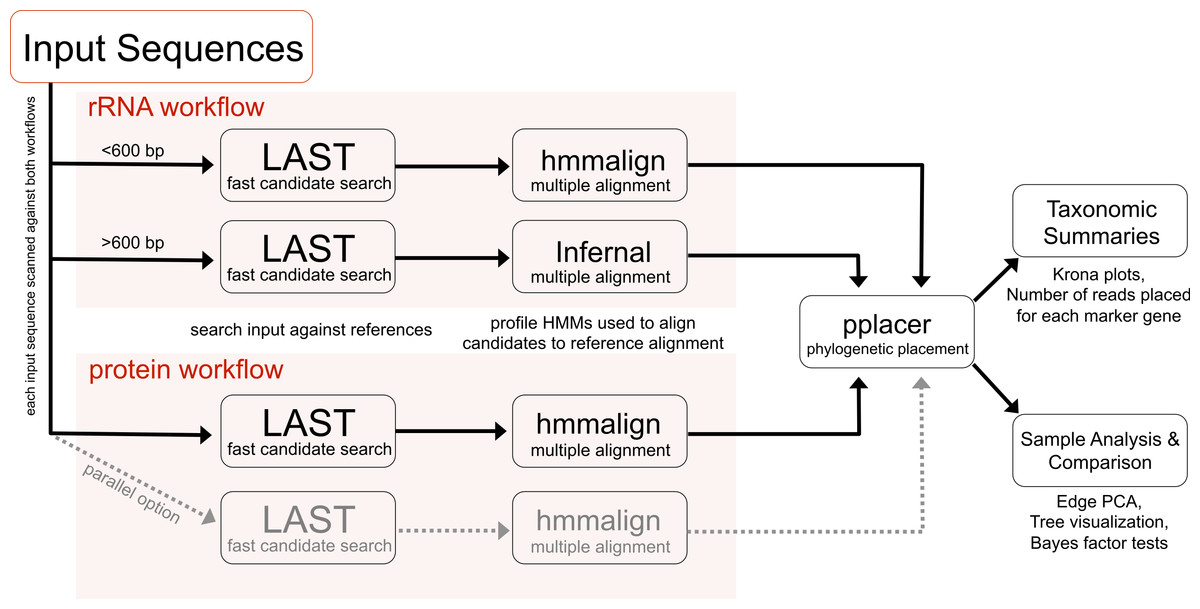
Figure 1 showing the Phylosift workflow.

The workflow follows a series of steps including

  • Sequence identity search 
  • Alignment to reference multiple alignment 
  • Placement on a phylogenetic reference tree 
  • Visual presentation of taxonomic summary 
  • Comparison among samples (e.g., using Edge PCA)
In addition, there is a workflow for updating the database behind Phylosift which includes

  • Acquiring new genome data 
  • Gene family search and alignment workflow on each genome 
  • Phylogenetic inference and pruning 
  • Selection of representatives for similarity search 
  • Taxonomic reconciliation 

The paper shows some of the things you can do with Phylosift and some comparison of Phylosift and other methods.
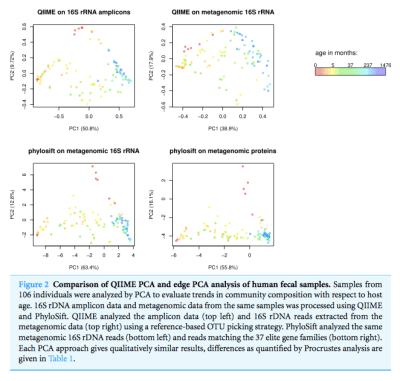
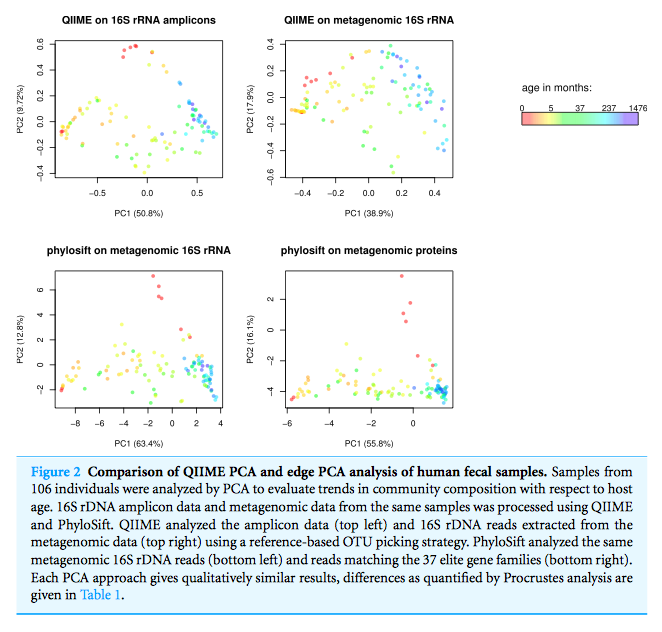
Figure 2. Comparison of QIIME PCA and edge PCA analysis of human fecal samples.

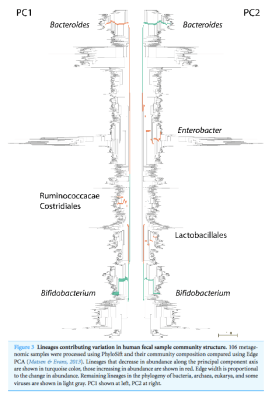
Figure 3: Lineages contributing variation in human fecal sample community structure. (Analyzed using EDGE PCA)

It also provides Krona based output visualization of the taxonomic composition of a sample.

Anyway, more on Phylosift later.  Just thought I would get some out here on the blog.  Thanks to Aaron Darling, Holly Bik, Guillaume Jospin, Eric Lowe and Erick Matsen for all their hard work on this.  And thanks to the Department of Homeland Security for supporting the work.

For more about Phylosift see

Worth a look: American Academy of Microbiology report on the Human Microbiome

Definitely worth checking this out: FAQ: Human Microbiome, January 2014. It is a report from the American Academy of Microbiology and it is really well done.  In addition to the report itself there is also and Infographic and a nice little handout.

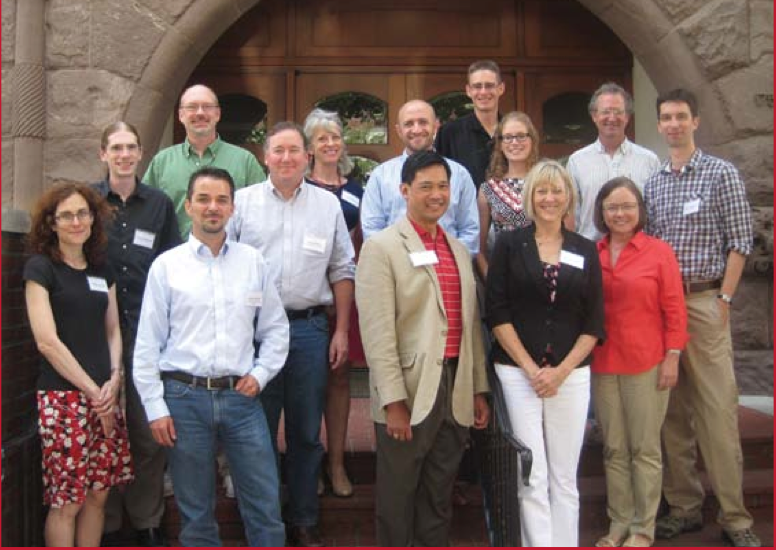
The report was based on discussions with a collection of Human Microbiome Gurus:

And it was written  by Ann Reid and Shannon Greene. It has a variety of useful tidbits and has a reasonable number of caveats – such as “it should be noted, however, that at this point, most studies, even in mice, are looking at correlations between gut microbiome composition and factors like weight, insulin sensitivity, and other metabolic measures.”

#UCDavis encouraging those with the flu to stay home rest and recover

Good to see this. I note – I have a lab policy that anyone who is sick MUST stay home. That forced my home for most of this week despite actually wanting to be in the lab / office for work.

See forwarded email below:

Dear MSOs/CAOs,

Following up on recent news reports about the major flu virus in the Sacramento area, Human Resources has reminded us to please encourage those are sick to please stay home, rest and recover. This will help prevent colleagues and friends from getting the flu.

While it takes about two weeks for the flu shot to work, it is probably not too late to get one since there are least two more months of flu season.

Please circulate this information us as is appropriate in your department/center.

Thanks.

Donna

Donna Watkins Olsson
Executive Assistant Dean

Interesting NSF Funding Opportunity – "Genealogy of Life"

From the web site:

SYNOPSIS
All of comparative biology depends on knowledge of the evolutionary relationships (phylogeny) of living and extinct organisms. In addition, understanding biodiversity and how it changes over time is only possible when Earth’s diversity is organized into a phylogenetic framework. The goals of the Genealogy of Life (GoLife) program are to resolve the phylogenetic history of life and to integrate this genealogical architecture with underlying organismal data. 

The ultimate vision of this program is an open access, universal Genealogy of Life that will provide the comparative framework necessary for testing questions in systematics, evolutionary biology, ecology, and other fields. A further strategic integration of this genealogy of life with data layers from genomic, phenotypic, spatial, ecological and temporal data will produce a grand synthesis of biodiversity and evolutionary sciences. The resulting knowledge infrastructure will enable synthetic research on biological dynamics throughout the history of life on Earth, within current ecosystems, and for predictive modeling of the future evolution of life 

Projects submitted to this program should emphasize increased efficiency in contributing to a complete Genealogy of Life and integration of various types of organismal data with phylogenies. 

This program also seeks to broadly train next generation, integrative phylogenetic biologists, creating the human resource infrastructure and workforce needed to tackle emerging research questions in comparative biology. Projects should train students for diverse careers by exposing them to the multidisciplinary areas of research within the proposal.