
Author: Jonathan Eisen
I am an evolutionary biologist and a Professor at U. C. Davis. (see my lab site here). My research focuses on the origin of novelty (how new processes and functions originate). To study this I focus on sequencing and analyzing genomes of organisms, especially microbes and using phylogenomic analysis

Not sure what to make of this new "Datasets.Com" effort from Hindawi
Just got this email and I thought I would share. Not sure what to make of this effort. I do support the sharing of data sets but I am think we probably do not need a whole new cadre of data journals to handle this data.
But there is a spread of what some have called “Predatory” open access publishers (see http://metadata.posterous.com/83235355 for example). Hindawi, who is behind this, seems to have a mix of good and predatory tendencies and this seems like it may fit into the more predatory categorization. And I just thought it would be good to bring this a bit more into the open to discuss it.
Dear Dr. Eisen,My name is Safa Tahoon and I am a Journal Developer for the Hindawi Publishing Corporation. We are in the process of launching a new peer-reviewed, open access journal titled Dataset Papers in Genetics, which will publish Dataset Papers in all areas of genetics research, and I am writing to invite you to join the Editorial Board of this new journal.
Dataset Papers in Genetics is part of a new journal platform that Hindawi is developing called Datasets International (http://www.datasets.com). The main objective of Datasets International is to help researchers in all academic disciplines archive, document, and distribute the datasets produced in their research to the entire academic community. In addition to publishing a series of journals devoted to the dissemination of Dataset Papers, Datasets International hosts the underlying data behind these Dataset Papers and makes it accessible to all researchers worldwide.
The journal will be run using a collaborative editorial model which is designed to provide a fast peer review process for all submitted manuscripts. The journal will be edited by a distributed Editorial Board, and it aims for an average review time of 4 weeks from submission until a final decision has been reached.
Manuscripts that are submitted to the journal will be sent to a number of Editorial Board Members (typically each manuscript will be sent to at least 5 Editors), who will have two weeks to provide either a recommendation for the publication of the manuscript, along with a written commentary detailing any improvements that the authors should make to their manuscript, or a written critique of why the manuscript should not be published.
After the two-week period has elapsed, if the majority of the editorial evaluations recommend the manuscript be rejected, the manuscript will be rejected. If all the editorial evaluations that are received recommend that the manuscript be accepted for publication, the manuscript will be accepted. Otherwise, the editorial evaluations will be anonymously communicated to all of the Editors who participated in the peer review process. Each Editor will be given an additional week to review the feedback of the other Editors and to either confirm or revise their earlier editorial recommendations. If the majority of the editorial evaluations that are received by the end of this second round of review recommend the manuscript be accepted for publication, the manuscript will be accepted. Otherwise, the manuscript will be rejected. If the manuscript is accepted for publication, the names of the Editors who recommended the publication of the manuscript will be published alongside the ma!
nuscript. More information on the journal is available on the following web pages:http://www.datasets.com/ (Datasets International Home Page)
http://www.datasets.com/journals/genetics/ (Journal Home Page)
http://www.datasets.com/journals/genetics/workflow/ (Editorial Workflow)
http://www.datasets.com/journals/genetics/editors/ (Editorial Board)The journal will be published using an open access model, which allows disseminating scholarly articles by removing the access barriers imposed by the subscription model, in order to make the full-text of all published articles freely available for any interested reader. In this model the publication costs of an article are covered in the form of Article Processing Charges, which are publication fees paid from the research budget of accepted authors. In this model authors retain the copyright of their work, and we make every possible effort to ensure that the full-text of every published article is both visible and accessible to all potential readers.
Manuscripts that are submitted by the members of the Editorial Board of Dataset Papers in Genetics to the journal will automatically receive a 50% reduction in their Article Processing Charges.
Please do visit the web pages above and let me know if you have any questions or comments. We hope you will accept to join the Editorial Board of the journal and I will be looking forward to hearing from you soon.
Best regards,
Safa Tahoon
——————————
Safa Tahoon
Journal Developer
Hindawi Publishing Corporation
http://www.hindawi.com/
——————————
Share this:
New Course=> PHA 250 Functional Genomics: from Bench to Bedside
<<< PLEASE POST >>>
PHA250: Functional Genomics: from Bench to Bedside
CRN: 84839
Spring 2012
Tuesdays/Thursdays 9:00-10:30am
Location: Tupper 2133
Instructor of Record (IOR): David Segal
COURSE GOALS AND ORGANIZATION: The purpose of the course is to familiarize
students with topics in Functional Genomics, with an emphasis on clinical
relevance and applications (e.g., genetic variation and disease, cancer
therapeutics, and biomarker discovery). Specific topics that will be covered
include detection of altered gene sequences, and measurements of the changes
in chromatin and RNA that occur in human diseases. Technologies that will be
covered include DNA and RNA microarrays and next generation sequencing
methods. Other topics will include data visualization and interpretation.
The overall goal of the class is to provide an overview of the cutting edge
technologies currently being developed in basic science laboratories, and
illustrate how these technologies can be used to improve public health.
Students will actively participate in group presentations. There will be
four guest lecturers who will add breadth to the program.
PREREQUISITE: Permission of Instructor
UNITS: 3 U (letter grade)
Share this:
Wanted – opinions/details on online systems for annotation of genomes and metagenomes
Doing a little survey/snooping around. Trying to compile a list of available online tools for annotating microbial genomes and metagenomes. And I am also trying to get comments on what people think of the various tools. There are some obvious candidates to think about
- IMG and IMG/M
- RAST and MG-RAST
- IGS annotation engine (which seems to no longer be a web server but an email the sequence to someone server).
But given that there are certainly many many more out there I decided to post a request to Twitter and Google plus and got some responses.
- Jonathan Eisen @phylogenomics
- Researching blog post on free/online microbial genome/metagenome annotation services – looking for examples beyond IMG & RAST
- Mick Watson @BioMickWatson
- @phylogenomics some microbial annotation pipelines mentioned in our review here bib.oxfordjournals.org/content/early/…
- Ewan Birney @ewanbirney
- @phylogenomics Check out @EBImetagenomics ebi.ac.uk/metagenomics/: ORFs, Interproscan, submissions and more.
- Mick Watson @BioMickWatson
- @ewanbirney @phylogenomics @EBImetagenomics needs illumina support, and support of assemblies

And from Google Plus where I asked “Researching blog post on free/online microbial genome/metagenome annotation services – looking for examples beyond IMG & RAST “:
- Mary Mangan – Oh, I know some:
- Manatee: http://www.jcvi.org/cms/research/projects/annotation-service/
- GATU: http://athena.bioc.uvic.ca/virology-ca-tools/gatu/
- Apollo: http://gmod.org/wiki/Apollo
- And also from Mary
- Here’s a question on that at BioStar:
- EDIT: Another question suggests Artemis:
Share this:
Worst new omics word award: circomics – running circles around my head
Wow – this is really not a good “omics” word. Check out this paper title and it’s abstract Circular DNA genomics (circomics) exemplified for g… [Virology. 2012] – PubMed – NCBI
Circomics was coined to describe the combination of rolling circle amplification (RCA), restriction fragment length polymorphism (RFLP) and pyro-sequencing to investigate the genome structures of small circular DNAs. A batch procedure is described using 61 plant samples from Asia, South America and Central America which revealed 83 contig sequences of geminiviral DNA components and 4 contig sequences of DNA satellites. The usefulness of this approach is validated for the Brazilian begomoviruses, and the sequence fidelity is determined by comparing the results with those of conventional cloning and sequencing of Bolivian begomoviruses reported recently. Therefore, circomics has been proven to be a major step forward to economize costs and labor and to characterize reliably geminiviral genomes in their population structure of the quasi species.
This definitely fits the category of a “bad omics” word which I have history of complaining about but had been ignoring for a bit. But I am back. I am giving “Circomics” a “Worst New Omics Word Award” here because, well, it seems completely unnecessary and distracting.
Hat tip to AJ Cann for pointing this one out on Google Plus.
Share this:
Who is hiring research fellows and/or instructors in microbiology?
A colleague emailed me the following question
“A good friend of mine is looking for a position as a research fellow or instructor in microbiology with an emphasis on teaching. While she’s exploring options herself I figured it couldn’t hurt asking; I usually know who is hiring in [my area of expertise] but this is way outside my usual networks, and from what I’ve been learning positions with an emphasis on teaching are surprisingly rare. Any pointers to departments or groups that might be hiring would be highly appreciated (as are tips on how to find such a position).”
And alas I did not have a good answer. So, with this person’s permission I am reaching out to the blogosphere to see if anyone has suggestions for good places/sources of information about job openings in teaching and/or research fellow positions in microbiology.
Share this:
Social Biology of Microbes 2012 #SocialMicrobes12 wrapup via Storify
Meeting details:
Welcoming remarks:
Welcoming remarks:
- David Relman (presentation) (audio)
- James Hughes (audio)
- Lonnie King (audio)
- KEYNOTE:
Sociomicrobiology:
- Quorum sensing, biofilms, and territoriality (presentation) (audio) E. Peter Greenberg, University of Washington
- Moderator: David Relman DISCUSSION (audio)
SESSION I: Formation and Function of Microbial Communities
- Moderator: Jacque Fletcher
- Symbiont community complexity
- The fungal gardens of leafcutter ants
- (presentation) (audio)
- Cameron R. Currie, University of Wisconsin – Madison
- The role of oxygen in shaping the structure and function of microbial communities
- (presentation) (audio)
- Thomas M. Schmidt, Michigan State University
- Source-sink dynamics:
- Marine invertebrate-associated and free-living chemosynthetic symbionts
- Colleen Cavanaugh, Harvard University DISCUSSION (audio)
SESSION II: Factors Contributing to Community Stability
- Moderator: David Relman
- Social evolutionary theory, cooperation, and the expression of virulence in microbial communities
- (presentation) (audio)
- Sam Brown, University of Edinburgh
- Ecological factors and processes during evolutionary transitions in Darwinian individuality
- (presentation) (audio)
- Paul Rainey, New Zealand Institute for Advanced Study & Max Planck Institute for Evolutionary Biology
- Evolution of cooperation and control of cheating in the social amoeba:
- Dictyostelium discoideum
- (presentation: part 1 part 2) (audio)
- Joan E. Strassmann, Washington University\
- Swarming bacteria as freight haulage systems (presentation) (audio)
- Colin J. Ingham, Wageningen University
- Emergence and robustness of multicellular behavior in bacteria (presentation) (audio)
- Joao Xavier, Memorial Sloan-Kettering Cancer Center
- Mathematical and computational challenges in the study of complex adaptive systems
- (presentation) (audio)
- Simon A. Levin, Princeton University
- DISCUSSION (audio)
DAY 2: WEDNESDAY, MARCH 7, 2012
]
SESSION III:
SESSION III:
- Summary of Day One: David Relman (presentation) (audio)
- Edith Widder, Ocean Research & Conservation Association
- KEYNOTE: Glowing corpses & radiant excrement: The role of bioluminescence in microbial communities
- (presentation) (audio)
- Moderator: Lonnie King DISCUSSION (audio)
- Jo Handelsman, Yale University
- Interspecies interactions among rhizosphere and soil bacteria (presentation) (audio
- Moderator: David Rizzo
- David Low, University of California – Santa Barbara
- Contact dependent mechanisms of communication in bacteria (presentation) (audio)
- Vanessa Sperandio, The University of Texas Southwestern Medical Center
- Interactions between symbiotic microbes, their mammalian host, and invading pathogens
- (presentation) (audio)
- Moderator: Carole Heilman
- Jonathan Eisen, University of California – Davis
- Phylogenetic and phylogenomic approaches to studies of microbial communities
- (presentation) (audio)
SESSION IV: What More Do We Need to Know about Microbial Community Dynamics?
- DISCUSSION (audio)
- Jared R. Leadbetter, California Institute of Technology
- Discovery and applications of the metabolic diversity of microbial communities
- (presentation) (audio)
- Statistical tools for integrating community networks, spatial and clinical data (presentation) (audio)
- Jill Banfield, University of California – Berkeley
- Microbial community assembly and dynamics: From acidophilic biofilms to the premature infant gut
- (presentation) (audio)
- David A. Relman, Stanford University
- Human-microbe mutualism in health and disease (presentation) (audio)
- DISCUSSION (audio)
- Concluding Remarks (audio)
Just got back from a meeting on the “Social Biology of Microbes”. Here are some notes from my trip and from the talks at the meeting, done via Storify. Here it is as a slideshow: http://storify.com/phylogenomics/social-biology-of-microbes-socialmicrobes2012.js?template=slideshow[&amp;amp;amp;amp;amp;amp;amp;amp;lt;a href=”http://storify.com/phylogenomics/social-biology-of-microbes-socialmicrobes2012″ target=”_blank”&amp;amp;amp;amp;amp;amp;amp;amp;gt;View the story “Social Biology of Microbes #SocialMicrobes2012” on Storify&amp;amp;amp;amp;amp;amp;amp;amp;lt;/a&amp;amp;amp;amp;amp;amp;amp;amp;gt;]
And here it is a a full scrollable presentation
http://storify.com/phylogenomics/social-biology-of-microbes-socialmicrobes2012.js[View the story “Social Biology of Microbes #SocialMicrobes2012” on Storify]
Share this:
Interesting upcoming conference Exploring Human Host-Microbiome Interactions in Health and Disease
Interesting upcoming conference:
Exploring Human Host-Microbiome Interactions in Health and Disease.
8-10 May 2012 Wellcome Trust Conference Centre
Wellcome Trust Genome Campus
Hinxton, Cambridge, UK
See WT Scientific conferences for more detail.
Share this:
A day of field guides at #UCDavis and @Wired
Well, how perfect is this. Today Wired ran a follow up “Birds, Poop and Roadkill: A field guide to Field Guides” to an article that came out last week about my drive for a full field guide to the microbes. Last weeks article was “Book of Germs: The Quest for a Field Guide to Microbes.” It is by Daniela Hernandez and was a follow up on my talk at AAAS on “A Field Guide to the Microbes” which you can see on YouTube here. I wrote a blog post with more detail on my obsession with field guides and microbes here.
While Daniela was writing the article I told her about how I collected field guides. And I sent her a link to a private album I had made of me and my field guides which I am now making public:
https://picasaweb.google.com/s/c/bin/slideshow.swf
For the follow up Daniela and a photographer from Wired Jon Snyder came to my office and lab and took some pictures of me and my field guides (with assistance from Russell Neches in my lab to help set up some of the “scenes).
Here are some pics from their visit.
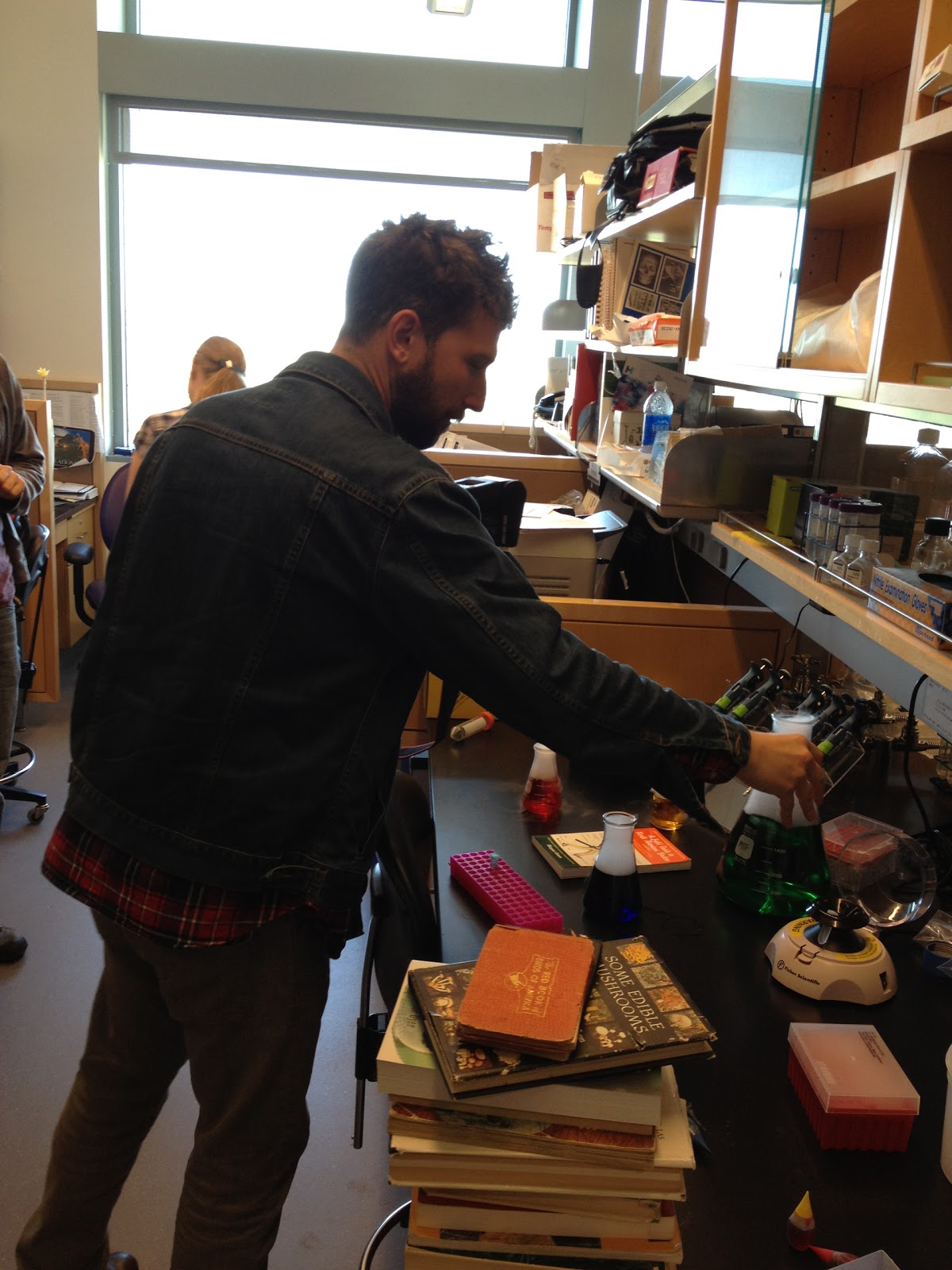

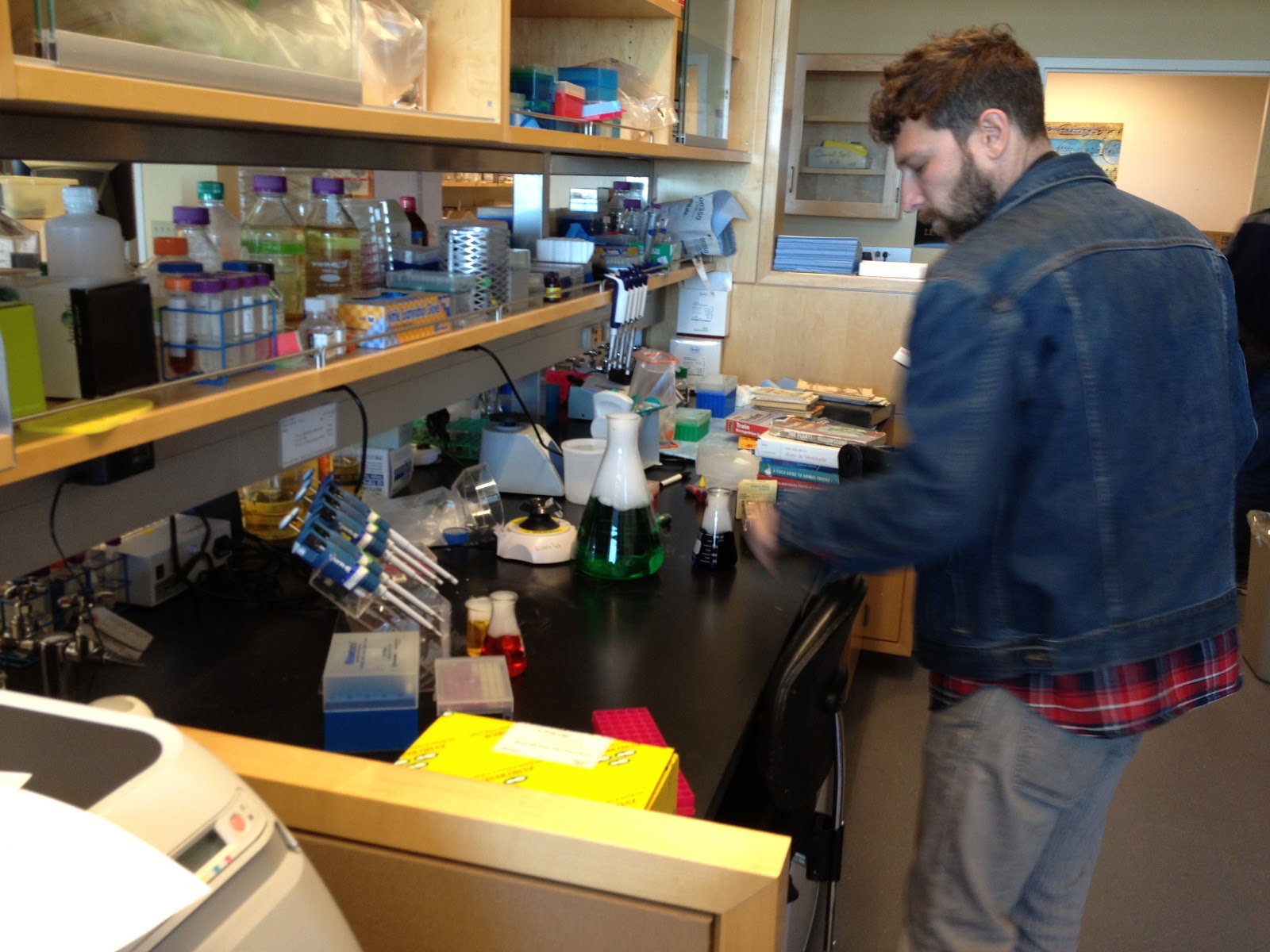
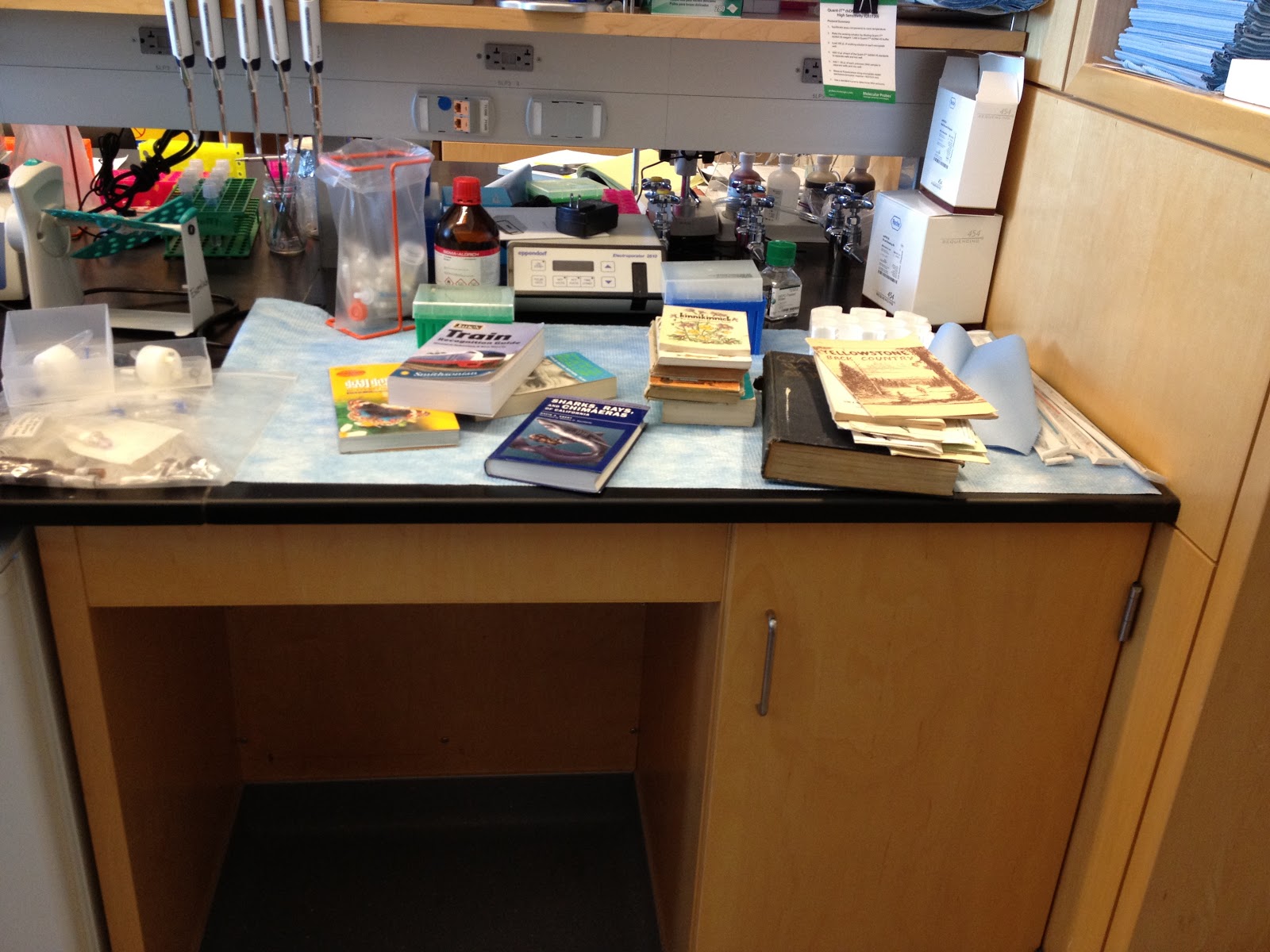

And now today, the Wired article came out and and amazing coincidence happened. I was taking a walk around campus with Misha Angrist who is giving a talk at UC Davis today. And on the walk first we saw a collection of turkeys wandering around campus:
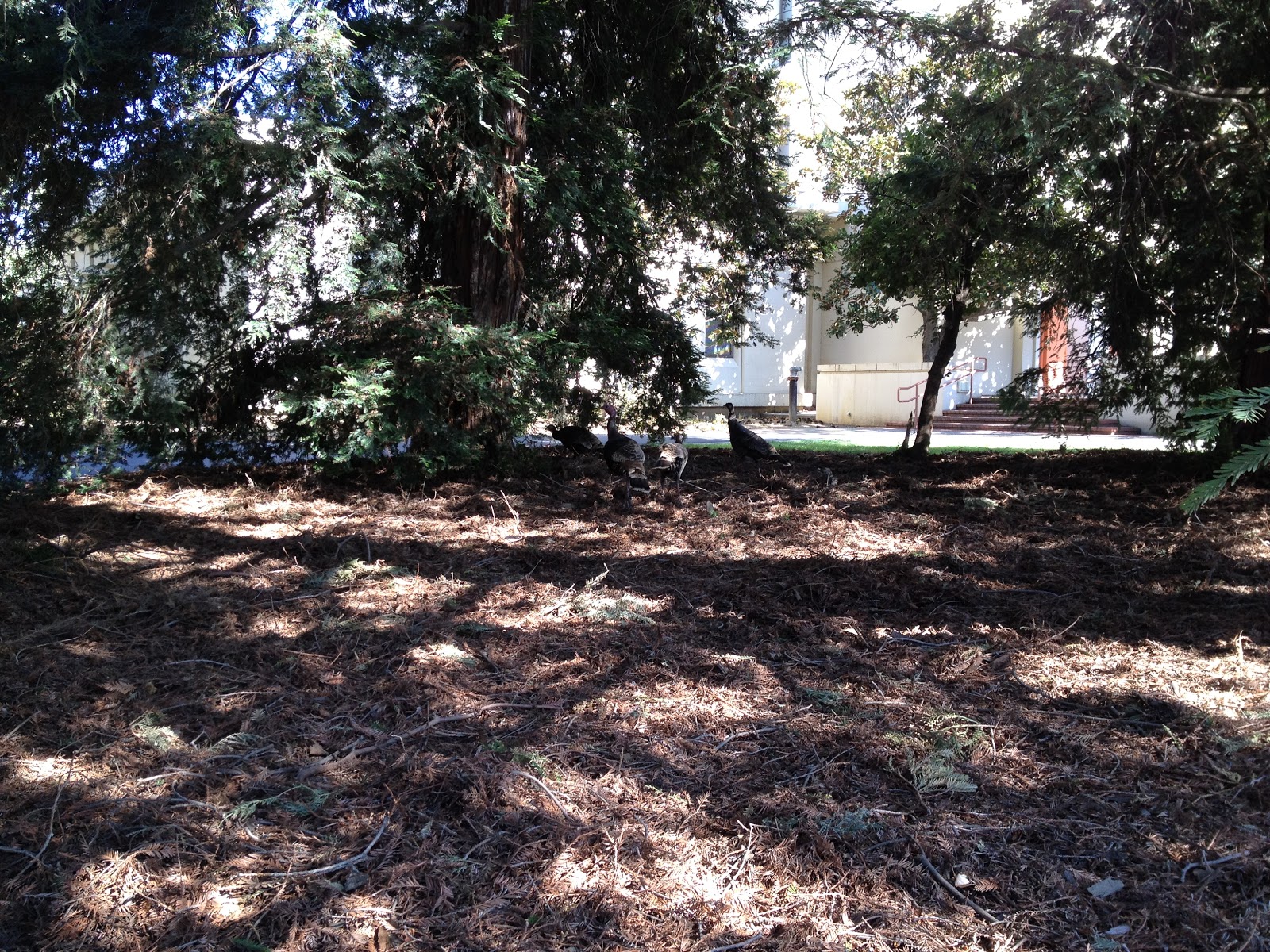
So my birding sense was turned up. And then we walked across to the UC Davis Arboretum along Putah Creek and bumped into a “birding tour” of the Arboretum. In six years here I have never seen one of these. There were some teachers and kids carrying around field guides looking for particular species of birds.
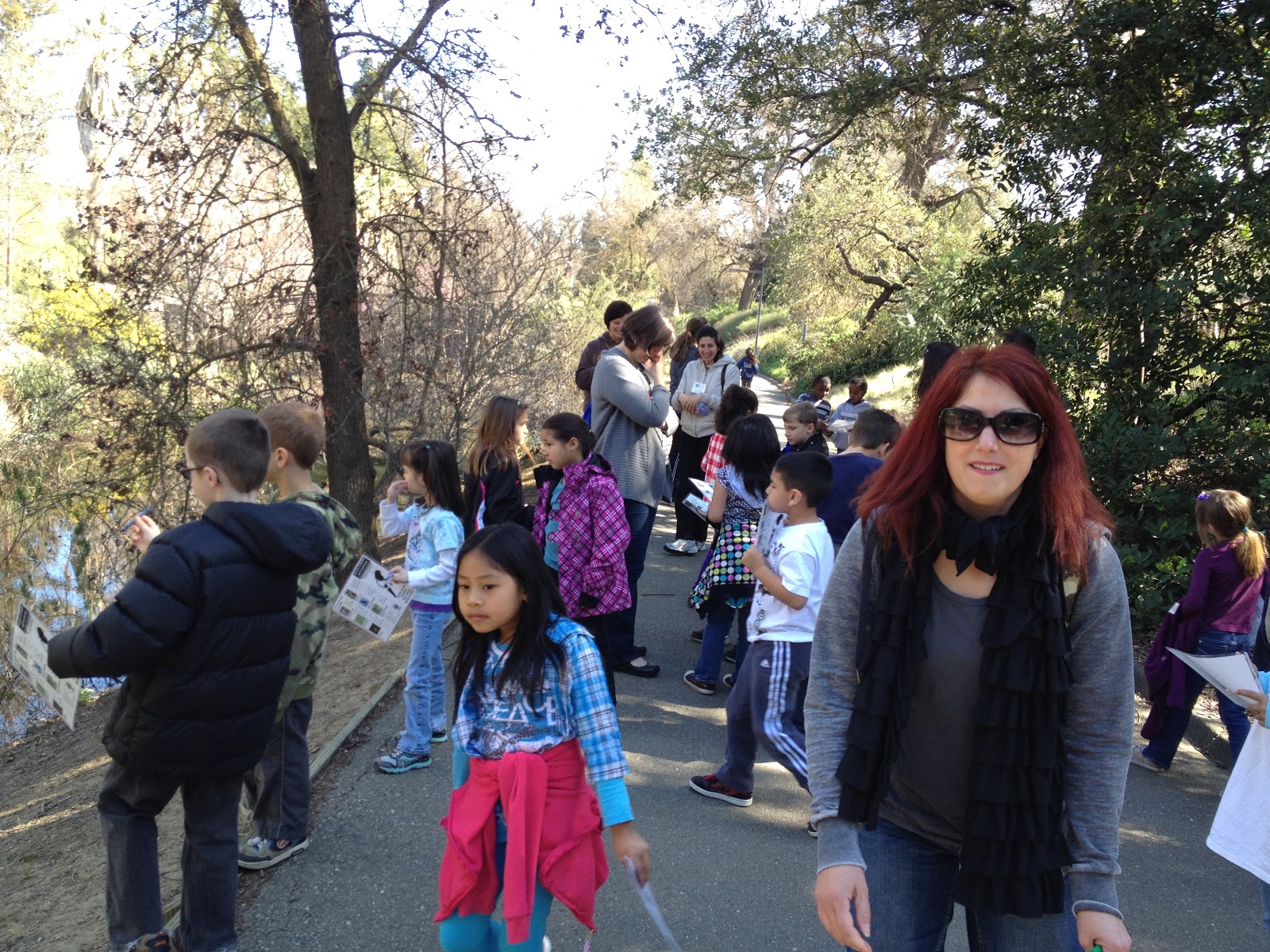

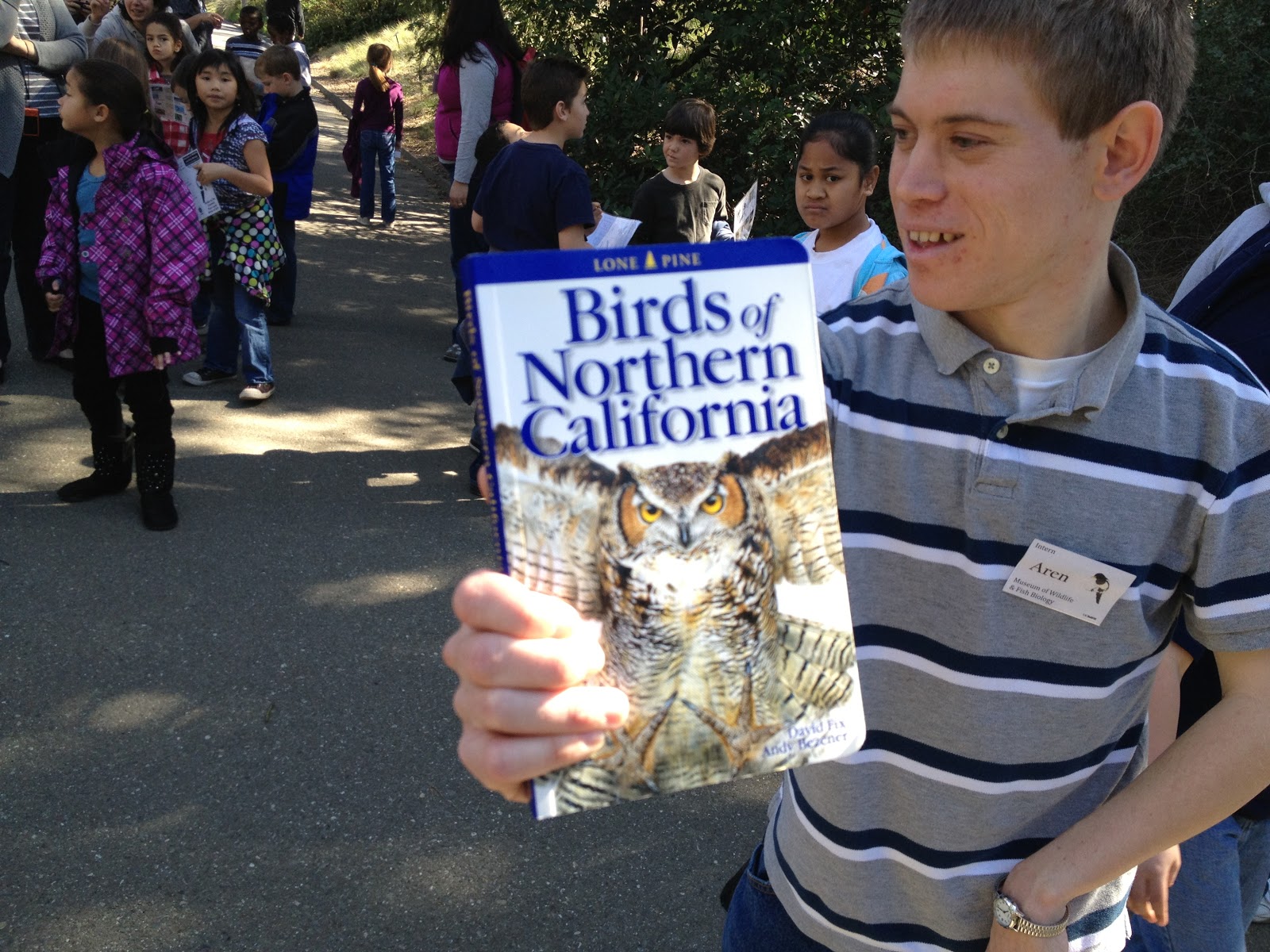
And I note – one even had a field guide I do not have – the “Birds of Northern California” which I will be getting very very soon. I think today will only serve to boost my obsession with field guides, but that is OK by me.
I note – I love the Wired photo spread of my field guides and my lab. I particularly am happy that they includes some of the funnier field guides out there like “Flattened Fauna.” And I am glad they got in Betsy Dyer’s Field Guide to Bacteria because it is one of my favorite field guides of all time. Thanks to Russell Neches for helping out with it and Daniela Hernandez and Jon Snyder for their work.
Share this:

Social Biology of Microbial Communities
Off to DC for a meeting on the “Social Biology of Microbial Communities” and I thought people out there might like to see the schedule. Going to try to live blog/tweet so stay tuned …

