Press release from De Gruyter regarding acquisition of Versita re #OpenAccess

This press release may be of interest to those interested in Open Access publishing so I am posting it here:


De Gruyter acquires Versita and becomes third-biggest international Open Access publisher

Berlin, January 9, 2012
De Gruyter, the Berlin-based academic publishing company, is acquiring the publisher Versita. As a service provider to academic organizations and bodies, Versita publishes over 230 journals on Open Access basis, i.e. outside the traditional subscription model. With this acquisition De Gruyter is substantially increasing its presence in an important future market of academic publishing. The complete staff of Versita is being retained in this take-over.
“The purchase of Versita is a logical continuation of our publishing strategy of recent years, which involves giving both our authors and our customers an optimum range of publishing options”, says Dr. Sven Fund, the Managing Director of De Gruyter. “For us, the most important issue is that our publications have high-quality content, and not how they are financed.”

As of 2012 De Gruyter will be merging the newly acquired Open Access journals with its traditional subscription-based and freely sold content on one electronic platform, thus providing researchers with an outstanding service: users will have a powerful search interface for searching all academic articles from journals, books and databanks in which the articles have been published, independently of the various business models.

“For some time now, Open Access has been an important element of academic publishing. With the integration of all Versita content under a joint publishing administration on the new De Gruyter platform, we are now realizing the principle in our program,” continues Fund.
In the future, De Gruyter’s Open Access activities will be managed by Jacek Ciesielski as Vice President Open Access. Ciesielski founded Versita in 2001 and has been expanding the enterprise ever since. “Now that we have joined forces with De Gruyter, I look forward to further developing and internationalizing my activities together with De Gruyter”, comments Ciesielski.
Contact:
Ulrike Lippe
Manager Public Relations
De Gruyter: The independent academic publishing house De Gruyter can look back on a history spanning over 260 years.  The publishing group with headquarters in Berlin and Boston annually publishes over 800 new titles in the humanities, medicine, science and law and more than 230 journals and digital media. http://www.degruyter.com/
Versita publishes about 250 own and third-party scholarly journals across many disciplines. Its journal portfolio takes in 25 subscription-based journals, including a group of Central European Journals in 8 disciplines. Versita also publishes over 230 society journals, which are available through Versita Open (www.versitaopen.com), one of the largest Open Access platforms in the world. The company was established in 2001 by Jacek Ciesielski.http://www.versita.com/

SPAM conference anyone

Just got this email.  Could be a real conference but am sick of getting SPAM advertising it.   I note – the emails look a lot like the ones I get from Bentham publishers.  I wonder if they are working together or just use the same email service?

Dr.J.A.Eisen
Department of Evolution and Ecology
Department of Medical Microbiology and Immunology University of California Davis Genome Center University of California Davis Davis
CA
United States

Dear Dr.Eisen.,
It is our great pleasure to announce the “4th International Conference on Drug Discovery and Therapy” (4th ICDDT 2012) to be held in Dubai, UAE, from February 12th-15th, 2012, with  Dr. Ferid Murad, Nobel Laureate and Prof. Atta-ur-Rahman, FRS as the conference Co-Presidents.  
The 4th ICDDT is CME accredited by the Ministry of Health in which each medical specialist will earn up to maximum 18 hours of CME credits.
This event will represent an exciting series of conferences that have already attracted 22 Nobel Laureates to the previous three events.  This four day event will feature recent findings from leading industrial, clinical and academic experts in the field, in the form of lectures and poters. Several Nobel Laureates including Prof. Jean-Marie Lehn (France), Prof. Michel Hurtmut (Germany), Prof. Robert Huber (Germany), Prof. Harald zur Hausen (Germany), Prof. Ferid Murad (USA), Prof. Mario Molina (USA) have already confirmed their participation in the 4th ICDDT along with several hundred top scientists and researchers from all over the world.
The details of the conference can be viewed at http://www.icddt4-01.com
Abstracts for consideration as Invited or Session Lectures, and Poster Presentations can be submitted athttp://www.icddt4-01.com  Alternatively, a maximum one-page length abstract written in English can be submitted to us by e-mail at info@icddt4-11.com    All submitted abstracts received will be reviewed on the basis of scientific merit, novelty and practical application.  Due to the limited slots available, only the best abstracts will be selected. The abstracts of the conference and a selection of the proceedings will be published in a high Impact Factor journal by an international publisher. We suggest that all interested participants to register and book their hotel in Dubai as early as possible.
Please join us in sunny Dubai for both work and enjoyment in February 2012 to explore a plethora of information on current research in drug discovery and therapy and to network with fellow academics and industrial researchers.
DEADLINE FOR ABSTRACT SUBMISSION TO PRESENT LECTURE / POSTER: JANUARY 15, 2012
For more details and to register, please visit the conference Web site at http://www.icddt4-01.com  or alternatively you may contact info@icddt4-11.com 
An associated exhibition will take place during the conference. Exhibitors and interested sponsors should contact the marketing department at info@icddt4-11.com To support this conference, you can download the conference poster from here http://www.icddt4-01.com/poster and post it on the public notice board.
We look forward to your participation at this important conference.
Sincerely yours,
Organizing Secretariat, ICDDT 2012
PO Box 7917
Saif Zone, Sharjah,
UAE
[Should you not want to receive any further emails, then please click here. Please also provide any other email address that you might be using to ensure that you do not receive any further emails]

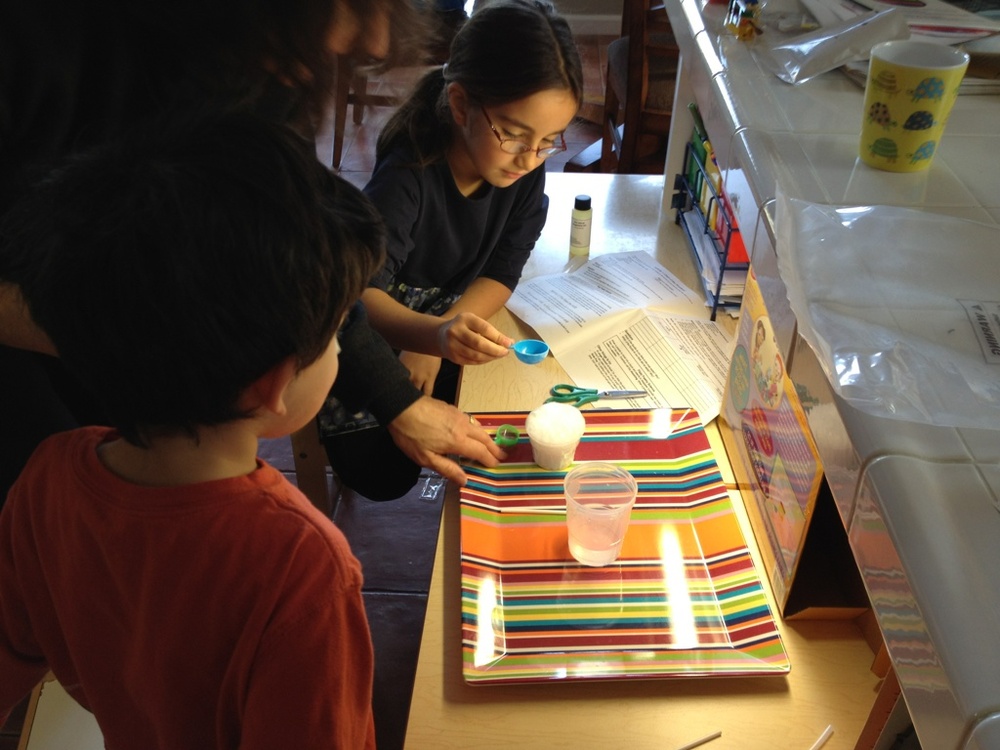
Woohoo – my kids are doing their 1st chemistry experiment (well 1st formal one)

Image

Woohoo – my kids are doing their 1st chemistry experiment (well 1st formal one)

Image

Woohoo – my kids are doing their 1st chemistry experiment (well 1st formal one)

Image

Draft post cleanup #10: trip to LA artificially sweetened by Carolyn de la Peña

Yet another post in my “draft blog post cleanup” series.  Here is #10:

Went on a mini trip to UCLA for a mini meeting in November. It seemed appropriate that I brought with me to Los Angeles, land of empty pleasures – the new book from UC Davis Professor Carolyn de la Peña – “Empty Pleasures” on the history of artificial sweeteners. So I took a picture of the book overlooking part of LA from my hotel room:


The book is great read by the way …

Announcement: Workshop on Multiple Sequence Alignment and Phylogeny Estimation

Posting this for Tandy Warnow

Workshop on Advances in Multiple Sequence Alignment and Phylogeny Estimation

May 20 and 21, 2012, Smithsonian Institution, Washington, DC

The workshop is funded by the National Science Foundation through grant DEB 0733029 to the University of Texas. Registration is required, and attendance is limited to 40 participants. The workshop will include presentations of new methods for multiple sequence alignment and phylogeny estimation, also training in the use of these methods, and personal assistance in analyzing datasets using the SATé software (see this page). Applications for the workshop (and for travel support) are due by February 15, 2012, and will be responded to by March 1. We expect to be able to provide support to all attendees. Please click here for the application form. For more information, please send an email to Tandy Warnow (see below).

Letter from Tandy explaining workshop:
Dear Colleagues,
We are writing to let you know about a workshop and symposium that we will hold on May 20-22, 2012, at the Smithsonian Institution in Washington, DC. The workshop will provide training in advanced methods for multiple sequence alignment and phylogeny estimation, and will take place on May 20 and 21; the symposium will follow immediately and will feature research presentations on the same topic. This workshop is funded by:
The workshop will include presentations of new methods for maximum likelihood phylogeny estimation of large sequence alignments (including GARLI and FastTree), for comparing different alignments of the same dataset, for phylogenetic analyses of datasets that include partial sequences (e.g., short reads generated in a metagenomic analysis), for supertree estimation, and for simulating sequence evolution. However, a main focus is to train participants in both basic and advanced use of the SATé software (Liu et al. 2009, Science, Vol. 324, no. 5934, pp. 1561-1564) for simultaneous estimation of alignments and trees (SATé software available for download at http://phylo.bio.ku.edu/software/sate/sate.html ).
Workshop participants are expected to bring laptops with them to the workshop, so that they can perform alignment and phylogenetic tree estimations. We will provide test datasets for you to learn how to use SATé, but strongly encourage you to bring your own datasets to analyze.
Attendance at the workshop is limited to 40 participants, and registration is required. If you are interested in attending the workshop, whether or not you are requesting travel support, please fill out the Word document available at http://www.cs.utexas.edu/users/tandy/workshop-application.doc, and return it to Laurie Alvarez (lauriea@austin.utexas.edu) by February 15, 2012. We will respond to requests for registration by March 1, 2012.
For more information on the workshop, please contact me (Tandy Warnow), at tandy@cs.utexas.edu. For more information on the Symposium, please contact Mike Braun (braunm@si.edu). We look forward to seeing you at the Smithsonian workshop and symposium!
Regards,
Tandy Warnow and Mike Braun
On behalf of the AToL project team:
  • Michael Braun, The Smithsonian Institution 
  • Mark Holder, The University of Kansas
  • Jim Leebens-Mack, The University of Georgia 
  • Randy Linder, The University of Texas 
  • Etsuko Moriyama, The University of Nebraska 
  • Tandy Warnow, The University of Texas

Draft post cleanup #9: Open Access spam from Bentham

Yet another post in my “draft blog post cleanup” series.  Here is #9; from June 2008.  It can in a way be viewed as an extension of my post from a few days ago about Bentham.  Here is what I wrote in 2008:

OK, I know I am supposed to be supportive of Open Access journals, just because a journal is OA does not mean it is OK. Take “The Open Evolution Journal.” being published by Bentham.

On paper, this could be a useful contribution to the list of OA journals. They have some good people on their Editorial Board and I am glad to see such a big list of people in Evolution seemingly supporting OA publishing.

And Bentham is certainly doing the OA talk and pushing OA as a major option for their publications. In fact, they might be pushing OA a bit too much. For example, in their letter to me they say

All published open access articles will receive massive international exposure and as is usually the case for open access publications, articles will also receive high citations.

Hmm. A bit over the top no? I love OA mind you. But OA in and of itself does not guarantee citations and exposure.

But this is a minor quibble. My real issue with them is the SPAM. I keep getting frigging emails from Bentham for all sorts of journals. And some of the emails I get are for accounts that I cannot easily send email from to use their lame unsubscribe option. I assume others out there get these emails from Bentham too, as I have gotten them from like 20 of their journals so far. And many are in areas that I have no expertise in (I just got one for a Geology journal).

Just goes to show – OA sometimes means “Objectively Annoying.”

YHGTBFKM: Ecological Society of America letter regarding #OpenAccess is disturbing

Wow — I am really disturbed by the letter the Ecological Society of America (ESA) has written to the White House OSTP in regard to Open Access publishing. (For some background see Dear Representatives Issa and Maloney – Are you kidding me? Stop this bill now #ClosedAccess and Calling on Publishers to Resign from The Association of American Publishers Re Anti-Open Access Stance).

In the letter they make many statements that bother me deeply including:

However, it is important to note that there is a significant difference between research results and peer-reviewed publications.

Really – how are they different exactly?

Publishers such as ESA have a long record of reporting, analyzing and interpreting federally funded research.

OMG – seriously?  Apparently ESA is doing the analyzing and reporting and interpreting.  Not the scientists writing the papers.  But the publisher.  Seriously.  This is completely ridiculous.

It is not appropriate for the federal government to expropriate the additional value publishers add to research results.

They can’t be serious.  This is not expropriation in any way.  This is the trying to guarantee that research taxpayers have paid for – that is done by scientists that taxpayers pay the salaries of – is not then published in a way that forces the taxpayers to pay for it again.

Furthermore, subscription revenue helps to support other Society services, including scientific conferences, education programs, and the distribution of science information resources to policymakers and the public.

So now what they are saying is that the government should hand them money via subscription fees so that they can then carry out some services they think are important.  How about this – how about the ESA applies for peer reviewed grants to fund their activities so that these can be reviewed by others.  As it is ESA can do whatever it wants with that money – being fed to it without any peer review – via indirect costs and grant money.

Papers published in ESA journals may therefore be just as relevant in several years as they are today, which means that any potential embargo period will do little to mitigate the financial losses that would result from full open access.

So – the justification here for not making ecological articles available is that they are MORE important over time?  So the taxpayers pays for research that is valuable and because it is valuable over time we should make it less freely available?  Seriously?

And here is the best one:

One way to make taxpayer funded research more visible and accessible to interested members of the public would be to require federally-funded grantees to provide a second version of the research summaries they already prepare, specifically for the lay reader. To aid in online searches, these summaries could also include the source of federal funding institutions and grant numbers. Publishers could also include grant information in paper abstracts which are usually available without a subscription.

That is right, they are suggesting that scientists write a second paper to go with their science papers that would be for the lay reader.  And that these summaries could include grant IDs to help in online searches.  WTF?  So now rather than making the actual scientific papers available they are proposing that scientists write a second paper because lay people would not be able to understand the first paper?  And what about scientists who want to read the papers but are at small institutions?  And never mind that “open access” is not just about money – it is also about “freedom” in the usage of published material.

The ESA has really gone off the deep end on this.  I note – I am in full support of companies and publishers making money.  I am also generally against government regulations.  But this issue is about taxpayers rights, government waste, and the progress of science.  It is simply inexcusable for the government to not use taxpayer money judiciously.


If the government pays for the research, pays for the research supplies, pays the salaries of researchers and peer reviewers, then it is unacceptable that publishers would then limit access to papers and force taxpayers to pay for them again.

The ESA basically is saying “taxpayers should be required to subsidize us“.

Or – another way to look at this – ESA is saying: “Taxpayers – we want your money -but you are too stupid to understand what we are doing with it.

Ridiculous.

Hat tip to Karen Cranston for pointing this out.

Some responses to this post:

//platform.twitter.com/widgets.js

//platform.twitter.com/widgets.js

//platform.twitter.com/widgets.js

//platform.twitter.com/widgets.js

//platform.twitter.com/widgets.js
//platform.twitter.com/widgets.js

//platform.twitter.com/widgets.js

//platform.twitter.com/widgets.js

//platform.twitter.com/widgets.js

//platform.twitter.com/widgets.js

//platform.twitter.com/widgets.js

//platform.twitter.com/widgets.js

Draft post cleanup #8: Don’t let a hospital kill you – CNN.com

Yet another post in my “draft blog post cleanup” series.  Here is #8 from 5-1-2008
——————

Saw an interesting article today on CNN.Com: Don’t let a hospital kill you – CNN.com.  It has some useful suggestions for how to protect yourself from infection in a hospital.  In many cases we have an excessive fear of germs which can be a bad thing.  But in hospitals, staying clean is almost certainly a good idea …