
MIC 291: Selected Topics in Microbiology
Work-in-Progress Seminars
Dr. Michi Taga
(UC Berkeley)"Corrinoids in Communities: Nutrient Sharing in the Microbial World"
Wednesday, October 1, 2014
4:10 pm
1022 Life Sciences
Author: Jonathan Eisen
I am an evolutionary biologist and a Professor at U. C. Davis. (see my lab site here). My research focuses on the origin of novelty (how new processes and functions originate). To study this I focus on sequencing and analyzing genomes of organisms, especially microbes and using phylogenomic analysis

Crosspost from microBEnet: Some interesting new papers on functional analysius of metagenomics
Crossposting from microBEnet:
Some new papers that may be of interest to people:
- FOAM (Functional Ontology Assignments for Metagenomes): a Hidden Markov Model (HMM) database with environmental focus.
- Statistical Methods for Functional Metagenomic Analysis Based on Next-Generation Sequencing Data PhD thesis from Pookhao, Naruekamol
- Profile Hidden Markov Models for the Detection of Viruses within Metagenomic Sequence Data
- Parallel-META 2.0: Enhanced Metagenomic Data Analysis with Functional Annotation, High Performance Computing and Advanced Visualization
- MP3: A Software Tool for the Prediction of Pathogenic Proteins in Genomic and Metagenomic Data
Share this:
Crosspost from microBEnet: Collection of papers on "The Science of Science Communication"
Crossposting this from microBEnet
Just got pointed to this by Sharon Strauss, the chair of the Evolution and Ecology department here at UC Davis: The Science of Science Communication II Sackler Colloquium. This is a collection of papers from a colloquium held in Septment 2013. Slides and videos of the talks are available online. The papers and links (copied from the PNAS site) are listed below. There are many papers here of relevance to work done at microBEnet and are also likely of general interest to many:
-
Select this article
-
Select this article
-
Select this article
-
Select this article
-
Select this article
-
Select this article
-
Select this article
-
Select this article
-
Select this article
-
Select this article
-
Select this article
Share this:
Today on "Express Yourself" Teen Radio – me – being interviewed about #Microbes & #OpenScience
Just a little self-centered plug. I was interviewed recently for Express Yourself! | VoiceAmerica™ teen radio show. The teens interviewing me included Henna Hundal who worked in my lab this summer as an intern on our “Seagrass Microbiome” project. See a post from Cassie Ettinger about Henna’s work. Also see:
Now watching our brilliant high school student Henna Hundal present about her summer project pic.twitter.com/WjlnkEuwuo
— Jonathan Eisen (@phylogenomics) July 31, 2014
//platform.twitter.com/widgets.js
It was a fun interview and I love the idea of teens doing a science radio show. From their site
Science is everywhere. From the stars that light the night sky to the intricate patterns on a butterfly’s wings, science is at play in all parts of our world and is continually making our lives so great. Hosts Henna Hundal and Courtney Chung discuss how science shapes our perspective on life from cell phones to lawn mowers, from cures for diseases to prosthetic limbs. Global Youth Talk reporter, Ryan Sim, talks about science careers in the United Nations, and how this international community is looking at science innovation to create solutions for the next generation. Special guest Dr. Jonathan Eisen,a Full Professor at the University of California, Davis, with appointments in the UC Davis Genome Center, the School of Medicine, and the College of Biological Sciences focuses on communities of microbes and how they provide new functions – to each other or to a host. Dr. Eisen is entertaining with his study systems of boiling acid pools, surface ocean waters, agents of many diseases, and the microbial ecosystems in and on plants and animals. In Health with Henna, Henna Hundal reports on how we can prevent the negative effects of prolonged sitting. It’s important to take those “stretch breaks” every hour. Whether it’s writing scientific articles, thoughtful science reporting, or even talking about science on the radio, integrating humanities with science is key to reaching a mass audience.
So – I recommend everyone listen …12 noon Pacific Time on VoiceAmerica Kids Channel. Express Yourself! | VoiceAmerica™
.
Share this:
Personalized Medicine World Conference 2015: 55 speakers 7 of which are women #YAMMM #StemWomen
Well, umm, Ralph Snyderman, despite the email invitation I will not be attending PMWC 2015 Silicon Valley. Why not? Well how about the fact that you have 55 speakers listed, only 7 of which are women.
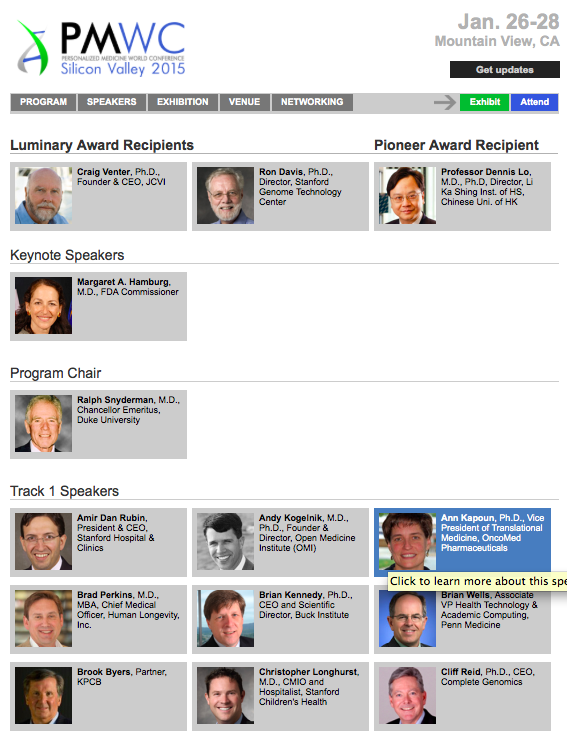
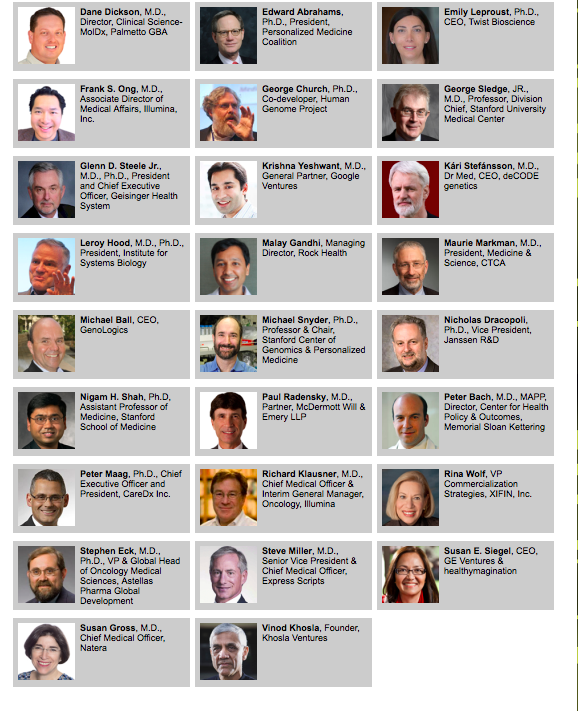

Previous year’s meetings are not much better. For example, for the 2014 Meeting in Silicon Valley the Track 1 session (which they call the premier session or something like that) has a ratio of 52:5 Male:Female.
Share this:

#UCDavis Provost’s Forum 10/9 – Michael Teitelbaum – Does the US have enough STEM workers?
Got this in an email …
Dear UC Davis Faculty, Staff, Students and Community Members,
We are delighted to announce that the 2014-2015 season of the Provost’s Forums on the Public University and the Social Good will begin on Thursday, October 9, 2014.
The first lecture of the season features Michael S. Teitelbaum, Senior Research Associate at the Labor and Worklife Program at Harvard University. Dr. Teitelbaum will discuss how the demand for and supply of STEM workers and scholars has been shaped and reshaped by public policies since World War II.
Among his previous roles, Dr. Teitelbaum has served as Vice President and Program Director at the Alfred P. Sloan Foundation, as a faculty member at Princeton University and the University of Oxford; and as Vice Chair and Acting Chair of the U.S. Commission on International Migration. He was educated at Reed College and at Oxford, where he was a Rhodes Scholar. He is a demographer, with research interests that include the causes and consequences of very low fertility rates; the processes and implications of international migration; and patterns and trends in science and engineering labor markets in the U.S. and elsewhere.
The event will begin at 4 p.m. in the Kalmonovitz Appellate Courtroom of King Hall and will go until 5:30 p.m. It is free and open to the general public. There will be an hour-long reception with light refreshments directly following the end of the lecture.
If you are unable to attend this event, videos of all Provost’s Forums lectures are available to the public and can be found on the official Provost’s Forums website. All of the lectures from the previous two years are now available for viewing.
For more details and information on this event, please see the attached flyer, visit our website: The Provost’s Forum on the Public University and the Social Good, or contact Casey Castaldi. In addition, please forward this information to any interested parties, as all events are open to the public.
We hope to see you at this exciting event!
Share this:
#UCDavis New Biology Postdoctoral Fellowship
New BiologyPostdoctoral Fellowship
College of Biological Sciences
UC Davis
The College of Biological Science at UC Davis invites applications for the New Biology Postdoctoral Fellowship program that brings outstanding young researchers to campus to conduct highly integrative research addressing major societal challenges. Fellows will have a home in a sponsoring CBS laboratory and will conduct research that leverages the tools and approaches represented by at least one additional laboratory at UC Davis.
A 2011 report by the National Research Council champions the power of deep integration of traditionally distinct research approaches and methods. The essence of the New Biology, as defined by this report, is integration – re-integration of the many sub-disciplines of biology, and the integration into biology of physicists, chemists, computer scientists, engineers, and mathematicians to create a research community with the capacity to tackle a broad range of scientific and societal problems.
Application: Interested early career individuals should establish communications with at least one host laboratory in the UC Davis College of Biological Sciences (http://biosci3.ucdavis.edu/Faculty/) and a second bridge laboratory from throughout the UC Davis community that can be from CBS or any other campus department. Eligibility is restricted to individuals who have the Ph.D. degree and will have completed no more than three years of postdoctoral training at the time of this appointment. Applicants should submit a cover letter that includes names and addresses of three letter writers, with their CV, statement of research accomplishments (1-2 pages) and a project summary of not more than 4 pages describing the research goals, the proposed integration of approaches, and explains how the work will lead to progress on a major societal challenge in nutrition, energy, health or the environment. Applications must be made electronically at: https://recruit.ucdavis.edu/apply/JPF00328.
Duration: Fellows are awarded a two year appointment.
Duties of the Fellow: In addition to conducting new research, the fellow would engage the community at UCD on three levels throughout the term of the fellowship:
- The fellow would give a research seminar near the inception of their tenure as an introduction of themselves and their research to the life sciences community at UCD.
- During the course of their tenure the fellow would offer a workshop or discussion series aimed at graduate students and others involving the transferal of new methods, tools, techniques or concepts to the UCD community. This might take the form of a focused workshop to demonstrate the utility of new analytical techniques or a more distributed discussion group that stretched over the course of fellow’s tenure. This activity will be defined in collaboration with the primary host PI and normally will take place during the second year of the postdoc.
- The fellow would engage the non-academic community in some form of public outreach activity. This could be a lecture aimed at the general public, an outreach event at local schools, picnic day, etc.
Together with the development of a fellow’s research program these three activities will help prepare the fellow for the multiple demands of academic life: research, teaching, and outreach.
Salary and Research Support: Awardees will be paid a salary of $50,000 per year ($34K from CBS, $8K from the hosting department, and $4K from each of the two sponsoring faculty members plus 17.45% for benefits and GAEL). While some research infrastructure will be supported by the host labs, to allow the scholar to pursue his or her research independent of grant funding from the host labs, a $10,000 per year research and travel budget will be provided by the college.
Selection Criteria:
- Ph.D. in biological sciences or related field at the time of appointment (but not necessarily at the time of nomination, as we would want to consider very recent PhDs.)
- Publication and prior research record that shows strong evidence of independent thinking and “superstar” potential
- Proposed research agenda / project that capitalizes on different research strengths of the two sponsoring faculty at UC Davis.
- Eligibility is restricted to individuals who have the Ph.D. degree and will have completed no more than three years of postdoctoral training at the time of this appointment.
EFFECTIVE: August 5, 2014
APPLICATION DEADLINE: December 1, 2014
NEW BIOLOGY POSTDOCTORAL FELLOWSHIP Ad 2014.pdf
Share this:
#YAMMM Alert: Drug Discovery and Therapy World Congress, a meeting made for @realDonaldTrump & other men
Note – see update at bottom of post
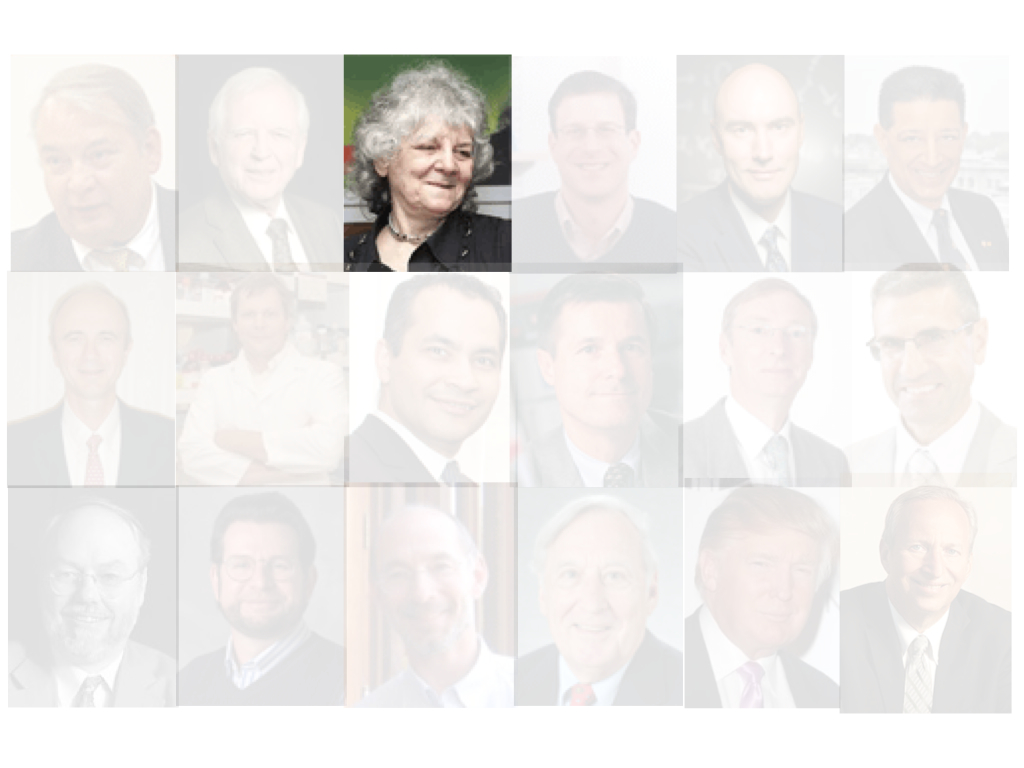
Elizabeth Bik sent me a link to this meeintg: DRUG DISCOVERY & THERAPY WORLD CONGRESS 2015 with a comment about the ratio of males to females in the keynote speakers. And it is painful. Of the plenary and keynote speakers, 15 are male and 1 is female. Below I show pics of the plenary and keynote speakers:
 |
| Plenary and Keynote Speakers at Drug Discovery and Thearpy World Congress |
 |
|
|
 |
| Two bonus people who could have been giving keynote talks but who actually are not. |
The gender bias at this meeting puts into perspective the push by the NIH to get drug researchers to inlcude more female subjects in their studies. See for example, Why Are All the Lab Rats Boys? NIH Tells Drug Researchers to Stop Being Sexist Pigs. Here is a thought, maybe we can get some of these speakers to cancel speaking at the meeting and also maybe we can get nobody to attent the meeting. Sigh. Yet another mostly male meeting. Also known as “YAMMM“.
——————–
UPDATE October 14, 2014.
Well, this is one of the strangest and lamest things I have seen associated with a conference in a while. Elizabeth Bik just emailed me to show me an invite she received to the “Global Biotechnology Congress 2015.” And here is the bizarre thing. It is at the same time as the Drug Discovery meeting discussed here. Same place. Same speakers. It is apparently the same meeting with a new name.

Same bad gender ratio of course too.
Did they do this to avoid people discovering my post about the awful gender ratio? I don’t know but seems like it might be so. What a joke. Well, I can guarantee people will associated this meeting name with the previous one.
Share this:

9/25 4PM GBSF1005: Lizzy WIlbanks “”Metagenomics and ecophysiology of macroscopic marine microbial aggregates: the ‘pink berries’ of the Sippewissett salt marsh””
Thursday, September 25, 2014
Lizzy Wilbanks
PhD Student in the Eisen and Facciotti Labs
“Metagenomics and ecophysiology of macroscopic marine microbial aggregates: the ‘pink berries’ of the Sippewissett salt marsh"
PhD exit seminar
1005 GBSF, 4:00 PM
Share this:
Triclosan in toothpaste: potential risks are not a "rumor" as arrogant Colgate official argues, but are something to worry about
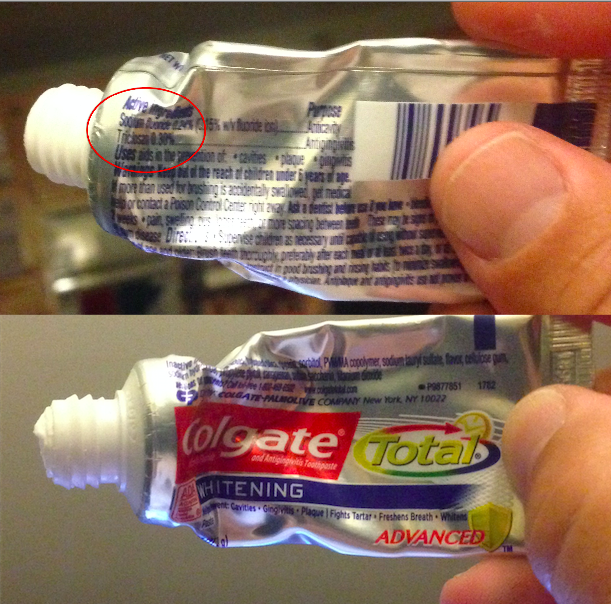 |
| Triclosan in my toothpaste (and maybe yours too) |
I was reading some posts of a friend and went down a bit of a rabbit hole that led me to a place that did not make me happy.
First I saw a post about some issues with Crest Toothpastes containing polyethylene: Dentist calls Crest toothpaste dangerous; Now P&G changing ingredients. This seemed a bit disturbing. But then I saw a “Related Link”: Shoppers Ditching Colgate Total Amid Triclosan Fears. And I thought – holy cra*## – really? I had no idea triclosan was in toothpaste. And why did I react strongly? Well triclosan, which is antimicrobial agent, though it has it’s potential benefits, has some potential risks associated with it’s antibacterial activity (see also this discussion from the EU). What are these possible risks? Risks like increasing the frequency and spread of antimicrobial resistance. And risks like messing with microbial ecosystems.
And due to these potential risks, I have been blogging and writing and complaining about the use of triclosan in various building materials for some time now. For example
Potentially important paper on need to regulate Triclosan http://t.co/eZaqq9mjQK – publishing behind a paywall is idiotic #ShameOnACS
— Jonathan Eisen (@phylogenomics) March 8, 2014
//platform.twitter.com/widgets.js
And also see:
- Studying – not wantonly killing – the microbes around us and the rise of the “microbiology of the built environment”
- A disturbing trend – casual and reckless use of antimicrobial agents in building materials.
You see, I thought, for reasons that are unclear to me right now, that the main issue with agents like triclosan was their use in kitchen counters and clothing and building materials. Well, it never even occurred to me that it would be in oral care products and thus purposefully introduced into the human body.
So I decided to check to see if my toothpaste had any in it. And, well, $*##. It did.
What the f$(#? Colgate has triclosan? Given potential microbiome effects http://t.co/Ej0mr5Vxxq … this seems idiotic. pic.twitter.com/bLPO3BRogg
— Jonathan Eisen (@phylogenomics) September 23, 2014
//platform.twitter.com/widgets.js
Well, that is disturbing. So I decided to Google around to see what else there was out there on Triclosan in toothpaste. And I discovered this gem from Colgate in response to the news story I mentioned above: Colgate officials have responded to such concerns by saying they think it is perfect safe. The piece is by Patricia Verduin, PhD., Head of Colgate-Palmolive Research & Development.
Here is a quote from that “article”:
We all know that a rumor travels half-way around the world before the truth even has a chance to be heard. But we want the truth to have a chance to catch up. We encourage consumers to look at the facts.
And here is another.
I know the science and I know how it works. It is the only toothpaste I use.
What a condescending, arrogant response. I am looking at facts. As I presume are others. And what we see does not make us happy. Just as we as a society are freaking out (justifiably) about overuse of traditional antibiotics (I use the term traditional antibiotics here to refer to things commonly called antibiotics), we should also be worried – probably really worried – about overuse of agents like triclosan. Don’t let the “biocidal” or “antimicrobial” or “antiseptic” terminology fool you. If one of the major effects of a chemical is to kill microbes, it is something to worry about. See for example Triclosan Promotes Staphylococcus aureus Nasal Colonization which shows some evidence that these worries are not just rumors that travel around the world. Here are some quotes from that article
These findings are significant because S. aureus colonization is a known risk factor for the development of several types of infections. Our data demonstrate the unintended consequences of unregulated triclosan use and contribute to the growing body of research demonstrating inadvertent effects of triclosan on the environment and human health.
In the end, I would like to say – shame on Colgate and Proctor and Gamble. Yes, triclosan in their toothpaste may lower the risk for some oral health problems. But consider traditional antibiotics as an analogy. Yes, they can lower the risk from dying from an infection and are very important tools for all sorts of cases. But at the same time, even with their benefits, we as a society are looking to reduce their use as much as possible and to reserve them for cases where they are truly needed. Prophylactic use of traditional antibiotics is now generally frowned upon. Similarly, prophylactic use of triclosan in toothpaste, even with some health benefits, has way way too many potential, unknown, health risks to be continued. This notion is not a rumor. It is not “overselling the microbiome”. It is simply following the precationary principle until we know more. It is certainly much more “the truth” right now than idiotic statements like “I know the science and I know how it works.”
UPDATE 11/1/2015
Posted about this topic again to Twitter. And some of the same issues came up so starting looking for more papers on the topic. Here are some:
- Urinary Triclosan is Associated with Elevated Body Mass Index in NHANES
- Perturbation and restoration of the fathead minnow gut microbiome after low-level triclosan exposure
- Human Fetal Exposure to Triclosan and Triclocarban in an Urban Population from Brooklyn, New York
- Prenatal Exposure to Phenols and Growth in Boys


