How to make a funny video commenting on gender issues in science and engineering

Not much to say other than, well, watch it

Seminar at #UCDavis 11/20 Bacterial sensing and degradation of aromatic compounds – Prof. Rebecca Parales

MIC 291: Selected Topics in Microbiology

Work-in-Progress Seminars

Prof. Rebecca Parales
(Department of Microbiology & Molecular Genetics)

"Bacterial sensing and degradation of aromatic compounds"

Wednesday, November 20, 2013

4:10 pm

1022 Life Sciences

Parales 11-20-13.doc

Free Publications in PeerJ Until 2014

From PeerJ:

In the past year, PeerJ has had two ‘free submission periods’ in which we encouraged authors in specific subject areas to publish with us for free. These limited-time promotions resulted in increased submissions, which showed that despite our already low prices there is a large community for whom price is still a consideration when trying Open Access – this must change.

At just nine months-old, PeerJ is already publishing a significant amount of great science, with hundreds of articles and preprints published since February of this year. Despite this fact, we are fully aware that the majority of authors have not yet experienced our benefits and we genuinely want as many of you as possible to experience the benefits of publishing your work in a modern, streamlined, holistic and integrated publishing platform.

Therefore, as we approach the end of our first calendar year of publication, we want to open up the PeerJ experience to as many researchers as possible. By doing so, we also want researchers like you to experience the benefits that our ‘end-to-end process’ provides (i.e. the close integration of PeerJ PrePrints with PeerJ).

As a result, we are pleased to announce that from now through the end of 2013, any article that is submitted to PeerJ PrePrints (including any articles which have already been submitted there) can go on to be published in PeerJ (the journal) entirely for free (assuming it passes peer review and assuming you initiate the PeerJ submission process before Jan 1st 2014).

As we celebrate the 10 year anniversary of the Berlin Declaration (one of the seminal moments in the history of Open Access), we want to make sure that researchers realize that Open Access publishing has evolved, and we want as many as possible to experience what it has become!

Yours,
The PeerJ Team

BioAgFR 2013 NCBI Discovery Workshops @ UC Davis Library Webinar Edition

>
>A Fall 2013 Hello to our Library Faculty Representatives to the Shields
>Library Biological & Agricultural Sciences Reference Department.
>
>Would you please distribute the following email notice to your
>respective departmental email lists, especially those for your graduate
>students.
>
>Thank you!
>
>~~~~~~~~~~~~~~~~~~~~~~~~~~~~~~~~~~~~~~~~~~~~~~~~~~~~~~~~~~~~~~~~~~~~~~~
>~~~~~~~~~~~~~~~~~~~~~~~~~~~~~~~~~~~~
>
>The UC Davis Library is pleased to announce:
>
>2013 NCBI Discovery Workshops @ UC Davis Library [Webinar Edition]
>
>The workshops will focus on the following areas:
>
>1. Sequences, Genomes, and Maps: December 17, 2013 from 12:30-2:30pm PT
>
>http://www.ncbi.nlm.nih.gov/education/workshops/sequences-genomes-and-m
>aps/
>
>2. Proteins, Domains, and Structures: December 18, 2013 from
>12:30-2:30pm PT
>
>http://www.ncbi.nlm.nih.gov/education/workshops/proteins-domains-and-st
>ructures/
>
>3. NCBI BLAST Services: December 19, 2013 from 12:30-2:30pm PT
>
>http://www.ncbi.nlm.nih.gov/education/workshops/ncbi-blast-services/
>
>4. Human Variation and Disease Genes: December 20, 2013 from
>12:30-2:30pm PT
>
>http://www.ncbi.nlm.nih.gov/education/workshops/human-variation-and-dis
>ease-genes/
>
>To register: http://tinyurl.com/NCBI-Workshops-UCD
>
>You are welcome to register for one or more workshops, each emphasizing
>different sets of NCBI resources. Specific examples will be used to
>highlight important features of the resources and tools under study and
>to demonstrate how to accomplish common tasks.
>Electronic copies of detailed handouts for each session will provide
>step-by-step instructions and additional information about each example.
>
>All workshops are taught by NCBI staff and will consist of 1.5 hours of
>instruction followed by a Q & A period.
>
>Due to the US Government sequester, the workshop instructors will not
>be able to present in person at UC Davis, as in previous years.
>Instead, you are invited to attend all sessions via webinar, using your
>own computer or perhaps collaborating with your department or research
>group to view together.
>
>NCBI Discovery Workshops Website:
>http://www.ncbi.nlm.nih.gov/education/workshops/
>
>Questions? Contact bioagquestions or
>hslref

Provost’s Forum 12/2- Dr. Caroline Hoxby – Opportunity, Meritocracy, and Access to Higher Education

Posting this via an email I received:

Dear Faculty, Staff, Students and Community Members,

In cooperation with the Center for Poverty Research, we are pleased to announce that the next event in the Provost’s Forums on the Public University and the Social Good will be held on Monday, December 2nd.

Dr. Caroline Hoxby, Professor of Economics at Stanford University, will speak about “Opportunity, Meritocracy, and Access to Higher Education.”

Caroline Hoxby is the Scott and Donya Bommer Professor of Economics at Stanford University, the Director of the Economics of Education Program at the National Bureau of Economic Research, and a Senior Fellow of the Hoover Institution and the Stanford Institute for Economic Policy Research. A public and labor economist, Hoxby is one of the world’s leading scholars in the Economics of Education. She is the Principal Investigator of the Expanding College Opportunities project, which has had dramatic effects on low-income, high-achievers’ college-going. Some of the other research for which she is best known includes explaining the rising cost of higher education, the effects of school choice and charter schools on student achievement, and the effects of teacher unionization. We hope you can attend this exciting event: Monday, December 2, 2013 – 3 p.m., Multi-Purpose Room, Student Community Center.

For more information please see the attached flyer, visit our website: The Provost’s Forums on the Public University and the Social Good, or contact Alycia Thompson. In addition, please forward to any interested parties, as events are open to the public.

Provost’s Forums-Hoxby 2013.pdf

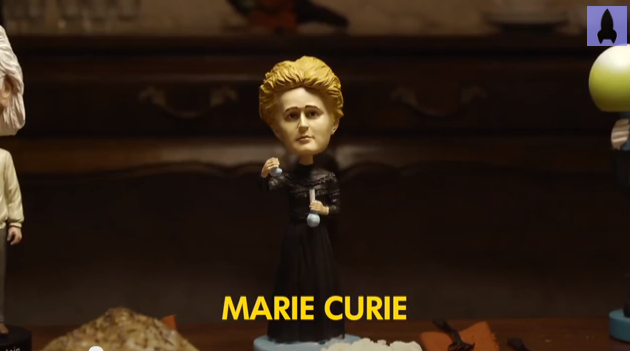
PBS Digital Studios Offensive Thanksgiving Special includes Einstein sexually assaulting Marie Curie

Wow.  I just do not know even what to say here really.  My Facebook feed is filling up with discussion about this video “A Very Special Thanksgiving Special | It’s Okay to be Smart” from PBS Digital Studios and I thought it would be important to share this with a wider audience.

The video includes scenes like the following:

Marie Curie is the only female scientist represented who says “It was very nice to be included”.

Later there is a scene of Einstein harassing Marie Curie.

Which ends with Einstein telling Marie Curie he wants her to “wear him like a Parka”


Einstein gets spontaneously naked at the party.
And then Einstein “accidentally” falls on Marie Curie and starts to sexually assault her.

Funny isn’t it?  Really funny no?

What a fu#*@ disgrace from PBS.  They should be ashamed.


UPDATE 11/16/13 9:45 AM

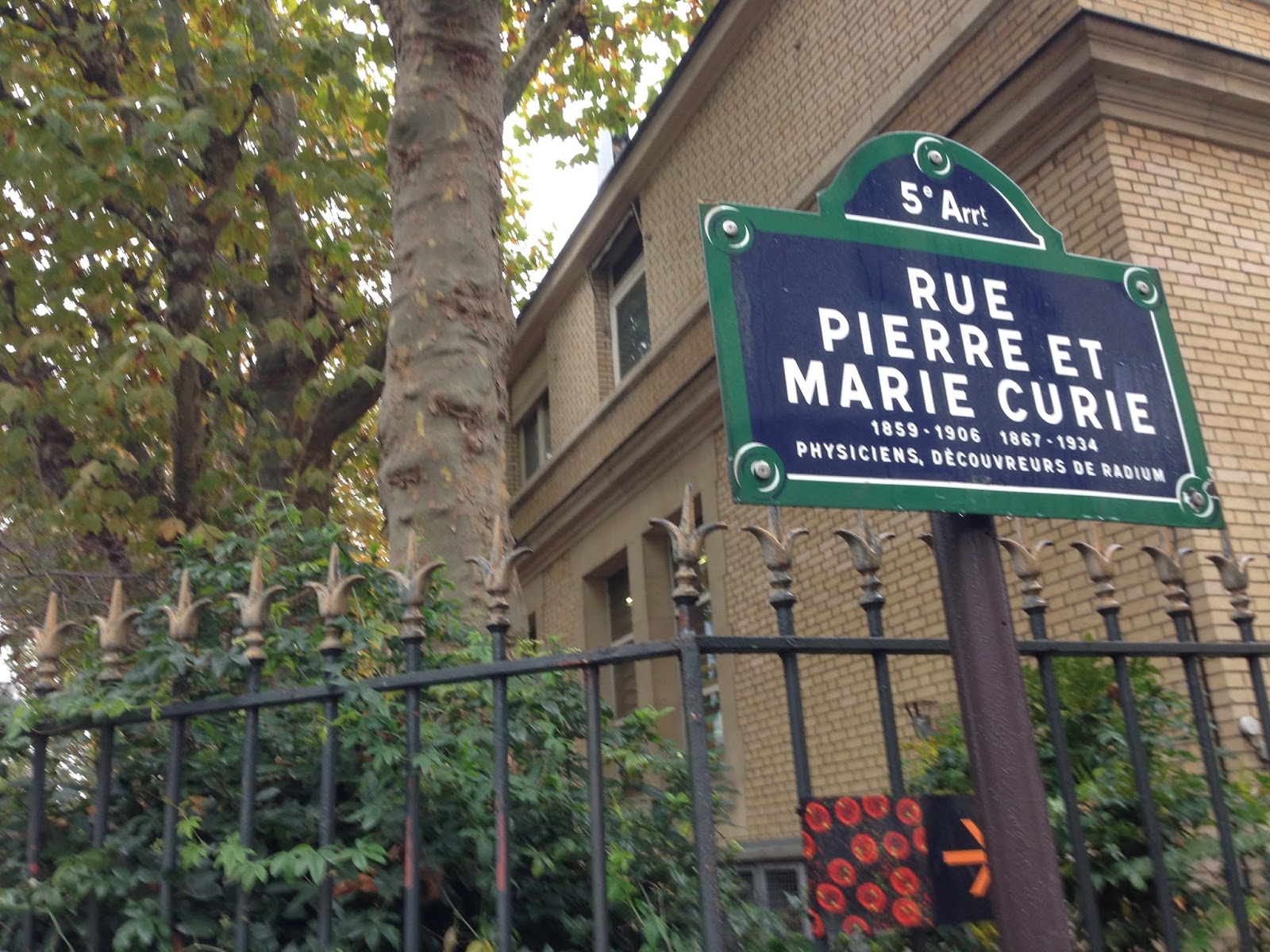
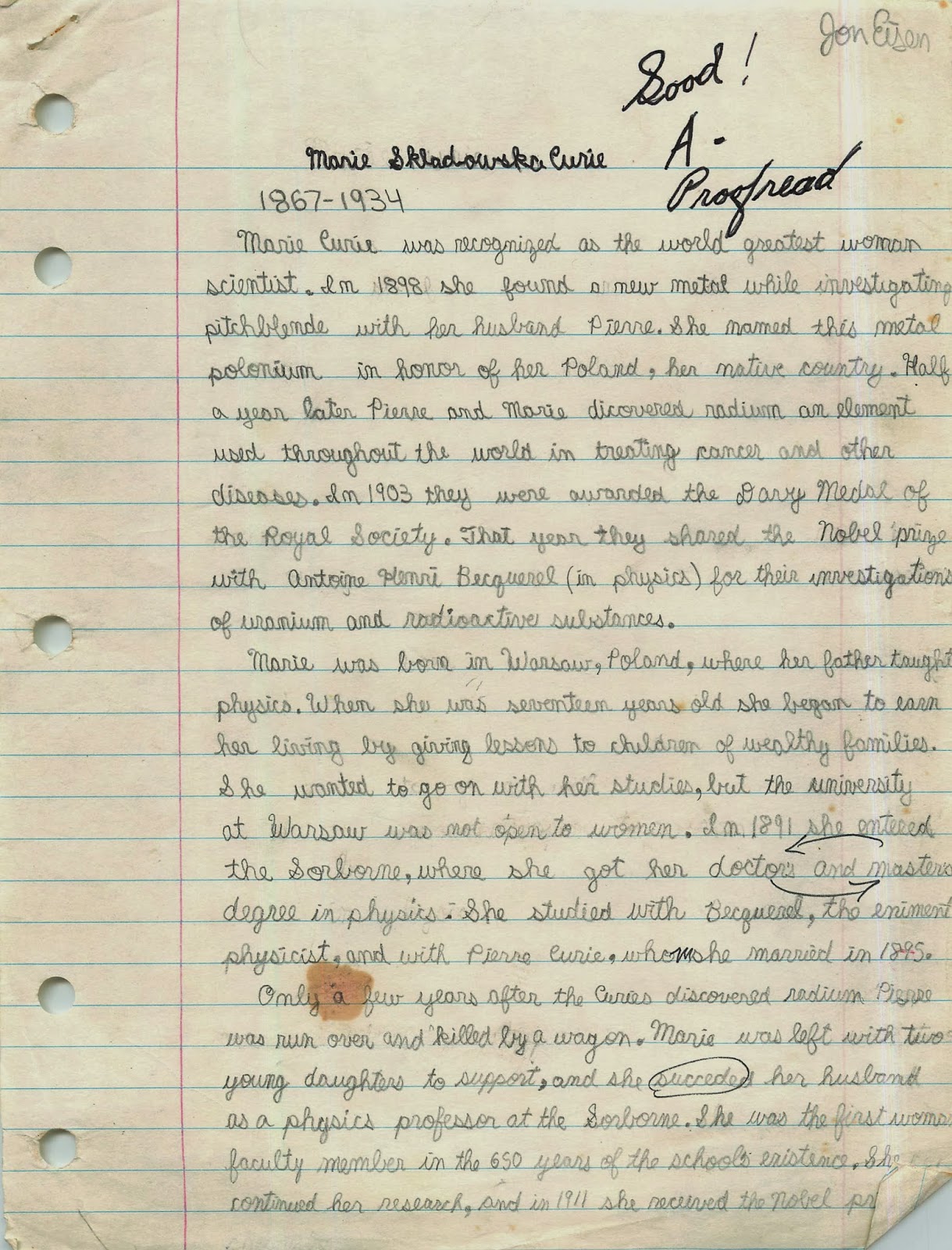
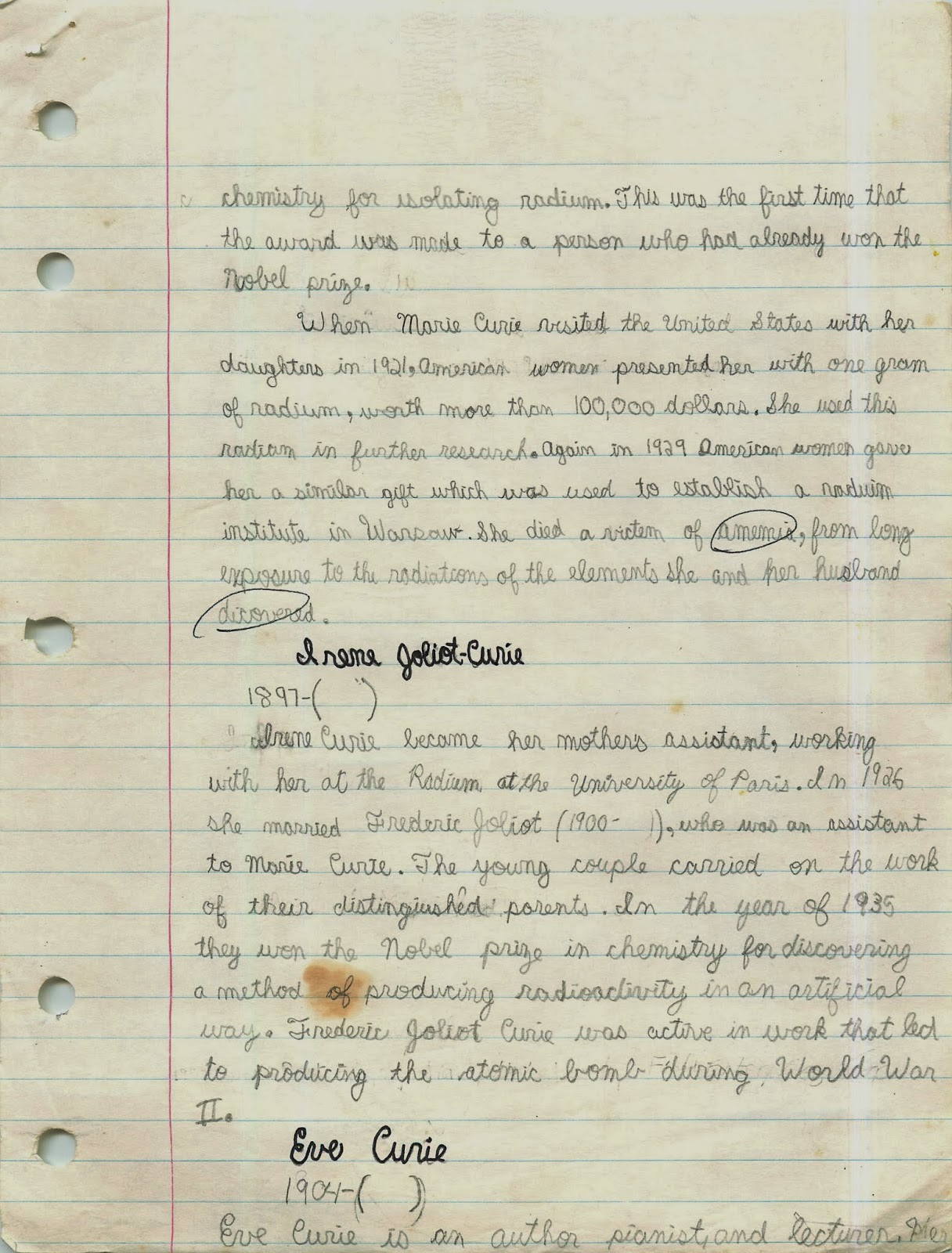
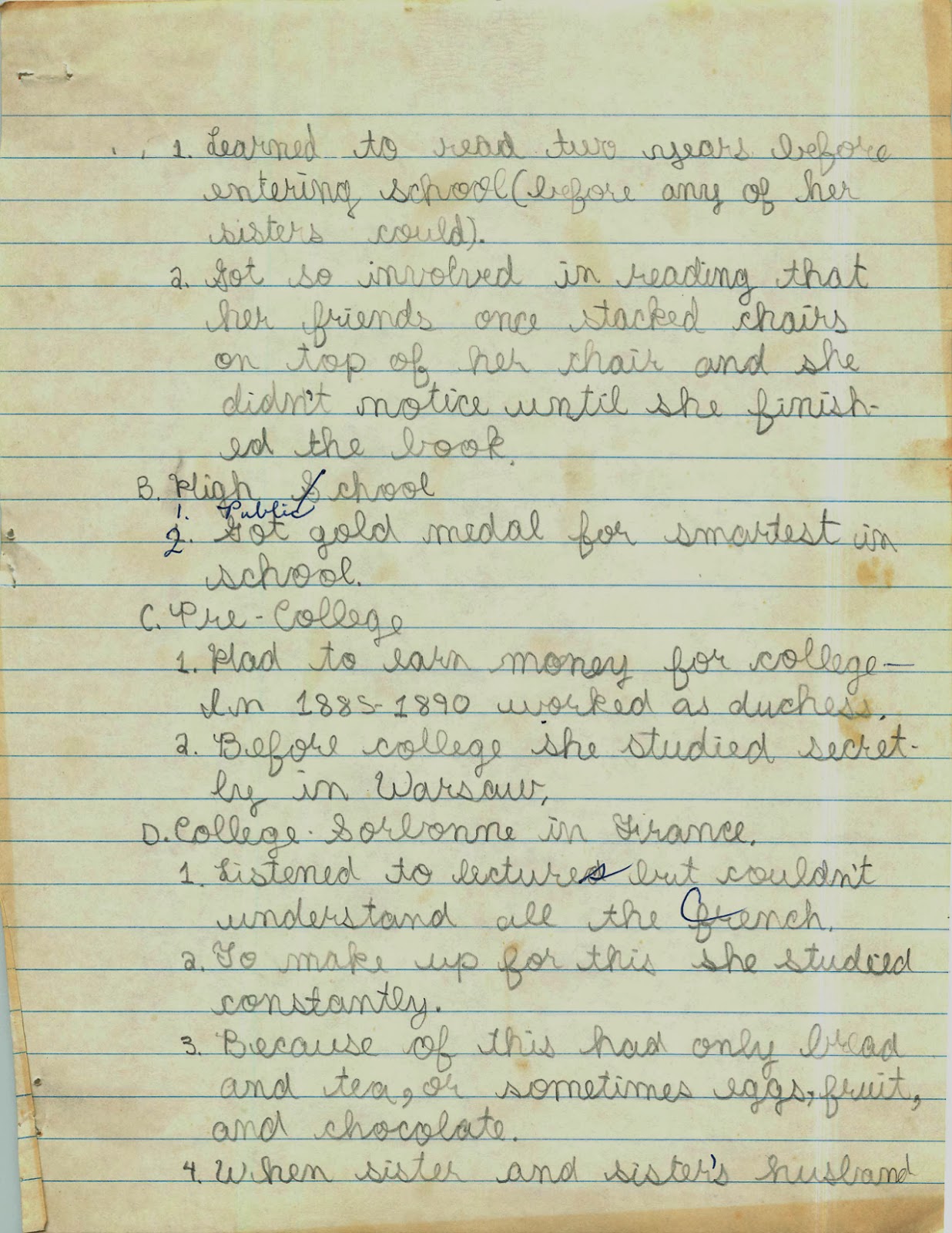
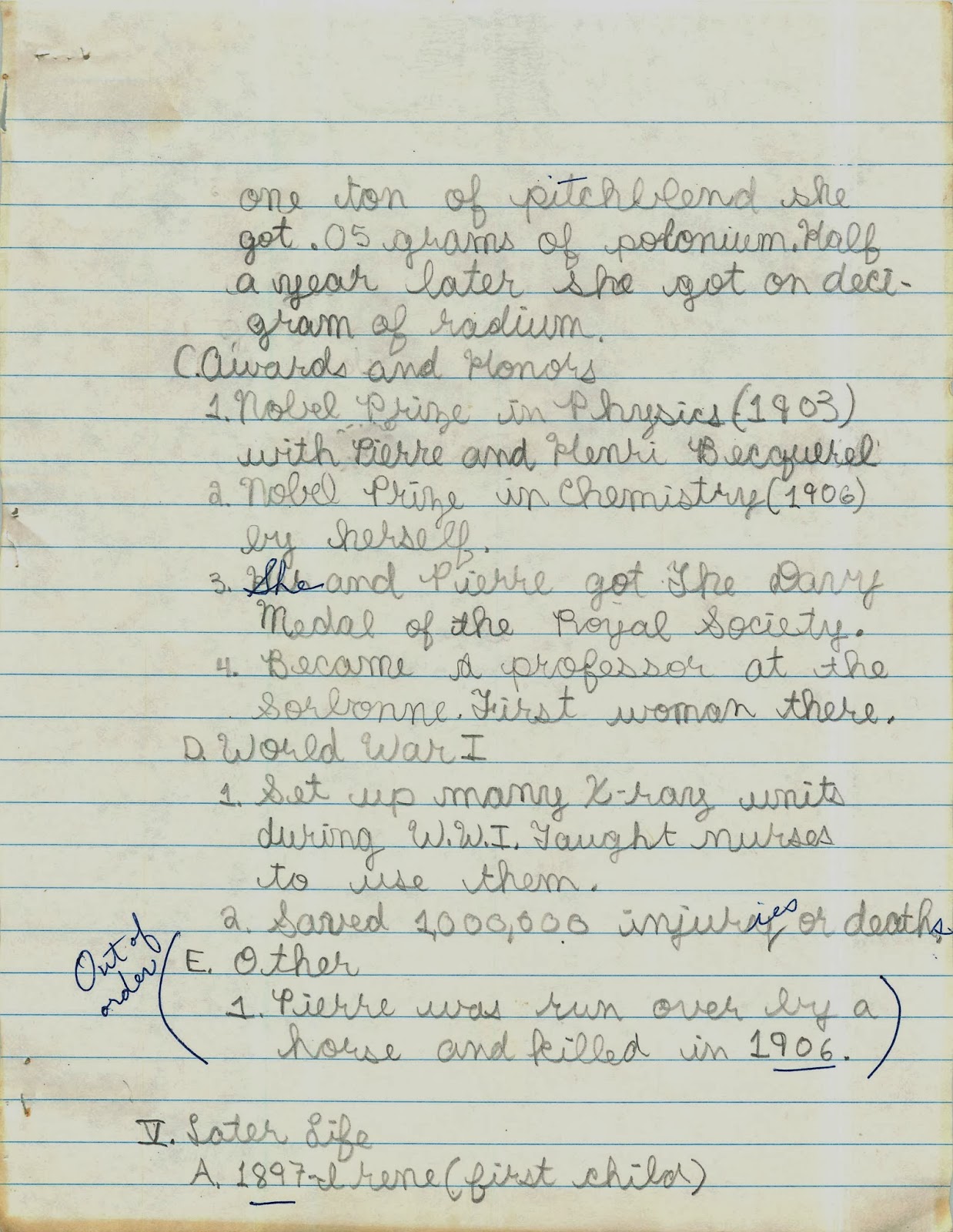
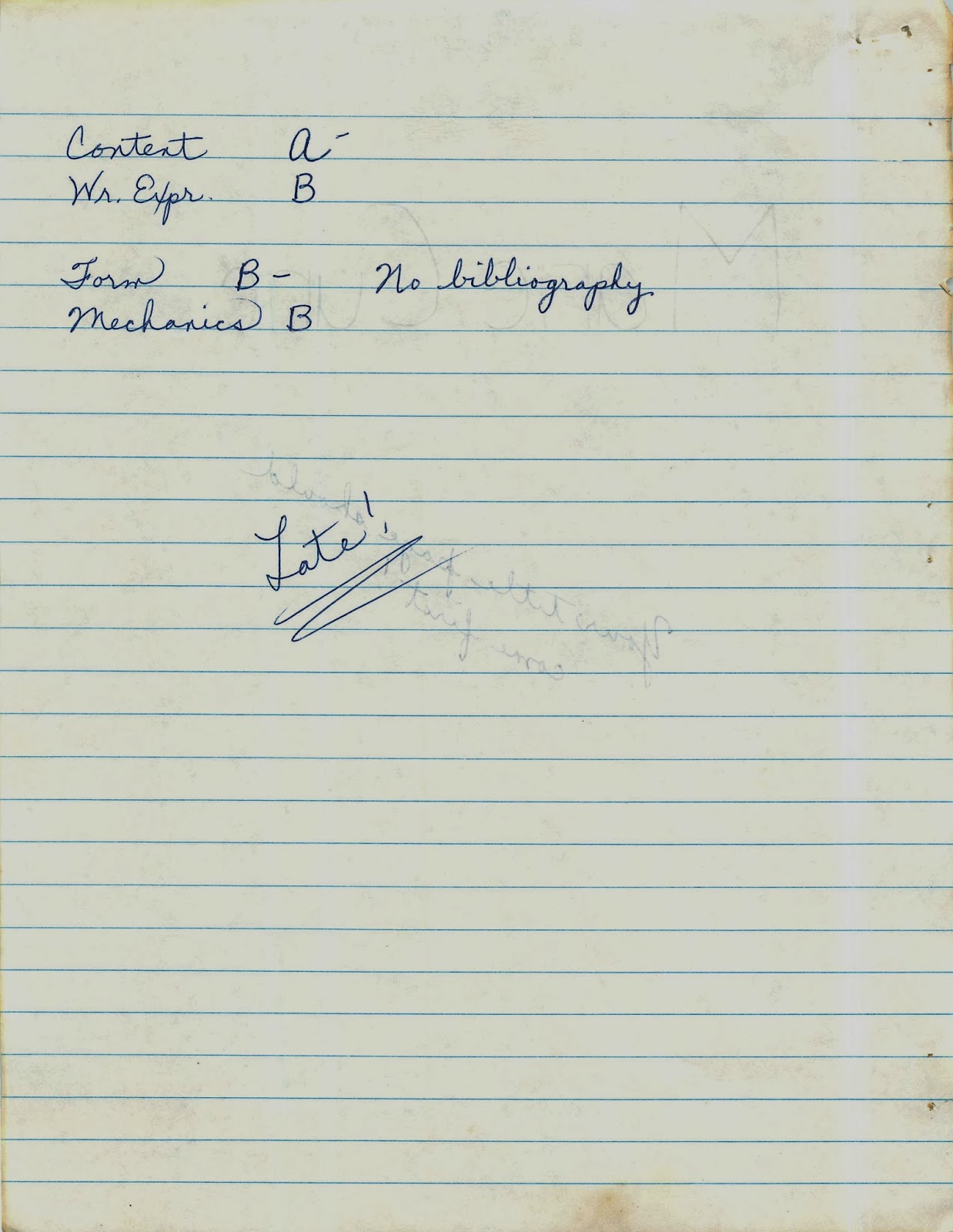
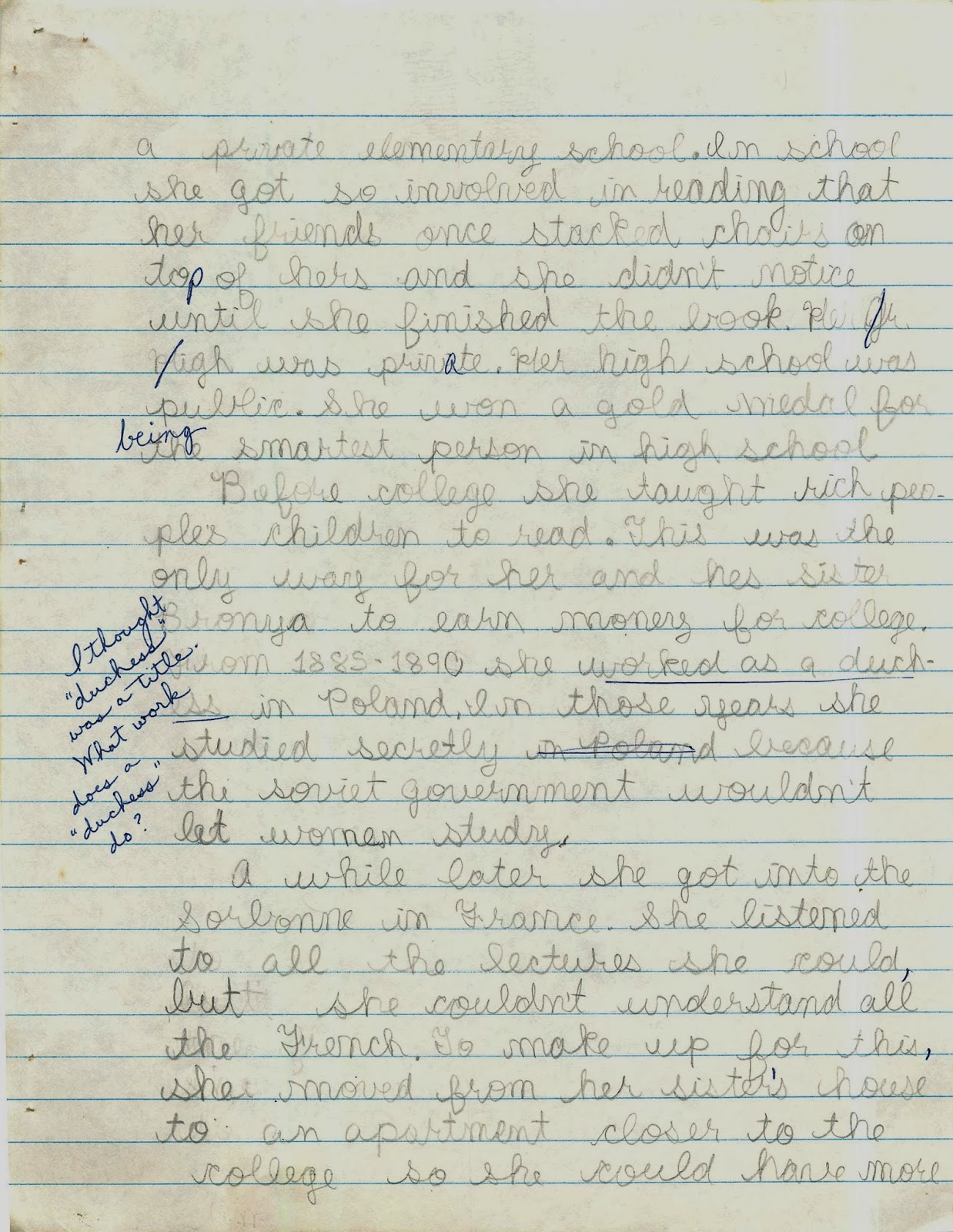
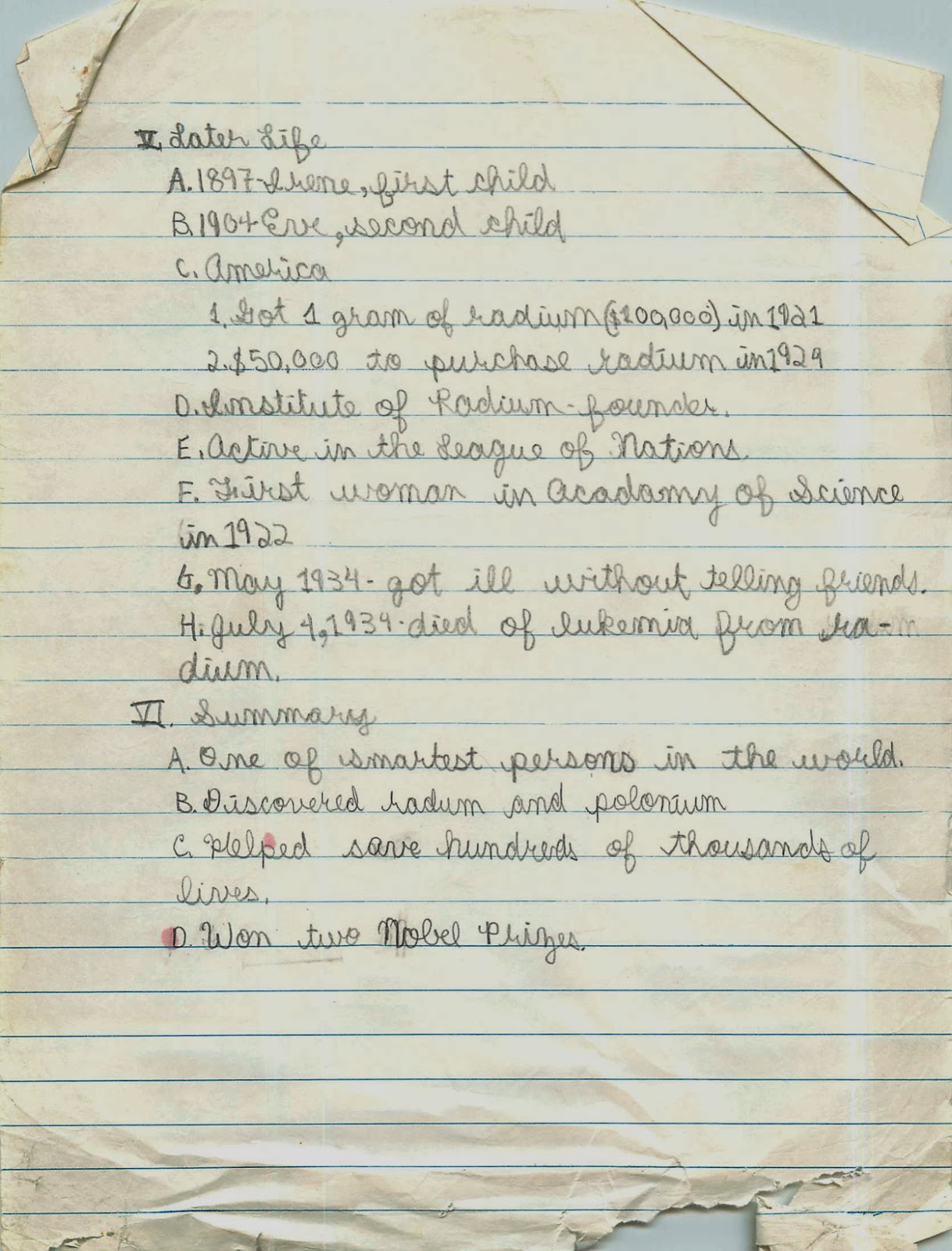
I just wanted to note one extra thing here.  I think this would be offensive no matter what female scientist was used as a character.  But it was extra painful to me that this had Marie Curie in it.  As a child I had one major hero – Marie Curie (yes, I was a bit of a geek – but my mom is a physical chemist so Curie appealed to me in many ways).  Every time there was an assignment to write about a historical figure or a famous person, I wrote about her.  So when I was in Paris for the first time last week I was very excited to go near places associated with Marie Curie.

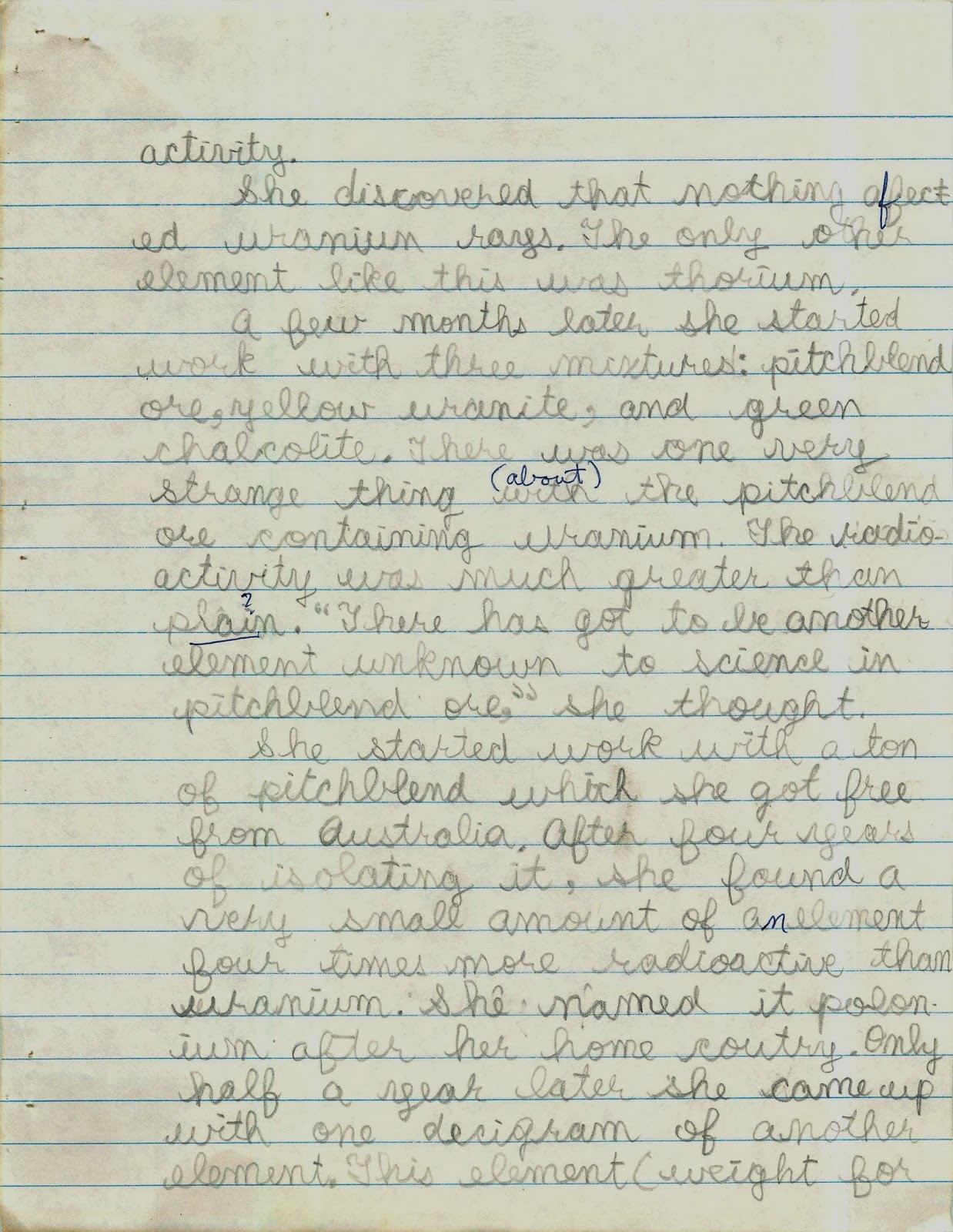
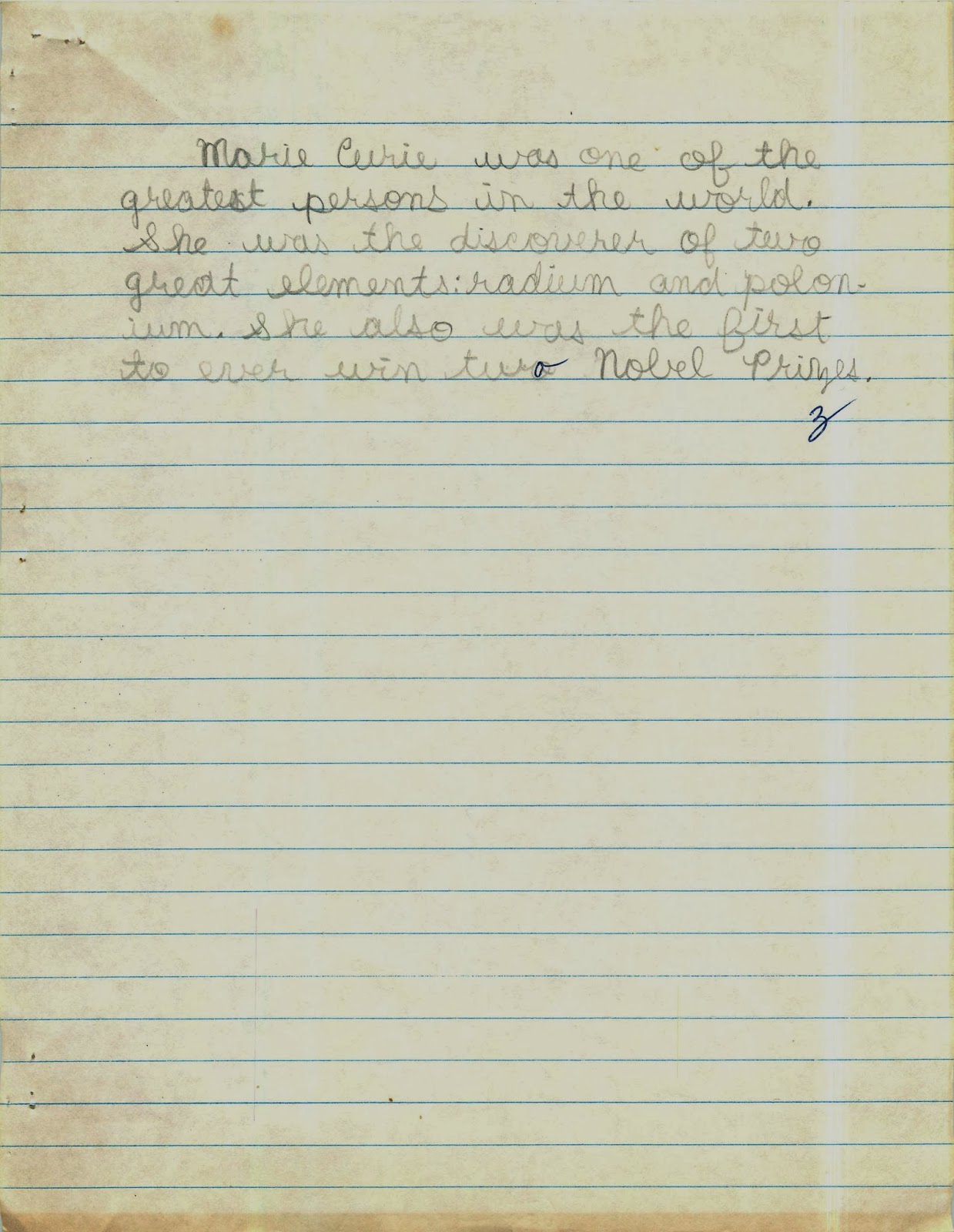
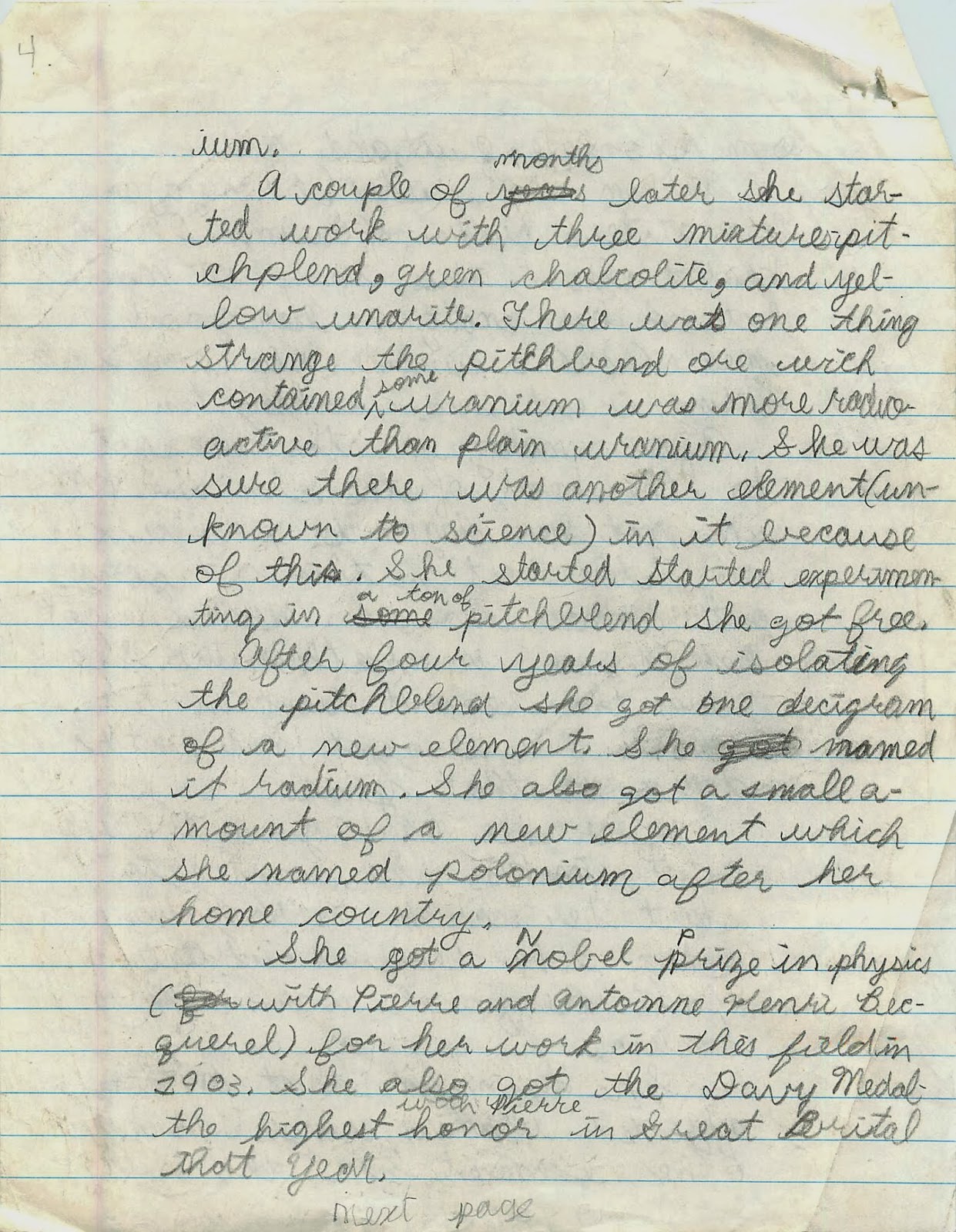
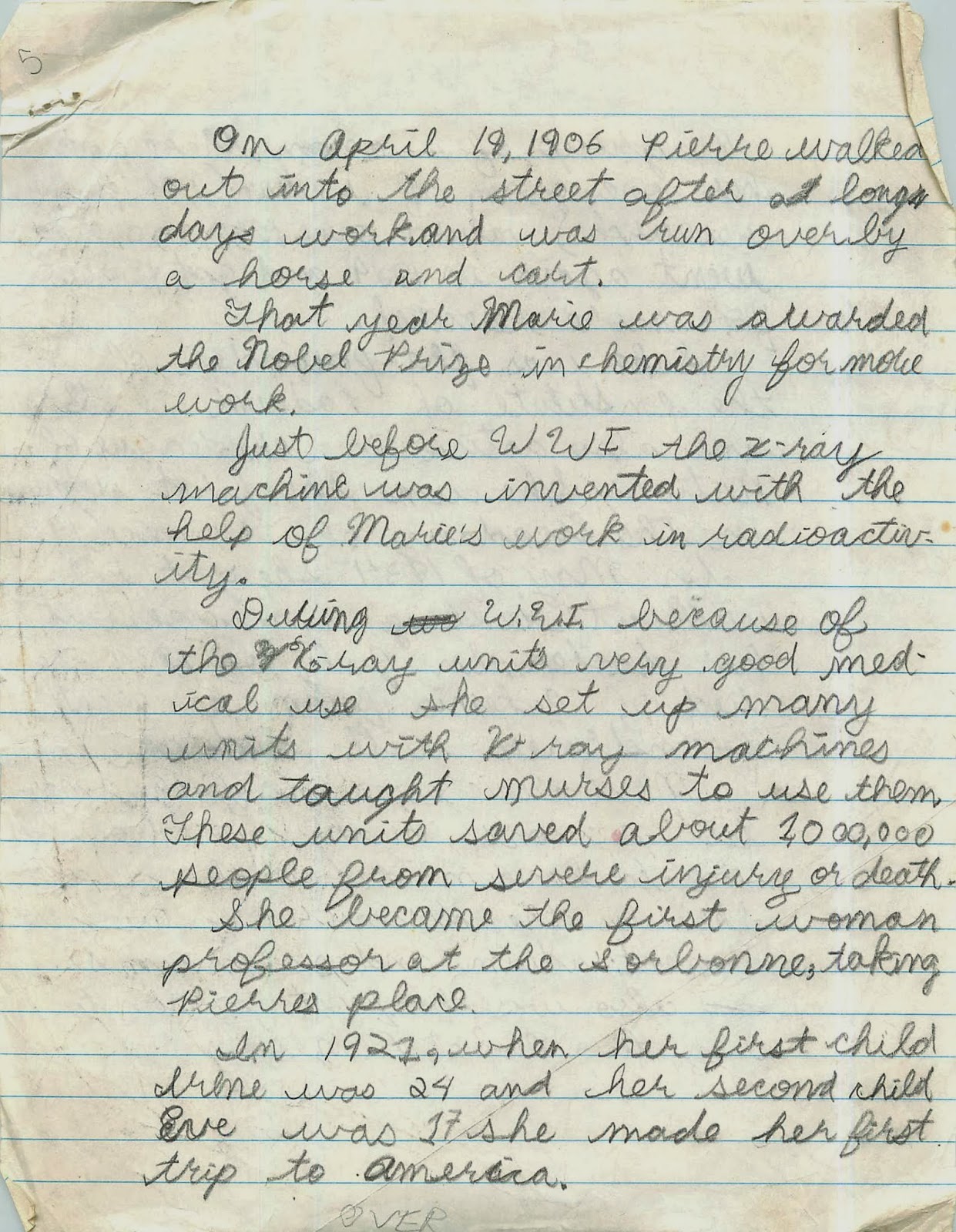
So this AM, after posting about this awful video,  I went in to my box of old papers and found some of those things I wrote about Marie Curie when I was in elementary and junior high school and I scanned them in.

Here are some of them:

Essay

Whole Booklet About Marie Curie

Essay Rough Draft

Notes for one essay


UPDATE 2: 11/17/13 4:52 AM: I made a Storify of some of the discussions of this post.


UPDATE 3: 11/17/13 5:20 AM Producer of the video has issued an apology / explanation.


UPDATE 4: 11/19/13 4:22 PM PBS Responds

The Ombudsperson for PBS has posted some comments about this here.  A key section:

What astounds me is that, while risk-taking is often to be applauded, this depiction of Einstein and Curie is so not funny, so off-the-wall, so not likely to be understood yet virtually guaranteed to anger a huge segment of a viewing audience for no good reason that one wonders how it was decided to show it. On the other hand, in an era where clicks count the most, maybe it is not so dumb.

He also posts what is supposedly an official PBS Response:

Joe Hanson issued a sincere apology on his blog, which is the channel he chose to discuss this issue. It included a detailed explanation of how the video was created, what he was trying to accomplish and the statement, “this video makes a joke to call attention to the sexual harassment that many women still today experience, often from wannabe Einsteins. The joke is uncomfortable because these issues are uncomfortable. To be very clear: that joke is not an endorsement of sexism in science. We aimed to ridicule miscues of science in society, past and present, using dolls, and we failed.” 

He also asks in the post that people form their opinions based on his past videos and writings, such as the video from the previous week, where he examines the fact that the vast majority of Nobel prize winners have been white men and criticizes women’s “Nobel snubbing” as a “symptom of a larger problem,” that “women are under-represented in science in general.” 

There have been a number of comments about “A Very Special Thanksgiving Special” since it debuted that have ranged from critical to laudatory. With this video, Joe has opened up an important, though difficult, debate. We believe we are meeting our public service mission by providing an open forum where this and other conversations about complex subjects can take place.

Are you fu$*## kidding me?  “With this video, Joe has opened up an important, though difficult, debate.”  Are they serious?  Joe opened up an important debate?  By posting an offensive video?  Seriously?  I mean – I have avoided ANY types of personal comments about the people behind this video.  But this response by PBS is awful, condescending, misleading, and, well pathetic.  What a joke.


UPDATE 5 11/21/13 1 AM The producer of the video has removed it from Youtube with the following comments:

I have decided to remove “A Very Special Thanksgiving Special” from the It’s Okay to Be Smart channel. We failed in using satire to shine some light on the problem of women’s under-representation in science and the on-going disrespect and harassment women face in the field. I hope it is clear that I never set out to offend anyone. Harassment is real and unacceptable — I never meant for my work to indicate anything other than that. I am looking forward to continuing what has always been my mission for It’s Okay To Be Smart: Inspiring people – all people – to learn about the beauty and wonder of science

Davis Faculty Assocatin – Petition in support of graduate student workers

The following message is being sent to the faculty at UC Davis on behalf of Davis Faculty Association chair Richard Scalettar:

Dear UCD Faculty,

On September 16th, the chairs of 33 departments at UC Berkeley signed a letter to their Dean of the Graduate Division, Andrew Szeri, to express their concern about the uncompetitively low graduate student stipends UC offers. On October 3rd, departmental chairs at UCSD sent a similar letter to their Graduate Studies Dean, Kim Barett.

The Board of the Davis Faculty Association (DFA) agrees that academic student employee wages are inadequate. According to UCOP’s own survey, these stipends lag at least $2,697 behind comparator institutions. Academic student employees are currently negotiating with UC for a pay increase, but UC’s latest offer of a 2% raise still leaves a wage-deficit in excess of $2,000 (and considerably more when compared to the programs of elite private institutions with which UC competes.)

The DFA’s sister chapter, BFA, has launched a petition to be sent to UCOP labor relations in support of the graduate student contract negotiations. (The current contract expired at the end of September). The DFA board endorses this petition and asks you to please sign it and spread the word amongst your colleagues.

http://petitions.moveon.org/sign/uc-faculty-in-support

Additionally, the academic student employee union’s next bargaining session for a new contract will be taking place at UC Davis this Monday and Tuesday, November 18th and 19th. Faculty are welcome to attend and give testimony in favor of increasing support for graduate student workers. The sign-up sheet is at:

https://docs.google.com/forms/d/1MkWmFrr4A_ExMdRqpTPWSzM3IHw6ejARZk7HE9uX1gI/viewform

Short post- a bad taste in my mouth for overselling the microbiome

Well, this just leaves a bad taste in my mouth: Oral Bacteria Create a ‘Fingerprint’ in Your Mouth.  Basically, the researchers compared microbial diversity in the oral microbiome of people and they looked at how correlated the microbiome was with ethnicity.  And they published a PLOS One paper and wrote a press release about it.  And there are many lines in the PR and some in the paper I take issue with.  These include:

  • PR: “The most important point of this paper is discovering that ethnicity-specific oral microbial communities may predispose individuals to future disease”.
    • Uggh.  I cannot find anything anywhere that indicates anything about predisposition to disease
  • PR: “Nature appears to win over nurture in shaping these communities,” Kumar noted, because African Americans and whites had distinct microbial signatures despite sharing environmental exposures to nutrition and lifestyle over several generations.
    • Double uggh.  So – different ethnic groups have different microbes.  And since some of the ethnic groups have similar environmental exposures to each other (actually, they do not even test this – they simply assume this) yet do not have similar micro biomes, therefore the cause of the differences in the microbiomes must be genetic differences between the ethnic groups.
  • Paper: “Our data demonstrates that ethnicity exerts a selection pressure on the oral microbiome, and that this selection pressure is genetic rather than environmental, since the two ethnicities that shared a common food, nutritional and lifestyle heritage (Caucasians and African Americans) demonstrated significant microbial divergence.” 
    • Triple uggh.  This should not have been allowed in the paper.  Their work in no way demonstrates any genetic component to the differences in the microbiome.  

This is certainly a case of overselling the microbiome.  But it is also a case of just bad science in relation to the “nature vs. nurture” issues.

Draft Outline of Workshop "Publish or perish? The future of academic publishing and careers" #UCDavis 2/13-2/14

Thanks to EVERYONE on Twitter and elsewhere who gave useful feedback on my request for ideas about a workshop we are planning to have at UC Davis.  For background see:

Over the last few days I have discussed the meeting with many many people and we have come up with a more detailed / revised draft of the whole meeting.  I thought I would share that here — a formal announcement will be coming soon with details on registering and submitting abstracts for short talks and such.


Publish or Perish? The Future of Academic Publishing and Careers (tentative title …)

February 13-14, 2013
University of California, Davis

Hosted by the UC Davis IFHA Innovating Communication in Scholarship (ICIS) Project
Day 1: Innovations in Scholarly Publishing
  • The Changing Nature of the Journal 
  • Beyond Journals and New Forms of Digital Publishing
  • Peer Review: Assessment and Evolution
  • Keynote talk by Yochai Benkler (which will also be part of the UC Davis Provost’s Forum)

Day 2: Assessment 

  • Tracking and Measuring Impact
  • Assessment by Institutions: Current Practices 
  • Assessment by Institutions: How to Change 


Potential Topics for the Sessions – and I note for every session we hope to cover how the topic area differs between fields and regions and will have a discussion panel / discussion session at the end.
Session 1: The Changing Nature of the Journal 
  • Role of societies in publishing
  • Financial side of journal publishing
  • Institutional open access policies
  • The spread of open access publishing
  • Preprints and repositories
Session 2: Beyond Journals and New Forms of Digital Publishing
  • Data publishing
  • Code and workflows
  • Books vs. journals
  • Social media
  • The living paper
  • Micro and nano publications
Session 3: Peer Review – Assessment and Evolution
  • New models of peer review: technical merit, open review
  • Post publication review
  • Reproducibility
  • Retraction 
Session 4: Tracking and Measuring Impact
  • Article level vs journal level metrics
  • Metrics in the humanities vs. sciences
  • Institutional level metrics
  • Integration of metrics beyond articles / books 
  • Predicting future impact
  • Unique identifiers and tracking individuals
Session 5: Assessment by Institutions: Current Practices 
  • How do hiring, promotion and tenure cases work?
  • Differences between fields
  • Tenure track vs. other academic positions
  • Assessment for grants / funding
Session 6: How to Change Models of Assessment
  • Search committee training
  • Bias: implicit and otherwise
  • Methods to limit implicit and explicit bias
  • Administration perspective

Twitter chatter / links of interest: October 2013

Well, I post to Twitter a lot of links to stories of possible interest to readers of this blog.  If you want to keep up with all of this chatter and discussion from me and others, you should probably hang out on Twitter a bit.  But I know that is not for all.  So I am going to try to start posting some of the more relevant links here.