Eisen Lab Blog

Twisted tree of life award #14: @nytimes and Nathaniel Rich on Immortal Jellyfish

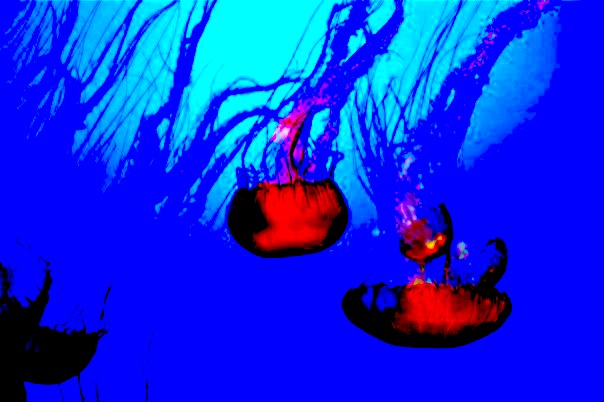
Well, this article by Nathaniel Rich in today’s New York Times Magazine certainly has gotten people talking: Can a Jellyfish Unlock the Secret of Immortality? – .  Alas, from a scientific point of view there are numerous problems with it.  So many that Paul Raeburn at the Knight Science Journalism Tracker at MIT has published a major takedown: First we get proof of heaven; now the secret of immortality. 
Now, the science about immortality in the article is certainly bad.  But that is not what I am here to discuss.  I am here to discuss the parts of the article about evolution.  I suppose if I had read the article online instead of in print I might have been attuned already to potential evolution problems from the correction on the first page

This article has been revised to reflect the following correction:
Correction: November 29, 2012
An earlier version of this article misstated the title of Charles Darwin’s classic book on the subject of evolution. It is “On The Origin of Species,” not “On the Origin of the Species.”

Oops.  Not a good start.  The article has a lot of background about jellyfish and in particular on person who is studying them and claiming this one species is immortal (which it is not).  It is the higher vs. lower organism meme that drives me crazy in the article:

Today the outermost twigs and buds of the Tree of Life are occupied by mammals and birds, while at the base of the trunk lie the most primitive phyla — Porifera (sponges), Platyhelminthes (flatworms), Cnidaria (jellyfish).

And then 

The mystery of life is not concealed in the higher animals,” Kubota told me. “It is concealed in the root. And at the root of the Tree of Life is the jellyfish. 

Seriously?  The root of the tree of life is the jellyfish?  And higher vs. lower organisms?  What exactly is a higher organism?  Does this mean that jellyfish have not evolved since their branch separate from the trunk of the animal tree?  Oh – and – what about the rest of the Tree of Life – you know – outside of animals for example?  Aaargh.  
The higher vs. lower meme continues with this quote:

Hydrozoans, he suggests, may have made a devil’s bargain. In exchange for simplicity — no head or tail, no vision, eating out of its own anus — they gained immortality.

Really?  So there is a tradeoff between complexity and immortality?  So does this mean all simple organisms are more immortal?  And all complex ones are doomed?  Where does this notion even come from?
For helping perpetuate the higher vs. lower organism meme (which drives me batty) I am awarding the author and the editor and the NY Times my coveted “Twisted Tree of Life” award.


As an aside, the article is littered with painful other statements like

It is possible to imagine a distant future in which most other species of life are extinct but the ocean will consist overwhelmingly of immortal jellyfish, a great gelatin consciousness everlasting.

So – this jellyfish operates in the absence of an ecosystem?  Suppose individual organisms are “immortal” as claimed in the article.  What exactly will they eat when everything else is gone?
Plus there is a conspiracy part that is lame.

You might expect that biotech multinationals would vie to copyright its genome; that a vast coalition of research scientists would seek to determine the mechanisms by which its cells aged in reverse; that pharmaceutical firms would try to appropriate its lessons for the purposes of human medicine; that governments would broker international accords to govern the future use of rejuvenating technology. But none of this happened.

Really?  So all the scientists and companies of the world have ignored this amazing finding?  Maybe, just maybe you might think that is because this is BOGUS?
And then there is the bogus “small bodied organism” problem.

He cited this as an example of a phenomenon he calls the Small’s Rule: small-bodied organisms are poorly studied relative to larger-bodied organisms. There are significantly more crab experts, for instance, than hydroid experts.

What?  Is this even remotely serious?  So ignore Drosophila as a model for animals.  Or mice for that matter.  Ignore Arabidopsis as a model for plants.  Ignore yeast too.  And E. coli.  Uggh.  Completely inane. 

Can’t think of a better way to spend my Saturday afternoon!

Unlike most Saturdays, today I woke up and my first thought was, “I get to go to the SciLab building and sample!”  Jennifer and I took samples of the wall, water, and sand in the Coral Pond. We also did all of our water chemistry tests. Everything went well!


My only concern is with the nitrite test that I did. My value was extremely higher than the first two times (before the water was added to the pond and time zero). Those values were around 20 while I measured nitrite at 125 today. Because of this significant difference I ran the test twice, but got the exact same number the second time. I’ve been trying to find anything online that would give me a hint to whether my value makes sense or not.


We are going to have a lot to do this week. DNA extractions here we come!

Drexel Executive Leadership in Academic Technology and Engineering program fellowships

Just a quick post here.  I just got an email about the ICELA | International Center for Executive Leadership in Academics program in “Leadership Development for Senior Academic Women”.

The full email I received about this program is below:

Dear Colleague

As a recent recipient of an NSF institutional- level grant and a leader in your field, I would like to alert you to our (NSF-supported) leadership development program for mid-career women faculty in science and engineering.

The Executive Leadership in Academic Technology and Engineering program (ELATE at Drexel(r)) is a program for the enhancement of the professional and leadership skills of women faculty in mid-career (associate or full professor) in science and engineering fields. It is designed for faculty who are in a developmental phase of their institutional leadership, or who are already holding such positions.

We are now accepting applications for its 2013-2014 class through our online application<https://www.icela.net/apply/>.

The ELATE at Drexel program launched in 2012, and is currently hosting its inaugural class of Fellows from some of the nation’s leading universities in science and engineering. Over the past year, the program has been recognized with awards from the National Science Foundation, the Sloan Foundation, and the Henry Luce Foundation.  Our greatest honor has been to work with the accomplished Fellows and faculty in the program. More information about the current fellows and faculty is available at http://www.drexel.edu/engineering/programs/special_opp/ELATE/

ELATE advances knowledge and skills in strategic finance and management, personal and professional leadership effectiveness, and academic organizational dynamics. Upon graduation, each ELATE fellow becomes part of a community of leaders in higher education that provides continuing support for each member and her organization while serving as role models for the next generation of men and women scientists and engineers.

We would appreciate it if you could distribute this information to your colleagues, and encourage women in current or potential leadership roles to apply. Information provided in the attached brochure.

Applications are due by January 3, 2013.

Questions? Please contact us at ELATE@Drexel.edu or 215-991-8240.

New Coral Ponds

Hi all,

I have been looking forward to adding some blog posts on this great student outreach project but keep holding back because I wanted to include some pictures. I have recently joined Eisen’s lab and will be at Davis for the year before returning to San Diego State University to continue working on my Phd looking at microbial communities across Southern California kelp forests. I was excited about the opportunity to join in on this project and am impressed by the level of student participation.

This week has been busy with everyone getting acquainted with all the new water chemistry kits David has ordered for us. With Russell’s new tweeting pH meter, I was afraid the machines were taking over but it turns out undergrads and grads are still needed for bench work.

ImageImage

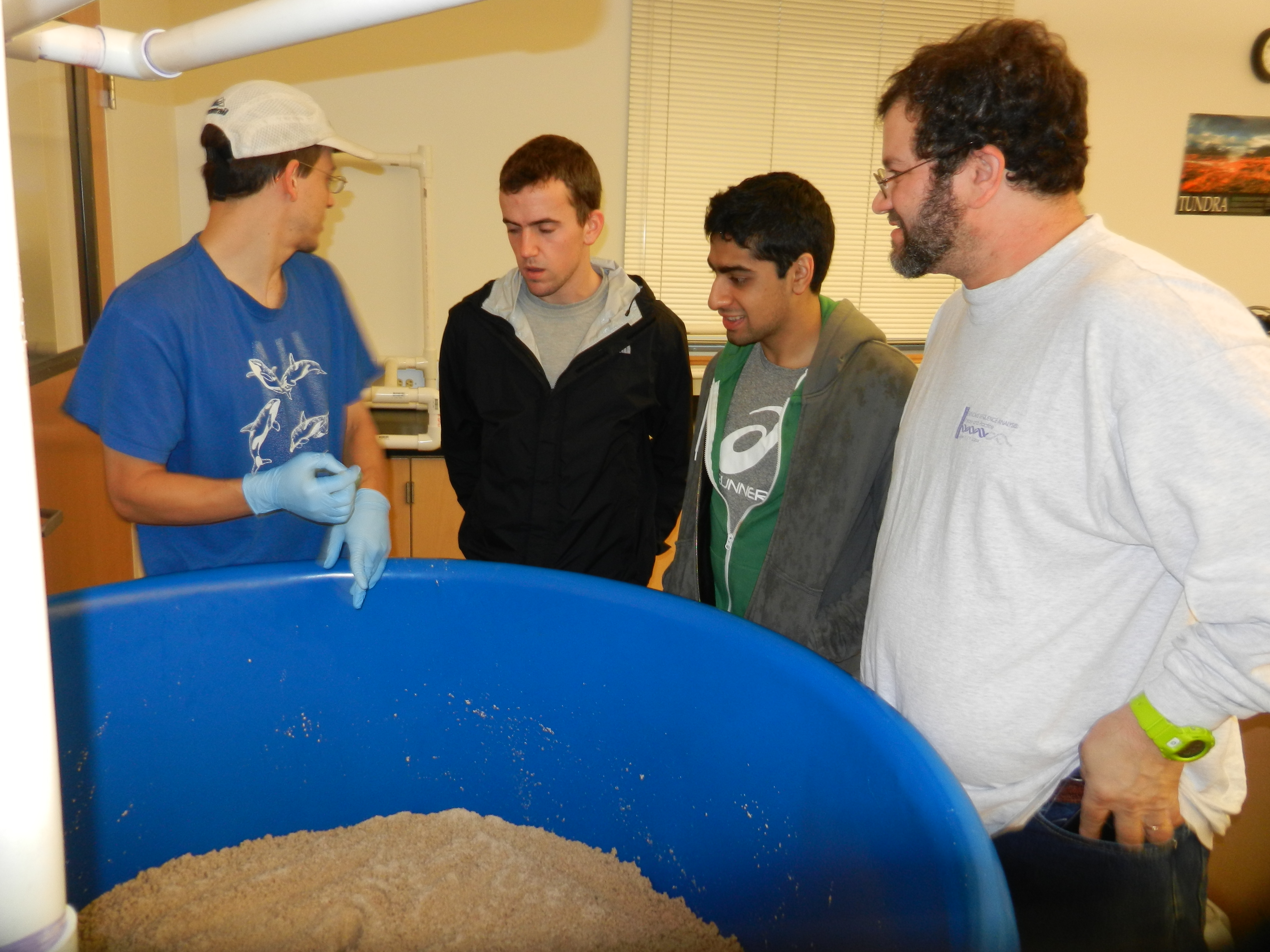
Today we got to see the newest coral pond setup and everyone in action as we collect our baseline data. Despite the rain we had a lot of participation and everything went smoothly.

ImageImage

Convoluted title, cool paper in #PLoSGenetics on relative of insect mutualists causing a human infection

Saw this tweet a few minutes ago:

//platform.twitter.com/widgets.js
The title of the paper took me a reread or two to understand.  But once I got what they were trying to say I was intrigued.  And so I went to the paper:  PLOS Genetics: A Novel Human-Infection-Derived Bacterium Provides Insights into the Evolutionary Origins of Mutualistic Insect–Bacterial Symbioses.  And it is loaded with interesting tidbits.  First, the first section of the results details the history of the infection in a 71 year old male and his recovery and the isolation and characterization of a new bacterial strain.  Phylogenetic analysis revealed this was a close relative of the Sodalis endosymbionts of insects.

And then comparative genomics revealed a bit more detail about the history of this strain, it’s relatives, and some of the insect endosymbionts.  And plus, it allowed the authors to make some jazzy figures such as

And this and other comparative analyses revealed some interesting findings.  As summarize by the authors

Our results indicate that ancestral relatives of strain HS have served as progenitors for the independent descent of Sodalis-allied endosymbionts found in several insect hosts. Comparative analyses indicate that the gene inventories of the insect endosymbionts were independently derived from a common ancestral template through a combination of irreversible degenerative changes. Our results provide compelling support for the notion that mutualists evolve from pathogenic progenitors. They also elucidate the role of degenerative evolutionary processes in shaping the gene inventories of symbiotic bacteria at a very early stage in these mutualistic associations.

The paper is definitely worth a look.

Playing with Impact Story to look at Alt Metrics for my papers, data, etc

The future of science will include in part better evaluations of the impact of individual scientists, individual papers and individual other units such as data sets, software, presentations, etc.

 There are many efforts in this area of “Alt Metrics” and one I have been playing around with recently is Impact Story. It used to be called Total Impact but they changed their name and some of their focus. It is pretty easy to use.

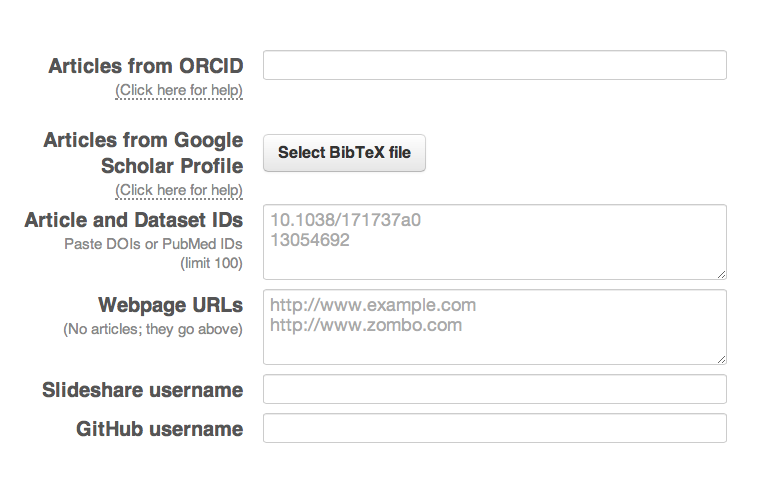
 One thing you can do is to create “A Collection.” To do this you go to their site, you register, and then you select “Create Collection“. And you add some information there

Among the information you can include: 
  • ORCID ID: ORCID is a new system for unique author IDs.  Once you get your unique ID you can curate / update your papers at the site (the site needs some work … some issues there with duplication).  I have gotten my ORCID ID and updating my publications there.
  • Articles from Google Scholar profile.  This allows one to upload a Bibtext fuile of one’s publication list from Google Scholar.  To get this, you need a Google Scholar page.  I have one here.  I have been playing a lot with Google Scholar recently: The Tree of Life: Wow – Google Scholar “Updates” a big step forward … and The Tree of Life: Thank you Google Scholar Updates for finding me … but did not realize it had a Bibtex export function until now.  From the drop down menu one selects “Export” and then can export ones publications (in the screen capture below the default option is Actions).  Once you get a Bibtex file you can upload it to ImpactStory.
  • Article and Dataset IDs.  Here one can Pubmed IDs or DOIs for other publications or datasets. Since most / all of my papers are in my Bibtext export and Orcid ID what I imagine using this for is data from places like Figshare and DataDryad
  • Webpage URLs.  One can include URLs here.  But so far my experience has been that they do not have a good system of assessing webpages.
  • Slideshare username.  If you are not posting slides and other materials on Slideshare, get with the program.  I post all my talks there.  And other things.  
  • Github Username.  A good place to post code/software.  We are doing this more and more in my lab.  I have a username though I don’t do much there myself.  
And then give your collection a name and click go.  It takes a bit of time to finish the initial collection creation with my list of materials.  But it is fascinating and very useful once done.  Here is a link to a collection “Jonathan Eisen try #3” I recently made.  I have not added everything to it but it is still a good record of how many of my contributions are being used.
My favorite thing to do so far is to click “expand all” from the menu which then shows the detailed Alt Metrics for everything.  

  • PDF views.
  • HTML Views. 
  • Facebook shares.  
  • Twitter shares.  
  • And much more. 
It does not seem perfect – not sure how the metrics are quantified for things like Twitter and Facebook.  But it gives a decent indication of how much chatter and use there is of various materials.
And you can export all the information for your own private use.  I can imagine this being VERY useful for promotion/tenure/other review actions.
I also sniffed around the site and found some nice features from their api page.  I especially like the embed function for specific DOIs.  You copy their text and change the DOI and you get a nice graphical summary of Alt Metrics for that DOI.  See an example at the bottom of the post.  Am probably going to add this to my publication lists on the web.

It is important to realize this is a BETA version. Still needs some work. But LOTS of cool things to play with. The future is here and I like it. Time to end reliance on indirect measures of the impact of papers and data (e.g., Journal Impact Factor). Time to measure actual impact. And this is a good tool to help do that.

http://impactstory.org/static/js/total-impact-item.jsdoi:10.1371/journal.pone.0018011


Follow the pH meter on Twitter

As part of the environmental monitoring of the coral ponds that we’re going to undertake Russell has agreed to loan us his famous tweeting pH meter.   Right now it’s just practicing in a freshwater tank at the facility but soon it will go into the first coral pond and we’ll get a continuous record of pH over the course of the project.   Follow along on Twitter @RussellspHMeter


Day 1 of sampling tomorrow! #OccupyBioLab

We have received word that they’re loading the first container with water tomorrow, which means we will have sampling and testing to do! They’re graciously lettings us keep our water chemistry equipment in the labs so we don’t have to bring it back and forth from the Genome Center. Also they’re giving us some freezer space. How nice! 🙂

ASM Career Development Grants for Postdoctoral Women

American Society for Microbiology:Career Development Grants for Postdoctoral Women.

Career Development Grants for Postdoctoral Women

The Membership Board is pleased to announce that the Career Development Grants for Postdoctoral Women Committee is accepting applications for its 2013 grant program.

Three grants ($1200 each) are given annually to advance the careers of postdoctoral women with outstanding scientific accomplishments and potential for significant research in the area of microbiology.  The fields covered by the award are any of those represented by the scientific divisions of the American Society for Microbiology (ASM).  The grants support the career development of the winning candidates by providing funds to attend a meeting (other than the ASM General Meeting or ICAAC), to visit another laboratory, to take a course in a geographically distant place, or for other travel to advance the candidate’s career.

To be eligible for this program, a woman scientist must hold a doctoral degree and have no more than five years of relevant research experience since receipt of her most recent doctoral degree.  Candidates must currently be performing postdoctoral work in microbiology, at an institution in the United States.  The candidate must be a member of ASM.  A letter of support must be provided by a nominator, who should be the candidate’s research project director, Department Chair, or Center Director.  The nominator must be a member of ASM and may only support one candidate for this award per year.  (Other guidelines exist – please check the website cited below for more details.)

Deadline for applications is February 1, 2013.

For more information on the program and the application process, go tohttp://www.asm.org/index.php/career-development-grants-for-postdoctoral-women on the Membership section of the ASM website, or contact Anne Dempsey at ASM Headquarters by email (adempsey@asmusa.org) or telephone (202-942-9381).

“How many species exist?” Seminar, Mark Costello. Dec 7,Fri. 3:10 2342 Storer”

Just got this in email:

Mark Costello will be giving a seminar on Friday, December 7th, at 3:10pm in Storer Hall room 2342. His talk will focus on several of his recent papers on “Can we discover Earth’s species before they go extinct?” If you have any questions, please contact Eliot Crafton (recrafton).

Mark is an Associate Professor as the University of Auckland Leigh Marine Laboratory. His work focuses on biodiversity, ecology, biogeography, and ectoparasites with an interest in conservation. He has done extensive work looking at biogeography of marine species, including invasive species, and examining the biodiversity of the world’s oceans. This work has relied on both taxonomic records and statistical modeling of these systems. In addition, Mark has been an active participant in developing and proliferating access to biodiversity data, including positions as the founding chair of the World Register of Marine Species (www.marinespecies.org), President of the International Association for Biological Oceanography (www.iabo.org), and Vice-Chair of the Global Biodiversity Information Facility Science Committee (www.gbif.org), among several other positions. More information regarding Mark’s activities can be found on his university webpage, http://www.marine.auckland.ac.nz/uoa/home/about/our-people/dr-mark-costello/

Seminar Topic: ‘Can we discover Earth’s species before they go extinct?’

Mark will be presenting findings from several of his 2012 papers. Poor estimates of how many species exist on Earth and extinction rates, coupled with a perception of declining taxonomic expertise, have led to concerns that many or most species may be extinct before they are discovered. In contrast to widespread beliefs, we find that hyper-estimates of species richness cannot be supported, that there have never been so many taxonomists, and that extinction rates are not yet out of control. Thus most species are likely to be described within this century, especially if taxonomic productivity increases.

Predicting Total Global Species Richness Using Rates of Species Description and Estimates of Taxonomic Effort

Mark J Costello, Simon Wilson, and Brett Houlding

http://sysbio.oxfordjournals.org/content/61/5/871.short

The Magnitude of Global Marine Species Diversity

Appeltans et al.

http://www.cell.com/current-biology/retrieve/pii/S0960982212011384