
Please join the Center for Science & Innovation Studies, the Humanities Innovation Lab, the Program in Science & Technology Studies, and the School of Law for a one day conference.
Nanovation! — Nanotechnology and Regimes of InnovationUC Davis Conference Center, Room A
May 10, 2012 (Schedule below)
Please RSVP for Lunch and Reception: https://www.surveymonkey.com/s/T5BSMXW
Eisen Lab Blog

Lab meeting, May 9th 2012
Marisano James will be presenting for this week’s lab meeting.
We’ll be in room 5206 from 1:30 to 3:00.
Share this:
Fun day at Capay Organic Farm (site of Farm Fresh to You) with DCCNS
My son goes to DCCNS preschool. They had a fundraiser yesterday at Capay Organic Farm in Capay (this is the place that the Farm Fresh to You folks have their farm). It was a nice time. Party started at 2 pm, they had tractor rides, kite flying, ladybug releasing, strawberry picking, and more. And then there was a raffle (the fundraiser part) and tomato planting to take home and a piñata. The farm was beautiful, the people there were great, and I am glad we get food from there (we are subscribers to their CSA). It was good for all the kids to see where some food comes from … Here are some pics. https://picasaweb.google.com/s/c/bin/slideshow.swf
Share this:
Dueling microbial diversity talks at #UCDavis on May 2 #symbioses #microbiology
Here is a storification of the dueling microbial diversity talks that happened at UC Davis on Wednesday May 2.
http://storify.com/phylogenomics/dueling-microbial-diversity-talks-at-ucdavis.js?template=slideshow[View the story “Dueling microbial diversity talks at #UCDavis” on Storify]
Share this:
How complete do microbial genomes have to be for metabolic predictions (to be useful)?

OK. Got a question for the blogo-twitto-webosphere.
In this day an age of rapid shotgun sequencing of genomes, many people are moving away from finishing the genomes. As some may know, I was a co-author many years ago on a paper arguing for the need to finish (rather than just shotgun sequence) microbial genomes for many scientific questions. But as sequencing costs continued to plummet, the relative cost of shotgun sequencing genomes kept going down while the cost of finishing genomes did not change much. So. two years ago I posted to my blog a question regarding this: “Wanted:Feedback on Importance of Finishing (Microbial) Genomes” and got a lot of useful feedback. And eventually, I came around to the argument that finishing was unnecessary for many purposes (and even got some props for admitting I was wrong).
Well, I am back. Now I am arguing to some colleagues that if we want to make metabolic pathway predictions and metabolic models for genomes, we probably don’t need finished genomes. But alas, I have no evidence to back that up. And in fact, I am not really sure anyway. So I am asking everyone and anyone out there … does anyone have data/evidence/opinions about whether there will be much difference in metabolic predictions one would make for an organism based upon a complete genome vs. a shotgun assembly of a genome generated by Illumina sequencing?
Thanks
Storification of some comments:
http://storify.com/phylogenomics/completeness-of-microbial-genomes-for-metabolic-pr.js[View the story “Completeness of microbial genomes for metabolic predictions” on Storify]
Share this:

Guest post: Paul Orwin at CSUSB on another undergraduate genome sequencing project
(Cross-posted from the microBEnet blog.)
Guest post by Paul Orwin, Associate Professor of Biology, CSU San Bernardino.
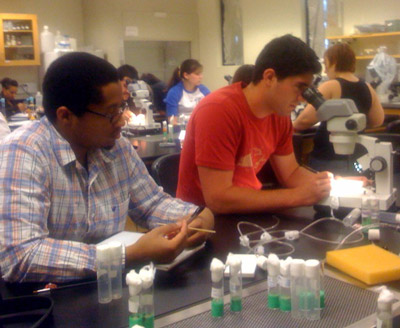
The California State University at San Bernardino is a regional comprehensive university in the Inland Empire region of California (Riverside and San Bernardino Counties). It is one of only two (the other being UC Riverside) public universities serving this region. As a master’s level school, we have a diverse student body from a lot of different educational and ethnic backgrounds. Designing courses for this group of students is a challenge! Fortunately, by the time they reach the upper division Biology courses, they have had a thorough grounding in biological sciences and chemistry. This makes my task in putting together this course easier. Many of the students see themselves following a health professions route in the future, including Medical, Dental, and Pharmacy school as well as some interested in Ph.D. studies. So there is a lot of demand for a course in Medical Microbiology, but I wanted to spice things up a bit! I decided that where I could do that was in the laboratory segment of the class, by including an enrichment and isolation experiment along with the traditional clinical microbiology diagnostic experiments.
I first need to explain where the idea for this course came from. For several years I have been taking students from my lab group to the International Conference on Microbial Genomics held at Lake Arrowhead, CA every other year. This is a fantastic meeting, organized by Jeffrey H. Miller (gotta be careful with those middle initials!) at UCLA. In a not terribly surprising coincidence, Jonathan Eisen (who got me interested in microBEnet) and Ashlee Earl (who I don’t think has a web site) (who will appear later in this story) are involved in organizing it this year. At this meeting I learned a great deal about genomics and metagenomics, and got interested in the idea of incorporating this type of work into the classroom based on the work Jeffrey Miller and Erin Sanders were doing with UCLA Microbiology undergraduates. One year they reported on their efforts to sequence and annotate the genome of a novel microorganism and another time Erin’s class put up posters describing the phage they identified, sequenced, and annotated. They wrote a textbook about this work, which goes to show they are dedicated to this idea! As we will see, I have not gotten nearly that far in my own efforts. Another source of inspiration for this work was the class that Jared Leadbetter taught at CalTech when I was working with him, on enrichment and isolation strategies from the environment (including the Built Environment, incidentally). The inventiveness of these students was remarkable, as was the frequency with which they were successful. Of course, he has forgotten more microbiology than I will ever know, which probably helps. After I started my own faculty journey, I drew on this inspiration as well as many conversations in various forms with Mark Martin (a true microbial supremacist) to develop an enrichment and isolation approach for my general Microbiology course. Mark and Jared (and others) have inspired me to think about culture techniques, and about the claim that much of the microbiome is “unculturable” (preposterous, IMHO).
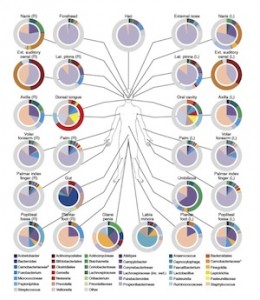
The final person who got me interested in this is the aforementioned Dr. Ashlee Earl, who presented some work on the Human Microbiome Project at the last ASM general meeting. On her poster, she described how the HMP had identified a group of 100 most wanted organisms – organisms that they wanted other labs and research groups to isolate so that a good set of reference genomes could be developed. This served as the jumping off point for my course design (if you can call it that).
Ok, the name dropping is out of the way (or the giving credit where credit is due, if you prefer), so on to the class itself. It is a class in Medical Microbiology, with the lecture based on Mims’ Medical Microbiology. The lab is based on enrichment and isolation techniques, bringing together classical clinical microbiology tests (metabolic testing, serotyping, and staining) with 16S rRNA sequence analysis for identification purposes. The idea here is to teach the students how to use these techniques for two major things a medical microbiologist might do – identify a known pathogen by rapid testing procedures, or identify and classify an unknown organism associated with a pathology.
The first half of the course (which we have just completed) involved identifying organisms from a mixed culture (given to the students by myself) based on traditional microbiological techniques. This identification was complemented with a 16s rRNA experiment, which also served as an introduction/refresher on basic molecular biology techniques (PCR, gel electrophoresis, DNA extraction). When the DNA sequences are returned to us from the sequencing facility, we will be analyzing them using the RDP database. This will also give us a chance to discuss error in sequencing and PCR, as well as the difference between identifying and classifying. Hopefully they get the same thing from the sequencing as they got from the culture tests!
We have spent a good deal of time discussing the idea of enrichment and isolation, and how this can be applied to the Human Microbiome. They have seen the immense diversity of the microbiome (cite) as well as the difference between what is there and what is published. To prepare them for the task, I used the HMP table that lists off the organisms identified from various body sites and categorizes them as “Most Wanted, Medium Priority, and Low Priority.” I just gave the students the “Most Wanted” organisms to work with, and to make things a little more comfortable for them I eliminated the stool sample organisms. I then proposed several options to them.
1) Everyone could agree on a single target to isolate, and we could design a number of different media to try to enrich for and isolate these bacteria.
2) Everyone could go their own way, picking individual organisms and designing experiments to enrich, isolate, and identify them.

In the end, several students chose to go their own way, while a number chose to focus on one group (the oral actinomycetes) and come up with multiple different approaches to isolate these bacteria. They all did background research on what is known about culturing these organisms from various sources, and we all agreed on using three of complementary strategies to enrich and isolate these bacteria. The first approach is the traditional enrichment, based on known characteristics of the species, design media that encourage actinomycetes (like potato agar) to grow. The second is to use the desiccation tolerance of the actinomycete spore as a strong selection against other vegetative cells (this is riskier, since there are endospore formers present as well, and we don’t know if the actinomycetes in the oral microbiota sporulate. The final approach is my personal favorite – the oligotrophy approach. First, put them on media with nothing in it (perhaps trace minerals). Let micro colonies form on that plate, then pick the microcolonies onto separate “nothing medium” and let them grow in isolation. Finally carefully pick them onto rich medium (or maybe just a bit richer medium, like 100 mg/L YE) to let them grow big enough to test. If they grow well on rich medium, we can do biochemical tests, or we can just go with the molecular identification. I can’t take credit for this idea (I first heard it from Jared), but I’ve used it a few times and I like it. It helps find bacteria that don’t grow very fast on rich media, or get outcompeted by the boring old familiars on typical clinical microbiology medium.
So that’s where we are right now, with IRB approval in hand, ready to embark on the adventure. I think it will work, and I’m sure that we will all learn something! Sadly I am not enough of a tech geek (yet!) to have the students blogging or tweeting the experience. Maybe next year…
Share this:

Draft of a Proposal for a UC #OpenAccess policy – comments wanted
Just got sent this email
Dear Colleagues,
On behalf of the Academic Senate Library Committee (ASLC), I am asking for your comments on the attached proposed Open Access Publishing Policy for the University of California.. All faculty, including Academic Federation members are invited to post their comments on the Academic Senate web-forum site at http://academicsenate.ucdavis.edu/Forums/index.cfm?Forum_ID=67. Please go to this site to submit your feedback.
Briefly, the issue is this: the faculty of the University of California, in conjunction with the University Committee on Libraries and Scholarly Communication (UCOLASC), is proposing a new OPEN ACCESS PUBLISHING POLICY that will apply to the dissemination of all scholarly work. UCOLASC is seeking feedback from all campuses on this issue in order to inform a final version of the policy which will be presented to the Universitywide Academic Senate sometime this calendar year.
The ASLC would appreciate your comments by Wednesday, May 9, 2012. Your ideas will then be shared with UCOLASC in time for its May 25th meeting. The web-forum will remain open substantially past May 9, and we will endeavor to include as many comments up to May 25 as possible.
Sincerely,
Brian H. Kolner
Academic Senate Library Committee
The relate to a draft of a proposal for a new Open Access Publishing Policy being circulated at the University of California. The draft of the proposal can be found here.
UC Davis (and I presume other UCs) are now soliciting comments on the proposal. I would love to here / read comments from anyone. Personally, I think the policy is way to weak as it allows exceptions to be granted …
Share this:
SEEDS: BioBlitz information #DavisCA #Nature #Biodiversity

DAVIS BioBlitz!
“In Honor of Mother Earth”
May 13, 2012
(Mother’s day)
Putah Creek Reserve
Discover the Many Plants and Animals in Putah Creek Reserve, and learn about ways to preserve and protect the earth!
Free Activities for All Ages!
Hosted by the UC Davis SEEDS Chapter,
a program of the Ecological Society of America
What is a BioBlitz?
A BioBlitz consists of activities to draw attention to the biodiversity of plants, and animals that live in Putah Creek Reserve. These activities include:
Species Counts:As a group we will count and document as many species as we can in Putah Creek: plants, birds, mammals, reptiles, amphibians, insects, and spiders.
Activities for the public: Kids and adults get to observe, explore, discover, touch, ask questions about, and enjoy the flora and fauna of Putah Creek Reserve.
Species found during the BioBlitz will be documented using iNaturalist and recorded in a National database. (For more information about iNaturalist visit iNaturalist.org).
**Volunteers needed for the day of the event?***
Are you an expert at identifying plant, fungi, or animal species?
Interested in gaining more experience with identification?
Just want to help out and learn something new about ecosystems near you?
Location: Putah Creek Reserve,
BioBlitz headquarters will be set up on Old Davis Road- Look for BioBlitz Signs!


Share this:

Social Networks and Scientists: Chronicle for Higher Education Article
Quick post here.
There is a new article in the Chronicle for Higher Education in which I am quoted: Social Networks for Academics Proliferate, Despite Some Scholars’ Doubts
The article discusses many connected topics relating to the use of social media by scientists – though it does not make clear how everything is connected perhaps. Anyway the author talked to me about Mendeley and various uses of Mendeley and I told her about an effort to create a Mendeley collection of my father’s papers. The article also discussed LinkedIn, Academia.Edu, Twitter and other social media systems.
Some quotes
Jonathan A. Eisen, a professor of medical microbiology and immunology at the University of California at Davis, used Mendeley to distribute the research papers that his father, Howard J. Eisen, a researcher at the National Institutes of Health, published before he died, in 1987. After struggling to free papers locked behind pay walls, Jonathan Eisen compiled the articles and posted nearly all of them on a Mendeley page he had created for his father.
Mr. Eisen, a self-described “obsessed open-access advocate,” described the impact in a blog post last year: “Thanks to the social features of Mendeley, more and more people will see and have access to those papers, thus ensuring that they do not wallow in never-never land but continue to have some potential impact on science and society.”
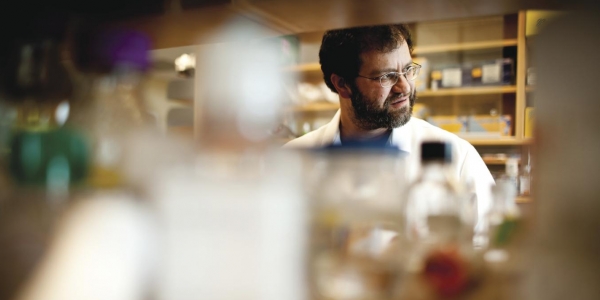
Perhaps most important from my point of view – I love the picture of me taken by Max Whittaker.
Share this:

Summary of responses to question about metrics for density in phylogenetic trees
I posted a question to Twitter and Facebook about metrics for assessing density in a phylogenetic tree. Here is a “Storification” of the responses. Thanks for the help all.
Any other suggestions welcome in comments … http://storify.com/phylogenomics/metrics-to-quantify-density-of-taxa-sampling-in-a.js?template=slideshow[View the story “Metrics to quantify density of taxa/sampling in a phylogenetic tree” on Storify]
 Jonathan Eisen's Lab