Eisen Lab Blog

Hungry researchers have hard time replicating “Subway” microbiome study

YORK, UNITED KINGDOM — After hearing about a new scientific study that found bubonic plague DNA in the subway microbiome, a group of intrigued researchers led by Dr. Patty Mayonnaise and Dr. Herbert Hoagie at the University of York rushed out to do a metagenomics study of their own.

Admittedly they had not read the methods of the paper in detail, but they figured that the Subway restaurant that just opened on Hamsandwichshire Road would be a good starting point. Thus began the “new York Subway” study.

In order to get help with sample collection, the study leads emailed an advertisement for free food to the graduate student listserv. This proved to be highly successful for recruiting volunteers and saved a lot of money on labor as graduate students seemed to be totally satisfied being paid in sandwiches.

Figure showing the diversity of subway samples tested


“I was aware that others had found bubonic plague, anthrax, and microscopic particles of pizza in connection to Subway,” one graduate student said, “but sometimes one must take risks in the name of scientific progress. Plus, I couldn’t say no to the sweet, sweaty smell of the Sweet Onion Chicken Teriyaki sandwich.”

Graduate student wearing proper PPE warily examines one of the Subway samples

Before devouring the samples, each student took a representative cross-section of each Subway and stuffed it into a tube to send off for DNA extraction and sequencing.

Sequencing results indicated that the food contained lots and lots of DNA. Most of the resulting sequences could be traced to the wheat genome, with others mapping to chicken, pig, cow,  lettuce, and tomato. “One of the biggest surprises for me personally,” said Dr. Hoagie, “was the presence of Arabidopsis DNA in my sandwich when I specifically asked for no mustard”.

Many bacterial sequences were also found in the Subways. Unfortunately none of them shared similarity to Yersinia pestis, the bacteria responsible for the bubonic plague. Scientists plan to repeat the study the next week around lunchtime to see if they can’t find something else historical or cool sounding for the media to pick up on when describing their study.

Critics worry that by following a DNA trail in their pursuit of the plague, York researchers may be headed down the wrong road to knowledge. Even if DNA that matched the plague was to be found in the new York Subway, it could come from a totally harmless related bacteria that we’ve never sequenced before. So rest assured that you can continue to eat sandwiches and ride the subway in peace without having to wear one of those freaky crow masks.


Two Eisen lab papers selected for the PeerJ 2015 Collection

Cool.  Two paper from my lab were selected as highlights of 2014 papers in the Peer J: PeerJ Collection: PeerJ Picks 2015 Collection

The papers were

The microbes we eat: abundance and taxonomy of microbes consumed in a day’s worth of meals for three diet types

Jenna M. Lang,  Jonathan A. Eisen,  Angela M. Zivkovic

and 

Aaron E. Darling,  Guillaume Jospin,  Eric Lowe,  Frederick A. Matsen,  Holly M. Bik,  Jonathan A. Eisen

Thanks PeerJ and all the co-authors for their great work.  I love open science and I particularly think we need continuing experiments on the best ways to do open science.  Thus I like the experiment that is PeerJ in regard to how to publish and how to pay for open access fees.

Full disclosure: I am an Academic Editor at PeerJ.


Winston Hide, is moving to Sheffield and is looking for a few good computational biologists …

Postdoctoral, Programming and Graduate Student opportunities in Computational Biology@Sheffield

The Hide Lab https://hidelab.wordpress.com is recruiting programmers, postdoctoral fellows and graduate students to a set of new and ongoing projects that are part of our new Centre for Genome Translation. Please go the positions available at the website to learn more.
The lab has relocated from Harvard School of Public Health to the Centre for Genome Translation at the Sheffield Institute for Translational Neuroscience (SITraN); a purpose built research facility which was opened in November 2010 by Her Majesty the Queen. The Institute houses computational, clinical and basic scientists with a focus on neurodegenerative disorders such as Motor Neurone Disease (MND) and Parkinson’s disease.

Successful candidates will be joining a global team working on best practice computational approaches and discovery in genome translation – literally working with the best clinicians, machine learning experts, wet lab scientists and a global bioinformatics team to deliver new interventions against lethal neurodegenerative diseases.

Requirements for postdocs: A PhD in an appropriate field. A strong publication record in peer-reviewed journals. Strong programming skills; strong oral and written communication skills in English; Strong knowledge of biology. Track record of excellence in publications.

Graduate students: You have a high calibre Masters degree (or equivalent qualification) in computational biology, biomedical research, genomics, computer science, mathematics, biostatistics, systems biology or combination of these. You have a strong biological background, and are skilled in scripting with demonstrated understanding of working together with biomedical researchers and quantitative biologists. You are confident in aspects of data integration and are enthusiastic about construction and analysis of biological networks and/or data integration. Highly motivated, you wish to work in a stimulating, international, scientific environment. You have excellent interpersonal, written and oral communication skills and seek exposure to a diversity of scientific projects.

Programmers: You have a combination of skills, with a strong emphasis upon programming, but with an understanding of biology, some statistics, and potentially machine learning. We welcome candidates with a desire and demonstrated ability to learn new areas and a desire to develop code in a global environment. Please include links to some of your previous code in GitHub or another repository hosting service, as well as a cover letter describing why this position interests you and how it fits your experience and interests.

Sheffield is an awesome place to live – the people are kind, professional and team oriented. The Peak district is within ten minutes and is a wonderful place to relax.

Programming applicants and Post doctoral candidates should send a C.V. and statement of interest as one PDF document to winhide [at] sheffield.ac.uk. Screening of applications begins immediately and will continue until the positions are filled. The positions are expected to start on or after April 2015.
Enquiries:
Interested candidates should in the first instance contact Prof. Winston Hide on +44 114 222 22233 or by email winhide – at – sheffield.ac.uk
Graduate student applicants:
Please complete a University Postgraduate Research Application form available from www.shef.ac.uk/postgraduate/research/apply
Please clearly state the prospective main supervisor in the respective box and select (neuroscience) as the department.

Overselling the microbiome award: CBC Fresh Air & JA Tetro on kissing microbiomes

Well, so there I was, enjoying a relatively peaceful and quiet Valnetine’s day.  When I noticed a Tweet directed to me from one of my favorite scientist’s out there

So I decided to check it out.  I clicked on the link and got to a CBC Fresh Air news story on Soundcloud:

▶ Kissing and romance and bacteria with Jason Tetro Feb 14/15 by CBC Fresh Air

I plugged in my headphones (was not sure if my kids should hear it) and listened away.  And what I heard was excrutiatingly painful.  The CBC Fresh Air reporter was discussing kissing and the microbiome with JA Tetro.  And Tetro made some of the most misleading, ridiculous overstatements about the microbiome I have heard in many years:

  • He basically implied or specifically said that, in humans, attraction to partners and relationship success was determined by finding a partner with similar microbiomes to oneself.  
  • Furthermore he discussed how maintaining similar microbiomes (e.g., via consuming the same probiotics or fermented foods) would help maintain attraction and how things like travel away from a partner might lead to repulsion.  
  • He said things like tha our immune systems determine if a partner is right for you from kiss-based comparison of a partner’s microbiome to one’s own.  
  • And that if the microbiome in a kissing partner is a match this leads to bliss and addiction and that salive is the first line of defense when it comes to relationships.  
  • He even went so far as to say that this is all about “trying to find your mother because our microbiomes come from our mother.”  

I could do on and on.  It was the worst, most misleading, innacurate material I have probably ever heard about microbiomes.  Tetro and CBC Fresh Air should be ashamed.

Sadly, I found some other misleading, inaccurate material from Tetro about the same topic in an article about kissing microbiomes from a few months ago: Swapping spit and testing chemistry: How kissing, germs help you pick your partner where Tetro is quoted

Tetro says that when you kiss your date, his or her germs make their way into your mouth’s ecosystem. And if it’s a match, you’ll want to keep smooching. 

“This study does one amazing thing, it shows you that kissing is the best way to find a mate for the long term. It might sound really gross but if the bacteria from the other person harmonizes with your bacteria, your immune system is all good. You feel a sense of calm and happiness, maybe even addiction,” he explained. 

“But if the bacteria don’t align with your microbes, you actually feel disgust and revolt. Your immune system is rejecting that person as a possible mate.”

and

“This study proves that when it comes to finding the right mate, the old game of spin the bottle actually has a base in science,” he said. 

More completely inaccurate, made up material with no basis in science.  As far as I can tell, this is basically made up.  Sure there may be a theory behind this.  But to present it as established facts about the microbiome is ridiculous.

This is all a shame really since the paper which the CBC Fresh Air story is referring to is actually a perfectly fine paper and the authors of the paper do not seem to be pushing these over the top ridiculous ideas.  And for this terrible story I am giving CBC Fresh Air and JA Tetro an “Overselling the microbiome award“.

I note before I finished writing this up I looked around and the discussion on Twitter about the article and saw that Bik and others had tried to get Tetro to tone down his claims but he refused. See for example Tweets below:

//platform.twitter.com/widgets.js

//platform.twitter.com/widgets.js

//platform.twitter.com/widgets.js

//platform.twitter.com/widgets.js

//platform.twitter.com/widgets.js

//platform.twitter.com/widgets.js

//platform.twitter.com/widgets.js

//platform.twitter.com/widgets.js

//platform.twitter.com/widgets.js

//platform.twitter.com/widgets.js and many more — but the gist was — Tetro presented not a single reference to back up his claims and did not seem to understand that what he did was misleading – to present personal ideas as though they were supported by research. So I felt the need to write a post providing some counter to his claims.

As an aside, the ridiculousness about kissing and microbomes did spawn one good thing: someone sent me this satire post amid the Twitter discussion: Love Transplants

BREAKING NEWS: Global chocolate distributor, Venus Inc., released a statement earlier today detailing their newest product line focused on manipulating the natural human microbiome to increase and sustain romantic relationships.


UPDATE 1: More from Tetro on kissing and the microbiome

Uggh. Was pointed to some more bad material from Tetro on kissing and the microbiome.  This time in Shape Magazine.

Question from Shape: 

Is it true that if the microbes aren’t in sync, kissing can make someone feel ill? Why is this? 

Answer from Tetro:

It’s due to the immune response, which is involved in everything from prevention of infection to allergies. For example, studies have shown a kiss from someone who has recently eaten peanuts can induce an allergic reaction for peanut allergy sufferers. This is due to the rapid nature of the immune system. When we kiss deeply, some 80 million bacteria are transferred. With that much, the immune system will react. If the bacteria are recognized and liked, then the response is one of happiness, joy and even addiction. But if they are not aligned, then like an allergic response, the person will feel uneasy and even defensive. When that happens, it’s best to move on.

Again.  This stuff about if the bacteria are recognized then the response is one of joy, happiness and addiction appears to be completely made up.

Another question from Shape:

Can people be a match, but over time fall out of interest with each other because microbes change?

Answer from Tetro:

Absolutely. Depending on the way people live, eat, exercise and perform hygiene, the microbiota can change over time. If this happens in one and not another, this could lead to a problem and possibly an eventual demise. To prevent this, the best way to help is to keep the microbiomes aligned using bacteria common to both. The best way to do this is though the use of probiotics.

So – is Tetro trying to sell probiotics?  WTF?  This also appears to be completely made up.


UPDATE 2: Oh wait, more awful material from Tetro – this time in Glamour.

We’ve found that microbes actually drive the majority of our how our bodies work, from general health to mental health to romantic health,” says Jason Tetro, microbiologist, probiotic company Bio-K+ advisory board member, and author of The Germ Code.

Microbes “drive the majority of how our bodies work”.  Really?  So our genes don’t matter?  Or our history?  Oh FFS.  This is just more off the deep end. And some other doozies like

“If you like the bacteria on someone’s body, you’ll like how he smells. If you experience that quasi-allergic reaction to his scent, it’s a sign your bacteria aren’t harmonizing,” says Tetro. Barely any of it has to do with how his actual body smells; it’s mostly chalked up to the scent his bacteria is giving off.

And much of the rest of the article is not quoting Tetro but the ideas clearly come from him.  I am intrigued about the part at the beginning saying he is on the Bio-K+ advisory board.  This appears to be the Bio-K+ probiotics company.  I wonder if this has anything to do with Tetro saying things like this, about probiotics:

And if you make it past a kinda queasy kiss and end up having sex with the guy, you can expect more of the same physical reaction (perhaps unless he’s been taking probiotics in between when you first kissed and had sex. Science suggests they can potentially change someone’s microbes to match yours, says Tetro). 

Perhaps all this ridiculousness is just marketing for Bio-K+?  I wonder if they provide relationship probiotics?  Uggh.  This just gets worse and worse the more I dig.


UPDATE 3: Even more from Tetro this time from the Globa and Mail: Why women’s germs are important to the health and happiness of us all

While ancient cultures never used kissing as a means to find a mate – it was simply an act of food sharing – modern society views this touching of lips and sharing of saliva as a part of the ritual of selecting a spouse. When the microbes of the mouth meet the immune system of a potential partner, a reaction happens. If the microbes are seen as friendly – similar to the rearing women – then there will be a sense of harmony and happiness

If, however, the germs are foreign to the system, inflammation will incur as well a sense of unease, ruining any chance for a long-term relationship. As a result, those with the most closely resembled microbiomes will find themselves making the best mates.

And then

Further research into the links between the female microbiome and society will no doubt unveil even more fruitful facts. For now, as we prepare to honour women the world over on March 8, we can all take a moment to be thankful for women for their beneficial microbes, for making the human species happy and healthy.

Again, there is no scientific basis for these claims.  There is no literature out there showing microbes exchanged via kissing lead to any of these responses.  There certainly is no literature showing that somehow the immune system examines the microbes and if there is a match (to one’s mother) then this leads to harmony and happiness.  And there is no literature on the opposite occurring when there is not a match.  This is just completely made up.  Presented as though it is established in the scientific literature.


UPDATE 4: Some papers on kissing and microbiomes and related topics

Just thought I would add some links to papers on kissing and microbiota and related topics.  I have scoured the literature on this in the past and again now and find nothing – absolutely nothing – that supports the outlandish claims of Tetro.

Key paper: Shaping the oral microbiota through intimate kissing.  The most recent and most detailed paper on the topic.  Open access from the journal Microbiome.  This is a pretty good paper by Kort et al.  It has some background references worth looking at too. Here are their conclusions:

This study indicates that a shared salivary microbiota requires a frequent and recent bacterial exchange and is most pronounced in couples with relatively high intimate kiss frequencies of at least nine intimate kisses per day or in couples sampled no longer than 1.5 h after the latest kiss. The microbiota on the dorsal surface of the tongue is more similar among partners than unrelated individuals, but its similarity does not clearly correlate to kissing behavior. Our findings suggest that the shared microbiota among partners is able to proliferate in the oral cavity, but the collective bacteria in the saliva are only transiently present and eventually washed out, while those on the tongue’s surface found a true niche, allowing long-term colonization.

Other papers of possible interest – and there are pretty few – most of which are on kissing and pathogens


UPDATE 5: Some reasonable stories about the kissing / oral microbiota paper:


UPDATE 6: Some other ridiculous stories about kissing and microbiomes – with completely different – but equally bogus claims – compared to the ones described above. For example, some discuss the idea that a match for oral microbiomes would be ones that are most different from one’s own – the exact opposite of Tetro’s claims.  Though this at least has some logical basis, there is no evidence for it.  None.


UPDTAE 7: Sadly the ridiculous ideas from Tetro spread to other places

How Bacteria Affects Your Love Life – iflmedicine.com

UPDATE 8: April 29 2015. More ridiculous microbe claims from Tetro

Here is a painful quote from a new article by Tetro: “Almost all bacteria love milk and use the various components for nutrition and growth”.  Where does this come from?  So – anaerobic thermophiles from Yellowstone love milk?  Intracellular symbionts of aphids love milk? Photoautotrophs love milk? WTF.


Love Transplants

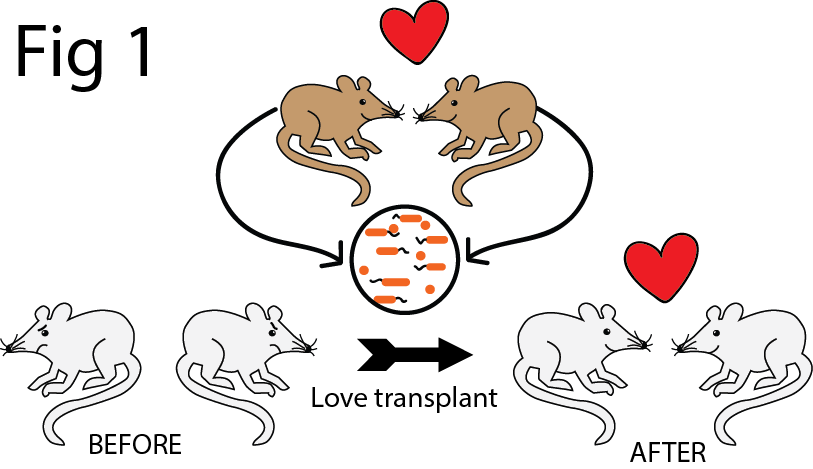
BREAKING NEWS: Global chocolate distributor, Venus Inc., released a statement earlier today detailing their newest product line focused on manipulating the natural human microbiome to increase and sustain romantic relationships. This comes shortly after an influential study on the mouth microbiome revealed key insights into how lovers exchange trillions of bacteria in seconds via french kissing.

Venus Inc. researchers wondered if microbes potentially played a role in the happiness of couples. They performed a series of studies where they took microbes from happy mice couples and transplanted them onto mice in rocky relationships.

lovetransplant-transparent
This is a graphical depiction of the “love transplant” study by Venus Inc. and was provided to us by the company for use in this article

Amazingly they saw that the mice in the rocky relationships seemed to rekindle their romantic feelings after receiving their “love” transplant. The researchers also did the reverse experiment, transplanting microbes from mice in rocky relationship onto mice in happy relationships and not surprisingly, they saw these mice begin to argue constantly. Venus Inc. researchers concluded that microbes associated with healthy loving relationships release wonderful chemicals that cause a state of bliss in the mice; they are currently working on follow-up studies investigating what role the immune system might play in attraction. Their research will be published later this year in the prestigious closed access journal, Nurture.

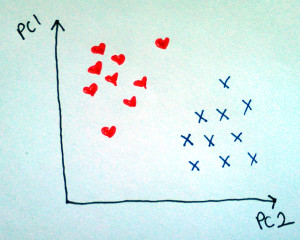
img_20150214_144620-300x240
Due to the closed access nature of Nurture, we had to reconstruct the plots depicted in the paper by hand. The gist is that the microbial communities of mice in love differs significantly from that of the microbial communities of mice in hate

Coincidentally the Venus Inc. research seems to be corroborated by very reliable evidence based on speculation and opinion given in this radio segment today by Jason Tetro, self-proclaimed Author, Researcher, Germevangelist and Germs Relationship Therapist.

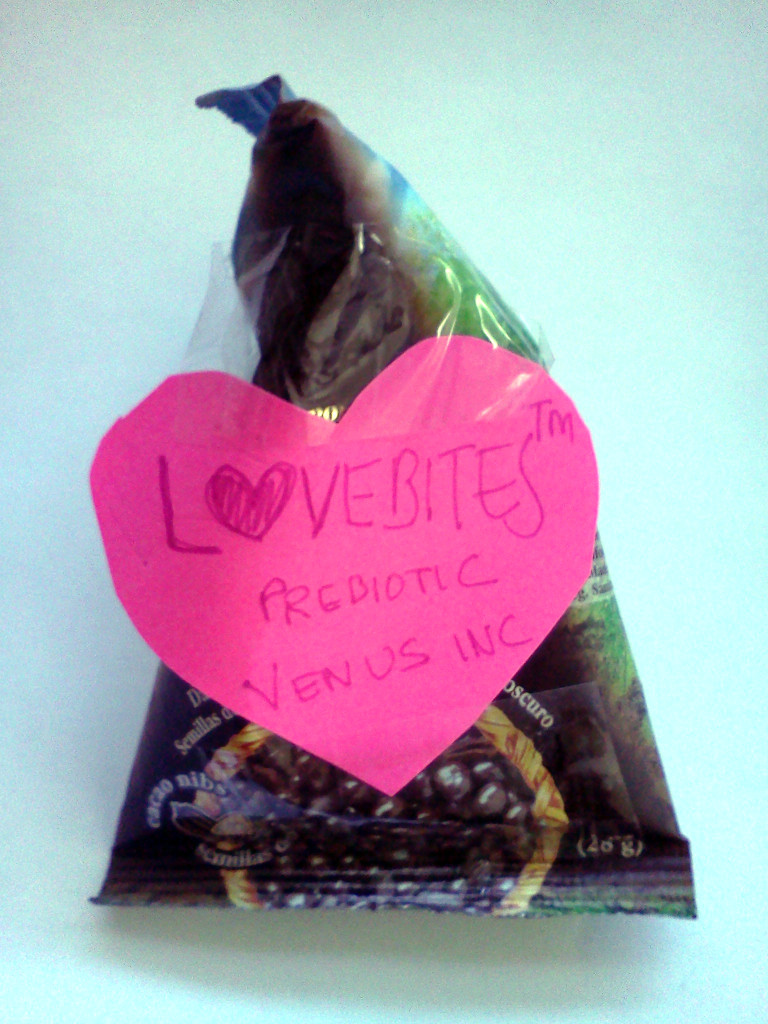
Using love-associated microbes identified in the aforementioned study, Venus Inc. is releasing two new chocolate products, LoveBites and Love Potion #9. LoveBites are bite sized chocolate pieces which double as a prebiotic and contain several proprietary compounds identified to enrich for the love-associated microbes identified in the upcoming Nurture paper. Love Potion #9 is a chocolate shake and a probiotic, containing 9 trillion different love-associated microbes to serve as your very own “love” transplant.

img_20150214_150720-768x1024
I was lucky enough to receive a sample of LoveBites and can attest to the fact that it really is love at first bite. I can only hope that the packaging  is not the final design

To complement their chocolate line, Venus Inc. is also launching an online dating website, OKmicrobe, where the oral and fecal microbiomes are used to assess dater similarity and relationship potential. As we learn more and more about the the human microbiome, it becomes clear that human behavior is really 10% human  and 90% microbe.

Bioinformatics Tenure-track position at Howard University

Dear Colleagues,

I wanted to alert you that the Biology Department at Howard University currently has a search on for 3 tenure-track faculty, including one in Bioinformatics, that will close on Feb. 17th. Our Department has added several new faculty recently that have phylogenetics-focused research programs, so I wanted to make sure any potential candidates in your labs were aware of the position. Don’t hesitate to contact me, or search chair Dr. Fatimah Jackson (fatimah.jackson@howard.edu) if you have any questions. Thank you for your time, and all the best,
Three Tenure Track Biology Positions – HigherEdJobs.pdf

Twisted tree of life award: throwback PR from an ingrained Oregon State

Just got pointed to this PR:  Unwanted impact of antibiotics broader, more complex than previously known — ScienceDaily

It has one of the worst microbe-evolution sections of text I have seen in a long long time:

Mitochondria plays a major role in cell signaling, growth and energy production, and for good health they need to function properly. 

But the relationship of antibiotics to mitochondria may go back a long way. In evolution, mitochondria descended from bacteria, which were some of the earliest life forms, and different bacteria competed with each other for survival. That an antibiotic would still selectively attack the portion of a cell that most closely resembles bacteria may be a throwback to that ingrained sense of competition and the very evolution of life.

Yup.  That antibiotics that target bacteria also affect mitochondria is a throwback to that ingrained sense of competition and the very evolution of life. 

Can anyone – anyone – please – please – tell me what that means?

For this, I am giving the folks from Oregon State a coveted Twisted Tree of Life Award.

At #UCDavis today: Jorge Rodrigues talk on “Disrupting the spatial structure of microbial communities in the largest tropical forest in the world”

MIC 291: Selected Topics in Microbiology

Work-in-Progress Seminars

Dr. Jorge Rodrigues

(Dept. of Land, Air and Water Resources)

"Disrupting the spatial structure of microbial communities in the largest tropical forest in the world"

Wednesday, February 11, 2015

4:10 pm

1022 Life Sciences

Rodrigues 2-11-15.doc

FITBIOTICS

Untitled2-300x300.png

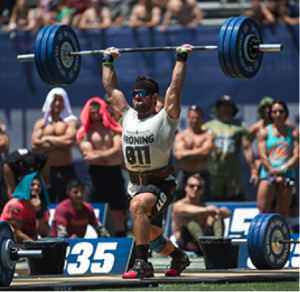
As the World has successfully found the Fittest Man and Woman on Earth for many consecutive years through the notorious CrossFit Games, a secret fit-weapon has been revealed. Supplements companies have collected the fittest microbes on Earth to help the athletes through their journey of fitness. A secret supplements company, until now known only by high levels athletes, sells the fittest microbiome on Earth: FITBIOTICS Inc.

Untitled-300x292.png

After years of work and countless microbial sampling, the company has finally achieve to gather ALL microbes from ALL the fittest athletes in ALL domains aiming to transfer the “Crème de la crème” of ALL microbiomes from these super athletes to anyone. Forget the barbells, kettle bells, dumbbells and all other training gear. The hours of endless running, burpees, air squats, pull-ups, and jump rope have ended. To achieve the level of fitness reached by the reigning Champs, you only need to include the α-FITBIOME in your daily shake and you will have the FITTEST MICROBIOME ON EARTH! To achieve maximal results, FITBIOTICS Inc. recommends that you also take a one-hour daily bath with one scoop of their α-FITBIOME. When tested on completely inactive people with poor eating habits, this treatment has been shown to help improve strength and endurance by 300%*. And to all readers greatly informed about the risks of DNA in food, don’t worry; this product definitively contains no DNA (http://www.washingtonpost.com/news/volokh-conspiracy/wp/2015/01/17/over-80-percent-of-americans-support-mandatory-labels-on-foods-containing-dna/).

Untitled3-235x300.png

You are dreaming of lifting 200 pounds, running a marathon, completing an ironman or deadlifting 2.5 times your bodyweight? Don’t wait any longer and run to your closest store to get your

α-FITBIOME from FITBIOTICS Inc.

 *Only when combined with a radical change in nutrition and daily physical conditioning activities.

Postdoc jobs in microbial bioinformatics in Iddo Friedberg’s lab at Iowa State

The Friedberg Lab is recruiting postdoctoral fellows to several newly funded projects. The lab is relocating to Iowa State University in Ames, Iowa as part of a university-wide Big Data initiative. Iowa State is a large research university with world-leading computational resources, and a strong highly collaborative community of bioengineering, bioinformaticians and life science researchers.

The successful candidates will be joining the lab at the College of Veterinary Medicine, Department of Veterinary Microbiology. Areas of interest include: bacterial genome evolution, gene and protein function prediction, microbial genome mining, animal and human microbiome, and biological database analysis.

These are bioinformatics postdoc positions, and the successful applicants would be required to perform research employing computational biology skills.

Requirements: A PhD in microbiology, bioinformatics, or a related field. A strong publication record in peer-reviewed journals. Strong programming skills; strong oral and written communication skills in English; Strong domain knowledge of molecular biology. Salary is competitive and commensurate with experience. The Friedberg lab is a computational biology lab equipped with high-end cluster computers and bioinformatics support.

Ames, Iowa is constantly ranked as one of the best places to live in the US, and has received numerous awards for being a progressive, innovative and exciting community with high affordability and high quality of life.

Candidates should send a C.V. and statement of interest as one PDF document, and have three letters of reference sent independently by their authors to Dr. Iddo Friedberg at Friedberg.Lab.Jobs. Screening of applications begins immediately and will continue until the positions are filled. The positions are expected to start on or after June 2015.

All offers of employment, oral and written, are contingent upon the university’s verification of credentials and other information required by federal and state law, ISU policies/procedures, and may include the completion of a background check. Iowa State University is an Equal Opportunity/Affirmative Action employer. All qualified applicants will receive consideration for employment without regard to race, color, age, religion, sex, sexual orientation, gender identity, genetic information, national origin, marital status, disability, or protected veteran status, and will not be discriminated against. Inquiries can be directed to the Director of Equal Opportunity, 3350 Beardshear Hall, (515) 294-7612