Today’s YAMMM (Yet Another Mostly Male Meeting) Brought to You by CIFAR & NAS

Well, just got an invite to this meeting: Symbioses becoming permanent: The origins and evolutionary trajectories of organelles.  The topic seems of direct interest to what I work on.  And, it is relatively close (Irvine is a short hop away).  So this could be a way to go to a meeting without having to travel too far.  And maybe I could see my younger brother Matt who lives in LA and just graduated from UC Irvine’s Masters program in Sound Engineering. Then I looked at the schedule of speakers and organizers.  Many are friends.  Many others are colleagues.  Could be fun to see some people I have not seen in a while.  And then I realized, most – no nearly all of them – are men.  Below I list the people involved in the meeting, highlighting men in yellow and women in blue.

Organizers: W. Ford Doolittle, Patrick Keeling, and John McCutcheon

Distinctive Voices Public Lecture presented by Michael Gray, CIFAR Advisor, Dalhousie University

Session 1: Genomes (evolutionary rates, oddities, and reduction)

  • Introduction and welcome remarks – W. Ford Doolittle, CIFAR Advisor & Patrick Keeling, CIFAR Program Director and Senior Fellow
  • John McCutcheon, CIFAR Associate Fellow, University of Montana
  • John Archibald, CIFAR Senior Fellow, Dalhousie University, Nuclear organelles 
  • Andrew Roger, CIFAR Senior Fellow, Dalhousie University, Organelle reduction 
  • Siv Andersson, Uppsala University, Alphaproteobacterial genome evolution 
  • David Smith, University of Western Ontario, Roots of genomic architecture variation 
  • Daniel Sloan, Colorado State University, Cytonuclear co-evolution under extreme mitochondrial mutation rates
  • John Allen, University College London, Why keep genomes?

Session 2: Integration/Control (trafficking, signaling, transporters)

  • Debash Bhattacharya, Rutgers University, Transporters in organellogenesis 
  • Nancy Moran, University of Texas, Austin, Insect endosymbionts 
  • Geoff McFadden, University of Melbourne, Diversity of protein trafficking
  • Chris Howe, Cambridge University, Why integrate?
  • Steve Perlman, CIFAR Fellow, University of Victoria, Maternal transmission, sex ratio distortion, and mitochondria 
  • William Martin, Düsseldorf University, Endosymbiont and organelle, what’s the difference? 
  • Moriya Okhuma, Riken University, Metabolic integration across endosymbiotic communities

Session 3: Theories and Models

  • Eors Szathmary, Loránd University, A fresh look at cooperation in some major transitions, especially the origin of eukaryotes
  • Marc Ereshefsky, University of Calgary, Evolutionary individuality
  • Peter Godfrey-Smith, City University of New York, Individuality and the egalitarian transitions 
  • Maureen O’Malley, University of Sydney, Philosophical Reflections on Endosymbiosis: Implications for Evolutionary Theory
  • Toby Kiers, University Amsterdam, Bacterial cooperativity

Closing remarks J. McCutcheon


So – that appears to be a ratio of 18 male speakers and 4 female speakers for a whopping 18% female speakers.  No thanks CIFAR and NAS.  I will sign up for a different meeting.  And by the way – WTF?  There are so so many qualified women working on these topics – what let to this 18:4 ratio?  The organizers should really rethink their processes and the sponsors should pull funding from meetings like this.  It is the only way some people will pay attention to diversity.


UPDATE: 8/20

Wrote to the NAS via their Website

To whom it may concern:

I am writing to express my disappointment in the gender ratio of speakers at this meeting (18 males, 4 females).  Due to the skew I am unwilling to participate.  See http://phylogenomics.blogspot.com/2014/08/todays-yammm-yet-another-mostly-male.html for details.

Sincerely,

Jonathan Eisen

Got this response

Dear Dr. Eisen,

The NAS Committee on Scientific Programs, which oversees the Sackler Colloquia most definitely considers gender diversity when approving these programs.  When organizers propose the programs they achieve a good balance on paper. Regrettably, in many fields, women scientists are at a premium and are sometimes overwhelmed with invitations and demands for their participation on programs and committees.  For a variety of reasons, including availability of speakers, the final program is not always as optimally balanced as originally intended.

I have conveyed your message to NAS Vice President and Chair of the Committee on Scientific Programs and will also share your concerns with the colloquium organizers and co-sponsor.

Best regards,

Susan Marty
Program Director
National Academy of Sciences
Sackler Colloquia
http://www.nasonline.org/programs/sackler-colloquia/

So I wrote back

Susan 

Thank you very much for the response.  It is good to hear there is some emphasis on gender diversity when programs and developed.  However, in my experience and based on my readings of the literature on this topic, this is not usually sufficient to produce diverse conferences.  Do you know if the NAS has any additional policies relating to diversity at conferences.  For example, if someone does not accept an invitation, is the organizer of the meeting then free to select whomever they like or are there protocols to help guarantee that the selection of replacements is also diverse?  Also do you know if there are any policies relating to the meetings themselves such as child care that have been shown to impact the attendance of women more than men?   

Any additional information you have would be appreciated.  I think that NAS could and should do more than just review the proposed list of invitees. 

Sincerely
Jonathan Eisen 

Why I don’t like to pre-submit slides for talks – lessons from #AAASMoBE meeting

So – I gave a talk at a meeting on Thursday.  The meeting was called “Microbiomes of the Built Environment” and it was sponsored by the Alfred P. Sloan Foundation and run by AAAS.

The meeting organizers, as is often the case, wanted me to submit my slides a few days in advance, in theory to make sure they were loaded into their system and that all worked OK.  Well, as usual, I did not do this.  I like to make my talks fresh – just before the meeting so that I can incorporate new ideas into them and so that they do not have that canned feeling that a lot of talks do.

My talk was to be 15 minutes long and was to focus on my Sloan Foundation funded project “microBEnet: the microbiology of the built environment network” (see http://microbe.net for information about the project). I figured, I would work on the talk on the plane – five plus hours to edit a talk I had given relatively recently on the topic of this project.  And all would be good.  Plus, United had told me there would be WiFi on the plane so if I needed any new material I should be able to get it from the web right?  Well, the flight took off on time – 8 AM on Wednesday morning.  And I opened my laptop once allowed and paid the $15+ dollars for the WiFi and got to work.  Then, about 10 minutes later, the WiFi died and despite heroic efforts by the flight attendants, it never came back. And I plugged away at my slides doing some edits of the following presentation.

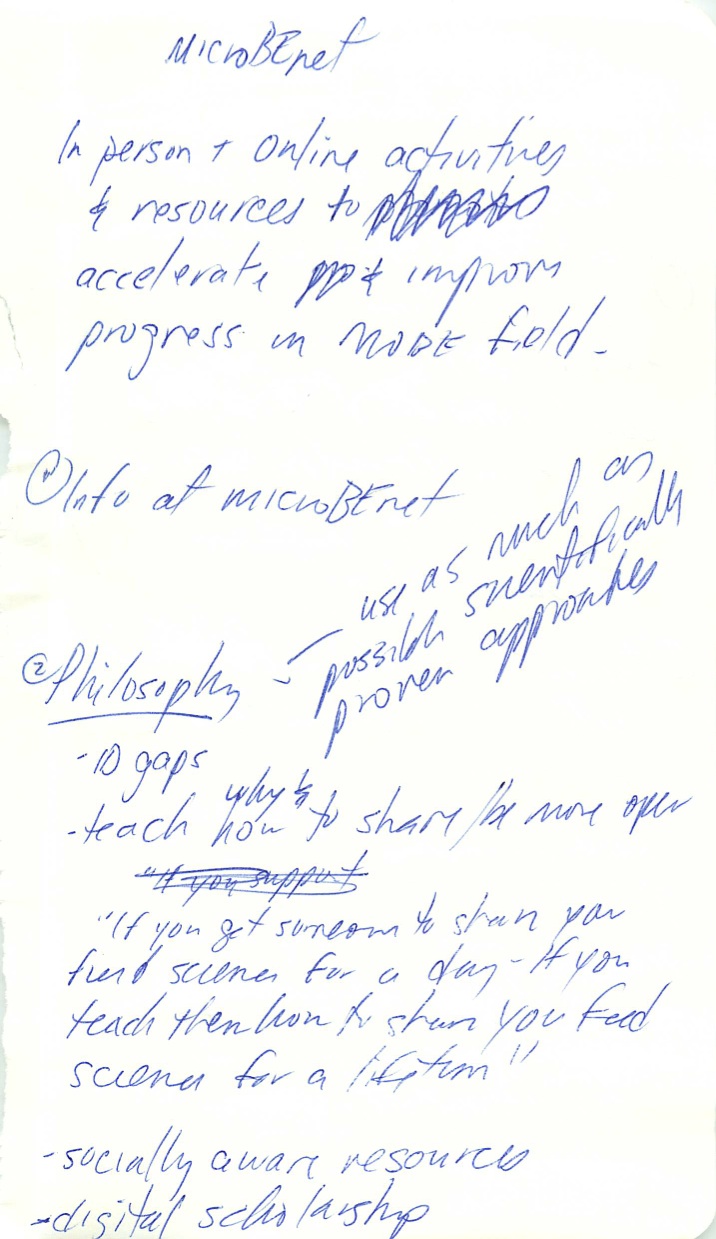
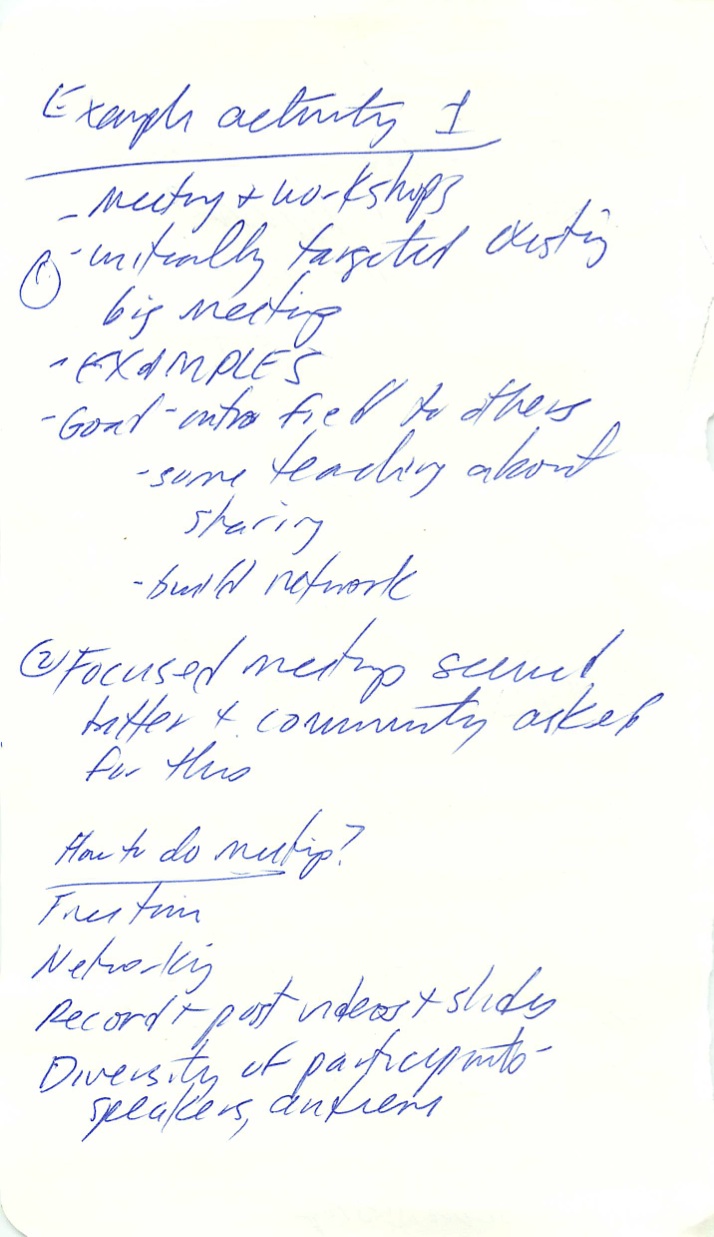
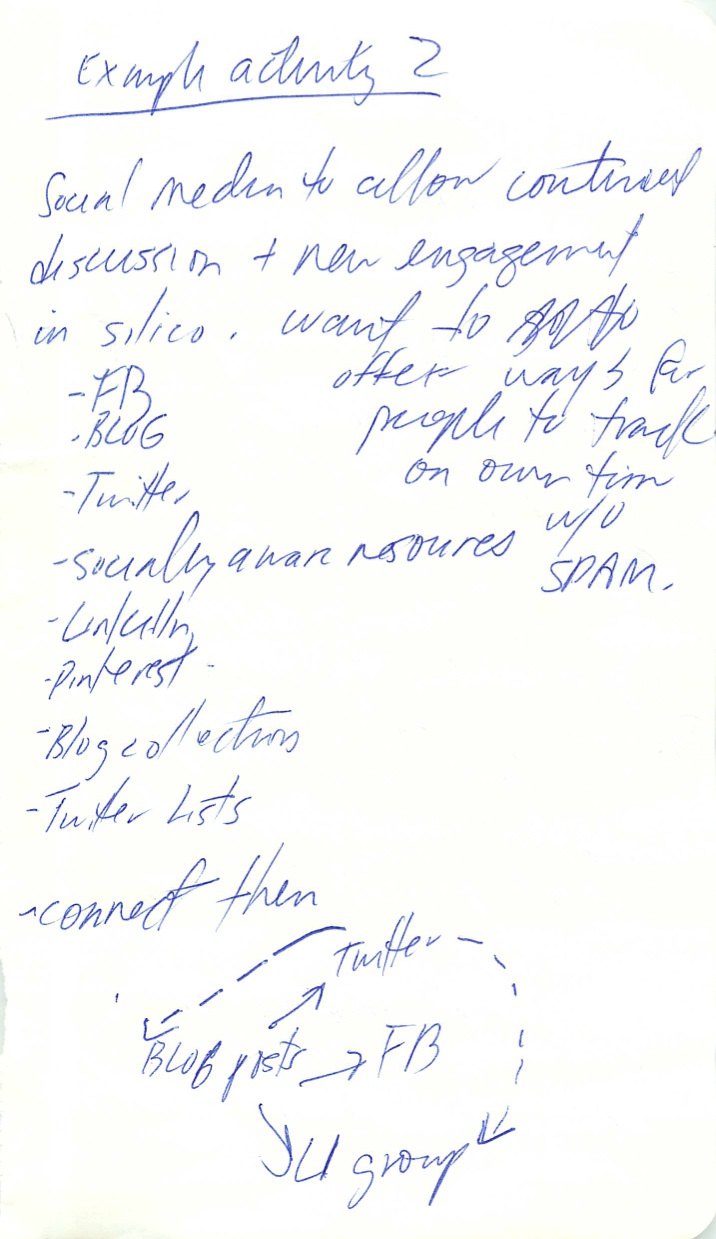
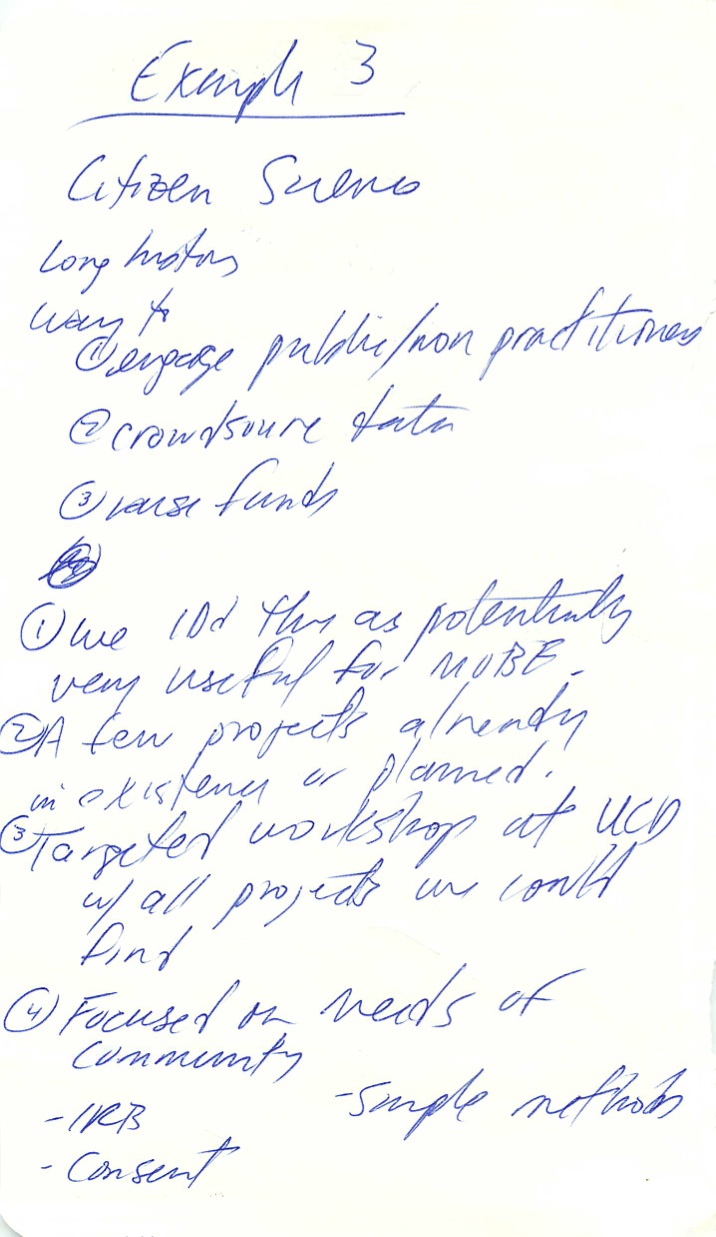
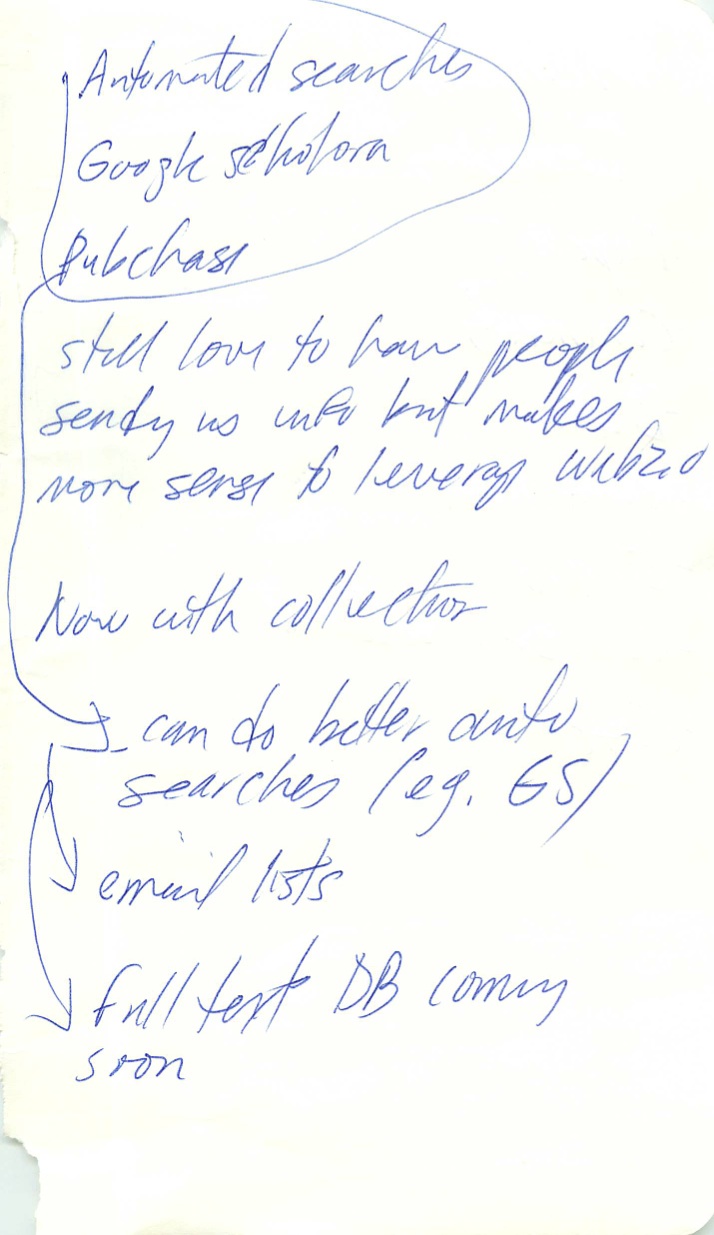
I had given this talk for the Annual Sloan Foundation meeting in May of 2013. I had other talks about microBE.net but they were focused on specific aspects and this was my most recent talk on the whole project. And, well, I started doing some minor edits on it, but, well, the slides felt too filled with boring text. And it did not seem to me to capture what I wanted to talk about. So I did the one thing that always helps me in such cases. I shut my computer and got our a notebook and started writing out and drawing out what I really wanted to talk about. And I finally started to have something I liked.

I liked this because what we are trying to do with microBEnet is to create an actual network and this was a visual way of representing our network. So then I got a bit more detailed

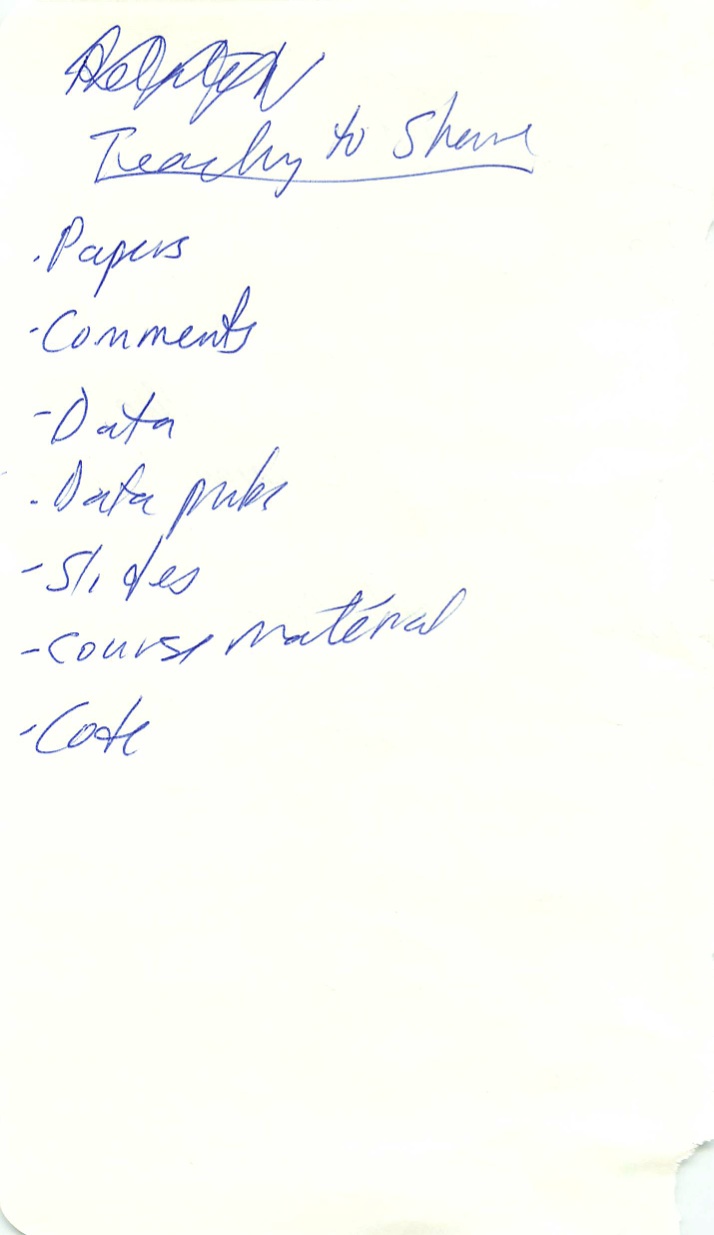
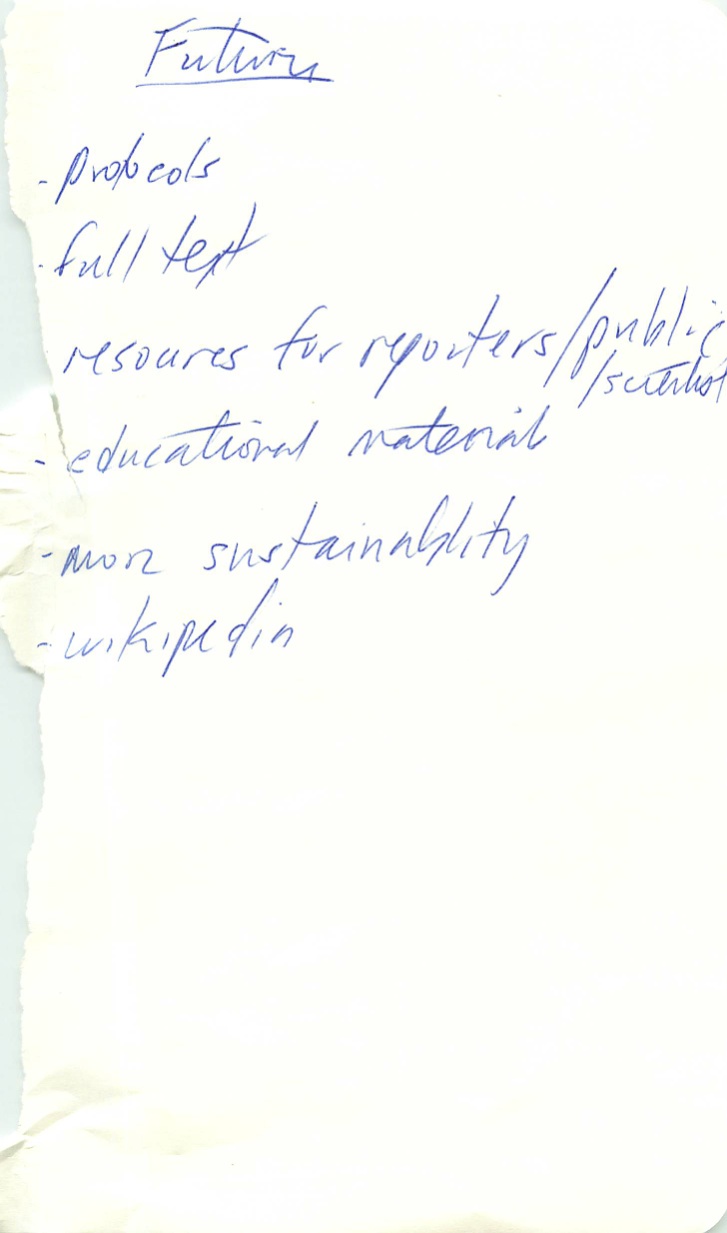
This was better. We were trying to help people in the field and help others who might be interested get connected, stay connected, and get rapid, easy access to information and tools. For example, we have been curating a reference collection for the field. And this reference collection has a lot of inputs and a lot of potential uses. In my previous talk I just listed some of this and had a screenshot of the web site. But it would be better to show this no?

Now this was feeling even better. I had a visual framework for the talk. Now I could fill in the details of what I wanted to cover in each of the parts of the network diagram.

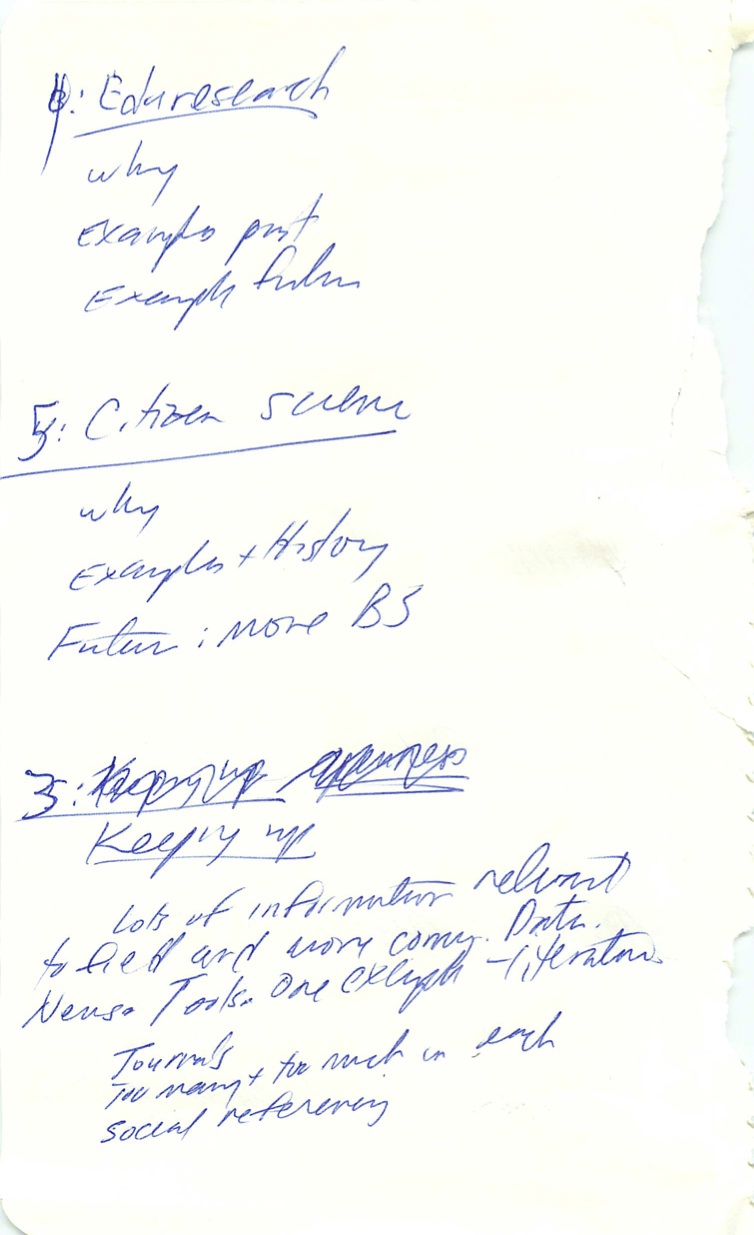
So now I had some idea as to what I might want to say on these topics. No slides yet, but some idea as to what I might want to cover. And then, still not back on the computer I thought it would be good to write out an outline / the flow of the talk again. So I did.

Still felt good.

Now all I needed was a title ..

And then finally I felt I could go back to the computer. And so I started working on converting this all into slides.

For the remaining 2 hours of the flight I tried but it was slow going. I wanted to make as much as possible be visual and I needed all sorts of new slides and material from the web (no web connection still) and more. We landed. I took a Taxi to the hotel. I worked on my talk a bit from my room. I emailed various people asking for certain images and slides. And then I had to go to the speaker’s dinner. And I got back to my room at about 9:30. And then I worked on my talk until about 3. And finally I was close to being done. Got a very brief few hours of sleep. Got up. Went to the meeting. Did a couple of minor modifications of my slides in the back of the room. Posted my slides to Slideshare. And then gave my talk.

Here are the final slides

Not perfect. But much more visual. Much more networky. Much better at showing what we actually do and try to do on my project.  And much fresher to me so it was certainly not a canned talk.  Not a polished talk .. but not a canned one.

For more about the meeting, including videos of talks (including mine) see the Storify I made.

Important new paper on impact of having women as conveners on gender ratio of speakers

There is an important new paper from Arturo Casadevall and  Jo Handelsman: mBiosphere: Scientific meetings: convening committees with at least one woman boost numbers of women speakers. It was published January 7, 2014 in the open access journal mBio. 

Their abstract

We investigated the hypothesis that the gender of conveners at scientific meetings influenced the gender distribution of invited speakers. Analysis of 460 symposia involving 1,845 speakers in two large meetings sponsored by the American Society for Microbiology revealed that having at least one woman member of the convening team correlated with a significantly higher proportion of invited female speakers and reduced the likelihood of an all-male symposium roster. Our results suggest that inclusion of more women as conveners may increase the proportion of women among invited speakers at scientific meetings. 

IMPORTANCE The proportion of women entering scientific careers has increased substantially, but women remain underrepresented in academic ranks. Participation in meetings as a speaker is a factor of great importance for academic advancement. We found that having a woman as a convener greatly increased women’s participation in symposia, suggesting that one mechanism for achieving gender balance at scientific meetings is to involve more women as conveners.

Basically they conclude that having women serve as conveners for sessions and meetings increases the chance that women will be well represented as speakers.

Much of their key findings are shown in Figure 1

From their paper:  FIG 1  Proportion of women speakers as a function of convener gender composition for the years 2011, 2012, and 2013 at the GM and ICAAC meeting. All comparisons were significant at P < 0.05 by Student’s t test

What to do about this? They have some suggestions at the end of the paper

Whatever the mechanism driving the results, practical actions are suggested by the data. The results suggest that an experiment in which at least one woman is included in every team of conveners might increase the proportional representation of women among the speakers at ASM meetings. An alternative might be to explicitly charge conveners with finding speakers who reflect the diversity of microbiologists. These strategies are worth testing. In the process, we might find that our meetings draw on a fuller arc of talent in microbiology and are enriched by increased gender balance. 

This study suggests a simple mechanism for increasing women’s participation in a critical part of a scientific life. Further research should determine whether discriminatory behaviors contribute to the outcomes and whether the outcomes contribute to the loss of women from academic science.

Some press for this article

Some other things I have written about gender ratio in meetings:

Draft Outline of Workshop "Publish or perish? The future of academic publishing and careers" #UCDavis 2/13-2/14

Thanks to EVERYONE on Twitter and elsewhere who gave useful feedback on my request for ideas about a workshop we are planning to have at UC Davis.  For background see:

Over the last few days I have discussed the meeting with many many people and we have come up with a more detailed / revised draft of the whole meeting.  I thought I would share that here — a formal announcement will be coming soon with details on registering and submitting abstracts for short talks and such.


Publish or Perish? The Future of Academic Publishing and Careers (tentative title …)

February 13-14, 2013
University of California, Davis

Hosted by the UC Davis IFHA Innovating Communication in Scholarship (ICIS) Project
Day 1: Innovations in Scholarly Publishing
  • The Changing Nature of the Journal 
  • Beyond Journals and New Forms of Digital Publishing
  • Peer Review: Assessment and Evolution
  • Keynote talk by Yochai Benkler (which will also be part of the UC Davis Provost’s Forum)

Day 2: Assessment 

  • Tracking and Measuring Impact
  • Assessment by Institutions: Current Practices 
  • Assessment by Institutions: How to Change 


Potential Topics for the Sessions – and I note for every session we hope to cover how the topic area differs between fields and regions and will have a discussion panel / discussion session at the end.
Session 1: The Changing Nature of the Journal 
  • Role of societies in publishing
  • Financial side of journal publishing
  • Institutional open access policies
  • The spread of open access publishing
  • Preprints and repositories
Session 2: Beyond Journals and New Forms of Digital Publishing
  • Data publishing
  • Code and workflows
  • Books vs. journals
  • Social media
  • The living paper
  • Micro and nano publications
Session 3: Peer Review – Assessment and Evolution
  • New models of peer review: technical merit, open review
  • Post publication review
  • Reproducibility
  • Retraction 
Session 4: Tracking and Measuring Impact
  • Article level vs journal level metrics
  • Metrics in the humanities vs. sciences
  • Institutional level metrics
  • Integration of metrics beyond articles / books 
  • Predicting future impact
  • Unique identifiers and tracking individuals
Session 5: Assessment by Institutions: Current Practices 
  • How do hiring, promotion and tenure cases work?
  • Differences between fields
  • Tenure track vs. other academic positions
  • Assessment for grants / funding
Session 6: How to Change Models of Assessment
  • Search committee training
  • Bias: implicit and otherwise
  • Methods to limit implicit and explicit bias
  • Administration perspective

YAMMGM – yet another mostly male genomics meeting (series): Plant Genomic Congresses by Global Engage

Just got invited to the “Plant Genomics Congress Asia” meeting. As usual, the first thing I look at now is gender ratio.  From their web site I got a list of their speakers (so far) and their advisory board.  I highlighted in Yellow ones I am inferring are male and in green ones I am inferring are female.  For the meeting the ratio so far is 17:4 male to female.  Not the worst I have seen but still pretty bad.  Though if you look at their advisory board at least the ratio for the speakers is better — it is 17:0 for the Advisory Board.

  1. John Manners, Chief, CSIRO Plant Industry, Australia 
  2. Dave Edwards, Principal Research Fellow, School of Agriculture and Food Sciences, University of Queensland, Australia 
  3. Nagendra Singh National Professor-BP Pal Chair, National Research Centre on Plant Biotechnology, Indian Council of Agricultural Research, India 
  4. Han Zhao, Professor of Biology and Biotechnology, Institute of Biotechnology Jiangsu, Academy of Agricultural Sciences, China 
  5. Huaan Yang, Department of Agriculture and Food (DAFWA), Australia 
  6. Rajeev K. Varshney, Principal Scientist (Applied Genomics) & Director, Centre of Excellence in Genomics, ICRISAT, India 
  7. Apichart Vanavichit, Professor, The Rice Gene Discovery Unit, Kasetsart University, Thailand 
  8. Norman Warthmann, Senior Post Doc, Borevitz Laboratory, ANU College of Medicine, Biology and Environment, Australian National University, Australia 
  9. Chungui Lu Lecturer in Post-Genomics, Faculty of Science, Nottingham University, UK 
  10. Beng Kah (Bk) Song, Lecturer, Monash University, Sunway Campus, Australia/ Malaysia 
  11. Kenneth Olsen, Associate Professor Department of Biology, Washington St Louis University, USA 
  12. Yue-Ie Hsing, Distinguished Research Fellow, Institute of Plant and Microbial Biology, Academica Sinica, Taiwan 
  13. Meilina Ong Abdullah, Breeding and Tissue Culture Unit, The Advanced Biotechnology and Breeding Centre, Malaysian Palm Oil Board (MPOB) Malaysia 
  14. Yijun Ruan, Professor and Director, Systems Biology Center, HuaZhong Agricultural University, Wuhan, China 
  15. Sachiko Isobe, Head Applied Plant Genomics, Kaduza DNA Research Institute (KDRI), Japan 
  16. Yuan-Ming Zhang, Professor of Statistical Genomics, State Key Lab. of Crop Genetics and Germplasm Enhancement, Nanjing Agricultural University, China 
  17. Parveen Chhuneja, Geneticist, Bioinformatics Centre School of Agricultural Biotechnology, Punjab Agricultural University, India 
  18. Shengyi Liu, Professor and Head, The Key Lab of Oil Crops Biology, the Ministry of Agriculture, PRC Department of Genomics, Oil Crops Research Institute, Chinese Academy of Agricultural Sciences, China 
  19. Wen-Hsiung Li, Director and Distinguished Research Fellow, Biodiversity Research Center, Institute of Plant and Microbial Biology, Academica Sinica, Taiwan 
  20. Graham King, Director, Southern Cross Plant Science Professor of Plant Genomics and Epigenetics, Southern Cross University, Australia 
  21. Ryan Lister, Professor/ARC Future Fellow, Plant Energy Biology ARC CoE, School of Chemistry and Biochemistry, The University of Western Australia 
  22. Amitabh Mohanty, Lead Trait Discovery, E.I. DuPont India Pvt Ltd. 

Advisory Board:

  1. Robin G Allaby, Associate Professor, School of Life Sciences, University of Warwick, UK
  2. Todd Blevins, Senior Postdoctoral Associate, Pikaard Lab, Indiana University
  3. Roger Bossé, Global Product Line Leader, PerkinElmer
  4. James Coomer, Senior Technical Advisor for Europe. Data Direct Networks
  5. Tamas Dalmay, Professor of RNA Biology, School of Biological Sciences, University of East Anglia, Norwich 
  6. Massimo Delledonne, Professor, Department of Biotechnology & Director, Functional Genomics Center,  University of Verona, Italy
  7. Joe Duran, Director – HPC Systems, Technology Solutions Division, Fujitsu
  8. Alberto Ferrarini , Biotechnology Professional, University of Verona 
  9. Keywan Hassani-Pak, Group Leader Applied Bioinformatics, Computational and Systems Biology, Rothamsted Research
  10. Julin Maloof, Professor, Department of Plant Biology, University of California, Davis
  11. Piotr Mieczkowski, Director of NGS Facility, Research Assistant Professor, University of North Carolina
  12. Stephen P. Moose, Associate Professor, Maize Genomics, Department of Crop Sciences,, Program Leader, Feedstock Genomics, Energy Biosciences Institute, University of Illinois at Urbana Champaign
  13. Lukas Mueller, Professor, Plant Breeding and Genetics, Boyce Thompson Institute, Cornell University
  14. Odd-Arne Olsen, Professor at Department of Plant and Environmental Sciences (IPM), Norwegian University of Life Sciences (UMB) , Faculty of Education & Natural Sciences, Hamar University College (HUC), Norway
  15. Chris Pires, Associate Professor Division of Biological Sciences, University of Missouri-Columbia
  16. Uwe Scholz, Group Leader, Research Group Bioinformatics and Information Technology, IPK
  17. Alan Schulman, MTT Agrifood Research and Institute of Biotechnology, University of Helsinki 
So after checking out this meeting I decided – at their suggestion to check out the meetings in Europe and the USA they are organizing.  The speakers for the US meeting are a whopping 33:4 male to female according to my count and the ratio for the European meeting is about the same (mind you I like some of the speakers – am not blaming them — but this meeting should be avoided in my opinion).  Definitely not impressed with the organizers here or the Global Engage organization behind these meetings.  Uggh. What is wrong with people?  It is really not actually that hard to do better than this.

I f$*#@#ing love science but really f$*#Ing hate travel much of the time

Well, have already written a bit about my fun trip to DC on Twitter and Facebook but thought I would sum it up here too. Last week I had to go to DC for a meeting relating to a Department of Homeland Security grant we have in my lab (it was the annual meeting of the program).  Of course the point of the whole trip was to present about our work.  And for the record – here are the slides for my talk I gave on Wednesday.

But alas, going to give talks is not just about the Science is it? It unfortunately is also about the travel. And boy do I hate travel most of the time these days. Here is a tale of my trip …. I was supposed to go on Monday but had to delay going until Tuesday due to illnesses in the family. So I called United and changed my flight and called the Westin in Alexandria and changed my hotel reservation and emailed the meeting organizers and let them know.

All seemed good. Then Tuesday AM I got an email from United saying my flight had been cancelled and I had been rebooked on another flight. After calling up United and finding out that the seat upgrade using my miles / Premier status was not available I at least confirmed that I would be getting in to DC not too late. And so after lingering at home I headed to the airport and got on the flight from SMF to Houston.

I got to Houston, walked around for a while and eventually made my way to the connection to DC. I went to board and the machine gave the ticket agent an error message saying “Passenger is not ticketed for this flight” or something like that. Great. And I had to leave the line, go to the desk and wait a bit until someone helped me. There I found out that United had somehow cancelled the entire rest of my flight and thus I was not only no longer booked on a flight to DC I had no return flight either. After a painful but brief delay somehow they put me on the connection and I got to DC.

It was after getting the error message that I ended up engaging some social media to express my frustration and I tweeted about United. And eventually the United Twitter handler got back to me and helped me confirm that I did now have a return flight.

Anyway – I moved on past the United issue and got in a cab in DC and headed to the Westin Alexandria. I got there and checked in. Sadly I found out there was no food available anywhere at the hotel (it was only 10:50 PM or so). So I decided to just go up to my room and crash. I went up to my room and – well – was seriously in for a shock. My room was a meeting room of some sort overrun with meeting tables and with a small, rollaway bed smushed up against the wall.

Oh my God. You have got to be kidding me. I have serious trouble sleeping when I travel and am not exactly the smallest guy in the world.  A rollaway bed in the middle of a conference room? Uggh.  So I called up the front desk and asked

Is this some sort of mistake. Is there supposed to be a bedroom connected to this room?

And the person from the desk said “No. That is your room.”

And I said “Well, I can’t sleep on that bed

And he said “Sorry – we are fully booked – that is all we have.”

And I said, again “Listen, I called yesterday and confirmed my room and told you I was coming late and this is not acceptable. I want a normal bedroom with a normal bed. Nothing fancy.  Just a bedroom.

And he said “OK.  I have another room.”

So I said “Can someone bring up the key?

And he said “No. There is no one else here.

So I said “OK I will come back down.”

So I got my stuff and went back down and really wanted to ask “Well, why is there a room now if you told me the room with the rollaway bed was the last room” but I held my tongue.  And after a computer malfunction that led to a 5-10 minute wait he gave me a new room key.

And I was off again.  Once there, I opened the door to the room and I knew before even getting into it why they did not give it to me at first.  It reeked of cigarette smoke.  Like someone had a cigarette testing party in the room.  Drowning in smoke smell.  I took a pic of the air vents to represent the smell … for what that was worth.  So I immediately went to the phone and called the desk again.

Me: “Hey it’s the guy who you just gave a new room to. This room is even worse.  Unbearable cigarette smell here.  Is this a smoking room?”

No we don’t have smoking rooms.”

Me: “So did the cleaning crew mark this room as having been smoked in and you gave it to me even though it has not been cleaned yet without telling me?

Answer “No.”

Me “I need a different room.”

Him: “Ok – let me look.  (click click click).  OK I have another room

Me: “Can someone bring the key up?

Answer: “I don’t think so.”

Me: “OK I will come back down.”

So down I went and finally got a third room.

And this one was OK.  Meanwhile I was also positing details of the debacle to Twitter and Facebook.  And enjoying (in a theater of the absurd kind of way) some of the responses I got from miscellaneous people and also the communications with the Westin Twitter handler.  Here below is a Storify of some of the communications around both the United issue and the Westin issue.

//storify.com/phylogenomics/i-f-ing-love-science-but-f-ing-hate-travel-much-of.js[View the story “I f#ing love science but f#ing hate travel much of the time” on Storify]

But perhaps the most entertaining part were the DM messages from the @Westin person. Here is the thread – copied and pasted from Twitter

  • @Westin: 1/2 We do apologize for the inconvenience. We spoke to the hotel and was informed that you have been shifted to another room 
  • @Westin: 2/2 with a king bed. Please let us or the front desk know if you need any further assistance. 
  • Me: Third try … Why wouldn’t the cleaning crew inform them of the smoky room? It was awful
  • Me: And why would they give me a room with a rollaway as the only bed without saying anything? 
  • Me: I would like to formally request a free night in exchange for this absurdity 
  • @Westin: 1/3 We truly apologize for the inconveniences.Your booking was made through a group rate & that was originally the room type booked for you. 
  • @Westin: 2/3 Unfortunately, we are unable to grant you that request as hotel has accommodated by shifting rooms for you to a king bed. We spoke to 
  • @Westin: 3/3 the hotel regarding the strong smell next door as there are no smoking rooms at the hotel. Someone will reach out to you in the morning. 
  • Me: ????- are you saying they booked me a room with a rollaway bed? 
  • Me: Are you saying the room did not smell of smoke ??? 
  • @Westin: We understand your frustration & do apologize again for the inconvenience. The management team will reach out to you in the morning to
  • @Westin: further follow up on your concerns as they are in the best position to address situations. Please feel free to let us know if you require 
  • @Westin: any additional assistance from our team
I spent a few hours working on my talk and then finally got a little bit of sleep.  In the morning I ordered room service.  An espresso, and eggs and toast.  I asked for fried eggs and got scrambled.  I did not want meat but got some.  I asked for water and got none.  But I never mentioned this to the hotel.  Seemed kind of pointless. 

And then I had an email exchange with a representative of the Westin Alexandria that ended up being somewhat interesting.

Westin

Good Morning Mr. Eisen,

I have received your feedback from our corporate office in regards to your check-in experience last night.

First of all, please allow me to apologize on behalf of my team and the hotel for the inconvenience you went through last night. Our hotel was closed to sold out last night so there were some challenges in the room assignment with the preference of each of our guest.

I also meant to touch base with your directly this morning but I have noticed you have already departed the hotel.

I will go ahead and take care of your night for the inconvenience you went through and it will also be my pleasure to recognize you as a loyal SPG member by giving you a credit of 5,000 SPG Points.

If there is anything further I can assist you with, please feel free to contact me directly. I hope you will choose us again for your future travel plan in Alexandria. When you do so, please let me know so I can review your accommodation.

Once again, my sincere apologies for the inconvenience.

Be Well,
Thomas

THOMAS
POTEAU
Director of Operations
THE WESTIN ALEXANDRIA
400 Courthouse Square, Alexandria, Virginia  22314 

Me

Thanks for the email. 

I appreciate what you have done.  I would very much like to know of you can give me some explanation of what happened – like why was I sent to a room with a rollaway bed with no warning or explanation.  And whether the second room I was sent to was empty because of the smoke smell and if so why I was sent there? 

Thanks 

Jonathan Eisen 

Westin:

Mr Eisen,

In a sold out situation like last night, we review the last arrivals and room assignment and with your SPG status, my front desk supervisor upgraded you to our hospitality suite. Yes this is a room which doesn’t have a permanent bed so we put a rollaway in this room, however this is a much larger room (suite) than our Traditional King. Most of our guests usually don’t mind the situation and actually enjoy the larger room. Since our rollaway beds are heavenly beds like any of our beds, the size of the bed is the only difference and most of the time acceptable with our guests.

That being said, yes, we should have been proactive and contact you to verify the accommodation, informed you during the registration of the situation and being accommodating in taking care of your rate knowing it was an inconvenience for you. My apologies for that, I have addressed it with my team this morning.

As far as the smoking room, again when we only have a couple of rooms available, it becomes much more challenging. The room had been treated for smoke for the last 2 days by the housekeeping team and was turn back to market due to our occupancy level. When our system assigned you that room, the agent didn’t know that room had smoking issue since it was back in his system as an available room.

I personally walked this room this morning and confirm the smell was still very much a discomfort. I have removed the room from our inventory for further treatment.

Once again, I am sorry for the inconvenience and hope you will come back to stay with us again in the near future so I can personally make sure we provide you with the service levels Westin offers.

Be Well
Thomas

THOMAS
POTEAU
Director of Operations
THE WESTIN ALEXANDRIA

Me

Thanks very much for the further explanation.  I note – IF someone had said that that was a heavenly bed I might have tried it, but I have extensive experience with rollaway beds because I have two kids.  And the rollaways are almost always unusably by me.  So perhaps when you inform the people what to do they should say “We only have a rollaway bed BUT it is comfortable and is a Heavenly bed.  That might have made everything fine … but without that knowledge I just thought I got screwed … 

Jonathan

Westin

Thank you. I agree and I will certainly take on the feedback and share with my team so we can better explain it to our guest.

THOMAS
POTEAU
Director of Operations
THE WESTIN ALEXANDRIA

So then – finally it seemed resolved.  Not only would my room be free but perhaps they learned something and would do a better job next time.  And finally I got to give my talk.

//storify.com/phylogenomics/dhs-talk.js[View the story “DHS talk” on Storify]
I note – the return trip was OK.  United let me change my flight to an earlier one.  I got home in time to read to my kids before they went to sleep.  And other than being exhausted and still a little peeved, I think it went OK.

Perhaps this meeting should be renamed "Of Microbiomes and Men" ….

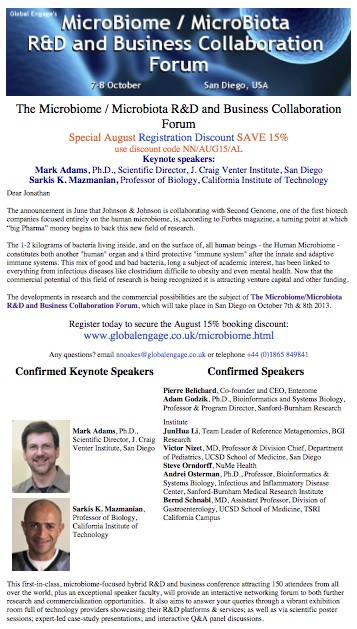
Well, just got an email inviting me to participate in a meeting on microbiomes. The full invite is at the bottom of this posting.  Alas, at first glances it seems this meeting, has, well, some gender issues.

Confirmed Keynote Speakers: both male.

  • Mark Adams, Ph.D., Scientific Director, J. Craig Venter Institute, San Diego
  • Sarkis K. Mazmanian, Professor of Biology, California Institute of Technology

Confirmed other speakers: all seven male

  • Pierre Belichard, Co-founder and CEO, Enterome
  • Adam Godzik, Ph.D., Bioinformatics and Systems Biology, Professor & Program Director, Sanford-Burnham Research Institute
  • JunHua Li, Team Leader of Reference Metagenomics, BGI Research
  • Victor Nizet, MD, Professor & Division Chief, Department of Pediatrics, UCSD School of Medicine, San Diego
  • Steve Orndorff, NuMe Health
  • Andrei Osterman, Ph.D., Professor, Bioinformatics & Systems Biology, Infectious and Inflammatory Disease Center, Sanford-Burnham Medical Research Institute
  • Bernd Schnabl, MD, Assistant Professor, Division of Gastroenterology, UCSD School of Medicine, TSRI California Campus

I suppose one could say “Well, they are still working on their agenda … maybe they will have some female speakers.”  So I decided to dig around a little bit more. They provide a link to the outline agenda here. Alas that is even worse.  There we find out who some invited speakers are who have not yet accepted

  • David Odelson, R&D Program Director, Life Technologies
  • Peter B. DiLaura, President & CEO, Second Genome
  • Chris Christofferson, Morganthaler Ventures 
  • Lou Tartaglia, Third Rock Ventures
  • Mike Grey, Pappas Ventures
  • Justin L. Sonnenburg, Assistant Professor, Microbiology & Immunology, Stanford School of Medicine, Palo Alto, CA

So that is 9 confirmed speakers and six invited speakers – all of whom are male.  Great.  Here is a suggestion.  DO NOT GO TO THIS MEETING.

Microbiome Masthead
The Microbiome / Microbiota R&D and Business Collaboration Forum
Special August Registration Discount SAVE 15%

use discount code NN/AUG15/AL
Keynote speakers:
Mark Adams, Ph.D., Scientific Director, J. Craig Venter Institute, San Diego
Sarkis K. Mazmanian, Professor of Biology, California Institute of Technology
Dear Jonathan

The announcement in June that Johnson & Johnson is collaborating with Second Genome, one of the first biotech companies focused entirely on the human microbiome, is, according to Forbes magazine, a turning point at which “big Pharma” money begins to back this new field of research.

The 1-2 kilograms of bacteria living inside, and on the surface of, all human beings – the Human Microbiome – constitutes both another “human” organ and a third protective “immune system” after the innate and adaptive immune systems. This mix of good and bad bacteria, long a subject of academic interest, has been linked to everything from infectious diseases like clostridium difficile to obesity and even mental health. Now that the commercial potential of this field of research is being recognized it is attracting venture capital and other funding.

The developments in research and the commercial possibilities are the subject of The Microbiome/Microbiota R&D and Business Collaboration Forum, which will take place in San Diego onOctober 7th & 8th 2013.

Register today to secure the August 15% booking discount:
www.globalengage.co.uk/microbiome.html

Any questions? email nnoakes@globalengage.co.uk or telephone +44 (0)1865 849841

Confirmed Keynote Speakers


Mark Adams
Mark Adams, Ph.D., Scientific Director, J. Craig Venter Institute, San Diego

Sarkis Mazmanian
Sarkis K. Mazmanian, Professor of Biology, California Institute of Technology

Confirmed Speakers


Pierre Belichard, Co-founder and CEO, Enterome
Adam Godzik, Ph.D., Bioinformatics and Systems Biology, Professor & Program Director, Sanford-Burnham Research Institute
JunHua Li, Team Leader of Reference Metagenomics, BGI Research
Victor Nizet, MD, Professor & Division Chief, Department of Pediatrics, UCSD School of Medicine, San Diego
Steve Orndorff, NuMe Health
Andrei Osterman, Ph.D., Professor, Bioinformatics & Systems Biology, Infectious and Inflammatory Disease Center, Sanford-Burnham Medical Research Institute
Bernd Schnabl, MD, Assistant Professor, Division of Gastroenterology, UCSD School of Medicine, TSRI California Campus

This first-in-class, microbiome-focused hybrid R&D and business conference attracting 150 attendees from all over the world, plus an exceptional speaker faculty, will provide an interactive networking forum to both further research and commercialization opportunities.  It also aims to answer your queries through a vibrant exhibition room full of technology providers showcasing their R&D platforms & services; as well as via scientific poster sessions; expert-led case-study presentations; and interactive Q&A panel discussions.
The Outline Agenda


Sequencing/Bioinformatics of the Microbiome

  • An overview of the human microbiome project
  • Contributions to Metagenomics and Data Analysis
  • Advances in sequencing technologies
  • The role of chip technologies (the Phylo chip) as a rapid readout vs. sequencing
  • The $1000 genome may cost $100Ms to interpret!

Venture Capital + Technology Transfer

  • Commercializing Microbiome Technologies from Government & Academic Entities
  • International Small Company Showcase

The microbiome of the GI tract

  • The role of commensal bacteria in regulating the immune system
  • Metabolic exchange in gut microbial communities: who needs vitamins?
  • Contemplating novel antibiotic therapies that do not destroy the healthy microbiome
  • Metagenomic profiling in IBD

Clinical Applications

  • The contribution of the gut microbiome to liver disease
  • Treatment of C. Difficile infections with fecal transplants

Connections to the Food World

  • The role of diet in regulating the microbiome mix
  • Prebiotics vs. probiotics vs. pharmaceuticals
  • Opportunities to treat diabetes and obesity via the microbiome
  • Panel Discussion – Pharma/Biotech/Food Industry Partnering
  • Small Company Showcases
www.globalengage.co.uk/microbiome.html
Not interested in the Microbiome/Microbiota?
Unsubscribe here

Nick Noakesnnoakes@globalengage.co.uk Tel +44 (0) 1865 849841
Global Engage, The Kidlington Centre, Kidlington, Oxfordshire, OX5 2DL, UK.

You might think that at some point some of the people organizing meetings

Another genomics meeting featuring men men men and men: International Forum on "Genomics, Innovation and economic growth"

Well this is just peachy.  Saw this tweet

And my first thought was – please – please – please let this meeting have a decent gender ratio. I am so so sick of genome meetings that have gender ratio issues. Alas, then I went to their site: International Forum “Genomics, Innovation and economic growth”

11 plenary speakers. All of them men.  See here.
Forum president: 1 man
Advisory Board: 5 men

Crap crap crap. What is WRONG WITH PEOPLE?

Nothing else to say really.  But I will not be going I guess I can say that.

ICG Europe starts w/ "Omics & the future of man" & sticks to men the rest of the time

Fun.  Another day.  Another YAMMGM (yet another mostly male genomics meeting).  This one is the International Conference on Genomics Europe 2013.  I have copied the program as it is now here and then highlighted the men and women as far as I can tell.  And, well, it is not very balanced.  It starts off, ironically, with “Omics and the future of man” and then stays on both omics and alas, men, for most of the meeting.  The first woman does not talk until 5 pm on the first day.  Nothing against BGI per se.  But they seem to be repeat offenders in having meetings with mostly male speakers.  A difference between countries?  Perhaps.  But unfortunate and unpleasant nevertheless.

Sessions with speakers:

Plenary Session 1: Omics and the future of man

  • 09:00-09:10: Opening ICG-Europe 2013 & Welcome: Hans Galjaard, Chairman of the Department of Clinical Genetics at Erasmus University
  • 09:10-09:55: Talk 1: Huanming Yang, BGI, China
  • 9:55-10:25: Talk 2: Jeremy Nicholsen, Head of the Department of Surgery and Cancer, Imperial College London, UK
  • Topic: Molecular Phenotyping and Systems Medicine Approaches in Personalised and Public Healthcare

Chairman: Prof.Huanming Yang, BGI, China

Plenary Session 2 :

  • 11:00-11:30: Talk 1 (30 min): Jun Wang, CEO, BGI, China
  • 11:30-12:00: Talk 2 (30 min): Karsten Kristiansen, Head of the Department of Biology, University of Copenhagen, Denmark
  • 12:00-12:30: Talk 3 (30 min): Nils Brunner, Director of the Sino-Danish Breast Cancer Research Centre, University of Copenhagen, Denmark
  • Topic: Docetaxel resistance in vitro: Known mechanisms and novel pathways in breast cancer
  • Chairman: Prof. Jun Wang, BGI, China

Plenary Session 3: Plant and Animal Genomics

  • 13:30-13.55: Talk 1: Rajeev K. Varshney, Director-Centre of Excellence in Genomics, ICRISA, Hyderabad, India
  • Topic: “Little” is “more” for chickpea and pigeonpea
  • 13.55-14.20: Talk 2: Michael Bevan, Genomics and Functional Genomics of Bread Wheat for Crop Improvement, John Innes Centre, Norwich, UK
  • Topic: Genomics and Functional Genomics of Bread Wheat for Crop Improvement
  • 14.20-14.45: Talk 3: Michel Georges, Unit of Animal Genomics, University of Liège, Belgium
  • 14.45-15.15: Talk 4: Tomas Marques, ICREA Research Professor, Universitat Pompeu Fabra, Spain
  • Topic: Great Ape genetic diversity
  • 15.15-15.35: Talk 5: TBC
  • Chairman: Prof. Marc Van Montagu , VIB, Belgium

Session 4: Cancer genomics and Transcriptional Regulation

  • 16:00-16:20: Talk 1(20 min): Stein Aerts, Heading the Laboratory of Computational Biology, K.U.Leuven, Belgium
  • Topic: Probing into the genome, transcriptome, and regulatory network of T-cell acute lymphoblastic leukemia
  • 16:20-16:40: Talk 2(20 min): Lars Bullinger, Assistant Professor, University of Ulm, Germany
  • Topic: Genomics in acute myeloid leukemia (AML) – clinical translation of findings
  • 16:40-17:00: Talk 3(20 min): Diether Lambrechts, Assistant Professor, K.U.Leuven & VIB, Belgium
  • Topic: Mutation signatures of mismatch repair deficiency in cancer genomes
  • 17:00-17:20: Talk 4(20 min): Lynnette Fernandez-Cuesta, University of Cologne, Germany
  • Topic: Characterization of lung neuroendocrine tumors
  • 17:20-17:40: Talk 5(20 min): Henrik Ditzel, University of Southern Denmark, Denmark
  • Chairman: Dr. Jan Cools (K.U.Leuven, VIB)

Workshop:Innovation-Entrepreneurship and Venture creation-1

  • 14:30-14:50: Talk 1 (20 min): Boo Edgar, Program Director, Innovation and entrepreneurship; The Sahlgrenska Academy, University of Gothenburg
  • 14:50-15:10: Talk 2 (20 min): Martin Bonde, Chairman of Danish Biotech association
  • 15:10-15:30: Talk 3 (20 min): Søren Møller, Managing Investment Director, Novo Seeds
  • Chairman: Johan Cardoen
  • 16:00-16:20: Talk 1(20 min): Johan Cardoen, Managing Director VIB
  • 16:20-16:40: Talk 2(20 min): Patrick Van Beneden, GIMV
  • 16:40-17:00: Talk 3(20 min): Ann De Beuckelaer, Flanders Bio

Session 5: Human Disease- Structural Genomic Variation and Function

  • 09:00-09:30: Talk 1 (30 min): Wigard Kloosterman, UMC Utrecht, The Netherlands
  • Topic: Cause and Consequence of Complex Genomic Rearrangements
  • 09:30-10:00: Talk 2 (30 min): Michael Talkowski, Instructor, MGH, Harvard University, USA
  • Topic: Sequencing unique human genomes reveals novel loci in autism and predictive phenotypes in prenatal diagnostics
  • 10:00-10:30: Talk 3 (30 min): Thierry Voet, K.U.Leuven
  • Chairman: Prof. Edwin Cuppen , Hubrecht Institute

Session 6: Metagenomics

  • 09:00-09:30: Talk 1 (30 min): Hui Wang, The Centre for Ecology & Hydrology, UK
  • Topic: Virus discovery by using deep sequencing data
  • 09.30-10:00: Talk 2 (30 min): TBC
  • 10:00-10:30: Talk 3 (30 min): Bjoern Textor, New England Biolabs GmbH
  • Topic: Direct Selection of Microbiome DNA from Host DNA
  • 11:00-11:30: Talk 1 (30 min): Jeroen Raes, Scientific Collaborator, VUB&VIB
  • 11:30-12:00: Talk 2 (30 min): Rob Knight, Associate Professor, Colorado University
  • Topic: Characterizing microbial effects of family structure, including our furry family members?
  • 12:00-12:30: Talk 3 (30 min): Ruth Ley, Cornell University
  • Topic: Host control of the microbiome
  • Chairman: Dr. Jeroen Raes (VUB, VIB)

Session 7(3 talks: include Q&A 5 mins): Human Disease – Clinical Genetics

  • 11:00-11:35: Talk 1(35 min): Han Brunner, Department of Human Genetics, Radboud University Nijmegen Medical Centre, The Netherlands
  • Topic: Clinical Genetic Diagnostics by Genome Sequencing.
  • 11:35-12:05: Talk 2(30 min): Wang Wei, BGI Health, Shenzhen, China
  • Topic: Non-invasive prenatal testing (NIPT): Current clinical application and future outlook
  • 12:05-12:45: Talk 3(30 min): Gabor Vajta, BGI Europe, Copenhagen, Denmark and Central Queensland University, Rockhampton, Australia in concert with Du Yutao, BGI Health, Shenzhen, China
  • Topic: Pre-implantation Diagnostics by Blastocyst Biopsy, Vitrification and Genome Sequencing
  • Chairman: Prof. Lars Bolund, Aarhus University

Session 8: Health and Translational Medicine-1

  • 13:30-13:55: Talk 1(25 min): Vince Gao, BGI
  • Topic: Development of Clinical Service at BGI Health
  • 13.55-14:20: Talk 2(25 min): Attila Lorincz, UK
  • Topic: Clinical Validation of Genomic and Epigenomic Biomarker Panels
  • 14:20-14:45: Talk 3(25 min): Maurizio Ferrari, Director of Clinical Molecular Biology and Cytogenetics Laboratory, and Head of Genomic Unit for the Diagnosis of Human Pathologies, Center for Translational Genomics and Bioinformatics, IRCCS San Raffaele, Milan, Italian
  • Topic: From bench to bedside: new advanced molecular techniques for genetic diagnosis
  • 14:45-15:10: Talk 4(25 min): Carlos Simón Vallés, Board Certified and Full Professor of Obstetrics and Gynecology at the University of Valencia,Spain
  • Topic: Clinical Application of the endometrial receptivity array
  • 15:10-15:35: Talk 5(20 min): To be selected from submitted abstracts
  • Chairman: Dr. Vince Gao , BGI

Session 9: Human disease

  • 13:30-13:55: Talk 1(25 min): Lars Bolund, Professor of Clinical Genetics at Aarhus University, Denmark, and Adjunct Professor of Human Genetics at Copenhagen University, Denmark
  • Topic: Chronic Disorders, Rare Genetic Variants and Pig Models of Degenerative Disease Processes
  • 13:55-14:20: Talk 2(25 min): Tao Dong, Head of anti-viral T cell immunology group, MRC Human Immunology Unit, Oxford University, UK
  • 14:20-14:45: Talk 3(25 min): Hartmut Wekerle, Honorary Professor, Max Planck Institute of Neurobiology, Martinsried, Germany
  • 14:45-15:10: Talk 4(20 min): Ramneek Gupta, The Technical University of Denmark, Danmark
  • 15:10-15:30: Talk 5(20 min): Anders Børglum, Professor, Aarhus University, Denmark
  • Chairman: TBC

Session 10: Health and Translational Medicine-2

  • 16:00-16:20: Talk 1(20 min): Diana M Eccles, Academic Vice President of the Clinical Genetics Society, Southampton General Hospital, UK
  • 16:20-16:40: Talk 2(20 min): E. Gomez Garcia, Maastricht University, the Netherlands
  • 16:40-17:00: Talk 3(20 min): Pascal Pujol , Chu Montpellier, France
  • 17:00-17:20: Talk 4(20 min): Atocha Romero, Hospital Clinico San Carlos, Spain
  • 17:20-17:40: Talk 5(20 min): Ian Campbell, Peter MacCallum Cancer Centre, Australia
  • Topic: Identification and validation of familial cancer susceptibility genes using massively parallel sequencing
  • Chairman: Prof. Yves-Jean Bignon, Centre Jean Perrin

Workshop: Ethical, Legal and Social Implications (ELSI)

  • 16:00-16:20: Talk 1(20 min): Lone Frank, Denmark
  • 16:20-16:40: Talk 2(20 min): Pascal Borry, K.U.Leuven, Belgium
  • 16:40-17:00: Talk 3(20 min): TBC
  • Chairman: Prof. Huanming Yang, BGI

Session 11: Biobanks

  • 08:00-08:30: Talk 1 (30 min): Zhang Yong, BGI, China
  • 08:30-09:00: Talk 2 (30 min): Kristian Hveem, Chief Scientific Officer, Nord-Trondelag County, Norway
  • 09:00-09:30: Talk 3 (30 min): Shaoliang Peng, National University of Defense Technology, China
  • Topic: Bioinformatics and Computational Biology on TianHe Supercomputer
  • Chairman: Dr. Zhang Yong, BGI

Workshop: Use of Omics Technology for Personalized Medicine

  • 08:00-08:30: Talk 1 (30 min): Jenny Wei, R&D Information China, AstraZeneca global R&D
  • Topic: Genomics for Personalized Medicine: From Discovery to Clinic
  • 08:30-09:00:Talk 2 (30 min):André Rosenthal, CEO, Signature Diagnostics AG
  • Topic: Next-Gen Sequencing Tests for Prognosis and Prediction of Response to Therapy of Patients with Colorectal Cancer Using Somatic Mutation Signatures
  • 09:00-09:30: Talk 3 (30 min):Radoje Drmanac, Complete Genomics, Inc. Mountain View, California, U.S.A.
  • Topic: Accurate whole genome sequencing as the ultimate genetic test enabling personalized disease prevention and treatment
  • Chairman: TBC

Session 12: Bioinformatics

  • 10:00-10:30: Talk 1 (30 min): Nathaniel Street, Assistant professor, Umea University
  • Topic: Sequencing the Norway spruce genome reveals a unique history of repeat expansion
  • 10:30-11:00: Talk 2 (30 min): Sofie Van Landeghem, Ghent University, VIB, Belgium
  • Topic: Mining the literature to enhance integrative network biology
  • 11:00-11:30: Talk 3 (30 min): Mario Caccamo, Acting Director at The Genome Analysis Centre, Norwich, UK
  • Topic: Next Generation Genomics for Complex Crops
  • Chairman: Prof. Yves Van De Peer (U.Ghent, VIB)
For related posts see

YAMMGM: Yet another mostly male genomics meeting #2: Beyond the Genome 2013

Well, the “winner” of this months YAMMGM award is Beyond the Genome 2013 | Mission Bay | San Francisco

Alas, YAMMGM stands for “Yet another mostly male genomics meeting” so it is not an award to covet.

This meetings listed speakers are below with women highlighted in green.

  • Nicholas Navin -The University of Texas MD Anderson Cancer Center
  • Sunney Xie – Harvard
  • Xu Xun – BGI
  • James Hicks -CSHL
  • Fuchou Tang – Peking
  • Itai Yanai – Israel
  • Thierry Voet – Sanger
  • Jacob Kitzman – Plasma cell free DNA sequencing
  • Stephen Quake – Stanford and Fluidigm
  • Mario Caccamo – Genome Analysis Centre
  • Rob Martienssen – CSHL
  • Ryan Lister – University of Westerm Australia
  • Neelima Sinha – UC davis
  • Jorge Dubcovsky – UC Davis
  • Robert Schmitz (Salk) – 1001 Arabidopsis project and CHiP-Seq
  • Marja Timmermans (CSHL)
  • Magnus Nordborg
  • Chairs Alicia Oshlack, Yingrui Li and Michael Schatz to chair the bioinformatics challenge.
  • James Taylor – Emory and Galaxy
  • Chris Dagdigian – Bioteam
  • David Haussler -UC Santa Cruz
  • Janet Kelso – Max Planck Institute for Evolutionary Anthropology

That comes to 16.6% if you count all listed.  If you exclude session chairs the numbers are a little different but still pretty low.

Certainly this does not prove any bias on the part of the meeting organizers.  But it certainly suggests to me they might want to think about why the ratio is skewed.