Water Chemistry Sampling: Our kit list

A couple of people have requested that I post information on the various kits and probes being used to assay water chemistry for our aquarium study.  Here’s the list, divided by type with a link to each item on Amazon.  Also various user complaints.

Probes:

pH  (worked fine, held calibration well)

Salinity (worked fine, held calibration well)

Temperature (annoying, a bit fiddly, I wouldn’t do this one again)

Titration-based kits:

Hardness, Alkalinity, Chloride, and Sulfide were all measured using this combo package  It also includes an iron assay that we didn’t use.  All of these kits are prone to error since they’re titration based.   But used very carefully (takes time!) they seemed to produce okay results.  I recommend using glass flasks instead of the plastic beakers supplied.

Colorimetric scanners:

Dissolved oxygen (this kit requires that you have a glass container capable of holding exactly 60 mls of water.. they don’t tell you this until you read the instructions.  Otherwise worked fine.  A bit hard to use but conversely you’ll learn new vocabulary from reading the instructions)

Ammonia (worked fine, but you have to be very careful to follow the instructions and mix between adding reagents or you’ll get a false high reading)

Nitrate (worked fine)

Nitrite (this one is pretty annoying; it’s hard to get the reagents into the tiny vial and these handheld meters turn themselves off after only 2 minute so if you get distracted you have to start over)

Phosphorus (see nitrite, but even worse.  As far as we can tell it’s not even possible to follow the instructions for this since it turns itself off before you finish mixing the reagents)

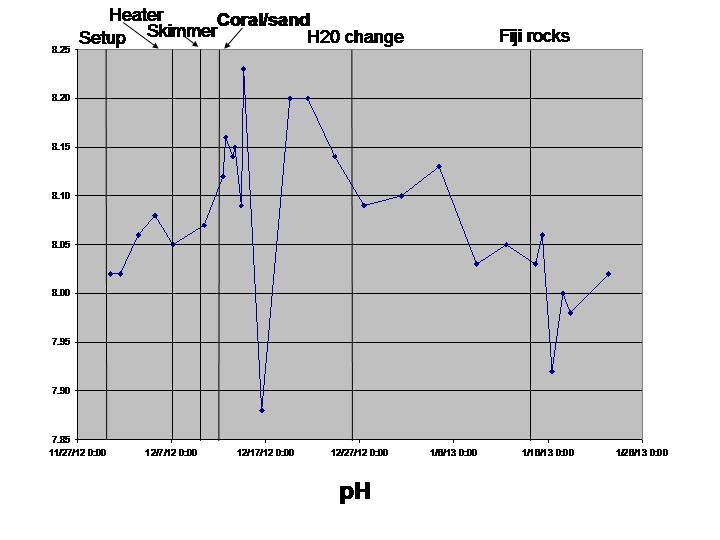
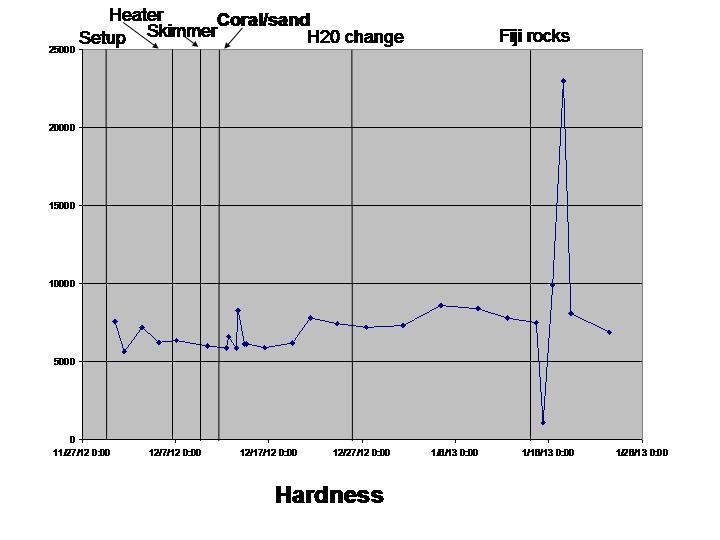
Preliminary chemistry data from Coral Pond #1

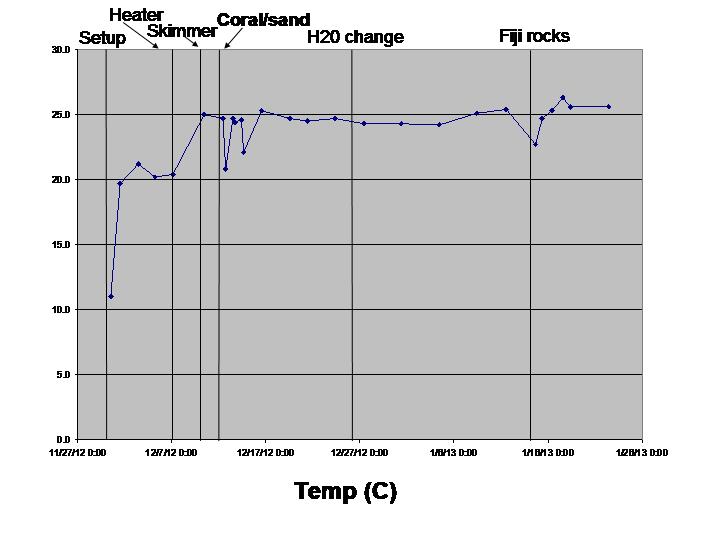
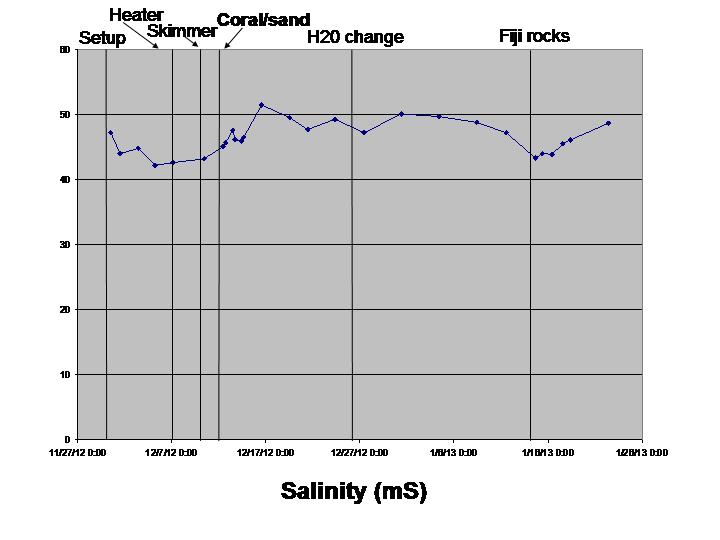
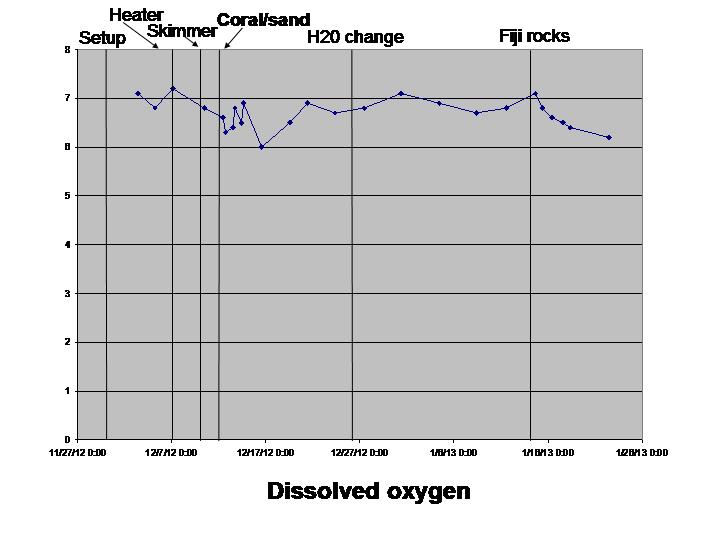
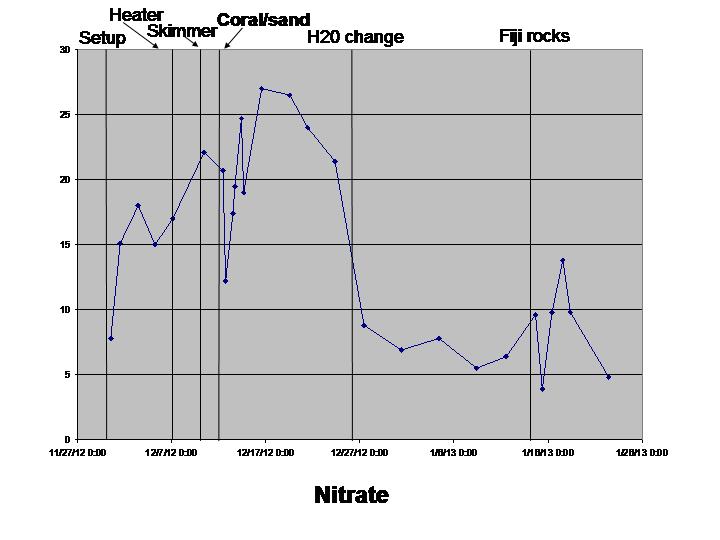
Since we’ve stopped sampling I went ahead and graphed out all the water chemistry data from Coral Pond #1.   Feeback, thoughts, comments etc. are welcome!

          Slide1

Slide2

Slide3 Slide4 Slide5 Slide6 Slide7 Slide8 Slide9 Slide10 Slide11

IBM will save the planet with this magical hydrogel – NOT

Well, press releases can drive me crazy.  And this one is one of the worst I have seen in a while: IBM News room – 2013-01-24 IBM and The Institute of Bioengineering and Nanotechnology Develop New Antimicrobial Hydrogel to Fight Superbugs and Drug-Resistant Biofilms – United States

This new fangled gel they have made they are very proud of.  That is good.  Pride in ones work is a good thing.  But getting the science wrong and making misleading statements is not.  Some statements I have issues with include

  • Able to colonize on almost any tissue or surface, microbial biofilms – which are adhesive groupings of diseased cells present in 80% of all infections – persist at various sites in the human body, especially in association with medical equipment and devices.
    • Huh?  Diseased cells?  What does this even mean?
  • When applied to contaminated surfaces, the hydrogel’s positive charge attracts all negatively charged microbial membranes, like powerful gravitation into a blackhole.
    • Again – huh?  How is this like gravitation in a black hole?
  • However, unlike most antibiotics and hydrogels, which target the internal machinery of bacteria to prevent replication, this hydrogel kills bacteria by membrane disruption, precluding the emergence of any resistance.
    • This is the killer statement.  They have apparently invented a treatment that no organism can resist.  It is therefore perfect.  Sort of like, well, penicillin?  Oh no, wait.  Sort of like chloroquine.  Oh no, wait.  I mean, sort of like streptomycin right?  Sorry – I meant tetracycline.  No no – I meant …. aaaaaaaaaaarrg.
I could go on.  Sounds like a possibly interesting new development.  But when you make absurd claims about it, and get the science all messed up, it does not give me that warm fuzzy feeling.  Annoyingly some news sources are basically just quoting from the PR with no skepticism.  For example, see this Daily Mail article. And this blip in The Star.  At least this in “The Conversation” has some comments on this being possibly overblown.  Anyway, shame on IBM for being more about hype than science.

One way to keep up with new genome sequence publications – SIGS compilation

This is a very very helpful thing to keep up with new genome sequence releases/publications: Genome sequences published outside of Standards in Genomic Sciences, October-mid November 2012 | Nelson | Standards in Genomic Sciences.  From Oranmlyan Nelson and George Garrity in the SIGS Journal.  It is a bit mind boggling how many genome sequences are being determined and published.  Fun.  But mind boggling.  Anyway – good to have someone trying to keep track.  Also see GOLD: Genomes OnLine Database.

SMBE Meeting on Eukaryotic -Omics: April 29-May 2 at UC Davis

I’m leading the organization of an SMBE Satellite Meeting focused on Eukaryotic -Omics at UC Davis this spring. The meeting dates have been set as April 29-May 2, 2013, and the meeting description is as follows:

The SMBE Satellite Meeting on Eukaryotic -Omics will bring together an interdisciplinary pool of researchers to discuss current efforts, challenges, and future directions for high-throughput sequencing approaches focused on microbial eukaryotes (environmental studies of non-model organisms). The meeting program will encompass investigations of eukaryote biodiversity, ecology, and evolution, using approaches such as rRNA marker genes, shotgun metagenomics, metatranscriptomics, and computational biology tools and software pipelines.

See the meeting website (http://www.smbe.org/eukaryotes/) for program announcements, registration details, and travel award information. We’re currently in talks to tack on a QIIME workshop at the end of the meeting (tentative dates May 2-4), so keep an eye our for further details. The official conference hashtag will be #SMBEeuks on Twitter.

Our call for travel award applications includes a heavy focus on diversity–encouraging early-career applicants as well as those from underrepresented groups. Please pass on this meeting announcement to anyone who might be interested in attending. Deadline for abstract submission and travel grant applications is Feburary 22, 2013.

Done with sampling!

So after a few months and 400+ samples later, we are finally done with sampling and data collection! The results look good, with several unique key points that we will be looking into once we have sequencing data. It will be interesting to see, and hopefully correlate, the appearance or growth of an organism with a change in one of the chemicals we measured.


On Tuesday I went in to do some DNA purifications to refamiliarize myself with the process and going back to lab overall. Hopefully the purifications and DNA isolation goes well, and we get back some interesting data from the sequencing run.

Connotea is closing

Just got this email … not sure what the full story is behind it but Connotea is closing ….

Connotea is closing

Connotea, nature.com’s social bookmarking site, is closing on March 12th, 2013. We would like to thank you for your patience with and support for the site.

To enable you to export your bookmarks to an alternative service, we are providing a tool to make the process as easy as possible. Connotea will be available until March 12th, 2013 and you are strongly encouraged to download your bookmarks before this date as your library will not be accessible afterwards.

The Connotea Export Tool will convert your bookmarks into two formats that should be compatible with most common browsers or reference management systems:

  • HTML – compatible with most browsers
  • RIS – compatible with most reference management systems.

You will be able to log in to the Connotea Export Tool by using your Connotea username and password and following the instructions on screen. Once you have downloaded your HTML and/or RIS file, please refer to the instructions for your browser and/or reference management system to import your bookmarks.

Access the Connotea Export Tool.

As Connotea stores a large amount of data, in some cases it may take over an hour for your bookmarks file to be generated. If you experience any problems with exporting your bookmarks, or have any other questions or queries, please contact Marta Rolak

From iSEEM project: Phylogenetic Diversity Theory Sheds Light on the Structure of Microbial Communities

Quick post.  Another paper is out based on the Gordon and Betty Moore Foundation funded iSEEM project I co-ran with Jessica Green and Katie Pollard.

PLOS Computational Biology: Phylogenetic Diversity Theory Sheds Light on the Structure of Microbial Communities.

O’Dwyer JP, Kembel SW, Green JL (2012) Phylogenetic Diversity Theory Sheds Light on the Structure of Microbial Communities. PLoS Comput Biol 8(12): e1002832. doi:10.1371/journal.pcbi.1002832.

It has one of my favorite paper figures ever.

Figure 1. The local community and metacommunity framework casts local biodiversity of coexisting species in terms of a sampling process from a larger reference pool, or metacommunity. 

And the paper is definitely worth checking out.

Crosspost from PLOS Biologue: Working to increase diversity of PLOS Biology Academic Editors and Advisory Board members

On the PLOS Biologue (the blog for PLOS Biology) I have a post that may be of interest.  I discuss our efforts to increase the diversity of the people involved in the various Boards of PLOS Biology.  This is my first task I have taken as the Chair of the PLOS Biology Advisory Board.  See the post: Working to increase diversity of PLOS Biology Academic Editors and Advisory Board members.

Back in business

We’ve been sampling every day for Coral Ponds 1 and 2. We are up to almost 500 samples… which means we have a lot of DNA extractions to do.


I’ve noticed a few things in the last month. The coral used to be white, but now it is covered with a reddish algae. This is good because clearly things are changing, which is what this study is about! If macroscopic things (for example, the visible algae) are changing, then the microscopic things (microbial community) are most definitely changing as well!


On a side note, Matt and I discovered the time it took for a full round of sampling at maximum efficiency. With water filtering being the rate limiting step of our sampling process, we focused on wasting no time with the filtering. By this I mean, we had the next liter of water ready to go instantly after the current liter was done filtering. We also set a timer to remind us to keep adding water to the filter. Out of curiosity, I timed our last filtration and it took 17 minutes and 30 seconds. Overall we were able to complete the sampling in about 1 hour and 50 minutes. Being the mathematician that I am (just kidding), I assumed each filtration (6 total) took about 17 minutes and 30 seconds and calculated the time that water was not being filtered from the time we started to the time we finished: 5 minutes! I’d we were pretty productive.