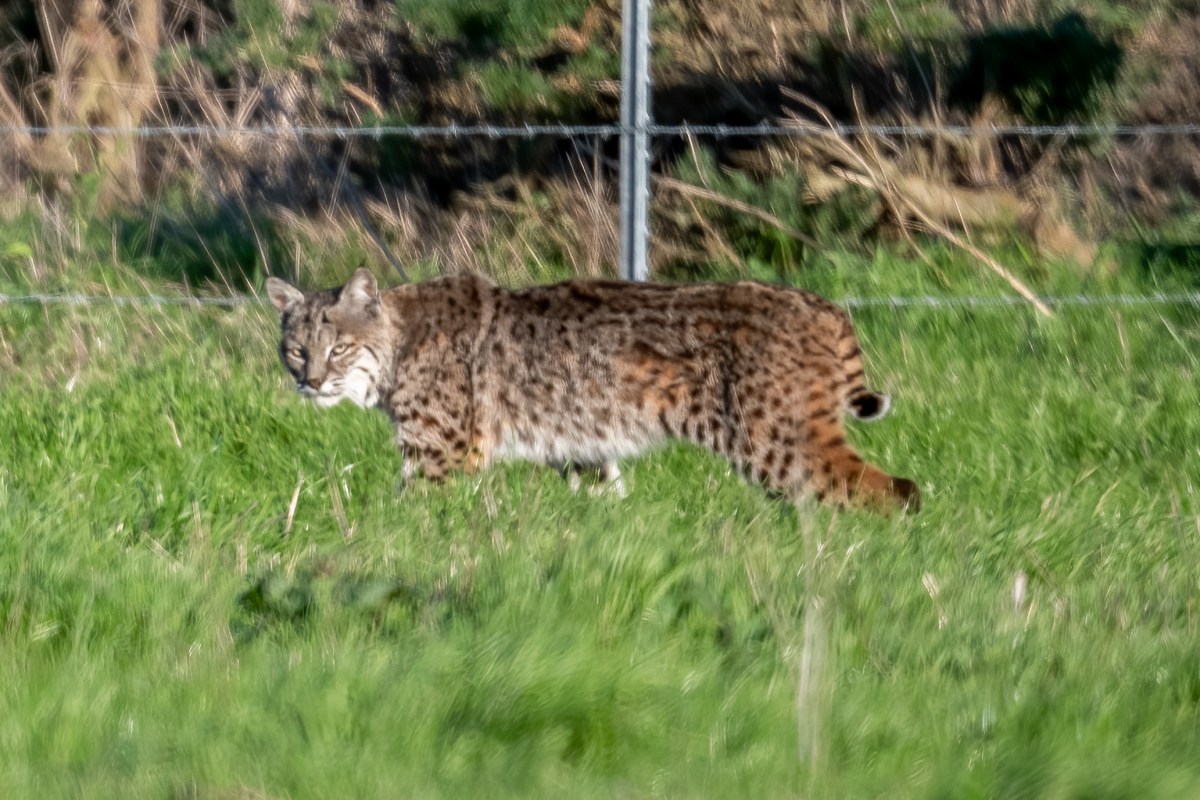
A three bobcat afternoon at Pt. Reyes (and a few other sightings)

So I wrote about going out to Pt. Reyes a few weeks ago and focused on seeing elephant seals on January 10. See my post about this here https://phylogenomics.me/2026/01/13/elephant-seals-at-point-reyes/. But the trip yielded much much more wildlife viewing / nature viewing than elephant seals and that is what I am writing up here.

The plan was to meet up with two colleagues / friends (Deanna Beatty and Kjiersten Fagnan) on the 10th but my daughter and I decided it would be better for us to stay the night in the area on the 9th so that we could get going reasonably early on the 10th. So my daughter and I headed towards Inverness on the 9th and checked in to the Tomales Bay Resort in Inverness mid PM. We went for a walk to stretch our legs, went to our room for a bit and then decicded we had time for a brief outing to Pt. Reyes that afternoon. This was not in our original plan but we had gotten there a bit earlier than we had anticipated and, well, we were right there near Pt. Reyes so we headed on in. And it ended up being amazing.

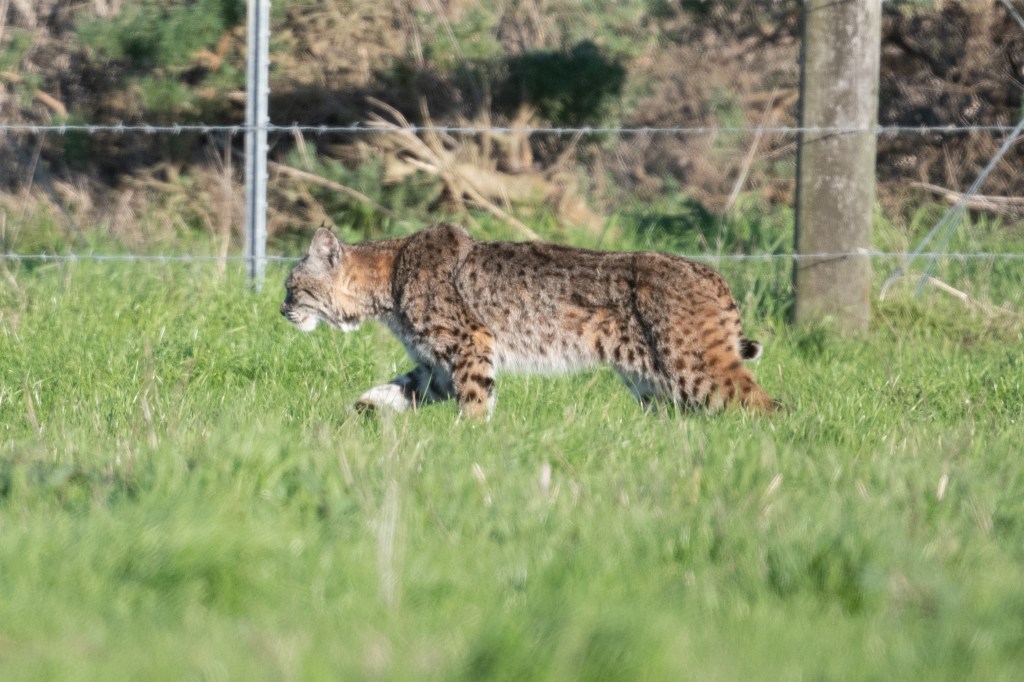
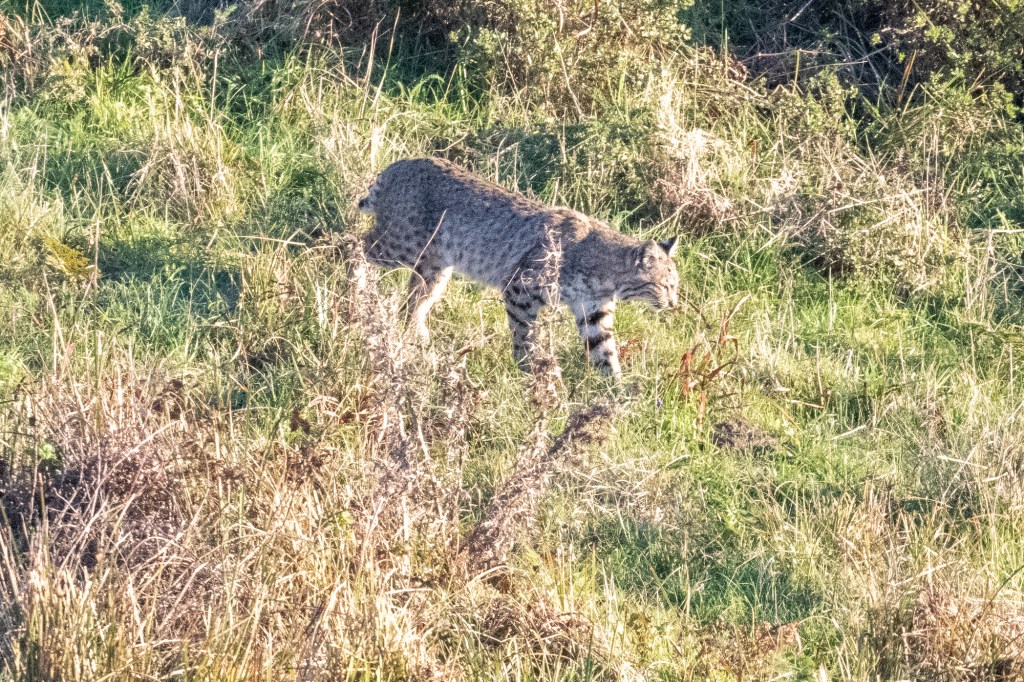
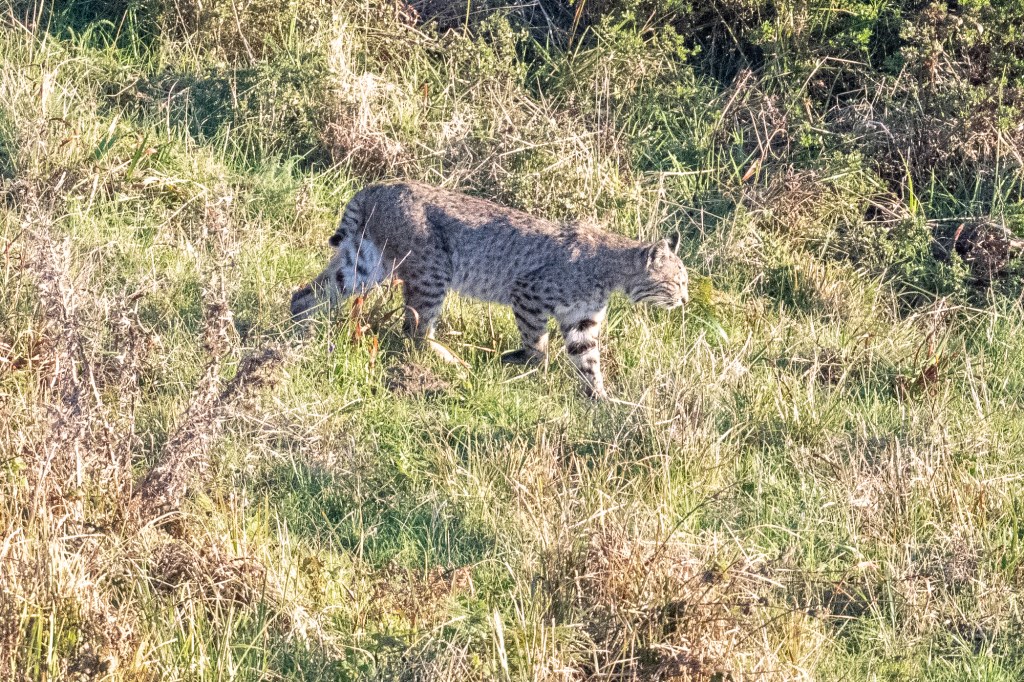
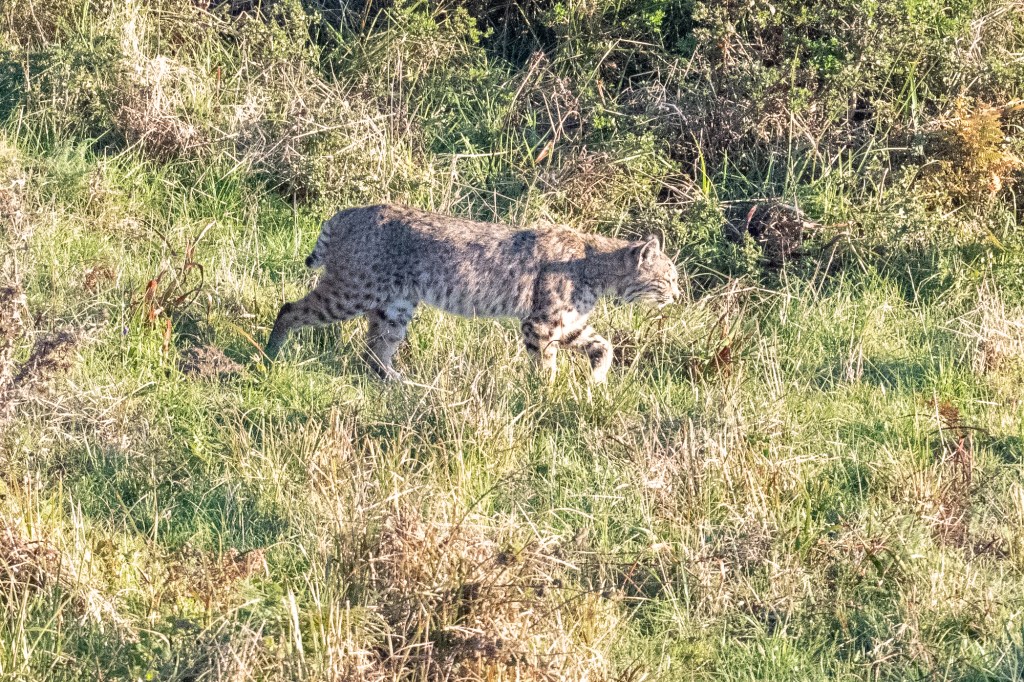
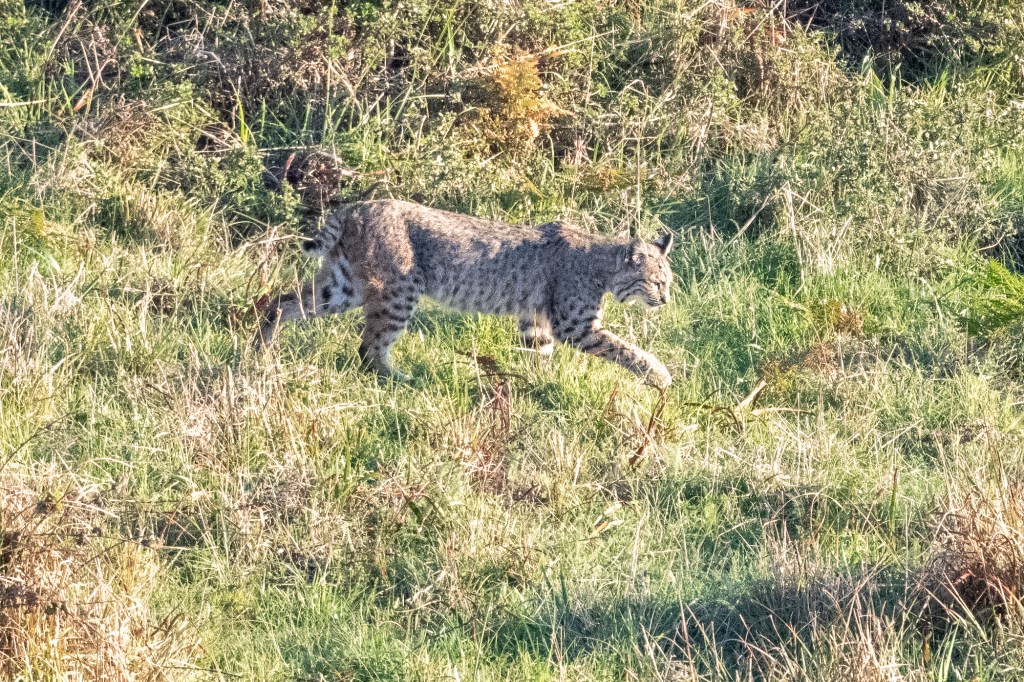
Basically, we drove to Pierce Ranch in the Northern part of Pt. Reyes and then drove back. But on the way there and back we saw some amazing things, including three different bobcats, a bunch of coyotes, and lots of elk. Below are some more details.

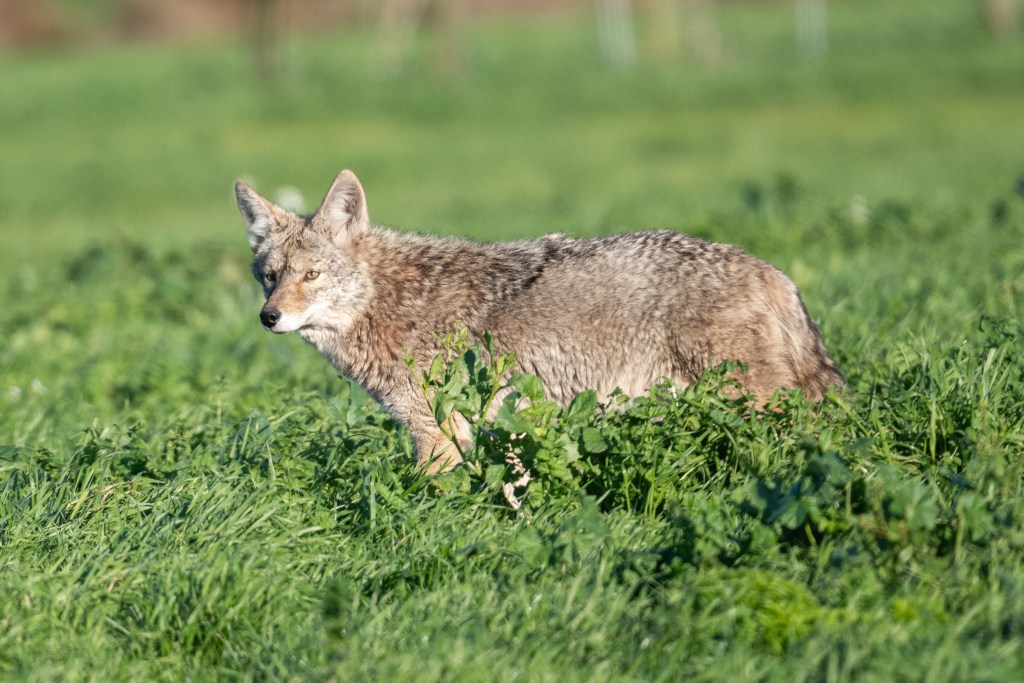
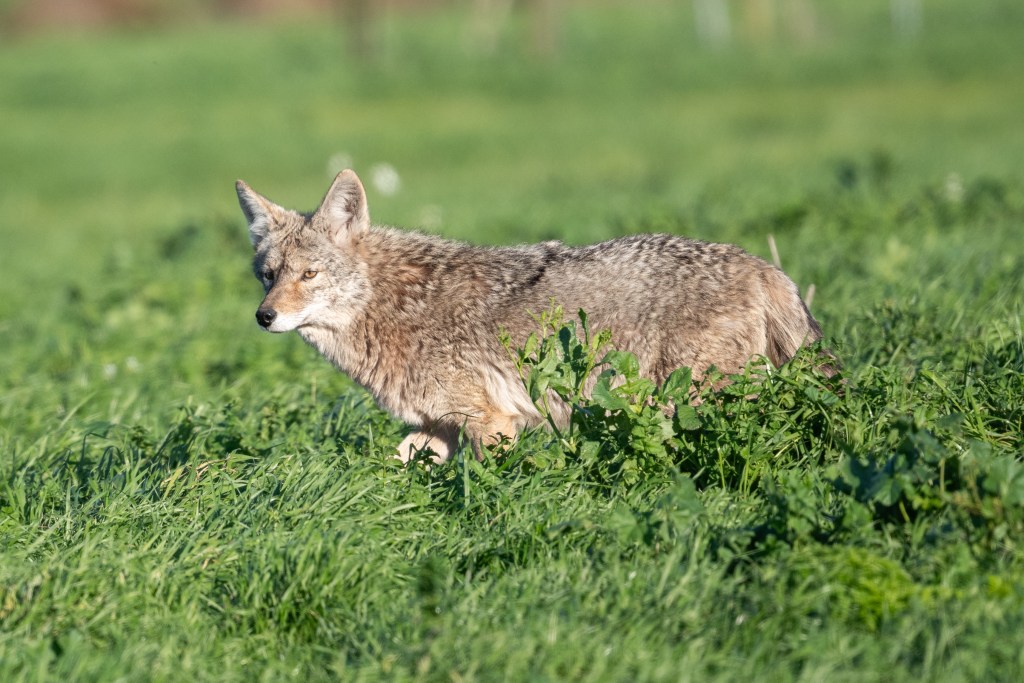
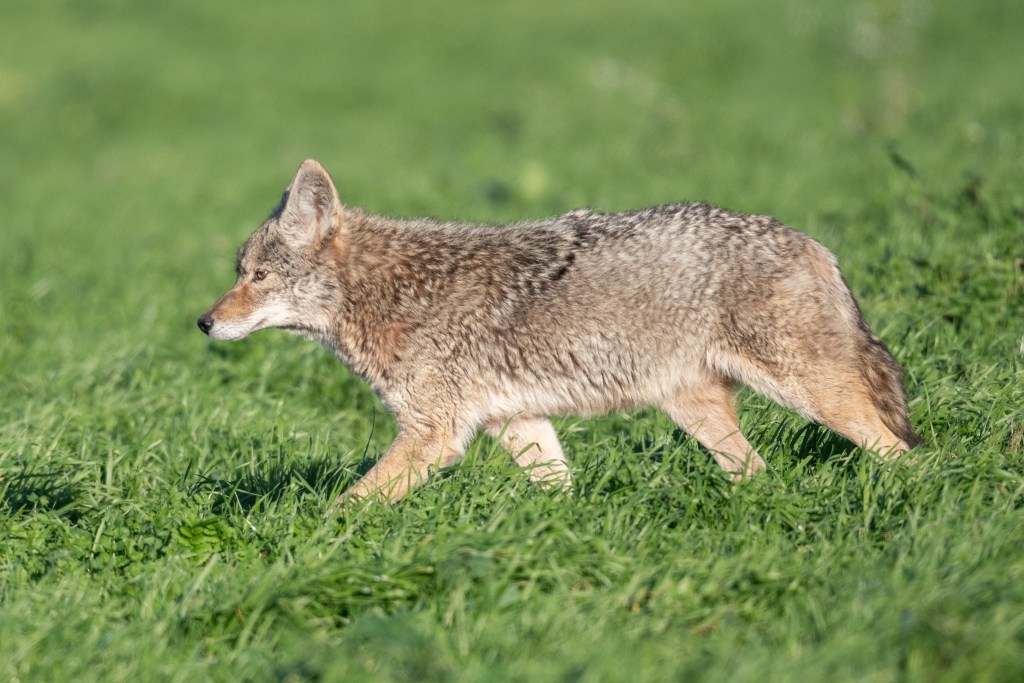
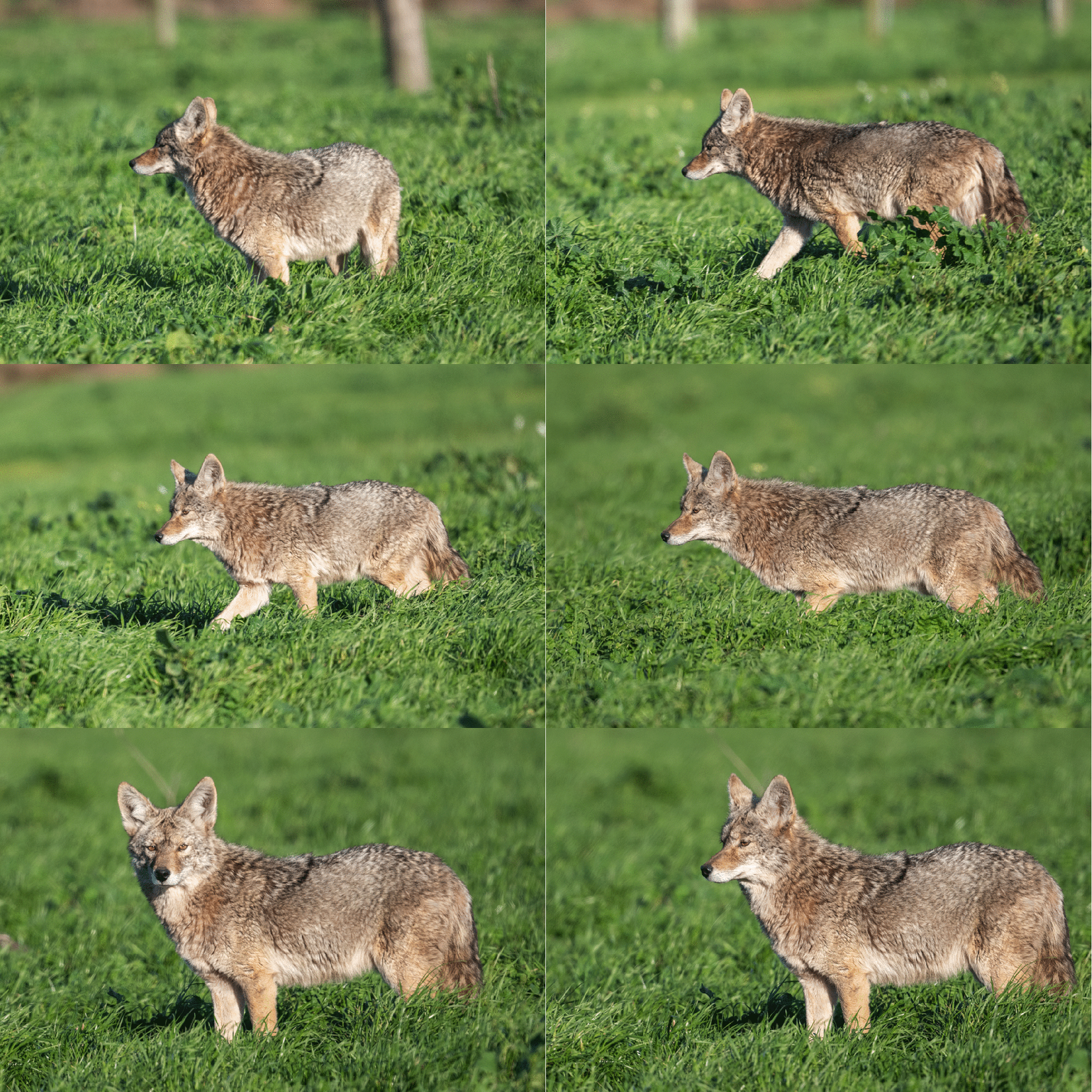
The first interesting wildlife we saw was a very happy and healthy looking coyote on the side of the road as we headed towards Pierce Ranch in the North East region of Pt. Reyes.
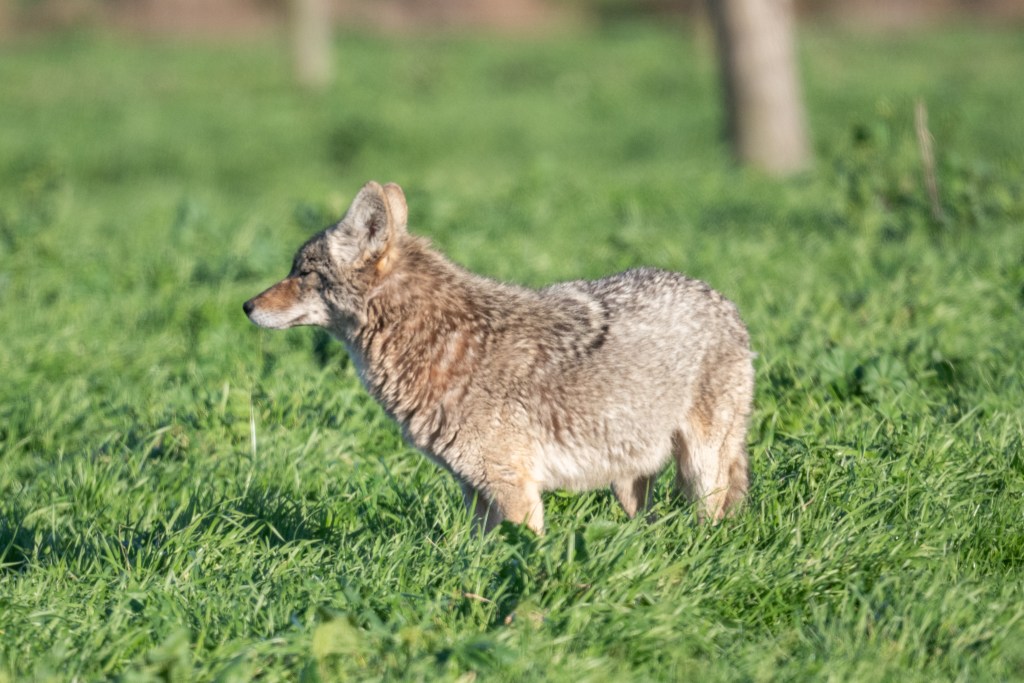
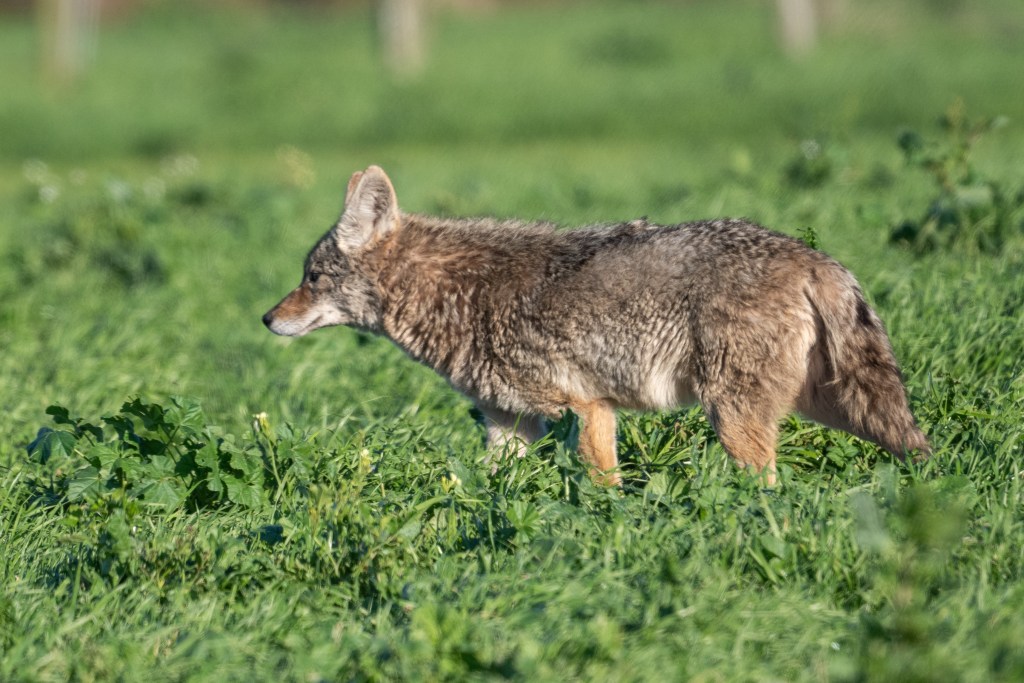
And my favorite
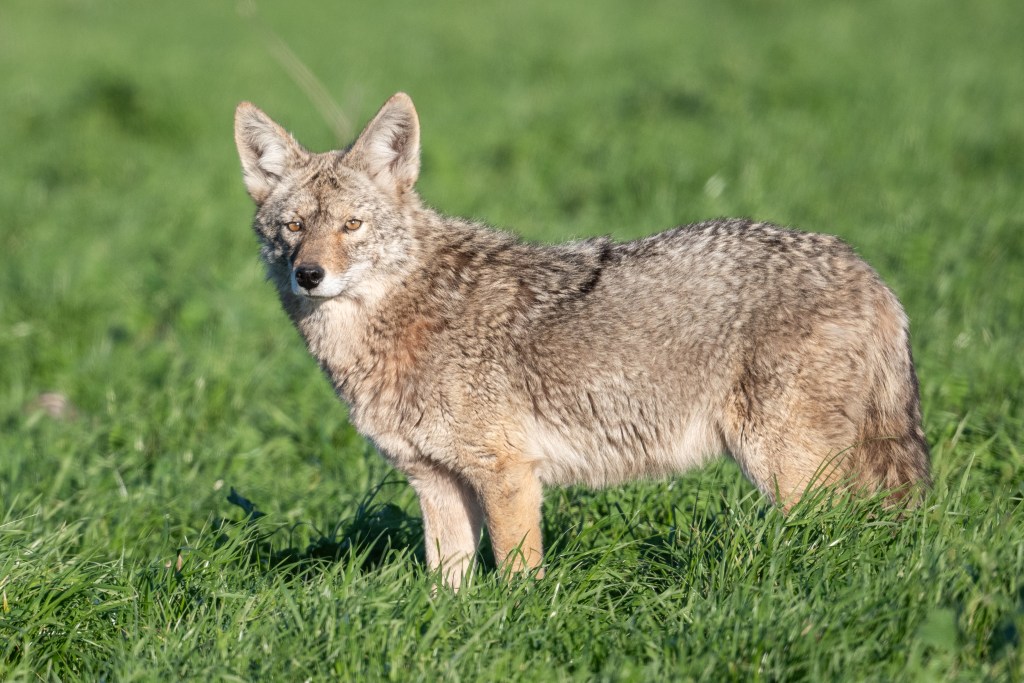
I also made a gif from the series of pics I took. See below
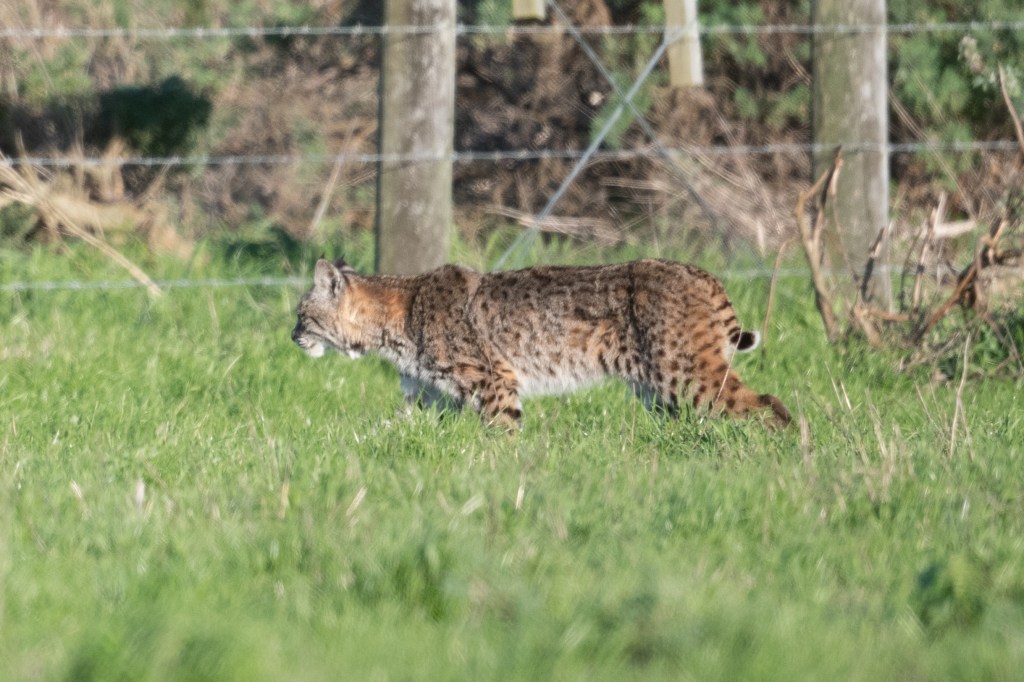
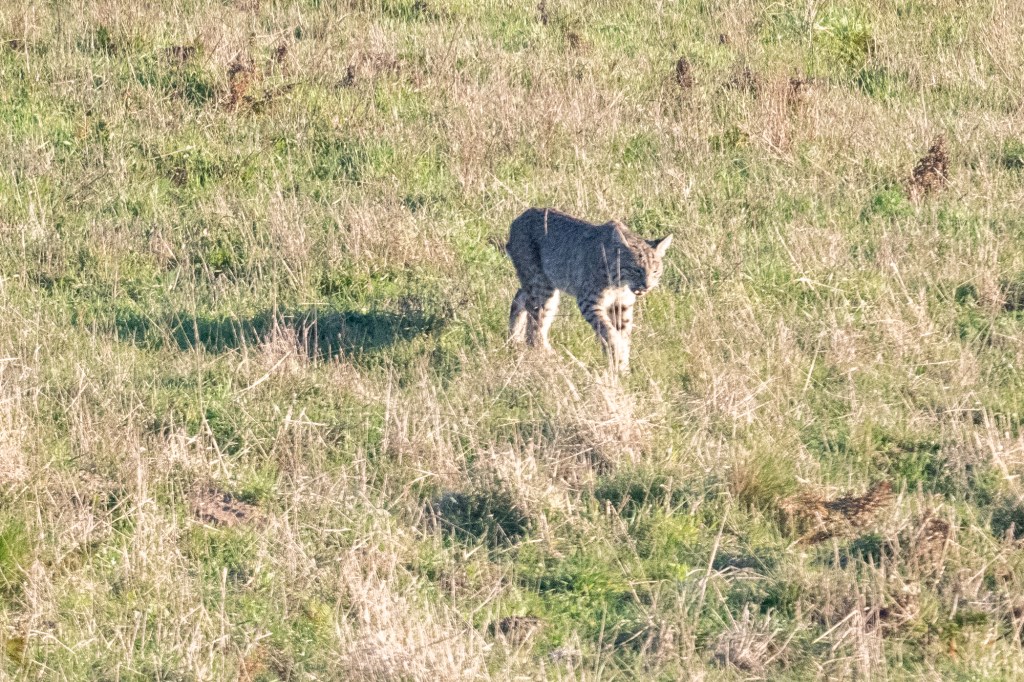
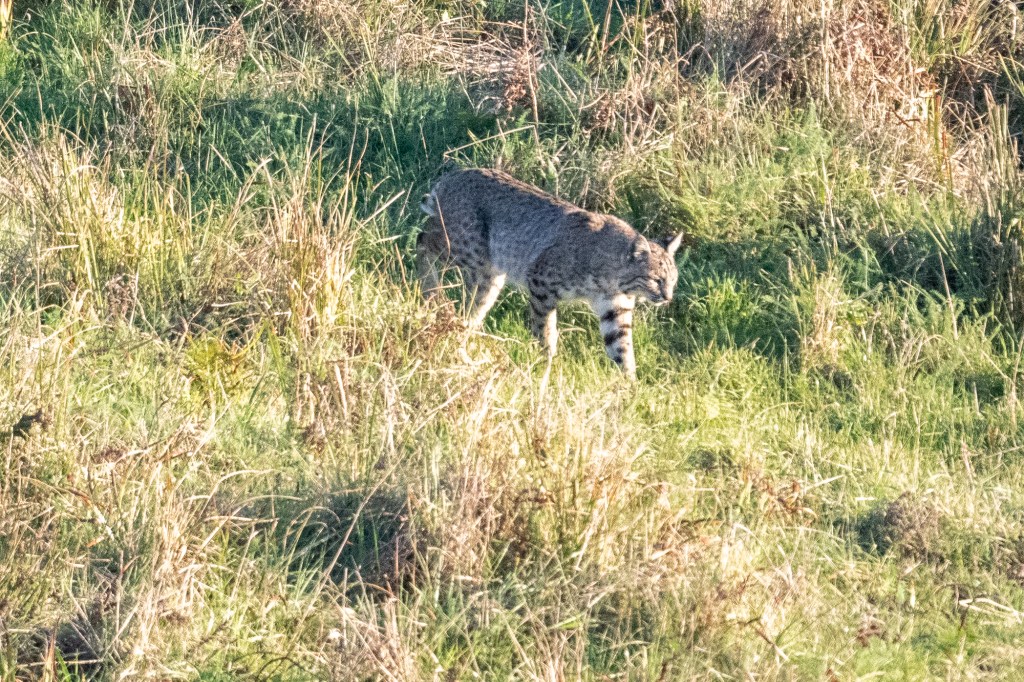
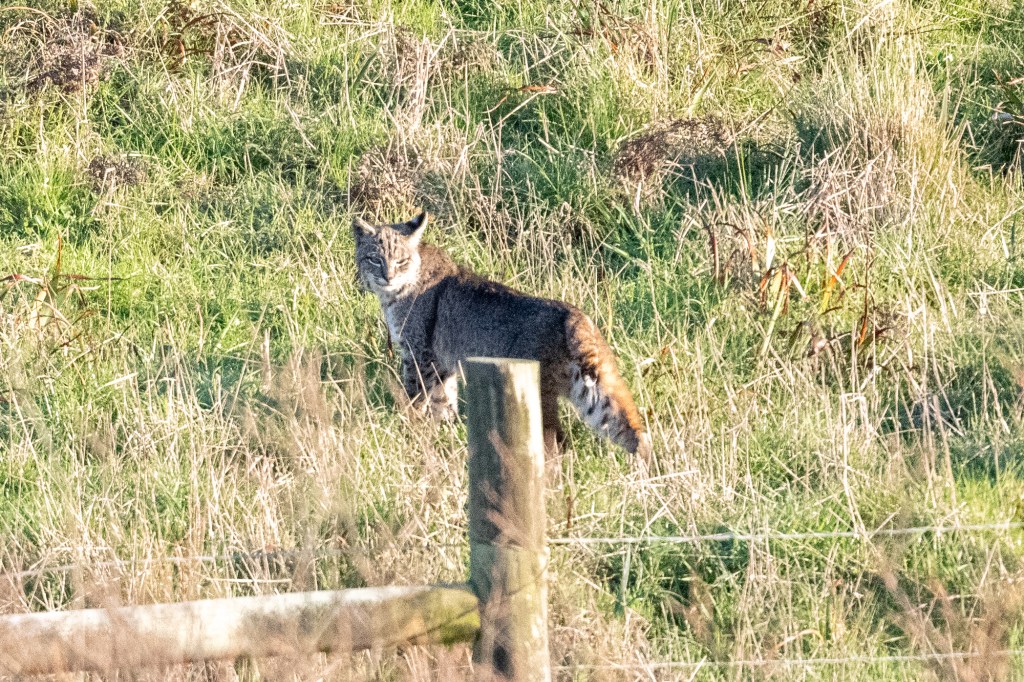
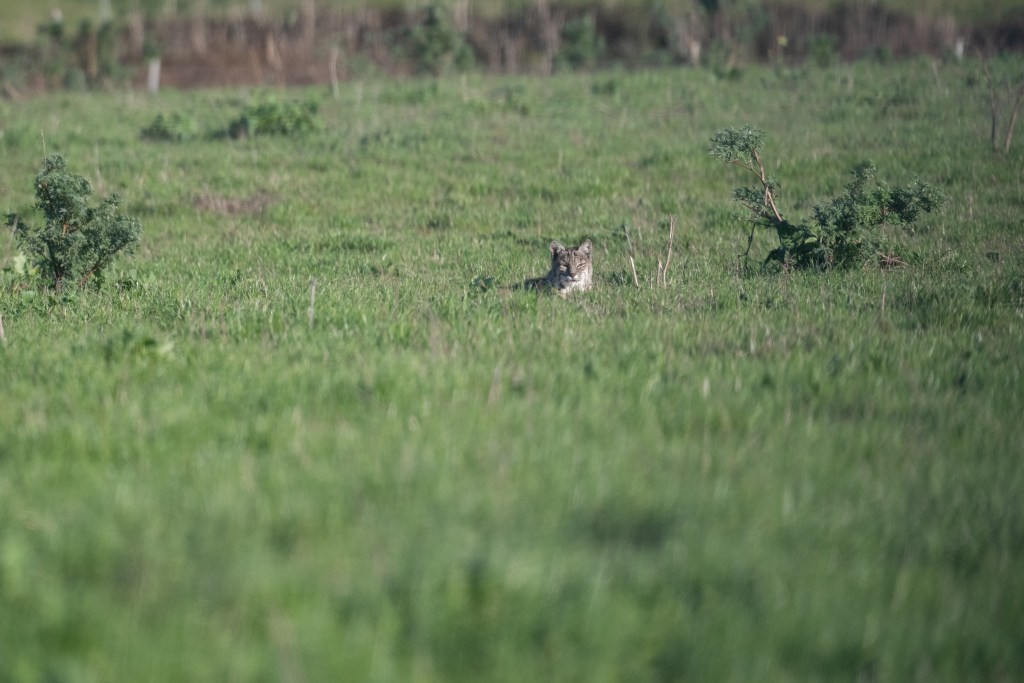
After the coyote we continued driving North on the road towards Pierce Ranch. Along the way we saw a person pulled over on the side of the road taking pictures of something in a field to the right. And off in the field I could see a lightly colored object. We pulled over and got out of our car and off in the distance, was Bobcat #1.
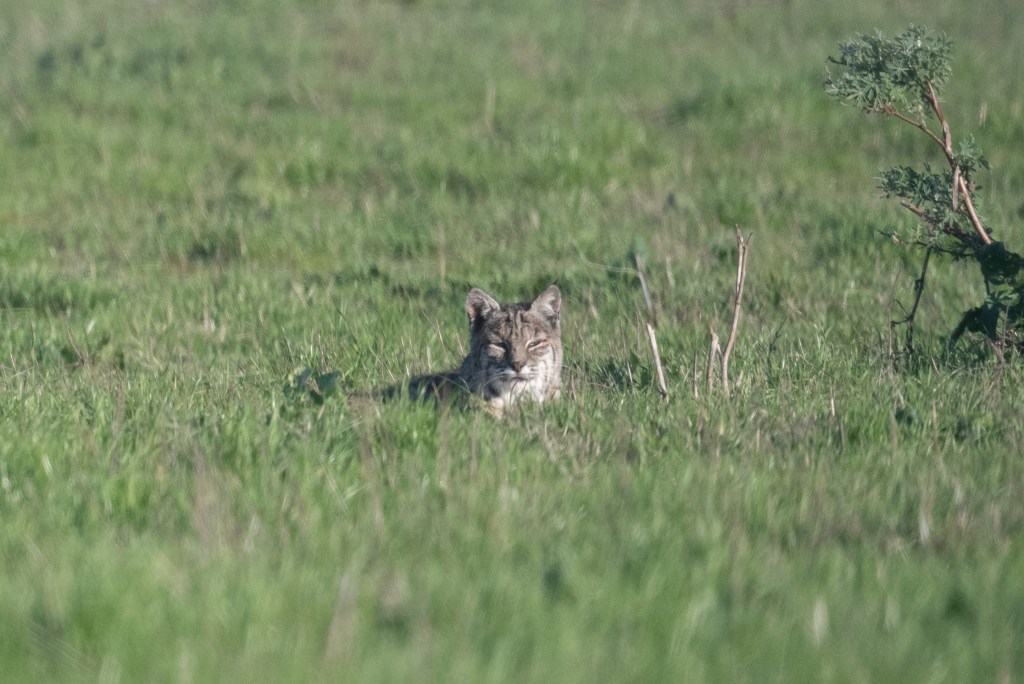
Zoomed in pic:
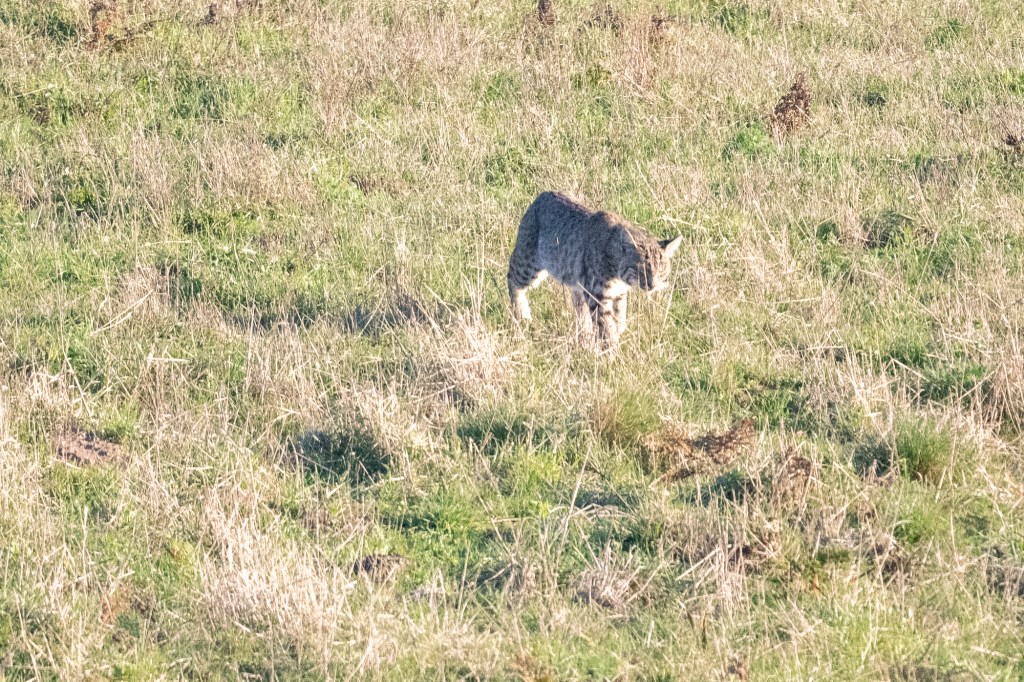
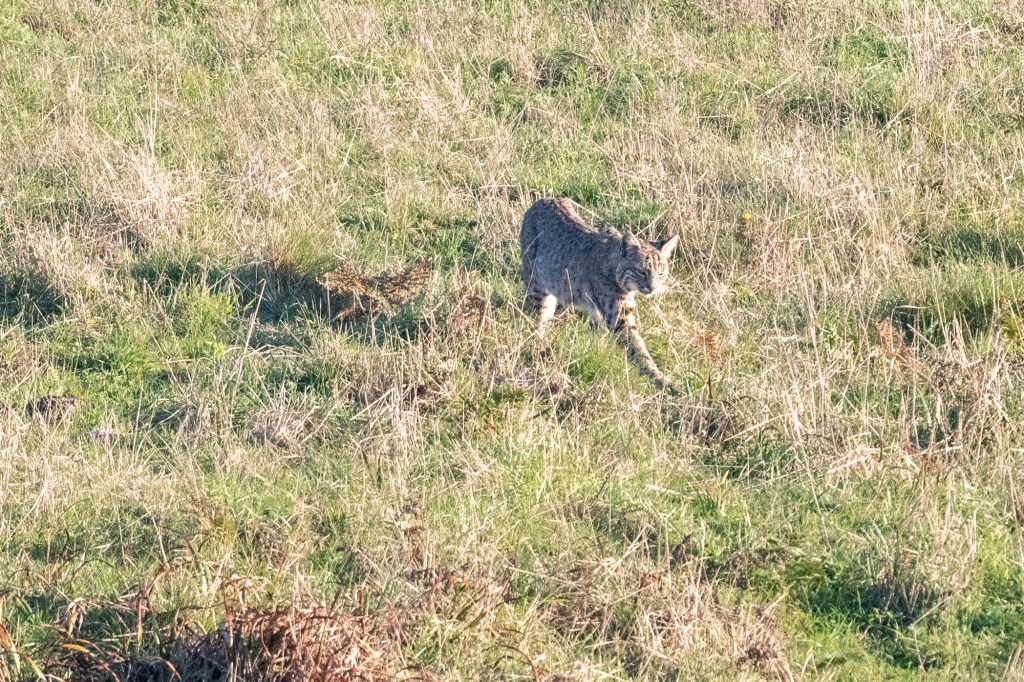
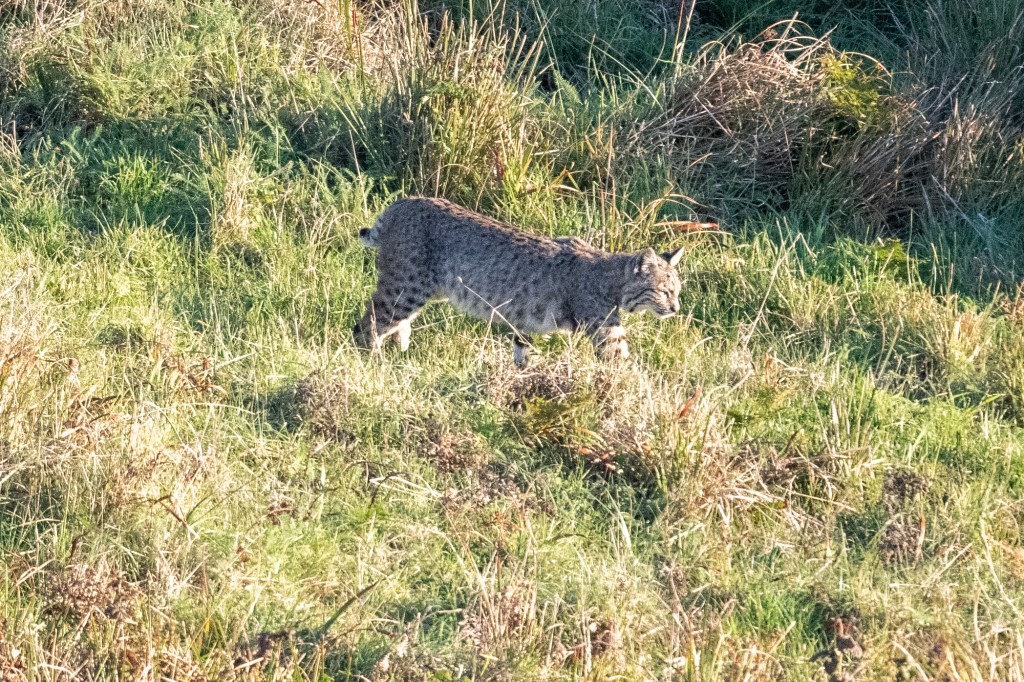
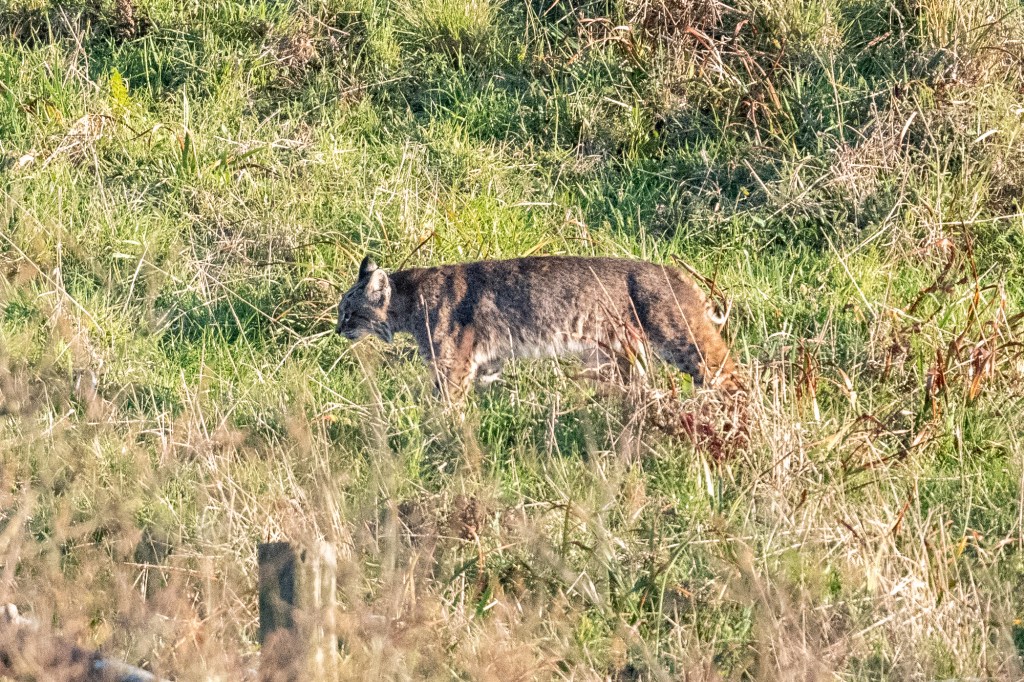
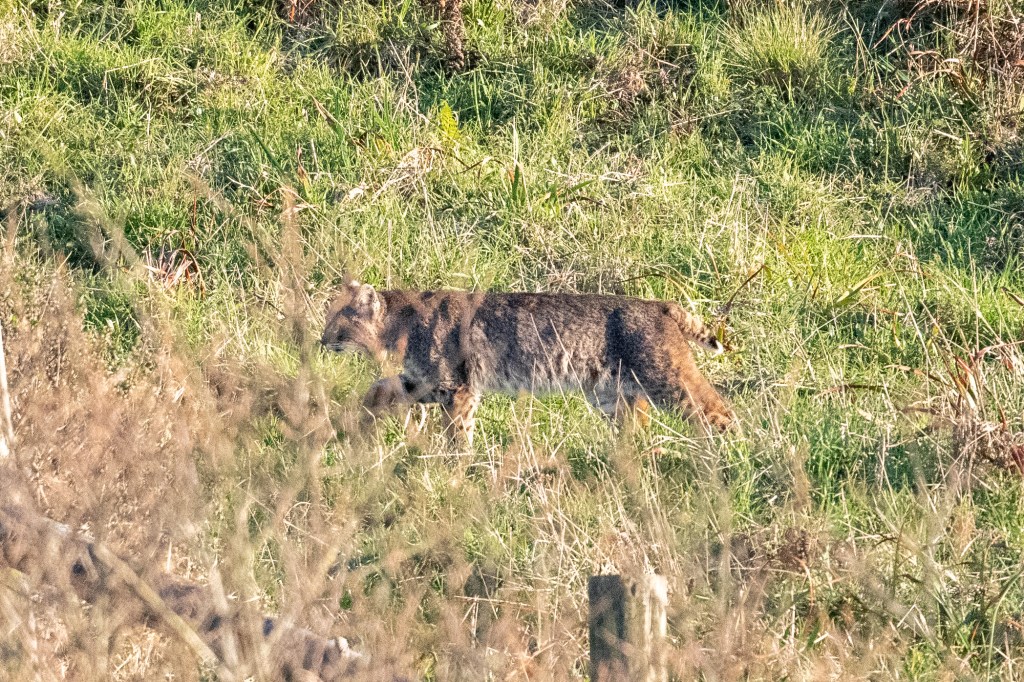
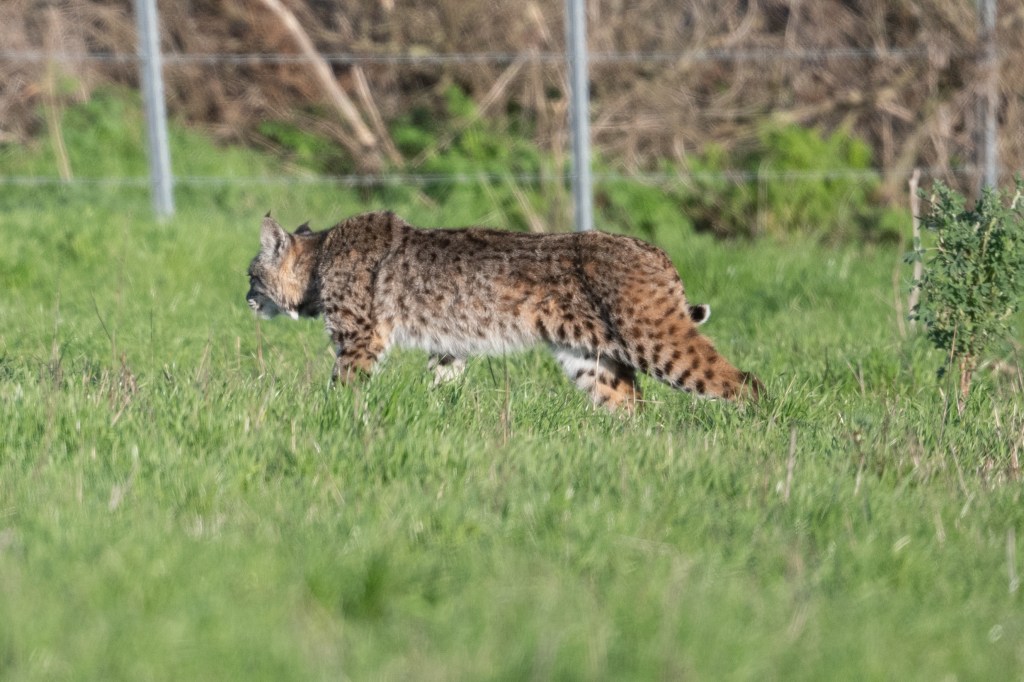
The bobcat then got up and walked towards some bursh and I got a few more pics.
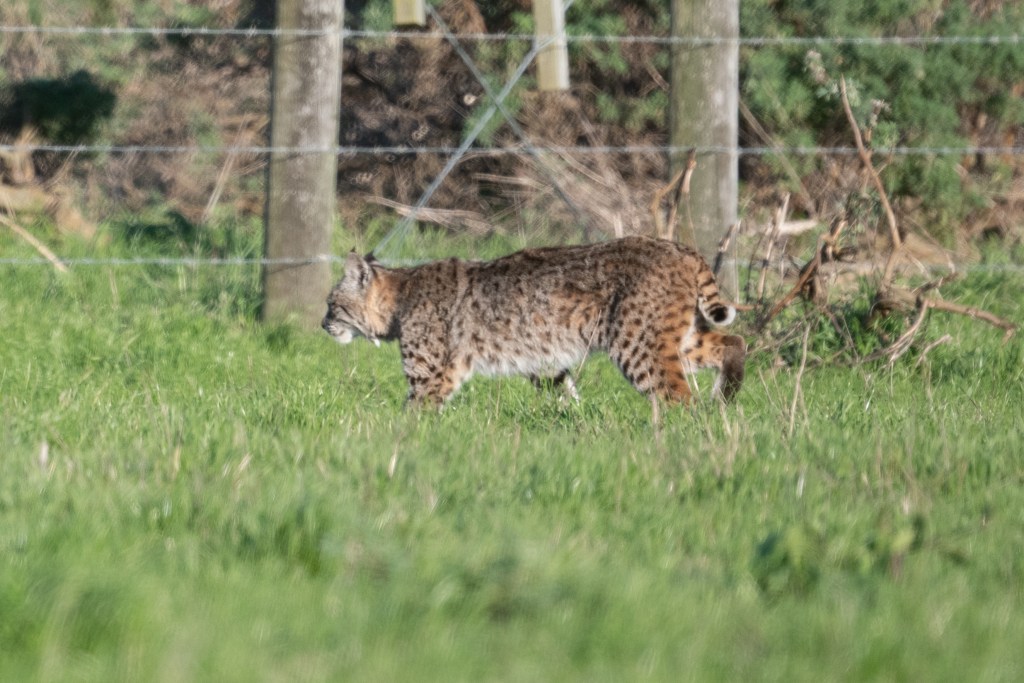
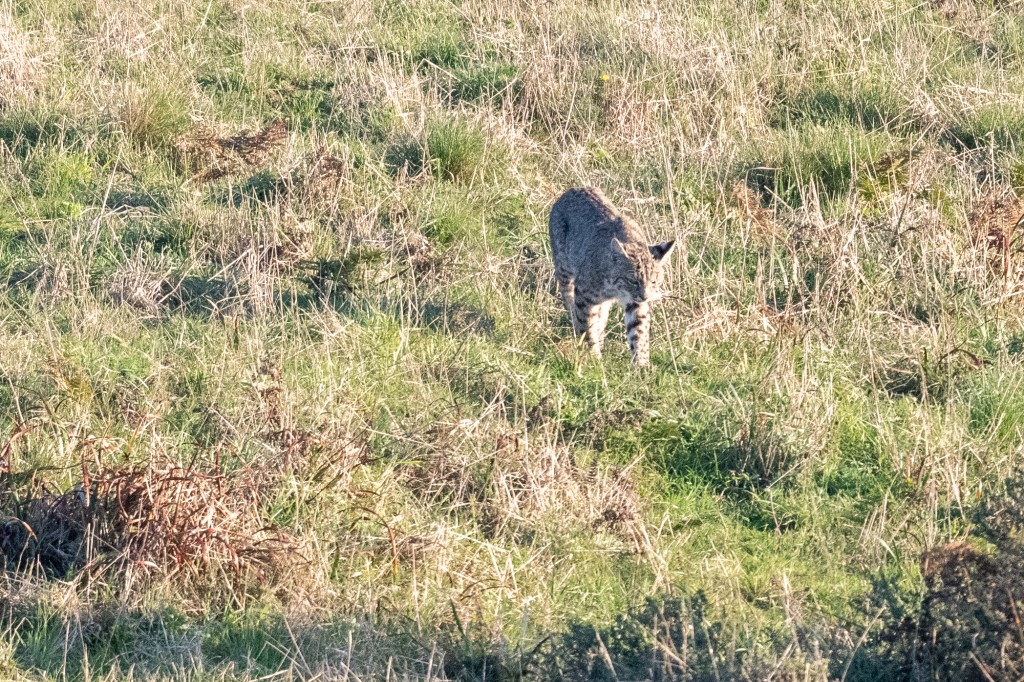
And then it took a look in my direction.
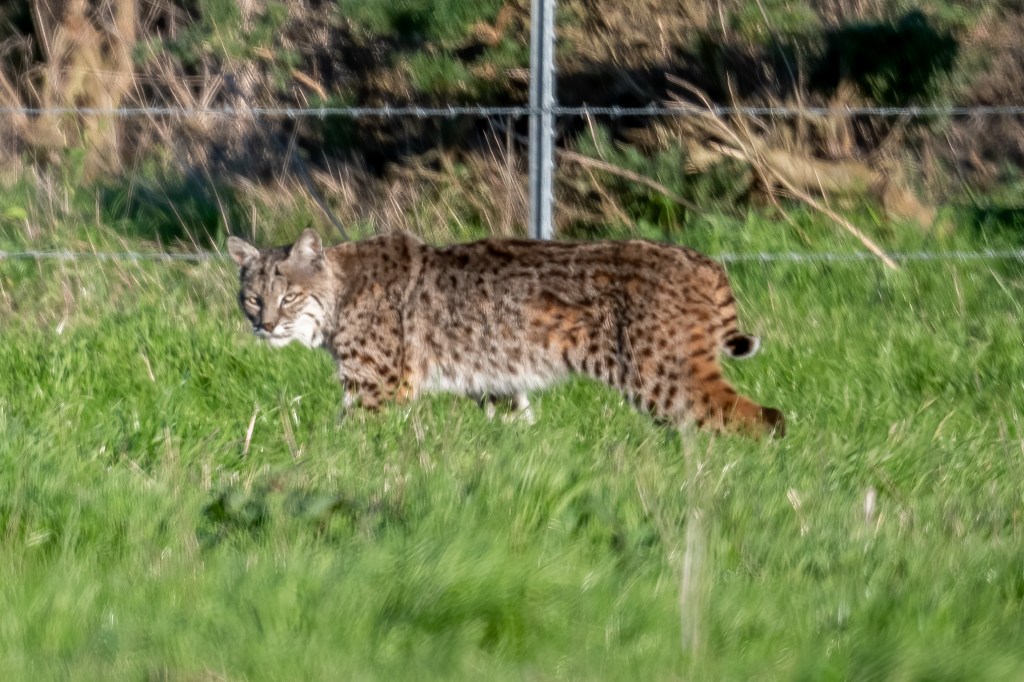
And then it was into the bushes and was gone.
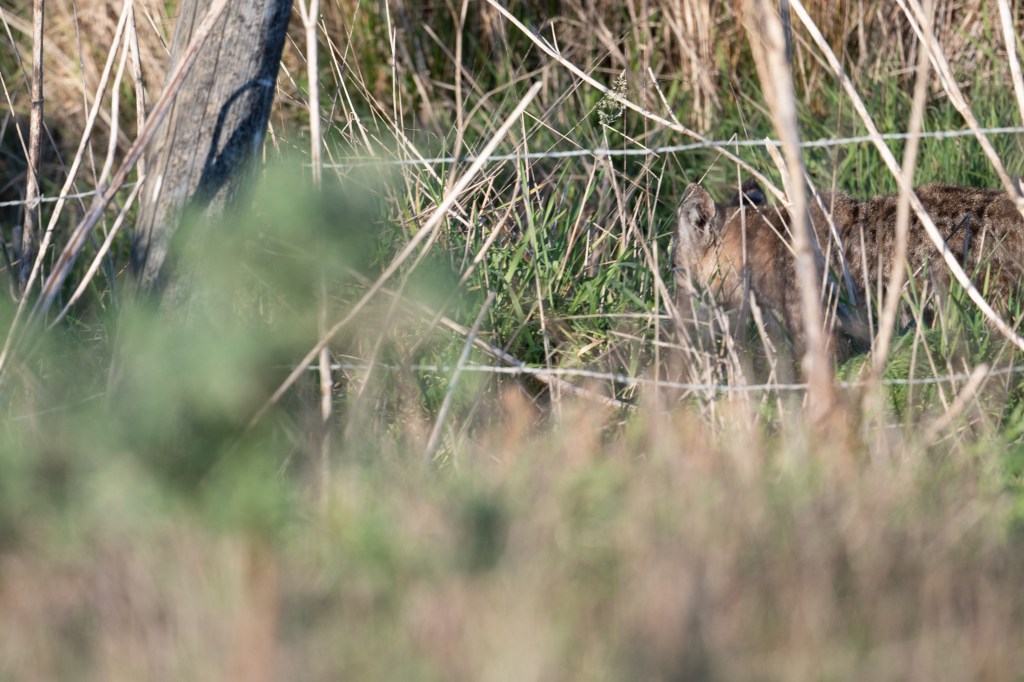
Absolutely amazing. It was the first good look my daughter has ever gotten of a bobcat. We were giddy.

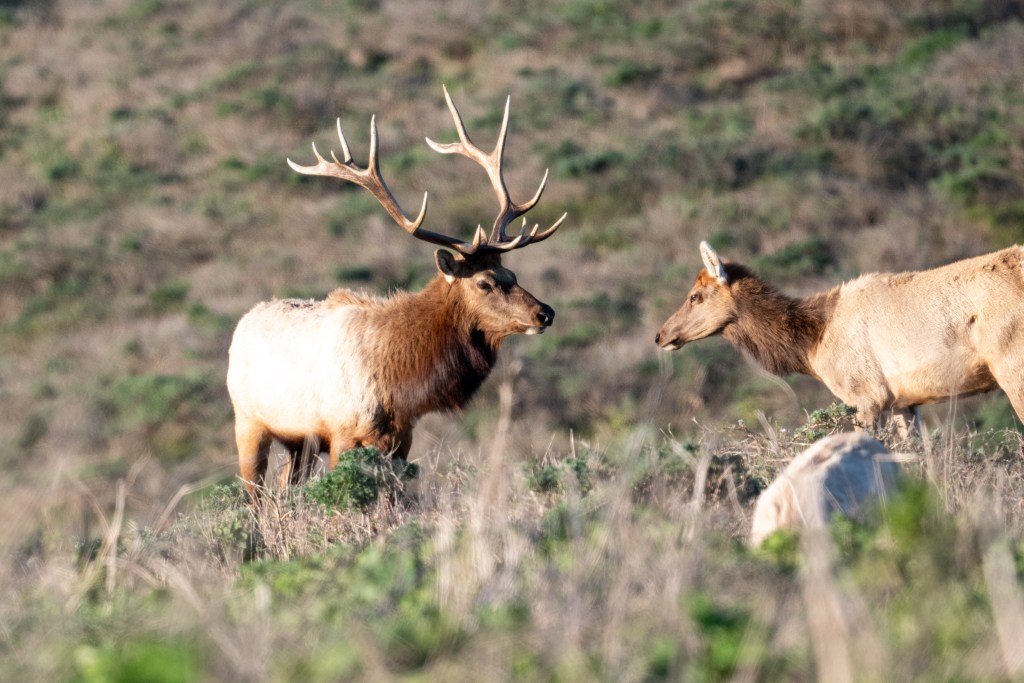
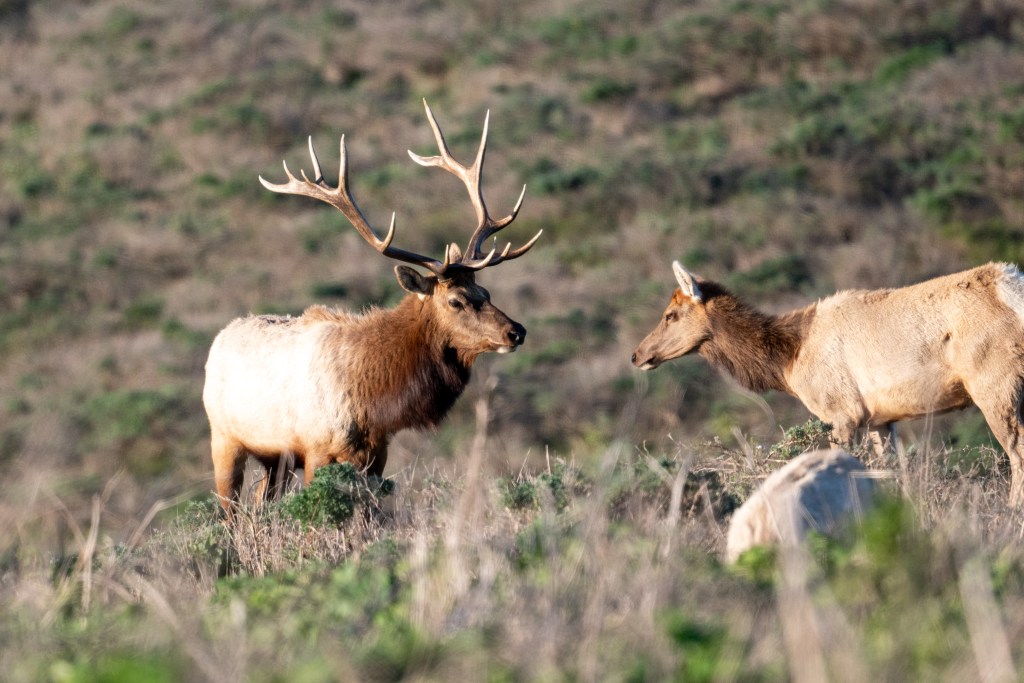
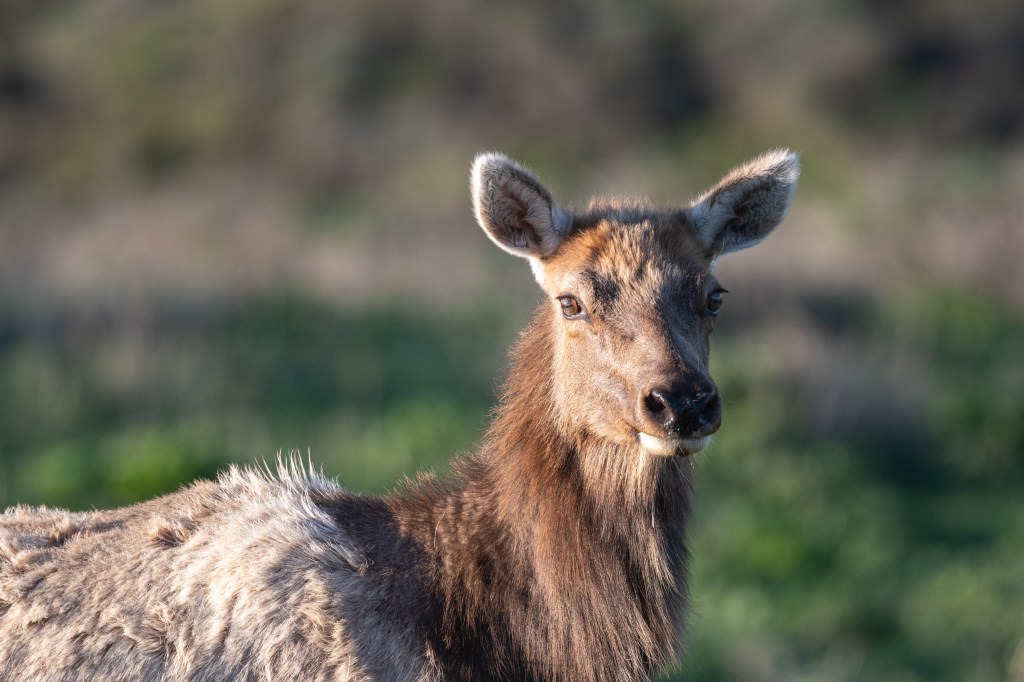
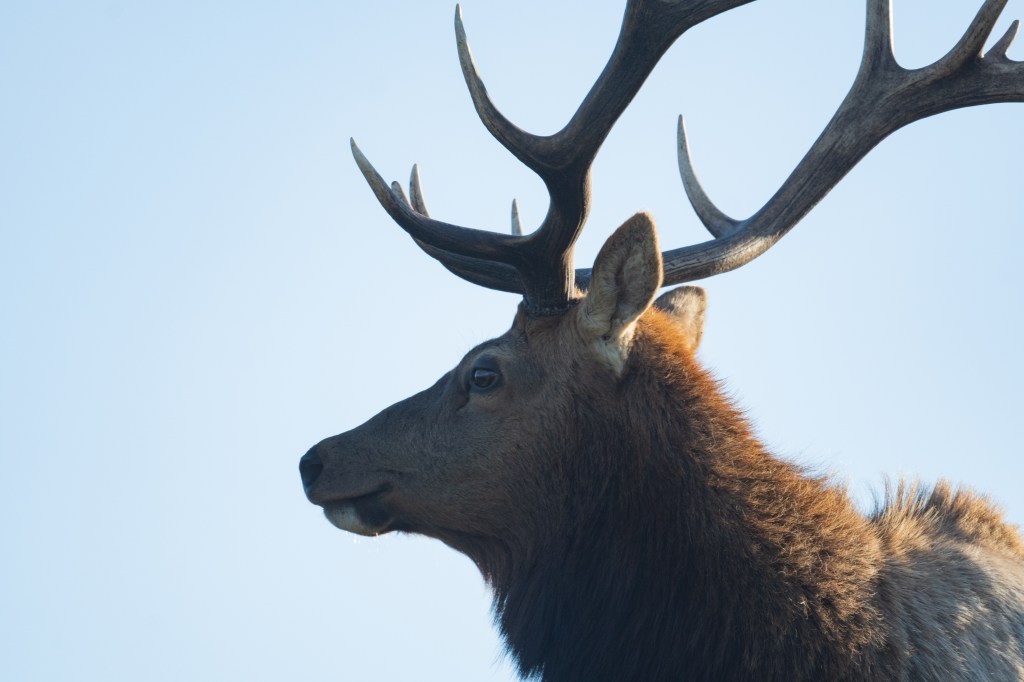
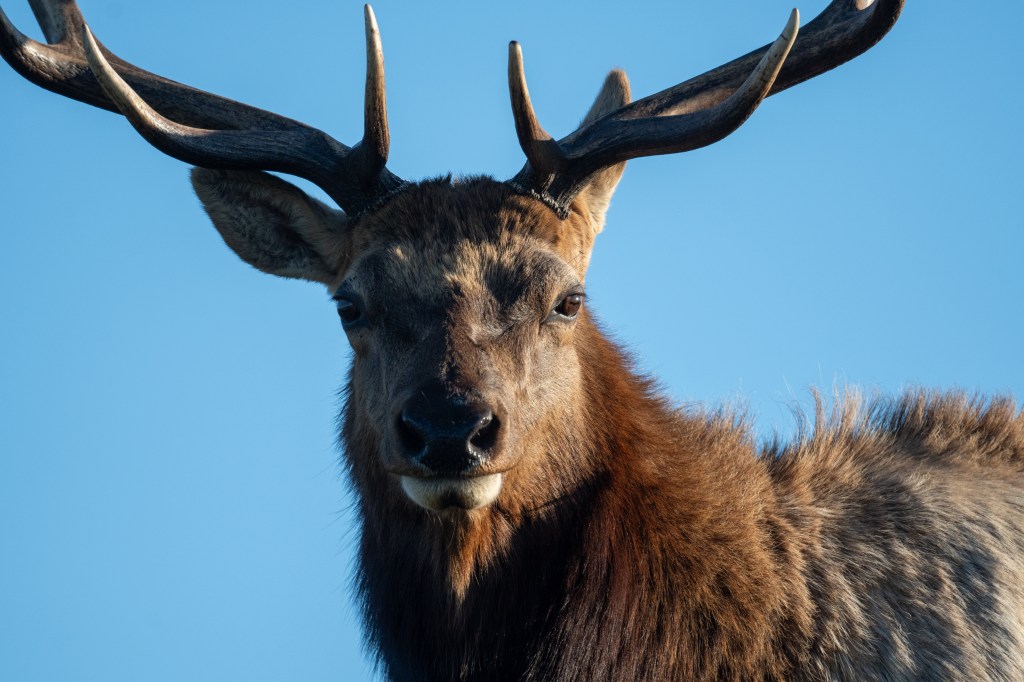
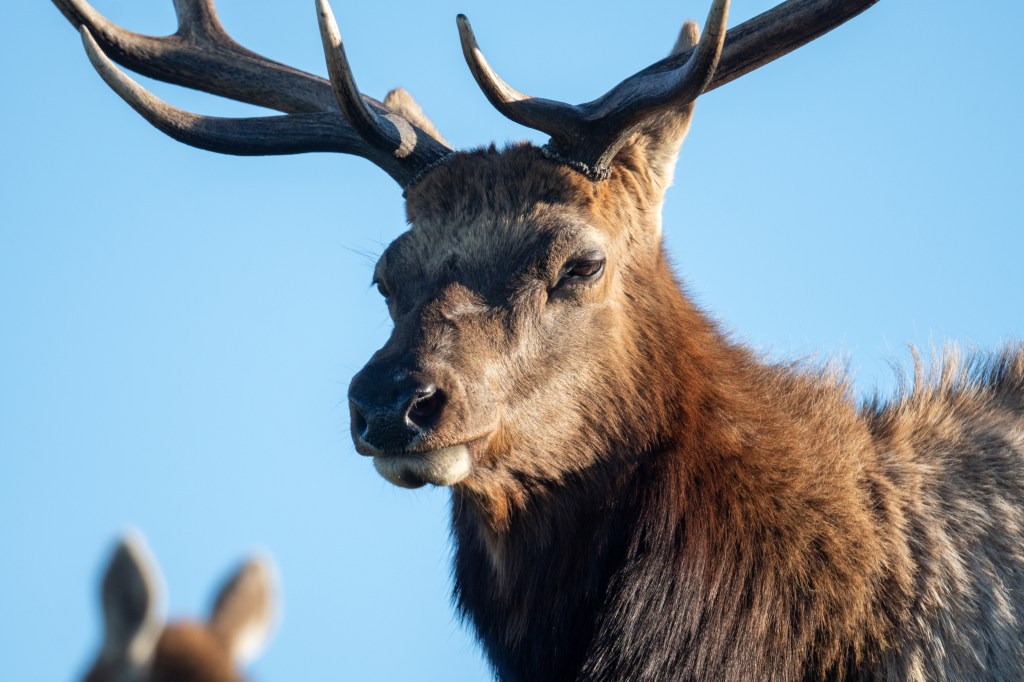
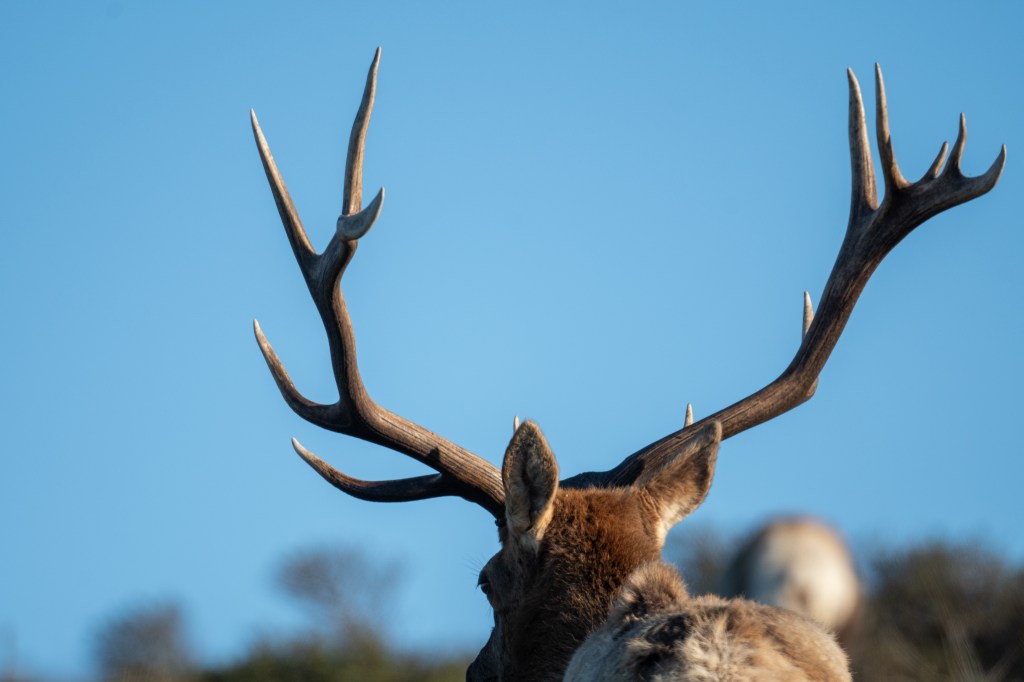
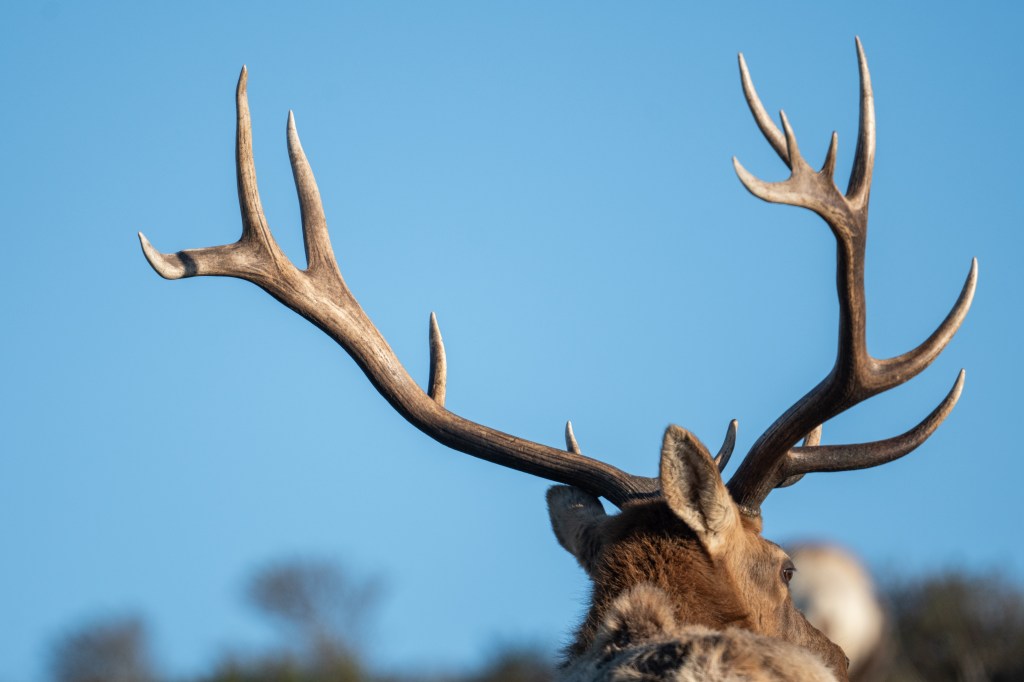
Basically our entire trip could have just ended and we would be happy. But this was just a taste … We got back in my car and headed off again – still going towards Pierce Ranch. On the way to and then from Pierce Ranch we got to see a few more coyotes and tons of elk. Here are some pics of the elk.
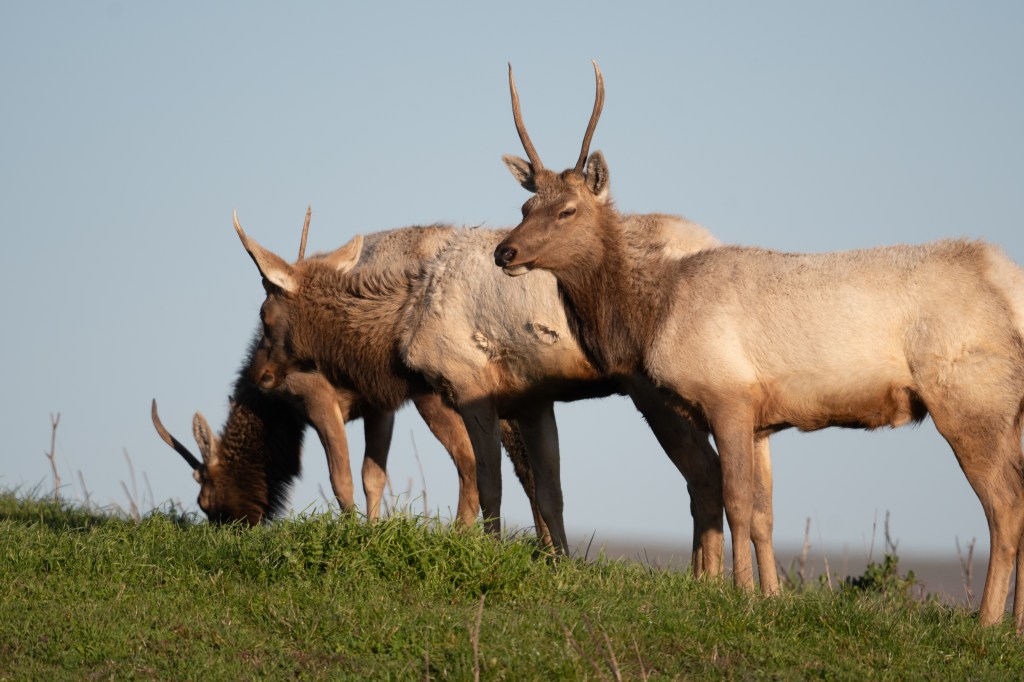
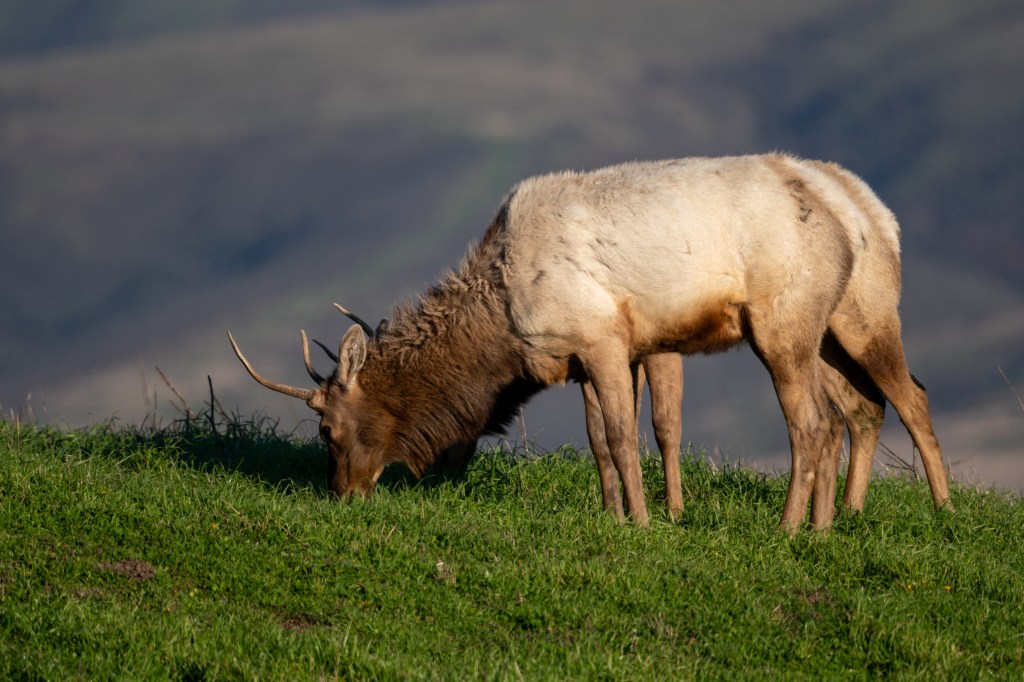
I also got a video of the big male elk leading his group across the road.

So this was amazing right? Nice bobcat sighting. Nice coyote sighting. A ton of elk. And some birds (which I am not adding here since I did not get any really good pics of them). But little did we know that there was more to come.

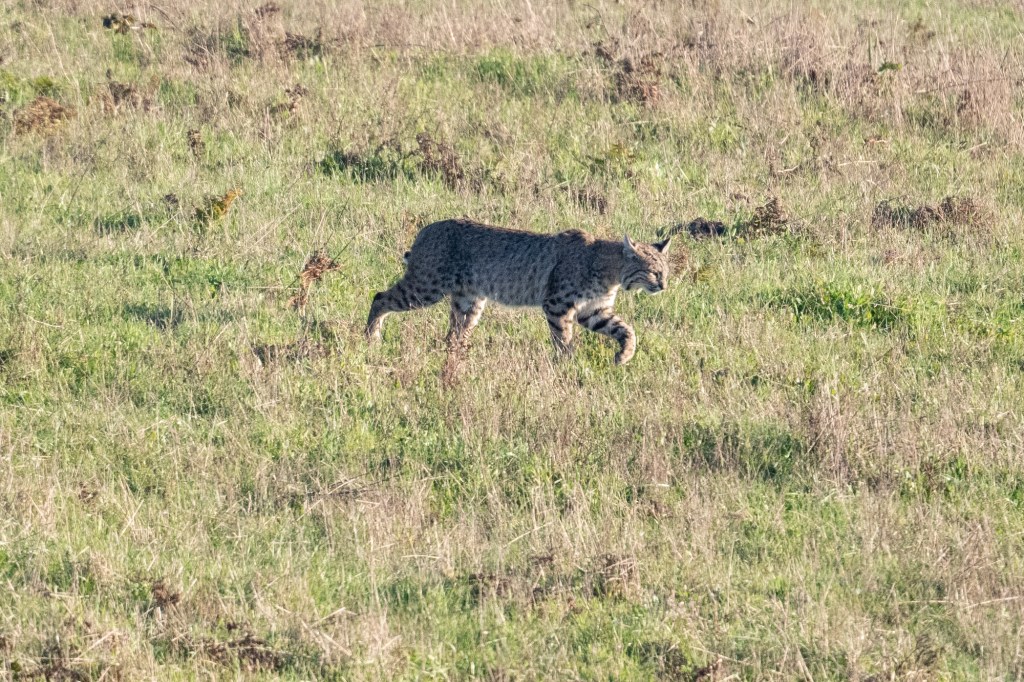
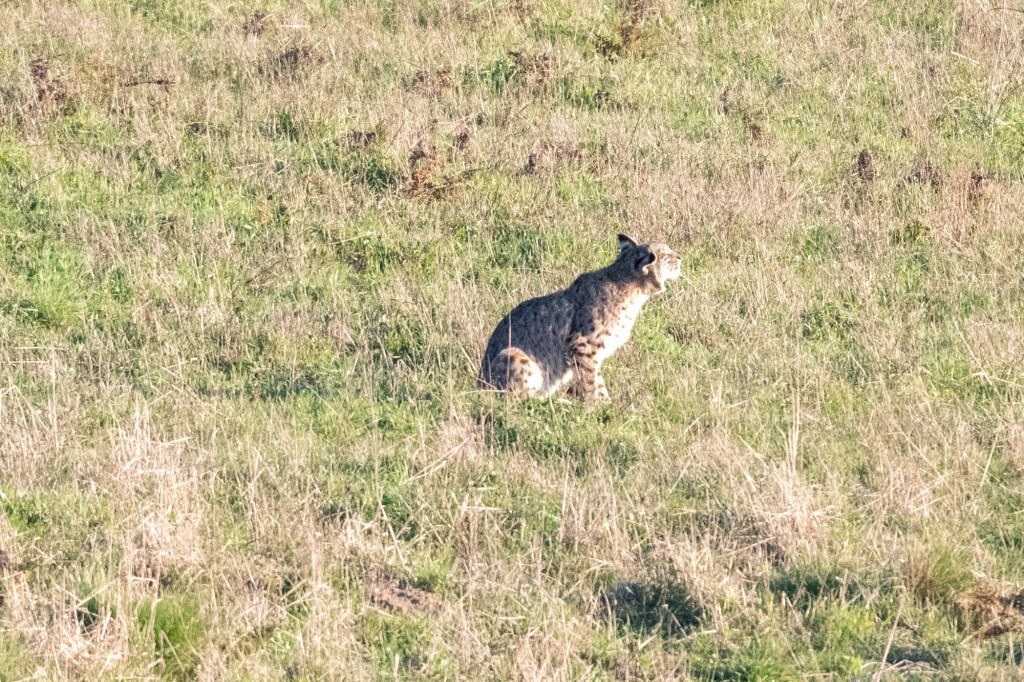
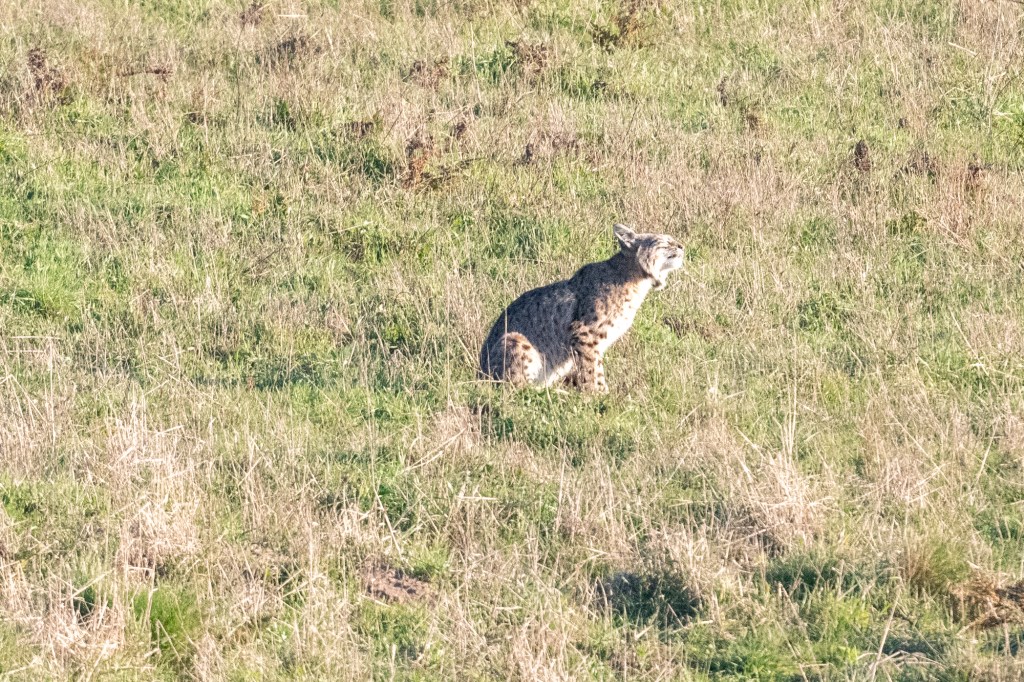
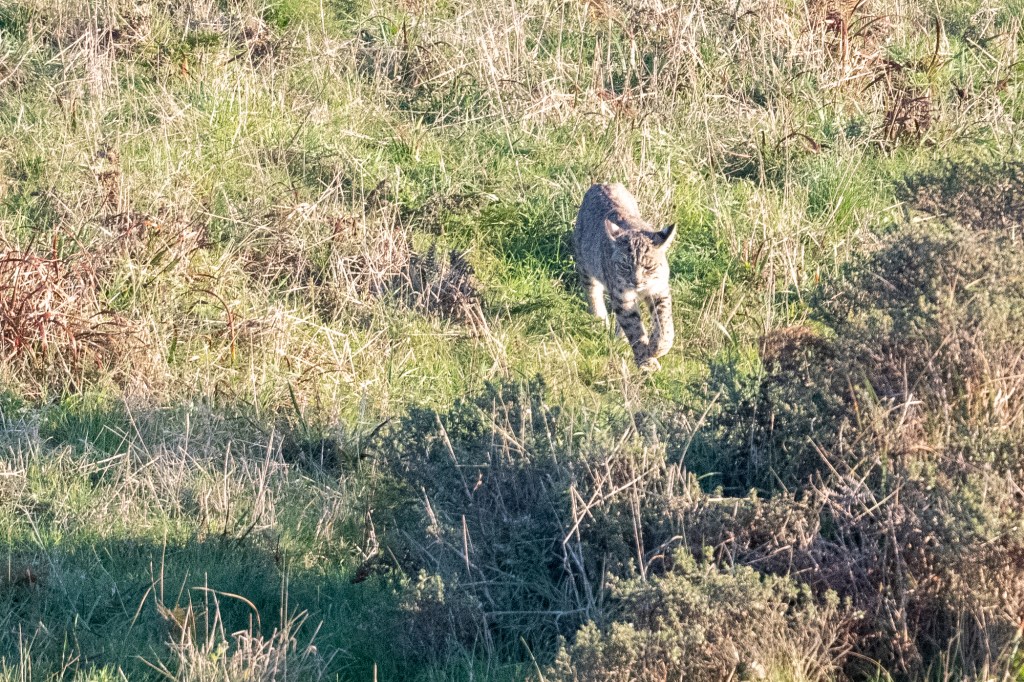
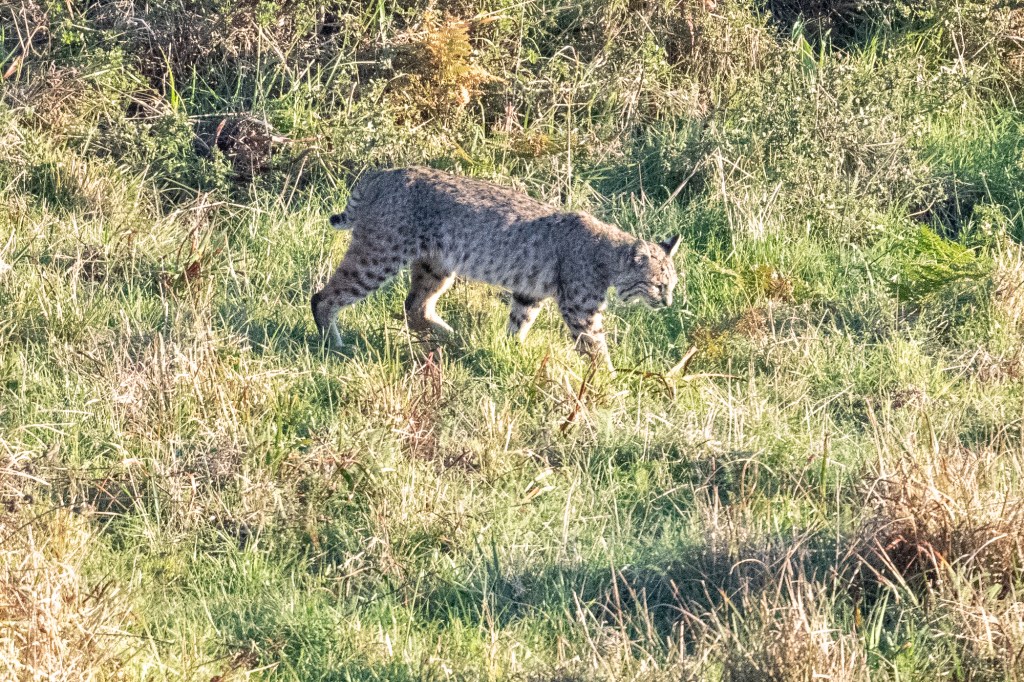
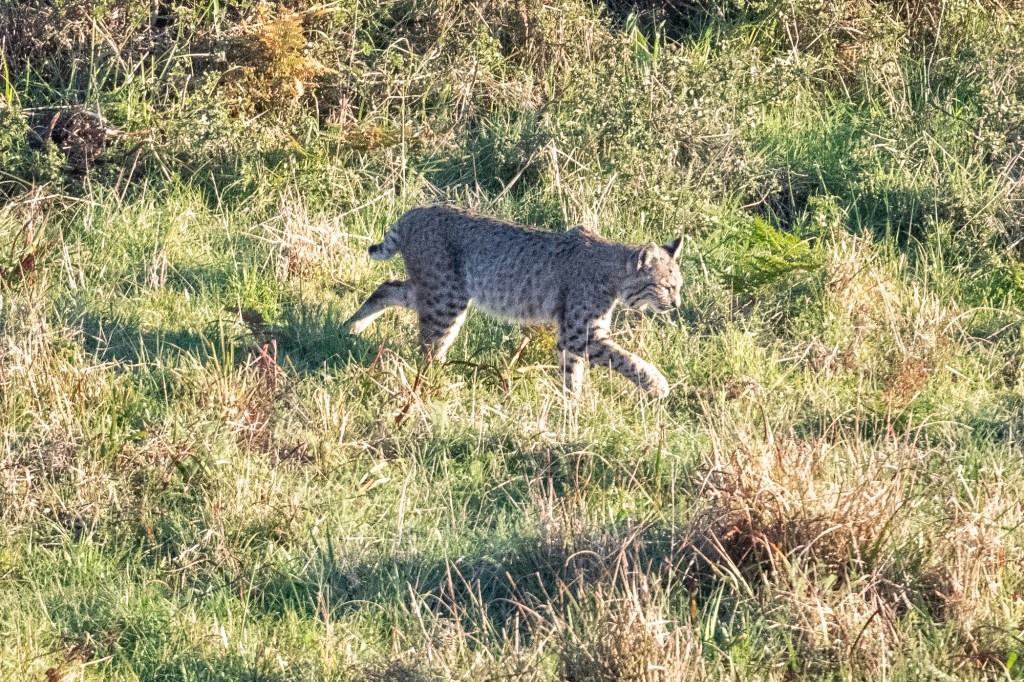
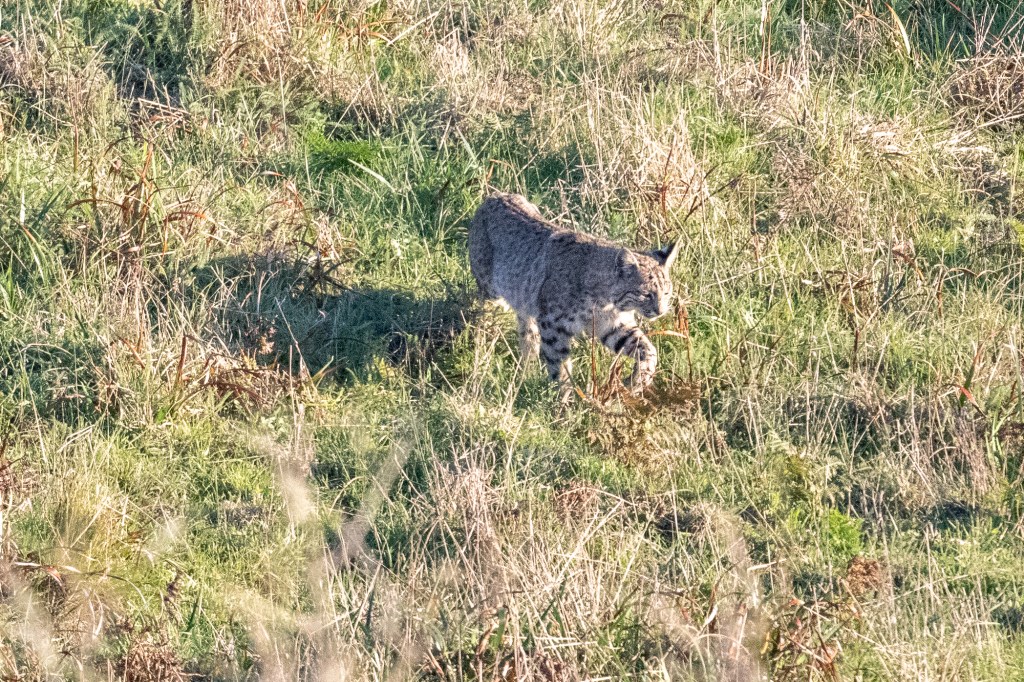
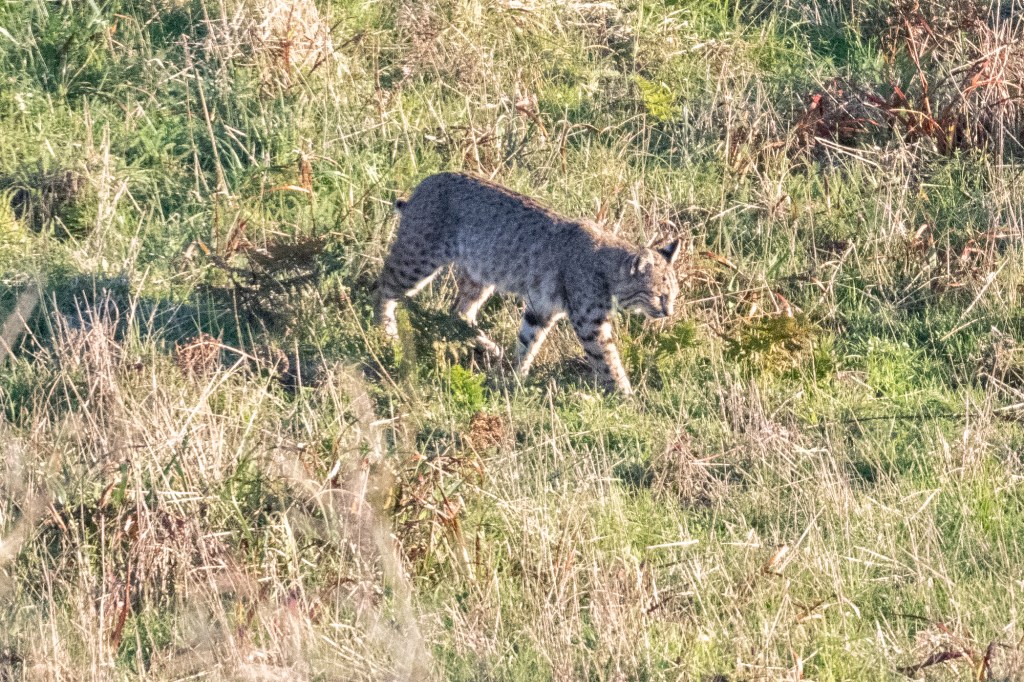
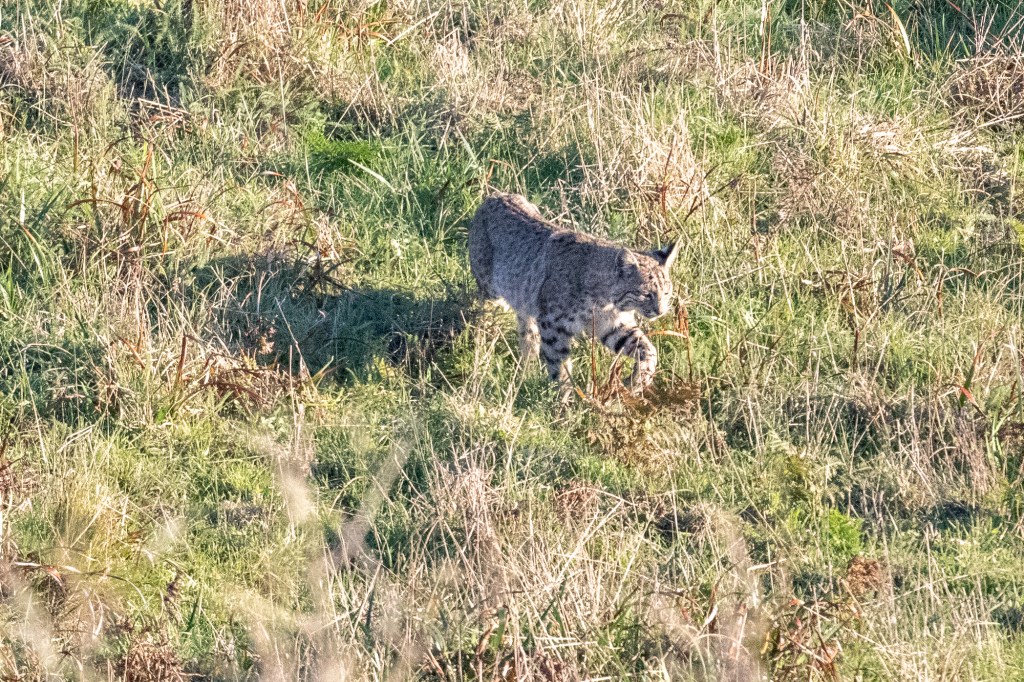
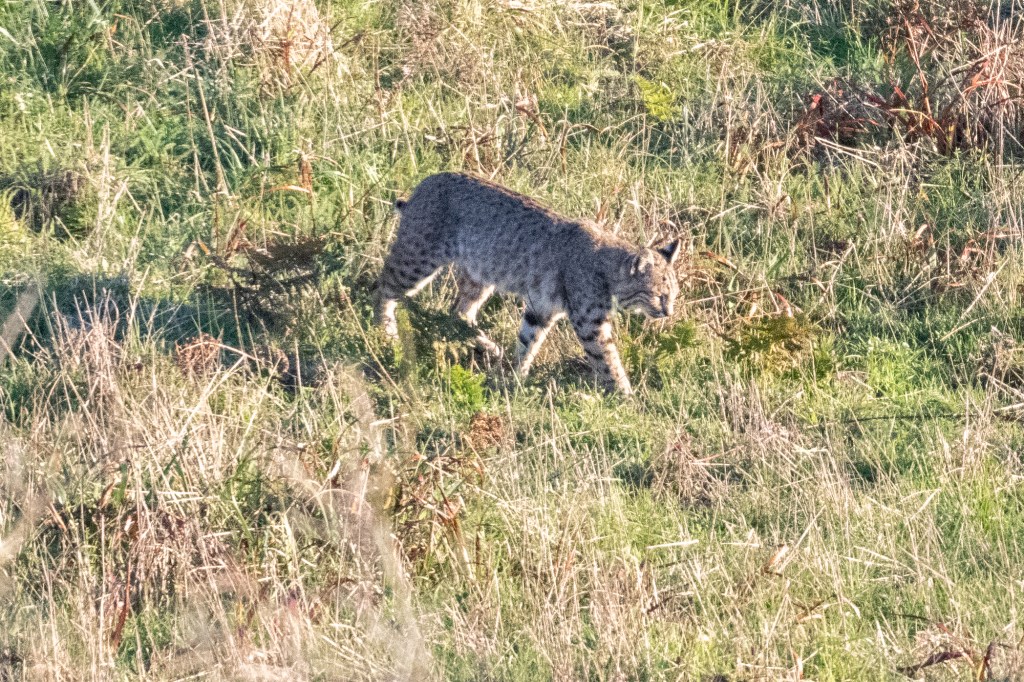
As we were driving back towards Inverness, close to where we saw the first bobcat, we saw a yellow / brown creature up on a hill. I pulled over, grabbed my camera (mostly to use the telephoto) and lo and behold it was another bobcat.
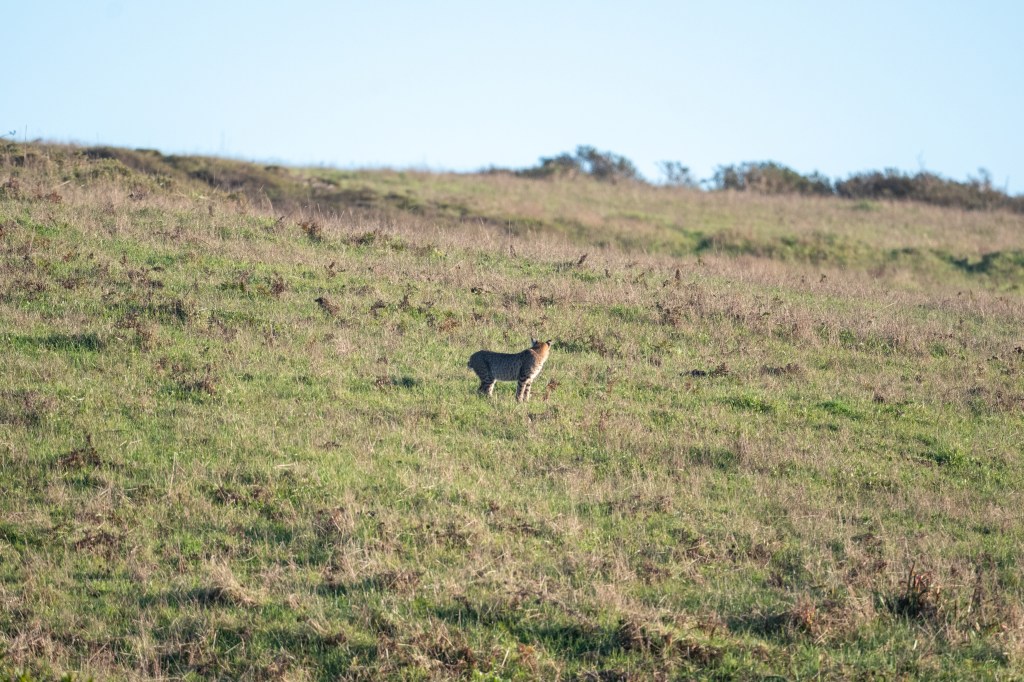
It then started walking down the hill towards us.
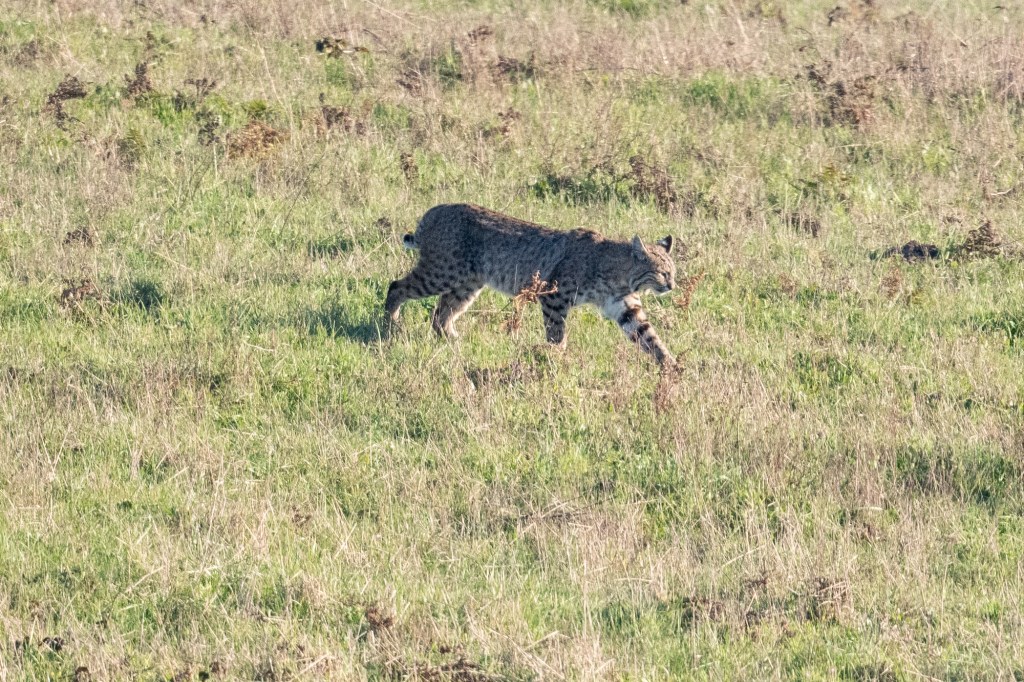
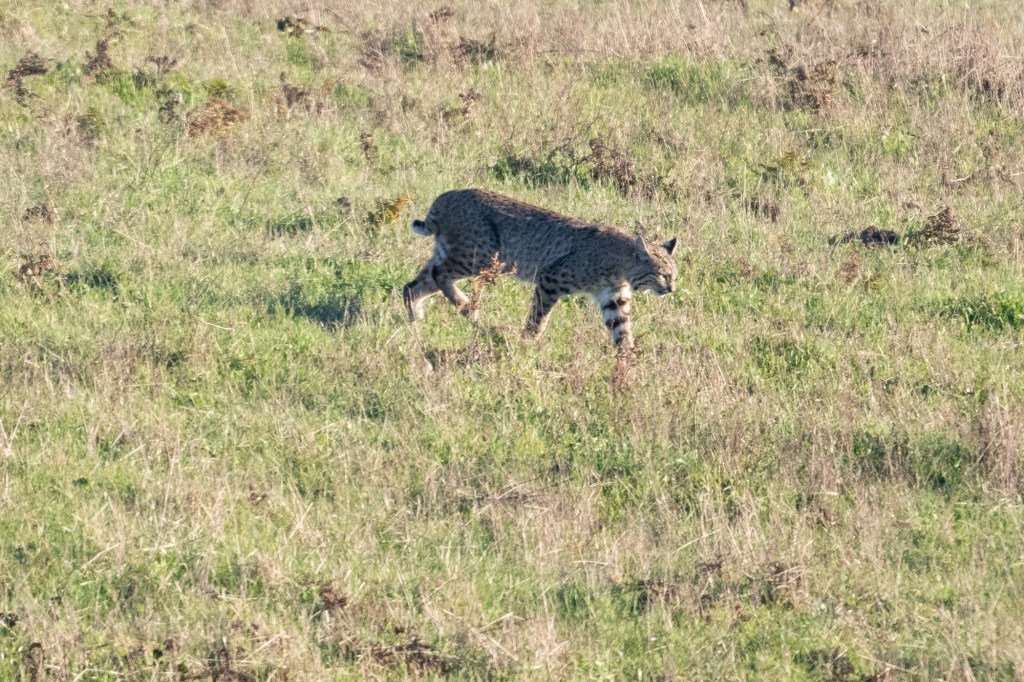
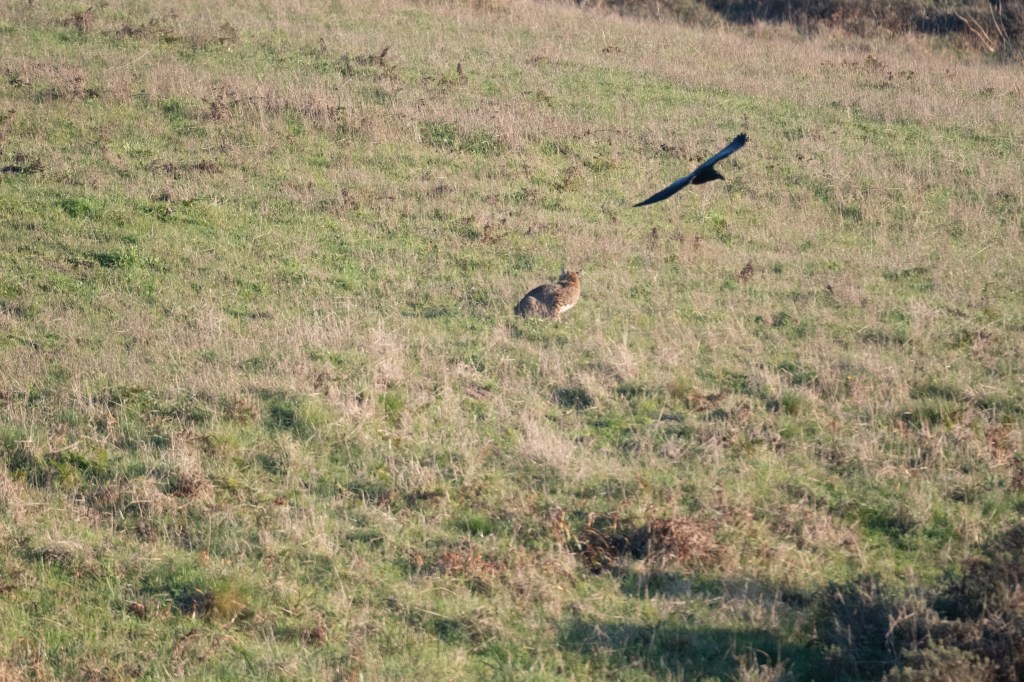
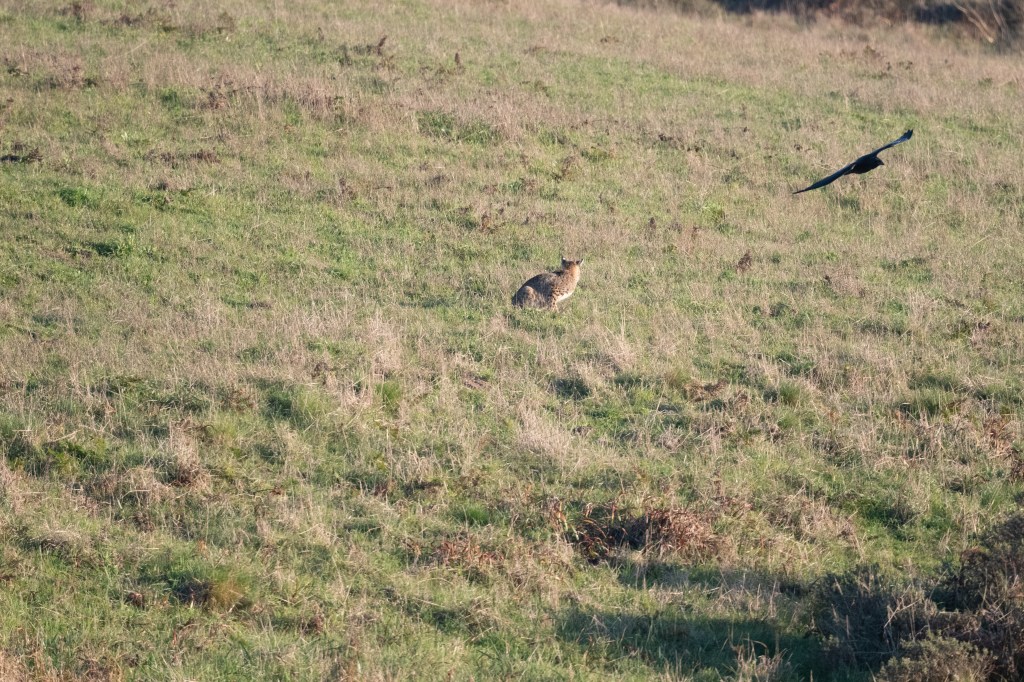
It then took a break and sat down for a while, groomed, sniffed a bit, and was even divebombed by a raven or crow.
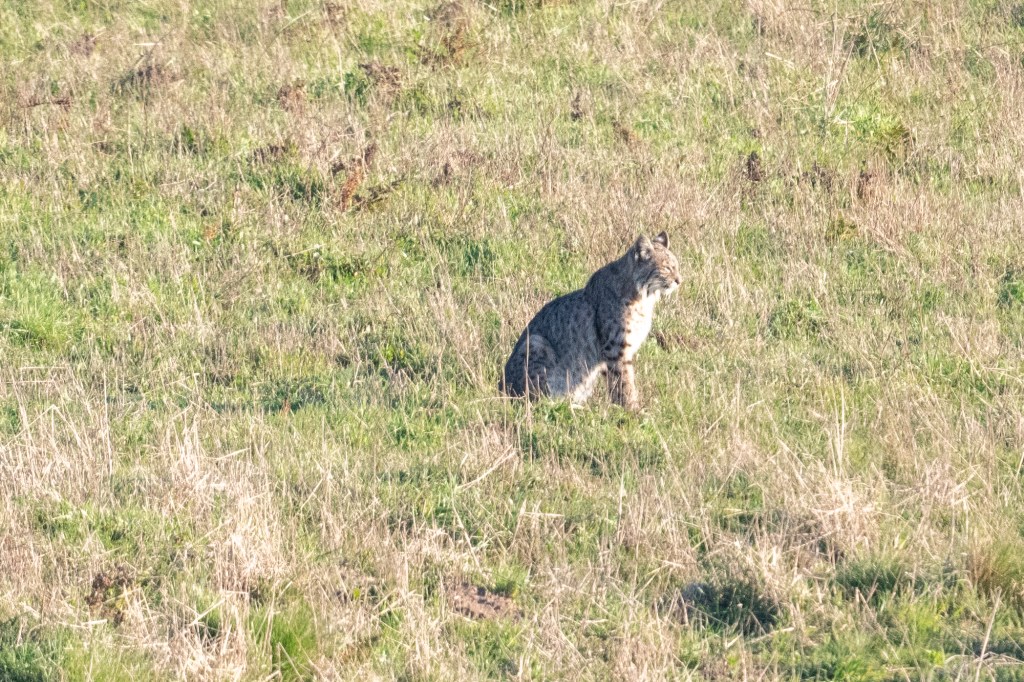
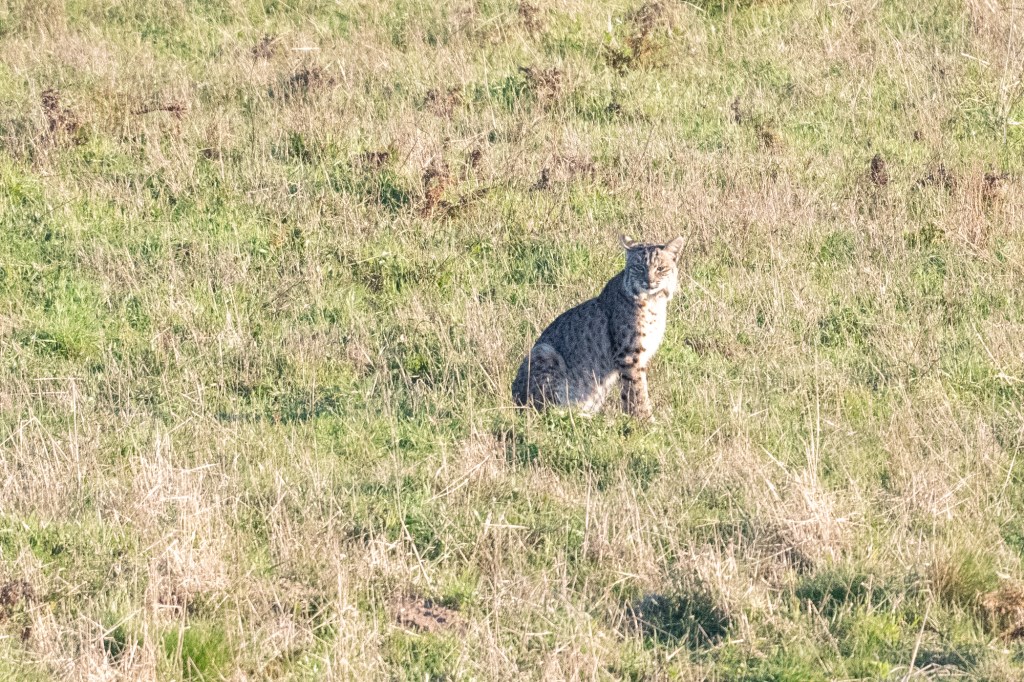
And then it headed down the hill getting a bit closer to us.
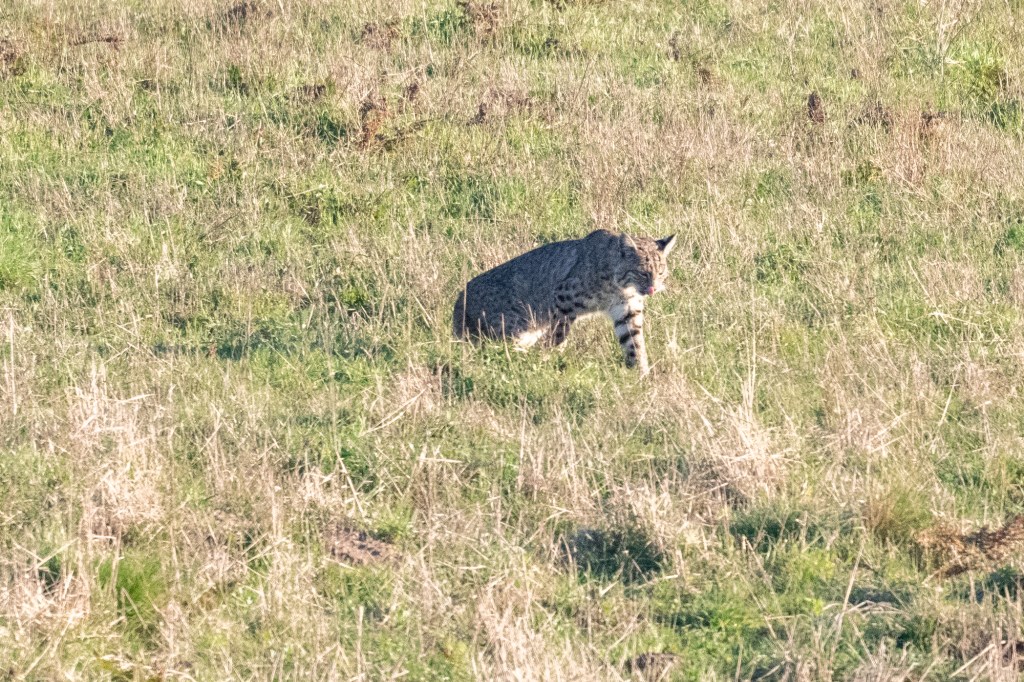
And then it sat down again.
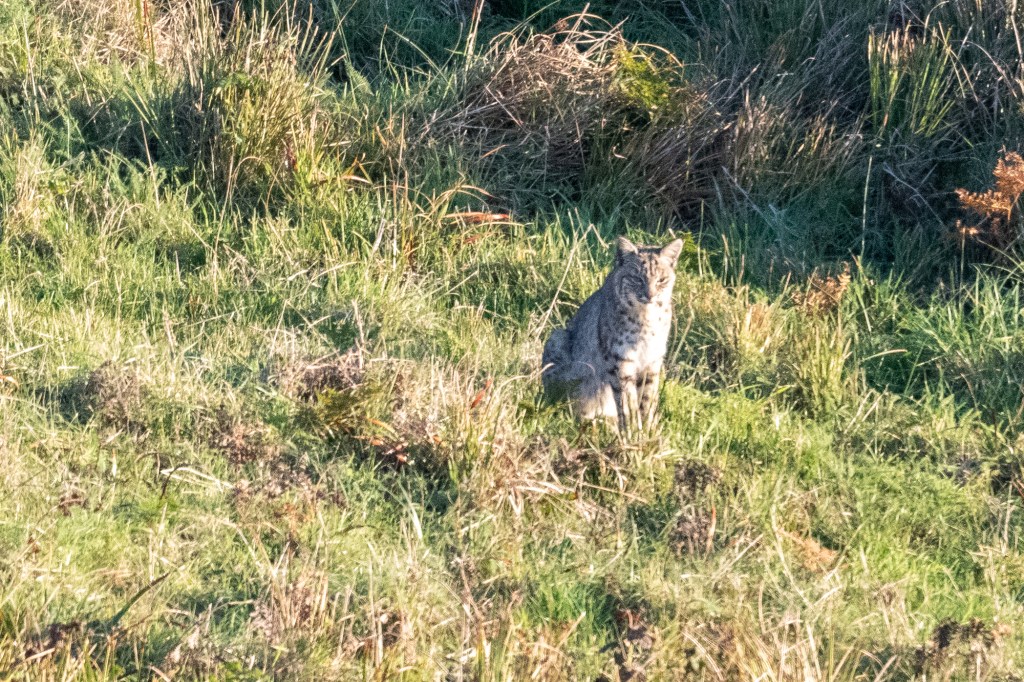
And I guess it could have stopped here. But this was not by any means the end of our bobcat encounter. Right then my daughter said, excitedly, something like “Oh my god – there is another bobcat.” And she pointed out where it was a bit down the hill from this one. Maybe 30 feet away or so. So I then took some pics of that one.
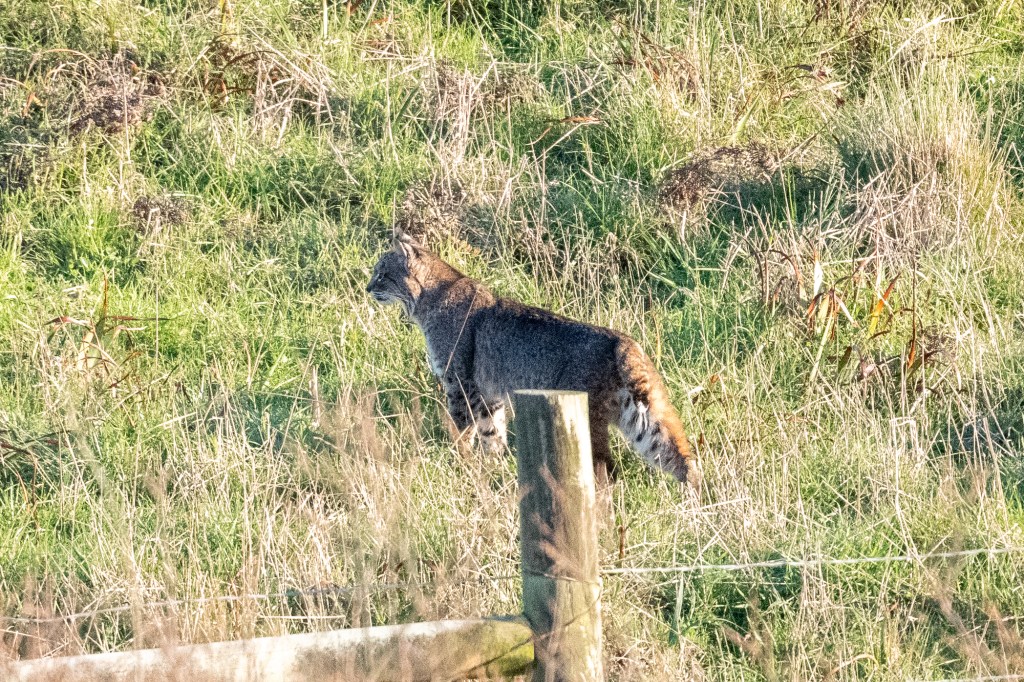
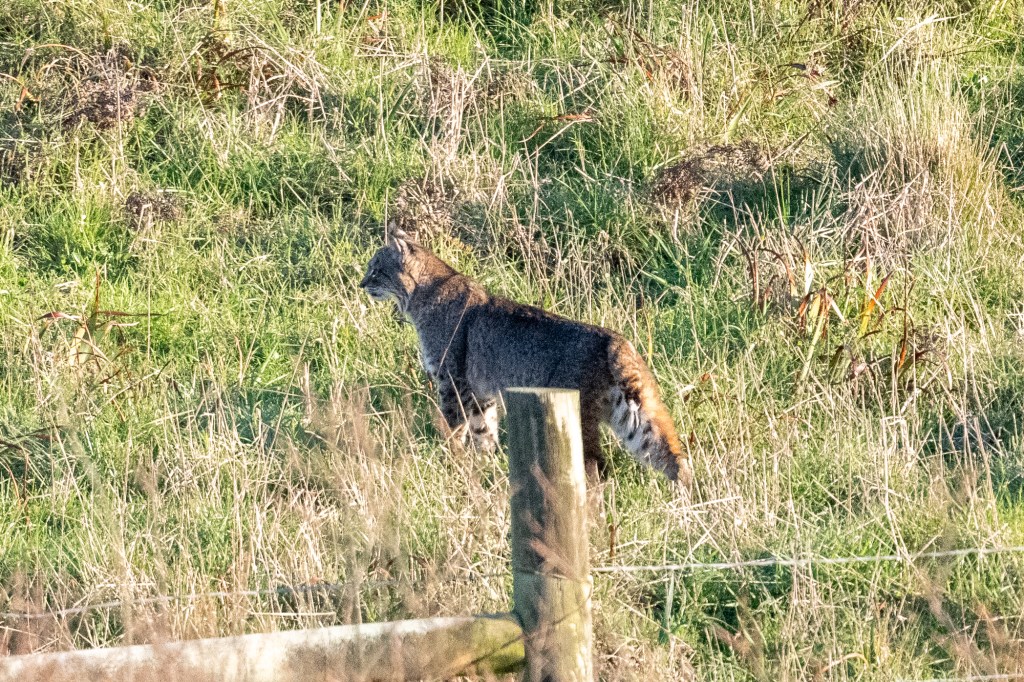
I then thought – I should try to get a pic with both of them in it – but my 500 mm lens was too large for that. So I deciced to take a bunch of pics panning from one bobcat to the other. I then stitched them together in Adobe Lightroom and this is what I got.
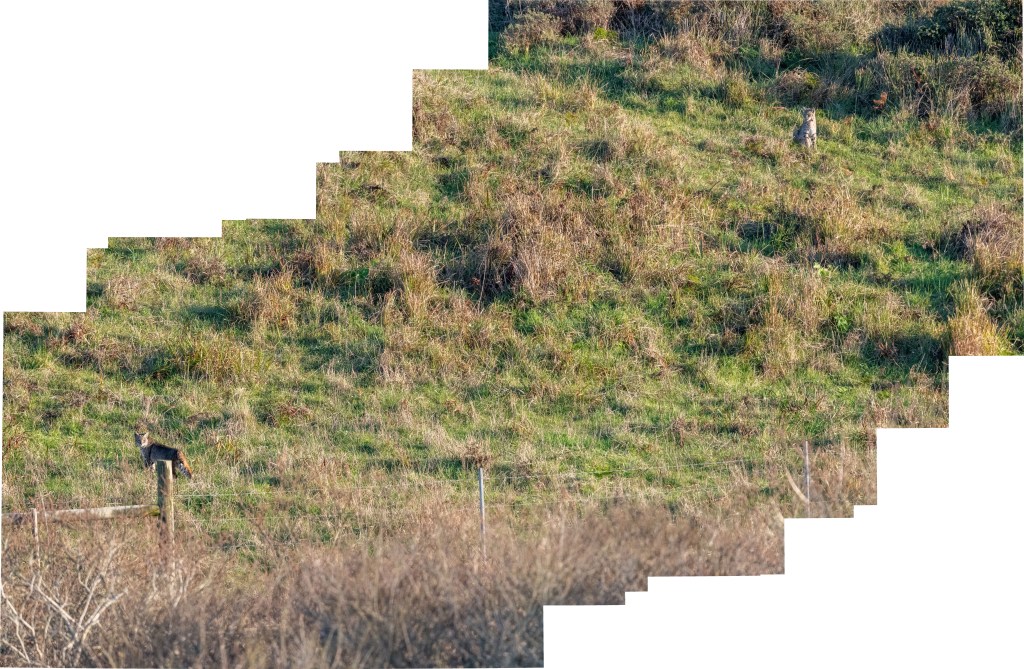
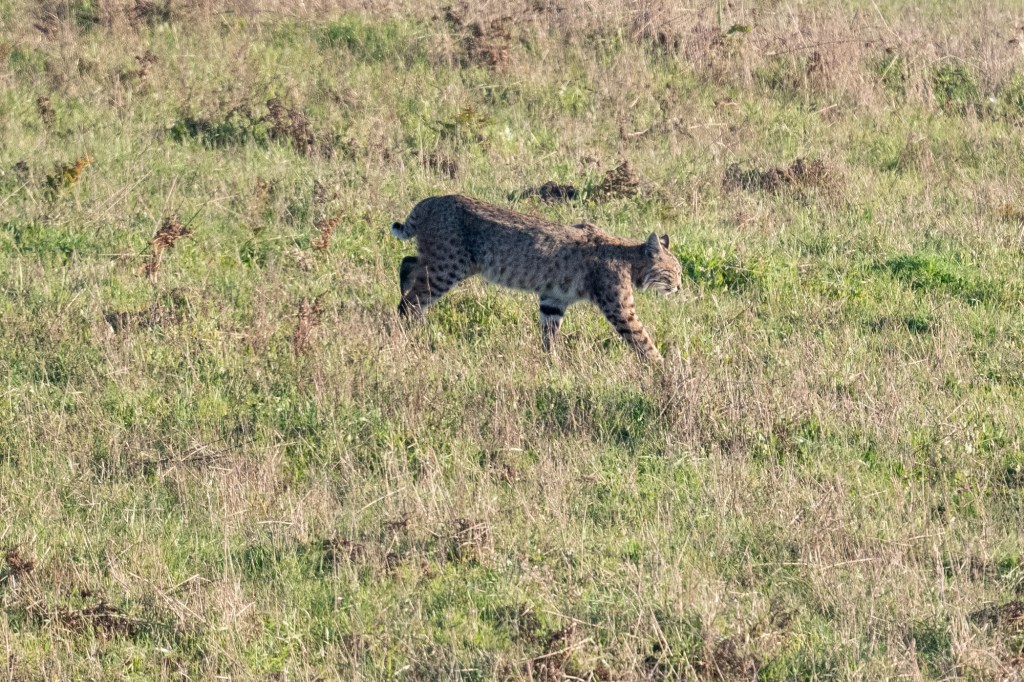
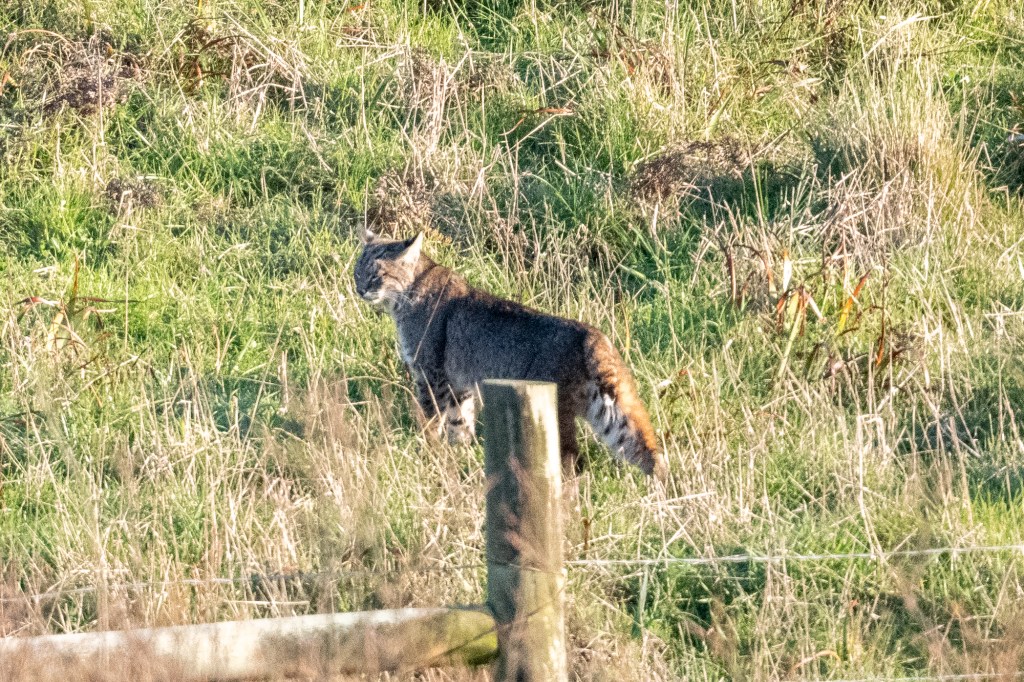
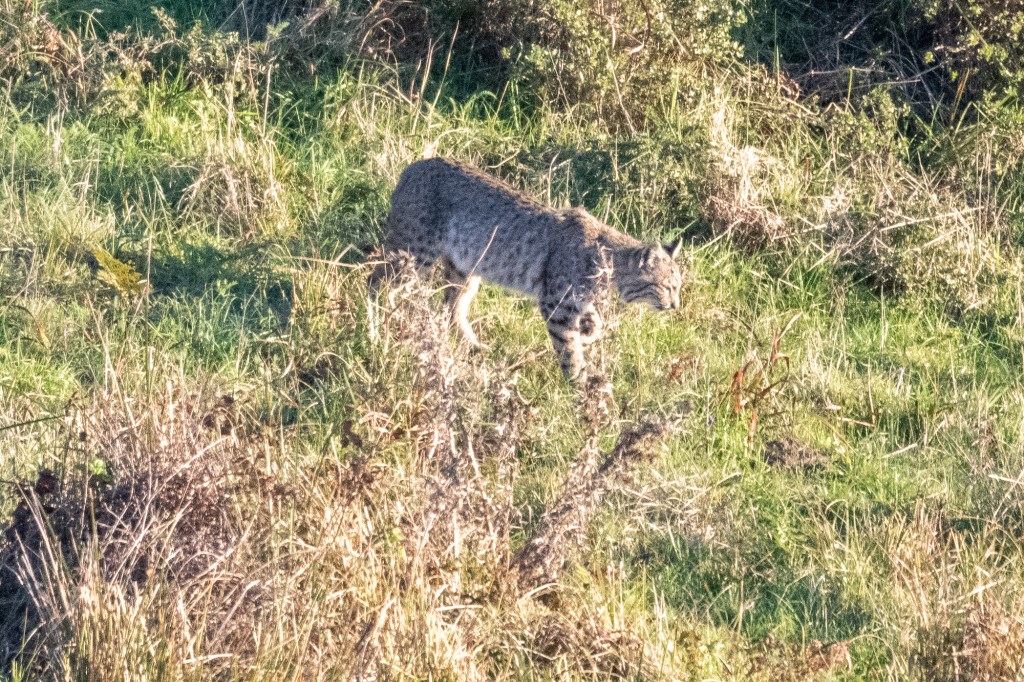
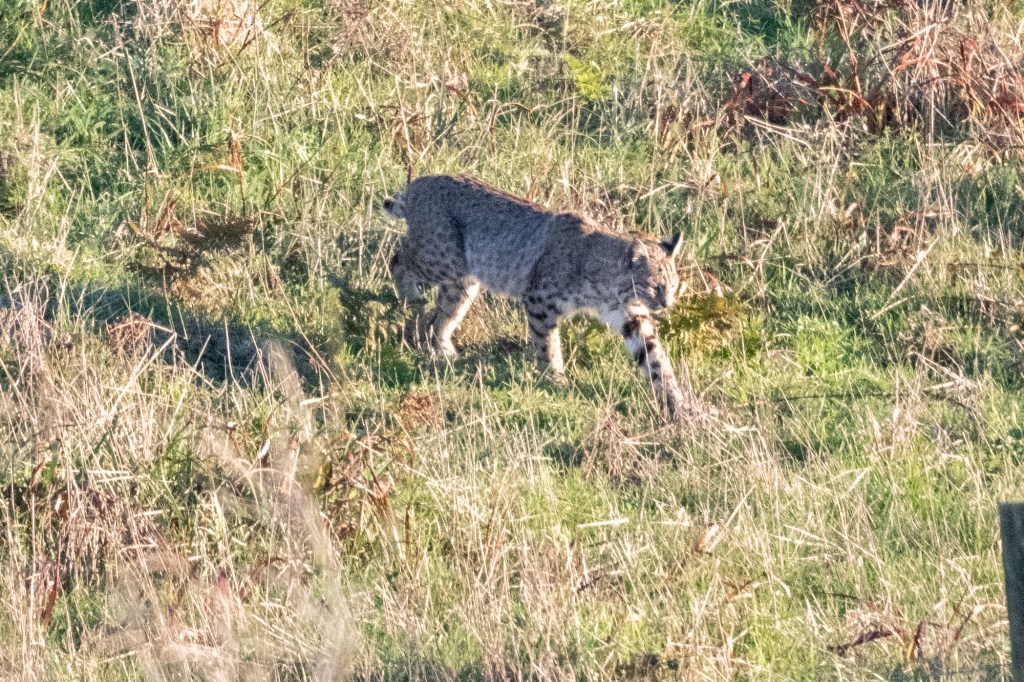
The third bobcat (the one below) started to move so I took some pics of it as it headed off into the brush.
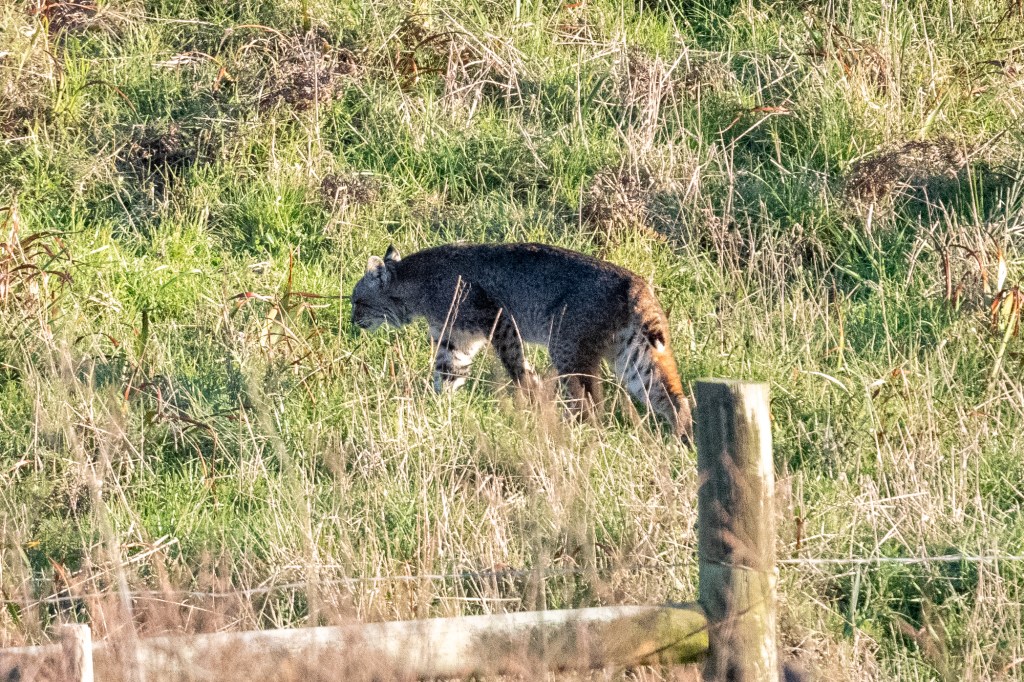
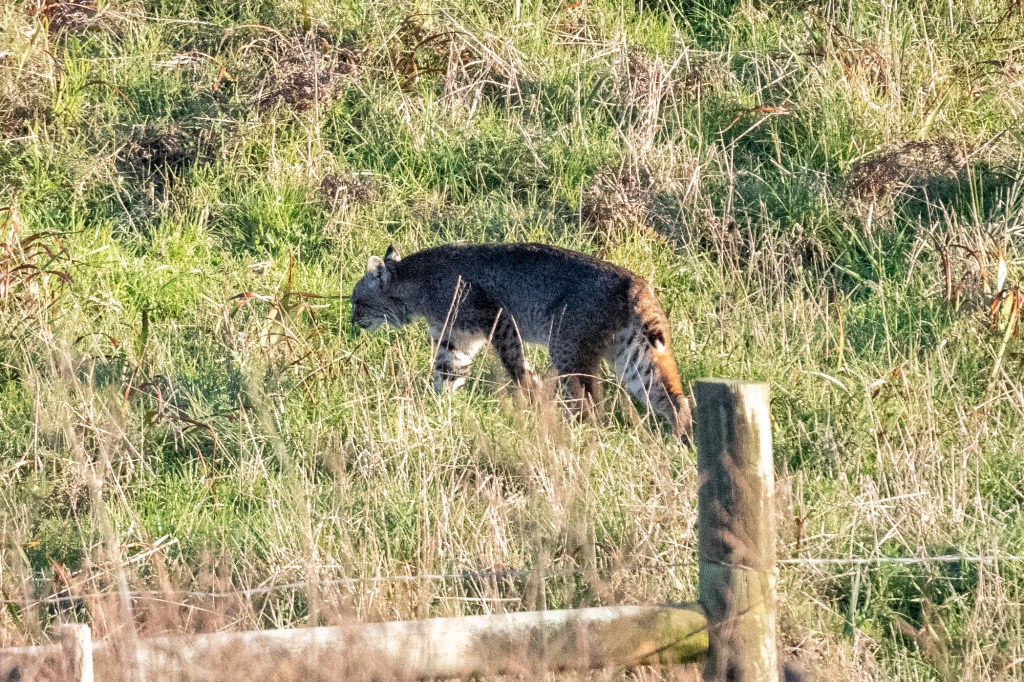
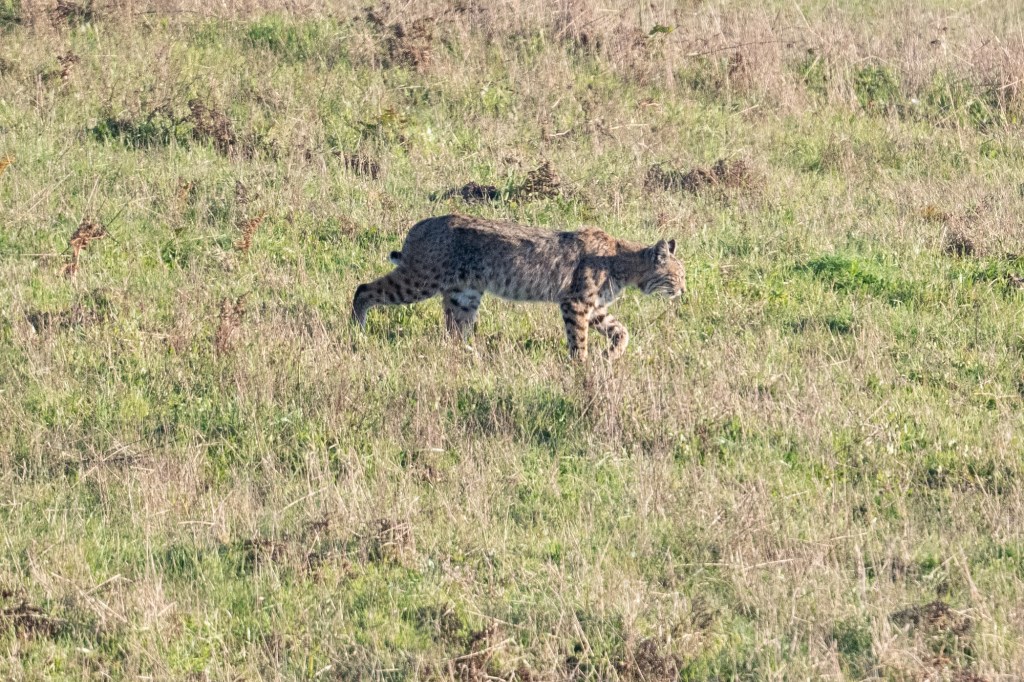
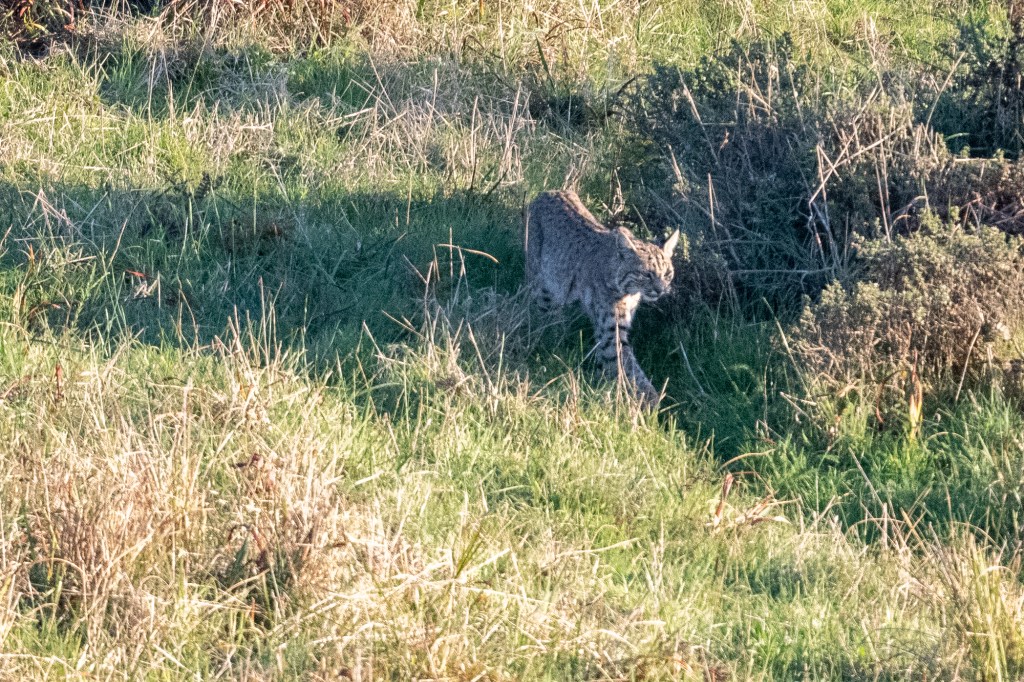
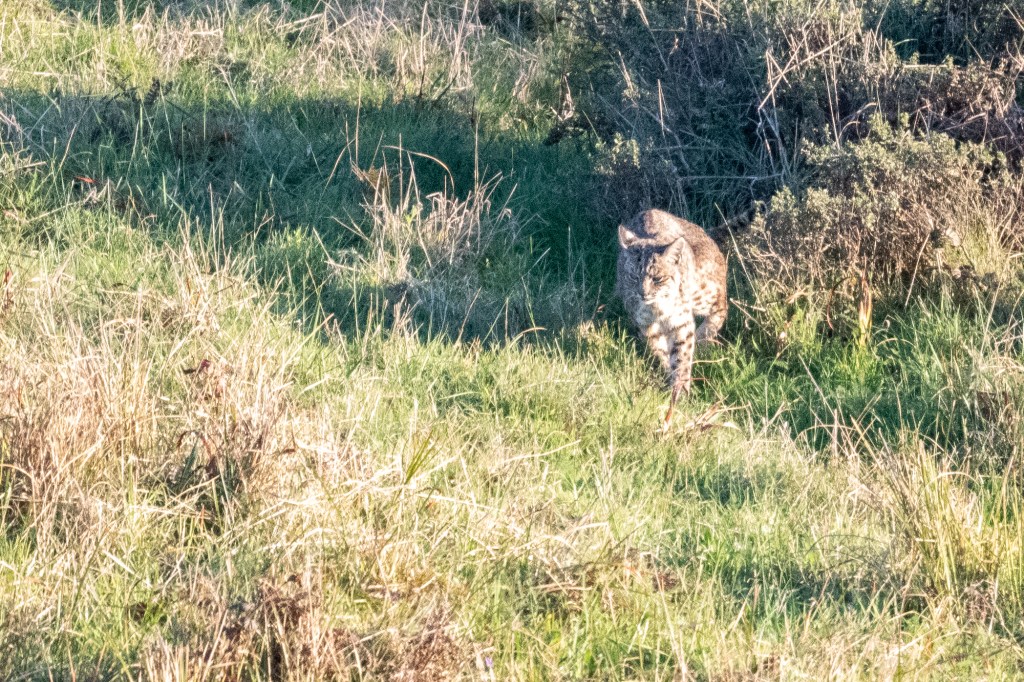
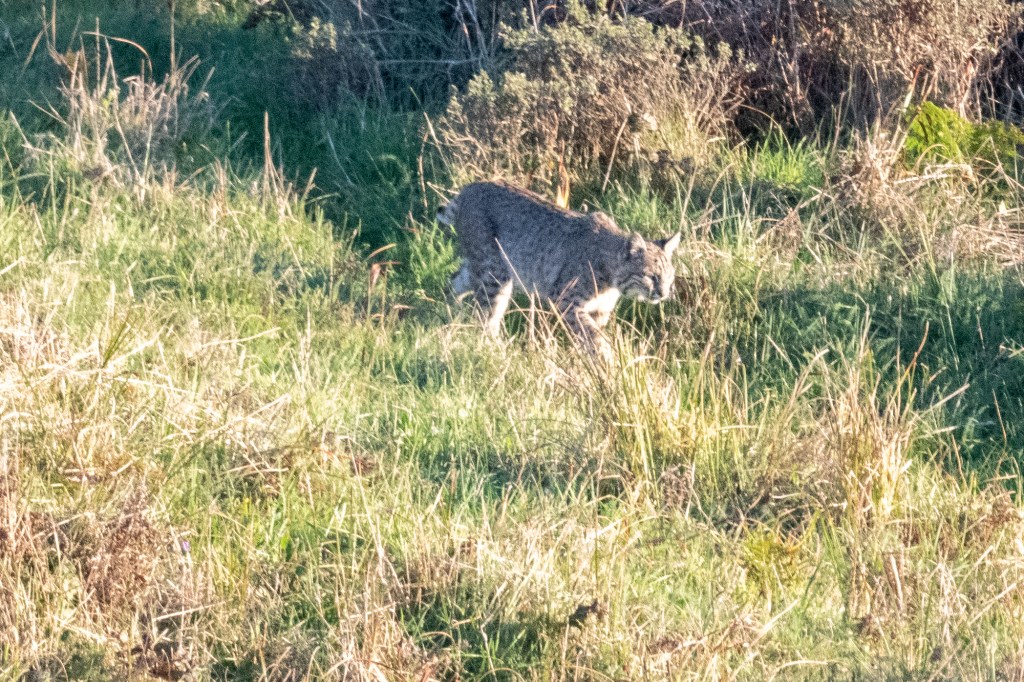
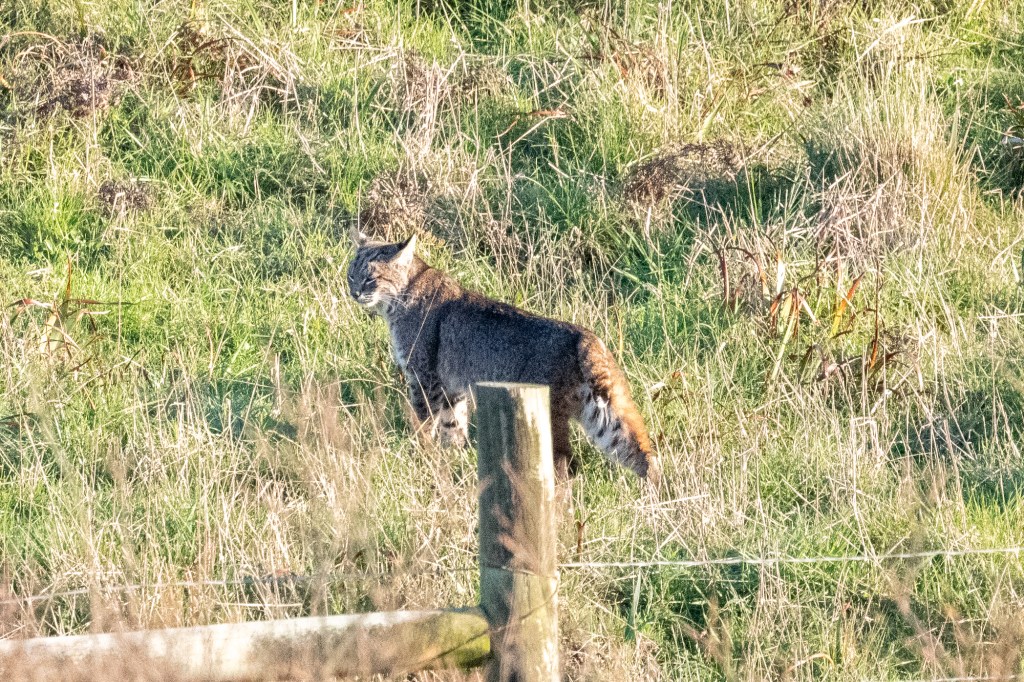
And then the other bobcat started moving again. It was not clear if they were “together” but they clearly were aware of each other. So I took some more pics of course.
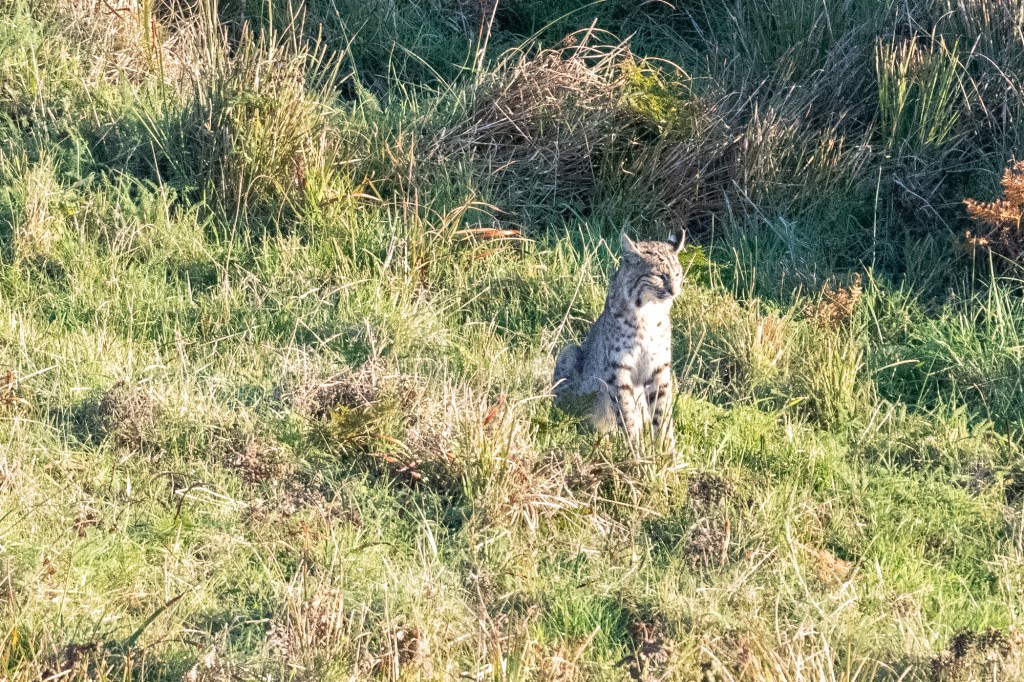
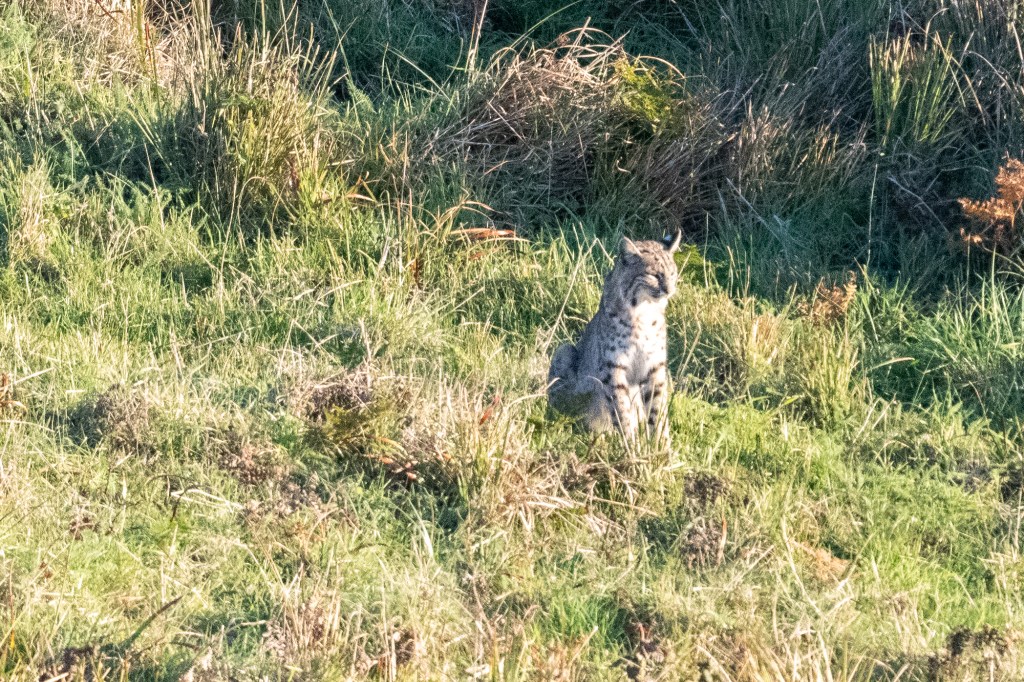
And then it disappeared into the brush

Oh and I made a gif showing the entire transit of this bobcat from my 300 or so pics.

What a day.

More about Day 2 later …

Day 1 of the #ChallengeOnNaturePhotography

OK – so after being nominated to join the fray by Gail Patricelli I am going to do the #ChallengeOnNaturePhotography. …
Posted by Jonathan Eisen on Saturday, December 19, 2015

New paper on “Global gender disparities in science” (Crosspost from UC Davis ADVANCE Blog)

I am cross posting this from the UC Davis ADVANCE Blog where I posted it yesterday, since it is of relevance to this project and to the upcoming meeting we are organizing on “Publish or perish? The future of academic publishing and careers.”

There is an interesting new paper in Nature of interest.  The paper is titled “Bibliometrics: Global gender disparities in science” and is by Vincent Larivière, Chaoqun Ni, Yves Gingras, Blaise Cronin & Cassidy R. Sugimoto.  In the paper the authors report a detailed analysis three parameters:

  1. authorship of published scientific papers (which they use as a surrogate for research output)
  2. co-authorship on papers (which they use as a surrogate for collaboration)
  3. citations (which they use as a surrogate for scientific impact)

They then assigned gender to authors using multiple sources and examined the relationships between the 3 listed parameters and gender.  And the findings are pretty striking.

I note – it is worth going to the Nature web cite for this article because some of the figures are interactive and one can click on different fields and change the plots.

The authors state – before digging into the details of their analysis “In our view, the scale of this study provides much-needed empirical evidence of the inequality that is still all too pervasive in science. It should serve as a call to action for the development of higher education and science policy.”  A pretty strong statement that at least to me seems to be worth considering given their analysis.

Among their findings

  1. Globally men make up > 70% of the “fractionalized authorships” of scientific papers.
  2. Countries in S. America and E. Europe have somewhat better (on average) gender equity in authorship
  3. As shown previously, the gender ratio varies enormously between fields
  4. In terms of collaboration women tended to be more “domestically oriented” (i.e., focused on within country collaborations) than men.
  5. And the finding getting the most press — papers for which a woman had a prominent author position received fewer citations (on average) than those in which a man had such prominent position.

The authors then discuss the implications of their findings and make some recommendations for future actions.  Among their conclusions (which I quote directly so as to not alter any implied meaning):

  1. “barriers to women in science remain widespread worldwide, despite more than a decade of policies aimed at levelling the playing field”
  2. “programmes fostering international collaboration for female researchers might help to level the playing field”
  3. “Any realistic policy to enhance women’s participation in the scientific workforce must take into account the variety of social, cultural, economic and political contexts in which students learn science and scientific work is performed”

This paper is definitely worth looking at in detail.  And I note there is also a lot of supplemental material that might be worth downloading and playing around with.  Data is critical for understanding the gender disparities in science and for planning and then testing ways to correct such disparities

Really? Nature put the #HeLa genome paper behind a paywall? Time for Nature Publishing Group to return ALL money obtained from genome papers

This is just fucking ridiculous.  As I have written about many many times – Nature Publishing Group many years ago promised to make papers reporting genome sequence data freely available.  They do not generally live up to this promise well.  See for example

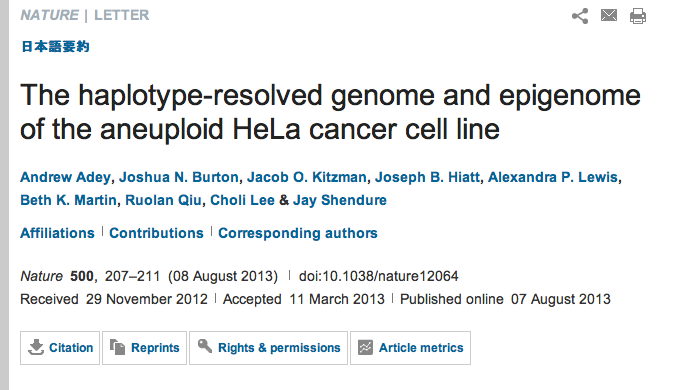
Today I discovered that not only are some important genome papers not freely available but one for the ages – the paper on the HeLa genome – reported with much fanfare recently as a triumph of an agreement with the family of Henrietta Lacks – is only available if you pay.

Once again I call on Nature Publishing Group to publicly disclose all financial gains that have come from people paying for the these genome papers and for the money to be returned.

Overselling the microbiome award: VIB press release saying "Intestinal flora determines health of obese people"

Some really cool new papers are out on the human microbiome today.  But alas that is not what I am here to talk about.  I am here, once again, to complain about overselling the microbome.  There is a headline from a press release from one of the institutes involved in one of the new studies that really irks me: “Intestinal flora determines health of obese people“.  As far as I can tell from reading the paper under discussion in this PR, nothing showed that the flora “determined” the health of obese people.  Yes, the flora had really interesting correlations with health status.  But “determines health” implies that the flora were the causal component of the health of obese people.  And as far as I can tell this was not shown.  What was shown was that the microbial communities – and some metrics of those communities like richness – can help predict risk of individuals for various health related ailments.

Now, mind you, the person discussed in this PR Jeroen Raes is completely brilliant and one of my favorite people in science in many ways.  And also it is important to point out that the paper does not make these claims.  The paper says things like

Our classifications based on variation in the gut microbiome identify subsets of individuals in the general white adult population who may be at increased risk of progressing to adiposity-associated co-morbidities

Even the title:

Richness of human gut microbiome correlates with metabolic markers

So – the reviewers and the authors seemed to have been relatively cautious in the text of the paper.  And the paper is fascinating and filled with important details.  But the headline in this press release has the potential to do damage to the whole field – especially as it gets taken up by the press.  And that is a shame.  The human microbiome is clearly important.  Why oversell it with BS like this?

Thus I hereby award an “Overselling the microbiome award” to the VIB Institute for their press release.

From the VIB Home Page

UPDATE 8/29 7:30 AM.  See comments.  Author Jeroen Raes gets PR fixed …

UPDATE 8/29 9:50 AM. Some links of interest

I am highly skeptical of the CHORUS system proposed by scientific publishers as an end run around PubMed Central

Just read this news story … Scientific Publishers Offer Solution to White House’s Public Access Mandate – ScienceInsider

It reports on an effort by various scientific publishers to create something they call “CHORUS” which stands for “Clearinghouse for the Open Research of the United States.” They claim this will be used to meet the guidelines issued by the White House OSTP for making papers for which the work was supported by federal grants available for free within 12 months of being published.

This appears to be an attempt to kill databases like Pubmed Central which is where such freely available publications now are archived.  I am very skeptical of the claims made by publishers that papers that are supposed to be freely available will in fact be made freely available on their own websites.  Why you may ask am I skeptical of this?  I suggest you read my prior posts on how Nature Publishing Group continuously failed to fulfill their promises to make genome papers freely available on their website.

See for example:

We need to make sure such papers are freely available permanently and the only way to do this is via making them available outside of the publishers own sites.  Pubmed Central seems to be a good solution for this.  I would be happy to hear other possible solutions – but leaving “free” papers under the control of the publishers is a bad idea.

UPDATE 6/27/2013

Saw this Tweet

//platform.twitter.com/widgets.js Seemed potentially really interesting. Read the story and got pointed to a new Nature paper on the ancient horse genome. I guess not so surprisingly, despite the fact that they report a new genome sequence, it is not openly available. We really cannot trust Nature on this can we? They could say “Well, this is a draft genome, and we did not mean to apply our policy to draft genomes.” Well, that would be weird since, well, they have applied this to draft genomes before. And then I decided to search for other examples … and in about ten minutes I found a few. See

//platform.twitter.com/widgets.js

//platform.twitter.com/widgets.js

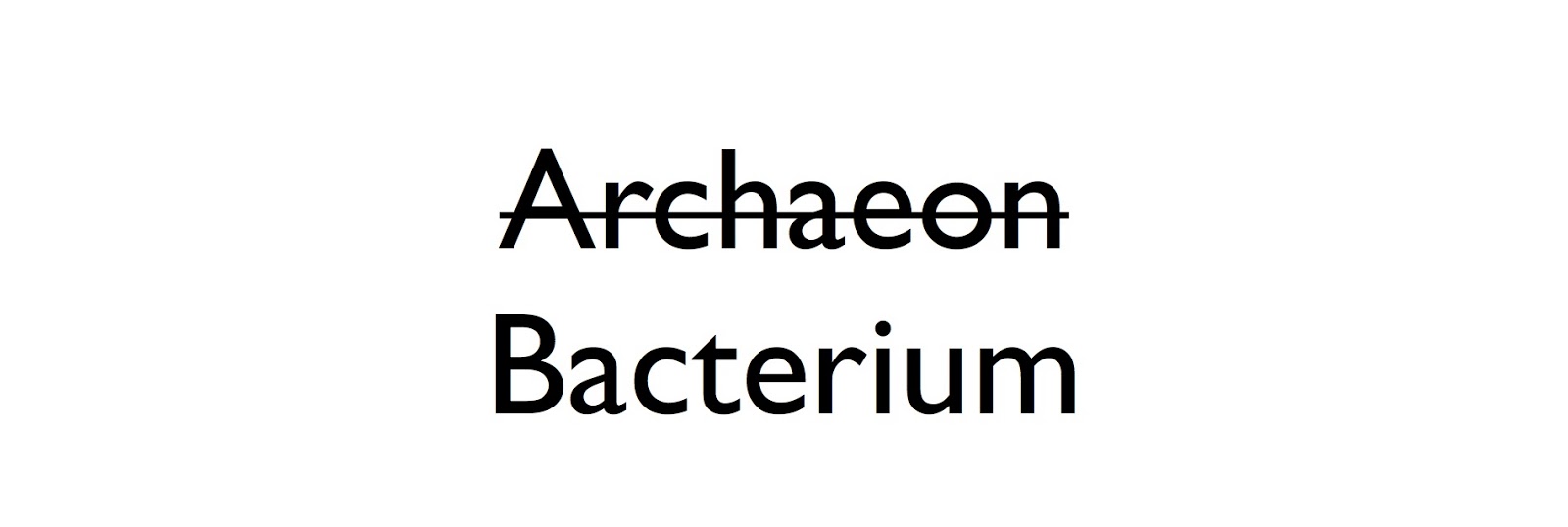
Twisted Tree of Life Award #16: Nature & Authors doing taxonomic alchemy converting an archaeon to a bacterium

Well, this is one of the bigger screw ups in terms of evolution I have seen at a major journal in a while.  See the following paper in Nature: The catalytic mechanism for aerobic formation of methane by bacteria : Nature. The paper discusses some functions of “the ocean-dwelling bacterium Nitrosopumilus maritimus.” Some of what is reported in the paper is perhaps interesting (alas I do not have access).  But painfully, there is one big big big big mistake – you see Nitrosopumilus maritimus is not a bacterium.  It is an archaeon (see for example this paper on its genome).


I got pointed to this by Uri Gophna (in an email and in a comment on my blog)(all see this on Twitter)  Sure – some people debate the structure of the tree of life.  But I am pretty certain the authors here  (Siddhesh S. Kamat, Howard J. Williams, Lawrence J. Dangott, Mrinmoy Chakrabarti & Frank M. Raushel) are not trying to make a statement about monophyly of bacteria or just what archaea are.  They just made what seems to be a colossal screw up.  And Nature not only let them, but added to it with things like their “Editors Summary”:

Novel bacterial biosynthesis of methane
Aerobic marine organisms produce significant quantities of the potent greenhouse gas methane, much of it via the cleavage of the highly unreactive carbon–phosphorus bonds of alkylphosphonates. In this study the authors explore the mechanism of PhnJ, an unusual radical S-adenosyl-L-methionine (SAM) enzyme that appears to use a cysteine-based thiyl radical to help catalyse the conversion of the alkylphosphonate substrate to methane and ribose-1,2-cyclic phosphate-5-phosphate. This reaction, not previously encountered in biological chemistry, establishes a novel mechanism for cleaving carbon–phosphorus bonds to form methane and phosphate via a covalent thiophosphate intermediate.

And for this taxonomic alchemy (converting an archaeon to a bacterium) I am awarding them and Nature my coveted “Twisted Tree of Life Award #16″.

UPDATE 5/28 7AM

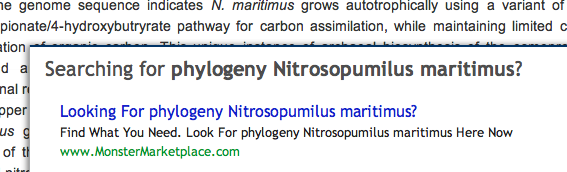
I love the ad that came up while I was writing this post and searching for some information.  I think Nature could use the services from this ad:

Quick post – Nature Publishing Group buys into #OpenAccess publisher Frontiers

In case you have not hear – Nature Publishing Group continues to play around with open publishing and other open science initiatives (when they switch some of their big journals to fully OpenAccess I will stop referring to it as playing around …).  The latest is that Nature has bought into the Frontiers publishing group which publishes a series of Open Access journals.  For more on this see:

Hat tip to many people who have sent this info to me.  Not 100% sure what to make of it, but it is interesting …

Nature Precedings – a preprint server for biology akin to arXiv – shutting down as of April 3

Just got this email regarding Nature Precedings.

Dear registrant:

As you are an active user of Nature Precedings, we want to let you know about some upcoming changes to this service. As of April 3rd 2012, we will cease to accept submissions to Nature Precedings.  Submitted documents will be processed as usual and hosted provided they are uploaded by midnight on April 3rd.  Nature Precedings will then be archived, and the archive will be maintained by NPG, while all hosted content will remain freely accessible to all.

Be assured that Nature and the Nature research journals continue to permit the posting of preprints and there is no change to this policy, which is detailed here.

Nature Precedings was launched in 2007 as NPG’s preprint server, primarily for the Life Science community.  Since that date, we have learned a great deal from you about what types of content are valued as preprints, and which segments of the research community most embrace this form of publication.  While a great experiment, technological advances and the needs of the research community have evolved since 2007 to the extent that the Nature Precedings site is unsustainable as it was originally conceived.

Looking forward, NPG remains committed to exploring ways to help researchers, funders, and institutions manage data and best practices in data management, and we plan to introduce new services in this area.  We have truly valued your contributions as authors and users to Nature Precedings and hope that you will actively participate in this research and development with us.

Interestingly, there is no announcement at the Nature Precedings site itself.  I assume the email I received is real (it really looks real) though you never know these days.  It’s too bad.  I like the concept of a preprint server for biology.  Interestingly, one of the alternatives to NP is FigShare (which is pretty cool) which recently became part of the Digital Science group which is a sister group to Nature.  Hmm … wonder what the conversations at joint tea parties between Nature and Digital Science group are like.  Could be fun.

Calling on Nature Publishing Group to return all money received for genome papers and article corrections

Well, let’s see if Nature Publishing Group actually does the right thing here.  A few days ago I showed that they were charging for access to “genome sequencing” papers that were supposed to be freely available (see Hey Nature Publishing Group – When are you going to live up to your promises about “free” genome papers? #opengate #aaaaaarrgh).  And in researching this I then discovered that Nature Publishing Group has been charging for access to corrections of articles (see Nature’s access absurdity: Human Genome Paper free but access to corrections will costs $64 and Corrections Scamming at Nature: Tantalizing clues, to see errors just pay more money #Seriously?).  

Multiple people from NPG have posted on my blog and twitter that they are working on “fixing” these issues.  By which I think they mean “We will make these freely available again.”  But this is not a full fix.  NPG really needs to do a self audit and return ALL money that anyone has paid for access to these articles.  Charging for something that is supposed to be free is not a good thing … and if they want to really fix the issue they need to give any money they got for these papers back.  Note – I already called for them to do this last year when I wrote about the genome papers not being free.  But I never heard back.  Please help put the pressure on them to do the right thing this time.