I’d like some open science please

Check out some of the videos from last year’s Open Science Summit. I like the first one below, especially since I am wearing my SciFoo shirt. I wore it because many of the people had to leave the Open Science meeting early to go to SciFoo and I was not invited … do you hear that SciFoo organizers?

Hat tip to Khadijah M. Britton

Open Parkinson’s – need for more progress on Open Access for papers on Parkinson’s

I have a new aspect of open science I am concerned about. It is research on Parkinson’s. This comes from having a family member with Parkinson’s who is not doing so well. And I am getting frustrated with trying to read up on some Parkinson’s related research but hitting a paywall for much of it. Uggh. This is so incredibly annoying and, in many ways, immoral. If we want to speed up the work towards cures, treatments and prevention strategies, we need to share more broadly everything we know about this disease. Yes, I know – publishing costs money. And yes, I know, open access and open science does not in any way solve all the problems associated with scientific and medical discovery and research. But I do know that openness can accelerate the pace of progress.
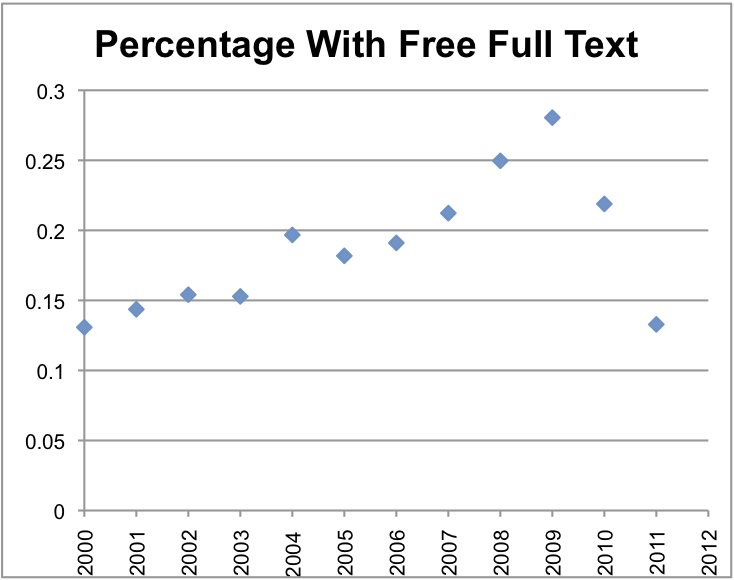
If you look at “openness” in relation to Parkinson’s studies it is pretty disappointing. For example, of 60,400 publications that come up in Pubmed with a simple search for “Parkinson’s” 9053 have free full text available. That’s is just not enough. One thing that is interesting (and disconcerting) is what it looks like over time:

In some ways, there is good news here. The percentage of free text papers goes up over time from 2000-2009. But there is much bad news too. First – even in the best year, more than 70% of papers are not freely available. But perhaps more disconcerting, the percentage of freely available papers drops in 2010 and 2011. Why is this? I think most likely it comes from the delays in deposition to Pubmed Central that happen at many journals. So, it is good that some material gets out there, and apparently a higher fraction is getting out over time. But there is a big delay in the release of much of this material and the max percentage is still low. That is really unfortunate as the best way to catalyze scientific discovery to me is via rapid, open sharing. Imagine, for example, if Twitter posts were only available after 6 months. Useful? I don’t think so. What about weather information? Wait six months for a forecast? Sure, some aspects of scientific research do not need any input from others. But if papers are not important, then, why do we all fuss over them so much? That is because they contain knowledge, techniques, data, ideas, theories, and more. And it would be really better for all if everyone could have access to the full text of all such papers immediately.

Now mind you, I have only focused here on availability of free full text. There is another major issue in “open access” which is, well, openness. Openness of papers involves the rules on use, distribution and reuse. Many of the “free full text” papers in Pubmed Central have restrictions on how those papers can be used. The ideal to me is for the papers to be fully open such that anyone can redistribute them, repost them, take material from them, and use it in any way (with attribution). Why is this important? Well, it would allow anyone to create a Parkinson’s papers database, for example, with interesting search and discovery features. Or anyone could use a paper as part of a course, without having to worry about permissions. Or anyone could use material from a paper as part of a news story or blog post without getting into fights about fair use.
Now – there are some Parkinson’s related papers available out there outside of Pubmed, in institutional repositories and such. But these are not easy to find at this time. So in a way they don’t count for much.
I will be writing more about Open Science issues and Parkinson’s in the future. But for now I have a request. Anyone out there working on Parkinson’s please find a way to make your discoveries more freely and openly and rapidly available. I realize many/most of you are very passionate about this disease. I realize many of you work your tails off. And openness may be the last thing on your mind when working, struggling to get grants and make discoveries and deal with all your other job requirements and life issues. But even if you for some reason choose not to publish in an open access manner, at least post your papers on a website. Deposit them into repositories. Create a Mendeley account and post your papers there. Try and find a way to get them into Pubmed Central. Try to find ways to get your papers picked up by Google Scholar. Do something to increase the probability that your work will have an impact.
I will be writing more about open science and Parkinson’s in the future. Stay tuned.

Yes, I am a #RedSox & #PLoS fan; & this video sort of is proof #BenFranklinAward #OpenScience

Just saw this posted on Youtube.  Did not know it was coming … but am happy they recorded it

And here are the slides I used.  Will try to synch

For more on this award see

Lawrence Lessig on Copyright "The architecture of access to scientific knowledge" #CERN

Not much to say other than that Lawrence Lessig is worth listening to.


The Architecture of Access to Scientific Knowledge from lessig on Vimeo.
Lecture at CERN, Geneva, Switzerland, 18 April 2011: A new talk about open access to academic or scientific information, with a bit of commentary about YouTube Copyright School.

Hat tip to Russell Neches for pointing this video out to me …

Boston, Bioinformatics & Ben Franklin Award wrap up from #BioIT11

Photo by Mark Gabrenya

Well, just got back from Boston where I went to the BioIT World convention to pick up the “Benjamin Franklin Award” for contributions to Open Science from Bioinformatics.Org.  A quick round up of the trip:

Flew to Boston early Tuesday AM.  Only thing of note – during Layover in Chicago I saw a bookstore selling autographed versions of “The Immortal Life of Henrietta Lacks” by Rebecca Skloot.

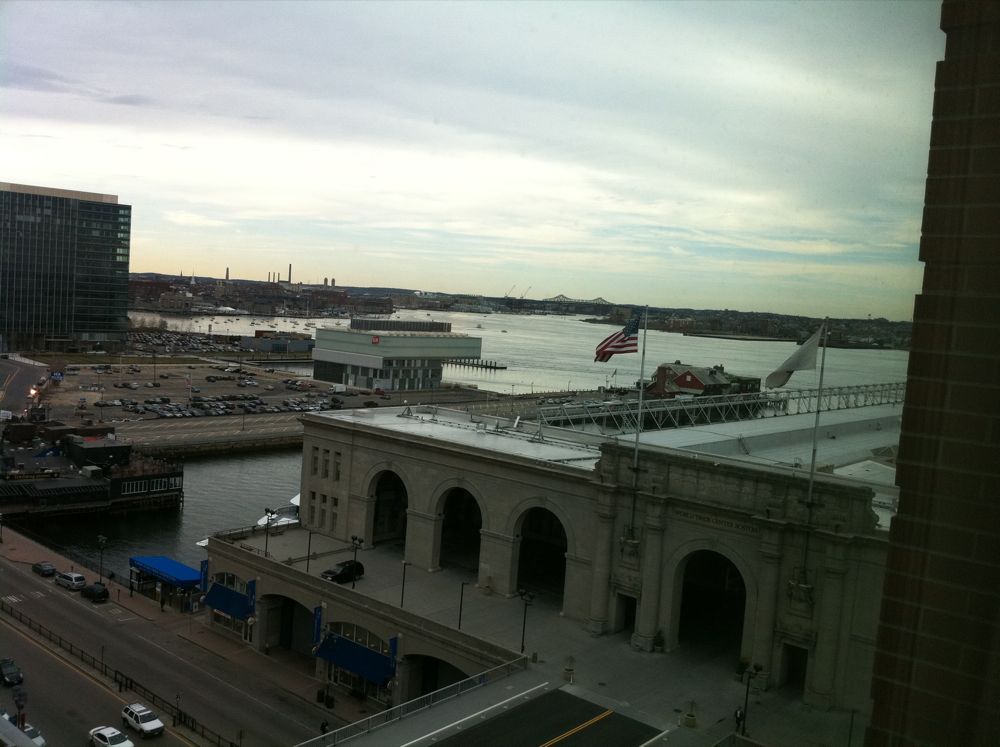
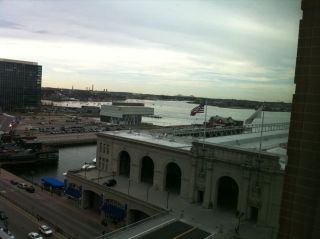
Dropped off my stuff at the Seaport Hotel – had a nice view from my room.
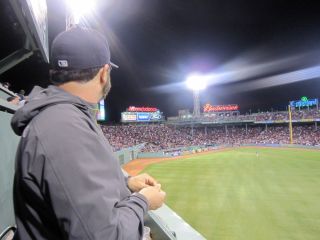
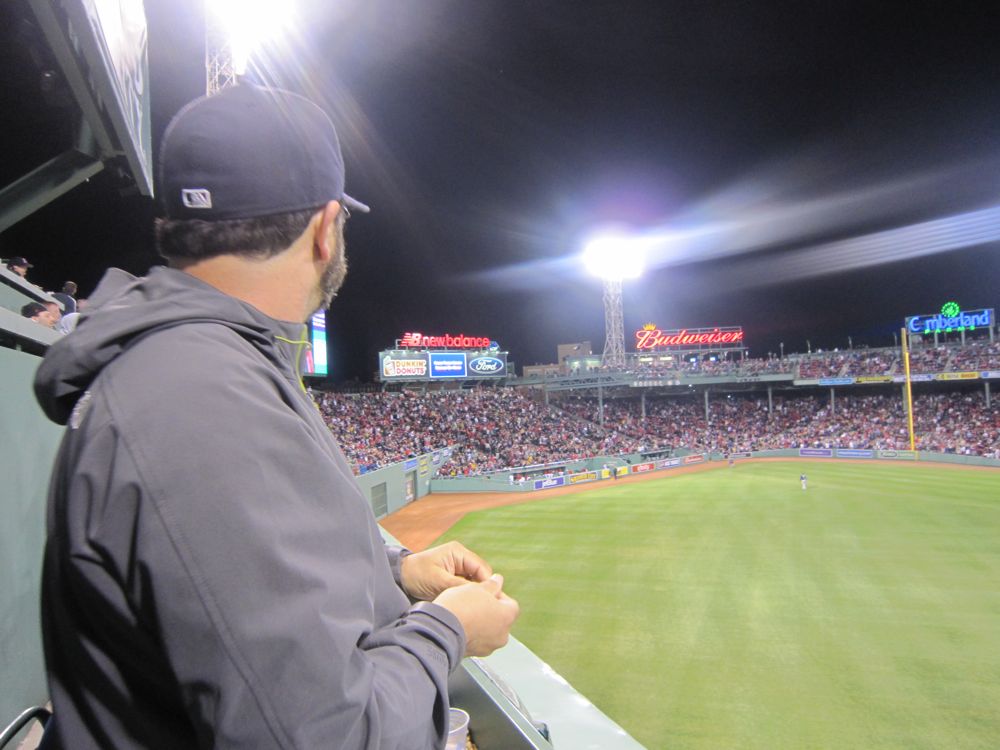
Called up my friend Ashlee Earl who currently works at the Broad and arranged to meet her at Kenmore Square in an hour.  I collaborated with Ashlee many years ago on analyzing her expression studies of the Deinococcus radiodurans genome and have been friends ever since. Took the T to Kenmore Square and met Ashlee and then went into this “Fenway Park” place to see a baseball game.  (I was born in Boston and am a Redsox fan …) Had the best baseball seats ever – front row Green Monster Seats – which I had bought from Stubhub.com.  Watched the Sox lose while Ashlee and I discussed Genome Centers.  I note – to those in the Broad Public Affairs office, Ashlee makes the Broad sound like a great place to work.  I tried to get some dirt out of her but she did not provide much.
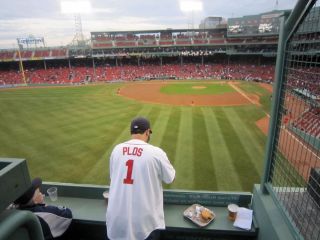
Photo by Ashlee Earl

Photo by Ashlee Earl

Took the T back to the hotel after the game. And went to sleep.  Got up very early to think about my “acceptance speech” for when I was to pick up my Ben Franklin Award.  I made some quick slides on my Ipad (this was the first time I have gone to a meeting w/o my laptop) and during the talk before the award ceremony I emailed them to one of the organizers and we got things set up.

Then I was Introduced and Jeff Bizzaro read a mini statement about why I won the award.  Something like what they put on the Bioinformatics.org web site:

Jonathan uses his high visibility in social media to advocate for open access by sharing links to discussions, mentioning open access articles and initiatives, and pushing for the opening up of popular closed access articles. This culture is shared with his students, who advocate for “open access” peer reviewing and created a peer-to-peer service for sharing bioinformatics material (articles, software and datasets). He is the academic editor in chief of PLoS Biology [1] and voices his opinions and support for open access publication and open data sharing on his “Tree of Life” blog [2]. In addition to just voicing his opinion, he also practices what he preaches, by refusing to publish in non-open access journals. With respect to bioinformatics, he has been involved with many software packages that are freely available, such as the recent AMPHORA [3] and PhyloOTU [4]. Lastly, Jonathan helped release a new open data sharing tool for scientists called BioTorrents [5]. This is just another step in encouraging all scientists to share their data and results more openly.

References: 

1. http://www.plosbiology.org/ 

2. http://phylogenomics.blogspot.com/ 

3. http://genomebiology.com/2008/9/10/R151 

4. http://www.ploscompbiol.org/article/info%3Adoi%2F10.1371%2Fjournal.pcbi.1001061 

5. http://www.plosone.org/article/info:doi/10.1371/journal.pone.0010071

Note – am proud to get this award.  It is given for contributions to Open Science and previous winners are an esteemed crew: Michael Eisen (my brother), Alex Bateman, Michael Ashburner, Jim Kent, Robert Gentleman,  Phil Bourne, Lincoln Stein, Ewan Birney, and Sean Eddy (see full details here).

Then I gave my mini talk focusing on a brief history of how I got into Open Science.  Here are my slides

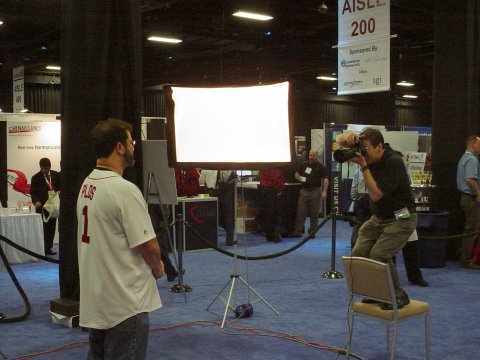
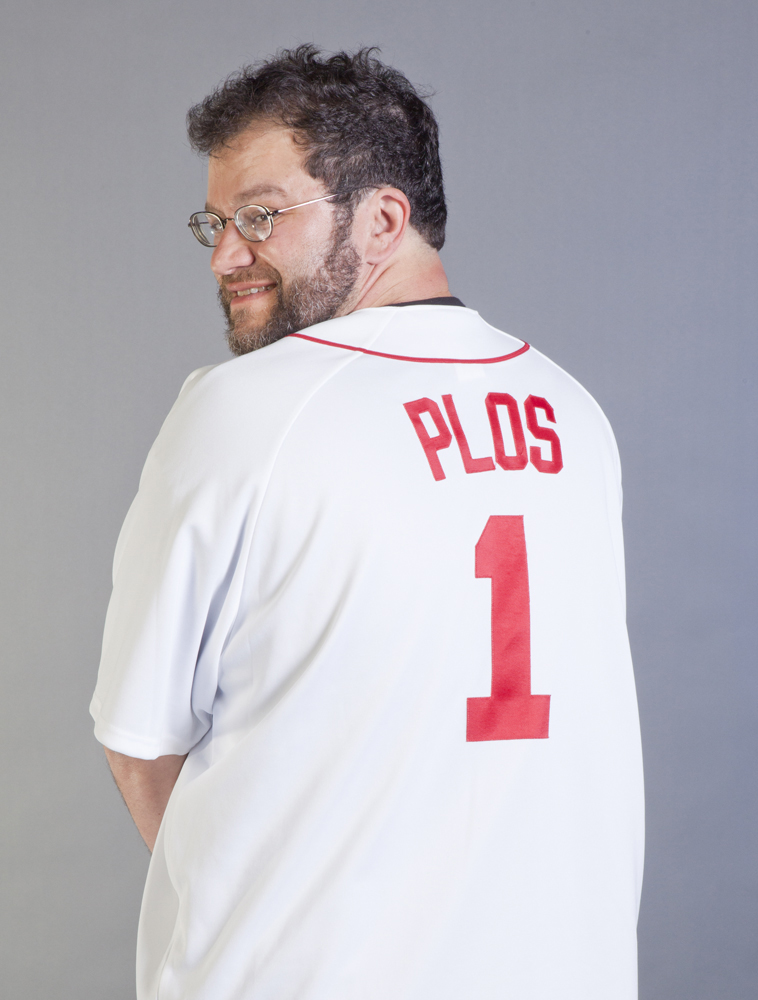
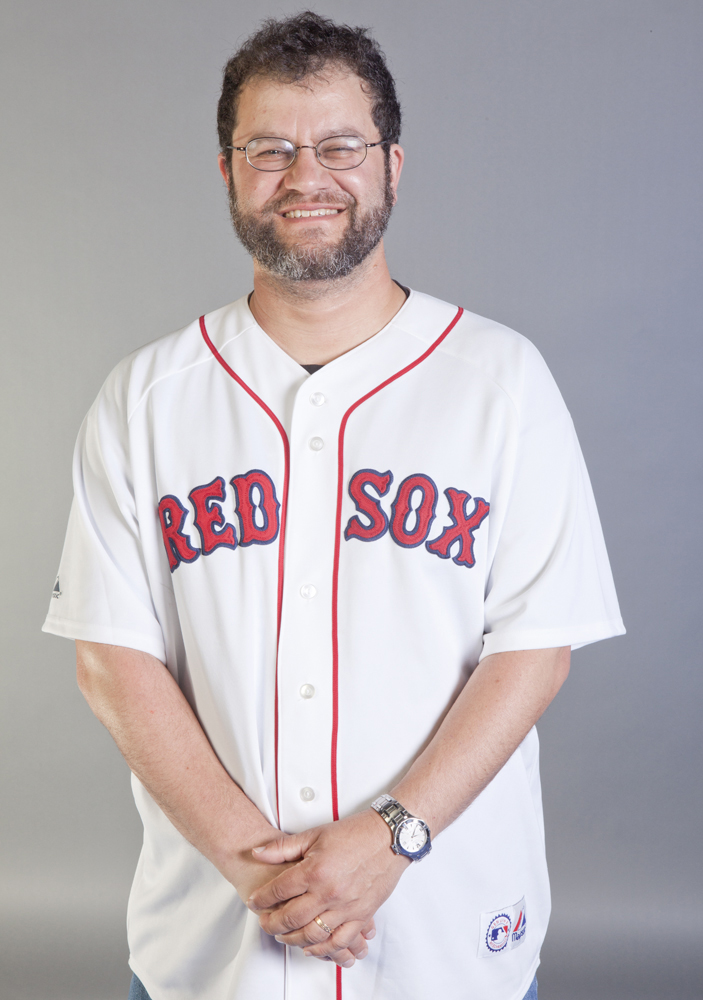
Note the awkward typo where I introduced the “Public Library of Science”. Oops.  Anyway – talked for a few minutes.  While wearing my RedSox PLoS 1 shirt I note.
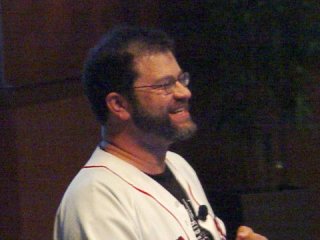
Photo by Jeff Bizarro
Photo by Mark Gabrenya

Photo by Mark Gabrenya

 And then there was a break. They took some pictures during the break and eventually I wandered around to the booths.

Photo by Mark Gabrenya

Photo by Mark Gabrenya

Photo by Mark Gabrenya

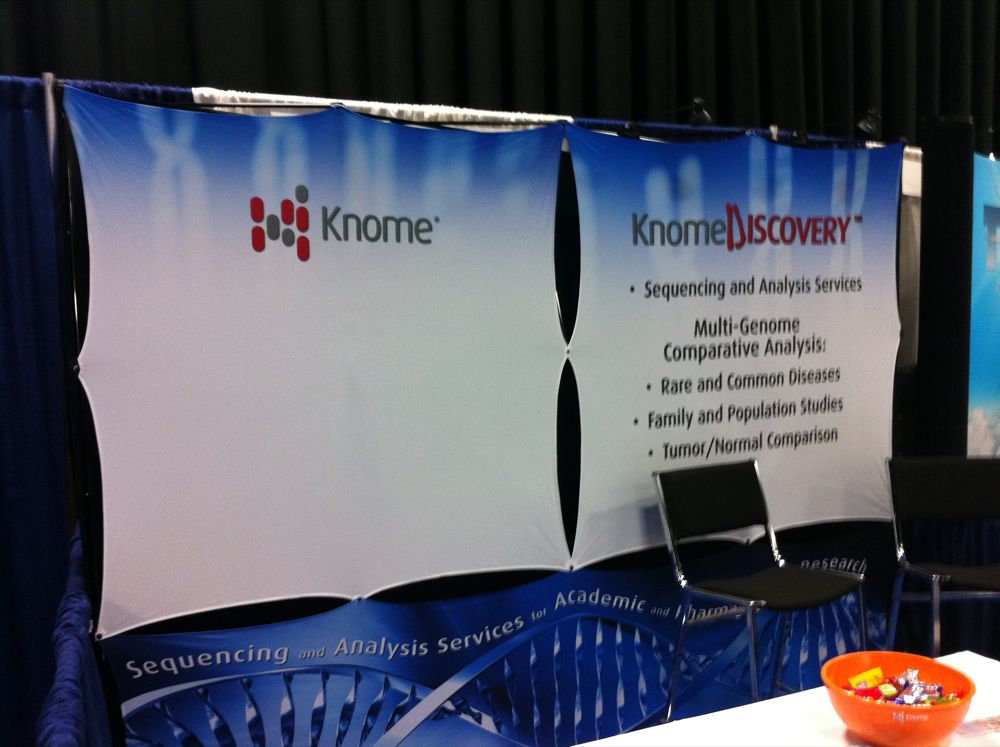
I saw Nat Pearson who now works for Knome and I went to lunch with him to discuss my “Exome” which Knome has sequenced.  I note, Nat was a student in a class I TAd at Stanford — good to see how far he has come.

 And then back to the meeting where I wandered around again for a while.  Saw an old friend from TIGR Xiaoying Lin who now works at Life Technologies and discussed the Ion Torrent with him.

Was pleased to see a booth giving away free RedSox tickets as a prize.

Then I headed out to Brookline for dinner with my Aunt and Uncle and cousin and eventually made my way back to the hotel where I had a few drinks.

The next day I got up a bit late, and eventually made my way to Logan Airport where the trip home was a disaster.  My outbound flight was late.  Missed my connection.  Then the flight I was on was held up for others to make their connection.  Though I did get a few hours in Denver Airport to wander around.  Got home after 1 AM …  And finally made it home.

I know – Ego Blogging is so 2010 – But I won. I won. I won. (The Ben Franklin Award …)

OK so the title is a bit much. But I am really happy that I won this years Benjamin Franklin Award, given out by the Bioinformatics Organization. For more on this see …
I found out a few days ago and am rearranging some things to go to Boston April 13 for the award ceremony at the Bio-IT World Conference and Expo.  
From the Bioinformatics Organization web site:

Benjamin Franklin (1706-1790) was one of the most remarkable men of his time. Scientist, inventor, statesman, he freely and openly shared his ideas and refused to patent his inventions. It is the opinion of the founders of the Bioinformatics Organization, Inc. that he embodied the best traits of a scientist, and we seek to honor those who share these virtues

The Benjamin Franklin Award for Open Access in the Life Sciences is a humanitarian/bioethics award presented annually by this organization to an individual who has, in his or her practice, promoted free and open access to the materials and methods used in the life sciences.

I like the general sentiment very much.  And perhaps more important – the list of prior winners is an impressive crew.  Again, from the Bioinformatics Organization web site:

Note – my brother won the first one.

Anyway – am thinking about what to say in the awards ceremony.  Probably going to say something about how openness is more than about being at no charge.  Also I might discuss how it would be good to have a female winner one of these days.  Speaking of which – maybe people can give suggestions for women to nominate for next year …

UPDATE 9/25/12: See this Friendfeed discussion for some more comments about possible female candidates. I have copied the text below in case Friendfeed disappears: “maybe people can give suggestions for women to nominate for next year …”. OK, I’ll start: how about Rosie Redfield? If it weren’t for the Life Sciences focus I’d also suggest Heather Joseph. Speaking of Heathers, one H. Piwowar springs to mind whenever Open Foo is mentioned. – Bill Hooker heh, that would be cool someday 🙂 For now, how about Helen M. Berman, Judith A. Blake, Maryann E. Martone, Catherine Ball, or other pioneers in open databases? – Heather Piwowar Janet Thornton. – Heather Piwowar Agreed! – Egon Willighagen In an award speech at ISMB 2005, Janet Thornton expressed gratitude she was able to take years out-with-family and then pick up again. Inspirational. Not relevant for the Ben Franklin award, but wanted to mention it because it made such an impact. – Heather Piwowar

Figuring out figures in scientific papers: new search / ranking method outline in PLoS One paper

Just a quick post here.  A colleague just sent me a link to her fascinating new paper in PLoS One: PLoS ONE: Automatic Figure Ranking and User Interfacing for Intelligent Figure Search

In this paper Hong Yu from the University of Wisconsin in Milwaukee describes a system for better automated characterization of figures from scientific papers.  The system is available through their webserver “Ask Hermes“.

If you want to learn more about the system I suggest you read the paper.  Or watch their video.

Basically the general idea is summarized in their background section of the abstract:

Figures are important experimental results that are typically reported in full-text bioscience articles. Bioscience researchers need to access figures to validate research facts and to formulate or to test novel research hypotheses. On the other hand, the sheer volume of bioscience literature has made it difficult to access figures. Therefore, we are developing an intelligent figure search engine (http://figuresearch.askhermes.org). Existing research in figure search treats each figure equally, but we introduce a novel concept of “figure ranking”: figures appearing in a full-text biomedical article can be ranked by their contribution to the knowledge discovery.

I particularly like that they also allow searching just for open access figures, which may be of significant value to people who want to do things like make a slide presentation with no copyrighted/protected material in it.  For example see the results of a search for open access figures using the keyword phylogenomics.

Anyway – definitely worth checking this out.

Yu, H., Liu, F., & Ramesh, B. (2010). Automatic Figure Ranking and User Interfacing for Intelligent Figure Search PLoS ONE, 5 (10) DOI: 10.1371/journal.pone.0012983

Interesting take on peer review & openness from outside the sciences in @nytimes

I assume many supporters of open science may have seen this already but if not it is worth a look.  The New York Times had an interesting article on Monday by Patricia Cohen: For Scholars, Web Changes Sacred Rite of Peer Review.

The article starts off with a familiar refrain

For professors, publishing in elite journals is an unavoidable part of university life. The grueling process of subjecting work to the up-or-down judgment of credentialed scholarly peers has been a cornerstone of academic culture since at least the mid-20th century.

It follows with a very important discussion focusing on how the web can transform scholarly publishing.  For example:

… scholars have begun to challenge the monopoly that peer review has on admission to career-making journals and, as a consequence, to the charmed circle of tenured academe. They argue that in an era of digital media there is a better way to assess the quality of work. Instead of relying on a few experts selected by leading publications, they advocate using the Internet to expose scholarly thinking to the swift collective judgment of a much broader interested audience.

This likely will sound very familiar to those who have read my blog, those who follow the discussions on peer review, or those with a pulse in the scientific community.  But there is a catch that caught me off guard here and might surprise many of you.  This catch is highlighted by the fact that the article was in the Arts section of the Times.  You see, the article was about transformation in the humanities.  Seems as though there is an almost completely parallel universe there where peer review and publishing and sharing are all getting re-evaluated.

This is yet another case of why we need more cross talk between the arts/humanities and the sciences.  For example, the article discusses how the journal Shakespeare Quarterly is becoming the first humanities journal to “open its reviewing to the World Wide Web.” They even recently conducted an experiment in fully open review where four preprints were posted on the web and feedback was solicited.  The feedback was then used by editors to guide the revision of the preprints to become published articles.  Sounds a lot like Biology Direct.  Note however, that they are not talking about publishing the final articles in an open access manner (see discussion of this on BigThink here) – but more about engaging the broader audience in commentary before an article is published.

The article does suggest that perhaps the humanities are lagging a bit behind the sciences in experimenting with new forms of peer review but I think that is OK.  We desperately need new experiments and ideas in this arena.  Peer review, at least the way it operates right now, has many problems.  I think there must be many better ways to go about things.  And thus cross pollination across fields from arts and humanities to economics to physics to life sciences is a good thing.

Interestingly Cohen identifies what she considers to be the most daunting obstacle to opening up review:

peer-review publishing is the path to a job and tenure, and no would-be professor wants to be the academic canary in the coal mine.

I think this is the same main obstacle in the sciences.  That is, it is our system of promotion and tenure and hiring that is the main roadblock.

Finally, I note that though the article was focusing mostly on opening up peer review, it does have some interesting bits on openness in general. In particular, there is a great line at the end from Dan Cohen from George Mason

“There is an ethical imperative to share information,” said Mr. Cohen, who regularly posts his work online, where he said thousands read it. Engaging people in different disciplines and from outside academia has made his scholarship better, he said.

I could not agree more.  Seems like the arts and humanities and sciences actually have much much more in common that many might think.

For some related posts from the web see

Some recent web stuff on peer review in the sciences

Some quick links on #OSS2010 Open Science Summit 2010

Just posting some links from the web relating to the Open Science Summit 2010 meeting which is continuing today … started Thursday.  If you want to follow today, check out twitter with hashtag #OSS2010

Possible electronic lab notebook systems – update

Well, I opened up a great can of worms today with a Twitter/Friendfeed post:


Am looking for systems for my lab to make electronic lab notebooks – suggestions? wiki? OWW? software?”


And have gotten some great responses so far from my various social networking circles and I thought I would centralize them here.  At the bottom I will post some of the raw responses.  Here is a current summary


Suggested things to look at so far

————————————
From Twitter:

  • iddux @phylogenomics basecamp
  • srhymes @phylogenomics have you tried Evernote? I use that for a lab notebook and love it! And it syncs across home, work, iphone, iPad…
  • MeadGal @phylogenomics I like a word document in notebook layout. I tried labassistant from mekentosj and i see it working for some, just not me.


FriendFeed had a wealth of useful information:


http://friendfeed.com/treeoflife/f9791f25/am-looking-for-systems-my-lab-to-make-electronic?embed=1


Also got some useful feedback from Eric Alm on Facebook who said they use Smart pens from LiveScribe.com