Biophotonics Mini-symposium 6/29 at #UCDavis Friday

Friday, 29 June 2012 • 148 Briggs Hall

12:00 – 01:00 PM Welcome, Opening Remarks & Lunch

· R. Holland Cheng, Ph.D.

· Frank Chuang, M.D., Ph.D.

01:00 – 02:45 PM Advances in Terahertz Biomedical Applications

· Koichiro Tanaka, Ph.D. Kyoto University, Japan

· Joo-Hiuk Son, Ph.D. University of Seoul, Korea

· Gerald Wilmink, Ph.D. Air Force Research Laboratory, USA

02:45 – 03:00 PM Coffee Break

03:00 – 04:45 PM Light Interactions with Biological Structures

· Benjamin Chu, Ph.D. SUNY Stony Brook, USA

· Tomas Strömberg, Ph.D. Linköping University, Sweden

· Yin Yeh, Ph.D. UC Davis, USA

2012 Biophotonics Symposium agenda v3b.pdf

Video, slides & storify of my talk on "#Phylogeny-driven approaches to #genomics and #metagenomics" from #CSMUBC2012

Just got back from the Canadian Society for Microbiology meeting where I gave the keynote talk on the last day of the meeting (Saturday).  Was a very short, but good trip.  Got to see some key collaborators and colleagues and Vancouver was very nice for the few days I was there.

I recorded my talk on my laptop using the Keynote “Record Slideshow” function.  I then exported it to Slideshare (just the slides – no audio) and to Youtube (video of slides with audio).  They are posted below.  I also did a mini storification of my talk which is also below.

http://storify.com/phylogenomics/my-talk-at-csmubc2012.js[<a href=”http://storify.com/phylogenomics/my-talk-at-csmubc2012″ target=”_blank”>View the story “My talk at CSMUBC2012” on Storify</a>]

For those who missed it: "Science as an open enterprise" from Royal Society

This will be of interest to many I think: Science as an open enterprise – Report | Royal Society

It is a comprehensive report from the Royal Society with links to videos, text, previous meetings, references, EPUBs, and more relating to a report that was released a few days ago.  From the web site:

Six key areas for action are highlighted in the report:

  • Scientists need to be more open among themselves and with the public and media
  • Greater recognition needs to be given to the value of data gathering, analysis and communication
  • Common standards for sharing information are required to make it widely usable
  • Publishing data in a reusable form to support findings must be mandatory
  • More experts in managing and supporting the use of digital data are required
  • New software tools need to be developed to analyse the growing amount of data being gathered

Definitely worth a serious browsing/reading.

For more on this see …

"More than a freezer" – #microbes in funny ad for Thermo Scientific freezers

I don’t normally post about ads but this one is quite well done. From Thermo Scientific – “More than a freezer”.

Best. Microbiology. Video. Ever.

Well, I could say so so much about this.  But it speaks for itself.  Funny.  Gross.  Cute.  And more.  Just watched it – like – seven times in a row.  Best. Microbiology. Video. Ever.

From Jennifer Gardy.

Science Magazine Special Issue on H5N1 #Links #Microbes

"As a service to the community, AAAS is also making these articles free to the public. "

Would be nice to make ALL of Science available to the public but AAAS is a dinosaur of sorts. Anyway — at least these are available. (Thanks to Eileen Choffnes for the links).

H5N1: Bruce Alberts

Science 22 June 2012: 1521

http://www.sciencemag.org/content/336/6088/1521.full.pdf

Benefits and Risks of Influenza Research: Lessons Learned: Anthony S. Fauci and Francis S. Collins

http://www.sciencemag.org/content/336/6088/1522.full.pdf

Implementing the New U.S. Dual-Use Policy:Carrie D. Wolinetz

http://www.sciencemag.org/content/336/6088/1525.full.pdf

Evolution, Safety, and Highly Pathogenic Influenza Viruses:Marc Lipsitch, Joshua B. Plotkin, Lone Simonsen, and Barry Bloom

http://www.sciencemag.org/content/336/6088/1529.full.pdf

Influenza: Options to Improve Pandemic Preparation : Rino Rappuoli and Philip R. Dormitzer

http://www.sciencemag.org/content/336/6088/1531.full.pdf

Perspectives

Regulating the Boundaries of Dual-Use Research – Mark Frankel http://www.sciencemag.org/content/336/6088/1523.full.pdf

Securing Medical Research: A Cybersecurity Point of View : Bruce Schneier http://www.sciencemag.org/content/336/6088/1527.full.pdf

Airborne Transmission of Influenza A/H5N1 Virus Between Ferrets (2012). Sander Herfst et al. http://www.sciencemag.org/content/336/6088/1534.full.pdf

· Materials/Methods, Supporting Text, Tables, Figures, and/or References Download Supplement

The Potential for Respiratory Droplet–Transmissible A/H5N1 Influenza Virus to Evolve in a Mammalian Host. Colin A. Russell et al. (2012). http://www.sciencemag.org/content/336/6088/1541.full.pdf

· Materials/Methods, Supporting Text, Tables, Figures, and/or References Download Supplement

Major lesson from #ASM2012 meeting: microblogs & microbiology go together well

Well without a doubt the biggest surprise to me of the American Society for Microbiology General Meeting was the massive increase in the use of Twitter compared to previous years.  Microbiologist are clearly just way way ahead of the curve compared to other scientists on this.  The tweets and retweets and discussion of tweets was so extensive that #ASM2012 was a trending topic on twitter for much of the time during the meeting:

For those not familiar with Twitter – this abbreviation w/ the # is known as a hashtag – and if everyone at a meeting uses this hashtag in their posts about the meeting then it is easy to keep track of all the meeting posts by searching for posts with that hashtag.  Such searches can be done in real time with various Twitter clients or via the Twitter website.

And if you followed in real time the #ASM2012 you were treated to a broad real-time coverage of pretty much the whole meeting.  At most broadly focused science meetings I have been at recently – even ones with 1000s of people like #AAAS – the use of Twitter has been relatively limited at best.  Sometimes a single session is covered well but very rarely is the whole meeting covered.  So this ASM meeting was indeed different.

I tried to create a “Storification” of all the Tweets from the meeting but Storify seems to crash when one includes so many tweets so that did not work.

So I tried to create my own archive via Twitter – by copying and pasting the posts from each day (some got left out here but it is decent coverage).   It is not as pretty as Storification but it works.  Still working on a full archive but Twitter makes it kind of difficult to do alas.

One thing missing however was the use of microbiology related hashtags for topics.  Seems we really need to get some coordination here to make it easier to search through and find tweets of interest.  Here are some I have used in the past and may be worth using if you want more people to notice your tweets.

#microbes
#bacteria
#archaea
#microbiology
#pathogens
#rRNA
#Antibiotics
#viruses
#yeast
#microbiome

Anyway – keep up the good work all you microbe-focused tweeters.  And though microblogging (i.e., Twitter and related things) is great – don’t forget to blog too.  See my growing list of microbiology related blogs and please add to it – either if you know of ones I missed – or by creating your own.

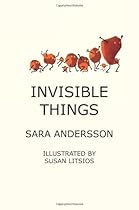
Ooh – cool – got to get this "Illustrated Children’s Book Introduces Invisible World Of #Microbes"

Just saw this news story: Illustrated Children’s Book Introduces Invisible World Of Microbes.  This looks like a potentially good addition to the list of books that could be called “Microbiology for Kids.”  I have made a collection at Amazon of examples in this area.  Any other suggestions for microbiology books for kids? //ws-na.amazon-adsystem.com/widgets/q?ServiceVersion=20070822&OneJS=1&Operation=GetAdHtml&MarketPlace=US&source=ac&ref=tf_til&ad_type=product_link&tracking_id=thtrofli-20&marketplace=amazon&region=US&placement=1469985713&asins=1469985713&linkId=HLADZ63WT64INEJC&show_border=true&link_opens_in_new_window=true

Quick summary of session at #ASM2012 on “The Great Indoors” #microBEnet

 The session at the ASM 2012 meeting on “The Great Indoors” seems to have gone well. I will be writing up a more detailed report but here is a quick summary done via “Storify”.

http://storify.com/phylogenomics/asm2012-microbenet.js[<a href=”http://storify.com/phylogenomics/asm2012-microbenet” target=”_blank”>View the story “Session at #ASM2012 on The Great Indoors: Recent Advances in the Ecology of Built Environments ” on Storify</a>]

Some notes from GSC13 session on microbiology of the built environment #microBEnet

At the GSC13 meeting a few months ago there was a session on microbiology of the built environment which was sponsored by my microBEnet project.

Posting some details from the meeting here.

Meeting notes and reports

Talk videos:

Paula Olsiewski

  http://www.scivee.tv/flash/embedCast.swf

The Indoor Standards – What Parameters Do We Need to Record? Jeffrey Siegel (University of Texas at Austin, USA)

http://www.scivee.tv/flash/embedCast.swf

Minimal Metadata for the Built Environment: A MIxS Extension Lynn Schriml (University of Maryland, USA)

http://www.scivee.tv/flash/embedCast.swf

The Home Microbiome Project: Unraveling the Relationship Between Human-associated and Home-associated Microbial Signatures. Jack Gilbert (University of Chicago/Argonne National Laboratory, USA)

http://www.scivee.tv/flash/embedCast.swf

The Indoor Virome! Scott Kelley (San Diego State University, USA)

http://www.scivee.tv/flash/embedCast.swf

The Role of VAMPs in the MoBEDAC Initiative Mitchell Sogin (Marine Biological Laboratory, Woods Hole, USA)

http://www.scivee.tv/flash/embedCast.swf

MoBEDAC – Handling Fungal Data From MicroBE Jason Stajich (University of California, Riverside, USA)

http://www.scivee.tv/flash/embedCast.swf

MoBeDAC – Integrated data and analysis for the indoor and built environment Folker Meyer (Argonne National Laboratory, USA)