Turning down an endowed lectureship because their gender ratio is too skewed towards males #WomenInSTEM

Just got this invitation.  I have edited it to remove some of the identifying factors since I think the specific details do not matter.

Dear Dr. Eisen: 

I am writing to invite you to present a lecture in the endowed XXXX Lecture Series at XXXX Univsersity.  The XXXX Lecture is a platform to allow leaders in the areas of XXXX to communicate research advances to a general audience.  Recent speakers include XXXX and XXXX and XXXX.  For your talk, we were hoping you could discuss advances in understanding human microbiomes and their significance to health.  I think this is an enormously important area that the general public is still largely unaware of, and also an area with incredible promise that will see exponential progress going forward.  I know this is relatively short notice, but we are hoping that the lecture would be sometime in October or November of 2014. 

The lectureship includes an honorarium of $2,000 in addition to covering your travel, lodging, and meal expenses.  Because XXXX we generally hold duplicate lectures XXXX on consecutive evenings (typical Tues-Wed or Wed-Thurs).  Speakers generally arrive early in the afternoon of the day of the first lecture, and depart after the second lecture the following day. Between the two lectures there will be a dinner and meetings with research or medical groups and an outreach activity in which, if you are willing, you would XXXX. 

We would be honored to have you speak in the XXXX series  and hope you will be able to fit us into your busy schedule. 

Sincerely, 

XXXX

Well, wow.  That would be really nice.  I do not think I have ever given a named lecture before.  Then I made one fateful decision – I decided to look up who had spoken at the lecture series previously.  And, well, it was not what I wanted to see.  And another lecture series from the same institute had the same problem.  Bad gender ratio of speakers.  So, after some thought and a brief discussion with a post doc in my lab Sarah Hird whose opinions I trust on such issues.  I wrote this to the people who invited me:

XXX 

Thank you so much for the invitation and the respect it shows to me that I would be considered for this.  However, when I looked into past lectures in this series I saw something that was disappointing.  From the site XXXX where past lectures are listed I see that the ratio of male to female speakers is 14:3.  I note – the XXXX lecture series – also from XXXX – also has a skewed ratio (11:2).  As someone who is working actively on multiple issues relating to gender bias in science, I find this very disappointing.  I realize there are many issues that contribute to who comes to give a talk in a meeting or seminar series or such. But I simply cannot personally contribute to a series which has such an imbalance and I would suggest that you consider whether anything in your process is biased in some way. 

Sincerely, 

Jonathan Eisen


UPDATE 7/22/2014

The person who invited me responded to my email.  Here is what this person wrote:

Jonathan: 

Thanks for response and your concern.  I noted this uneven representation also when I took over the series a couple years ago and have worked (not as successfully as I would have liked) to get more balance.  For example, in trying to book the XXXX lecture this year I have been turned down by XXXX, but did manage to book XXXX.  For the XXXX lecture series, a related but separate series aimed at professional rather than the lay public audiences that I also run, I was turned down by XXXX, but I’ve booked XXXX.  You have been the sole male invite to either series this year.   But I will agree that in previous years the ratio has not been as good as I would like.  In part this is because it seems even harder to book top female speakers than males speakers – presumably because they are in such demand and are always asked to be representative on a million committees etc, but in past XXXX I did bring in XXXX and XXXX.  For the XXXX lecture I brought in XXXX last year.  So numbers are getting better, and this year the ratio will be at least 2:1 (max) in favor of females. 

But you point is well taken, and perhaps I can even things out a little with your help.  Although I think microbiomes are an incredibly important and under appreciated area, this is not my area of research, so I don’t know the players.  If you can recommend female researchers in this area who are dynamic speakers that would be able to give a very publicly accessible talks (TED talk level) on the topic, and ideally are also doing great research too, I would be happy to invite them.  

Best, 

XXXX

So then I wrote back

Ruth Ley at Cornell is great – works on evolution of microbiomes and
has done some fantastic stuff in humans and plants. See
https://micro.cornell.edu/people/ruth-ley. And gives very good talks. 

Katie Pollard at UCSF is completely brilliant and awesome and gives
amazing talks
http://www.docpollard.com. She works on many things including microbiomes 

Jessica Green http://pages.uoregon.edu/green/ at Oregon does not work
on human microbimes per se but does work on microbiomes in buildings
and connects that to human microbiomes.  She is also a TED fellow and
has given two great TED talks and is one of the best speakers I know. 

Julie Segre at NHGRI is great too.  Hard core medical microbiome work:
http://www.genome.gov/Staff/Segre/.


UPDATE 2: Storify of responses

//storify.com/phylogenomics/giving-up-endowed-lectureship-due-to-gender-ratio/embed?border=false//storify.com/phylogenomics/giving-up-endowed-lectureship-due-to-gender-ratio.js?border=false[View the story “Giving Up Endowed Lectureship Due To Gender Ratio of Speakers ” on Storify]


UPDATE 3: Some links writing about this


For related posts by me see my collection on Diversity in STEM.  Some key posts of possible interest include:

Other diversity related posts

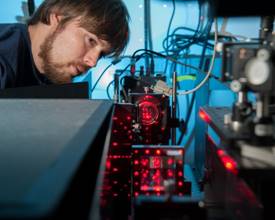
Call for Proposals for using the Advanced Imaging Center at Janelia Farm

Got this in an email from the Gordon and Betty Moore Foundation:

In June of 2014 the Howard Hughes Medical Institute and the Gordon and Betty Moore Foundation announced the establishment of an Advanced Imaging Center at Janelia Farm that will make leading-edge imaging technologies more widely available to the scientific community.

Visualizing and understanding complex biological processes demands the integrated efforts of biologists and physicists. The mission of the Advanced Imaging Center (AIC) is to make cutting-edge imaging technologies developed at Janelia widely accessible, and at no cost, to scientists before the instruments are commercially available.

Operating strategically at the interface of engineering and biological applications, the AIC is positioned to drastically reduce the time between instrument development and widespread use in the increasingly technology-intensive field of biology. The AIC will expand the number and diversity of biologists who have access to the unique, state-of-the-art optical imaging microscopes developed at Janelia years before they become commercially available.

We encourage applications from scientists who are addressing significant scientific questions that require measurements of cellular/molecular behavior at spatial and/or temporal resolutions that would only be possible for them through access to the AIC.

The instruments currently available in the AIC:

· Lattice Light Sheet Microscope

· Interferometric Photoactivation and Localization Microscope (iPALM)

· Single Molecule Total Internal Reflection Fluorescence Microscope (sm-TIRF)

· Aberration-Corrected Multifocus Microscope (acMFM)

· Live Cell Multicolor Structured Illumination Microscope (SIM)

Proposals to use the AIC will be evaluated through a two-tier peer review process. A Call-for-Proposals will be announced several times a year. The Janelia Visitor Program will cover the cost of lodging for the visiting scientist, experiments, technical support from our applications scientists, and scope time for researchers whose proposals are accepted.  The deadline for applications is August 15, 2014. Application material can be found here. Further inquiries can be directed to aic@janelia.hhmi.org

The AIC is generously sponsored by Gordon and Betty Moore Foundation and Howard Hughes Medical Institute at Janelia.

Is this a new form of #OpenAccess Spam – spammy blog comments pointing to Bentham

Well, this is very very weird and not sure what to make of it.  In the last week the filter that Google runs for Blogger Comments has picked up a slew of highly spammy comments coming from one account.  And all of the comments include a link to Bentham Science publishers – one of the annoying Spammy new publishers. See some of them below (note I have removed the links to Bentham but trust me, this went to a Bentham site).  Anyone else getting Spam comments pointing to Bentham?  

Jesica Mack has left a new comment on your post “Science SPAMMER of the month: OMICS publishing gro…“:

For me it has been a surge of meeting welcomes, for the most part in China, having nothing to do with my examination: bentham science publishers.
—–
Jesica Mack has left a new comment on your post “I am highly skeptical of the CHORUS system propose…“:

I don’t see anything in this that seems particularly useful.Please click: bentham science publishers
——-
Jesica Mack has left a new comment on your post “Wow – Google Scholar “Updates” a big step forward …“:

Snap. I likewise found this advancement a couple of days prior and discovered one recommended paper of immediate pertinence.Please click:bentham science publishers

——
Jesica Mack has left a new comment on your post “ADVANCE Journal Club: Developing Graduate Students…“:

This is very interesting I appreciate this effort.Please click:bentham science publishers

—–
Jesica Mack has left a new comment on your post “UCDavis IT and GMail think this “Open Journal of G…“:

What’s particularly annoying about all these SPAM journals is that they are training filters to ignore legitimate journal activity.Please Click:bentham science publishers


Microbial genomics job opening at Bayer CropScience

Bioinformatics position.pdf

Bayer Crop Science is looking for a Microbiologist …

Microbiologist.pdf

Paper of interest: Whole genome and exome sequencing of monozygotic twins discordant for Crohn’s disease

For those interested in microbiomes it is definitely worth looking at this paper: BMC Genomics | Abstract | Whole genome and exome sequencing of monozygotic twins discordant for Crohn’s disease

Simple summary – they have sets of identical twins where one twin has Crohn’s and the other does not.  They looked for somatic mutations that could like the ones with Crohn’s and did not find any.  Sure – a negative result.  Could be anything.  But the next obvious thing to do (which they report they are already doing) is to look at the microbioata in these people.  Alas, they probably do not have data from before these people got Crohn’s, but still, this could be interesting …

Pacific Northwest National Lab (PNNL) is looking for some microbial computational / genomics folks

Check out these job ads. PNNL is looking for a few good microbial people.
Postdoc Flyer.pdf
PNNL Assoc Director Microbiology.pdf

Fun times with whooping cough in #DavisCA

Just got this email.  I have removed the specific sender / facility since that does not seem needed for my purposes here.  I have replaced the name of the site with “Our Facility”. Anyway – thought some people would be interested in the things that can happen when too many people in your community do not vaccinate their kids.

From: Office Administration 
Subject: Possible Exposure to Whooping Cough – Pertussis
Date: June 25, 2014 at 12:55:59 PM PDT
To: Office Administration 

Dear Parent or Guardian,
Our Facility was informed this morning that a student who has been attending a class since 6/16/14 has been diagnosed with pertussis (whooping cough). The child is no longer attending the class and is under a medical care.
If you feel you or your child may have been exposed, watch carefully for symptoms in the next 1-2 weeks, and consult a physician if any occur. Here is some pertinent information regarding pertussis (whooping cough):
Pertussis can spread through the air when people cough. It often starts like a common cold which gets worse and worse over 1-2 weeks. People with pertussis have coughing spells that may last several seconds. As they catch their breath at the end of each coughing spell, they may gasp loudly (“whoop”) and vomit or choke.
The vaccine usually protects against pertussis, but sometimes even immunized children can get pertussis. Pertussis is treated with antibiotics. Antibiotics can also prevent the spread of pertussis to others.
Activities that may help stop the spread of pertussis include:
  • The exclusion of all pertussis cases from classes until they have taken the first five days of the antibiotic.
  • The administration of antibiotics for babies, pregnant women and other high risk contacts of pertussis cases as well as consideration of antibiotic administration for other household or close contacts to prevent the further spread of pertussis.
  • The administration of another dose of DTaP vaccine to babies and Tdap for older children who are not up to date on their vaccine series.
Please know that Our Facility is taking every precaution in this matter and let us know if you have any questions or concerns.
Sincerely,

Office Staff

“An Evening with the World’s Leading Marine Microbiologists” in San Jose

Just got this and am sharing:

Dear Dr. Eisen,

The Tech museum in San Jose wanted to invite you to a very special event of ours that might be of your interest. On July 30th, 16 exceptional marine microbiologists from all over the country will gather in The Tech for an evening of conversation with our local community.

The Tech would love for you to join us! I attached a more detailed description of the event below. Please don’t hesitate to contact me if you have any questions or concerns. And we would also highly appreciate if you could forward this email to any of your colleagues and students who might be interested in coming.

Thank you so much and look froward to hearing back from you!

Best Regards,

Haven Yang

The Tech Museum of Innovation

201 S. Market St., San Jose, CA 95113 | thetech.org

Exclusive Engagement!
An Evening with the World’s Leading Marine Microbiologists
A Creative Collisions Initiative
Wednesday, July 30, 2014
5:45 p.m.
The Tech Museum of Innovation’s Lower Level
General admission $25 in advance/$35 at the door
Members $15/$25
Students and Seniors $10/$15
Food & Beverage available for sale at event
Buy Tickets

“The oxygen in every second breath we take is produced by microbes in our oceans—they are thought to produce about 50 percent of the oxygen in the earth’s atmosphere. Yet, we know surprisingly little about these tiny organisms.”

—The Gordon and Betty Moore Foundation’s Marine Microbiology Initiative

The Tech welcomes 16 world-renowned scientists for an evening of discussion and discovery.

Please join us to learn more about our diverse ocean ecosystems through robust conversation with some of the most innovative minds of our time, and to connect with bio-focused community groups and individuals. Listen to Professor Kay Bidle of Rutgers University explore “The Invisible World of Marine Microbes: How Earth’s Smallest Living Things Have the Biggest Impact on How Our Ocean Works.”

Mingle with the 16 Investigators of the Gordon and Betty Moore Foundation’s Marine Microbiology Initiative:

Schedule
5:45—6:45 p.m. Mingling over food, drinks and exhibits
6:45—7:30 p.m. Kay Bidle: “The Invisible World of Marine Microbes: How Earth’s Smallest Living Things Have the Biggest Impact on How Our Ocean Works,” followed by 15-minute Q&A
7:30—10 p.m. More mingling over food and drinks

Click here to learn more about the event.

National Research Council Fellowship opportunities to work at Federal Labs

Forwarding this announcement which might be of interest:

We are asking your assistance in forwarding this message to inform students and faculty in your department of these outstanding fellowship opportunities. More detailed information and an online application can be found at http://www.nationalacademies.org/rap.

The National Research Council of the National Academies sponsors a number of awards for graduate, postdoctoral and senior researchers at participating federal laboratories and affiliated institutions. These awards include generous stipends ranging from $45,000 – $80,000 per year for recent Ph.D. recipients, and higher for additional
experience. Graduate entry level stipends begin at $30,000. These awards provide the opportunity for recipients to do independent research in some of the best-equipped and staffed laboratories in the U.S. Research opportunities are open to U.S. citizens, permanent residents, and for some of the laboratories, foreign nationals.

Detailed program information, including online applications, instructions on how to apply, and a list of participating
laboratories, are available on the NRC Research Associateship Programs Web site (see link above).

Questions should be directed to the NRC at 202-334-2760 (phone) or rap@nas.edu.

There are four annual review cycles.

Review Cycle: August; Opens June 1; Closes August 1

Review Cycle: November; Opens September 1; Closes November 1

Review Cycle: February; Opens December 1; Closes February 1

Review Cycle: May; Opens March 1; Closes May 1

Applicants should contact prospective Adviser(s) at the lab(s) prior to the application deadline to discuss their research interests and funding opportunities.

Thank you for your assistance.

Sincerely yours,

H. Ray Gamble

Director of the Fellowship Programs

National Research Council

The National Academies

500 5th Street NW, Keck 568

Washington, DC 20001